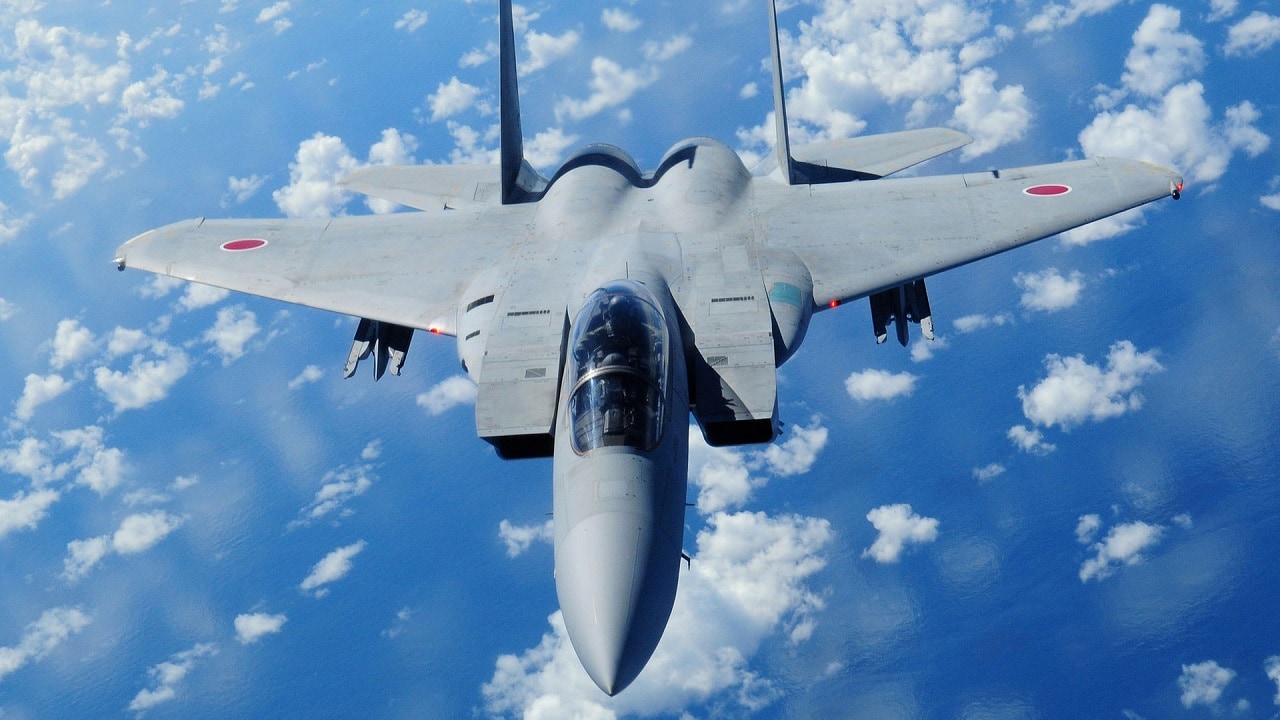
Key Points and Summary – Japan’s F-15J “Peace Eagle” is pushing past middle age and getting a serious mid-life upgrade instead of retirement.
-Originally delivered in the early 1980s and built under license by Mitsubishi, the F-15J fleet is now being transformed into the F-15 Japan Super Interceptor with APG-82 AESA radar, ADCP II processing, BAE’s EPAWSS electronic warfare suite, new cockpit displays, and integration of AAM-4B and AAM-5B missiles plus precision-guided munitions.
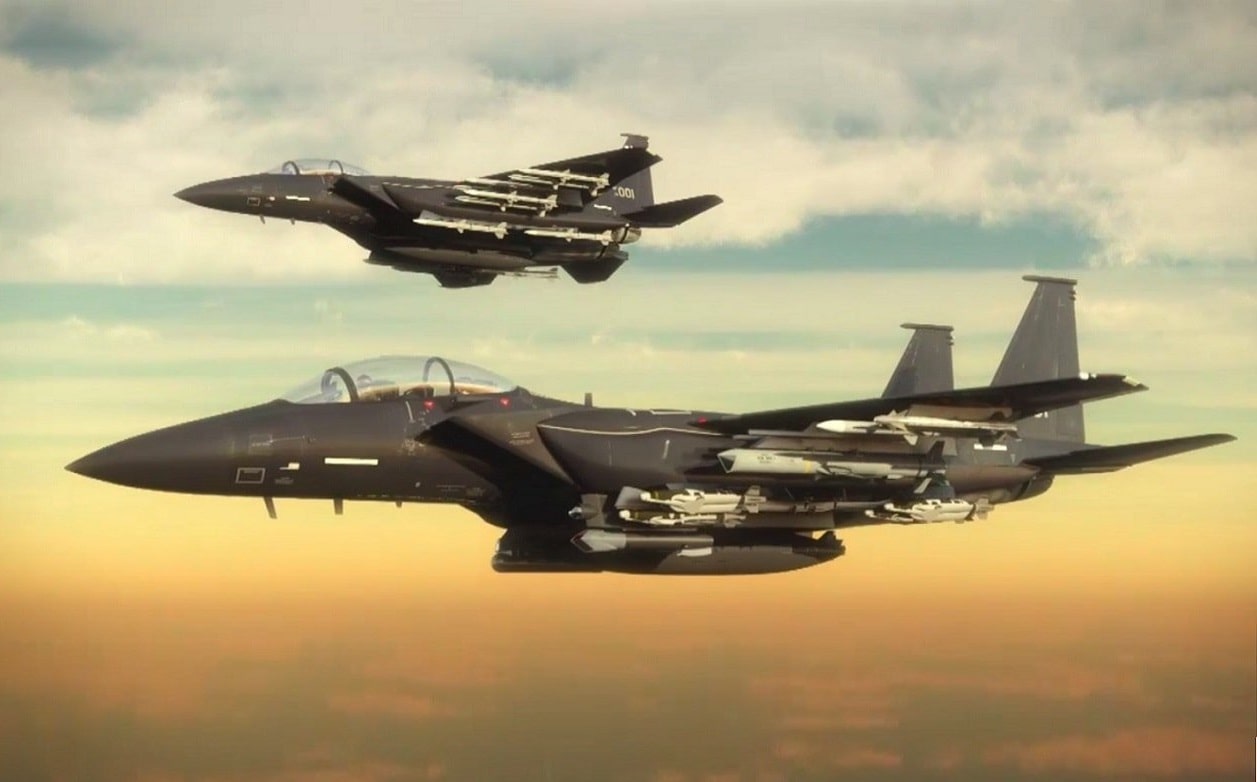
F-15EX Eagle II. Image Credit: Boeing.
-Roughly 98 airframes will be modernized in St. Louis by 2030, extending their life into the 2030s and 2040s, where they’ll fly alongside F-35As intercepting Russian and Chinese aircraft near Japan.
F-15J: The Japanese Eagle at 45
Fort Lauderdale, Florida – Someone who has reached their 45th birthday is generally considered to be “middle-aged.”
An air superiority fighter, however, may be deemed to be in its twilight years once it approaches this number of years in service.
This is primarily due to stresses in the aircraft’s structure.
There is also the fact that advancements in propulsion technology, on-board systems, sensor accuracy, and a growing list of increasingly advanced weaponry can also reach the point where simply designing a new aircraft is more practical than trying to fit these new inventions into an older, previous-generation one.
In some respects, the F-15, originally designed by McDonnell-Douglas (MDC) and now, in the post-merger era, labelled a Boeing product, is an exception to this rule.
One of the longest-serving versions of the aircraft is the 45-year-old F-15J, which was built back in the days when the St. Louis plant was still an MDC facility.
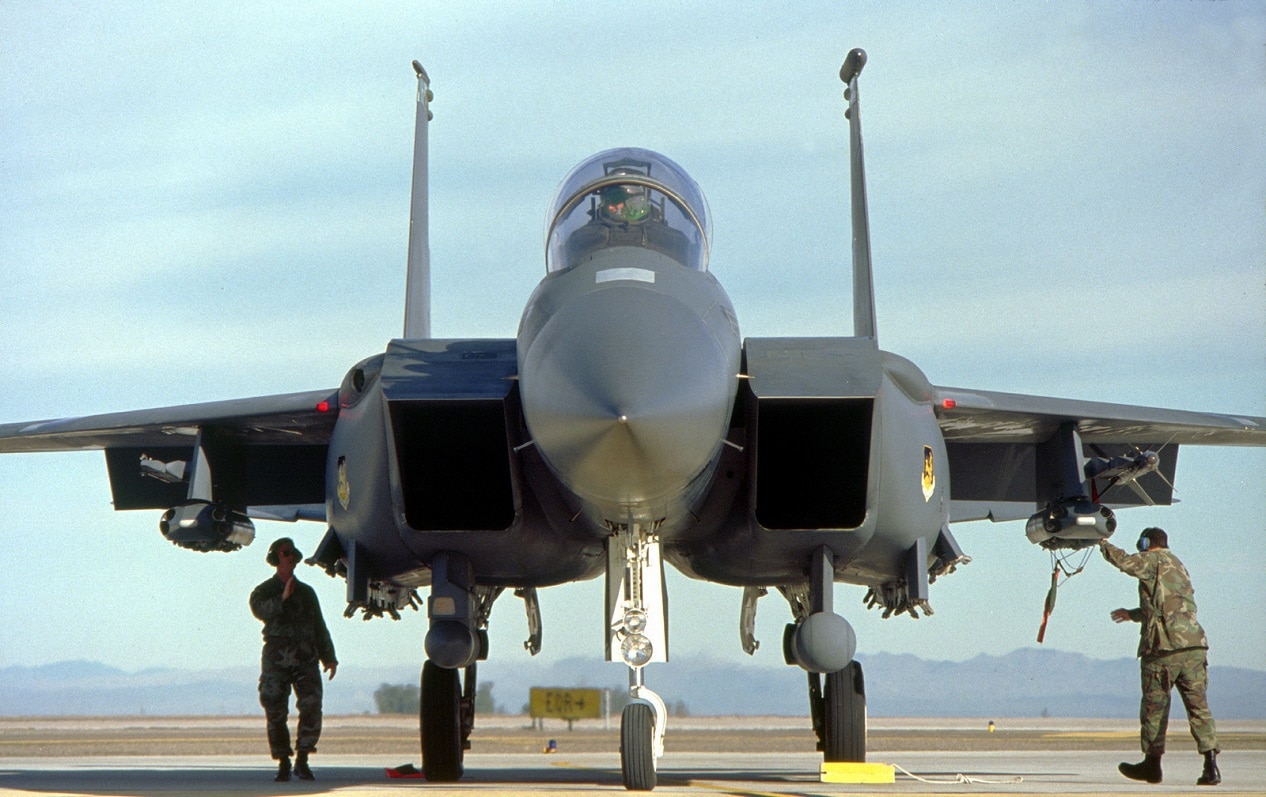
Staff Sgt. Dave Smith and Senior Airman John Pusieski from the 58th Operational Support Squadron, 58th Fighter Wing, peform last-minute checks and arm practice bombs on an F-15E Eagle aircraft from the 461st Fighter Squadron.
The F-15J is a variant of the original US Air Force (USAF) version of the aircraft, developed in 1980 for the Japanese Air Self-Defence Force (JASDF).
This version was initially designed with the mission of an air superiority fighter.
Upgrade to a Super Interceptor
The F-15J was first introduced into service in 1981 and has since undergone a series of upgrades that have transformed it into a multi-role platform.
The latest upgrade valued at $450.5 million was awarded to Boeing by the USAF to support the F-15 Japan Super Interceptor (JSI) program.
Work on the JSI was shut down briefly in 2020 due to spiralling costs.
These were partly due to the need for a new production line and the decision to switch to a newer electronic warfare system from BAE Systems. In the end, the Japanese government included the modernization of 68 F-15Js in the fiscal year 2022 budget.
The central components of the latest upgrade signed off in December 2024 include: a Raytheon APG-82(v)1 Active Electronically Scanned Array (AESA) radar, the Boeing Advanced Display Core Processor II (ADCP II), and the BAE Systems AN/ALQ-250 Eagle Passive Warning Survivability System (EPAWSS).
Other upgrade features include improvements to the fly-by-wire flight controls (available only on some older aircraft), new cockpit displays, and integration of the Japan-designed AAM-4B active radar-homing BVR missile and AAM-5B IR-guided missile.
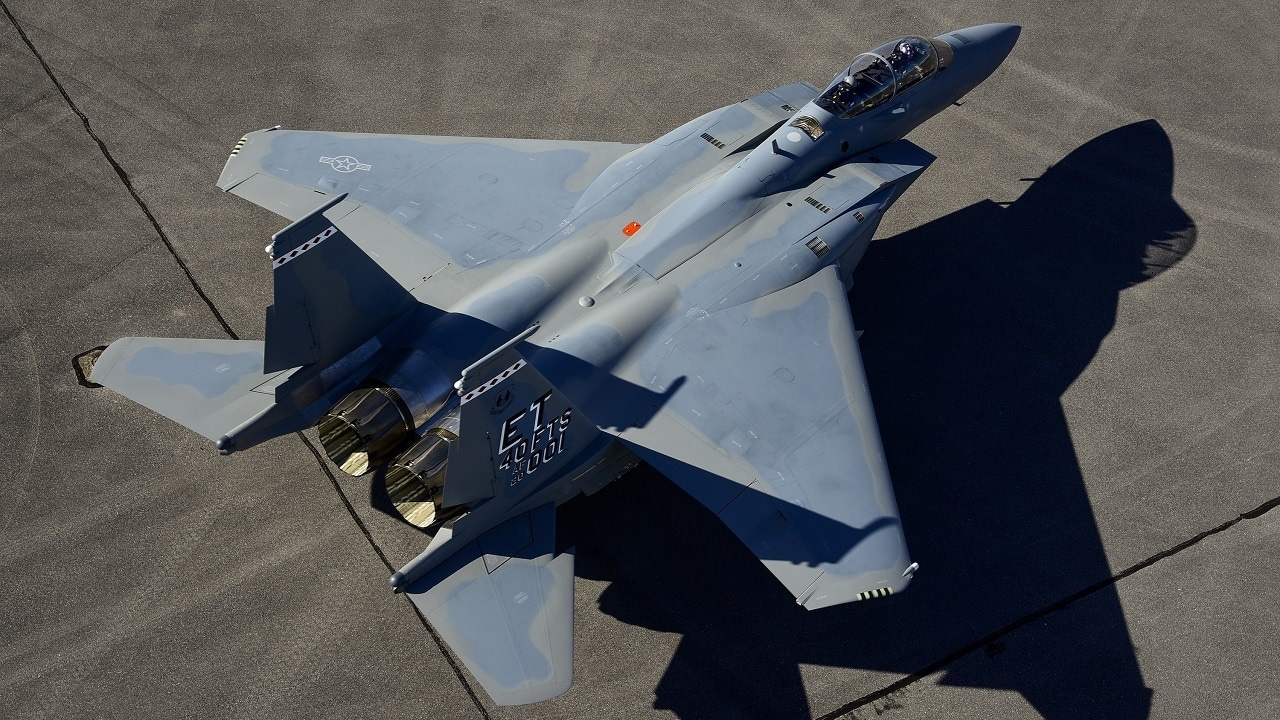
The F-15EX Eagle II, the Air Force’s newest fighter aircraft, arrives to Eglin Air Force Base, Florida March 11. The aircraft will be the first Air Force aircraft to be tested and fielded from beginning to end through combined developmental and operational tests. The 40th Flight Test Squadron and the 85th Test and Evaluation Squadron personnel are responsible for testing the aircraft. (U.S. Air Force photo/1st Lt. Karissa Rodriguez)
The aircraft have also been modified to carry drop tanks and precision-guided munitions, giving the upgraded airframes multi-role mission capability.
These current-generation systems are being retrofitted to the F-15Js as after-sales modernization packages.
Still, most of the standard equipment configuration is installed in the latest version of the aircraft, the F-15EX Eagle II.
Work on the program is scheduled to be carried out not in Japan but at the St. Louis, Missouri, plant, with an expected completion date of February 2030.
History of Service
The F-15Js were originally built under license by Mitsubishi Heavy Industries (MHI) in Japan rather than on the US production line.
The versions sold to Japan are based on the USAF F-15C single-seat and F-15D two-seat models of that day.
A total of 223 aircraft, composed of 203 single-seat F-15J and 20 two-seat F-15DJ, were eventually manufactured at MHI.
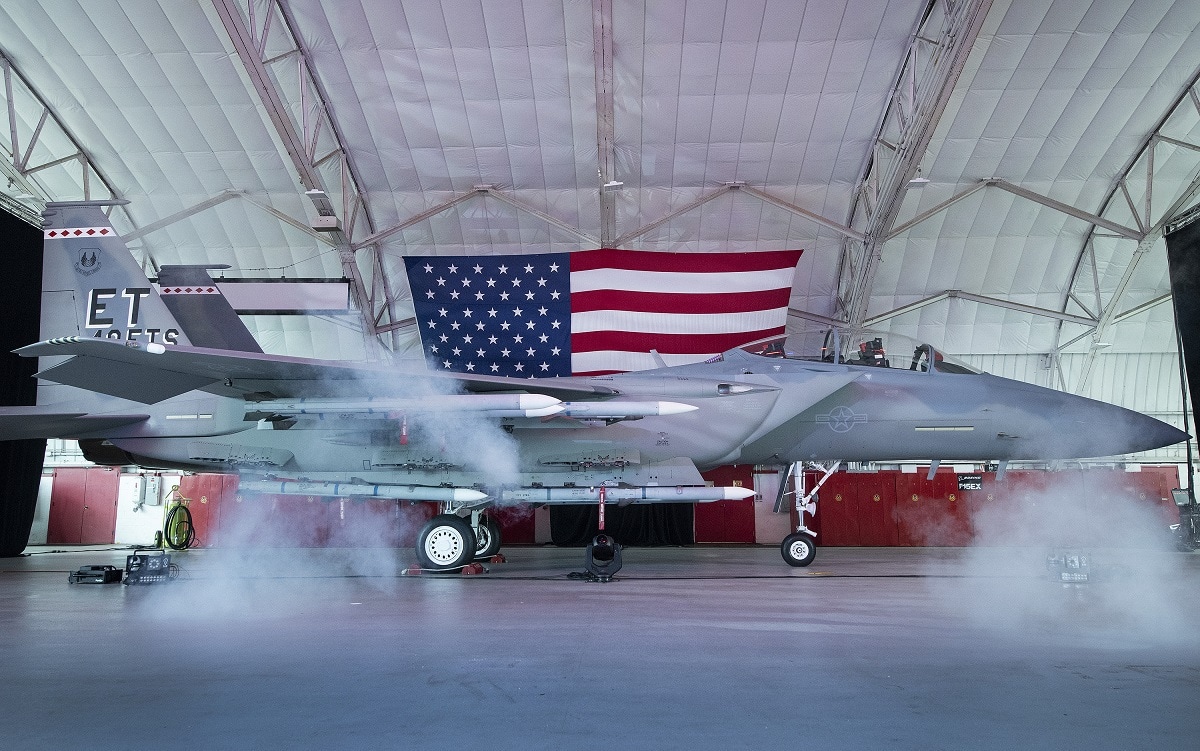
The Air Force’s newest fighter, the F-15EX Eagle II, was revealed and named during a ceremony, April 7, 2021, at Eglin Air Force Base, Fla. The aircraft will be the first Air Force aircraft to be tested and fielded from beginning to end, through combined developmental and operational tests. (U.S. Air Force photo by Samuel King Jr.)
Nicknamed “Heiwa no Taka” or Peace Eagle in Japanese, it remains the backbone of JASDF’s air defense force, but now operates in concert with the 5th-generation stealthy F-35A.
Roughly 150 F-15Js remain in service, which include approximately 98 models that are being modernized under the “F-15J Pre-MOD/Upgrade” program.
This will extend their service life to the 2030s, with some still planned to be in service in the 2040s.
The aircraft’s missions are gradually being taken over by the F-35s, but no immediate retirement from service is planned for the F-15J.
This aircraft maintains extremely high readiness rates and regularly intercepts Russian and Chinese aircraft near Japanese airspace.
About the Author: Reuben F. Johnson
Reuben F. Johnson has thirty-six years of experience analyzing and reporting on foreign weapons systems, defense technologies, and international arms export policy. Johnson is the Director of Research at the Casimir Pulaski Foundation. He is also a survivor of the Russian invasion of Ukraine in February 2022. He worked for years in the American defense industry as a foreign technology analyst and later as a consultant for the US Department of Defense, the Departments of the Navy and Air Force, and the governments of the United Kingdom and Australia. In 2022-2023, he won two awards in a row for his defense reporting. He holds a bachelor’s degree from DePauw University and a master’s degree from Miami University in Ohio, specializing in Soviet and Russian studies. He lives in Warsaw.