
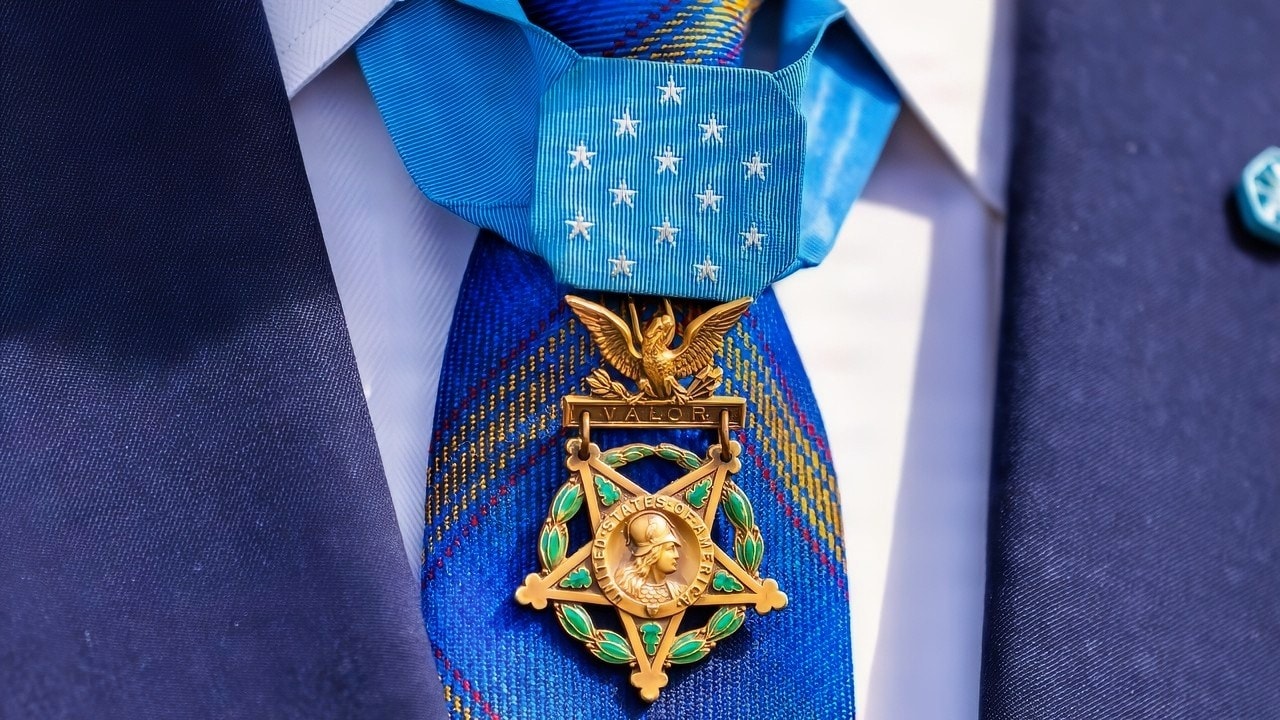
Key Points and Summary – Audie Murphy rose from poor Texas farm boy to America’s most decorated World War II soldier, earning the Medal of Honor for a one-man stand against German forces at Holtzwihr, France.
-Fighting from a burning tank destroyer, he held off an assault long enough to save his company.
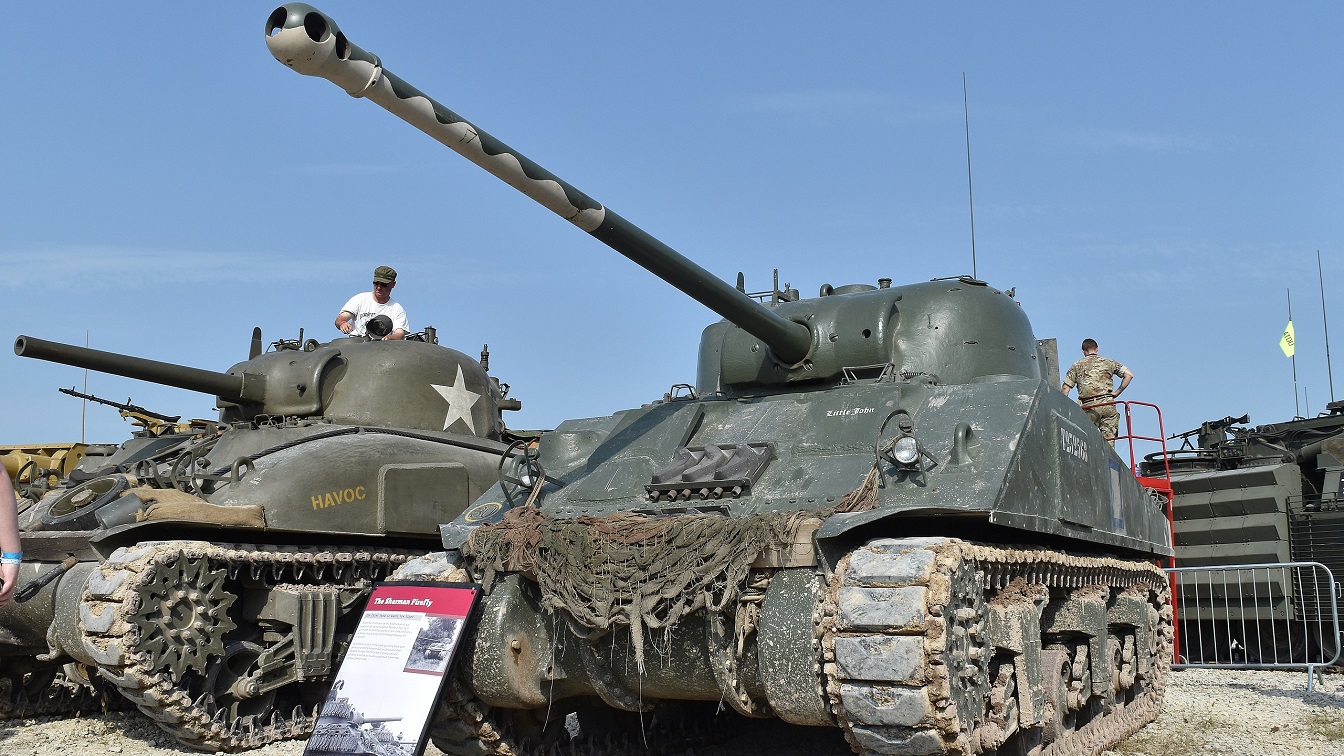
Serial No:- 16912 Official designation:- M4A4 Tank Medium 17Pdr. Total production:- 2,100-2,200 Main armament:- QF 17-pounder Anti-tank Gun The Firefly was a British modification of the M4 Sherman, with a 17 pounder gun replacing the usual 75mm. This gun was able to puncture the armour of a Tiger I or Panther, making the Firefly one of the few Allied tanks genuinely feared by Axis forces. This example comes from the Bastogne Barracks in Belgium, part of the Belgian Royal Military Museum. It was manufactured in the USA in 1942 and delivered to Europe in 1943 carrying the running number ‘USA 3017218’. It was converted to a Firefly in early 1944 and saw British service as ‘T232568’. She is fully operational and is seen in the ‘Tank Park’ after making a guest appearance at TankFest 2019. The Tank Museum, Bovington Camp, Dorset, UK.
-His 33 medals made him a national hero, but they didn’t spare him from lifelong PTSD.
-After the war he acted in Hollywood and spoke out for veterans’ mental health. Killed in a 1971 plane crash, he was buried at Arlington, his legacy a mix of courage, sacrifice, and quiet scars.
Audie Murphy: The Medal of Honor Hero Who Never Stopped Fighting
Audie Leon Murphy remains one of the most celebrated American soldiers of World War II, a man whose courage and resilience transformed him from a poor Texas farm boy into a national hero. His story is not only about battlefield valor but also about perseverance, humility, and the weight of heroism.
Among his many decorations, the Medal of Honor stands as the ultimate testament to his extraordinary bravery. While he ended the war as a prestigiously decorated hero, throughout his civilian life, he would suffer from PTSD until the day of his death.

M4 Sherman Tank from WWII Image: Creative Commons.
Audie Murphy: Early Life and Enlistment
Murphy was born on June 20, 1925, in Kingston, Texas, and grew up in grinding poverty during the Great Depression. He was one of twelve children in a sharecropping family, and hardship was a constant companion. His father abandoned the family when Audie was still young, leaving him to shoulder responsibilities far beyond his years. Murphy dropped out of school in the fifth grade to help support his family, working odd jobs and hunting to provide food.
When World War II erupted, Murphy was determined to serve his country. Initially, he faced rejection from the Marines and paratroopers because of his small stature (he was barely 5 feet 5 inches tall and weighed around 110 pounds). Eventually, the U.S. Army accepted him in June 1942, and he began his journey as an infantryman. His size belied his tenacity; Murphy quickly proved himself as a soldier of exceptional skill and courage.
Before the events that earned him the Medal of Honor, Murphy already had an eventful career with the Army. Serving with the 15th Infantry Regiment, 3rd Infantry Division, he fought in North Africa, Sicily, Italy, and later France.
His battlefield exploits earned him numerous decorations, including the Bronze Star, Silver Star, and Distinguished Service Cross. By January 1945, Murphy had become a seasoned combat veteran, respected by his peers and feared by the enemy.
Combat Experience and Heroism
The defining moment of Audie Murphy’s military career occurred near Holtzwihr, France, during the final months of World War II.
At this point, Murphy was a second lieutenant commanding a small unit tasked with holding a critical position against an overwhelming German force.
Murphy’s company was ordered to defend a section of the Colmar Pocket, a heavily contested area in Alsace. On January 26, 1945, his unit faced an imminent attack by German forces equipped with tanks, artillery, and infantry. Outnumbered and outgunned, Murphy made the difficult decision to send most of his men to the rear for safety while he stayed behind to direct artillery fire.
As the German assault began, Murphy climbed onto a burning M10 tank destroyer that had been disabled in the fight. Despite intense enemy fire and the risk of explosion, he operated the .50 caliber machine gun mounted on the vehicle. For over an hour, Murphy single-handedly held off the German advance, killing or wounding dozens of enemy soldiers. He continued firing until he ran out of ammunition, all while calling in artillery strikes on enemy positions via radio.
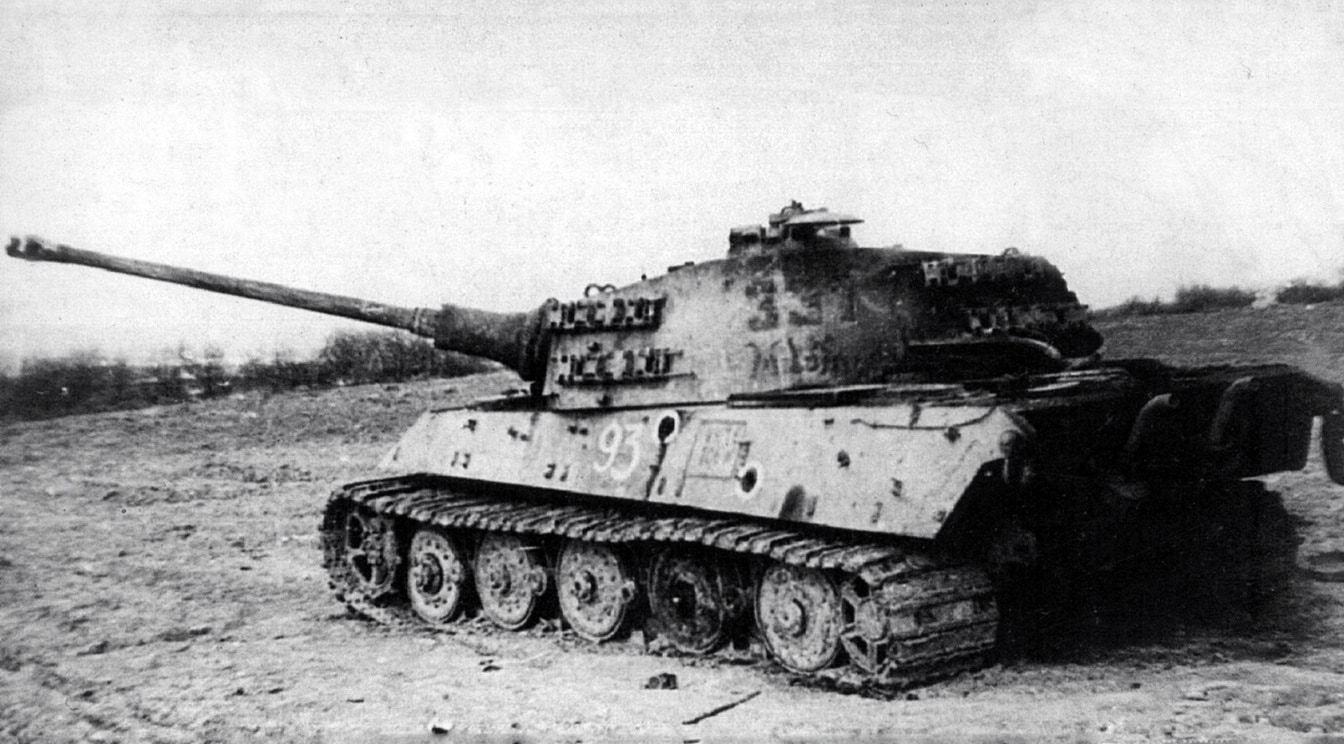
King Tiger Tank. Image Credit: Creative Commons.
His actions were not only courageous but tactically decisive. By delaying the German attack, Murphy allowed his unit to regroup and counterattack, ultimately forcing the enemy to retreat. When reinforcements arrived, Murphy refused evacuation despite being wounded in the leg.
His leadership and valor saved countless lives and prevented a breakthrough that could have endangered the entire division.
Medals and Post-Service Life
For his extraordinary heroism, Audie Murphy was awarded the Medal of Honor on June 2, 1945, by Lieutenant General Alexander Patch.
The official citation highlighted his “indomitable courage and refusal to give an inch of ground,” emphasizing that his actions exemplified the highest traditions of military service. Murphy’s Medal of Honor was just one among thirty-three U.S. decorations and awards, making him the most decorated American combat soldier of World War II.
His decorations included the Medal of Honor, the Distinguished Service Cross, two Silver Stars, the Bronze Star, three Purple Hearts, and numerous campaign medals and foreign honors.
After returning home, Murphy struggled with what we now recognize as post-traumatic stress disorder, then called “battle fatigue.” His life back in civilian life was troubled to say the least, as is sadly the case with many veterans who experience high-intensity combat abroad. Despite his inner turmoil, he became a public figure, starring in films such as To Hell and Back (1955), which dramatized his wartime experiences. Murphy also became an advocate for veterans’ mental health, helping to raise awareness about the psychological toll of combat.
He later died on May 28, 1971, when his private airplane crashed into the side of a mountain near Roanoke, Virginia. He was buried with full military honors alongside his fellow service members in Arlington National Cemetery.
His life story inspired many, his heroic actions saved numerous lives, and he exemplified the highest virtues of armed service. Audie Murphy’s story resonates because it embodies the ideal of selfless service. His Medal of Honor was not earned through luck or circumstance but through deliberate, courageous action in the face of overwhelming odds.
About the Author: Isaac Seitz
Isaac Seitz, a Defense Columnist, graduated from Patrick Henry College’s Strategic Intelligence and National Security program. He has also studied Russian at Middlebury Language Schools and has worked as an intelligence Analyst in the private sector.

