
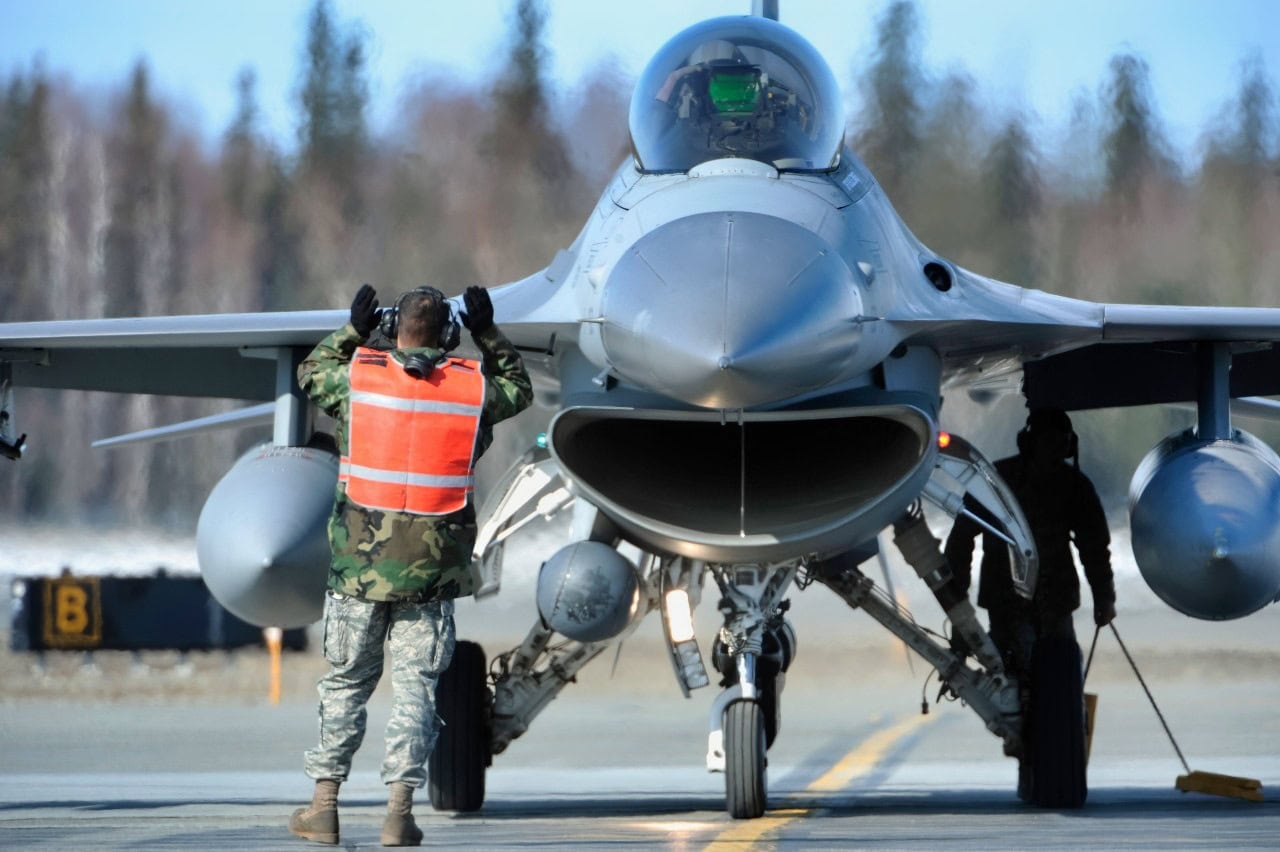
Key Points and Summary – U.S. Air Force F-16 pilots near Germany’s Spangdahlem Air Base recently reported multiple blue-laser illuminations on approach, triggering a joint U.S.–German investigation.
-The incidents echo a spike in laser strikes on NATO aircraft across Europe and follow earlier cases in Italy and elsewhere.
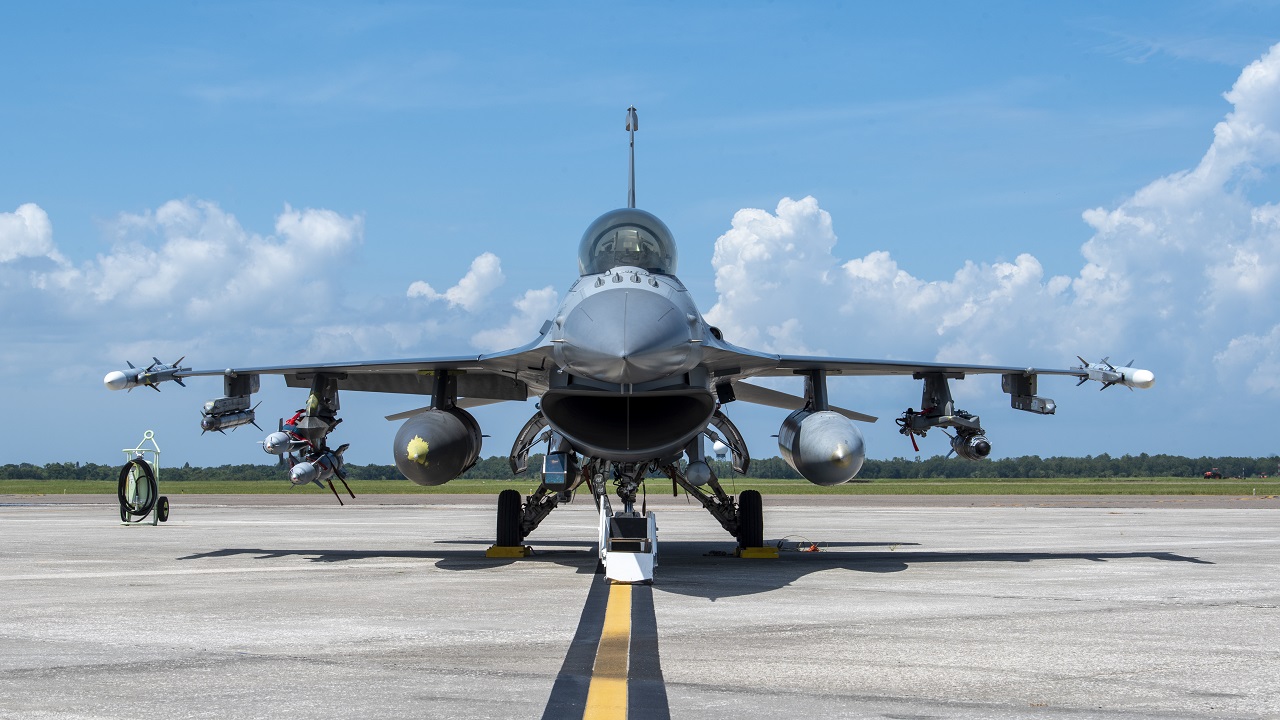
A U.S. Air Force F-16 Fighting Falcon aircraft sits parked on flight line at MacDill Air Force Base, Sept. 8, 2021. (U.S. Air Force photo by Airman 1st Class Lauren Cobin).
While no jets were lost, officials warn cockpit laser glare can cause flash blindness at the worst possible moment—takeoff and landing.
-U.S. authorities routinely prosecute offenders, but overseas cases depend on host-nation law. The Air Force is now fielding upgraded laser-protective eyewear through 2027 to shield aircrews and keep affected pilots safe over global skies.
USAF F-16 Pilots Hit by Mysterious Blue Lasers Over Germany
In a bizarre story out of Germany, authorities are investigating a pair of incidents, both this month, in which laser beams were pointed at Air Force pilots during F-16 flights, both near Spangdahlem Air Base.
According to Stars and Stripes, the incidents occurred on two occasions: on December 2 and a third a week later, on December 9. The pilots landed safely in all three instances.
“Three fighter pilots reported encountering what they described as a blue laser beam while on approach to Spangdahlem,” Stars and Stripes reported, citing a statement from the Trier criminal investigation department. Each happened when the aircraft were “only a few kilometers away” from the base.
The 52nd Fighter Wing at Spangdahlem is “tracking the incidents,” spokesman Master Sgt. Alex Riedel told the news outlet.
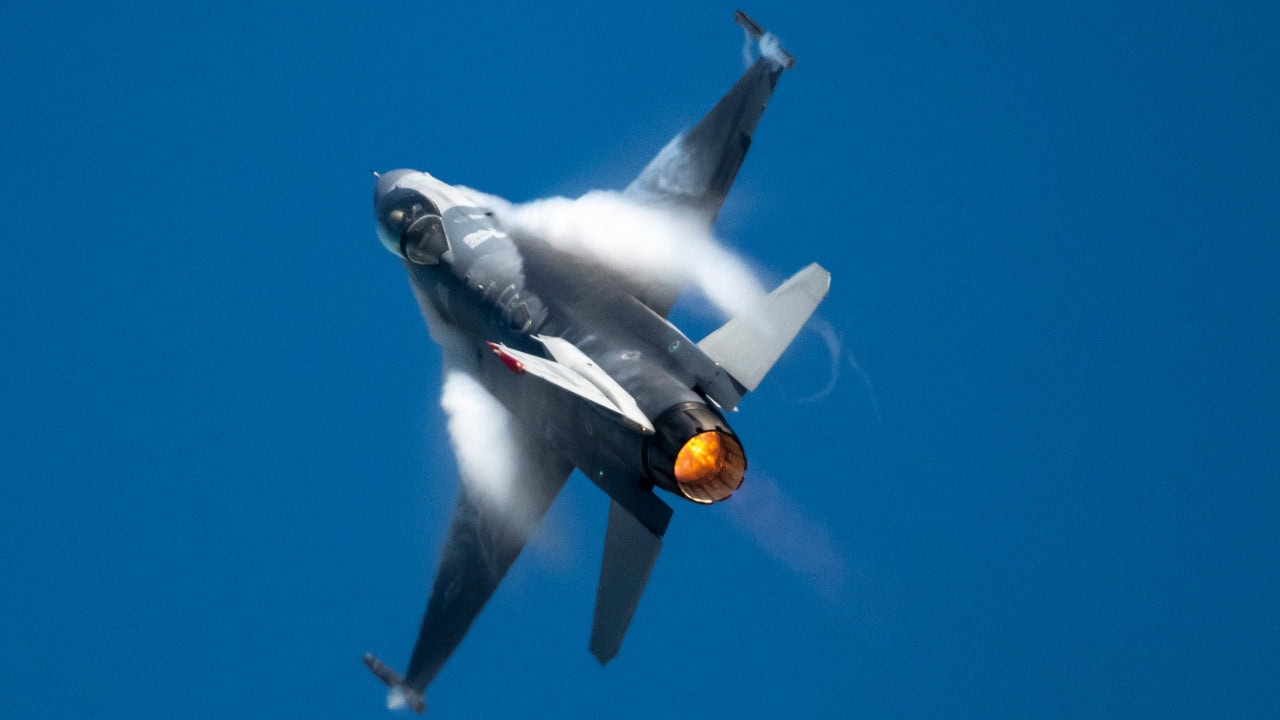
U.S. Air Force Capt. Ethan “Bantam” Smith, Pacific Air Forces F-16 Demonstration Team pilot, conducts a falcon turn during Misawa Air Fest at Misawa Air Base, Japan, Sept. 8, 2024. The demonstration team’s primary mission is to inspire goodwill and promote positive relations between the U.S. and partner nations across the Indo-Pacific region by showcasing displays of F-16 combat prowess and dedication to U.S. Air Force core values. (U.S. Air Force photo by Tech. Sgt. Peter Reft)
“In all instances, the aircraft landed safely,” Riedel told Stars and Stripes. “Our pilots are well-trained for these scenarios and report the laser source’s location to the US law enforcement and German police, with whom we are fully cooperating. Further details are pending investigation.”
It’s unclear who was responsible for the laser beams. But it has happened before.
2023 Incidents
Stars and Stripes had reported, in December of 2023, that a series of similar incidents had taken place near Aviano Air Base in Italy, affecting the 31st Fighter Wing.
The Wing reported 13 such incidents in 2023, compared to just four the previous year. Maj. Ben Weigold, the Wing’s chief of safety, told the news outlet that those numbers were “unusually high,” but that there may have been even more of them that hadn’t been reported.
When confronted by lasers, the 2023 reports said, pilots are directed to “change their flight path.”
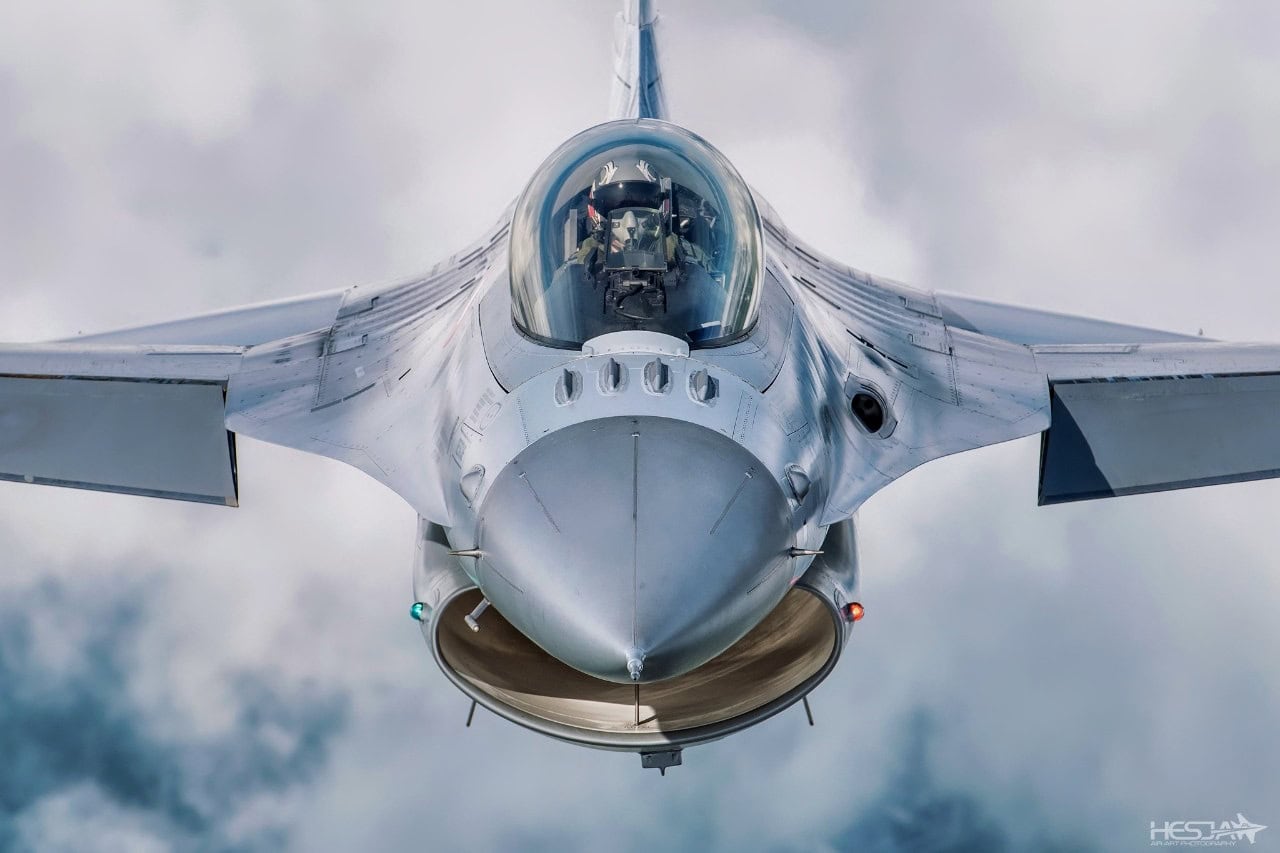
F-16 Fighter. Image Credit: Creative Commons.
Why It’s Dangerous
An article on the Air Force Safety Center (AFSC) website looks at why lasers can be dangerous for pilots.
“Aiming a laser pointer at an aircraft in flight could be catastrophic for an affected aircrew and possibly for people on the ground. Though the devices’ compact size, easy availability, and widespread ownership may make hand-held lasers seem harmless, they pose a big danger when pointed at aircraft. It is also against the law.”
The consequences could be catastrophic.
“A laser’s intense light can cause flash blindness in pilots and aircrew members during critical phases of flight, such as airfield approach and landing,” the Air Force said. “Disrupted vision could cause ineffective aircraft control measures, possibly leading to the loss of the aircraft and crew, and even endangering people on the ground below.”
Such incidents can be reported to the FAA here.
There do not appear to be any confirmed incidents of a laser pointer actually causing an aircraft to crash.
Legal Recourses
Ever since the passage of the FAA Modernization and Reform Act of 2012, it has been a federal crime to “aim a laser pointer at an aircraft,” as well as to aim it into the flight path of an aircraft.
According to the law firm Black & Askerov, “the offense is punishable by a federal prison sentence of up to five years and substantial fines. Please get in touch with a skilled criminal defense attorney now if you or a loved one is facing criminal charges under federal law.”
A website called LaserPointerSafety.com, described as “a comprehensive resource for safe and responsible laser use, makes clear that “You should NEVER aim a laser pointer at or near an airplane, helicopter, or drone (drones are legally considered aircraft and you may blind or damage the operator’s camera). It is not safe, you may be arrested, and you may help get laser pointers banned.”
And yes, the law has been enforced. In October, a man living “unlawfully” in Oregon was brought up on federal criminal charges for pointing a laser at a US Customs and Border Protection (CBP) helicopter near Portland.

A 40th Flight Test Squadron F-16 Fighting Falcon releases a Stand-in Attack Weapon for the first time Nov. 7 at Eglin Air Force Base, Florida. The mission marked the first time the weapon was successfully released from an aircraft. (U.S. Air Force photo by Staff Sgt. Blake Wiles)
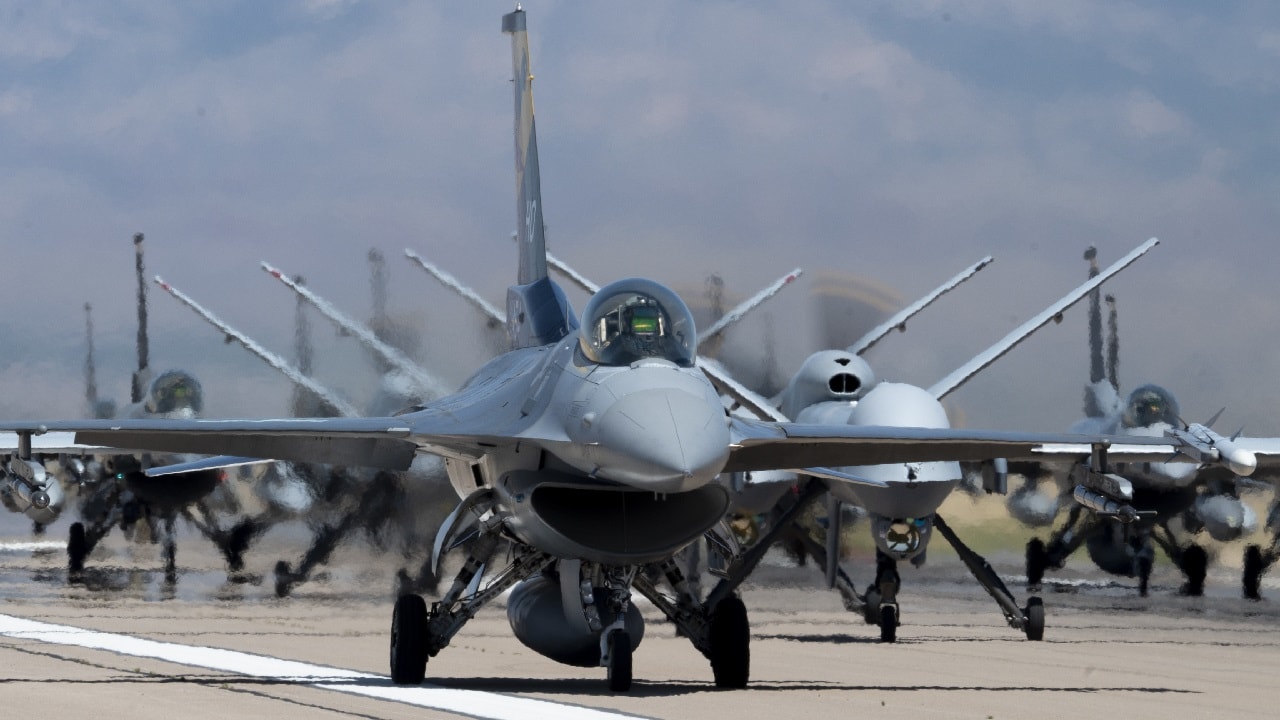
Forty-nine F-16 Vipers and MQ-9 Reapers assigned to the 49th Wing line up on the runway during an elephant walk at Holloman Air Force Base, New Mexico, April 21, 2023. The 49th Wing is the Air Force’s largest F-16 and MQ-9 formal training unit, building combat aircrew pilots and sensor operators ready for any future conflicts. (U.S. Air Force photo by Tech. Sgt. Victor J. Caputo)
“Aiming a laser pointer at an aircraft endangers lives and is a federal crime. This conduct put the lives of CBP personnel and the community directly at risk, and my office will aggressively pursue those who engage in this illegal activity,” Scott E. Bradford, US Attorney for the District of Oregon, said in a DOJ statement.
There were “hundreds” of reports of lasers being pointed at aircraft in Washington state earlier this year, leading the FBI to offer a $10,000 reward for information leading to the arrests of the responsible parties, TV station KING 5 reported.
In August, a Colorado man was arrested and charged with shining a “high-powered laser pointer” at airplanes; he was also hit with drug charges. In Houston in May, a man was sentenced to 15 months in prison for pointing a laser at a police helicopter and also at a Southwest Airlines plane in 2021.
“Y’all can go ahead and just detain him and start searching for that laser pointer, but this is a felony,” an officer was heard stating over the radio, per Fox 28, about the Colorado incident. The executive director of the transport service Flight for Life told the TV station that a colleague had had to quit working as a pilot after losing 30 percent of vision in his eye after a laser pointer incident.
For such incidents as those in Germany and Italy, they fall under the jurisdiction of those countries. In one reported incident, in Poland in October, a laser pointer nearly “blinded” pilots during a flight, and it turned out a nine-year-old was responsible.
What Can Be Done?
According to this week’s Stars and Stripes report, the Air Force is “upgrading eyewear for aircrews to provide combined laser and ballistic protection capability for the first time.” A total of 42,000 devices are set to be fielded by 2027.
“The consequences of getting lasered without having proper protection could not only prevent the pilot from flying and landing an aircraft safely, but it could also cost them their career,” Capt. Pete Coats, the lead manager of that program, said in a 2023 statement.
About the Author: Stephen Silver
Stephen Silver is an award-winning journalist, essayist, and film critic, and contributor to the Philadelphia Inquirer, the Jewish Telegraphic Agency, Broad Street Review, and Splice Today. The co-founder of the Philadelphia Film Critics Circle, Stephen lives in suburban Philadelphia with his wife and two sons. For over a decade, Stephen has authored thousands of articles that focus on politics, national security, technology, and the economy. Follow him on X (formerly Twitter) at @StephenSilver, and subscribe to his Substack newsletter.