
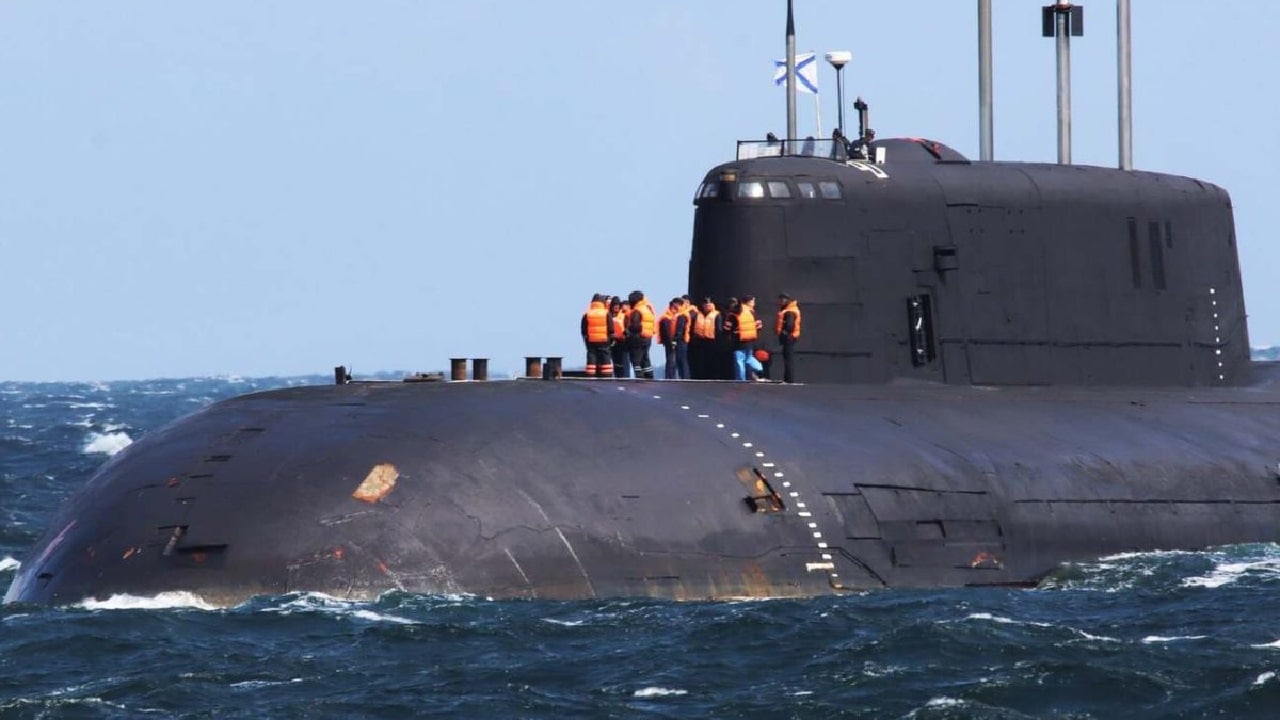
Synopsis: This piece examines Russia’s planned Laika- or “Husky”-class submarine, a fifth-generation design meant to restore Moscow’s undersea edge despite wartime strain.
-Projected to enter service around 2030, Laika would field Tsirkon hypersonic missiles, Oniks and Kalibr cruise missiles, advanced conformal sonar, and a stealthier hull meant to replace aging Akula and Sierra boats.
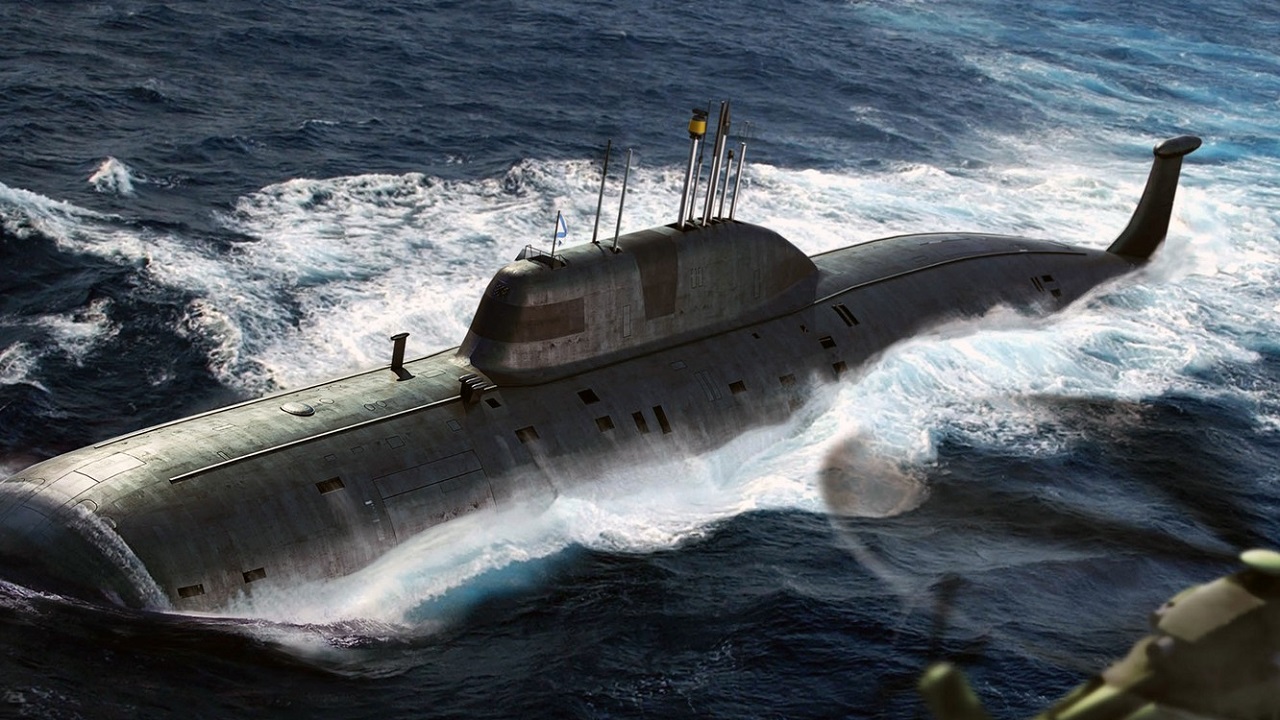
Akula-Class Submarine. Image Credit: Computer Generated Image, Screenshot.
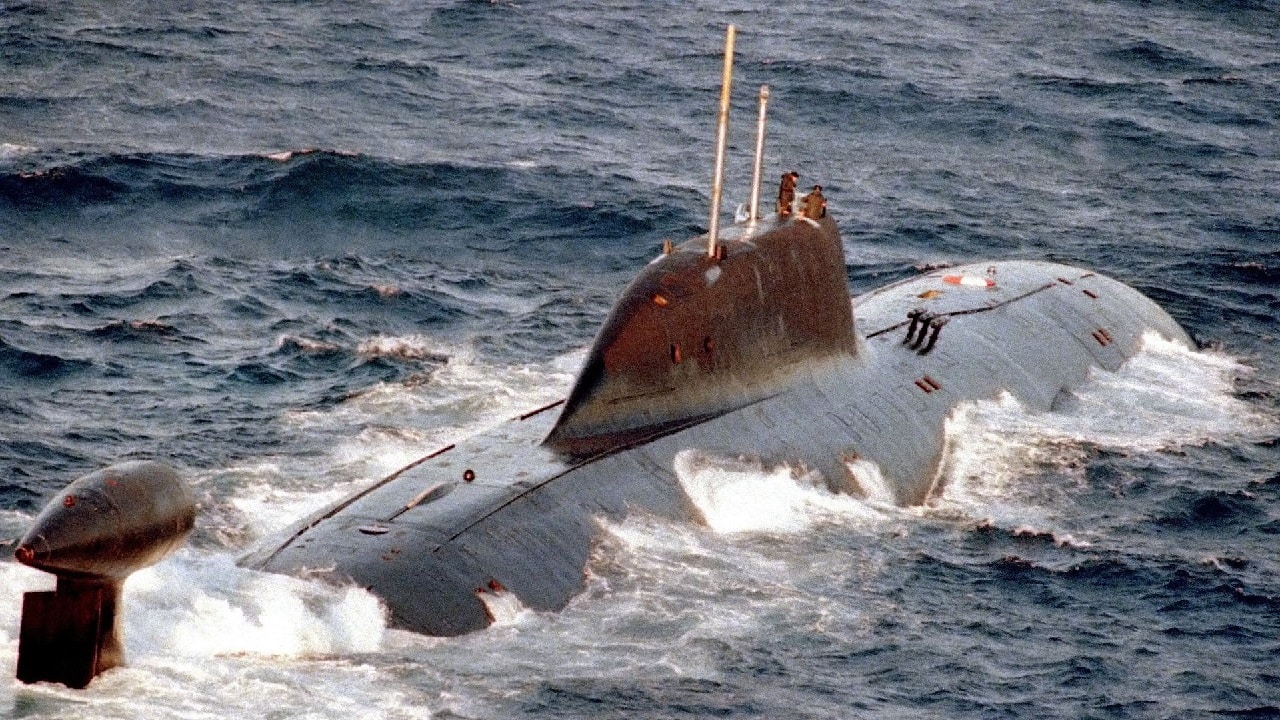
K-322 Cachalot, Akula class submarine underway. A port quarter aerial view of the Russian Northern Fleet AKULA class nuclear-powered attack submarine underway on the surface.
-The article highlights its dual role as both a hunter-killer and a potential nuclear delivery platform, while stressing the harsh realities: a stretched defense budget, a weak shipbuilding base, and competing “super weapon” priorities could leave Laika as an ambitious concept rather than a serially produced fleet workhorse.
Russia’s Laika-Class Submarine: Hype Weapon or Paper Tiger?
Russia has big naval plans despite difficulty with its Black Sea fleet during its war against Ukraine. The Russian defense industrial complex has been on overdrive during the war. The emphasis has been on building up mechanized forces in the army after devastating losses to its tank and armored personnel carrier corps. But progress has still been made on a new submarine, the Laika-class or “Husky”-class.
The Laika-class is a fifth-generation submarine that should be ready for active duty by 2030. Russian engineers and technicians are currently sorting out its features and conducting research and development efforts. The designers are sure to make this submarine stealthier than the others in the fleet. Weapons will be a significant aspect of the Laika-class, and the sub should be integrated with the Tsirkon hypersonic missile. The Laika-class will also be large, displacing 11,340 tons.
The Russians Are Being Tight-lipped About the Sub
Details on the Laika-class are sparse, but Russian state-run media have disclosed that it will use artificial intelligence in some manner. Malakhit Marine Engineering Bureau has been working on the Laika project since 2014. Malakhit is also building the Yasen-class submarine. The Laika-class will feature “modular structure and a joint integrated combat management system,” according to TASS.
One Troubling Aspect is a Dual-Threat Hypersonic Cruise Missile Launch
The Tsirkon sea-launched hypersonic missile was first successfully tested in 2021. The Tsirkon can fly at MACH 9. Hypersonic weapons can reach altitudes of 19 to 25 miles, where air resistance is reduced. It has an impressive range of 621 miles and a maximum payload of 882 pounds.
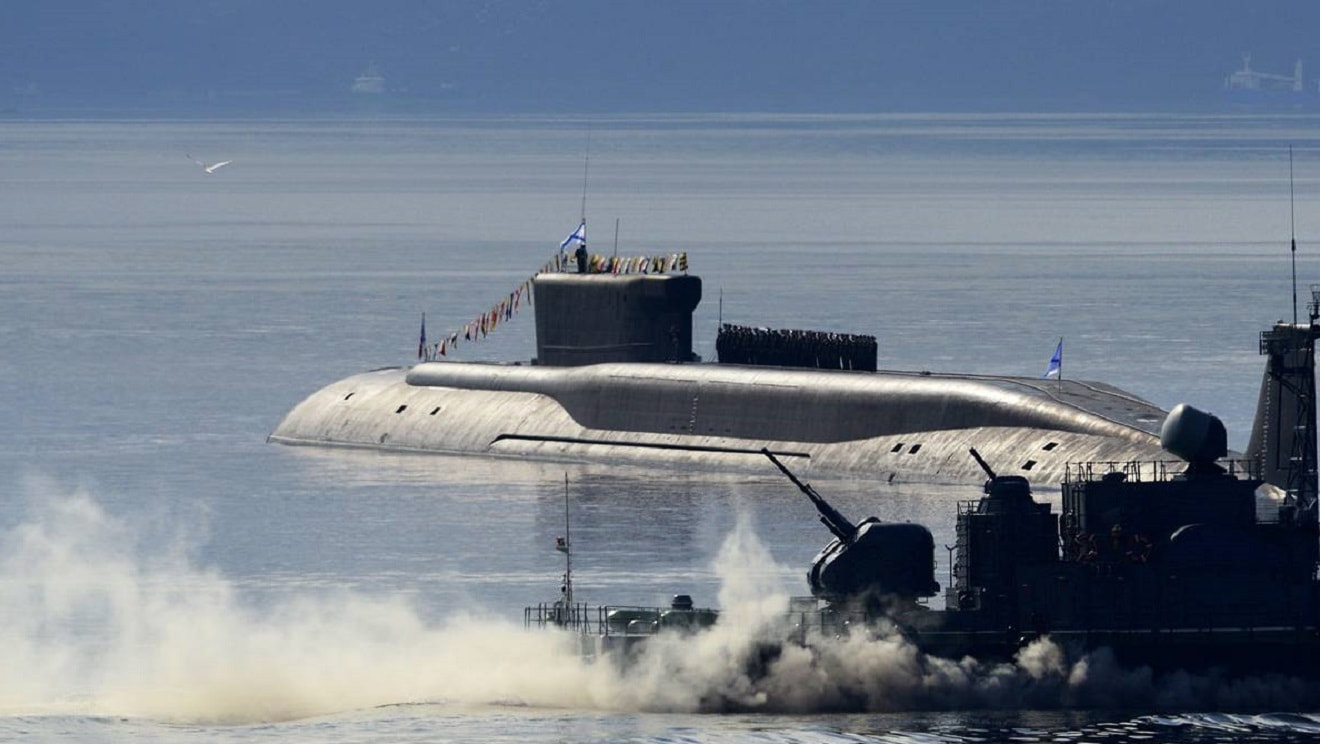
Russia’s Borei-class Ballistic Missile Submarine. Image Credit: Creative Commons.
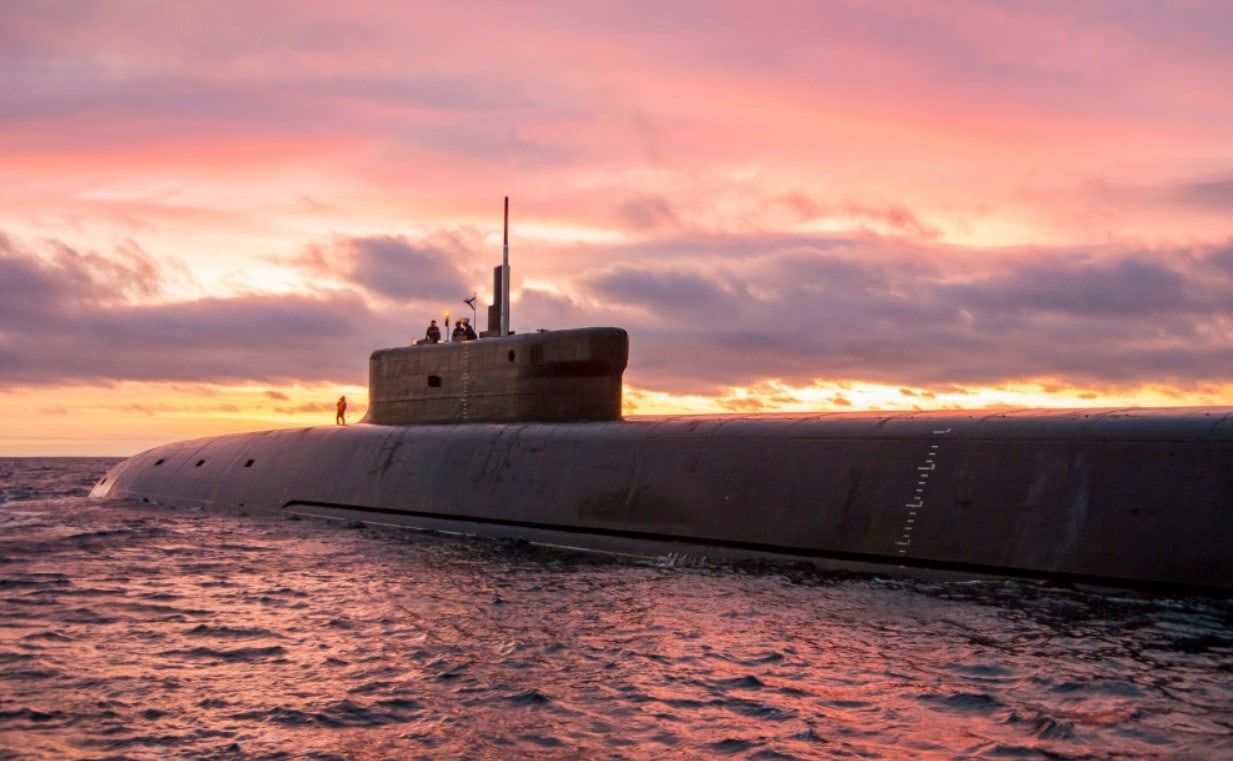
Borei-class Submarine. Image Credit: Russian Government.
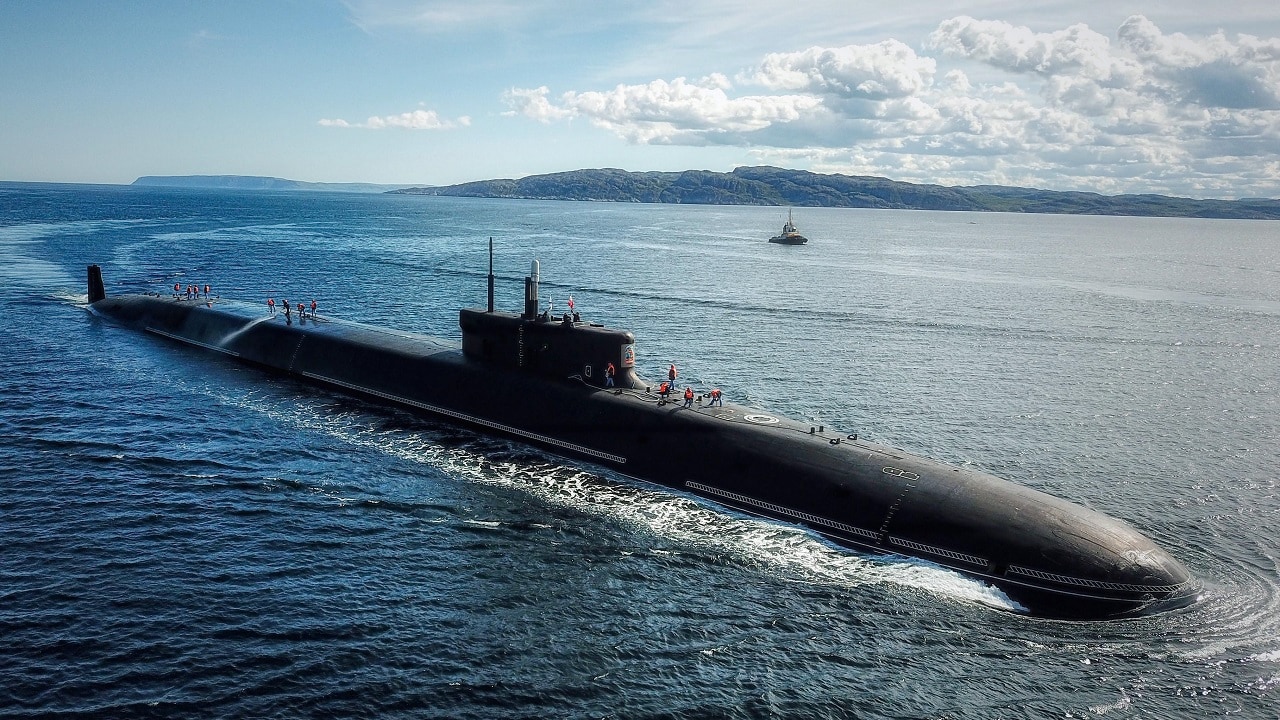
Russia’s Borei-class ballistic missile submarine.
The Tsirkon can deliver nuclear weapons, making the Laika-class a “boomer” SSBN sub, although some analysts have placed the Laika-class into the guided-missile SSGN designation.
The Laika-class will have four missile tubes, each with four Tsirkons. The new submarine will also be able to fire P-800 Oniks anti-ship cruise missiles and Kalibr land-attack cruise missiles.
Design Has Echoes of the Akula-class
The submarine will also be fast with a top speed of 35 knots. Composite materials will be used to enhance sonar absorption and stealth. The design could be similar to the Akula-class. There will be a double hull with a chin-mounted sonar.
The Laika-class is meant to replace the Akula and Sierra classes. “Laika starts life with the conformal array so the torpedo tubes can, logically, be accommodated above the sonar, like on the Akula. This will have some advantages, allowing faster torpedo shots and simplifying the torpedo room,” according to Naval News.
Propulsion System Is Not That Advanced
The defense media outlet also noted that the Laika-class does not have “pump jet propulsion” that would make the sub quieter. The Americans, along with other allied navies, have used pump-jet propulsion on their boats for years. However, the Laika-class will still be stealthier than existing Russian subs.
The Sonar Will Be Much Improved
Laika’s sonar systems will also be advanced. “Like the Virginia Class, it will have a conformal main sonar array instead of the older cylindrical arrays. Even the more talked-about spherical arrays are looking old-fashioned. Conformal arrays are seen as the way forward on both sides of the Atlantic,” Forbes explained.
The Laika-class would give a needed boost to the Russian navy. The dual-threat nature of the boat is intriguing because it could first deploy nuclear-tipped missiles and also serve as a “hunter-killer” with high levels of stealth and speed. The Laika-class is more of a cruise-missile boat, which would make it an SSGN or SSN, but the sub has the nuclear option on the Tsirkons, which would make it a boomer SSBN.
The Laika-class Has Tactical Advantages
The stealthiness of the new sub would allow it to sneak close to shore and fire on land or sea targets. This makes the Laika-class all the more effective should it graduate from research and development mode and enter serial production. But this is not a good time for the Russian defense industry. The military needs help with new defense hardware across all service branches, and the Navy may get the short end of the stick in funding and attention.
So the Laika-class may be a paper tiger. But look for Russian engineers and technicians to refuse to give up. The Laika-class is a considerable advancement in submarine development, and the Russian Silent Service has also been a strong branch of the navy.
The MACH 9 nuclear-capable Tsirkon is a worry for the West. NATO ships lack the necessary defenses to counter hypersonic missiles like the Tsirkon. Even the American Aegis Combat System could struggle to identify and track it.
But the Russians have to build the Laika-class first, even as the program competes with other defense projects that Vladimir Putin often touts as “super weapons.” We will keep an eye on the Laika-class. This would be a practical addition to the Russian navy as Moscow considers how the submarine composition of the fleet stacks up in the 2030s. Putin would love to have this new boat in significant numbers.
About the Author: Brent M. Eastwood
Author of now over 3,000 articles on defense issues, Brent M. Eastwood, PhD is the author of Don’t Turn Your Back On the World: a Conservative Foreign Policy and Humans, Machines, and Data: Future Trends in Warfare plus two other books. Brent was the founder and CEO of a tech firm that predicted world events using artificial intelligence. He served as a legislative fellow for US Senator Tim Scott and advised the senator on defense and foreign policy issues. He has taught at American University, George Washington University, and George Mason University. Brent is a former US Army Infantry officer. He can be followed on X @BMEastwood.