
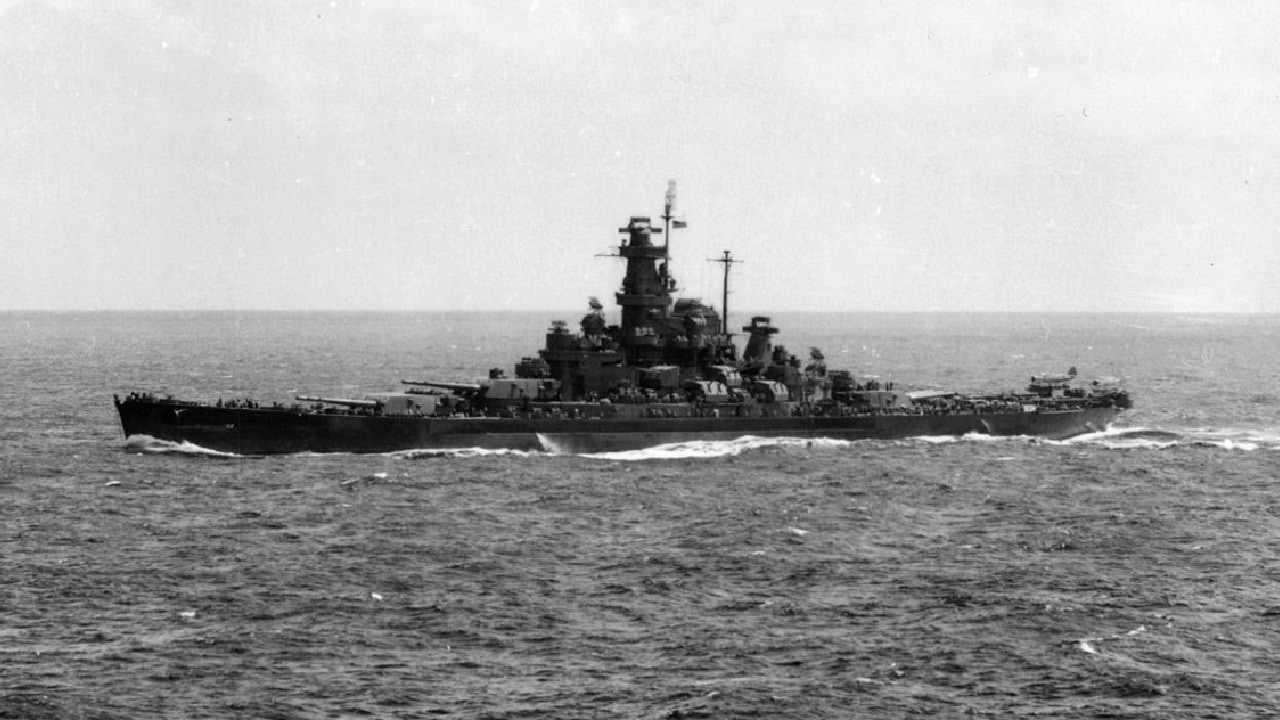
Key Points and Summary – A century ago, battleships anchored American sea power—and the South Dakota-class quietly mattered more than most remember.
-Funded in 1939, these ships were designed under strict treaty displacement limits even as global tensions rose and Japan walked away from naval restraints.
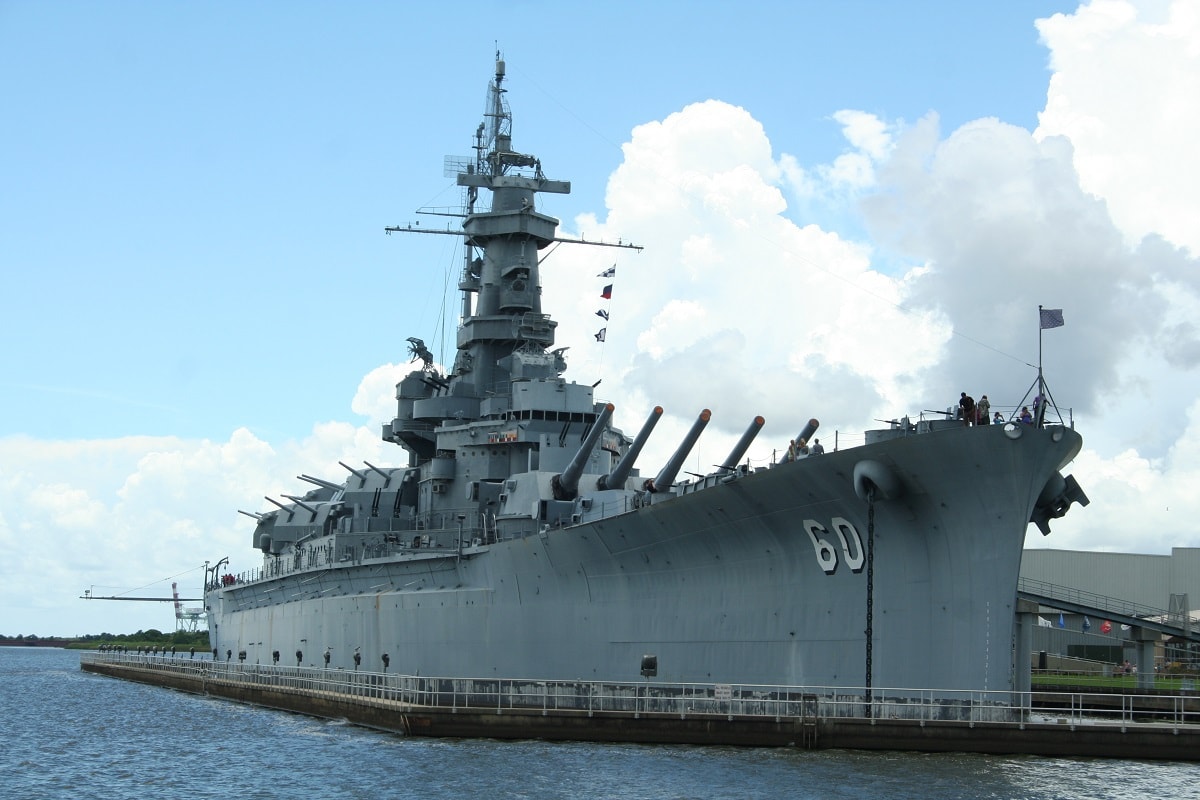
USS Alabama Battleship
-The class improved on the North Carolina design by addressing underwater protection, machinery, and space constraints while still delivering serious combat power.
-Historians often regard the South Dakota-class as the most successful treaty-limited battleship design, and its World War II service proved it.
-After the war, the class was retired as carriers took over—yet USS Massachusetts and USS Alabama remain as living reminders.
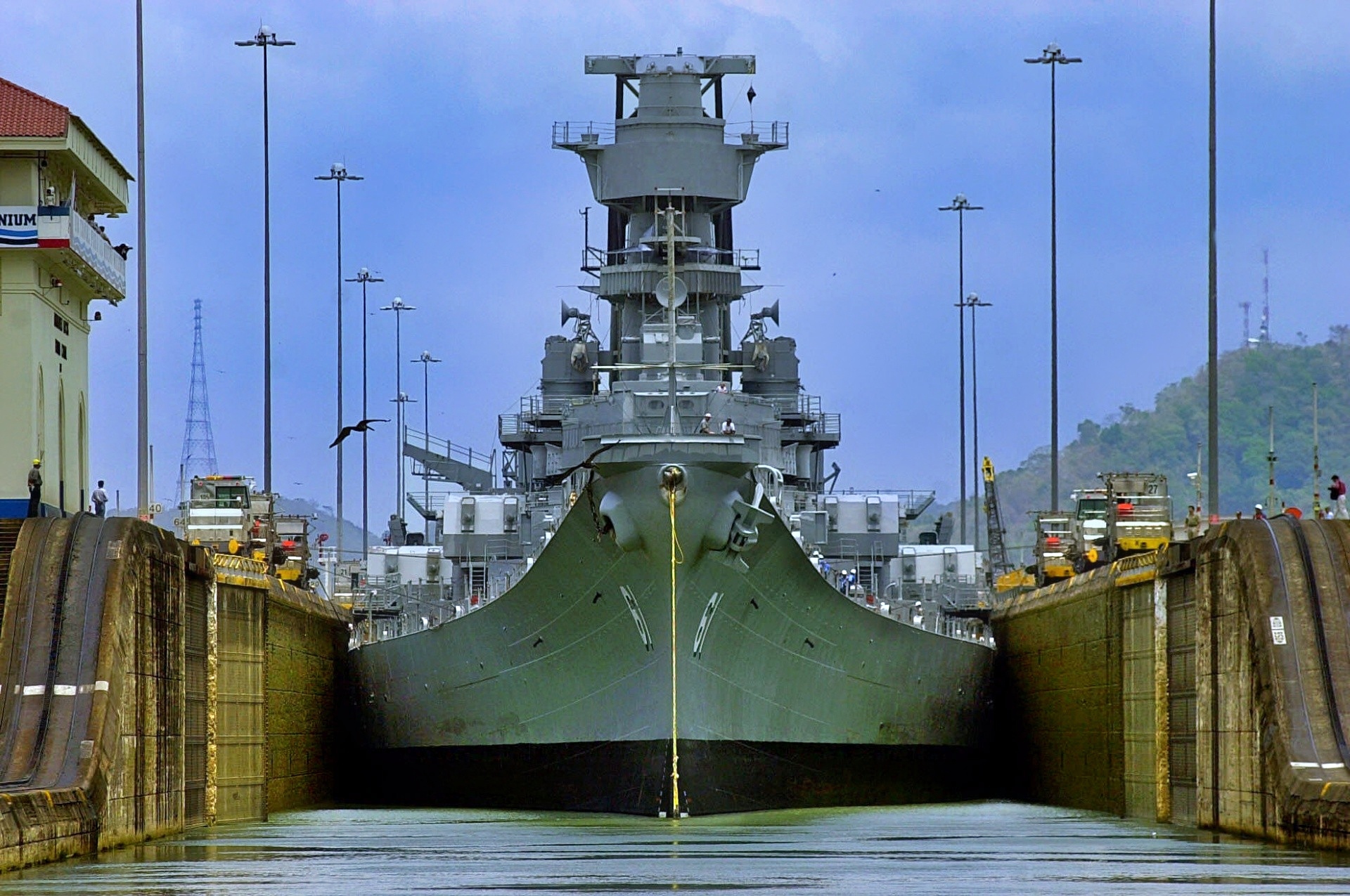
USS Iowa Battleship. Image Credit: Creative Commons.
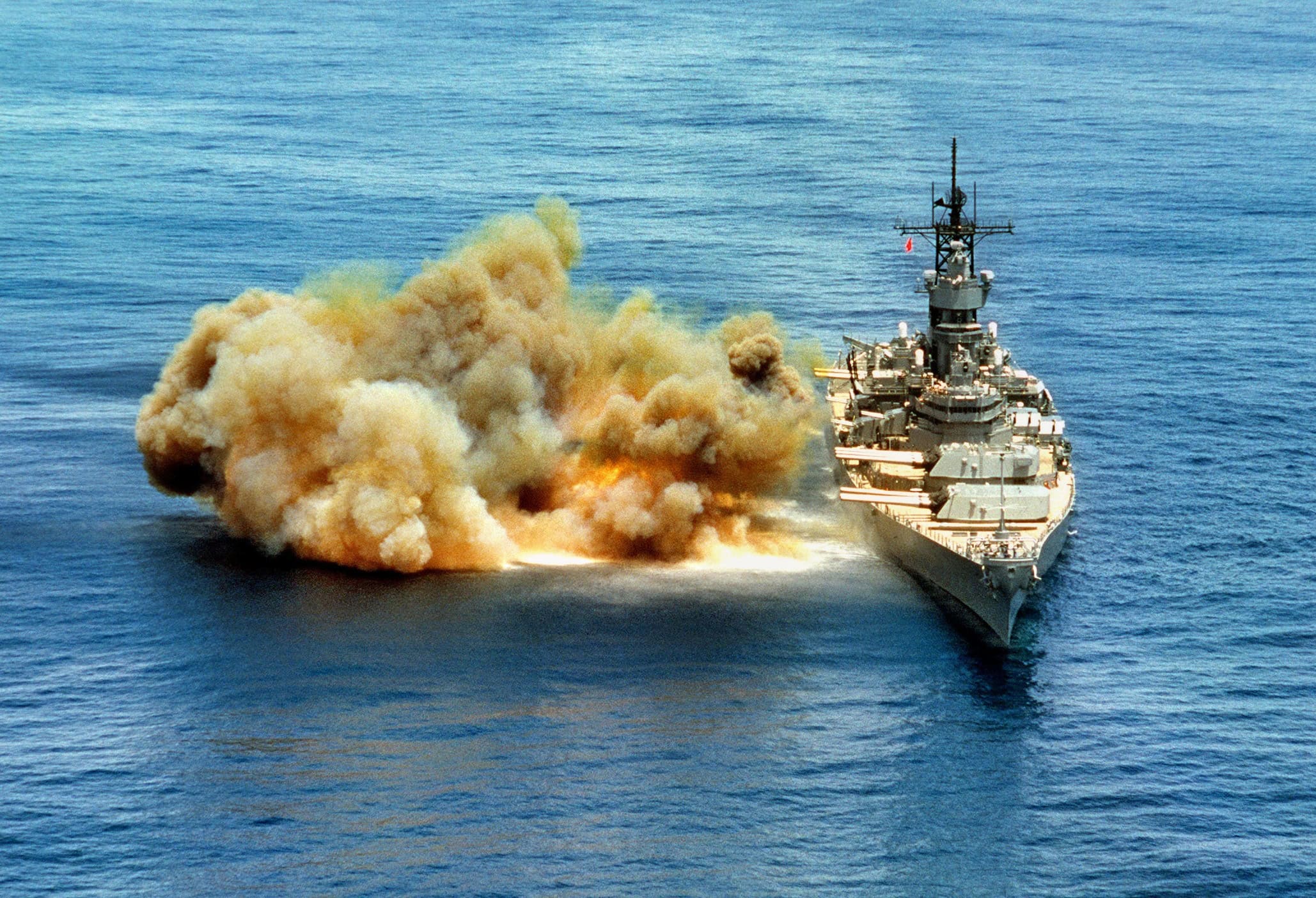
An aerial bow view of the battleship USS IOWA (BB 61) with its 15 guns (nine 16-inch and six 5-inch) firing a salvo off the starboard side.
The Forgotten South Dakota-Class Battleship That Paved the Way for the Iowa-Class
One hundred years ago, the battleship was the foundation upon which the US Navy was built. Constructed to deliver raw firepower to distant shores, the battleship was a heavily armed and widely feared surface vessel.
The US Navy, at the turn of the twentieth century still a rising power, invested heavily in the battleship, knowing that the type was key to the outsized ambitions of the still relatively young nation.
Four battleships that the US constructed were of the South Dakota-class, a type of ship that has been mostly overshadowed, and is little remembered, but served as an important stepping stone to the larger and more heralded Iowa-class.
Stepping Stone to the Iowa-Class
Funding for the South Dakota-class was set aside in Fiscal Year 1939, signaling the Navy’s shift away from the two-ship North Carolina-class, a product of the 1930s. The North Carolina was an appropriate design and a worthwhile investment for the very specific time in which the ship was built – that being a time when international treaties placed strict limitations on the displacement of capital ships below 35,600 tons.
The North Carolina was crafted to fit beneath the 35,600 threshold and accordingly lacked the weaponry, armor, and speed that the Navy would need for global conflict.
When Japan unilaterally withdrew from the treaty, the “Escalator Clause” of the Second London Naval Treaty was issued, offering a modest increase in displacement allowances, meant to serve as an “escalator,” or increment, to larger displacements.
Despite having wider design latitude, the US Congress was still only willing to sign off on the construction of battleships that adhered to the original treaty’s 35,600 threshold. The South Dakota-class was constructed accordingly.
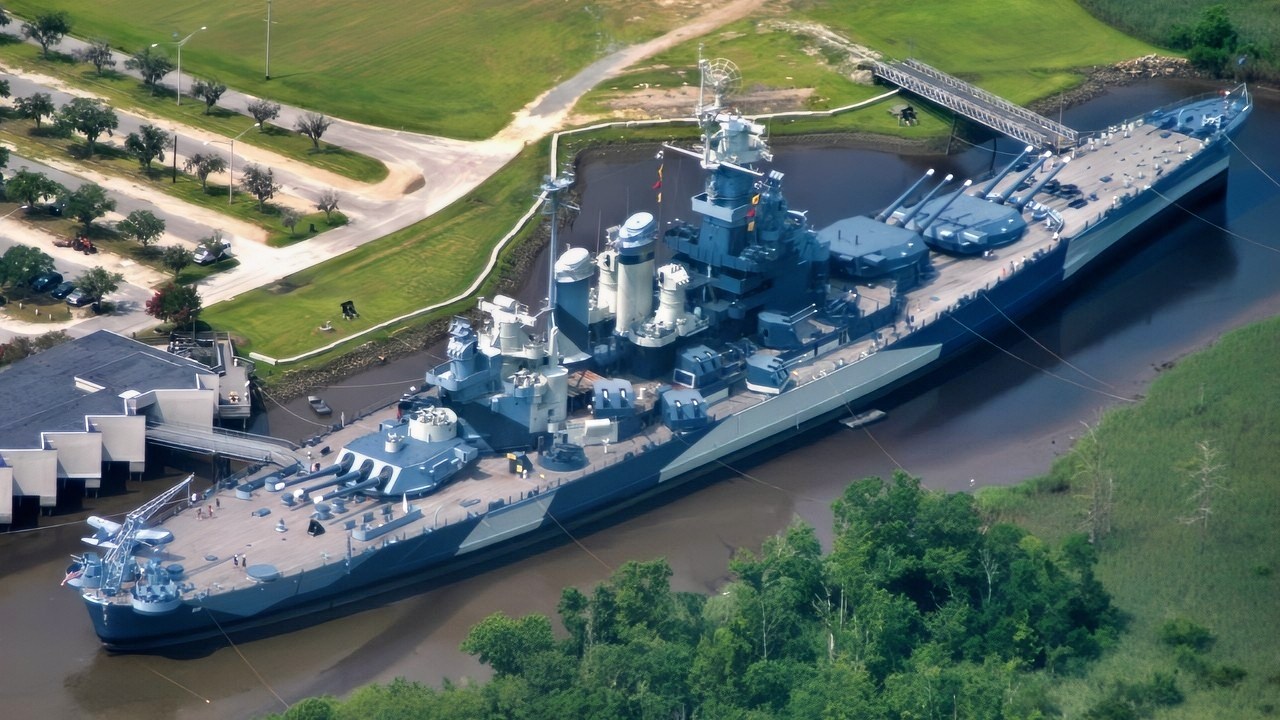
USS North Carolina Battleship. Image Credit: Creative Commons.
Still, despite being the underweight and underpowered relative, the South Dakota offered improvements over the preceding North Carolina. Specifically, the South Dakota addressed deficiencies that had plagued the North Carolina, including inadequate underwater protection, obsolete turbine engines, and insufficient deck space. The Best Battleships – With an Asterisk
Naval historians have argued that the South Dakota was the best of the battleships designed under the treaty limitations. According to historian Norman Friedman, the South Dakota was “a remarkable achievement within very constricting treaty limits.”
The South Dakota would serve admirably during World War II, facing heavy action. At war’s end, however, each of the four South Dakota-classes would be decommissioned. The retirement of the South Dakota essentially marked the end of the entire battleship era; the Iowa-class, a ship commissioned after the South Dakota, would be the last class of battleship that the US Navy would ever build.
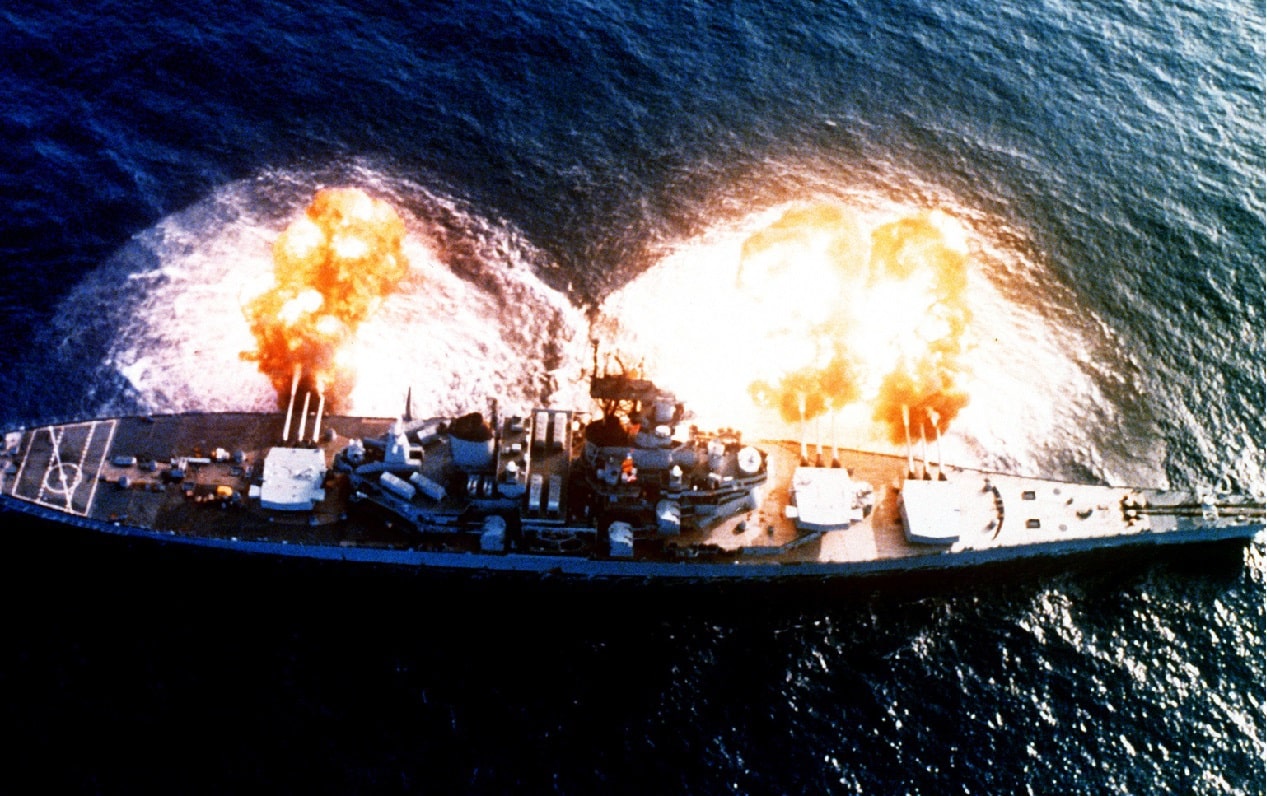
An overhead view of the battleship USS NEW JERSEY (BB-62) firing a full broadside to starboard during a main battery firing exercise.
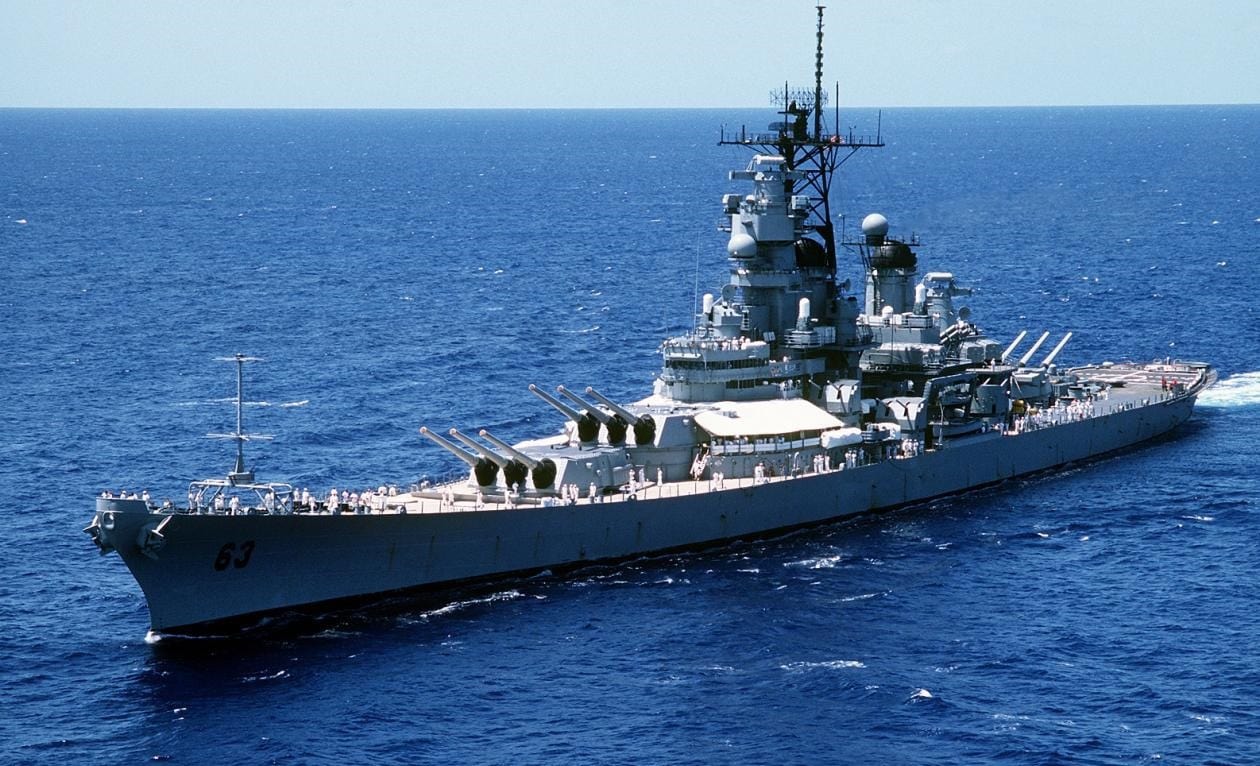
USS Iowa. Image Credit: Creative Commons.
Granted, the Iowa was in and out of service throughout the back half of the twentieth century, often being decommissioned, or recommissioned, but the true era of the battleship ended during World War II, giving rise to the era of the aircraft carrier within which we still reside.
If you want to see the South Dakota-class today, you would have two options: Fall River, Massachusetts, where the USS Massachusetts rests, or Mobile, Alabama, where the USS Alabama rests, both serve as testaments to a bygone era of naval warfare.
About the Author: Harrison Kass
Harrison Kass is a defense and national security writer with over 1,000 total pieces on issues involving global affairs. An attorney, pilot, guitarist, and minor pro hockey player, Harrison joined the US Air Force as a Pilot Trainee but was medically discharged. Harrison holds a BA from Lake Forest College, a JD from the University of Oregon, and an MA from New York University. Harrison listens to Dokken.