
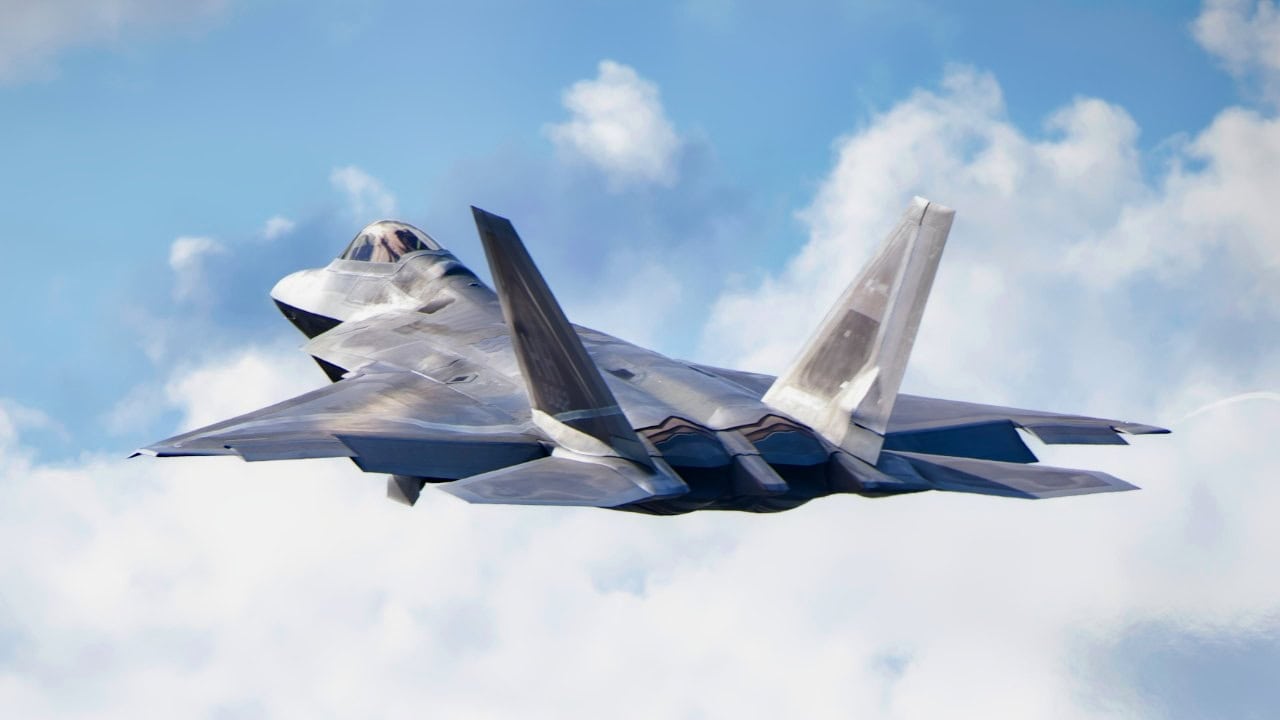
Key Points and Summary – The F-22 Raptor is widely regarded as the world’s premier air-superiority fighter, yet the U.S. will never build more of them.
-Production was capped at 187 jets after then–Defense Secretary Bob Gates killed the program in 2009 to free up funding for the B-21 bomber and counterinsurgency priorities, assuming great power conflict was fading.
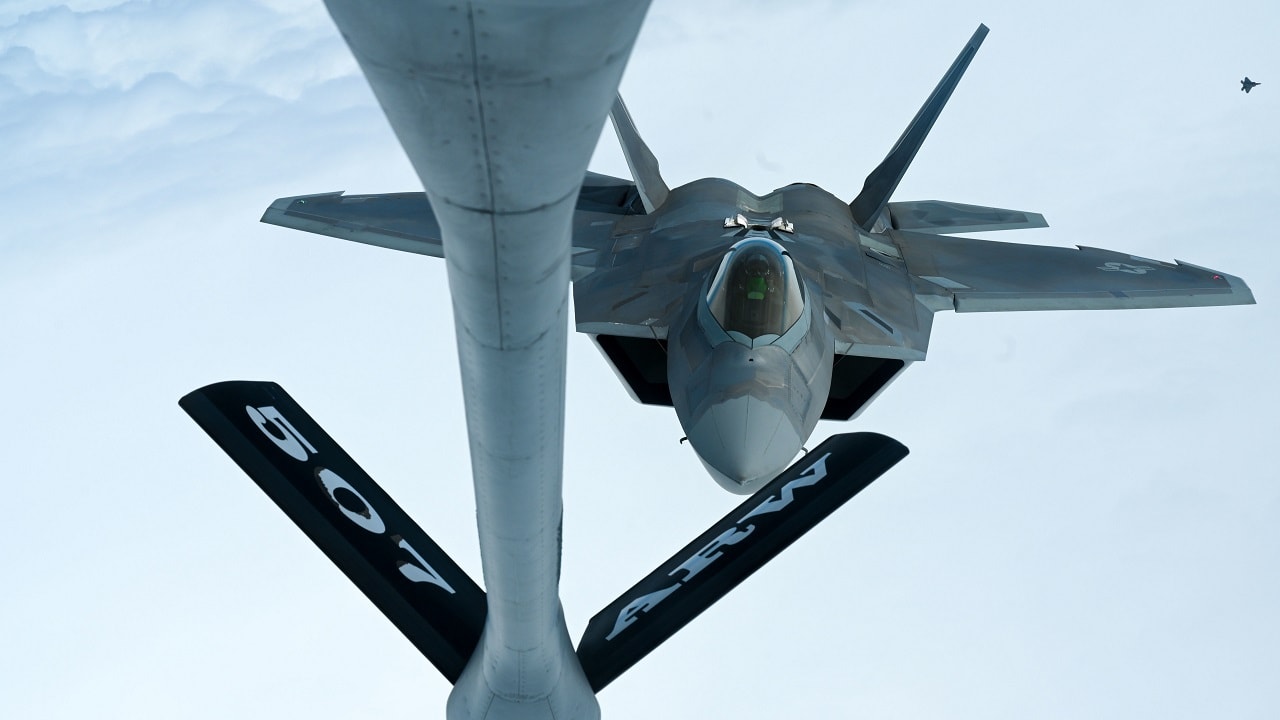
Eight F-22 Raptors with the 325th Fighter Wing at Tyndall Air Force Base, Florida, receive fuel from a KC-135 Stratotanker from the 507th Air Refueling Wing from Tinker Air Force Base, Oklahoma, Feb. 7, 2022, while the Okies flew to the U.S. Virgin Islands for training. (U.S. Air Force photo by Lauren Kelly)
-Fourteen years after the line shut down, resurrecting it would be prohibitively expensive, especially with sixth-generation fighters like the F-47 and F/A-XX on the way.
-Instead, the Air Force is spending $8 billion on major upgrades—new infrared defenses and stealthy fuel tanks—to keep a dwindling Raptor fleet viable despite poor readiness rates.
Why Can’t We Build More F-22s?
The world’s first two operational fifth-generation stealth fighters, the F-22 Raptor and the F-35 Lightning II, are both products of Lockheed Martin’s legendary Skunk Works division. The F-22 and F-35 made their official service debuts 20 years ago and 10 years ago, respectively. But while the Raptor has been around a full decade longer, it never even came close to matching the Lightning II’s production numbers.
Lockheed Martin has delivered 1,255 F-35 airframes to date. According to the World Directory of Modern Military Aircraft, the U.S. Air Force has 302 F-35As, while the Navy has 45 F-35Cs, and the Marine Corps has 81 F-35Bs—these numbers do not include the additional airframes each service has on order.
Meanwhile, F-22 remains frozen at 187, with 183 currently left in service. This begs the question:
Why can’t we build more F-22s?
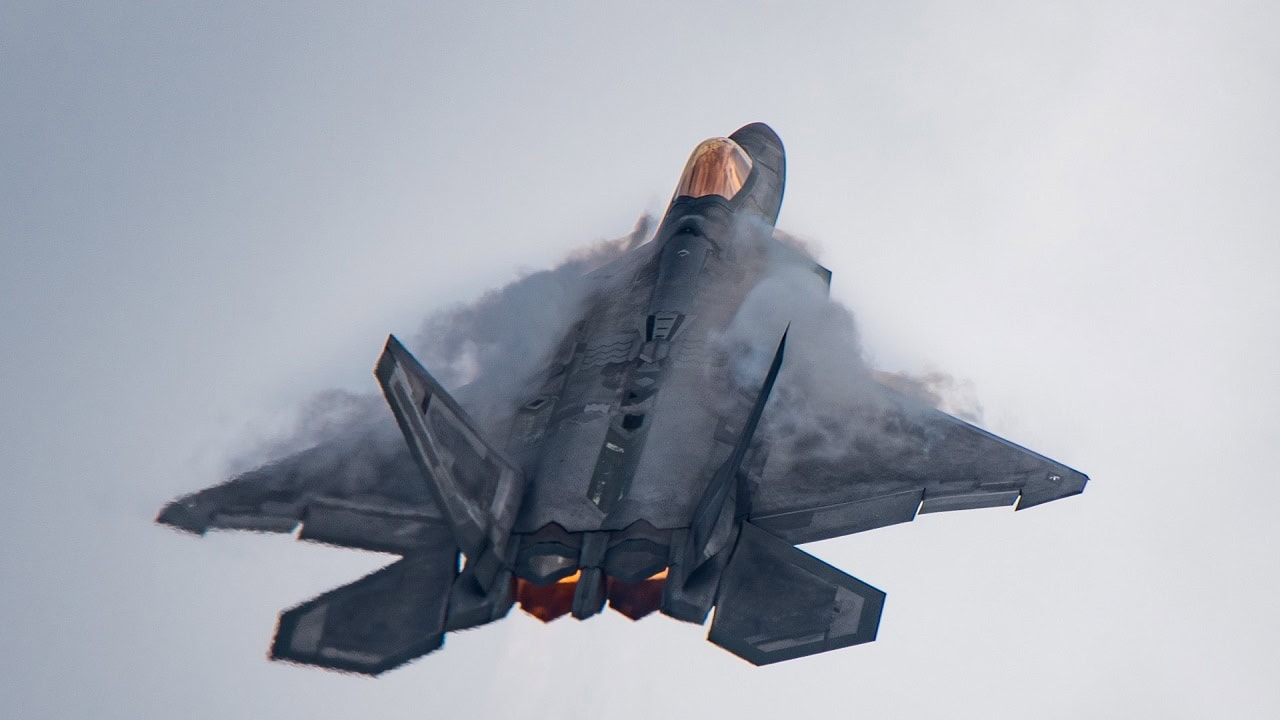
F-22 Raptor. Image Credit: Creative Commons.
After all, the Raptor is considered by many airpower experts to be the premier air superiority fighter in the world.
The Short Answer, i.e., the BLUF (Bottom Line Up Front)
Two words: Bob Gates.
In 2009, then-U.S. Secretary of Defense Bob Gates made the incredibly boneheaded decision to kill the program, thus capping production at 187 and scrapping the original plan to build 381 F-22 airframes. In a bittersweet moment on Dec. 13, 2011, the last of these Raptors rolled off the Lockheed Martin assembly line in Marietta, Georgia.
(For a detailed account of the Gates F-22 decision, read the book Air Power Abandoned: Robert Gates, the F-22 Raptor and the Betrayal of America’s Air Force by the late Robert F. Dorr, himself an Air Force veteran and former columnist for Air Force Times.)
In the 236-year history of the Office of the Secretary of War and Office of the Secretary of Defense, 20/20 hindsight shows Gates’ to be one of the worst decisions ever to emerge from that office.
But Why (and Wherefore)?
For those of you who don’t have the time to read Dorr’s book, here’s the condensed version of Gates’s rationale.
Retired U.S. Air Force Chief of Staff General Norton Schwartz stated in his 2018 memoir that it was motivated by the desire to make room within the Air Force budget for a new stealth bomber—the sixth-generation bomber program that we now know as the Northrop Grumman B-21 Raider (the successor to the original stealth bomber, the B-2 Spirit, which is still very much operational).
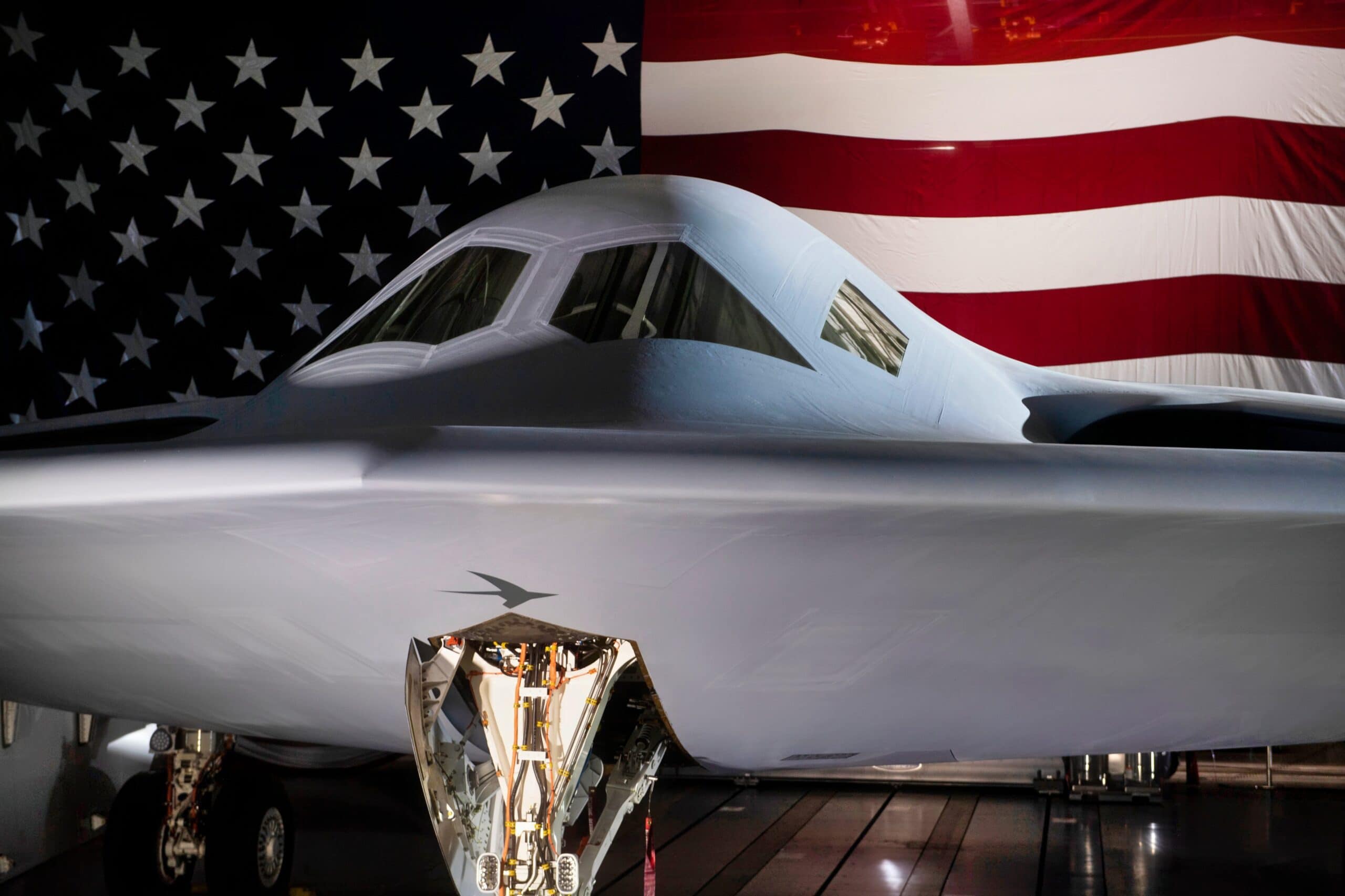
B-21 Raider. Image Credit: Creative Commons.
In addition, and in a modicum of fairness to Gates, the U.S. was deeply embroiled in the war on terrorism in Iraq and Afghanistan.
Gates assumed that counterinsurgency would be the wave of future warfare, and apparently didn’t consider the possibility of a revival of great power competition with the likes of Russia and China.
So, Now What?
It would simply be too cost-ineffective to try to resurrect production of the F-22 after a 14-year lag, especially with the new emphasis on building sixth-generation fighters such as the F-47 for the Air Force and the F/A-XX for the Navy.
Going hand-in-hand with the F-22’s numerical shortage is the hefty price tag to keep the existing birds flying. According to Rosita Mickeviciute of AeroTime, the Raptor is the most expensive fighter jet in the world.
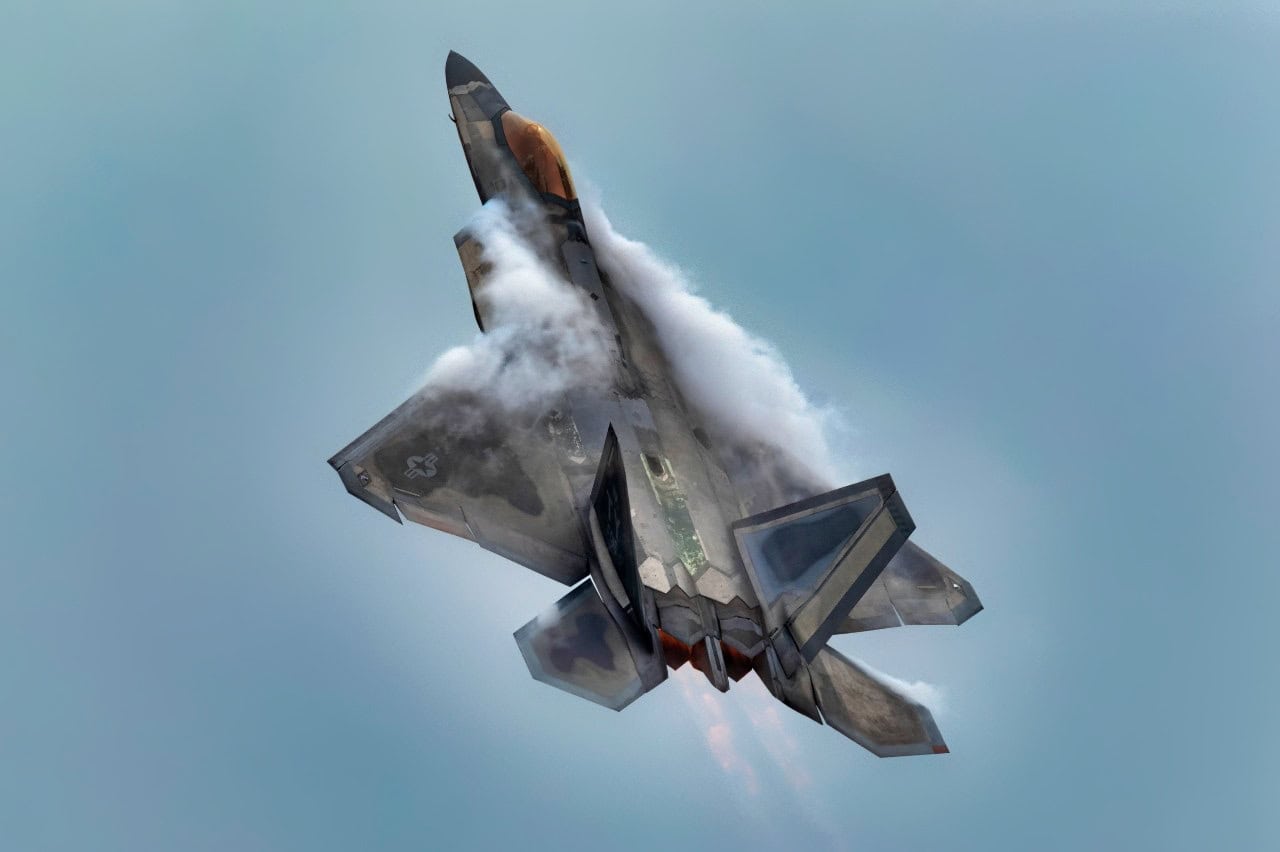
U.S. Air Force Maj. Josh Gunderson, F-22 Demo Team commander, performs maximum power takeoff during a demonstration for the 67th National Security Forum at Maxwell-Gunter Air Force Base, Montgomery, Alabama, May 11, 2021. The F-22 Raptor’s two Pratt and Whitney F119 Turbofan engines bring a combined 70,000 pounds of thrust, allowing the aircraft to takeoff straight into the vertical. (U.S. Air Force photo by Staff Sgt. Don Hudson)
Government Accountability Office data indicates that it costs the Air Force $85,325 to fly the F-22 for just one hour.
So, in the meantime, the best compromise is an $8 billion “lifeline” for upgrades to keep the existing F-22s viable.
This lifeline consists of a massive upgrade program that will equip the remaining 142 operational Raptors with a new Infrared Defensive System for enhanced survivability and new stealthy, low-drag external fuel tanks that kill two stones with one bird by improving both the combat range and radar signature of the current specimens.
This upgrade couldn’t come at a better time for the Raptor, as its mission-capable rate in Fiscal Year 2024 was only 40.19 percent—a precipitous drop from 57.4 percent just two years prior, according to John A. Tirpak of Air & Space Forces.
About the Author: Christian D. Orr, Defense Expert
Christian D. Orr is a Senior Defense Editor. He is a former Air Force Security Forces officer, Federal law enforcement officer, and private military contractor (with assignments worked in Iraq, the United Arab Emirates, Kosovo, Japan, Germany, and the Pentagon). Chris holds a B.A. in International Relations from the University of Southern California (USC) and an M.A. in Intelligence Studies (concentration in Terrorism Studies) from American Military University (AMU). He is also the author of the newly published book “Five Decades of a Fabulous Firearm: Celebrating the 50th Anniversary of the Beretta 92 Pistol Series.”