
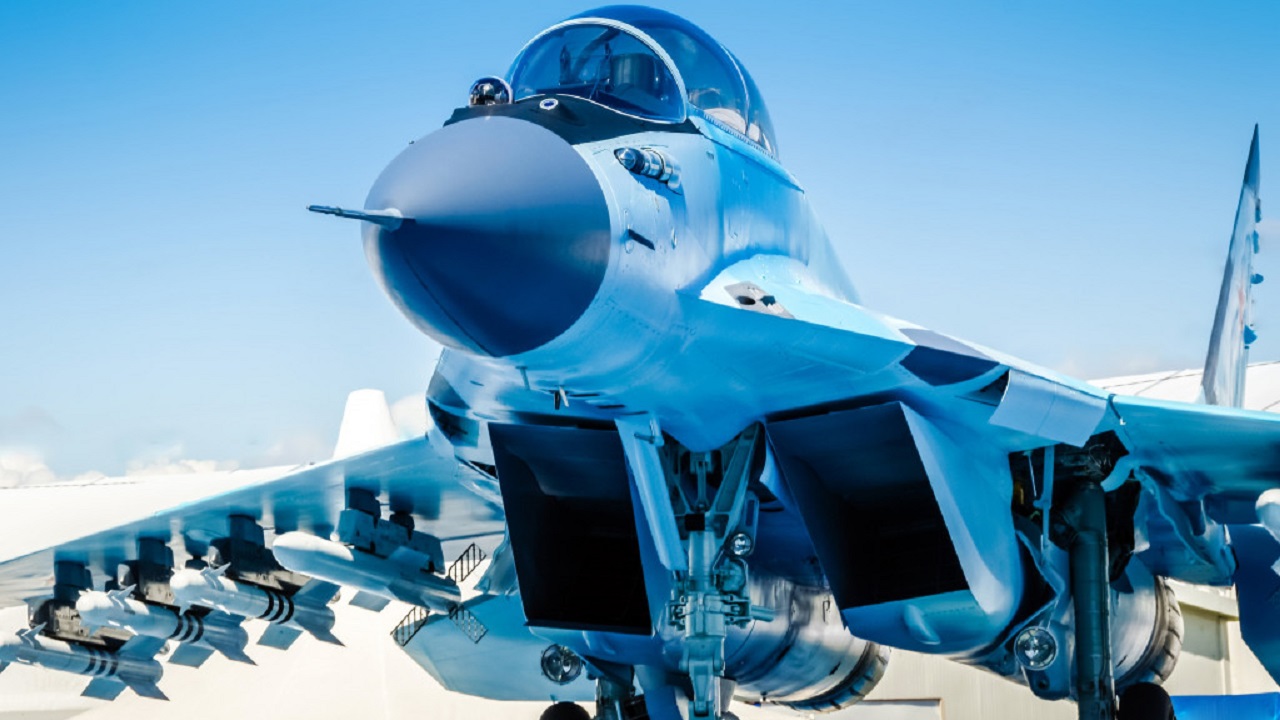
Key Points and Summary – The MiG-35 was supposed to be Russia’s “4+++ generation” answer to the F-16, F-15EX, and even Western stealth jets.
-Instead, sanctions, poor fuel efficiency, underwhelming sensors, and a vague mission have left it stuck in limbo.
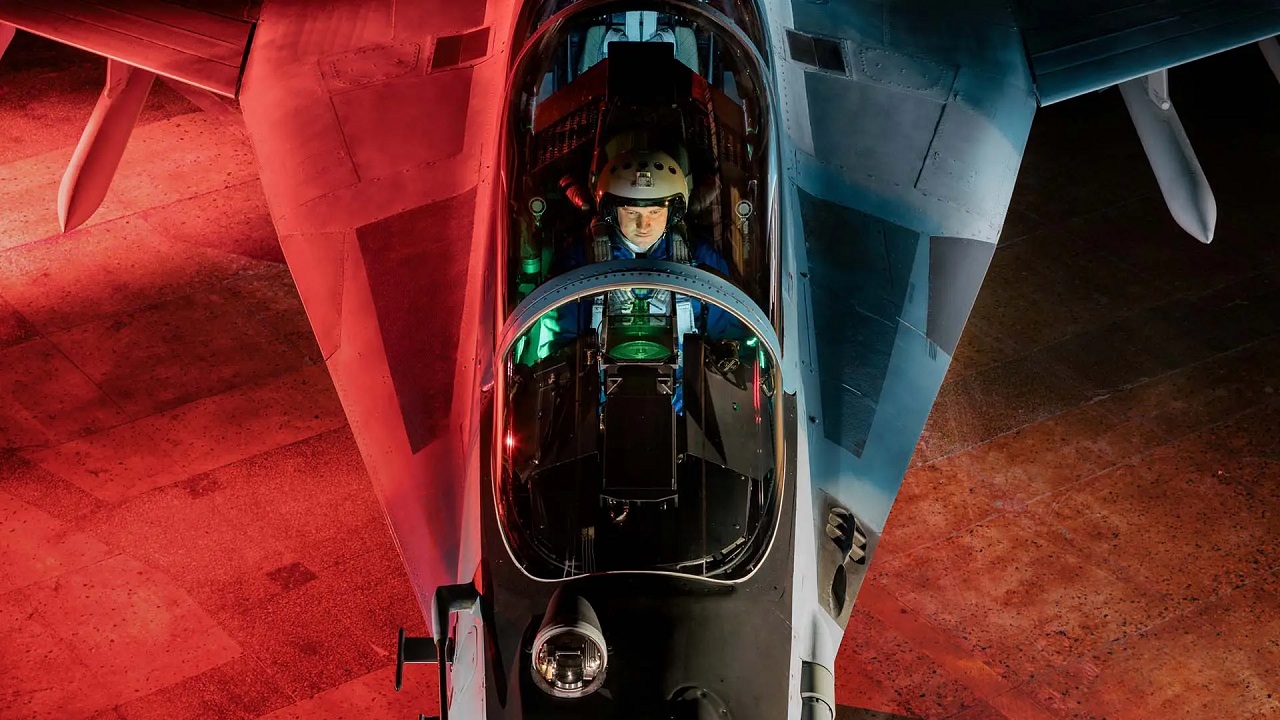
MiG-35. Image Credit: RAC MiG.
-Fewer than ten are believed to be in active service, with a reduced production run and almost no export traction as countries like Egypt and India look elsewhere.
-In Ukraine, the jet has mainly lobbed stand-off weapons from safe airspace, not changed the air war.
-With buyers waiting for Su-57s, the MiG-35 risks going down as a good-looking but forgettable bridge to nowhere.
Is the MiG-35 Just One Big Failure?
The Russian MiG-35 is a beautiful airplane, but it hasn’t been a hit in the export market.
Moscow considers this a valuable transition fighter between the fifth-generation Su-57 and the fourth-generation Su-35, but international customers are just kicking the tires on the non-stealthy fighter.
Sensing weakness, the Russians declared that the MiG-35 is a fourth-generation “+++” fighter.
That is certainly overstated.
It just doesn’t have the performance of a fifth-generation stealth warbird, and international partners for the MiG-35 aren’t emerging.
The MiG-35 has only been deployed in small numbers against the Ukrainians.
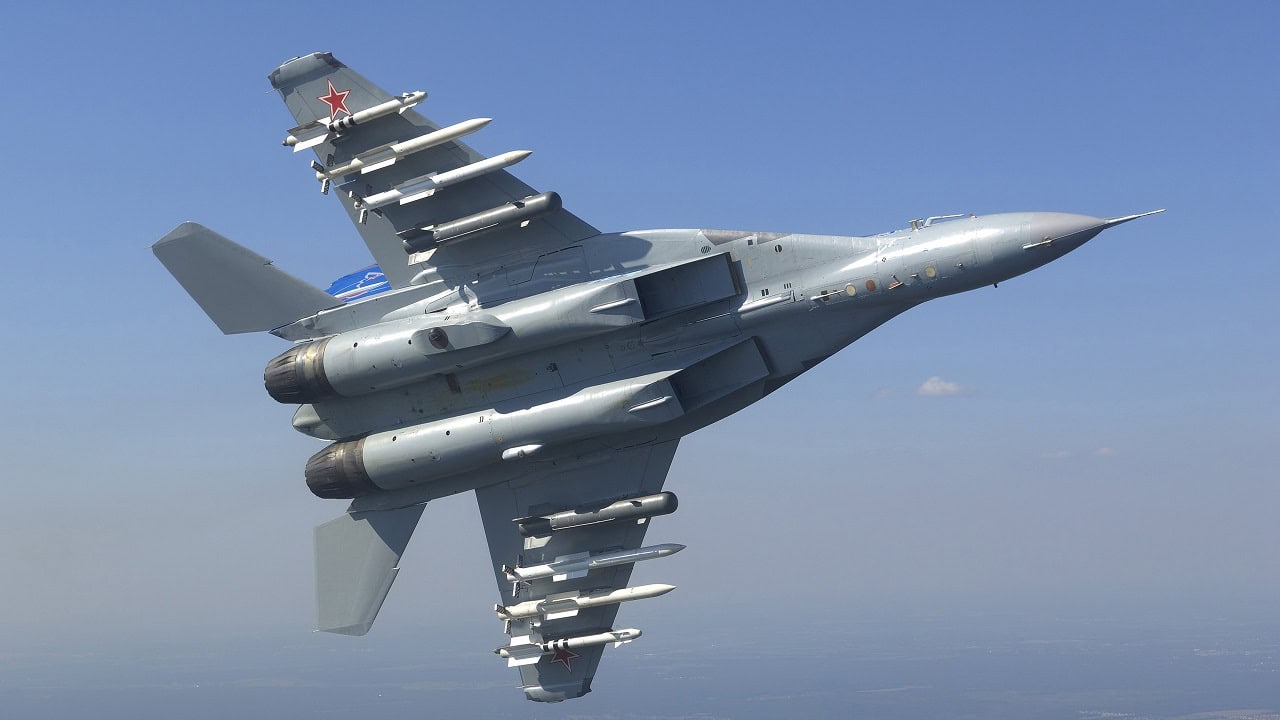
MiG-35 fighter. Image Credit: Creative Commons.
The Russians hoped it would create air dominance, but the MiG-35 just hasn’t been a real difference-maker. The most it has done is serve as an aircraft conducting suppression of enemy air defense missions.
Passive and Not Active Role for the MiG-35
The MiG-35 has also been used to fire stand-off precision-guided ground strike missiles at Ukrainian targets.
But this is a humdrum mission that has not been decisive during the war. It often flies out of range of enemy fighters and remains over Russian airspace.
The Russians originally ordered 37 MiG-35s, but fewer than ten have entered active service.
The production target was reduced to 24 fighters.
This has been a disappointment, as the Russians face international sanctions that make parts and components for the MiG-35 difficult to obtain.
Potential customers on the export market, sensing a failed program, have yet to come to the bargaining table with the Russians.
Not So Fast, It Could Still Sell
Moscow hopes the potential buyers look past the limited production run and problematic combat performance.
There are still redeeming features on the MiG-35.
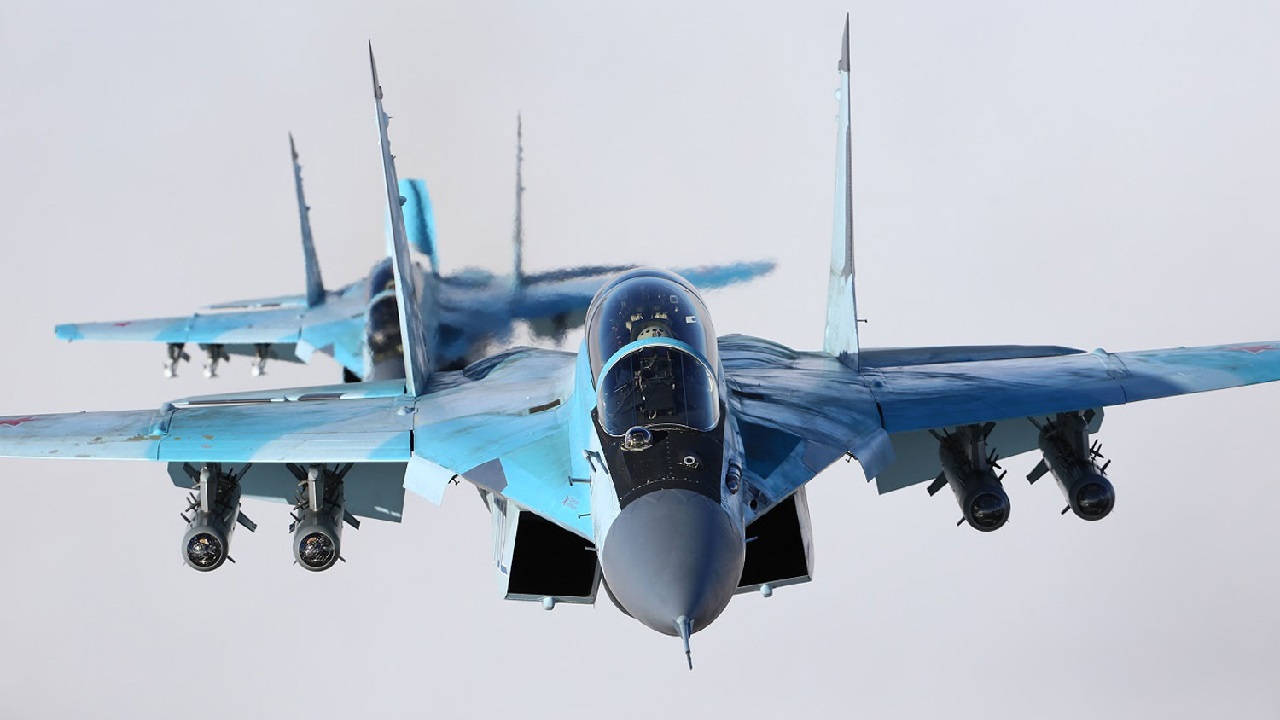
MiG-35 fighter. Image Credit: UAC.
“The all-weather, day-and-night-capable aircraft can engage in air dominance/superiority roles and hit moving and stationary ground and surface targets. Designers mention the NPK-SPP OLS-k electro-optical targeting and surveillance pod mounted to the fuselage, which can be used for the purpose. It also has a digital fly-by-wire system,” according to the EurAsian Times.
Fourth Generation Bridge to Nowhere
But it has not lived up to its original hype. The Russians hoped that the MiG-35 would dominate American fighters like the F-16 Viper and the F-15EX. It was even once seen as competition for the F-35 and F-22. Still, full stealthiness was never achieved, and it became a “tweener“—better than base model fourth-generation warbirds but less valued than a fifth-generation fighter.
The MiG-35 does have a powerful range of weapons. A diverse array of missiles, bombs, and rockets is mounted on nine hardpoints, including the Kh-31A anti-ship missiles, the Kh-31P anti-radar missiles, the Kh-29TE missiles, and the KAB-500Kr video-guided bombs.
That still has not impressed potential buyers. Egypt was considering the MiG-35, but, perhaps noticing its lack of a clear role in the Russian air force order of battle, the country opted to purchase MiG-29Ms.
Sales Growth Is Not Emerging for the Developing World
India has also opted for something else. Its air force is awaiting Su-57s, and New Delhi is currently negotiating for the F-35 stealth fighter. Why not opt for a fully stealth platform rather than settling for a fourth-generation +++?
This is probably why Argentina, Bangladesh, and Malaysia are not interested either.
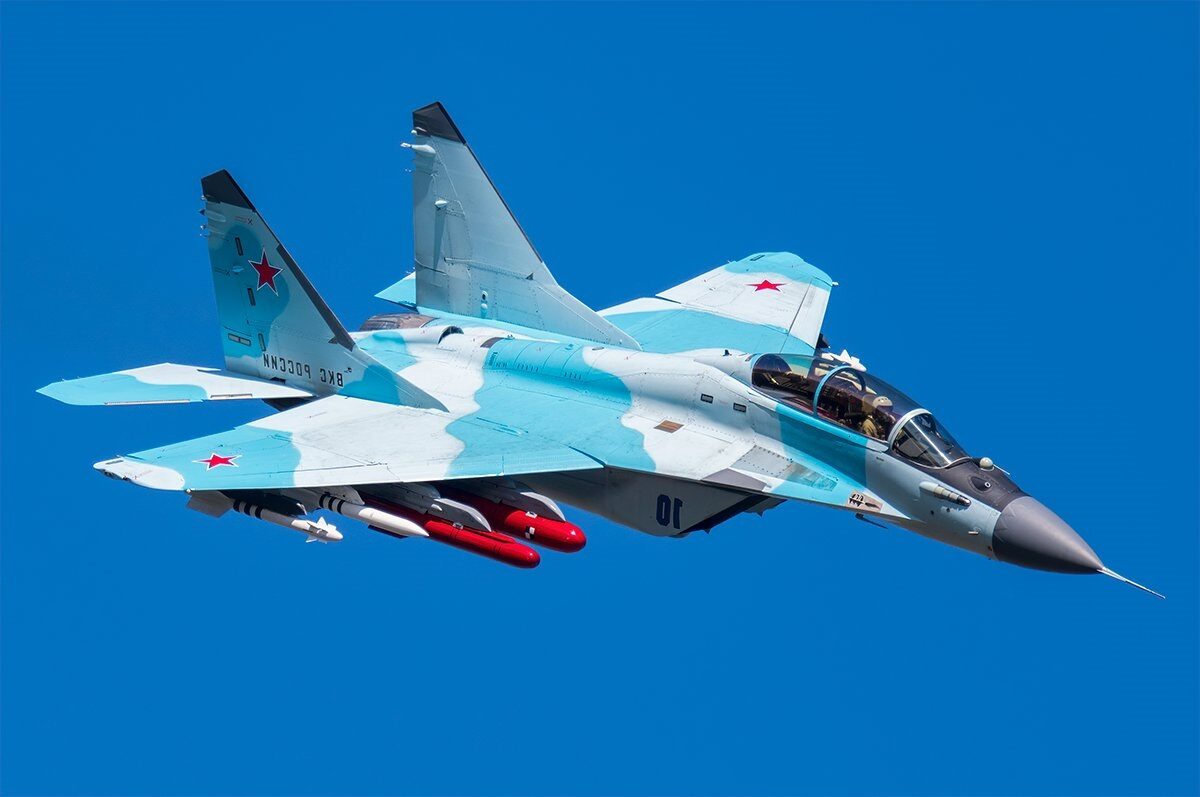
MiG-35 fighter. Image Credit: Russian Government.
New Delhi has noticed that Russia is going with more Su-35S and Su-30SMs in the war. These airplanes are seen as better performers, with the ability to be produced in greater numbers. If the Russians do not plan to feature the MiG-35, why buy it?
The Russians hope that by this year, the MiG-35 will be produced well with numerous overseas customers. That could happen by 2027, but no one is getting excited about its future.
However, Vladimir Putin’s air force has plugged the MiG-35 into squadrons that have lost airplanes in battle to the Ukrainians, so that is a plus. The MiG-35 could still show its stuff in combat and take a more domineering role in future fights.
Thirsty Fuel Hog, IRST Problems, and Radar Lapses
The MiG-35 also has poor fuel efficiency, though. The Infrared Search and Track doesn’t always work as well as advertised. The radar and sensor suite has not lived up to its reputation either – likely because of a lack of resources.
One way the MiG-35 could be improved would be to focus more on its electronic warfare suite.
This could help suppress enemy air defenses and spoof incoming missiles. It is not clear if Russian engineers can goose the EW features in time for a bigger production run in 2026 and 2027.
The Russians have tried to boost potential overseas sales by pointing out that the MiG-35 can take off from highway roads and unimproved runways. This is a feature that the Swedes hype with the JAS 39 Gripen, but so far, this sales gimmick has yet to move the needle.
Overall, the MiG-35 has been disappointing. Relying solely on it to destroy enemy air defenses is not particularly exciting for international customers. The warbird has no clear role in the Russian doctrine of air superiority. The in-between nature of the airplane (a bridge between fourth- and fifth-generation fighters) has shown that even Russia is unsure what the best use cases are for marketing and advertising.
Most countries are waiting to purchase Su-57s if they want to deal with Moscow for a new airplane.
It’s not over for the MiG-35, though. Putin’s air force can still try to give it a new role to improve its combat record. It’s a good-looking aircraft with a powerful set of munitions. However, this program has been inadequate and needs improvement. The MiG-35 may just be a dud overall.
About the Author: Brent M. Eastwood
Author of now over 3,000 articles on defense issues, Brent M. Eastwood, PhD is the author of Don’t Turn Your Back On the World: a Conservative Foreign Policy and Humans, Machines, and Data: Future Trends in Warfare plus two other books. Brent was the founder and CEO of a tech firm that predicted world events using artificial intelligence. He served as a legislative fellow for US Senator Tim Scott and advised the senator on defense and foreign policy issues. He has taught at American University, George Washington University, and George Mason University. Brent is a former US Army Infantry officer. He can be followed on X @BMEastwood.