
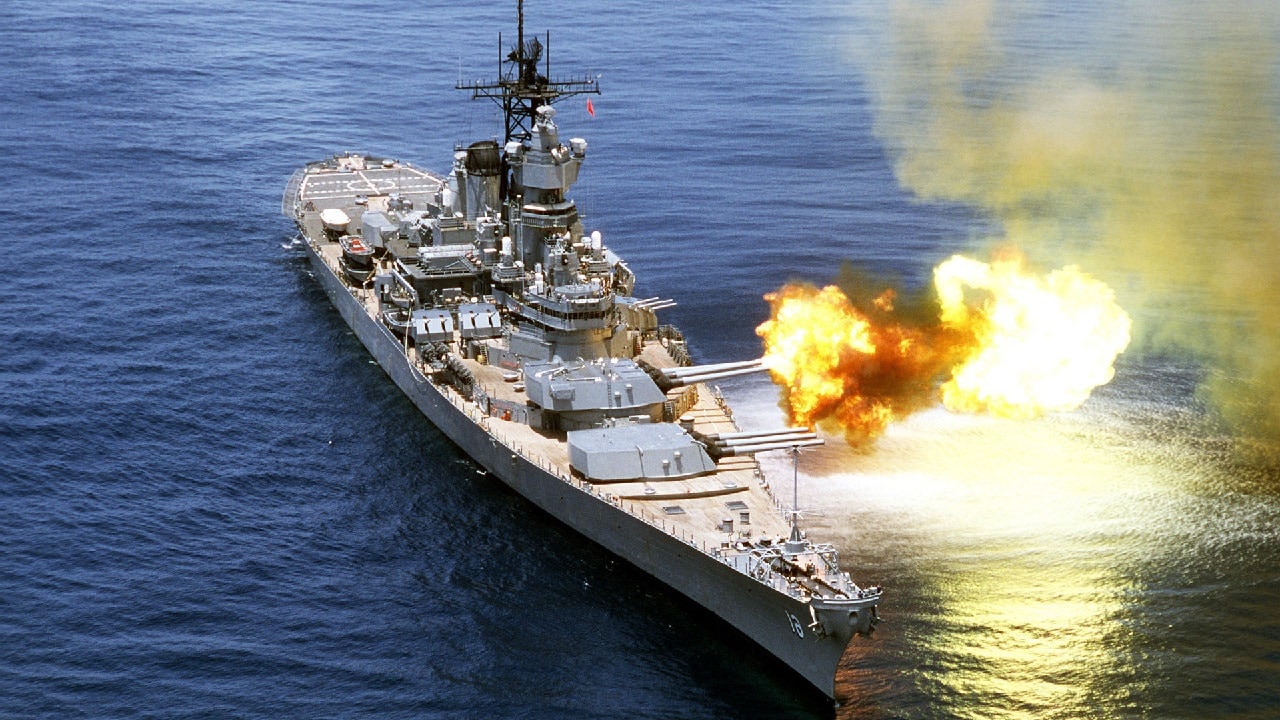
Key Points and Summary – The Montana-class battleships were meant to be the apex of US naval gunpower: 60,000-ton giants with twelve 16-inch guns, massive armor, and protection tailored to withstand Japan’s Yamato-class shells.
-Freed from treaty limits, they traded Iowa-class speed for heavier guns and protection, even at the cost of being too wide for the Panama Canal.
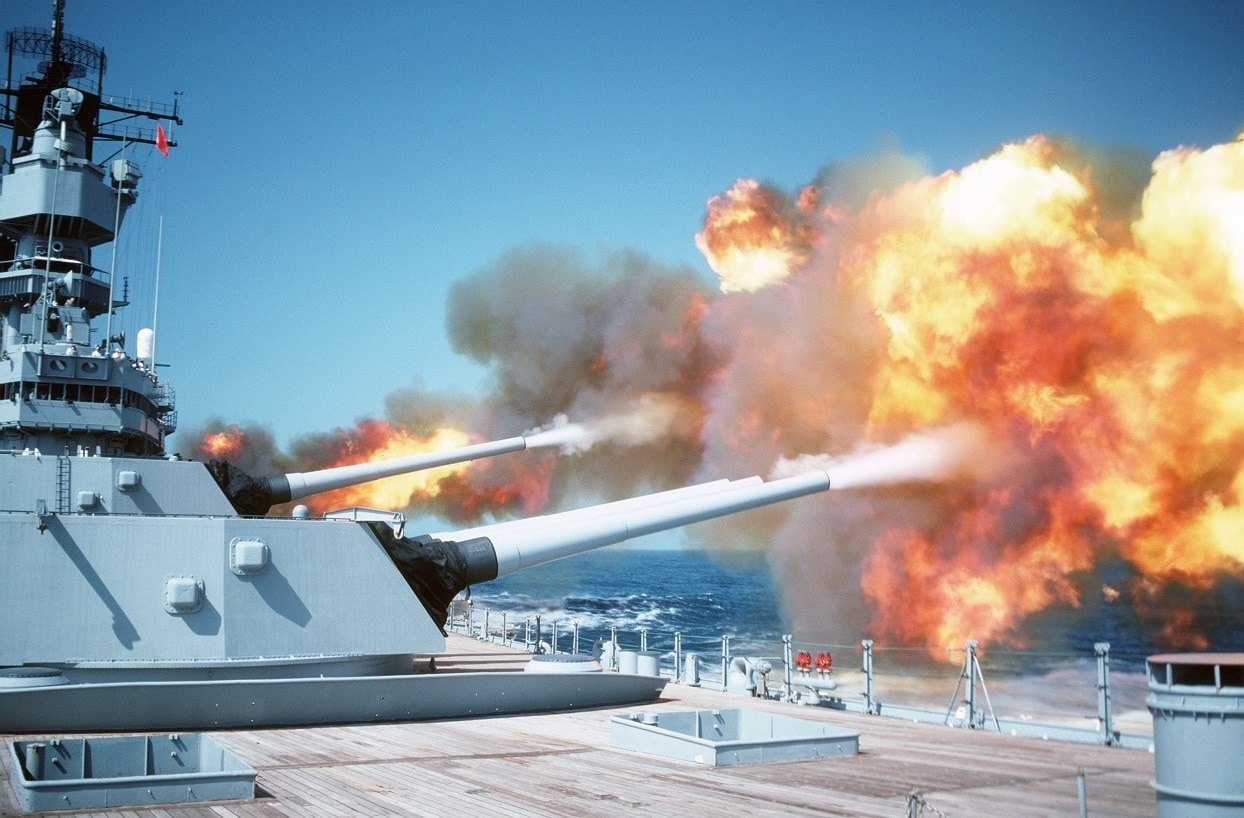
USS Iowa battleship. Image Credit: US Navy.
-But Pearl Harbor, Coral Sea, and Midway proved carriers, not battleships, would decide the Pacific war.
-By 1943, scarce steel, yard space, and manpower were redirected to Essex-class carriers and escorts, leaving Montana on the drawing board as the battleship era’s last, unbuilt masterpiece.
Montana-Class: The US Navy’s Super Battleships That Never Sailed
By the late 1930s, battleships were still considered the backbone of naval power.
The Washington Naval Treaty of 1922 and the London Naval Treaty of 1930 had imposed strict limits on battleship size and armament, capping displacement at 35,000 tons and main guns at 16 inches.
These treaties aimed to prevent an arms race and maintain balance among major naval powers. However, Japan’s withdrawal from treaty obligations in 1936 and Germany’s naval expansion signaled the end of this era of restraint.
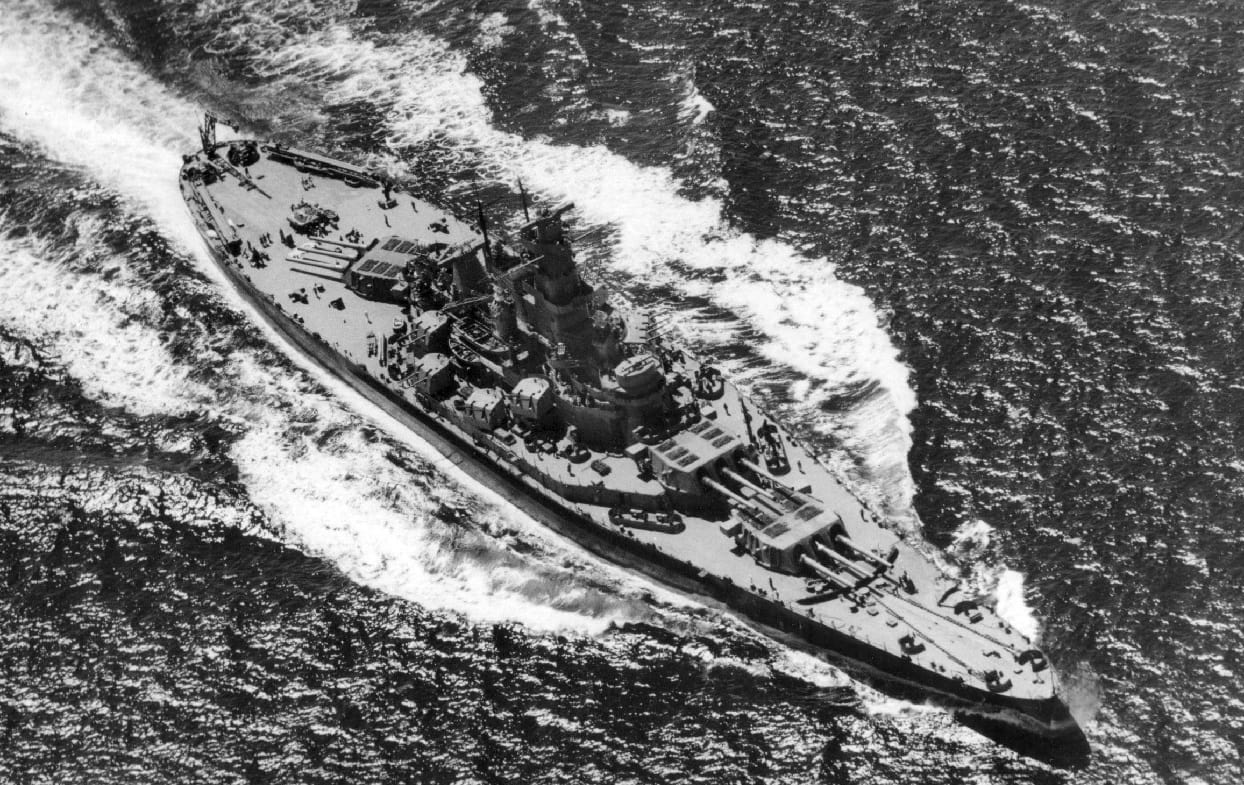
USS South Dakota. Image: Creative Commons.
The US Navy began planning for larger, more powerful battleships to maintain superiority in the Pacific. The Iowa-class battleships, authorized in 1939, were fast and formidable, but they were optimized for speed to escort carriers rather than for maximum firepower and armor.
The Montana-class was envisioned as the next step, a class of “super battleships” designed without treaty restrictions, prioritizing overwhelming strength over speed.
Design Features
The Montana-class was intended to outclass every battleship afloat at the time. Five ships were authorized under the 1940 naval expansion program: Montana (BB-67), Ohio (BB-68), Maine (BB-69), New Hampshire (BB-70), and Louisiana (BB-71).
These ships were enormous, with a full-load displacement of approximately 60,500 tons, making them the largest US battleships ever planned. They were about 921 feet long and had a beam of 121 feet, which was too wide for the Panama Canal and influenced operational considerations.
The main battery consisted of twelve 16-inch/50-caliber guns mounted in four triple turrets, a significant increase over the Iowa-class, which carried nine 16-inch guns.The secondary battery included twenty 5-inch/54 caliber dual-purpose guns for anti-aircraft and surface targets, supplemented by dozens of 40mm Bofors and 20mm Oerlikon guns to counter the growing threat of aircraft. Armor protection was equally insane, with belt armor up to 16 inches thick, deck armor exceeding 6 inches, and turret faces measuring 22.5 inches.
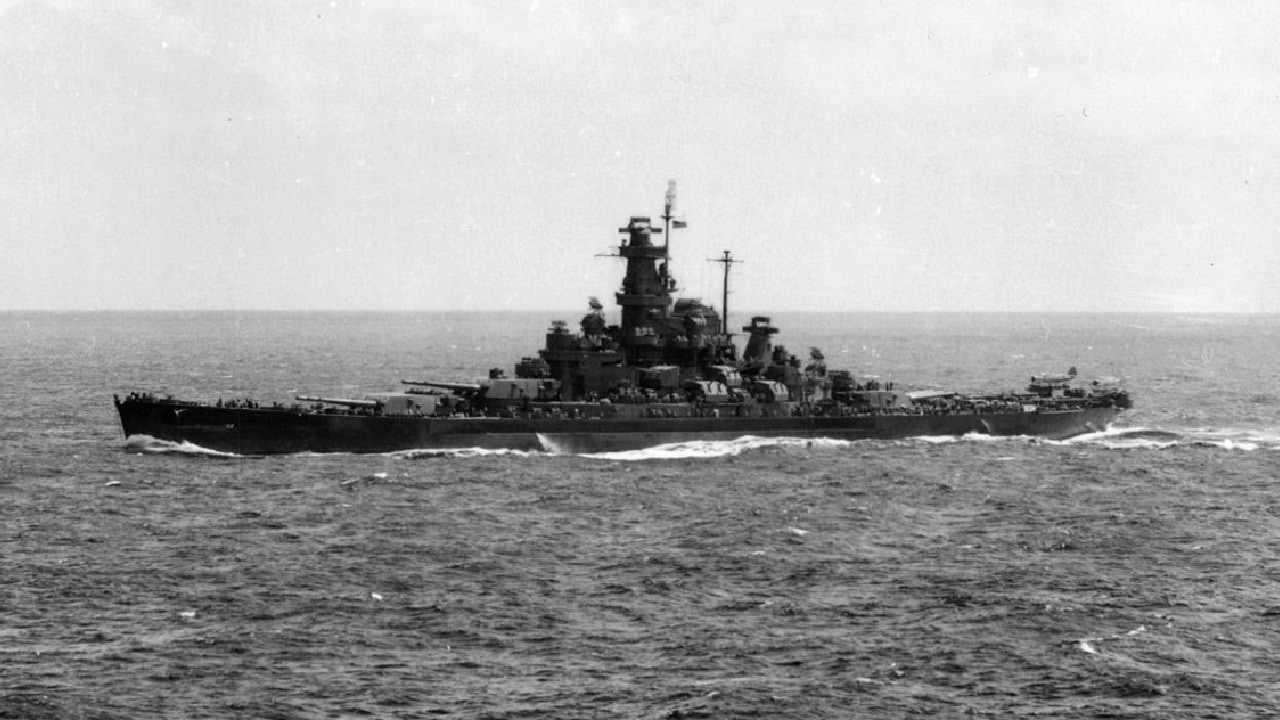
South Dakota-Class USS Alabama Battleship.
This armor scheme was intended to withstand hits from Japanese 18-inch shells, such as those mounted on the Yamato-class battleships.
Unlike the Iowa-class, which could reach 33 knots, the Montana-class was slower, with a top speed of about 28 knots.
This trade-off allowed for heavier armor and armament but made them less suited for carrier-escort duties.
Why Were They Never Built?
Despite their impressive design, the Montana-class battleships were canceled before construction began.
The most decisive factor was the changing nature of naval warfare.
The attack on Pearl Harbor and subsequent battles at Coral Sea and Midway demonstrated that aircraft carriers, not battleships, were now the dominant force at sea. Carriers could project power hundreds of miles away, while battleships remained limited to line-of-sight engagements.
As the war progressed, the US Navy prioritized carrier production over battleships. Resources like steel, labor, and infrastructure were redirected to build Essex-class carriers and their escorts, which offered far greater strategic flexibility.
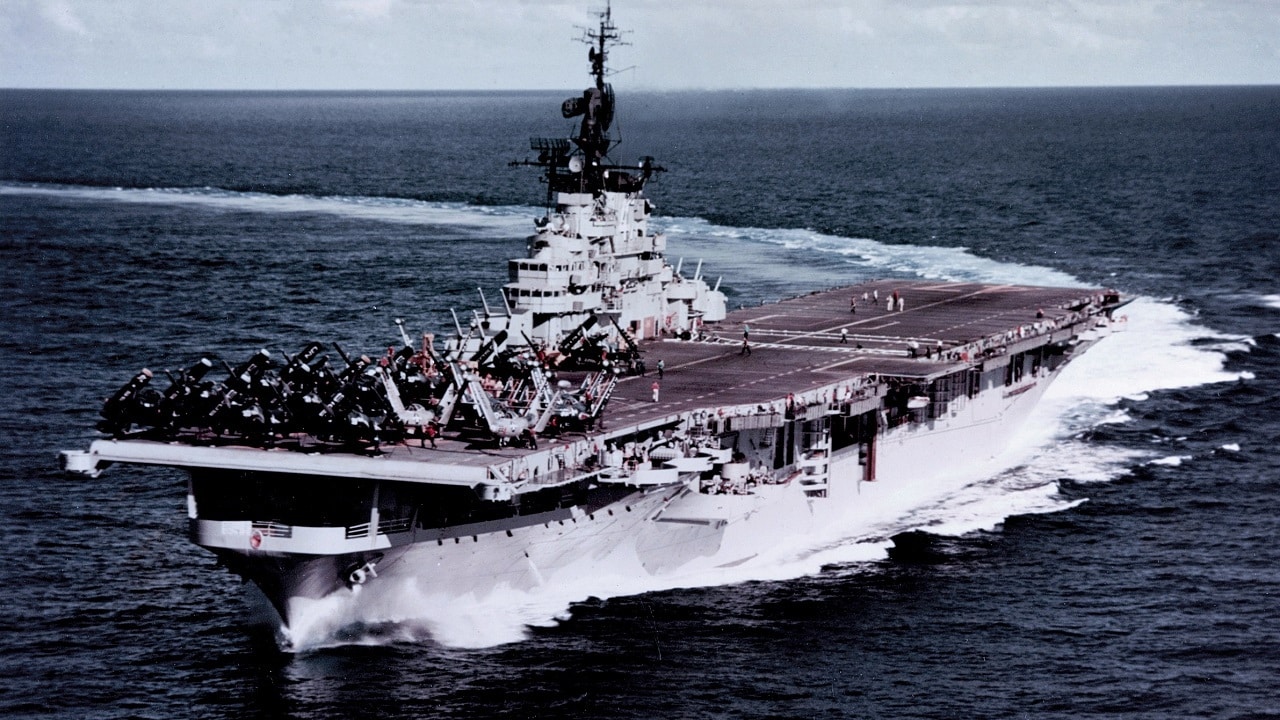
The U.S. Navy aircraft carrier USS Philippine Sea (CVA-47) makes a sharp turn to starboard, while steaming in the Western Pacific with the U.S. Seventh Fleet, 9 July 1955. Philippine Sea, with assigned Air Task Group 2 (ATG-2), was deployed to the Western Pacific from 1 April to 23 November 1955.
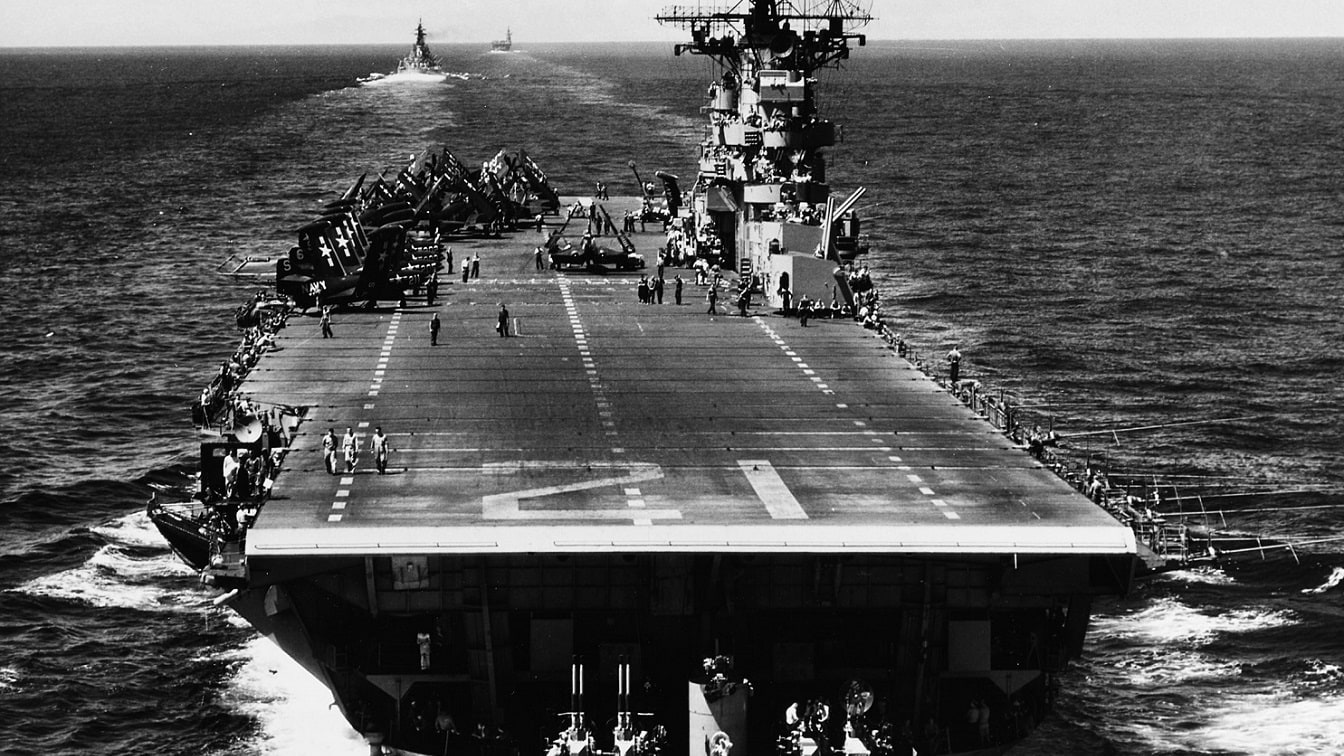
Essex-class. Image Credit: US Navy Archives.
As with any cool initiative, the project was shelved for economic reasons as well. Building the Montana-class would have required enormous resources and time. Each ship’s size meant they could not transit the Panama Canal, limiting their operational mobility.
Additionally, the US was already committed to producing Iowa-class battleships, carriers, cruisers, destroyers, and submarines. The Montana-class did not fit into the urgent wartime production schedule.
By 1943, the US Navy already had a powerful battle line of modern battleships, including the Iowa-class and the fast South Dakota-class. These ships were more than adequate for shore bombardment and fleet engagements. The Montana-class offered diminishing returns in a war increasingly dominated by air power and submarines.
The Montana-Class and the Death of the Battleship Concept
In many ways, the Montana-class is a microcosm for the battleship concept as a whole.
They were the largest in their class, a culmination of decades of experience and technological advancement. Naval architects poured immense effort into their plans, and their specifications influenced later designs for armored carriers and cruisers.
The Montana-class also serves as a reminder of how rapidly military technology can render even the most advanced weapons obsolete.
In 1940, battleships were seen as indispensable; by 1943, they were secondary to carriers. Their tough armor and large caliber guns were seen as largely obsolete compared to the value of a carrier strike group.
The Montana-class was conceived partly in response to Japan’s Yamato-class battleships, which carried 18.1-inch guns and displaced over 70,000 tons.
While the Montana-class would have had smaller guns, its superior armor scheme and greater number of barrels might have given it an edge in a hypothetical engagement.
However, such a battle never occurred, as carriers decided the war long before these giants could clash.
About the Author: Isaac Seitz
Isaac Seitz, a Defense Columnist, graduated from Patrick Henry College’s Strategic Intelligence and National Security program. He has also studied Russian at Middlebury Language Schools and has worked as an intelligence Analyst in the private sector.


Geoff Storey
December 6, 2025 at 6:40 am
Yet another article on a fictional warship…including impression image? How about writing a piece on a real warship…just several to choose from!!
J169
December 7, 2025 at 1:16 am
Would have been amazing to have these monsters in service. Could have been modernized like New Jersey. Probably could have gotten by with a bit less armor for more speed. If I could have waved a magic wand, I’d have converted the last 2 Iowa class battleships that were never built into Montana class ships. That’s a lot of steel, however. C’est la guerre…