
Synopsis: NATO or Not? The 3 “Guarantee Models” Ukraine Could Be Offered
-As Ukraine–Russia peace talks gain momentum, the hardest unresolved issue is what comes after: long-term security guarantees for Ukraine.
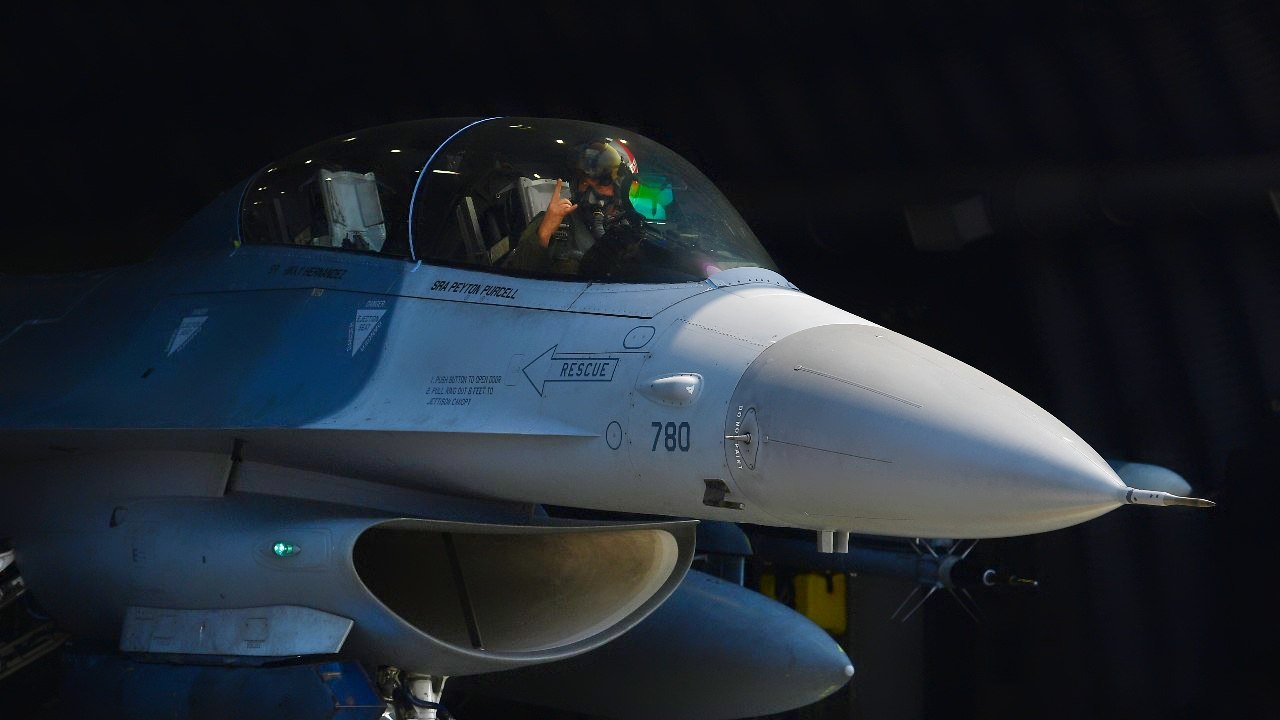
Capt. Michael Terry, 36th Fighter Squadron F-16 pilot, prepares to launch at Osan Air Base, Republic of Korea, July 9, 2020. The 36th Aircraft Maintenance Unit and the flight line operators wokred to make this aircraft mission-capable after being grounded for 186 days. (U.S. Air Force photo by Senior Airman Noah Sudolcan)
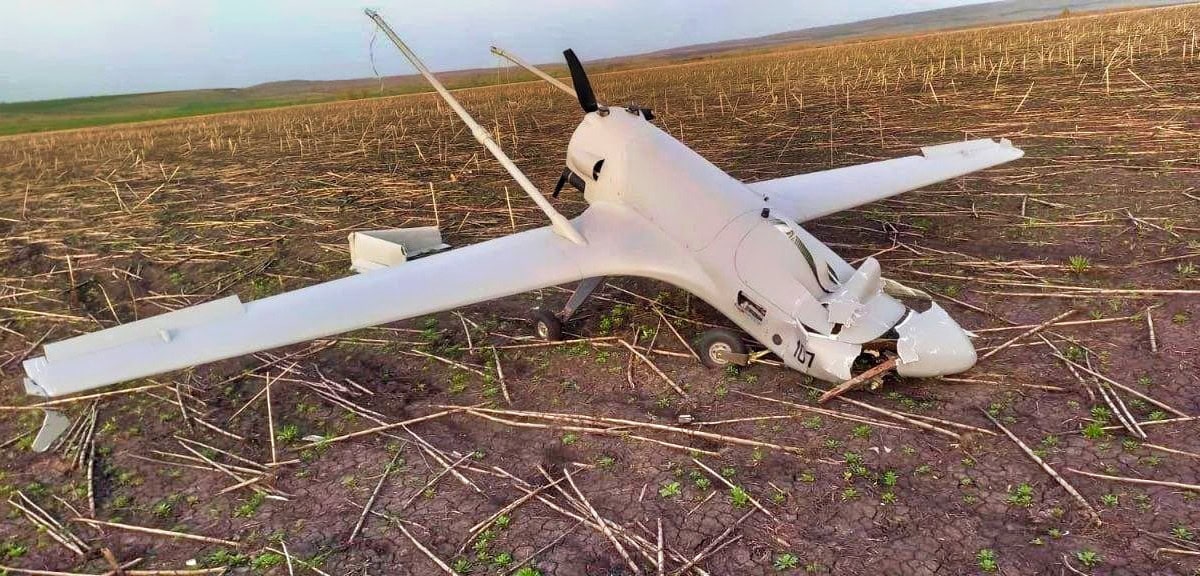
Lyutyi Drone from Ukraine Social Media.
-The piece frames three historical “models” Washington has used to bolster partners without NATO membership—Mutual Defense Treaties (binding, highest-risk), the Taiwan approach of strategic ambiguity (arms and capacity without an automatic war guarantee), and the Israel model (massive assistance plus a qualitative military edge).
The Ukraine Security Guarantee Challenge
Talks on a potential peace agreement between Ukraine and Russia are gathering steam. Among the key issues yet to be resolved are long-term security guarantees for Ukraine. Ukraine’s President Volodymyr Zelenskyy reportedly offered to drop Ukraine’s longstanding bid for membership in the North Atlantic Treaty Alliance (NATO) as a condition for a potential peace agreement.
Instead, Zelenskyy has stated that the current draft of the peace plan offers Ukraine a 15-year “NATO-like” guarantee, which the Ukrainian leader would like to see extended up to 50 years. This arrangement would be backed by an international peacekeeping force, likely composed primarily of willing European partners.
Such an agreement would be unique to the Russo-Ukrainian conflict. Still, its elements have historical precedent in previous arrangements that the United States has offered its security partners around the globe. These arrangements include a Mutual Defense Treaty (MDT), the Taiwan model of “strategic ambiguity,” and the Israel model of the “qualitative military edge.” Each model offers certain benefits and risks for Ukraine and the United States.
Mutual Defense Treaty Model
Following the end of World War II, the United States sought to establish new security mechanisms worldwide, with the primary goal of deterring future Soviet aggression. In addition to NATO, the Truman and Eisenhower administrations concluded a series of bilateral and multilateral treaties, including the Rio Treaty in the Western Hemisphere, the Southeast Asia Treaty (SEATO), Australia-New Zealand-US (ANZUS), and bilateral treaties with the Philippines, the Republic of Korea, and Japan. Apart from SEATO, each of these treaties is still in force today.
The MDT model offers the same core guarantee as NATO membership does: an attack on a member state triggers a right to collective self-defense. In these MDT agreements, the United States serves as the security guarantor, with the other parties as beneficiaries. If that is the option pursued with Ukraine, ratification by two-thirds of the US Senate would ensure that the commitment lasts beyond the current Administration.
Ukraine is likely to favor this model in current negotiations, because a US guarantee of an armed response to a future Russian attack is, de facto, tantamount to a NATO Article 5 commitment. European states can also join the arrangement, especially those neighboring Russia, such as Poland, the Baltic states, and the Nordic states.
From a US perspective, this option would represent the highest risk of engaging in a future military conflict with Russia on behalf of Ukraine, an outcome it has strenuously sought to avoid to date. In fact, the recently-released US National Security Strategy calls for US diplomatic efforts to “reestablish strategic stability” and “mitigate the risk of conflict” with Russia. The Trump Administration has also aggressively sought to shift the burden for Ukraine’s defense squarely to Europe, and this option would suggest the opposite.
The Taiwan Model
The Carter Administration established diplomatic relations with the People’s Republic of China on January 1, 1979, and instituted the “One-China Policy.” In response, lawmakers in the United States scrambled to come up with a viable option to help Taiwan deter future PRC aggression. Thus, the Taiwan Relations Act (TRA) was enacted into law on April 10, 1979.
The TRA’s primary benefit is codifying US arms sales to Taiwan into US law, along with the corresponding policy commitment that the United States will oppose any change in Taiwan’s status by force and will “maintain the capacity” to deter such aggression. In 1982, the Reagan Administration strengthened these commitments to Taiwan with the so-called Six Assurances. Since 1950, Taiwan has received an estimated $50 billion in arms from the United States. Although Beijing continues to threaten to “reunify” the island by “all means necessary,” the TRA and other US commitments have so far succeeded in deterring this outcome.
Ukraine is unlikely to favor a TRA-like arrangement. The TRA is largely a policy commitment, and not a genuine treaty with an enforcement mechanism like the MDT. It does not commit the United States to defending Taiwan in the event of a Chinese invasion, but only seeks to arm the island with sufficient weapons to prevent such an outcome. In the event of an actual conflict, the US commander-in-chief would still have to make the momentous decision on the scope and scale of US involvement. Although the “strategic ambiguity” model has so far succeeded in deterring PRC aggression, Russia has demonstrated that it cares little for Western guarantees that lack forceful backing (see: the 1994 Budapest Memorandum).
While a TRA-like arrangement may offer Kyiv a firm commitment to US arms purchases, Ukraine can already benefit from similar procurement programs, including the recently adopted Prioritized Ukraine Requirements List (PURL) initiative. Moreover, various US policy commitments to Ukraine’s sovereignty already exist, such as the 2018 Crimea Declaration and similar Congressional statements that are part of US law.
The Trump Administration might see this option as the most desirable for Ukraine, because it gives the United States flexibility in the event of renewed Russian aggression. A TRA-like commitment would not commit the US to a kinetic option in the event of renewed conflict. Still, it would provide Ukrainians with access to advanced US weaponry and US political support, thereby meeting the Administration’s minimalist goal of “ending” the Russo-Ukrainian conflict.
The Israel Model
Since the establishment of the State of Israel in 1948, the United States and Israel have enjoyed a close political, economic, and security relationship. While the two nations never concluded a binding defense treaty, Israel is one of the top recipients of US security assistance, with over $300 billion provided to date. This relationship is sustained by various US political and legislative commitments, including the current 10-year Memorandum of Understanding that runs until 2028. Israel is also designated by the United States as a “major non-NATO ally,” allowing for additional security benefits.
Aside from the continued flow of US arms, a critical element of the US-Israel relationship is the US commitment to maintain Israel’s so-called Qualitative Military Edge (QME). The QME, enshrined into US law in 2008, is a US commitment that Israel will have access to superior military technology to defend itself against external threats. The QME allows Israel to procure frontline US or jointly developed technology, such as the F-35 stealth fighter, advanced missile defenses, and other weaponry.
Ukraine is likely to favor the Israel option more than Taiwan’s, but less than a binding MDT. Zelenskyy has spoken openly about seeing Ukraine as a “big Israel” in terms of its defense capacity, which would not be possible without a robust US commitment to provide for such defense. In 2024, the United States demonstrated the depth of that commitment by intercepting Iranian ballistic missiles launched at Israel on two occasions. On June 22, 2025, the United States conducted an operation, Midnight Hammer, to severely damage three Iranian nuclear sites, which aligned with Israel’s primary security goals.
It seems unlikely that the Trump Administration could offer such robust support for Ukraine as it does for Israel—support that has also been sustained and strengthened for decades by a vocal bipartisan Congressional majority. The Israel option would require extensive post-agreement alignment between the US and Ukraine on long-term security goals, which would be challenging in the current political environment in both countries.
The Way Forward
None of these options is likely to solve the main driver of the current conflict, which is Russia’s desire to end Ukraine’s sovereignty, democracy, and Kyiv’s pro-Western orientation.
To counter Vladimir Putin’s maximalist goals, the United States should retain key aspects of current Western policies toward Russia, including restricting the Kremlin’s economic means to wage future war, supporting Ukraine’s Euro-Atlantic aspirations, and maintaining Ukraine’s armed forces at the maximum possible readiness level to deter future Russian aggression.
But if the US pressures Ukraine to bargain away these elements in exchange for a temporary ceasefire deal with Russia, it will be tough for any legitimately elected Ukrainian leader—now or in the future—to accept those terms. The United States needs to keep this perspective firmly in mind for any long-term deal with Russia.
About the Author: Igor Khrestin
Igor Khrestin serves as the Senior Advisor, Global Policy at the George W. Bush Institute. Prior to joining the Bush Institute, he served as Managing Director at FGS Global, a leading public affairs firm. For nearly two decades, Khrestin worked in high-level roles in foreign affairs and advocacy. Khrestin was a Senior Adviser to former Senators Cory Gardner and Mark Kirk, and he also served as the Staff Director of the Senate Foreign Relations Subcommittee on East Asia, the Pacific, and International Cybersecurity Policy. He served as the lead staffer for multiple major legislative initiatives enacted into law. These included the Asia Reassurance Initiative Act of 2018, which authorized $10 billion annually in new funding for US efforts in the Indo‐Pacific region; the North Korea Sanctions and Policy Enhancement Act of 2016; and the Taiwan Allies International Protection and Enhancement Initiative (TAIPEI) Act of 2019.

