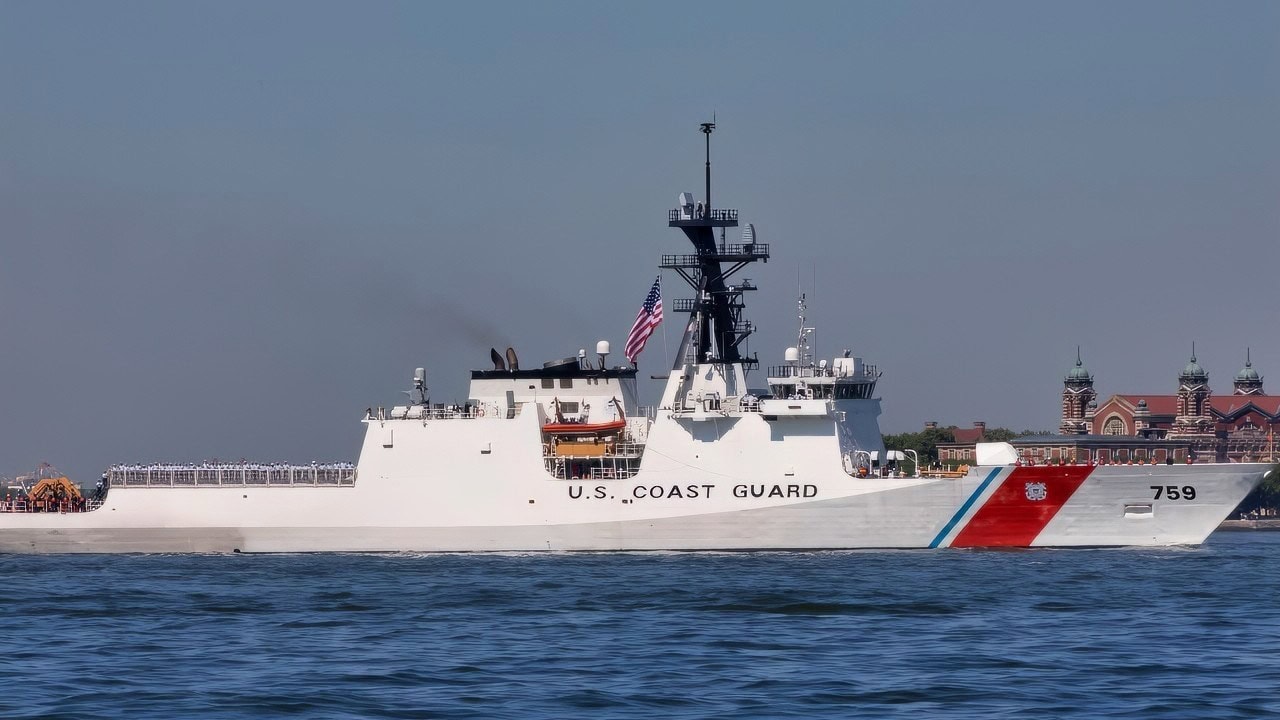
Key Points and Summary – After canceling the Constellation-class frigate, the U.S. Navy says it will build a new FF(X) based on the Coast Guard’s Legend-class National Security Cutter.
-The first ship will be sole-sourced to HII Ingalls to move fast, with competition added once the design is locked.
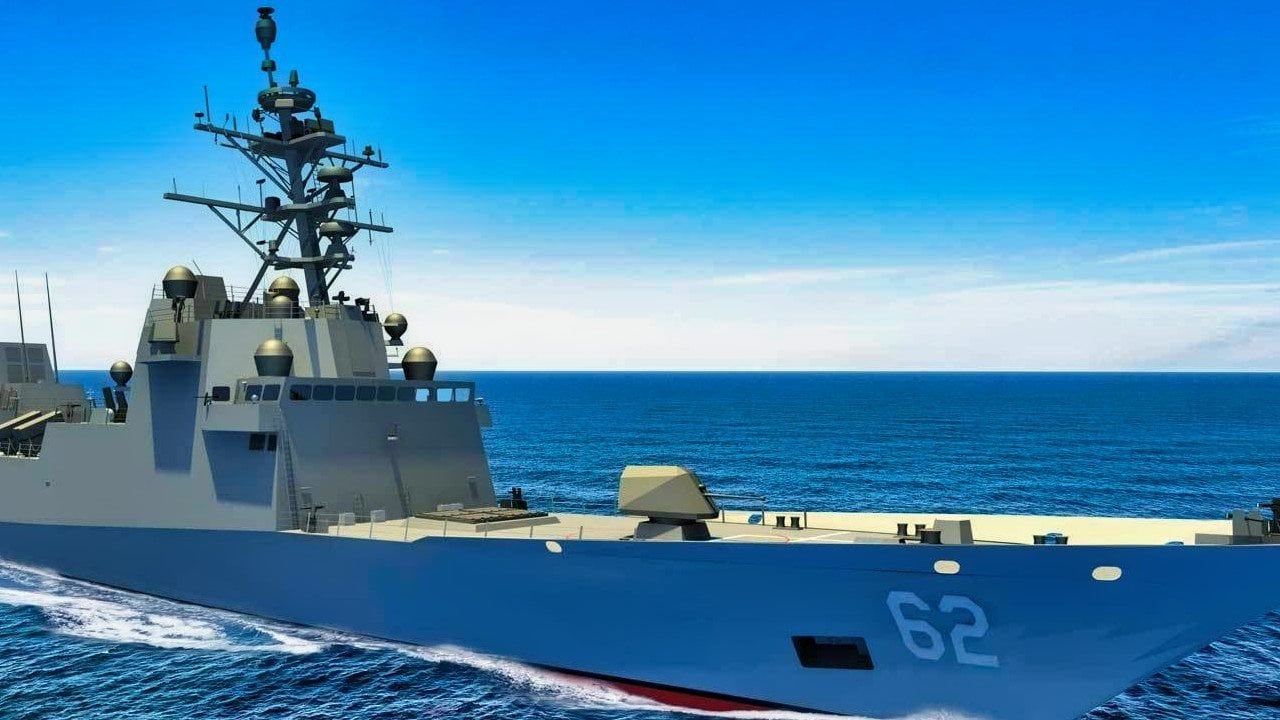
Constellation-Class Frigate. Image Credit: Creative Commons.
-Navy leaders sell the shift as an “America First” recovery plan: a proven U.S. hull, U.S. suppliers, and an existing support network.
-The 4,000-ton ship, crewed by about 140, aims to relieve destroyers in lower-end missions.
-The Navy targets a 2028 in-water date and limited changes, including space for containerized modules such as MK-70 Typhon VLS.
New FF(X) Design Will be Based on USC Legend Class
On December 19, the US Navy (USN) announced plans to introduce a new class of smaller combatant ships, the FF(X). This vessel will be based on the US Coast Guard (USCG) Legend-class in what could be called a recovery plan following the November 25 decision to cancel the Constellation-class frigate program.
The FF(X) is being described as a “critical component” of the USN’s future fleet structure. Almost in the same mode as escort fighter aircraft that defend and run interference for the missions of larger bomber aircraft, the FF(X) will be a smaller, more agile surface combatant designed to support the fleet’s multi-mission and capital warships.
The Constellation program was originally contracted with the European Fincantieri Marinette Marine conglomerate. However, the Navy has now selected the HII Ingalls Shipbuilding enterprise and its proposed 4,000-ton cutter design to be the baseline for the new FF(X) program.
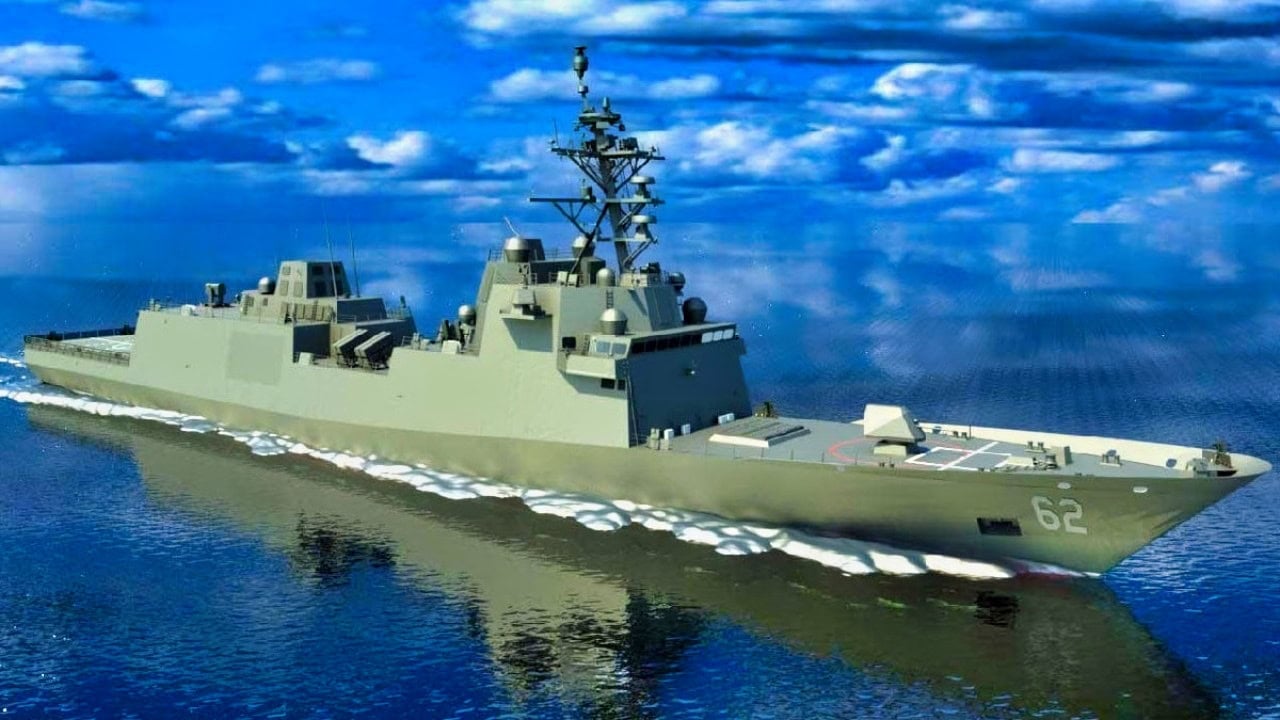
Constellation-Class Frigate. Image Credit: Creative Commons.
The announcement was made by Secretary of the Navy John Phelan and Chief of Naval Operations Adm. Daryl Caudle in a video announcement on the “X” platform.
“We will deliver on a wartime footing, and we will unleash the American industrial base to do it, competition, accountability, and real output steel in the water,” Phelan said. “To deliver at speed and scale, I’ve directed the acquisition of a new frigate class based on HII’s Legend-Class National Security Cutter design: a proven, American-built ship that has been protecting US interests at home and abroad,”
America First
An “America First” orientation is a key motivation for switching from a European design to the HII solution. Caudle emphasized that this vessel will instead be based on a US design and will be built in American shipyards.
“Other countries will always prioritize their own fleets, not us, ships that depend on foreign industry,” he said. “That’s why this is an American design backed by American workers, American suppliers, and an established logistics and maintenance network. So wherever the ship sails, when the American flag goes into port, it does so with American industry firmly behind it.”
Two Navy officials told media outlets that the Department will initially award a sole-source contract to HII under the FF(X) program. Kicking off the program with a single contractor is intended to streamline the effort in its first stages to facilitate meeting the USN’s Battle Force Requirements Study by the earliest possible date.
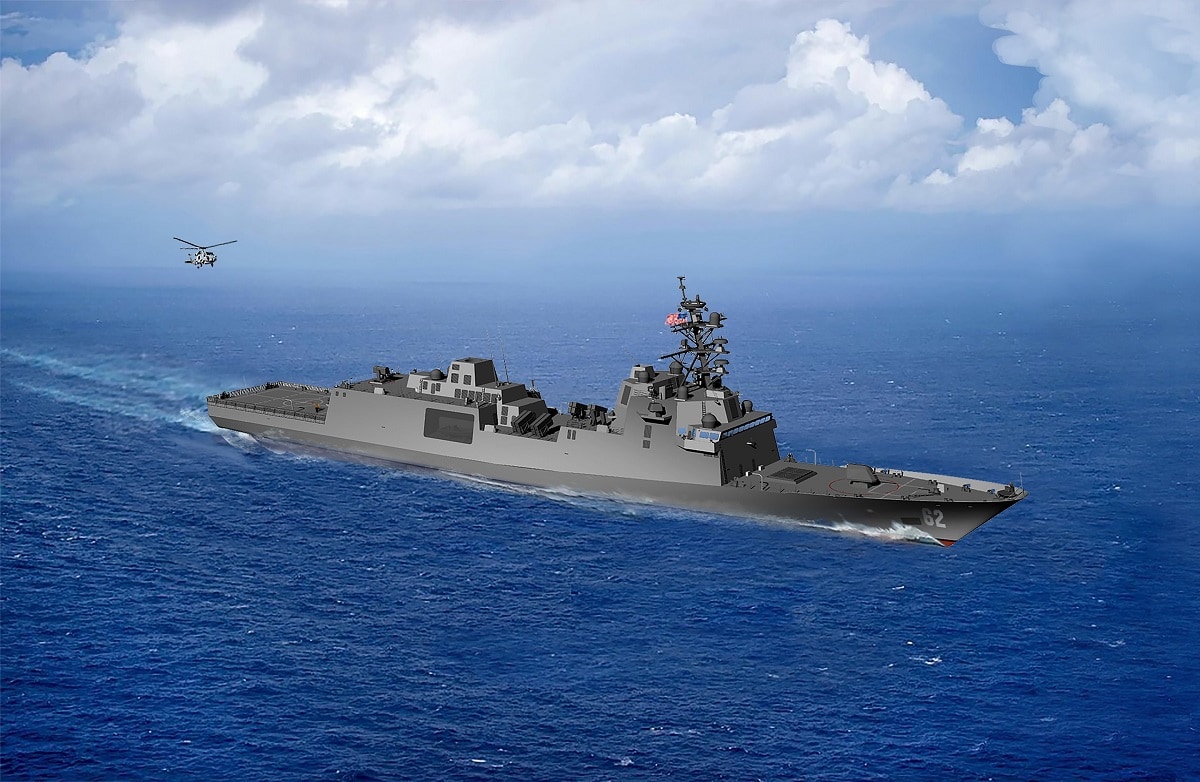
An artist rendering of the U.S. Navy guided-missile frigate FFG(X). The new small surface combatant will have multi-mission capability to conduct air warfare, anti-submarine warfare, surface warfare, electronic warfare, and information operations. The design is based on the FREMM multipurpose frigate. A contract for ten ships was awarded to Marinette Marine Corporation, Wisconsin (USA), on 30 April 2020.
However, once construction is underway and a fixed, validated design is in place, additional shipyards will be brought into the program.
“We will initially sole-source the lead ship to Ingalls, but we will move to competition as soon as possible,” said a senior Navy official.
Earlier this month at the US Naval Institute’s Defense Forum in Washington, Jason Potter, who is acting as the Assistant Secretary of the Navy for research, development, and acquisition (RDA), said the service would base this new frigate on the original Legend configuration with the intent for there to be minimal changes to the baseline design.
“We believe the future frigate can be in the water in 2028. This design approach will enable us to build in multiple yards using a similar build-to-print methodology,” he said.
Revised Requirement
The ship to be built at Ingalls is a smaller, less ambitious design than the Constellation was initially intended to be. This decision came out of a USN study of what the service requires in the short term to support lower-priority missions that today require the “overkill” of dispatching larger and more capable warships. The Legend design will be built with accommodations for about 140 sailors.
Part of the design consideration was a Navy analysis of the US Navy’s operations through the US 5th and 4th Fleets. The objective is to relieve the fleet’s destroyers and free them up for some of the higher-priority missions.
One of the few changes the Navy intends to make to the original design will be an add-on platform above the open boat deck for containerized mission packages. One of the options under consideration is a version of the US Army’s MK-70 Typhon vertical launch system. The Navy is looking at these and other proposed containerized weapon systems that could be used in an almost modular approach – swapping them out between ships as required.
About the Author: Reuben F. Johnson
Reuben F. Johnson has thirty-six years of experience analyzing and reporting on foreign weapons systems, defense technologies, and international arms export policy. Johnson is the Director of Research at the Casimir Pulaski Foundation. He is also a survivor of the Russian invasion of Ukraine in February 2022. He worked for years in the American defense industry as a foreign technology analyst and later as a consultant for the U.S. Department of Defense, the Departments of the Navy and Air Force, and the governments of the United Kingdom and Australia. In 2022-2023, he won two awards in a row for his defense reporting. He holds a bachelor’s degree from DePauw University and a master’s degree from Miami University in Ohio, specializing in Soviet and Russian studies. He lives in Warsaw.