
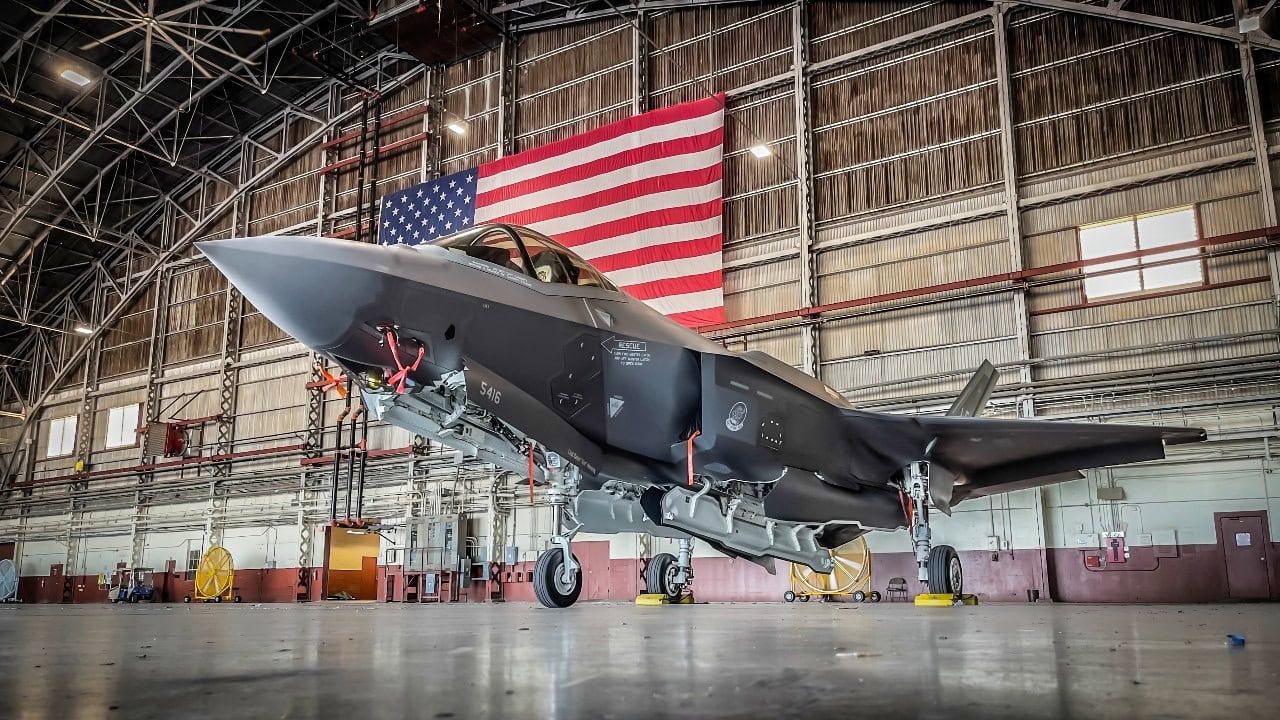
Summary and Key Points: U.S. airpower in Japan is set for a major upgrade as Misawa Air Base prepares to host 48 F-35A stealth fighters, replacing 36 F-16s under a broader modernization plan announced in 2024.
-With Misawa already home to two Japanese F-35A units, basing U.S. Lightnings there strengthens interoperability and accelerates day-to-day readiness.
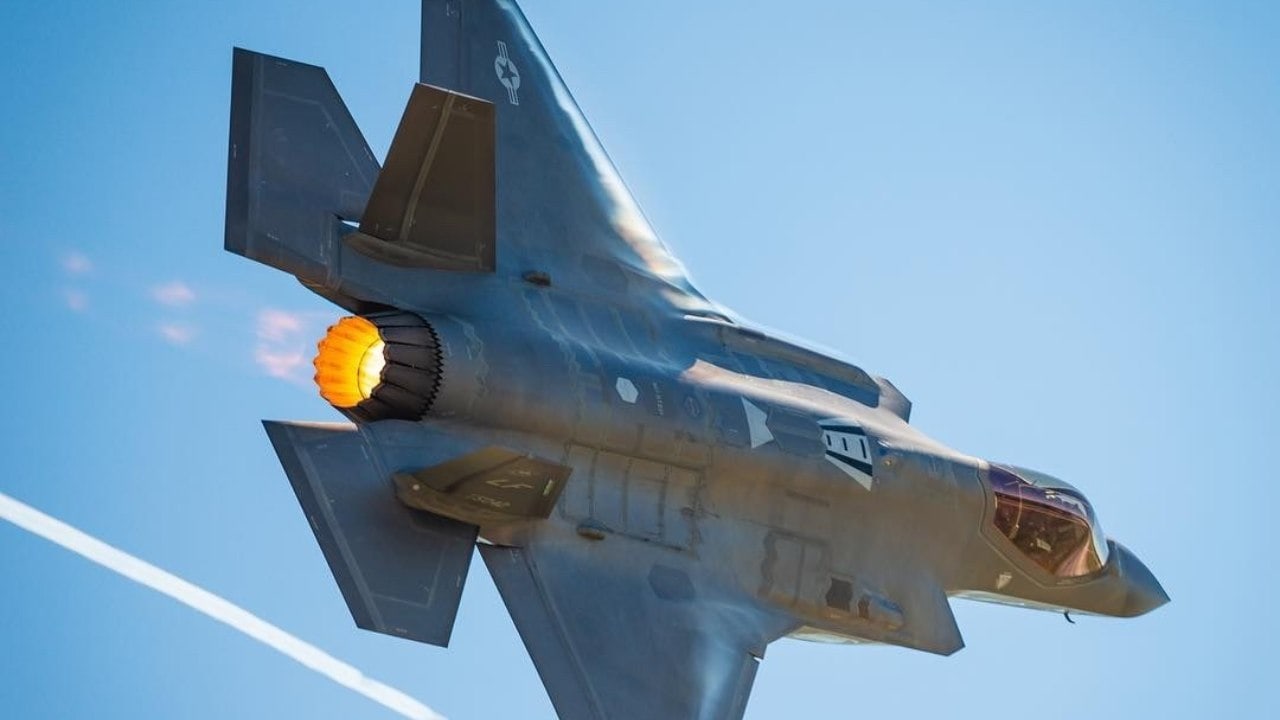
Capt. Andrew “Dojo” Olson, F-35 Demonstration Team commander and pilot performs a dedication pass in an F-35A Lightning II during the 2019 Wings Over Wayne Airshow April 27, 2019, at Seymour Johnson Air Force Base, North Carolina. The WOW Airshow marks the third public performance of the F-35 Demo Team’s new aerial demonstration during 2019 airshow season.
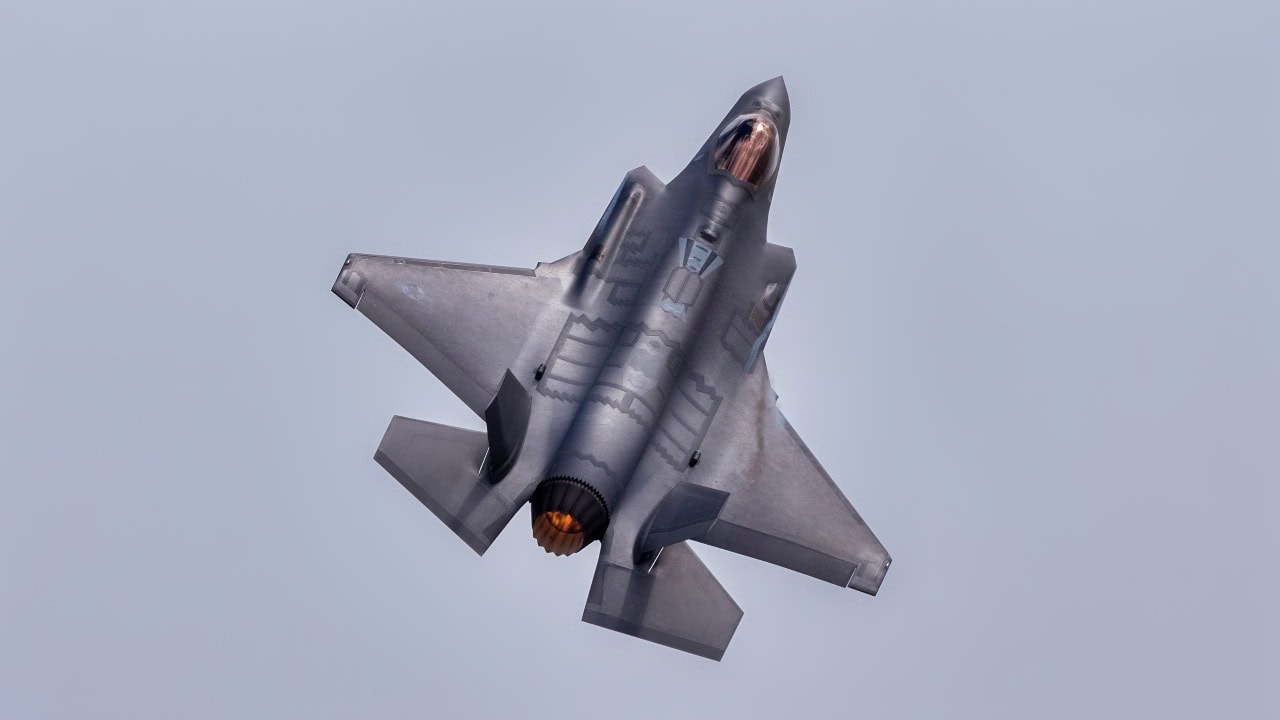
U.S. Air Force Capt. Kristin “BEO” Wolfe, the F-35A Demonstration Team pilot, climbs into the sky during a flight practice June 17, 2020, Hill Air Force Base, Utah. Air Combat Command’s single-ship aerial demonstration teams are required to regularly practice in order to maintain flight currencies and stay performance-ready. (U.S. Air Force photo by Capt. Kip Sumner)
-The shift supports deterrence along the first island chain—Japan through Taiwan to the Philippines—by improving survivability, sensing, and rapid response in a contested environment.
-The timeline for the first arrivals remains unclear, but Misawa’s role as a key northern Honshu air hub is expanding.
Snow, Sensors, Stealth: Why Misawa Is the Right Base for U.S. F-35A Fighters
If the United States ever goes back to war in East Asia—whether against China, North Korea and/or Russia—the F-22 Raptor and F-35 Lightning II will be key aerial assets in the endeavor.
And a key U.S. ally in any Indo-Pacific regional war will be Japan. Accordingly, a major Japan Air Self-Defense Force (JASDF) base will now host the F-35.
The Basics
Newsweek reporter Ryan Chan has the details: “The United States is preparing Misawa Air Base, one of its major military outposts in Japan for projecting air power, to support the future hosting of stealth fighter aircraft. As part of a plan announced in July 2024 to modernize its Japan-based tactical aircraft, the Pentagon has decided to deploy 48 F-35A jets, capable of evading radar detection, to Misawa to replace 36 older F-16 jets with greater capacity and capability.”
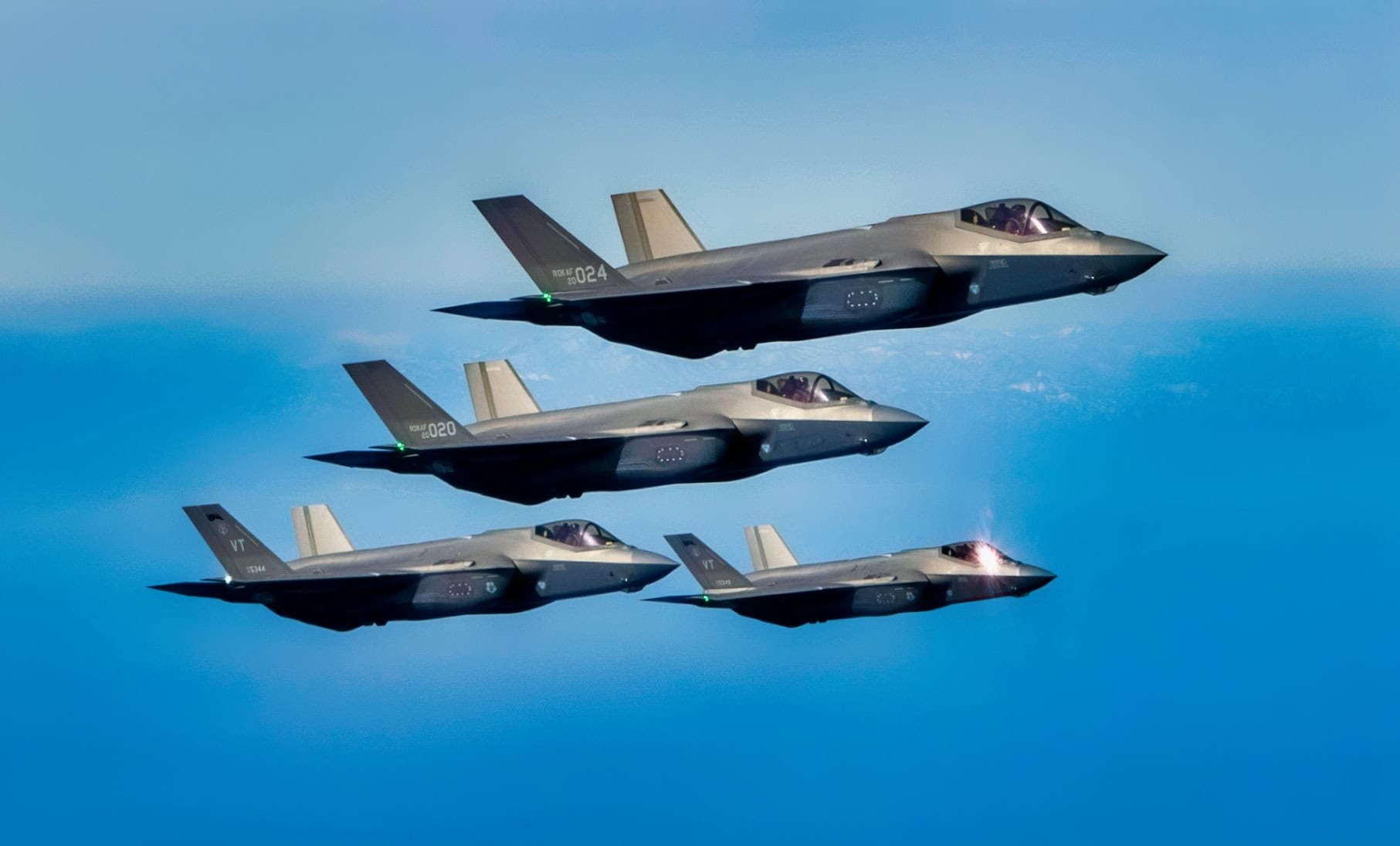
Two U.S. Air Force F-35A Lighting IIs fly in formation with two ROKAF F-35As during Freedom Shield 25, a defense-oriented exercise featuring live, virtual, and field-based training, March 13, 2025. The aircraft participated in dynamic targeting and aerial refueling training, validating the capability of ROK and U.S. Air Forces, to find, fix, and defeat a range of threats. (Photo courtesy of Republic of Korea Air Force)
For good measure, the U.S. Navy and Marine Corps variants of the F-35—the F-35C and F-35B, respectively—have been posted at Marine Corps Air Station Iwakuni.
Significance
This announced upgrade of U.S. airpower in Japan comes shortly after the Trump administration’s U.S. national security strategy called for a military buildup to counter aggression along the first island chain, which runs from Japan to the Philippines through Taiwan.
As U.S. Secretary of Defense Pete Hegseth said during a meeting with Japanese Defense Minister Shinjiro Koizumi at the Pentagon earlier this month, “[We] talk about America first, yes, but it doesn’t mean America alone. It means [working] with our friends [who] are investing [and] standing with us. And that’s how we bring peace through strength around the world [and] here in our hemisphere.”
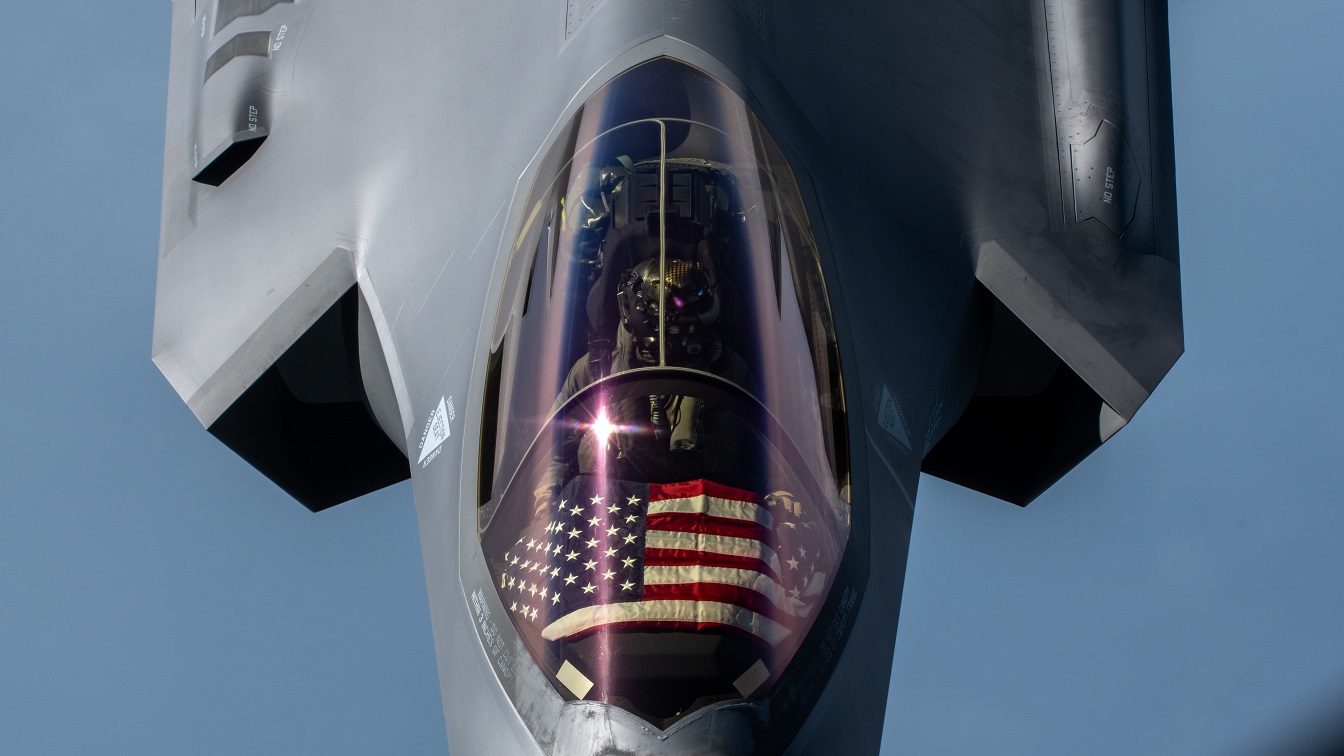
An F-35A Lightning II from the 354th Fighter Wing, Eielson Air Force Base, Alaska, flies behind a KC-135 Stratotanker assigned to the 117th Air Refueling Squadron, Forbes Field Air National Guard Base, Kansas, over the Indo-Pacific, March 10, 2022. Aircrews routinely fly missions aimed at sharpening the necessary skills needed to respond to emerging situations at a moment’s notice. (U.S. Air Force photo by Airman 1st Class Yosselin Perla)
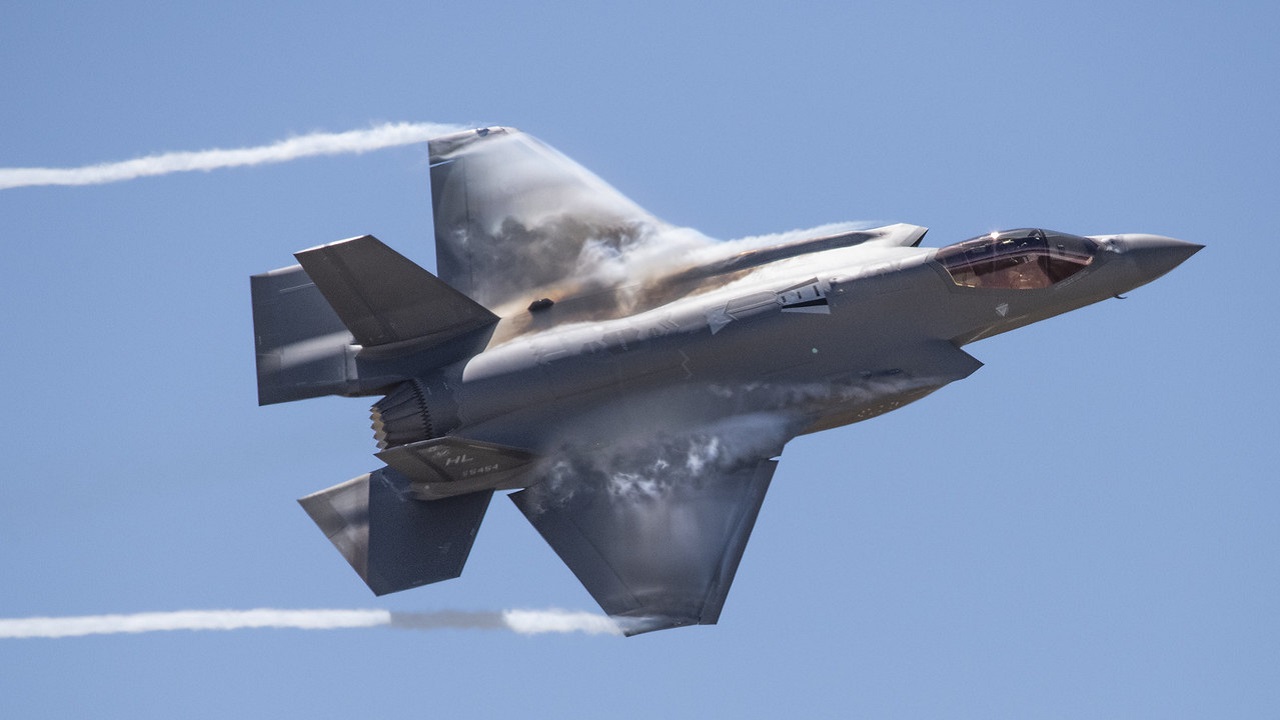
U.S. Air Force Maj. Kristin Wolfe, F-35A Lightning II Demonstration Team commander and pilot, showcases the unique aerial capabilities of the USAFs most advanced 5th generation multi-role stealth fighter, the F-35A, during Wings Over Solano at Travis Air Force Base, California, May 15, 2022. The Wings Over Solano open house and air show provided an opportunity for the local community to interact directly with the base and its Airmen and see capabilities on full display at Travis AFB. (U.S. Air Force photo by Heide Couch)
Meanwhile, a U.S. Air Force spokesperson said that, “In permanently assigning its most advanced tactical aircraft in Japan, [the Pentagon] will bolster regional deterrence and significantly improve its response capabilities.”
Misawa Air Base already hosts two of the JASDF’s F-35A units, so it makes good sense for it to host U.S.-owned Lightning IIs.
About Misawa AB
Misawa Air Base is in Aomori Prefecture, which is the northernmost part of the main island of Honshu, bordered by the Hokkaido Strait. It is located 684 kilometers north of Tokyo—about a six-hour drive by car or a two-hour commute via bullet train.
I spent quite a bit of time at Misawa Air Base as a private military contractor assigned to Japan from September 2014 to April 2015. Though my job duties were performed at the Shariki Communication Site in Tsugaru City, Misawa was our main support base, where we went for our administrative and logistical needs. I got to see my fair share of U.S. F-16s and JASDF Mitsubishi F-2 Viper Zeros taking off and landing there. (And oh yeah, the off-post restaurants run by the local civilian populace were pretty top-notch too.)
The Way Forward: F-35A Fighters Should Make China Concerned
It remains unclear when Misawa will receive its first F-35As, but in the meantime, the base is continuing routine aircraft operations.
Recently released official images showed F-16s participating in a training exercise earlier this month despite snow and extreme cold. Presumably, once the Lightning IIs arrive in-country, they will be assigned to the 35th Fighter Wing, which operates and maintains two squadrons—the 13th and 14th Fighter Squadrons—of F-16CM (C and D models) Block 50 Fighting Falcons.
It also remains to be seen whether the U.S. will deploy additional assets, such as the F-22 and/or the B-21 Raider sixth-generation stealth bomber aircraft in Misawa—or at other JASDF airbases such as Kadena or Yokota—amid tensions in the first island chain.
About the Author: Christian D. Orr, Defense Expert
Christian D. Orr is a Senior Defense Editor. He is a former Air Force Security Forces officer, Federal law enforcement officer, and private military contractor (with assignments worked in Iraq, the United Arab Emirates, Kosovo, Japan, Germany, and the Pentagon). Chris holds a B.A. in International Relations from the University of Southern California (USC) and an M.A. in Intelligence Studies (concentration in Terrorism Studies) from American Military University (AMU). He is also the author of the newly published book “Five Decades of a Fabulous Firearm: Celebrating the 50th Anniversary of the Beretta 92 Pistol Series.”