F-35 Block 4 Is the Upgrade That Keeps the Jet Relevant Into the 2070s
Years ago, the Pentagon was clear that it expected to fly a relevant, effective, and largely superior F-35 well into the 2070s, thanks to its ability to quickly accommodate software upgrades and massively improve capability without needing to re-engineer or rebuild the aircraft.
The Pentagon has called this “continuous modernization” as it pertains to the F-35, as the aircraft has a long history of using incremental software “drops” to greatly expand its performance parameters.
While the external structure or basic “hardware” may not change in the coming decades, the aircraft will be able to make paradigm-changing leaps forward in computing, AI-integration, weapons capacity, sensing, and targeting through software upgrades.
The stealth exterior can even be maintained or enhanced without the aircraft needing to be rebuilt. Thermal management could also be improved, so the F-35 can continue to evolve into an entirely different, vastly more capable aircraft over the coming years with its existing airframe.
For example, the aircraft will in the coming years be outfitted with a software upgrade known as Block IV, an enhancement that will enable the aircraft to make a “quantum” leap in lethality, performance, and sensing.
F-35 Block IV upgrades
The success and implementation of Block 4 hinge on the continued production of a technological upgrade to the F-35, referred to as Tech-Refresh 3, which introduces new generations of computing power into the jet. Over the years, new software “drops” have enabled the F-35 to fire new weapons.
Block 4 in particular enables the F-35 to fire weapons such as the new ultra-high-tech, long-range AIM-260 Joint Advanced Tactical Missile.
This air-to-air and air-to-ground attack weapon is more precise, less detectable, and more lethal, with a longer range than the existing AIM-120 AMRAAM, as it was engineered specifically to address the changing threat equation.
Many details of the AIM-260 are not publicly available for security reasons, yet its arrival could prove critical to the F-35’s continued relevance.
As has been the case throughout the multi-year trajectory of the F-35, software “drops,” “adaptations,” “interfaces,” and fire control specs are needed to accommodate new generations of weapons as they appear, so a delay in the integration of Block 4 means the AIM-260 simply will not fire from the F-35.
New F-35 Weapons
Block 4 also enables the F-35 to fire the AGM-88G Advanced Anti-Radiation Guided Missile – ER, a significant air-attack weapon engineered to identify and “destroy” ground-based enemy air defenses emitting an electronic signature.
The ER or “extended range” component of this is extremely significant, as it is designed to enable a manned fighter jet to target and attack air defenses from safer “stand-off” ranges.
The most significant impact of Block 4, however, likely pertains to a critically important weapon known as the Stormbreaker, a guided air-dropped bomb capable of tracking and destroying targets at ranges up to 40 nautical miles.
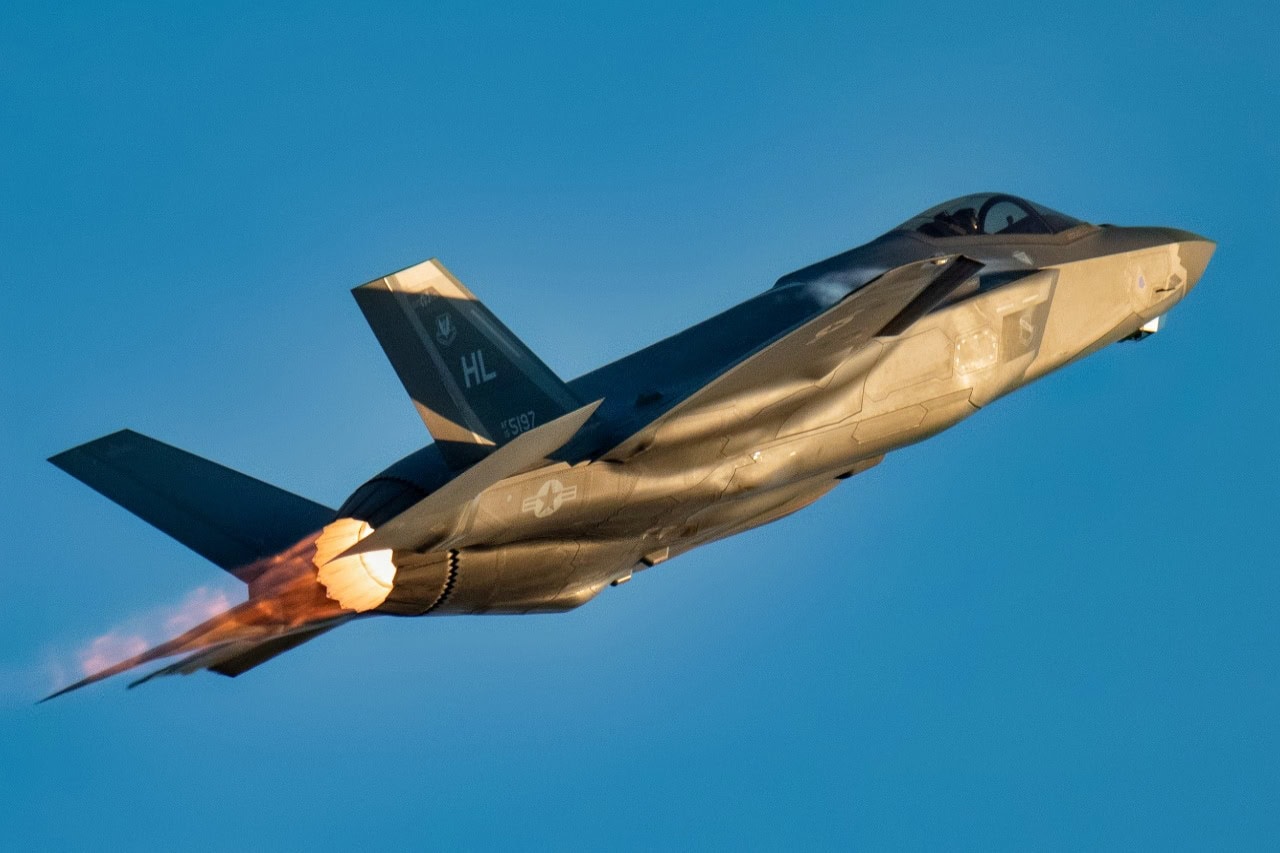
U.S. Air Force Major Kristin “BEO” Wolfe, F-35A Lightning ll Demonstration Team pilot and commander, flies during sunset over Mathers Airport, Calif., Sept. 24th, 2021, at the California Capital Airshow. The team consists of approximately 15 total Airmen to include the pilot and commander, pilot safety officers, superintendent, team chief, maintenance Airmen, aircrew flight equipment specialists, and public affairs personnel. (U.S. Air Force photo by Staff Sgt. Thomas Barley)
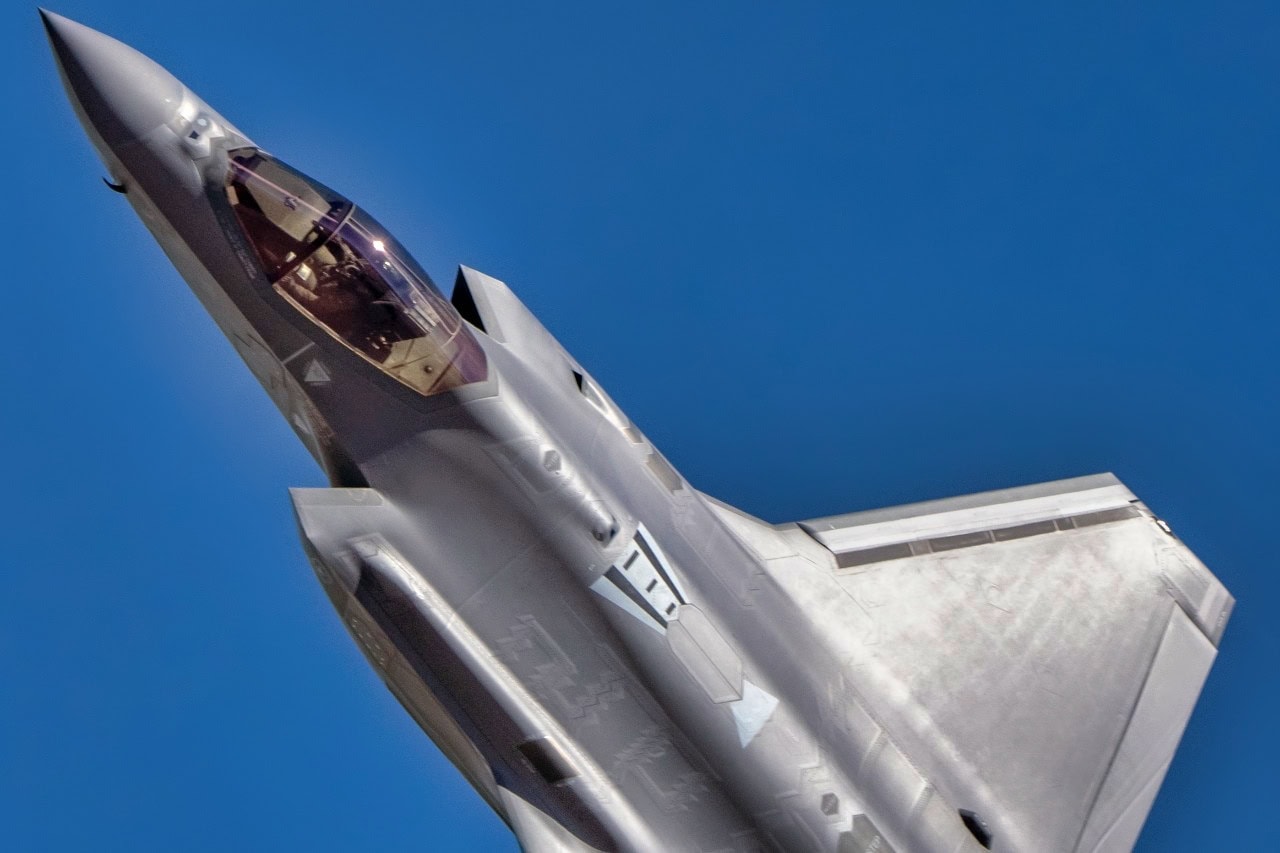
U.S. Air Force Maj. Kristin “BEO” Wolfe, F-35A Lightning II Demonstration Team pilot and commander, flies during the 2021 Reno Air Races, Reno, Nev., Sept. 18, 2021. The 2021 Reno Air Races featured performances from the U.S. Air Force F-35A Demo Team and the U.S. Air Force Thunderbirds. (U.S. Air Force photo by Capt. Kip Sumner)
In development for many years by Raytheon, the Stormbreaker incorporates a now-famous “tri-mode seeker,” meaning it can leverage RF, laser, or all-weather millimeter wave guidance and targeting technology.
The weapon is also engineered with a two-way data link enabling retargeting and in-flight adjustments. Tactically speaking, the GBU-53/B Stormbreaker can track a moving target through fog or weather obscurants from great distances and adjust course as needed.
This much-anticipated weapon will greatly expand the F-35s attack capabilities in more dynamic, modern threat environments.
About the Author: Kris Osborn
Kris Osborn is President of Warrior Maven – Center for Military Modernization. Osborn previously served at the Pentagon as a highly qualified expert in the Office of the Assistant Secretary of the Army—Acquisition, Logistics & Technology. Osborn has also worked as an anchor and on-air military specialist at national TV networks. He has appeared as a guest military expert on Fox News, MSNBC, The Military Channel, and The History Channel. He also has a Masters Degree in Comparative Literature from Columbia University.