
Synopsis: In a rare personnel move, U.S. Army Master Sergeant Jeremy Chambers was directly promoted to the rank of Captain, bypassing the standard Lieutenant grades.
-The initiative, championed by Lt. Gen. Jonathan Braga, aims to better utilize the specialized expertise of senior NCOs for high-level roles like Foreign Area Officers (FAOs).
-Chambers, sworn in in Hawaii, will now serve as a regional expert and military attaché, potentially establishing a new career pathway for highly qualified enlisted soldiers to transition into the officer corps.
Why the Army Directly Commissioned a Master Sergeant to the Rank of Captain
This is a U.S. Army personnel move sure to delight Non-Commissioned Officers (NCOs) who often toil in difficult military jobs without the pay and prestige they deserve.
The Army recently decided to promote a senior NCO directly to the rank of captain.
This is a rare event, as most enlisted personnel who become officers start as second lieutenants (0-1s). Captains are 0-3s.
Jeremy Chambers, an Army master sergeant, was sworn in as a new captain in Hawaii early last month. His chain of command believes that Chambers has been doing the duties commensurate with an O-3 for years.
Chambers will now be considered a Foreign Area Officer – one who is an expert in the foreign policies of a country or region around the world.
What Is an FAO?
FAOs, as they are called, can speak difficult foreign languages and serve as military attaches at embassies or as regional experts on large planning staffs to offer cultural or political advice when soldiers are ordered to serve in foreign lands.
The path to becoming an FAO is arduous, and the career often requires an officer to hold a master’s degree in international relations.
I taught Army FAOs at George Washington University Elliott School of International Affairs in Washington, DC.
They were all excellent students.
Many FAOs, after their civilian schooling is complete, receive a monetary stipend to travel in the region they are assigned to, so they can better hone their language skills and immerse themselves in the local economy and culture.
You Must Be a Fluent Foreign Language Speaker
Chambers may already have his master’s degree, and that could be why he got directly promoted to captain.
The former master sergeant likely speaks more than one language and has probably attended the rigorous Defense Language Institute Foreign Language Center in California. This school is one of the most difficult in the military, and instruction often lasts up to 12 months.
If Chambers speaks a critical language like Mandarin, Russian, or Arabic, you can bet that he worked hard to achieve that ability.
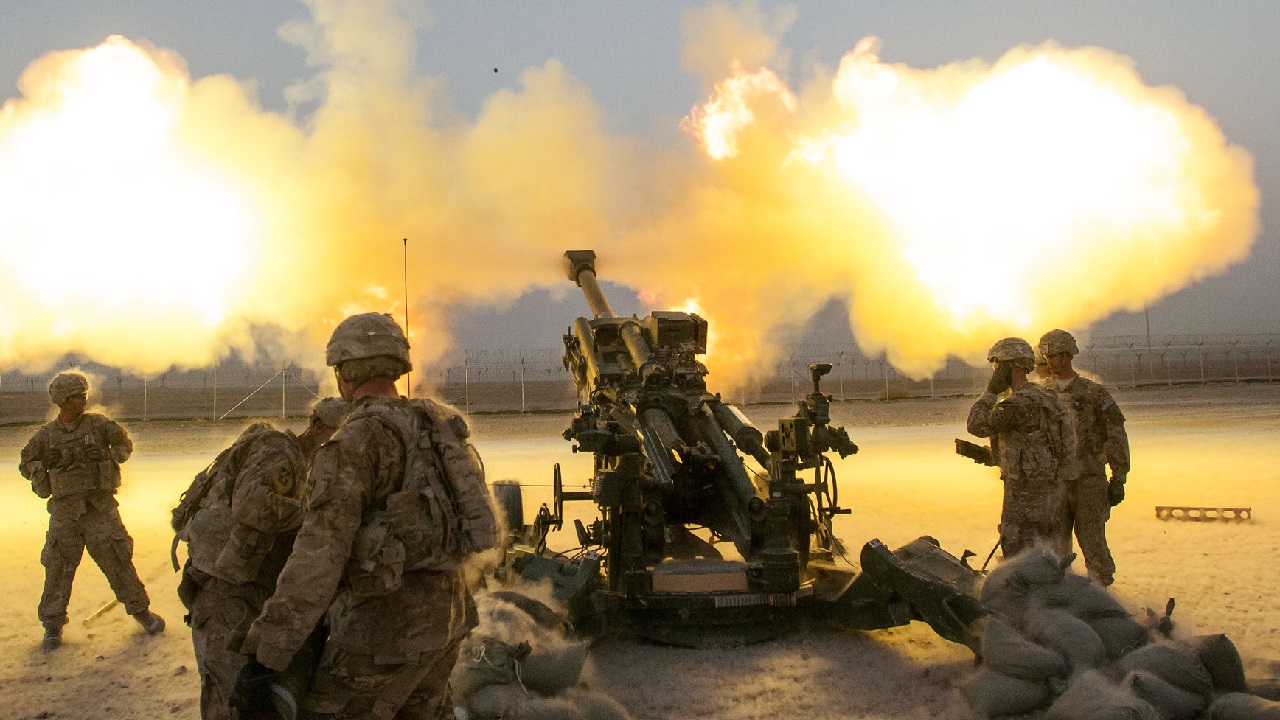
Soldiers serving with Alpha Battery, 2nd Battalion, 77th Field Artillery Regiment, 4th Infantry Brigade Combat Team, 4th Inf. Division, shoot a round down range from their M777A2 howitzer on Kandahar Airfield, Afghanistan, Aug. 22, 2014. The round was part of a shoot to register, or zero, the howitzers, which had just arrived on KAF from Forward Operating Base Pasab. The shoot also provided training for a fire support team from 1st Battalion, 12th Infantry Regiment, 4th IBCT, 4th Inf. Div. This is similar to artillery now engaged in Ukraine. (U.S. Army photo by Spc. Ariel Solomon/Released)
“The Army said Chambers will begin rigorous academic, cultural, and language training to prepare for future roles that could range from embassy placements to advising senior leaders about international-level strategy,” according to Military Times.
This General Had a New Personnel Idea
The idea for a direct NCO to Officer promotion was the brainchild of Lt. Gen. Jonathan Braga.
Braga now leads the Joint Special Operations Command that oversees Tier One operators such as Delta Force and SEAL Team Six.
Braga had noticed that he was surrounded by high-level NCOs who knew just as much about international relations as captains.
Chambers was thrilled to have been given the chance to serve as an officer. “My hope with this entire direct commission was to help create a legacy and a pathway for other NCOs. Still, it is more important now that we’ve created an opportunity for other NCOs, other enlisted soldiers, to recognize that there’s another thing they can do,” he said.
Will This Rare Personnel Move Happen Again?
While this is great news for Chambers and his family, it raises larger personnel and human resources questions. Is this part of a new pilot program that could affect more soldiers? Or is this going to be for NCOs assigned to special operations commands?
It would be a good idea for master sergeants (E-8s) to get a chance to become officers if they desire the promotion.
The U.S. military has direct promotion programs for civilians with expertise in fields such as intelligence and communications to become officers “off the streets.” This is popular in the U.S. Navy Reserves.
He Is Not Done With Training, Though
Chambers may also have to attend a basic officer branch career preparation course. For example, if he chose to have Infantry as his basic branch, he would attend that leadership school at Fort Benning, Georgia.
However, that will likely be up to Chambers’ chain of command. I would like to see other master sergeants be given the chance to become captains.
This is a reward for their expertise and hard work throughout their military careers. NCOs bring in a high level of professionalism and experience to their commanders, and they should have the opportunity to serve as officers if they desire.
Let It Happen to Other Master Sergeants
Plus, aptitude for critical foreign languages is rare. If the NCO is already using language skills to understand local economies and culture, he or she should be able to serve as an officer, especially if they are already conducting these duties.
Army personnel commands should study this idea to determine whether it can be applied in other career fields. It is a good way to incentivize soldiers who would likely retire without further promotion opportunities.
Losing that level of brainpower and expertise in international relations is not the most optimal way to manage human resources in the military.
Let’s Give Him a Hand
Congratulations to Captain Chambers, and we wish him a successful career as an FAO.
Hopefully, he may serve as a military attaché at an embassy someday, and that would be a highlight for his excellent career so far.
Maybe other master sergeants can become FAOs soon, and a pilot program can be set up to study whether this can be used in other military occupational specialties.
About the Author: Dr. Brent M. Eastwood
Author of now over 3,000 articles on defense issues, Brent M. Eastwood, PhD is the author of Don’t Turn Your Back On the World: a Conservative Foreign Policy and Humans, Machines, and Data: Future Trends in Warfare plus two other books. Brent was the founder and CEO of a tech firm that predicted world events using artificial intelligence. He served as a legislative fellow for US Senator Tim Scott and advised the senator on defense and foreign policy issues. He has taught at American University, George Washington University, and George Mason University. Brent is a former US Army Infantry officer. He can be followed on X @BMEastwood.