
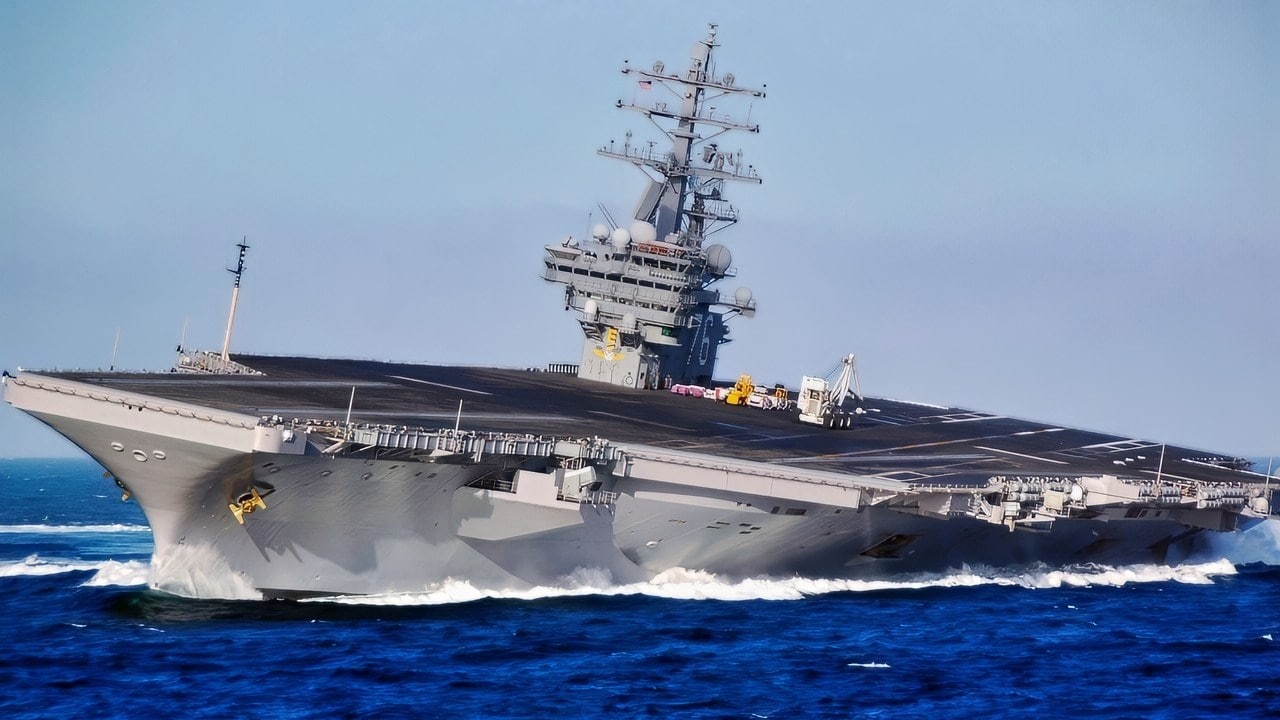
Key Points and Synopsis: The Pentagon’s 2025 China Military Power Report confirms that Beijing has fielded the DF-27, a conventionally armed intercontinental ballistic missile capable of striking the U.S. homeland. With a range of 5,000 to 8,000 kilometers, this new “aircraft carrier killer” extends China’s reach well beyond the Second Island Chain, threatening U.S. naval forces and targets in Hawaii and Alaska.
-Analysts warn this qualitative shift ends the concept of the U.S. homeland as a “sanctuary” and forces American carrier strike groups to operate at greater standoff distances, fundamentally reshaping Pacific naval strategy.
DF-27: How China Could Sink a Navy Aircraft Carrier In Hawaii?
The 2025 U.S. Department of Defense’s China Military Power Report recently revealed that, for the first time, the People’s Republic of China (PRC) has fielded a conventionally armed intercontinental ballistic missile (ICBM) capable of reaching parts of the United States’ homeland.
That system, the DF-27, sits at the low end of the ICBM range band.
Still, unlike traditional ICBMs, which are typically nuclear-armed, the weapon can carry a conventional payload with anti-ship ballistic missile (ASBM) capability.
Its fielding reflects a shift like long-range strike capabilities – not to mention broader strategy – and should serve as a warning to Washington that America’s homeland is not a sanctuary from either nuclear or conventional strike by Chinese missiles.
The news has implications for naval warfare dynamics, too. With a range estimated to be somewhere between 5,000 and 8,000 kilometers, the DF-27 now potentially threatens American naval forces across the Pacific while also enabling the People’s Liberation Army Navy (PLAN) to operate its own carriers with a new defensive umbrella that includes long-range missiles.
Meet the DF-27
China’s ballistic missile modernization efforts have been ongoing for decades, with successive generations of the Rocket Force gradually introducing longer ranges, improved guidance systems, greater payload capacities, and new payload options.
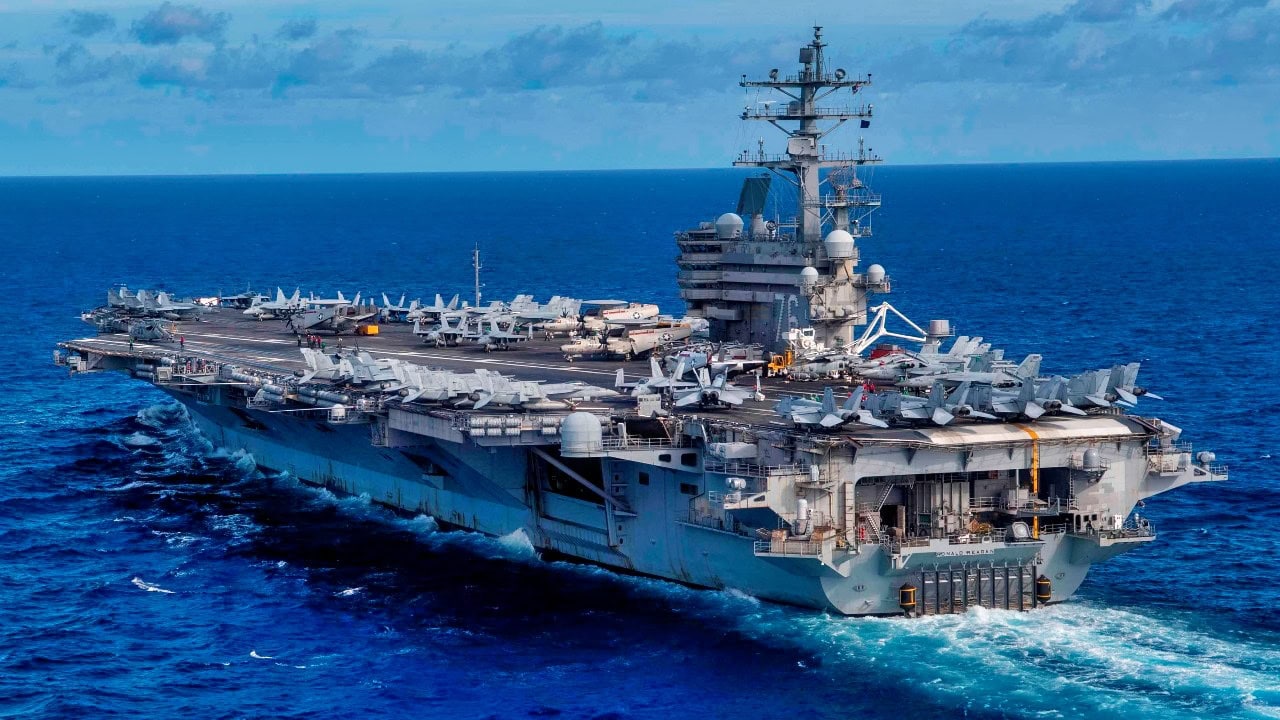
SOUTH CHINA SEA (June 16, 2021) The Navy’s only forward-deployed aircraft carrier USS Ronald Reagan (CVN 76) transits the South China Sea. Reagan is part of Task Force 70/Carrier Strike Group 5, conducting underway operations in support of a free and open Indo-Pacific. (U.S. Navy Photo by Mass Communication Specialist 1st Class Rawad Madanat)
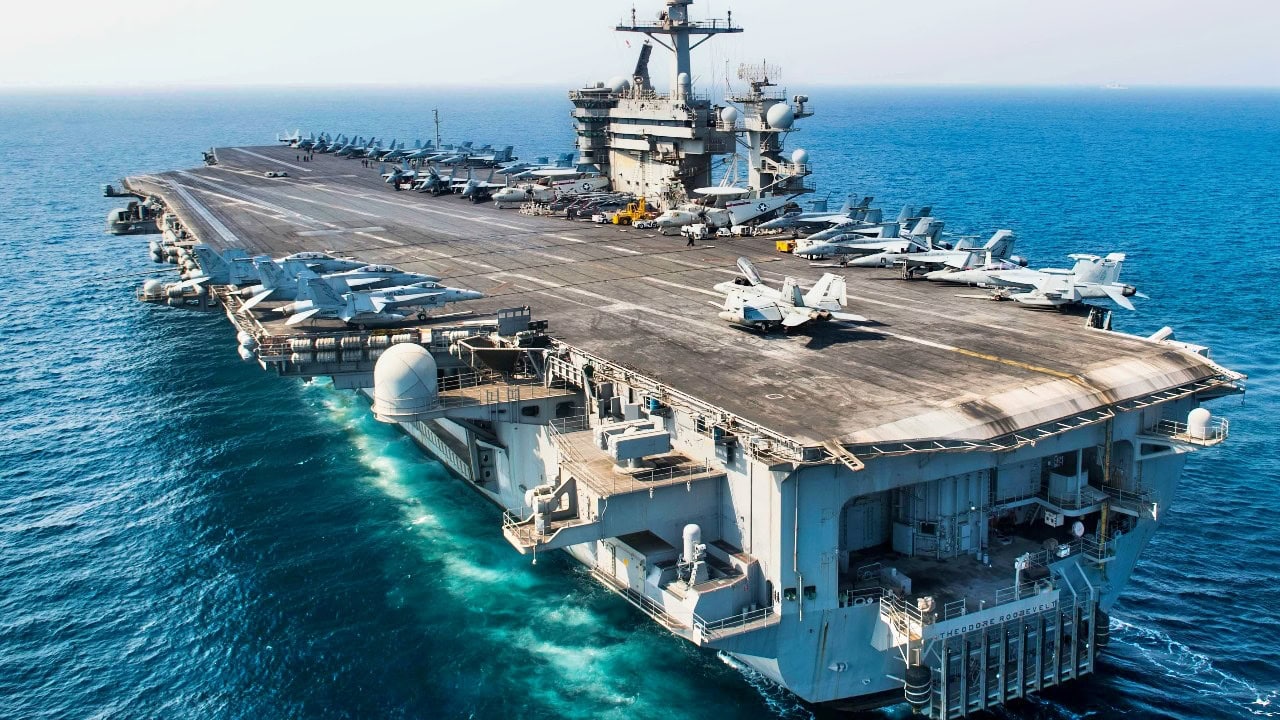
(Oct. 10, 2015) The aircraft carrier USS Theodore Roosevelt (CVN 71) transits the Arabian Gulf. Theodore Roosevelt is deployed in the U.S. 5th Fleet area of operations supporting Operation Inherent Resolve, strike operations in Iraq and Syria as directed, maritime security operations and theater security cooperation efforts in the region.
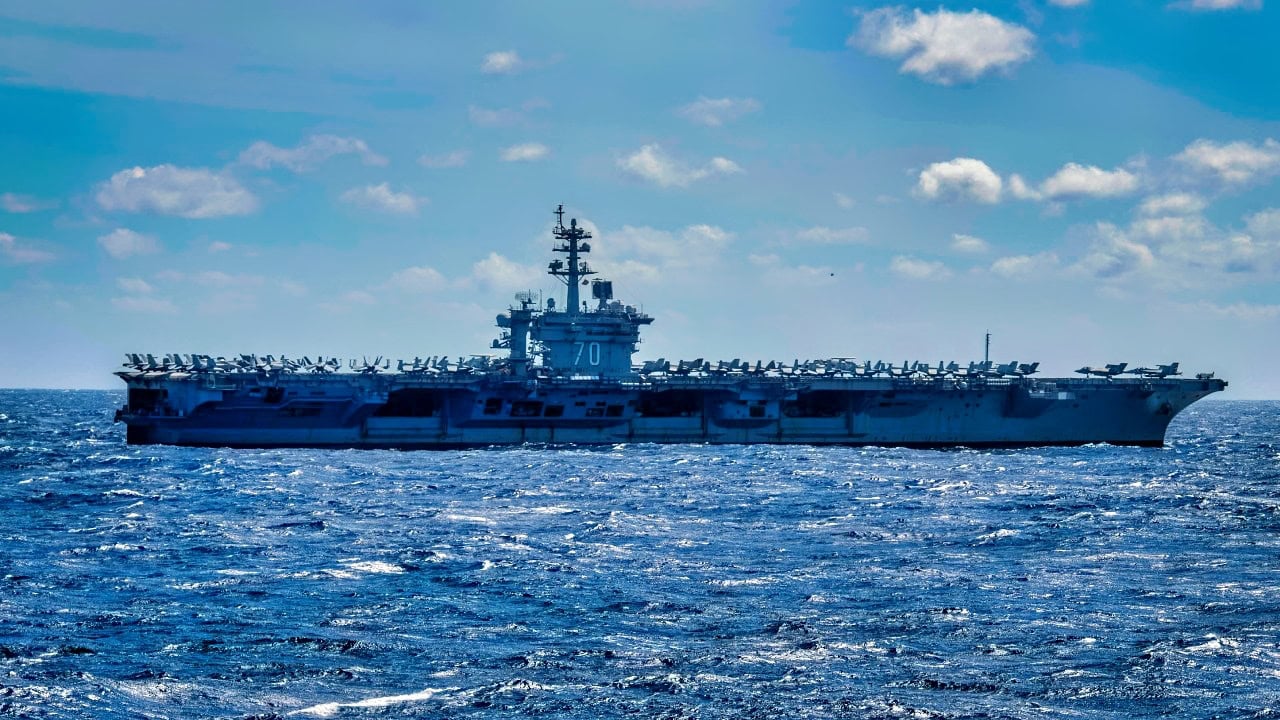
SOUTH CHINA SEA (Jan. 17, 2025) – The Nimitz-class aircraft carrier USS Carl Vinson (CVN 70) transits the South China Sea during a Maritime Cooperative Activity with the Philippine Navy, Jan. 17, 2025. The U.S. and Philippines work together as allies, enhancing the interoperability of maritime forces and supporting their shared goal of a free and open Indo-Pacific. Carrier Strike Group ONE, is underway conducting routine operations in the U.S. 7th Fleet area of operations. (U.S. Navy photo by Mass Communication Specialist 3rd Class Brianna Walker)
Earlier missiles like the DF-21 ASBM have demonstrated that the PLA is clearly intending to target – or intimidate – U.S. carrier strike groups at ranges exceeding 1,400 kilometers. The DF-26 also extended that reach to U.S. bases in Guam with dual conventional and nuclear capability.
The DF-27, however, is a qualitative improvement along that same trajectory in virtually every aspect. In contrast with the intermediate- and medium-range ballistic missiles China has developed and fielded in the past, the DF-27’s range – which now sits squarely in the range of the “intercontinental” category – enables China to reach much farther into the Pacific and toward the U.S. mainland.
According to the 2025 China Military Power Report, the DF-27’s range would allow it to reach Alaska, Hawaii, and parts of the continental United States depending on variant and trajectory.
Unlike most American and Russian ICBMs throughout recent history, which have been tied to nuclear deterrence, the DF-27 can be armed with a conventional warhead for precision land-attack and anti-ship missions.
On the one hand, it technically makes the missile less powerful – but on the other hand, it means it is far more likely to be used. It also means that the rocket can be used for anti-ship missions – a reality that will now complicate American planning.
Beijing has not disclosed the technical details of the DF-27, and much of what we know so far comes from U.S. defense assessments and imagery analysis.
However, the Pentagon’s recent depiction of a fielded conventional ICBM with an ASBM variant suggests that Beijing’s goal of establishing its own multi-domain long-range strike capability has been technically fulfilled.
How the DF-27 Strengthens Chinese Carriers and Reshapes U.S. Naval Risk
At first glance, the DF-27 may appear primarily as a threat to U.S. forces – particularly carriers operating in the Western Pacific. Its extended range means U.S. carrier strike groups could be engaged far beyond the First and Second Island Chains. These areas previously served as buffers for high-value surface vessels and units.
The maps, however, have changed: Chinese long-range missiles now cover much of the Pacific theater, encroaching on what were once perceived as relatively secure operating areas.
Yet the DF-27 also plays a role in protecting China’s own carriers. By threatening U.S. surface assets from a greater distance, the missile allows PLAN carrier groups to become more assertive.
In a conflict scenario, for example, land-based strike forces equipped with DF-27s could compel U.S. carriers to maintain greater stand-off distances, reducing the risk to PLAN carriers from American strikes.
In essence, then, the DF-27’s range and its ability to carry conventional payloads effectively extend China’s current area-denial strategy, enabling it to operate at intercontinental distances. That complicates adversary operational planning and also preserves China’s ability to maneuver closer to home.
In short, times are truly changing.
For the United States, the implications of that extend beyond the immediate threat envelope. The survivability of large surface fleets is increasingly in question by planners and analysts, thanks to the rise of long-range adversary strike capabilities.
A missile like the DF-27 only amplifies ongoing debates about the future of carriers and surface vessels, and about the role advanced submarines could play.
The DF-27, then, represents not only a new threat to U.S. surface vessels but a system that extends China’s A2/AD envelope to intercontinental distances, with direct consequences for the balance of naval power in the Pacific.
About the Author:
Jack Buckby is a British researcher and analyst specialising in defence and national security, based in New York. His work focuses on military capability, procurement, and strategic competition, producing and editing analysis for policy and defence audiences. He brings extensive editorial experience, with a career output spanning over 1,000 articles at 19FortyFive and National Security Journal, and has previously authored books and papers on extremism and deradicalisation.