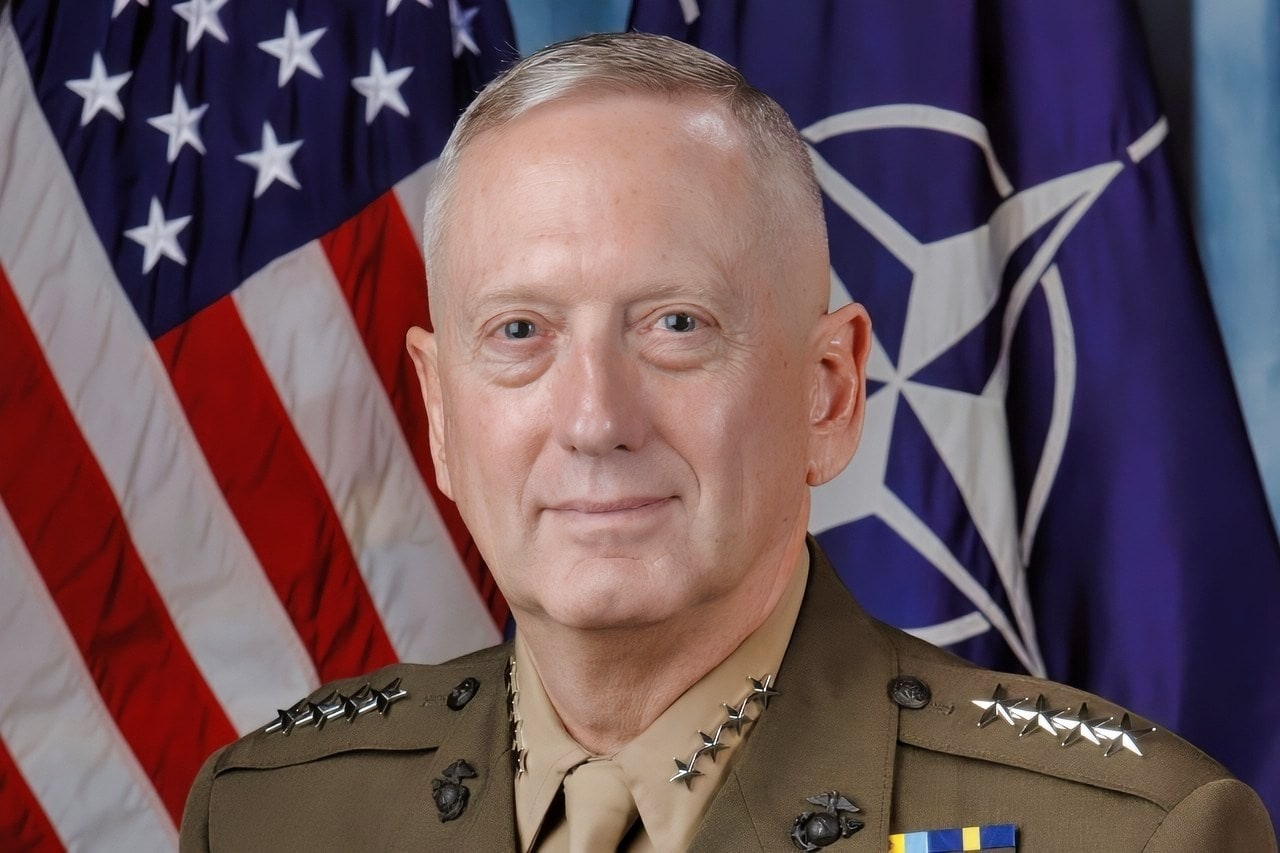
“Hunters and Victims”: The Jim Mattis Mindset That Defined a Generation of Marines
“There are hunters and there are victims. By your discipline, cunning, obedience and alertness, you will decide if you are a hunter or a victim. – General James Mattis
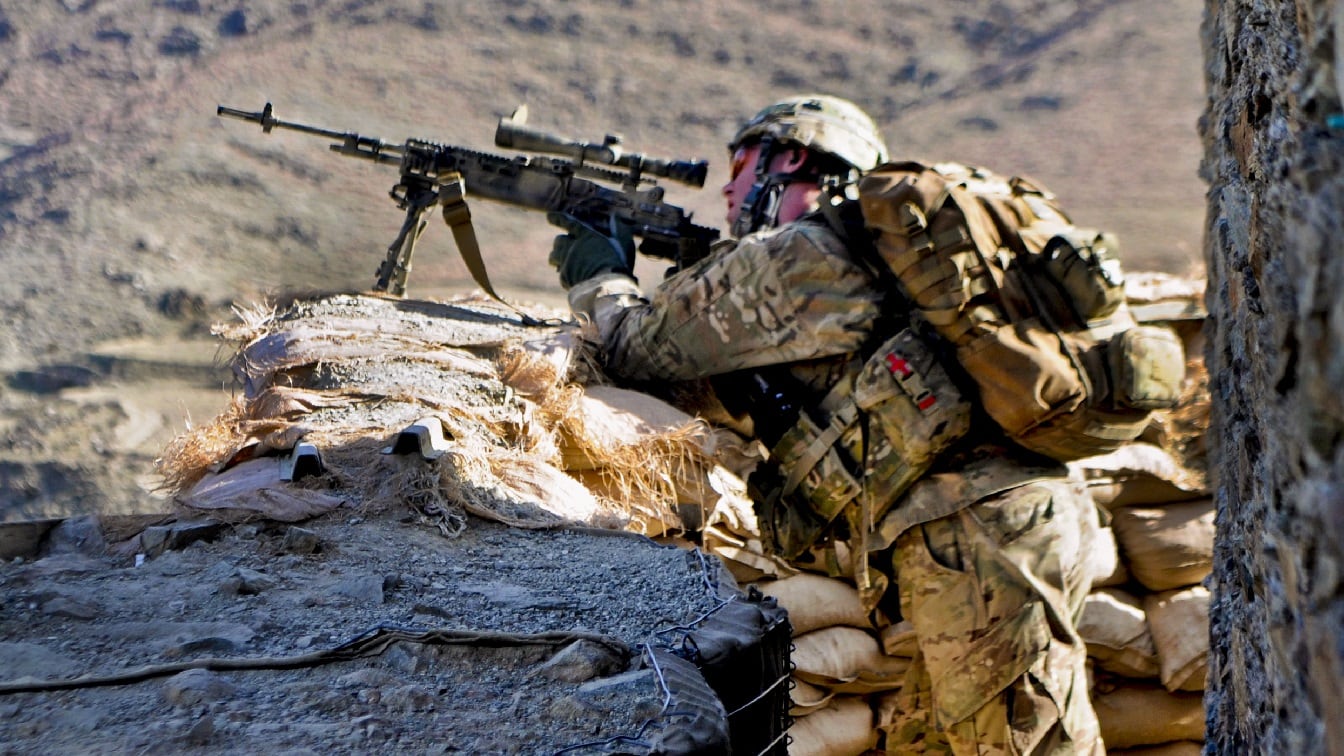
U.S. Army Sgt. Andrew Barnett scans the area using the optic lens on his M14 enhanced battle rifle outside an Afghan border police observation point in Kunar province, Afghanistan, Jan. 28, 2013. Barnett is assigned to the 101st Airborne Division’s 2nd Battalion, 327th Infantry Regiment, 1st Brigade Combat Team. U.S. Army photo by Sgt. Jon Heinrich
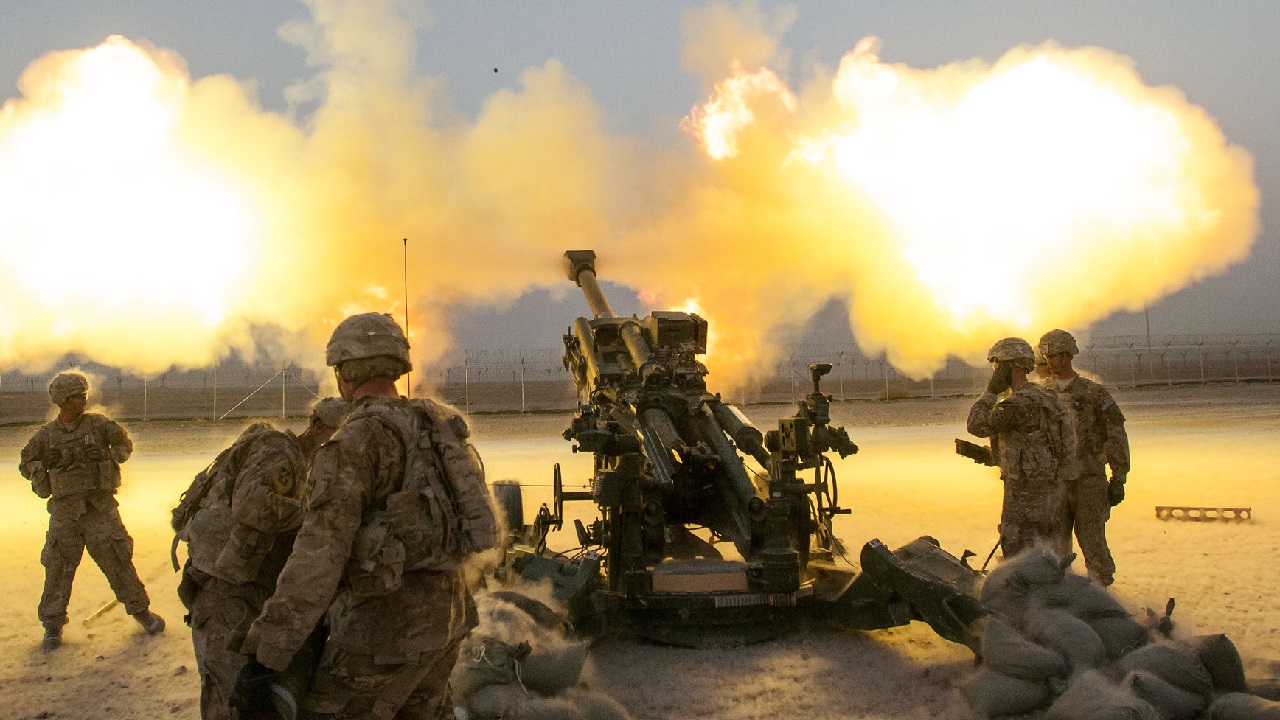
Soldiers serving with Alpha Battery, 2nd Battalion, 77th Field Artillery Regiment, 4th Infantry Brigade Combat Team, 4th Inf. Division, shoot a round down range from their M777A2 howitzer on Kandahar Airfield, Afghanistan, Aug. 22, 2014. The round was part of a shoot to register, or zero, the howitzers, which had just arrived on KAF from Forward Operating Base Pasab. The shoot also provided training for a fire support team from 1st Battalion, 12th Infantry Regiment, 4th IBCT, 4th Inf. Div. This is similar to artillery now engaged in Ukraine. (U.S. Army photo by Spc. Ariel Solomon/Released)
The quote by Marine General James Mattis is one of several, by the colorful and candid Mattis, who endeared himself to Marines by talking straight, to the point, and made himself abundantly clear as to what was expected.
Mattis’ straight talk largely hid a superior intellect, but he had many quotes his troops loved. Among them were the following “Mattisisms”:
“Be polite, be professional, but have a plan to kill everybody you meet.”
“There are some assholes in the world that just need to be shot.”
Mattis offered this advice while speaking to some 200 Marines, according to reporter Thomas Ricks: “The first time you blow someone away is not an insignificant event. That said, there are some ******* in the world that just need to be shot.” And then there was this one, which was a classic.
“I come in peace. I didn’t bring artillery. But I’m pleading with you, with tears in my eyes: If you **** with me, I’ll kill you all.”
Ricks reported that Mattis told this to Iraqi leaders following the US invasion.
General Jim Mattis Early Biography:
Mattis was born on September 8, 1950 in the state of Washington. He enlisted in the Marine Corps Reserve in 1969 at the age of 18, and graduated from Central Washington University, with a B.A. in History, in 1971.
During the Second World War, his mother worked in Army Intelligence, stationed in South Africa. His father worked on the Manhattan Project.
After college he was commissioned as a second lieutenant through the Reserve Officers’ Training Corps (ROTC) in 1972.
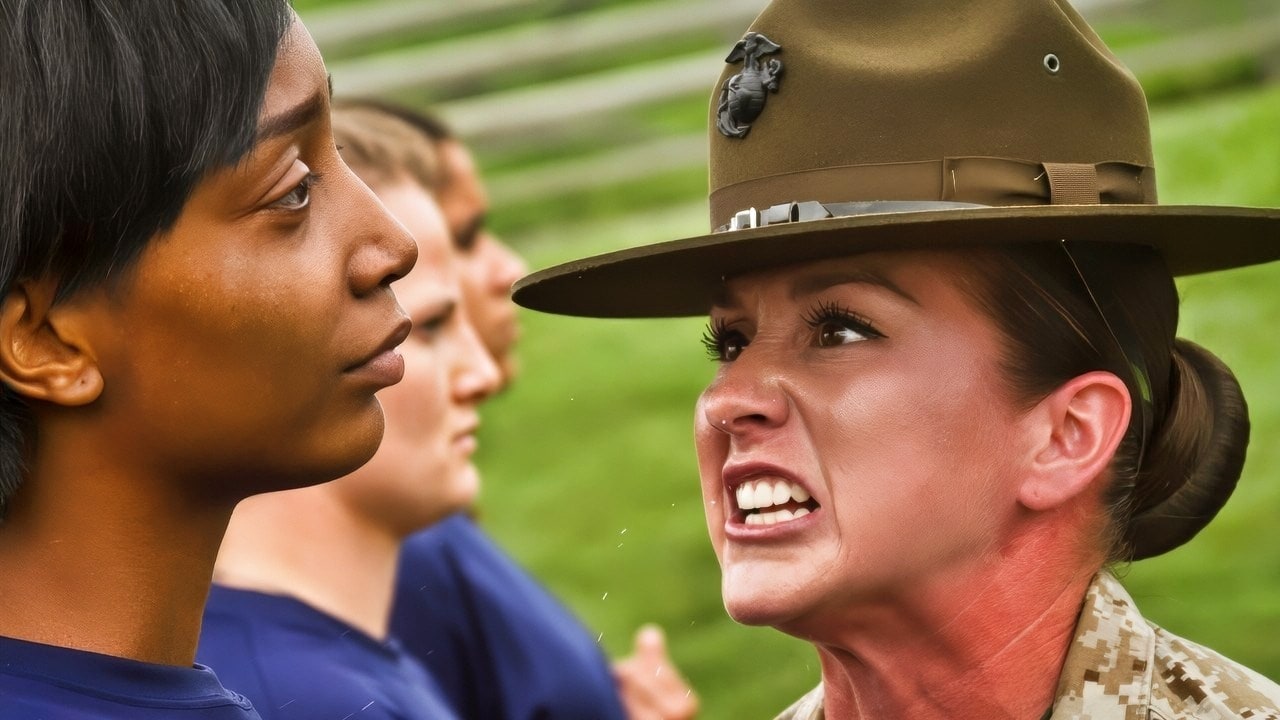
U.S. Marine Corps Sgt. Julie Martinez, a drill instructor with 4th Recruit Training Battalion, Marine Corps Recruit Depot Parris Island, South Carolina and a native of St. George, Utah, encourages a member of the Marine Corps’ Delayed Entry Program to sound off during Recruiting Station Baltimore’s annual Female Pool Function at Fort George G. Meade, Maryland, June 20, 2015. The purpose of the annual Female Pool Function is to build mental and physical toughness among members of the Delayed Entry Program and to maintain their commitment to complete recruit training in order to become United States Marines. (U.S. Marine Corps photo by Sgt. Bryan Nygaard/Released)
As a lieutenant, Mattis was assigned as a rifle and weapons platoon commander in the 3rd Marine Division. As a captain, he was assigned as the Naval Academy Preparatory School’s Battalion Officer, commanded rifle and weapons companies in the 1st Marine Regiment, then served at Recruiting Station Portland, Oregon, as a major.
Mattis was considered one of the most intellectually gifted officers by his commanders and was earmarked for advancement early in his military career.
After Mattis’ promotion to the rank of lieutenant colonel, he commanded 1st Battalion, 7th Marines, one of Task Force Ripper’s assault battalions during the first Gulf War. As a colonel, Mattis commanded the 7th Marine Regiment from June 28, 1994, to June 14, 1996.
Call Sign Chaos:
During the war in Afghanistan that started in 2001, Mattis was promoted to Brigadier General and commanded the 1st Marine Expeditionary Brigade. It was there that he earned one of his nicknames as well as his call sign “Chaos.” This was an interesting acronym for “the Colonel Has Another Outstanding Solution.”
Mattis’ other nicknames include the Warrior Monk and Mad Dog Mattis.
During November 2001, Mattis led Task Force 58 into southern Afghanistan. At 400 miles inland, this is considered the “farthest ranging amphibious assault” in the history of the Marine Corps and Navy.
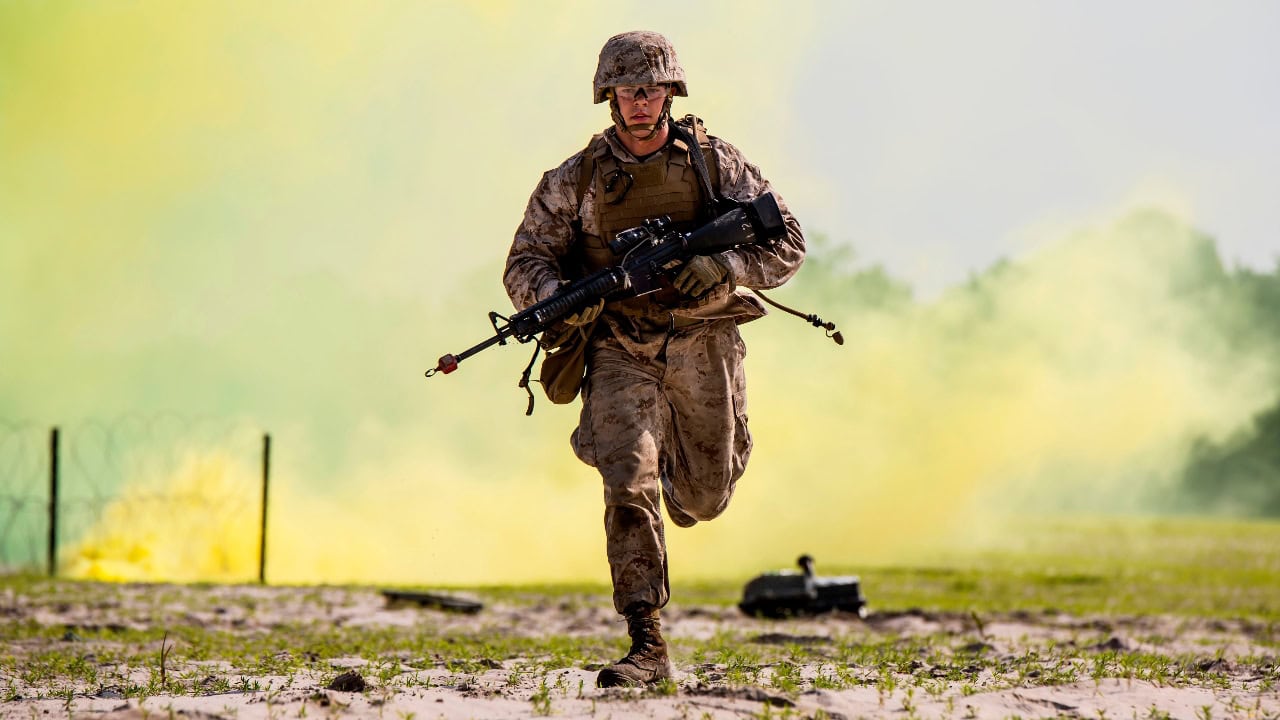
Lance Cpl. Alex Rowan, a combat engineer with 4th Combat Engineer Battalion, 4th Marine Division, stationed out of Bessemer, Ala., runs to take cover before the Anti-Personnel Obstacle Breaching System detonates during the SAPPER Leaders Course aboard Camp Lejeune, N.C., June 26, 2015. During the course, the Marines used assault and breaching techniques to clear a wire obstacle using line charges that utilized C4 explosives and their APOBS. (U.S. Marine Corps photo by Cpl. Krista James/Released)
After that, his promotions and added responsibilities came quickly.
2002-2004 – Commander of the First Marine Division during the invasion of Iraq.
2004-2006 – Commander of Marine Corps Combat Development Command.
2006-2007 – Commander of I Marine Expeditionary Force.
2007-2009 – NATO Supreme Allied Commander Transformation.
2007-2010 – Commander of US Joint Forces Command.
2010-2013 – Commander of US Central Command.
2013 – Mattis retired as a four-star general.
Controversy in Afghanistan Over Medevac For Army Green Berets:
In December 2001, an airstrike carried out by a B-52 bomber inadvertently targeted a position held by a US Green Beret A-Team (ODA-574) and Afghan militiamen in Uruzgan Province. The SF team was protecting future President Hamid Karzai near Kandahar and had requested air support against Taliban forces, but were hit by a 2,000-pound bomb, resulting in three Green Beret deaths and several wounded, alongside Afghan militia.
Numerous men were wounded in the incident, but Mattis repeatedly refused to dispatch helicopters from the nearby Camp Rhino to recover them, citing operational safety concerns.
Instead, an Air Force helicopter flew from Uzbekistan to ferry the men to the Marine Corps base, where helicopters sat readily available but unauthorized to fly.
Captain Jason Amerine blamed the delay caused by Mattis’s refusal to order a rescue operation for the deaths of several men. Amerine wrote, “Every element in Afghanistan tried to help us except the closest friendly unit, commanded by Mattis,” though he also wrote that “none of that was assessed properly because the [5th Special Forces Group] chose not to call for a formal investigation”.
This incident was used against Mattis during his 2016 nomination as Defense Secretary in President Trump’s first term.
Mattis Named President Trump’s Secretary of Defense:
Shortly after the 2016 Presidential Election, Donald Trump announced in December 2016 that he would nominate Mattis as Secretary of Defense.
The House and Senate voted on January 12-13, 2017, to approve a waiver allowing Mattis to serve as secretary of defense even though he retired from the military four years prior (the National Security Act of 1947 dictates that retired military officials must wait seven years after retirement before leading the Department of Defense, now the War Department).
Mattis resigned from the post in 2019, after failing to convince the president to remain in Syria after the defeat of ISIS. Mattis had stated that the US would remain there to ensure ISIS didn’t reorganize. But President Trump insisted that the US would withdraw.
Mattis wrote that Trump has “the right to have a Secretary of Defense whose views are better aligned with [his] on these and other subjects.”
Mattis is an avid reader and is said to have a 7,000-book library, and the one book that he claims every American should read is Marcus Aurelius’s Meditations.
About the Author: Steve Balestieri
Steve Balestrieri is a National Security Columnist. He served as a US Army Special Forces NCO and Warrant Officer. In addition to writing on defense, he covers the NFL for PatsFans.com and is a member of the Pro Football Writers of America (PFWA). His work was regularly featured in many military publications