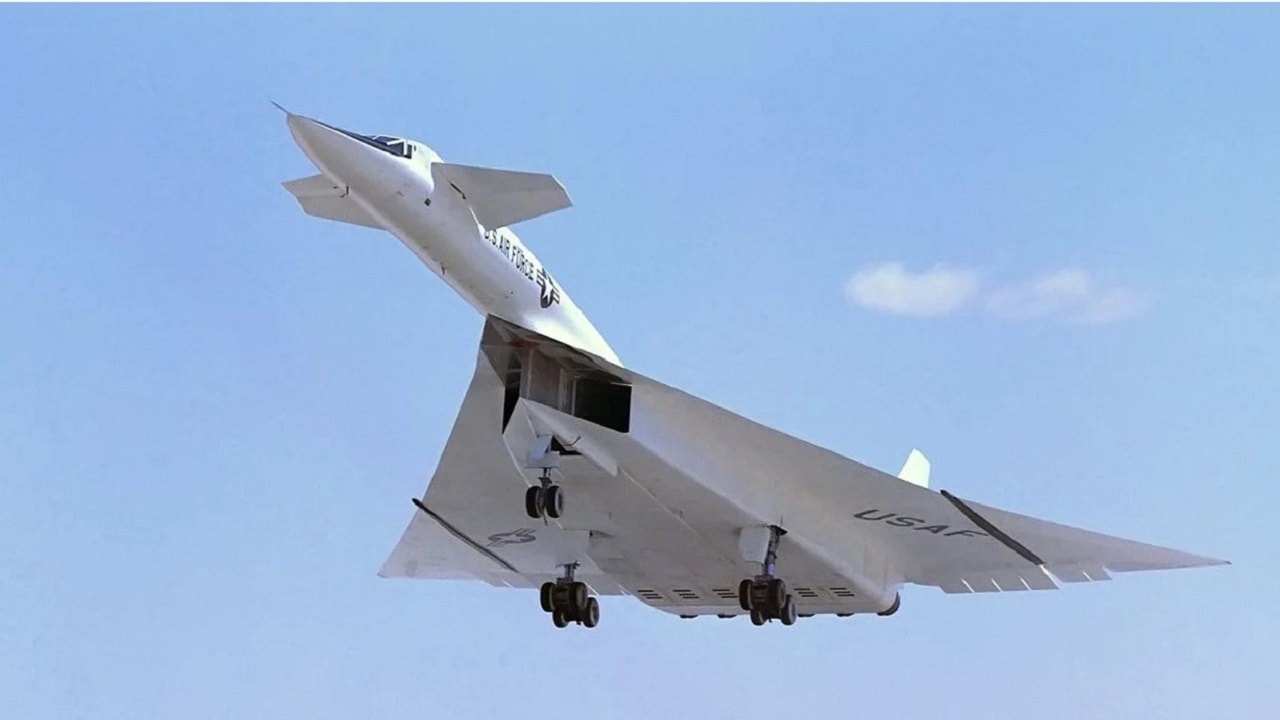
XB-70 Valkyrie: The Mach 3 Bomber That Never Went to War
North American Aviation had an idea for a bomber during the mid-1950s and the early years of the Cold War. The company envisioned a massive strategic bomber, powered by a whopping six jet engines that, although normally flying at subsonic speeds, could also sprint blisteringly fast into the supersonic range. That aircraft would become the XB-70 Valkyrie.
Toting early iterations of America’s nuclear weaponry, the jet would fly at Mach 3 speeds, or three times the speed of sound, and avoid defending aircraft and simply outrun them.
Unfortunately for North American Aviation, though they ultimately built a pair of research aircraft, their vision for a fleet of U.S. Air Force supersonic strategic bombers would not come to fruition, remaining experimental aircraft that would not enter serial production or service.
The reasons for the platform’s lack of success were several, but in essence stemmed from increasingly sophisticated air defenses as well as nuclear weapon delivery systems and the intercontinental ballistic missile.
The Age of the Intercontinental Ballistic Missile
“As impressive a technological feat as the B-70 represented, the aircraft was under development at a time when the future of the manned bomber was uncertain,” NASA wrote about the remarkable jet. “During the late 1950s and early 1960s, many felt that manned aircraft were obsolete, and the future belonged to missiles. As a result, the Kennedy Administration ended plans to deploy the B-70. Two experimental XB-70A prototypes were under construction at North American Aviation when the program was canceled.”
The logic was cold, but crystal-clear: why send human pilots in the air, risking their lives on platforms that were orders of magnitude slower than even supersonic aircraft?
It proved to be a powerful argument, though it was not the end of the XB-70’s career: there was still a window of opportunity for supersonic transport aircraft to service the commercial market.
Commercial Supersonic Transport
NASA explains that, concurrent with the XB-70’s cancellation, there was an increase in interest in the potential of supersonic transport (SST), which could give the project new life not for the military but for the commercial transportation market.
The growing fleet of jet-powered airliners had drastically cut travel time for commercial passengers compared to early propeller-driven aircraft, and further time savings would naturally be of interest to both passengers and, consequently, airlines.
In the early 1960s, the Flight Research Center — later called the Dryden Flight Research Center — had made initial forays into supersonic transportation, with several aircraft modified to serve as research platforms for a proposed supersonic transporter.
“The XB-70 Valkyrie seemed to be a perfect testbed for SST research,” NASA explains. It was a time of hope for the flagging project. The XB-70 “was the same size as the projected SST designs, and used similar structural materials, such as brazed stainless steel honeycomb and titanium. Thus, the XB-70A’s role changed from a manned bomber prototype to one of the most remarkable research aircraft ever flown.” There was great promise in the project.
But despite an agreement between the U.S. Air Force and NASA to join forces for supersonic transport research, a deadly accident put the kibosh on SST research.
May Day
“On June 8, 1966, when the second XB-70 crashed following a midair collision with NASA’s F-104N chase plane,” NASA details. “Joe Walker, F104N pilot, died in the accident. North American test pilot Al White ejected from the XB-70 in his escape capsule, but received serious injuries in the process.
Co-pilot Maj. Carl Cross, who was making his first flight in the XB-70, was unable to eject and died in the crash.”
“The deaths of Walker and Cross, and the destruction of the second XB-70 had major consequences for the research program. The second XB-70 had been selected for the Phase II tests, which were to be conducted jointly by NASA and the Air Force. With this aircraft now destroyed, only the first aircraft was available. Given the aircraft’s shortcomings, the Air Force began to doubt that it would be able to meet the Phase II test goals.”

XB-70. Image Credit: Creative Commons.

XB-70. Image Credit: Creative Commons.
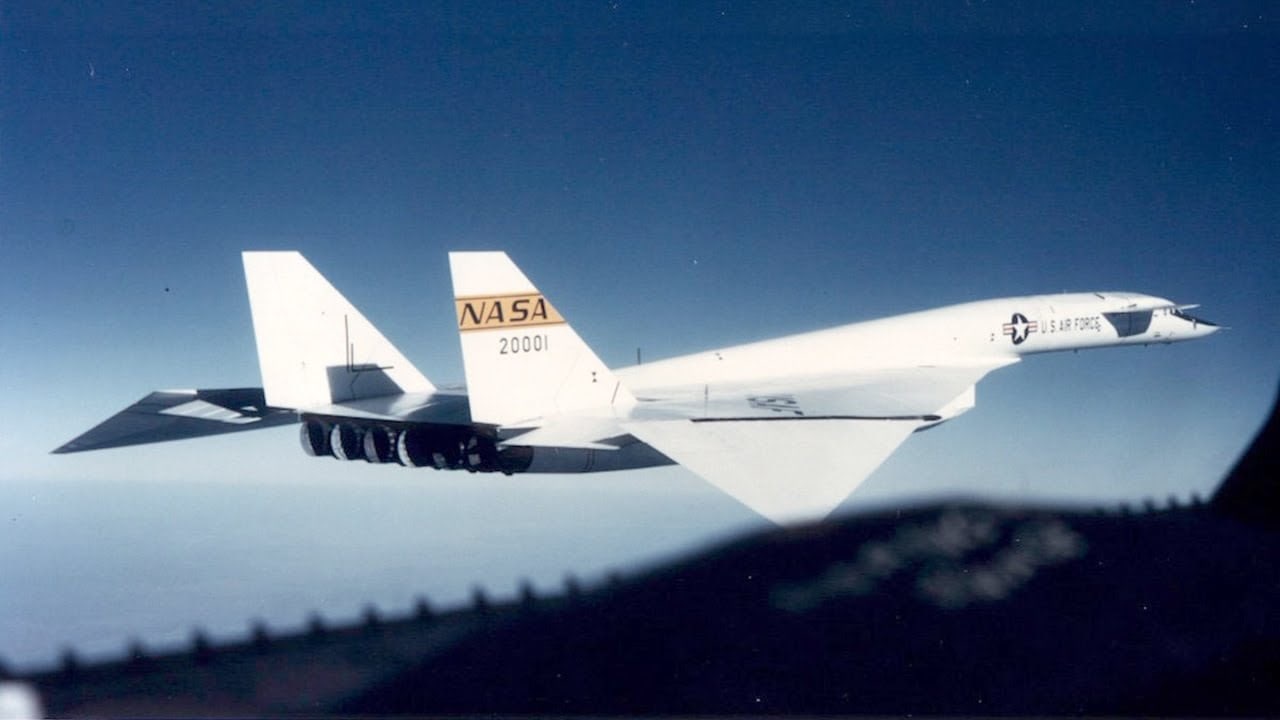
XB-70. Image Credit: Creative Commons.
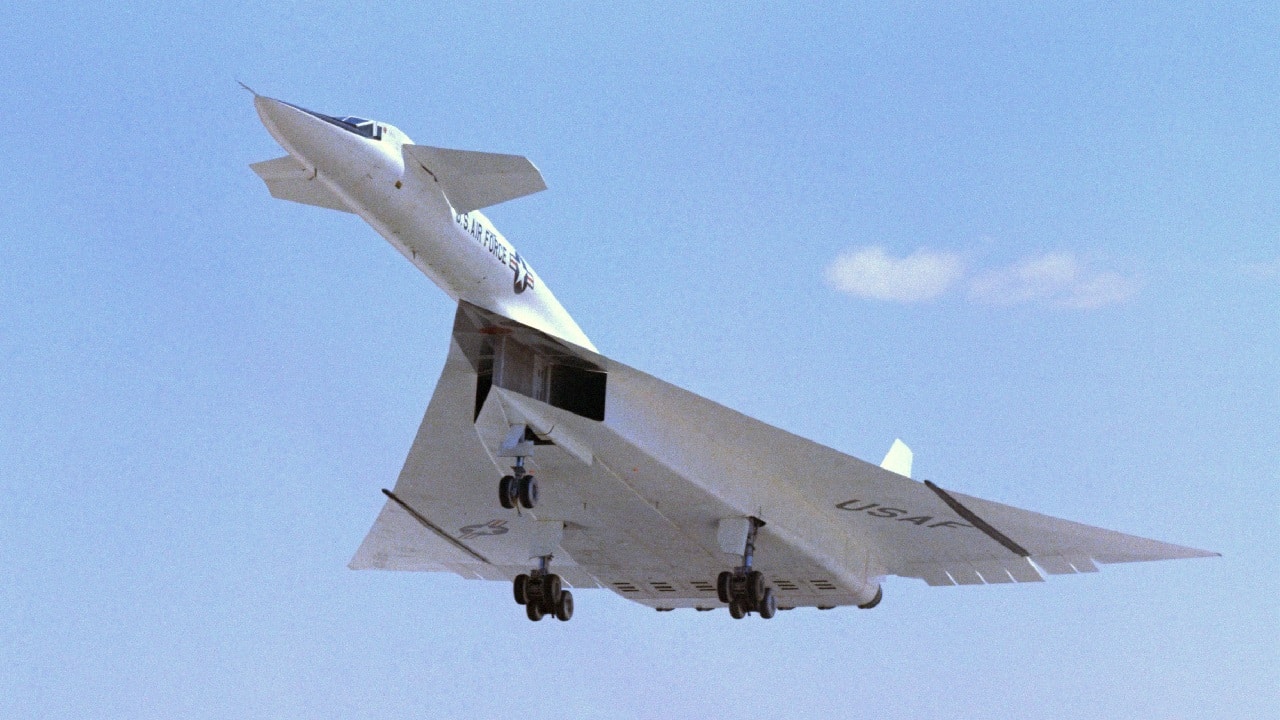
XB-70 Valkyrie. Picture Details: Viewed from the front the #1 XB-70A (62-0001) is shown climbing out during take-off. Most flights were scheduled during the morning hours to take advantage of the cooler ambient air temperatures for improved propulsion efficiencies. The wing tips are extended straight out to provide a maximum lifting wing surface. The XB-70A, capable of flying three times the speed of sound, was the world’s largest experimental aircraft in the 1960s. Two XB-70A aircraft were built. Ship #1 was flown by NASA in a high speed flight research program.
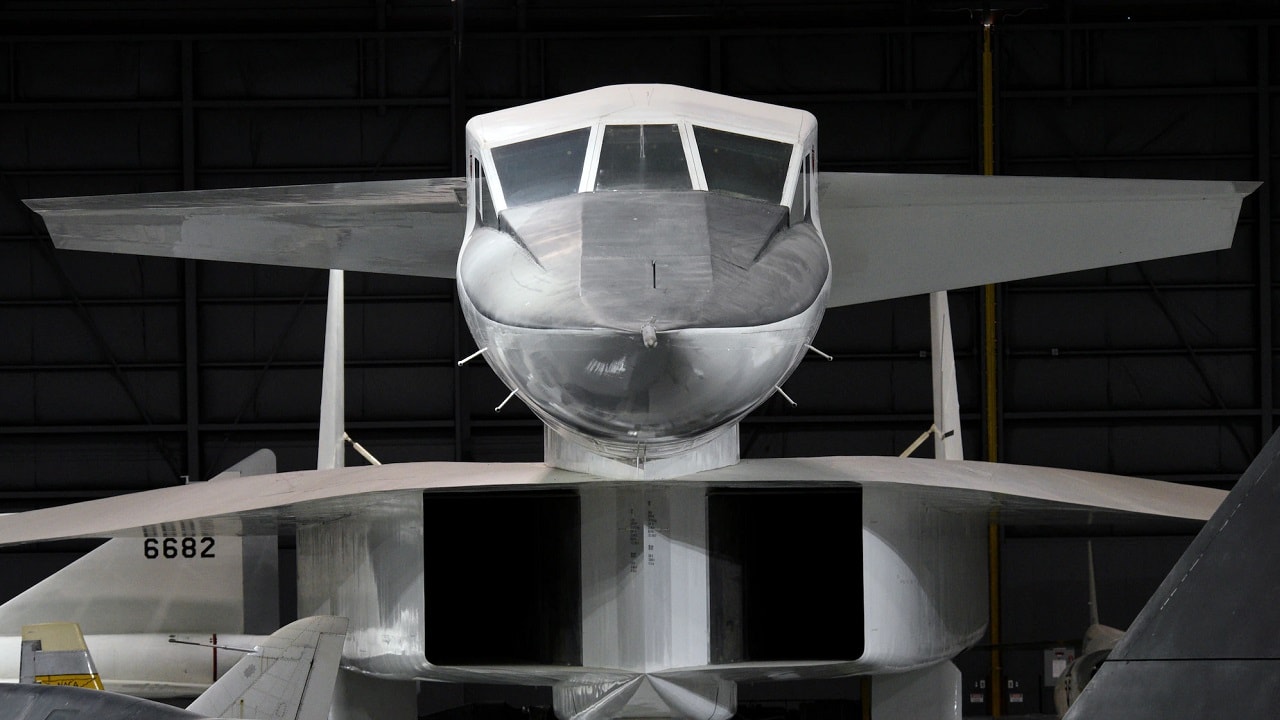
The futuristic XB-70A was originally conceived in the 1950s as a high-altitude, nuclear strike bomber that could fly at Mach 3 (three times the speed of sound) — any potential enemy would have been unable to defend against such a bomber.
Despite the horrific and fatal crash, there were also several engineering challenges that simply could not be overcome with the XB-70 as it was. Research flights showed that although the aircraft could indeed sustain supersonic flight, it was not optimized for commercial flight.
At high altitudes and high speeds, the research aircraft exhibited buffeting turbulence, requiring close attention from the pilots.
For a military aircraft, this motion was certainly somewhat of an irritation, but it did not make the aircraft necessarily ineffective.
But for civilian passengers on a commercial supersonic flight, it could be quite uncomfortable and accelerate the aircraft’s accumulated structural fatigue.
While the late 1960s marked the end of the XB-70, it did not signal the end of supersonic transport research more broadly — the first commercial passenger flight at supersonic speeds was achieved by the Concorde project in 1976, not long after the XB-70 program ended.
About the Author: Caleb Larson
Caleb Larson is an American multiformat journalist based in Berlin, Germany. His work covers the intersection of conflict and society, focusing on American foreign policy and European security. He has reported from Germany, Russia, and the United States. Most recently, he covered the war in Ukraine, reporting extensively on the shifting battle lines in Donbas and writing about the war’s civilian and humanitarian toll. Previously, he worked as a Defense Reporter for POLITICO Europe. You can follow his latest work on X.