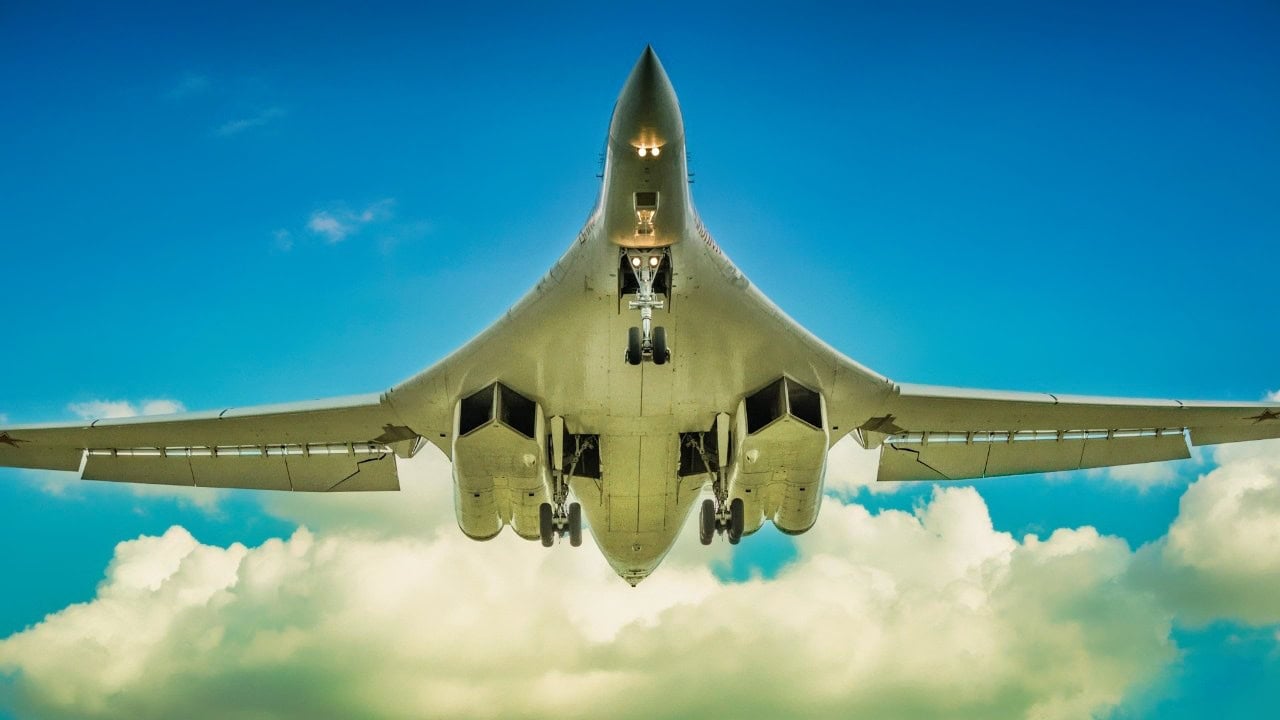
Key Points and Summary on Tu-160 Bomber Delivery to Russian Air Force – Russia’s defense industry is surging production to backfill combat losses, with emphasis on two fighter lines: Su-34s from Novosibirsk and Su-35s from Komsomolsk-on-Amur, where deliveries are described as arriving at a rapid, sustained tempo. But the “forgotten child” is Russia’s Long-Range Aviation.
-While two modernized Tu-160M bombers were reportedly delivered, the broader Tu-160M2 modernization plan remains constrained by slow timelines and propulsion challenges tied to the NK-32-02 engine effort.
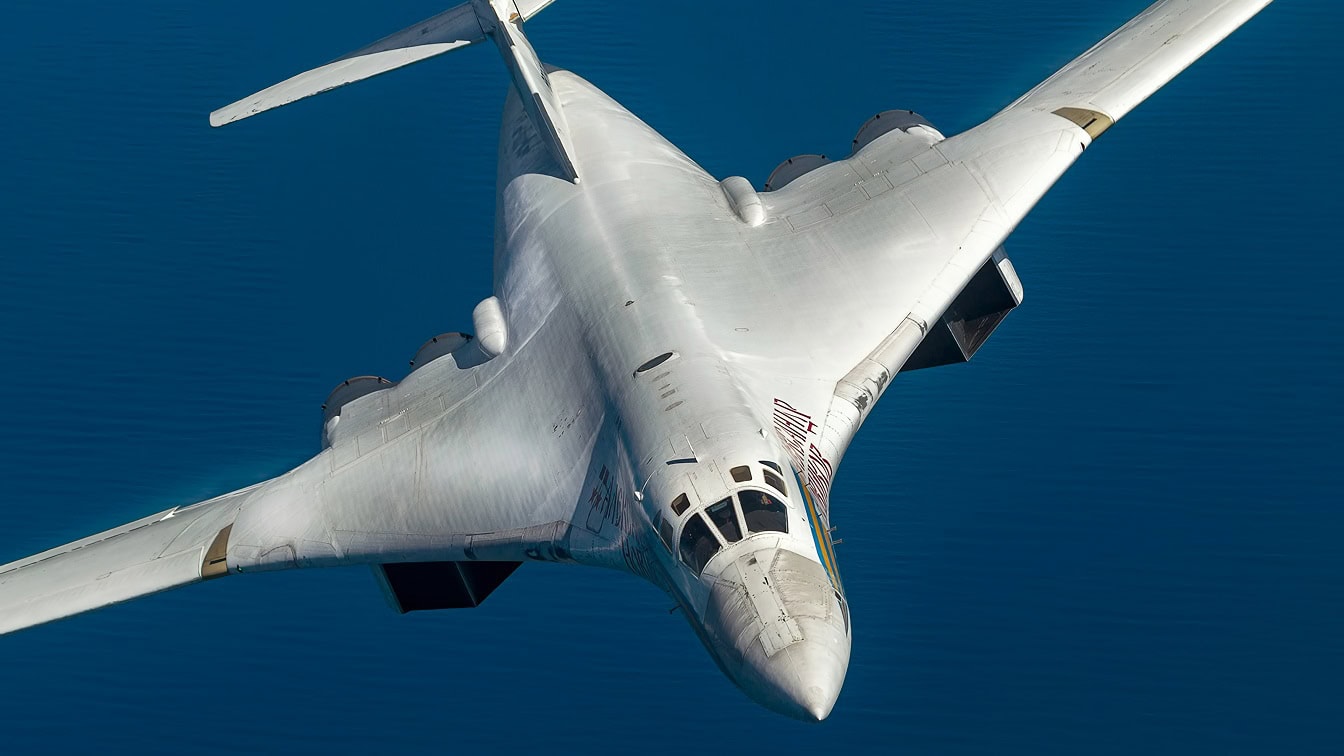
Tu-160 Bomber. Image Credit: Creative Commons.
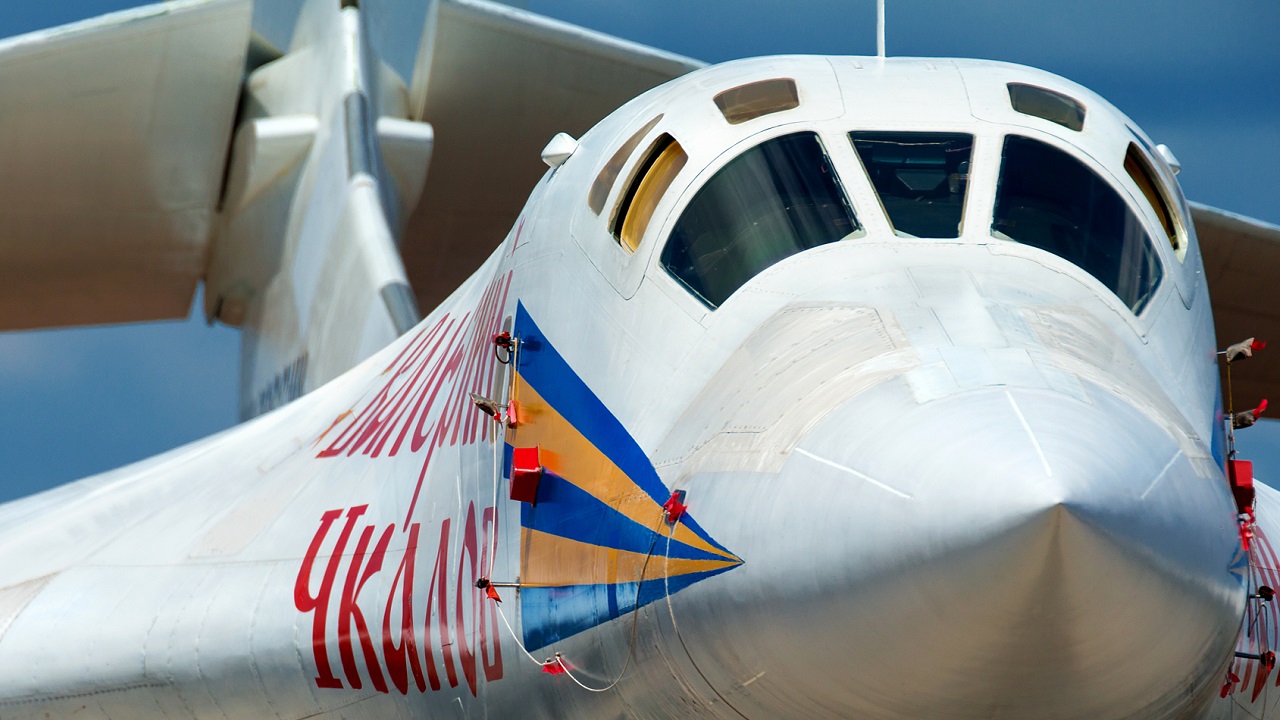
Tu-160. Image Credit: Creative Commons.
-The result is an uneven recapitalization: tactical jets get priority, while strategic aviation modernizes in smaller increments.
Inside Russia’s Wartime Aviation Surge: Jets Up, Tu-160M Bombers Lag
Russia’s defense industry is working overtime to produce the combat aircraft needed to replace the many airframes lost by the Russian Aerospace Forces (VKS) in the Ukraine war. Its efforts have been directed mostly at two production lines, according to TASS.
The first is the Novosibirsk Aircraft Production Association (NAPO), which is the production line for the Sukhoi Su-34 side-by-side medium-range fighter-bomber. The Su-34 has suffered some of the highest combat losses in the Ukraine war, with at least 22 shot down or crashed during operations or training.
The other model is the Su-35, which is produced at the Komsomolsk-na-Amure plant in Khabarovsk Province, in the Russian Far East. There were seven batches of this model delivered in 2025, with the sixth delivery taking place in November and the last on Christmas.
“If there were deliveries occurring at this frequency then the Komsomolsk plant must have been working three shifts, seven days a week,” said a retired Russian aerospace engineer familiar with the Sukhoi aircraft production operation. “But as remarkable as it might be for these aircraft to be produced at a regular tempo this is nothing compared to the numbers of Su-27s and MiG-29s that were manufactured each year in the 1980s.”
The Forgotten Child: Dalnaya Aviatsiya
The “forgotten child” in this time of accelerated production has been the other part of the VKS force structure, namely the Long-Range Aviation—Russia’s bomber command.
According to TASS, the Russian United Aircraft-Building Corporation (OAK) delivered two modernized Tupolev Tu-160M strategic bombers at the beginning of this month, but no further details were released. The Tu-160 design was originally developed in the 1970s. The bomber entered service with the Soviet Air Force in 1987 and was the last strategic bomber ever produced in Russia.
The NATO codename for the Tu-160 is Blackjack, but the Russian nickname given to the aircraft by its operators is the “White Swan,” a reference to the white color of many of the airframes and its variable-sweep wings. It is the most modern bomber in the VKS today and carries some of the longest-range air-launched weapons.
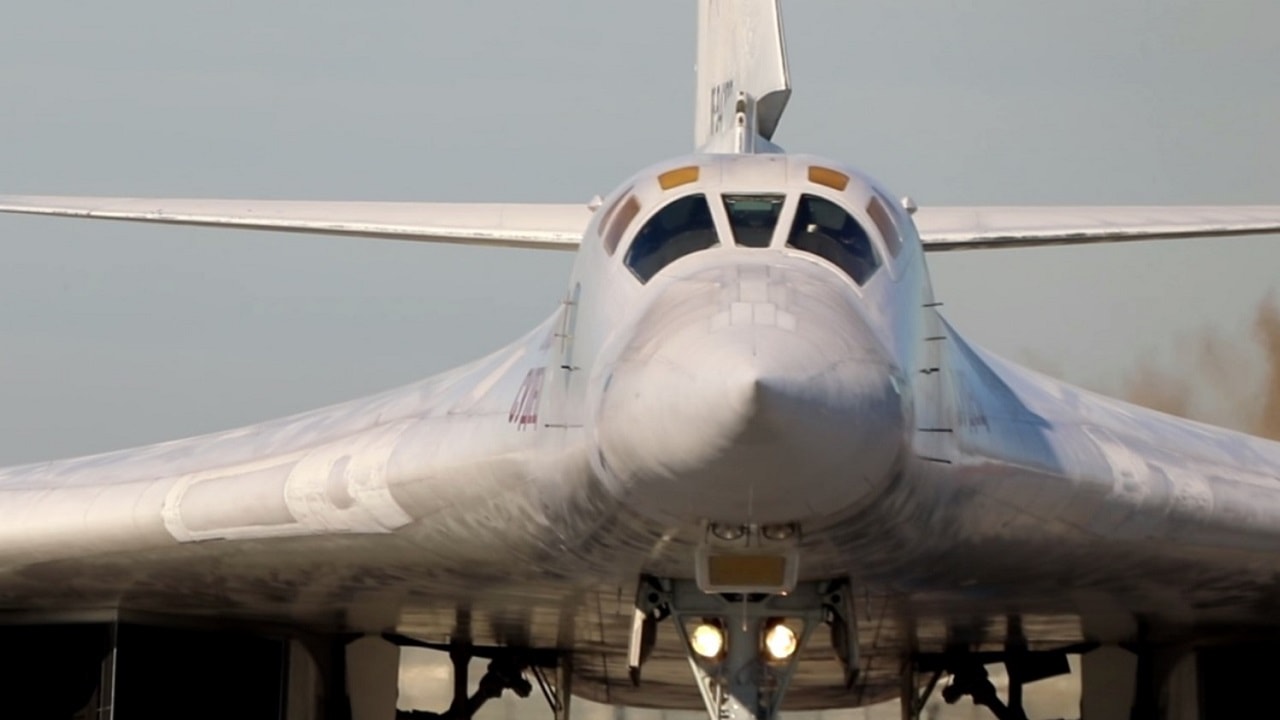
Tu-160. Image Credit: Creative Commons.
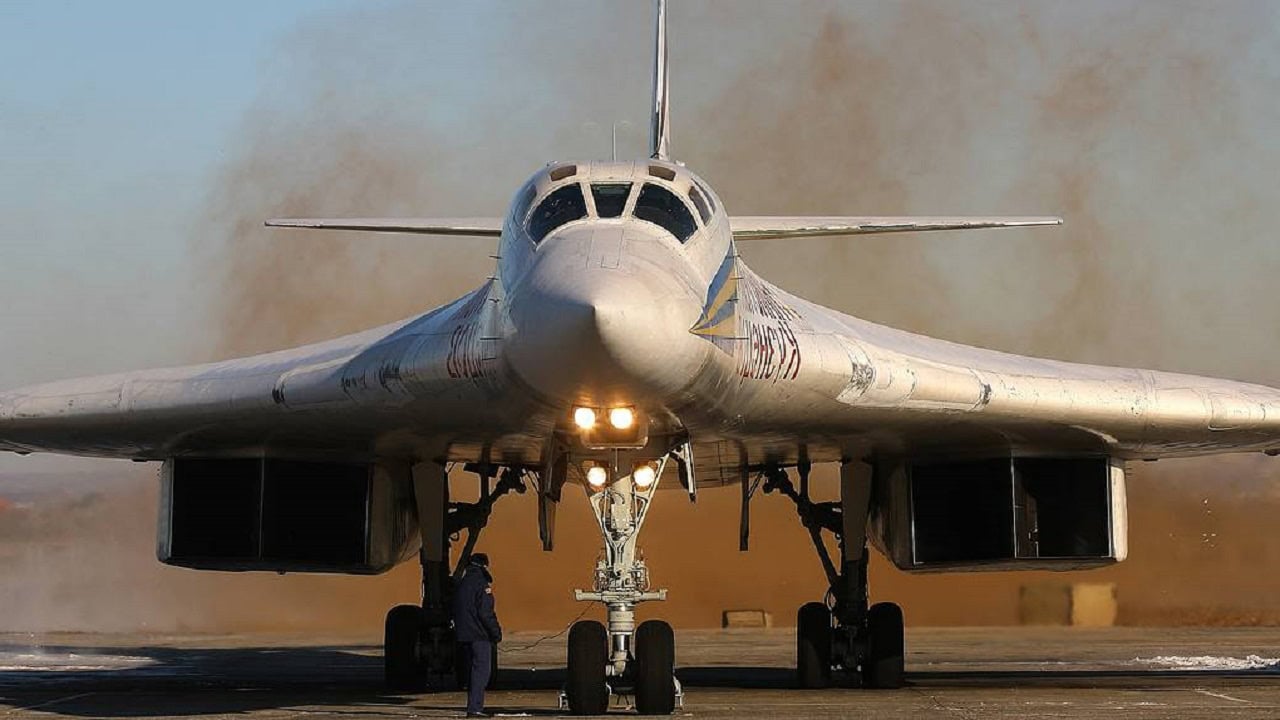
Tu-160 bomber about to take off. Image Credit: TASS.
By the end of 1990s, the aircraft were already beginning to show the initial signs of obsolescence, especially in propulsion and on-board systems. In the middle of the 2010s, Russia began a slow-moving program to upgrade the bomber force.
This effort was to occur in two overlapping stages. In the first stage, the Tu-160 aircraft inherited from the Soviet period would be modernized. In the second stage, a large number of new models would build a much larger fleet.
Modernization Plan for Tu-160
A decade ago, then-Russian Deputy Defense Minister for Procurement Yuri Borisov announced that the new and upgraded bombers “would both be designated the Tu-160M2,” and that “according to our plans, this will most likely happen sometime after 2023.”
The first of the new models did not take flight until early January 2022, roughly six weeks before the Russian invasion of Ukraine.
The two most recent Tu-160M2 aircraft are identified as Red “23,” serial RF-66017, and Red “22,” named Mintimer Shaimiev, whose serial number has not been seen in any released images. The modernization’s main goal is the installation of new avionics and other combat systems.
For improved propulsion, the old Kuzetsov NK-32/321 engines are replaced by the new-generation NK-32-02. There have been problems with the engine program for years, however, due to a lack of resources.
The Kuznetsov plant that built these engines almost disappeared in the 1990s, when what remained of the Soviet aerospace industry fell on hard times in newly independent Russia.
About the Author: Reuben F. Johnson
Reuben F. Johnson has thirty-six years of experience analyzing and reporting on foreign weapons systems, defense technologies, and international arms export policy. Johnson is the Director of Research at the Casimir Pulaski Foundation. He is also a survivor of the Russian invasion of Ukraine in February 2022. He worked for years in the American defense industry as a foreign technology analyst and later as a consultant for the U.S. Department of Defense, the Departments of the Navy and Air Force, and the governments of the United Kingdom and Australia. In 2022-2023, he won two awards in a row for his defense reporting. He holds a bachelor’s degree from DePauw University and a master’s degree from Miami University in Ohio, specializing in Soviet and Russian studies. He lives in Warsaw.