
Key Points and Summary – The Su-35 is Russia’s most capable non-stealth fighter built in meaningful numbers—a peak evolution of the Su-27 Flanker, not a true fifth-generation competitor.
-It pairs powerful AL-41F1S engines with 3D thrust vectoring for extreme maneuverability, and it carries a strong sensor mix including the Irbis-E radar and an IRST for passive targeting.
-Its strengths are range, payload, and kinematics; its weaknesses are low observability and limited networking depth.
-In practice, Russia tends to use the Su-35 inside a layered air-defense ecosystem, favoring standoff tactics over deep penetration.
-This Flanker is the most capable non-stealth fighter Russia has fielded at scale.
The Su-35 Isn’t “Fifth-Gen”—But It’s Still a Serious Problem
Often mischaracterized as a fifth-generation competitor, the Su-35 is really just the peak evolution of the Flanker design, a hedge against the delays and limitations of the fifth-generation Su-57 program.
Su-35 Fighter from Russia Explained
The Su-35 is a deeply modernized derivative of the Su-27 Flanker. With one seat and twin engines, the Su-35 serves as a long-range air superiority fighter.
The design prioritizes range, sensor fusion (albeit the lesser Russian kind), and super maneuverability. The aircraft is not stealth-optimized but does incorporate some radar cross-section (RCS) reduction measures.
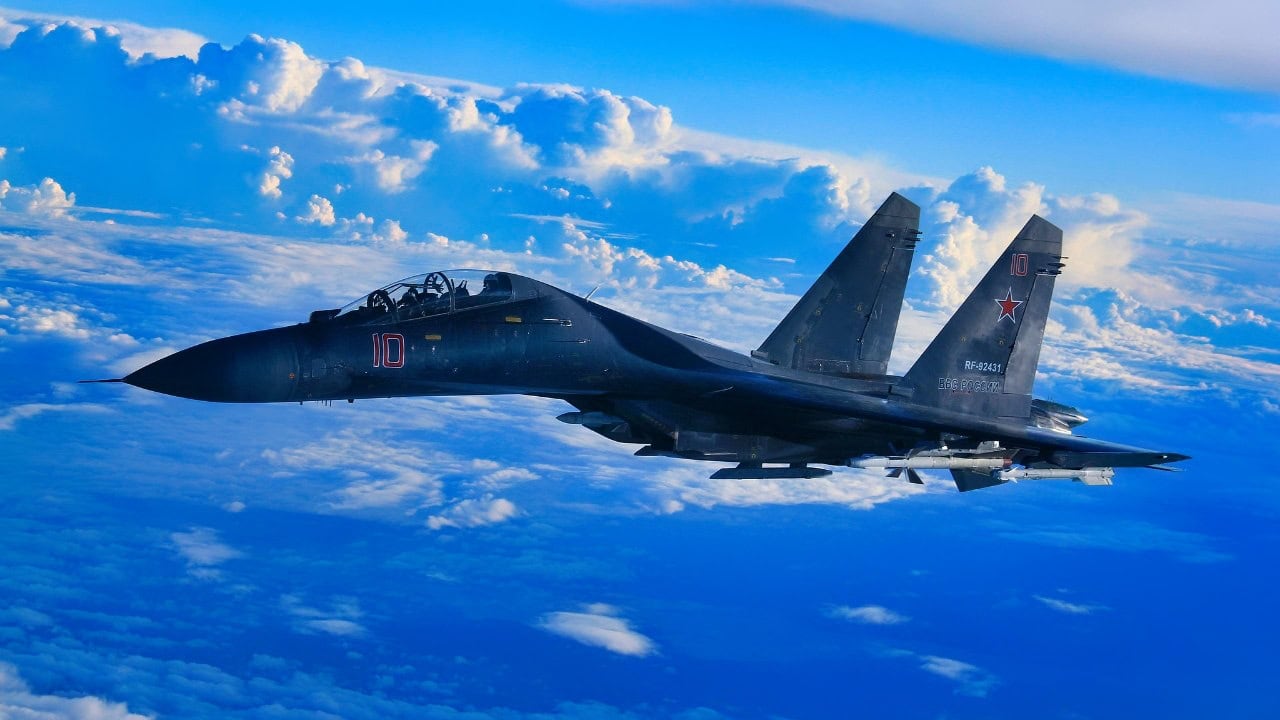
Su-35 Fighter from Russia.
The platform is intended for multi-role fighter operations, with an emphasis on air-to-air engagements.
The Su-35 was developed after the Soviet collapse left Russia with a fleet of aging Su-27s and a surfeit of funds insufficient to produce a new, modern fighter from scratch.
The Su-35 emerged as a reality-based compromise, something that could serve as a cost-effective modernization path for the existing Su-27, a technological bridge to the more advanced, yet chronically delayed, Su-57.
The first iterations of the Su-35, in the 1990s, failed commercially. But the production variant, the Su-35S, reflects a maturation in Russian avionics and an export-driven funding model. The platform ultimately proved that a post-Soviet Russia could still build high-end fighters.
Tech Specs On This Flanker Warplane
The Su-35 features two AL-41F1S engines with 3D thrust vectoring, which provide an exceptional thrust-to-weight ratio and high-alpha and post-stall performance.
The sensor suite includes the Irbis-E PESA radar and IRST for passive targeting. The platform is compatible with a wide variety of AAMs and precision-guided munitions.
Speaking generally, the aircraft’s strengths are range, payload, and kinematics. The constraints are the lack of stealth capabilities and the lack of networking depth.
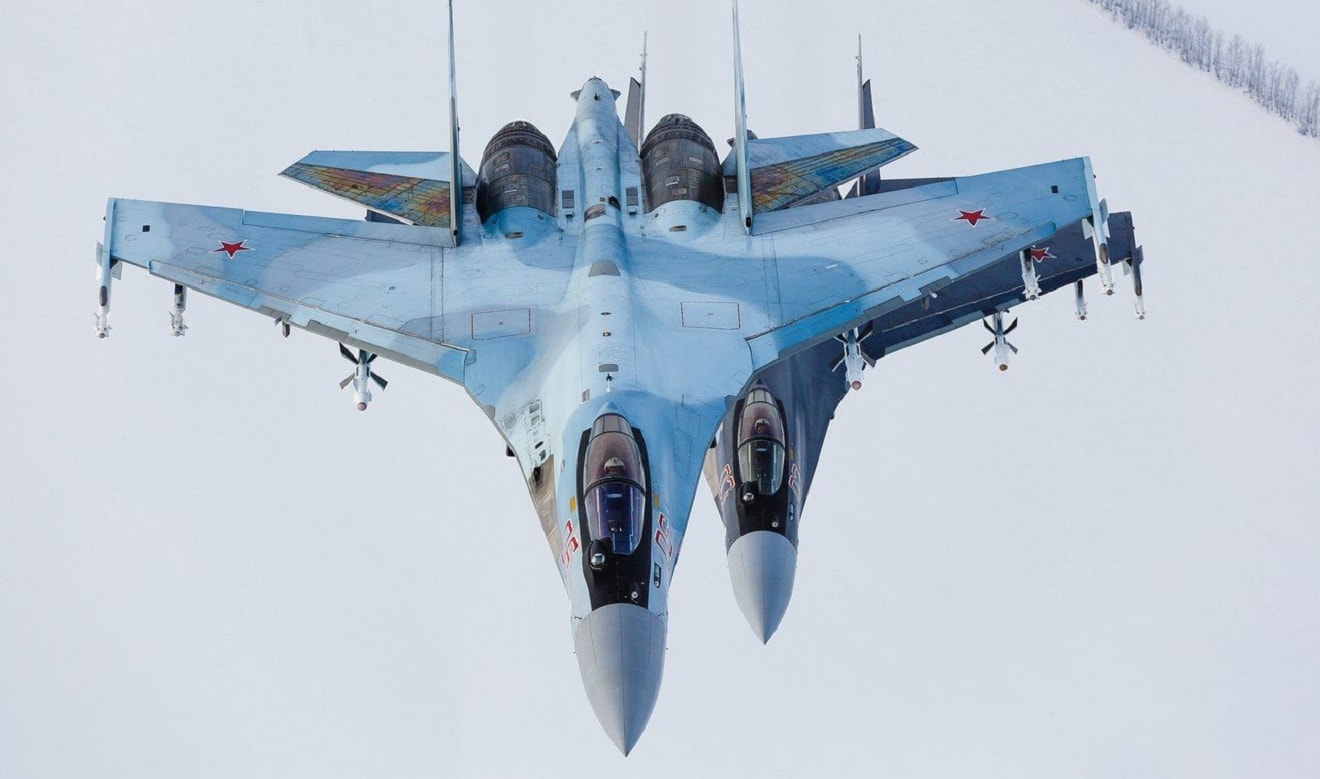
Su-35. Image Credit: Creative Commons.
The Russians use the Su-35 for air superiority, defensive counter-air, and escort missions. The platform is heavily reliant upon ground-based sensors and integrated air defense systems. The combat use has been limited: in Syria, the Su-35 was mainly used in a deterrent role; in Ukraine, it has been used chiefly for standoff employment. The tactical emphasis is on BVR missile shots while avoiding deep penetration into heavily defended zones. The aircraft is at its best when protected by SAMs and supported by ISR.
Strategic Implications
Strategically, the Su-35 reflects a defensive, denial-oriented airpower doctrine—not a power-projection doctrine. Russia designs fighters to operate inside layered air-defense ecosystems, rather than independently.
This partially explains why stealth has been deprioritized relative to kinematics and payload, why radar power and missile range are emphasized over low observability. Basically, the Su-35 is an airborne extension of ground-based IADS.
The way the fighter is used contrasts with US doctrine. US fighters are designed for autonomous operations with a heavy reliance on networking, ISR, and expeditionary basing. Ukraine, however, has highlighted the way the Su-35 is used to launch long-range missiles from standoff distances, rarely penetrating contested airspace without SAM coverage.
The strategic relevance of the Su-35 also stems from its export value. The platform is attractive to countries seeking airspace denial, rather than global reach. A
nd the Su-35 can be purchased without having to jump through the political hoops that Western platforms often require.
Ultimately, the Su-35 signals that Russia prioritizes contested airspace control, not air dominance everywhere—a subtle tell that Russia is not especially influential beyond its own region. In application, the Su-35 is a deterrence asset as much as a combat asset.
The fighter jet will remain operationally relevant for the foreseeable future, in large part because Russia is currently incapable of mass-producing the Su-57. Only a handful of Su-57s have been delivered, and those have been treated so preciously that their impact is indiscernible.
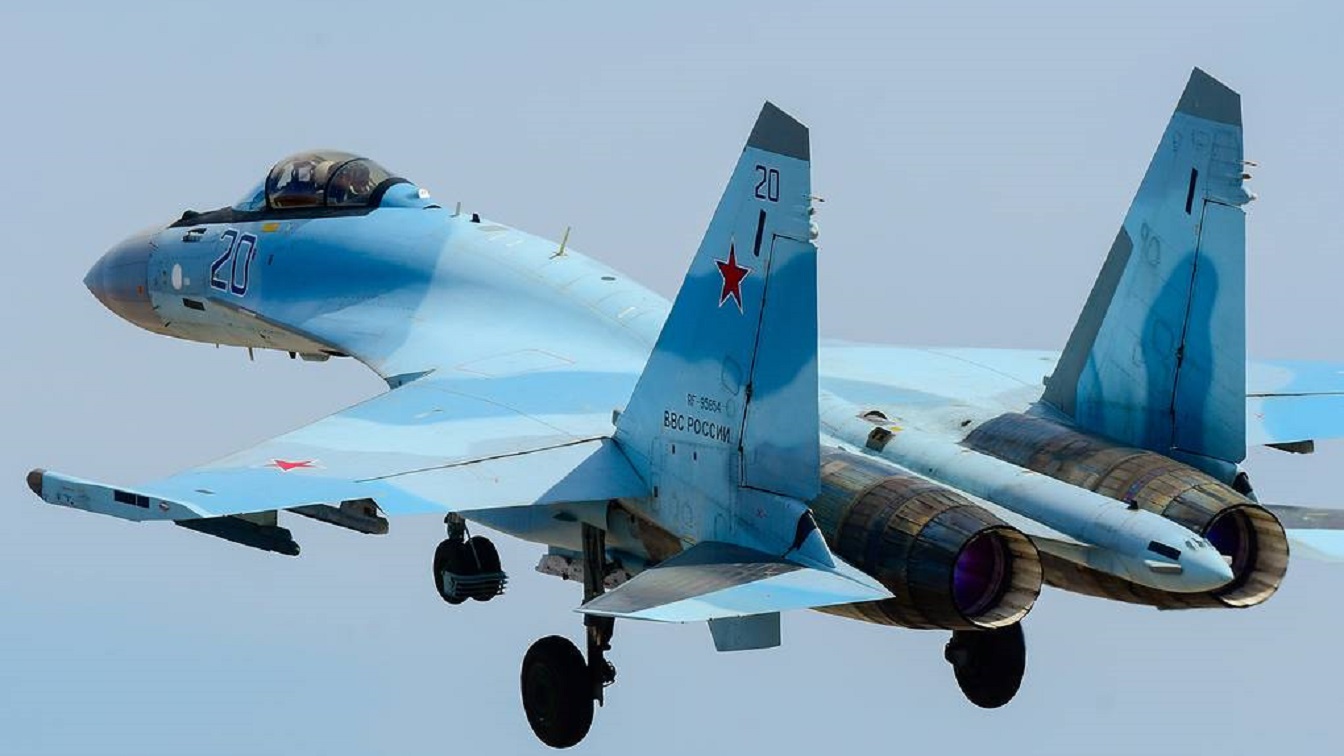
Su-35S fighter. Image Credit: Russian State Media.
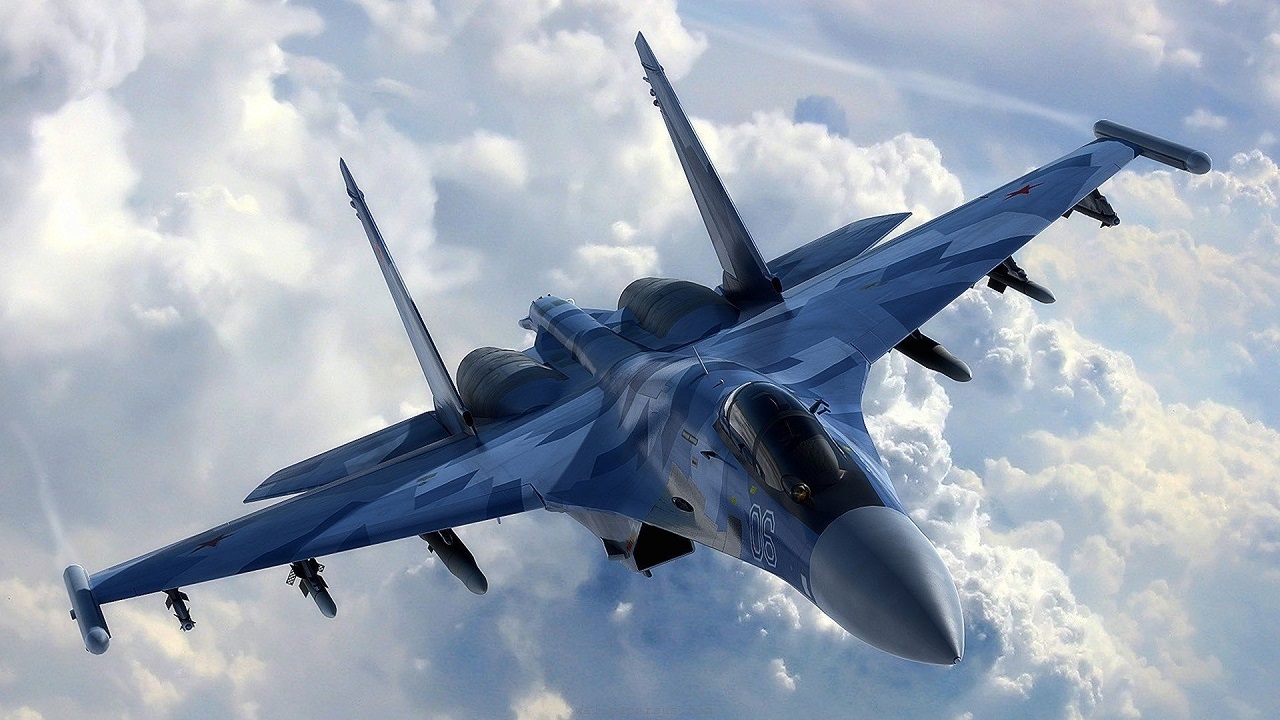
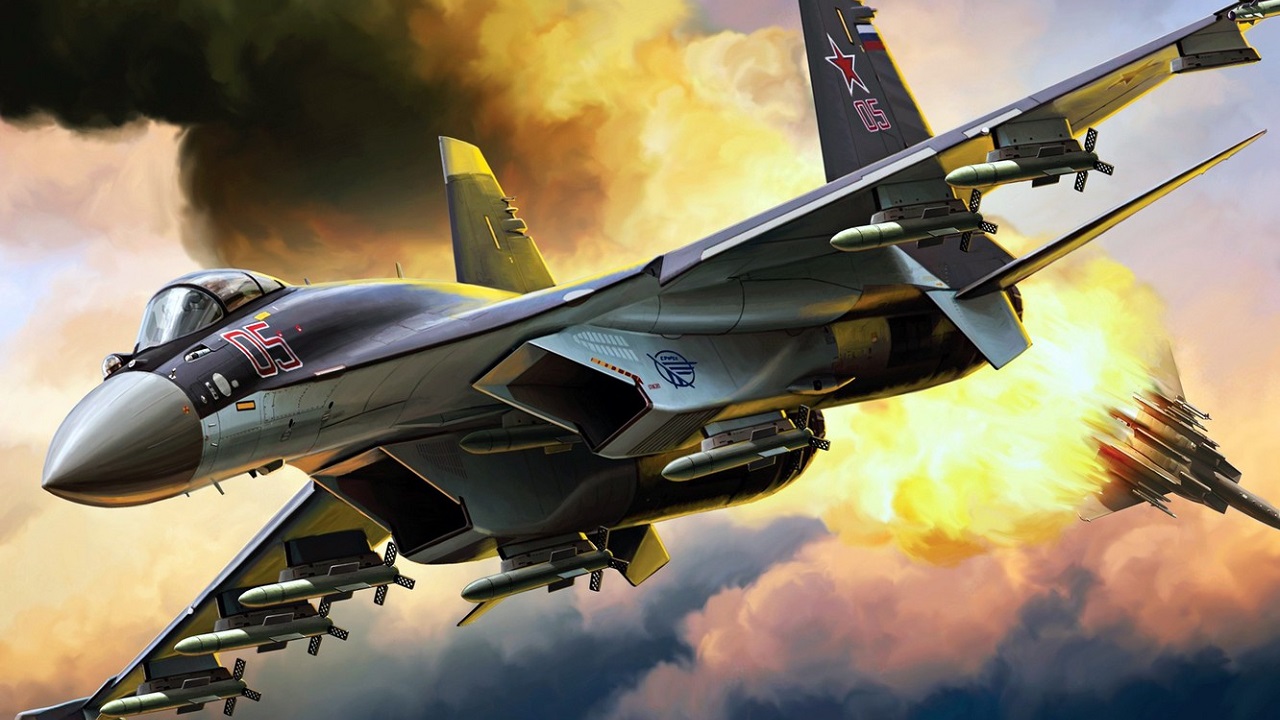
Artist rendering of a Russian Su-35 fighter. Image Credit: Creative Commons.
The Su-35 is a capable bridge product; however, the airframe still offers a strong range, payload, and performance. In the future, expect the Su-35 to receive incremental avionics upgrades, improved missiles, and better integration with drones and ground systems.
But the Russian fighter will never be a fifth-generation-adjacent fighter; it will never have the low observability of the F-22 or the networking depth of the F-35. The Su-35 will ultimately be remembered as what the post-Soviet Russians were capable of crafting with a limited, post-collapse budget, rather than an ambitious or forward-thinking fighter product.
About the Author: Harrison Kass
Harrison Kass is an attorney and journalist covering national security, technology, and politics. Previously, he was a political staffer and candidate, and a US Air Force pilot selectee. He holds a JD from the University of Oregon and a master’s in global journalism and international relations from NYU.