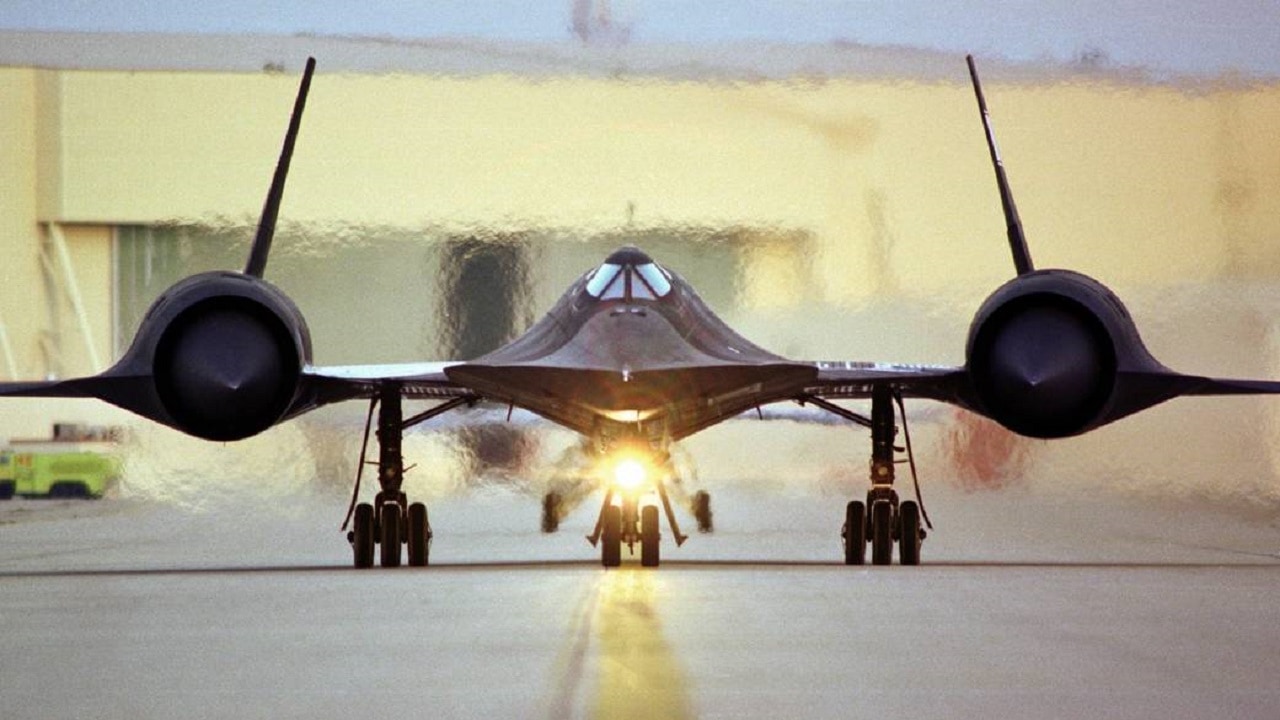
Summary and Key Points: The SR-71 Blackbird remains an aviation outlier—Mach 3.2 speed and extreme altitude made it a reconnaissance platform that could often avoid interception simply by outrunning threats.
-Yet it was retired in 1997 because it was expensive to operate and increasingly redundant in an era when satellites and other ISR tools were expanding.
-The Blackbird’s performance could have inspired something even bigger: a high-altitude, ultra-fast strike aircraft. But turning speed into a bomber raises hard questions—payload drag, survivability tradeoffs, and whether precision weapons could be delivered accurately from extreme altitude without sacrificing the jet’s defining advantage.
Mach 3.2 and 85,000 Feet: Why the SR-71 Was Retired Anyway
The SR-71 Blackbird ticks a lot of rarified boxes: It flew at high altitudes, and faster than any existing aircraft. The high-speed reconnaissance plane was well ahead of its time. It reached still-unrivaled speeds of Mach 3.2 and breakthrough altitudes of 85,000 feet.
The SR-71’s speed influenced the whole field of aviation, and now its possible successor, the SR-72 “Son of Blackbird,” may fly even faster—perhaps achieving hypersonic flight. If it ever does become a reality, the SR-72 may not fly until 2030.
How can the fastest aircraft on earth now sit in a museum, after being cancelled in 1997?
The SR-71 first served in Vietnam, and later, in the 1990s, in the Middle East. It was canceled just a few years after that service because of its high costs and redundancy. In subsequent years, many military weapon developers and leaders in Congress came to lament this decision—the 1990s Clinton years are often recalled as a “procurement holiday” that some believe set back the military many years.
SR-71 Bomber?
The attributes that gave the SR-71 its speed and altitude could have served as a foundation for a paradigm-changing bomber platform.
A similar aircraft engineered with advanced command-and-control capabilities and perhaps an internal weapon bay, could have provided a technological leap for the U.S. Air Force as it sought to maintain air supremacy during and after the Cold War.
Imagine a bomber platform that high and that fast with added stealth capabilities—it could have flown undetected by Soviet air defenses.
SR-71 Outruns Missiles
Even if adding hard points increased such an aircraft’s radar signature, the SR-71 was known for being unhittable simply because it flew too high and too fast, according to an article in The National Interest by Maya Carlin.
“Its engine intakes included sophisticated mechanisms to slow the air below the speed of sound before it entered the engines, and many of its components were made from titanium or a titanium alloy to withstand the intense heat generated by its high speeds,” Carlin writes in a 2025 essay.
If speed, altitude, and technology combine to create an aircraft that cannot be hit, a bomber based on that aircraft could fly safely with or without an internal weapon bay. Because of protruding structures and angled external configurations, the SR-71 may not have been as stealthy as the more modern B-2.
But a sleek, blended wing-body formation combined with unmatched speed and altitude could make the aircraft nearly impossible to hit.
Too Fast to Track
An aircraft traveling at Mach 3.2 might travel so quickly from one radar aperture to another that a ground-based radar system cannot establish a continuous track of the aircraft. At high altitudes, the task would be even harder.
So why wasn’t the SR-71 turned into a bomber? Cost considerations and technical complications may be the explanation: Were there bombs at this time that could be accurately dropped from 85,000 feet?
SR-71 surveillance conducted at high altitudes showed great promise for reliable reconnaissance, but the aircraft would have lost speed if loaded up with bombs.
About the Author: Kris Osborn
Kris Osborn is the President of Warrior Maven – Center for Military Modernization. Osborn previously served at the Pentagon as a highly qualified expert in the Office of the Assistant Secretary of the Army—Acquisition, Logistics & Technology. Osborn has also worked as an anchor and on-air military specialist at national TV networks. He has appeared as a guest military expert on Fox News, MSNBC, The Military Channel, and The HistoryChannel. He also has a Master’s Degree in Comparative Literature from Columbia.