
Synopsis and Key Points: The U.S. Army has officially retired the female drill sergeant “bush hat,” mandating a single, standardized campaign hat for all drill sergeants effective January 2, 2026.
-Driven by manufacturing difficulties and strong support from 70% of surveyed personnel, the move ends over 50 years of gender-specific headgear.
-The decision aligns with broader standardization efforts under Defense Secretary Pete Hegseth to resolve logistical issues and unify the iconic image of the Army drill sergeant.
End of an Era: US Army Retires Female ‘Bush Hat’ for Standard Campaign Hat in 2026
The U.S. Army has retired one of its longest-standing gender-specific uniform differences, ending the use of the female drill sergeant “bush hat” and moving to a single, standardized campaign hat for all drill sergeants beginning in January 2026.
What Did the U.S. Army Change This?
The change, while modest in the grand scheme of things, reflects broader institutional changes under the Trump administration to simplify standards and address long-standing logistical problems that the service says have become increasingly difficult to ignore.
The effective date was January 2, 2026, and the Army’s decision applies to both active-duty and reserve drill sergeants across the force, with female drill sergeants currently serving authorized to draw campaign hats immediately ahead of the effective date.
“Every member of society understands the importance of the U.S. Army drill sergeant and the iconic headgear associated with the time-honored position as a symbol of excellence.”, 2024 U.S. Army DSOY Samuel Matlock said. “This single standard will eliminate any confusion among the training population, the American public, and cadre regarding all standards for serving as a drill sergeant.”
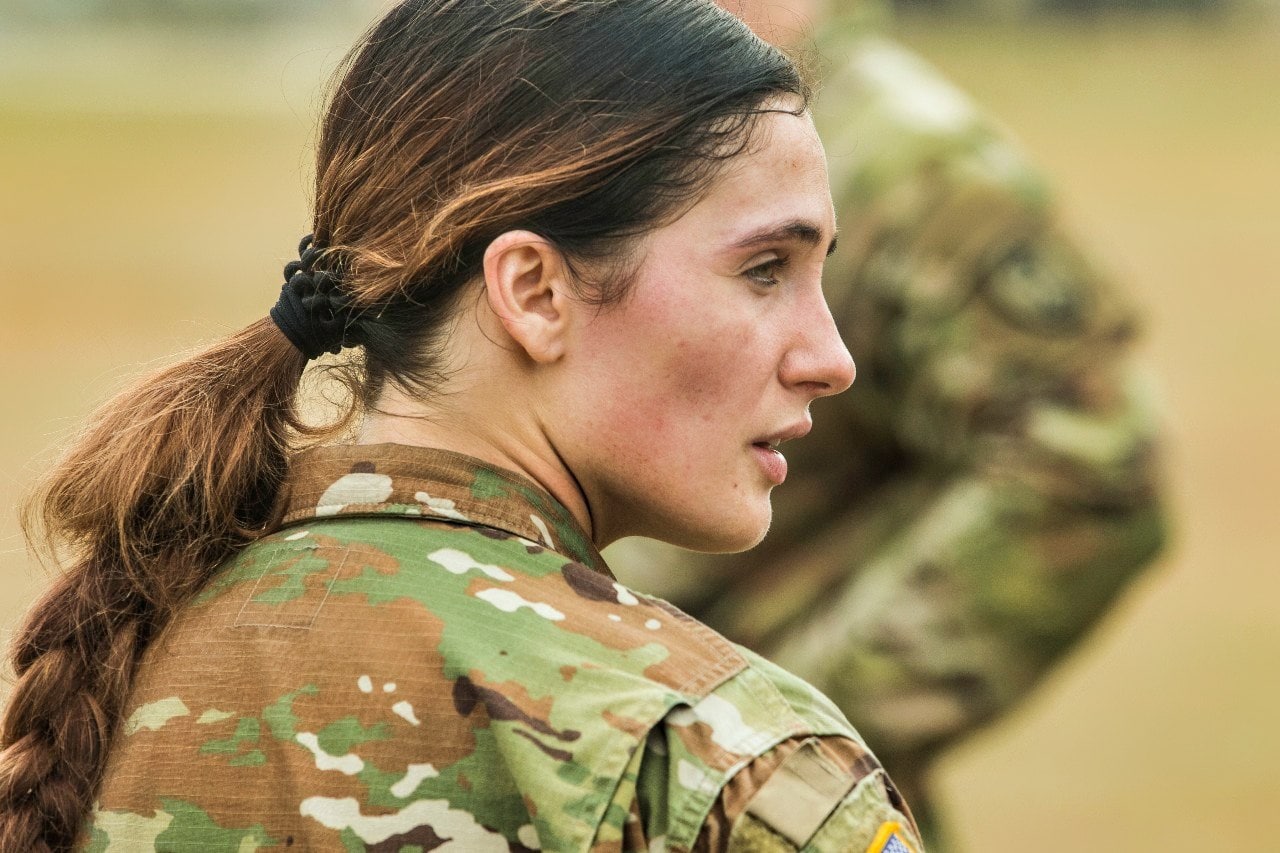
Sgt. Jamie Ortiz, an Army Signal Support System Specialist from the 542nd Military Police Company takes a break after finishing the 2-mile run portion of the Expert Soldier Badge qualification. The ESB is a portion of the Combined Brigade Best Squad Competition here in McCrady Training Center, South Carolina. The 200th Military Police Command will select the top performers to compete at the 2023 U.S. Army Reserve Best Squad Competition.
Why Now?
For more than 50 years, male and female drill sergeants have worn different headgear. Male drill sergeants have worn the flat-brimmed campaign hat since the establishment of the Drill Sergeant Program in 1964, while women assigned to the role have worn an upturned–brim bush hat that was modeled on Australian designs since 1972, when the Army first opened the program to women.
The Army now says that distinction is no longer necessary and is not practical.
“There’s a single standard when screening and certifying Noncommissioned Officers (NCOs) for service as a drill sergeant, a single standard that we hold all serving drill sergeants to, and moving forward, there will be a single standard drill sergeant uniform,” Command Sgt. Maj. Michael McMurdy said about the decision.
The decision is interesting because drill sergeants occupy a highly visible – and unique – role within the Army, serving as the first point of contact for civilians entering military service and acting as enforcers of discipline and standards within Army culture during initial training.
The campaign hat has become one of the most recognizable symbols of the profession, with its origins dating back to the 19th century.
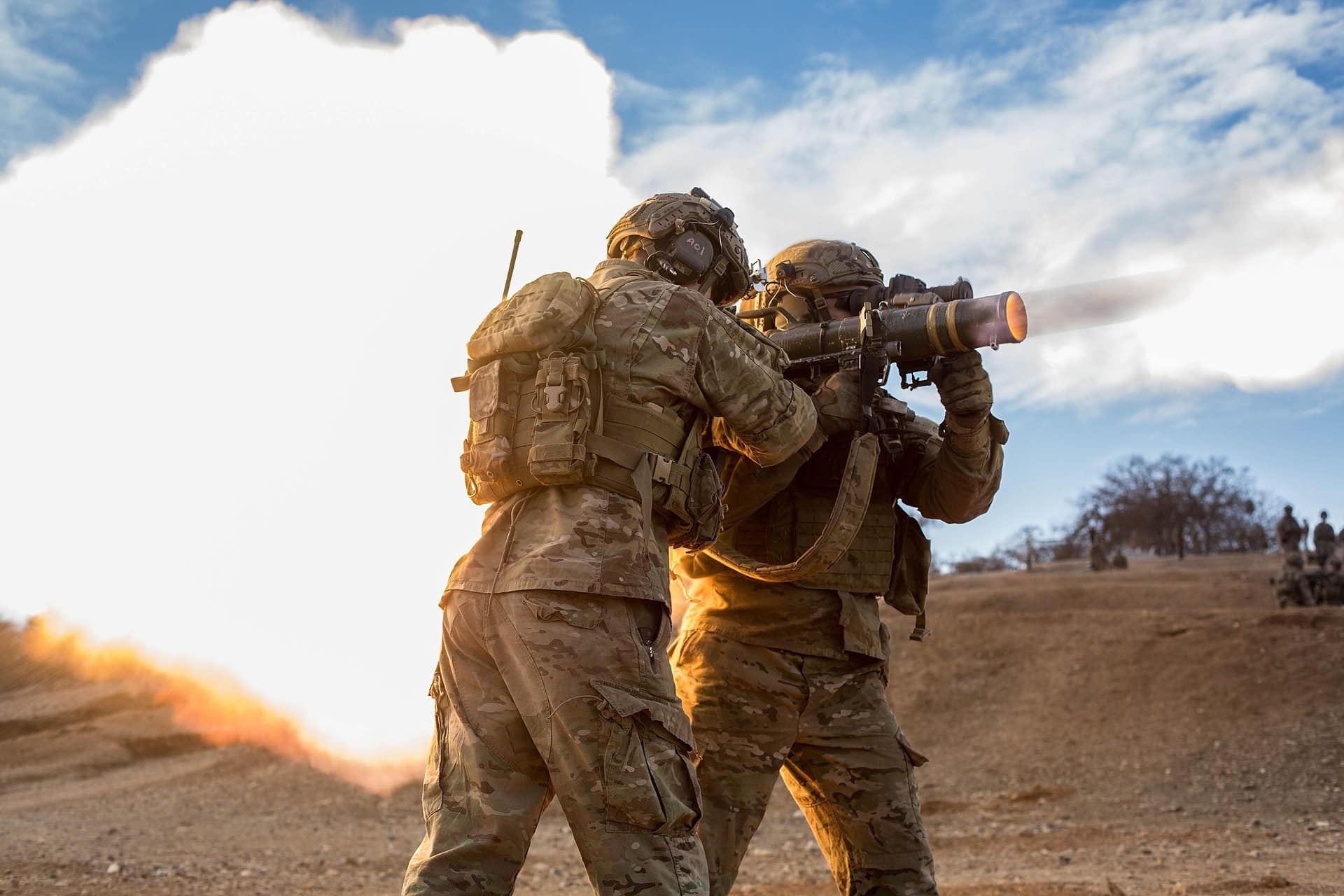
U.S. Army Rangers assigned to 2nd Battalion, 75th Ranger Regiment, fire off a AT-4 at a range on Camp Roberts, Calif., Jan 26, 2014. Rangers use a multitude of weaponry during their annual tactical training. (U.S. Army photo by Pfc. Rashene Mincy/ Not Reviewed)
According to the Army, more than 142,000 NCOs have served as drill sergeants since 1964, including more than 38,000 women who wore the bush hat during that period.
So far, the move seems to be popular. Internal Army surveys suggest broad support for the decision, with consolidated data collected since fiscal year 2023 showing that roughly 70 percent of surveyed drill sergeants favor switching from the bush hat to the campaign hat, while more than 60 percent believe the campaign hat conveys a more professional appearance.
Practical considerations also come into play: Army officials have acknowledged that manufacturers have struggled for years to produce bush hats that consistently meet service quality standards, with no industry partner currently willing to accept new contracts for their production.
A Welcomed Change
Senior NCOs who previously served in the role have also largely welcomed the move. Sgt. Maj. Melissa Solomon, who was named U.S. Army Reserve Drill Sergeant of the Year in 2010, said the bush hat once played an important symbolic role but that it had since become a liability.
Sgt. 1st Class Sarah Escarcega, the 2023 Maneuver Center of Excellence Drill Sergeant of the Year also shared a similar sentiment, arguing that maintaining separate headgear no longer aligned with how drill sergeants are evaluated or held to uniform standards.
The change is also intended to reduce confusion among trainees during the earliest stages of basic training – a concern that was cited by multiple drill sergeant leaders involved in the Army’s review process.
While the decision has attracted public attention amid debate over military culture and standards – particularly given the negative attention attracted by Trump’s appointment of Defense Secretary Pete Hegseth – Army officials have stressed that the decision is more administrative than it is ideological.
That means that, if the circumstances were different, the hat would likely stay – and the Trump administration is not concerned about any perceived gender barrier or distinction that exists as a result of the separate uniforms.
An Army spokesman told Army Times that the change is unrelated to recent combat arms reviews or gender integration debates and was driven primarily by quality control issues and feedback from the force.
More Changes Coming
The announcement also comes amid a broader push from Defense Secretary Hegseth to tighten grooming and uniform regulations across the services.
In September 2025, Hegseth ordered new rules governing hairstyles, jewelry, fingernails, and facial hair, implementing a stricter focus on clean and standardized military appearance.
As the Army now implements the change, all drill sergeants will wear the same campaign hat for the first time, formally ending a gender-specific uniform separation that has existed for over half a century.
About the Author:
Jack Buckby is a British researcher and analyst specialising in defence and national security, based in New York. His work focuses on military capability, procurement, and strategic competition, producing and editing analysis for policy and defence audiences. He brings extensive editorial experience, with a career output spanning over 1,000 articles at 19FortyFive and National Security Journal, and has previously authored books and papers on extremism and deradicalisation.