The M103’s 120mm Gun Was Brutal—So Why Did The Army Quit It?
Tank doctrine in World War II was dominated by the light, medium, and heavy tank concepts. After Germany’s infamous Tiger tanks, the United States and Soviet Union pursued their own heavy tanks.
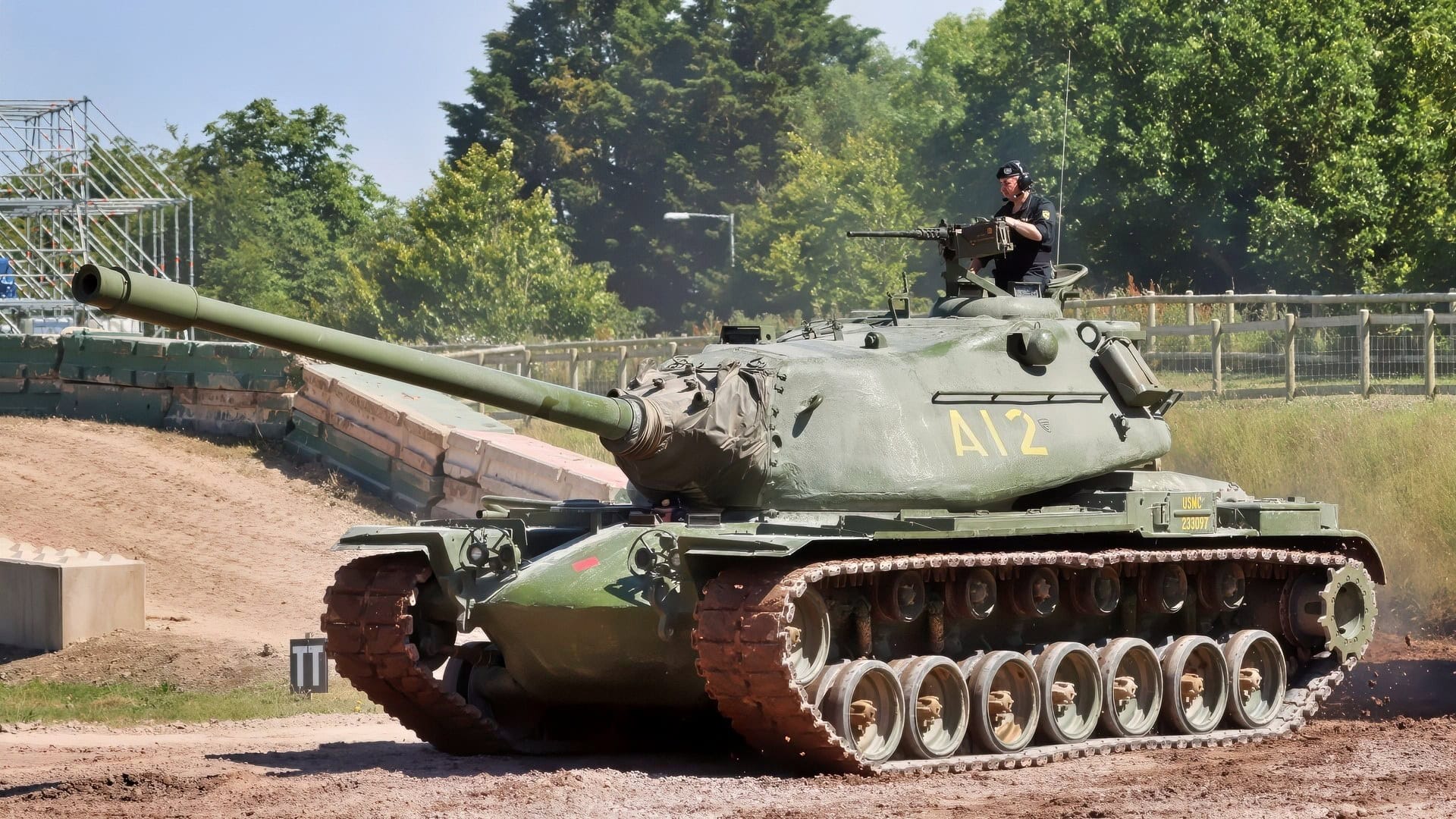
After the end of the war, the emergence of the Cold War ensured that the heavy-tank arms race would continue—now between the Americans and Soviets. The Soviets possessed the IS series of heavy tanks, which had thick armor and powerful 122-mm guns. In response, the U.S. developed the M103, one of the largest heavy tanks the United States ever made. The M103 would be the last hurrah for heavy tanks—the introduction of Main Battle Tanks rendered them obsolete.
Design and Development
By the late 1940s, reports of new Soviet heavy tanks such as the IS series and the T-10—with thick, well-sloped armor and large-caliber guns—raised concerns that U.S. tanks would be outmatched in a direct confrontation. The U.S. Army initiated development of a new heavy tank under the T43 program.
This vehicle was intended to mount a 120-millimeter gun capable of penetrating Soviet heavy armor at long distances, while also possessing sufficient frontal protection to survive incoming fire.
Development proved difficult. Early prototypes had serious shortcomings in reliability, engine performance, and ammunition handling. Additionally, the use of two-piece ammunition introduced complexity in both loading and stowage. Despite these issues, the acceleration of Cold War tensions encouraged continued development. After a series of revisions, the improved T43E1 was standardized in 1957 as the M103 heavy tank.
Armor Protection
The hull glacis was heavily sloped, providing respectable resistance to kinetic penetrators of the period, while the turret was a massive 127-mm thick-cast structure with excellent ballistic curvature.
The turret front in particular was extremely thick when measured in line-of-sight terms, making it highly resistant to conventional armor-piercing rounds. However, side and rear armor were more vulnerable, and the vehicle was increasingly exposed to new weapons such as shaped-charge munitions, which reduced the effectiveness of sheer armor thickness.
Although the M103’s protection was formidable against many contemporary threats, it also contributed to the tank’s significant weight and mechanical strain. Weighing in at 65 tons, the tank was heavier than a base M1 Abrams. The mass of the turret gave it a profile of a small barn and placed additional stress on the suspension and drivetrain, which would prove problematic throughout its service life.
Armament and Firepower
The defining feature of the M103 was its 120-millimeter M58 rifled gun. It was a dramatic increase in firepower compared to earlier American tanks and was specifically chosen to defeat Soviet heavy armor at long range. In terms of raw ballistic performance, the M58 was among the most powerful tank guns of its time.
The gun used separate-loading ammunition consisting of a projectile and a propellant case, loaded sequentially. This arrangement allowed for larger and more powerful rounds but required two dedicated loaders inside the turret.
As a result, the M103 had a five-man crew rather than the more common four-man configuration.
While this theoretically allowed for sustained fire during extended engagements, it reduced the rate of fire compared to single-piece ammunition systems and made the turret interior extremely cramped.
Mobility and Powerplant
Mobility was one of the M103’s most significant weaknesses. Power was provided by a Continental AV-1790 gasoline engine producing around 900 horsepower, which was sufficient to move the tank at moderate speeds on paved roads but struggled in difficult terrain. The combination of high weight, fuel consumption, and mechanical complexity limited operational endurance and made logistics a constant concern.
Cross-country performance was inferior to that of lighter tanks, and the M103 could not easily keep pace with medium-tank units during rapid advances. Its range was also restricted, requiring frequent refueling and complicating deployment in expeditionary scenarios.
Although later Marine Corps variants adopted diesel engines to improve safety and efficiency, the fundamental limitations of the platform remained.
Service with the U.S. Army and Marine Corps
The U.S. Army fielded the M103 primarily in Europe, where it was intended to counter Soviet heavy tanks in a conventional war. However, dissatisfaction with reliability, logistical demands, and doctrinal incompatibility soon emerged.
By the early 1960s, advances in gun technology and fire control had enabled medium tanks to achieve similar lethality without the drawbacks of extreme weight and specialization. As a result, the Army withdrew its M103s from service by 1963.
The Marine Corps, operating under different doctrinal assumptions, retained the M103 for a longer period. Marines valued the tank’s firepower for defensive operations and potential use in amphibious landings, during which heavy direct fire support could be decisive. Improved variants remained in Marine service until the early 1970s, making the M103 the last heavy tank fielded by the United States.
Obsolescence and Retirement
The M103 was retired from service in 1974, less than 20 years after it was fielded. It was retired not because of any flaws, but because technological advancements rendered the heavy-tank concept obsolete. Shaped-charge rounds could pierce thick armor much more effectively than conventional armor-piercing rounds could at the time.
Thick cast armor could no longer guarantee crew safety like it did during World War II.
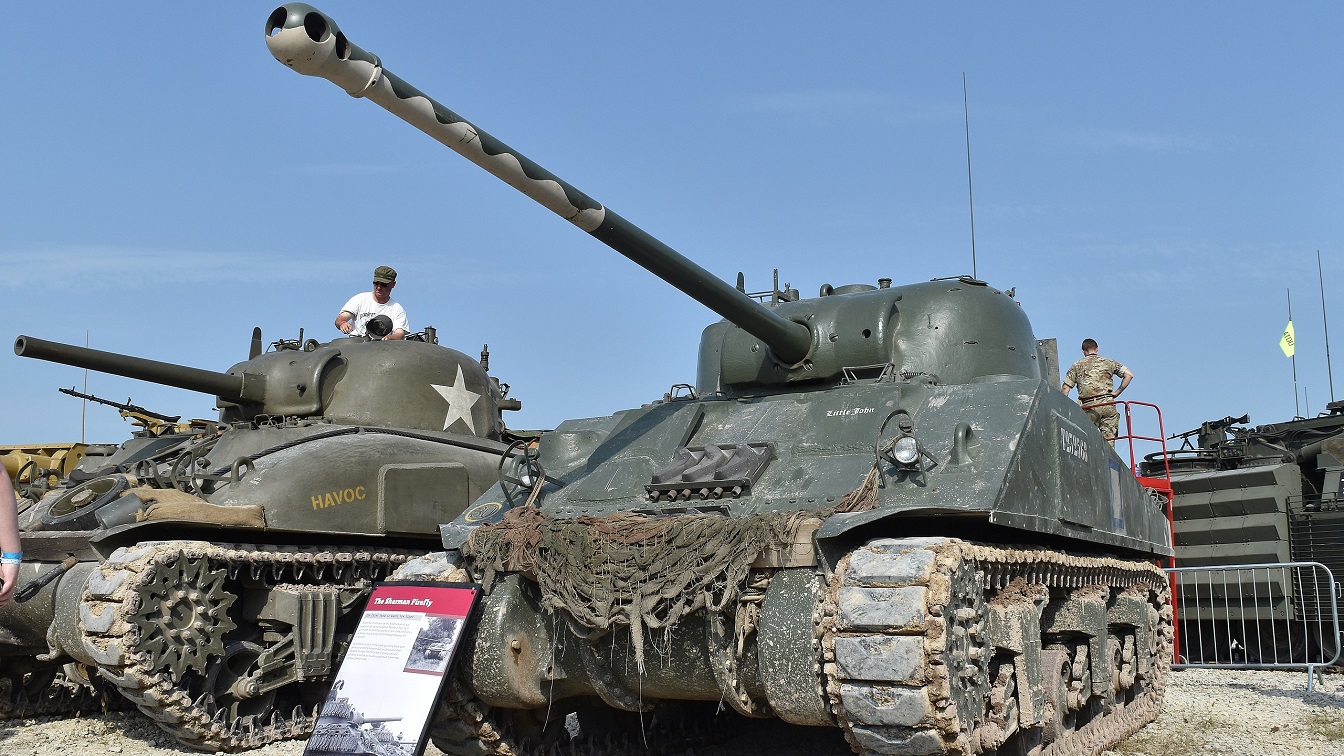
Serial No:- 16912 Official designation:- M4A4 Tank Medium 17Pdr. Total production:- 2,100-2,200 Main armament:- QF 17-pounder Anti-tank Gun The Firefly was a British modification of the M4 Sherman, with a 17 pounder gun replacing the usual 75mm. This gun was able to puncture the armour of a Tiger I or Panther, making the Firefly one of the few Allied tanks genuinely feared by Axis forces. This example comes from the Bastogne Barracks in Belgium, part of the Belgian Royal Military Museum. It was manufactured in the USA in 1942 and delivered to Europe in 1943 carrying the running number ‘USA 3017218’. It was converted to a Firefly in early 1944 and saw British service as ‘T232568’. She is fully operational and is seen in the ‘Tank Park’ after making a guest appearance at TankFest 2019. The Tank Museum, Bovington Camp, Dorset, UK.
The second development that killed the M103 was the introduction of the Main Battle Tank. MBTs combine the armor and firepower of a heavy tank with the weight and mobility of medium/light tanks into one package.
This more or less ensured that the MBT could perform the tasks of a medium or heavy tank without the excessive weight and slow speeds.
About the Author: Isaac Seitz
Isaac Seitz, a Defense Columnist, graduated from Patrick Henry College’s Strategic Intelligence and National Security program. He has also studied Russian at Middlebury Language Schools and has worked as an intelligence Analyst in the private sector.