
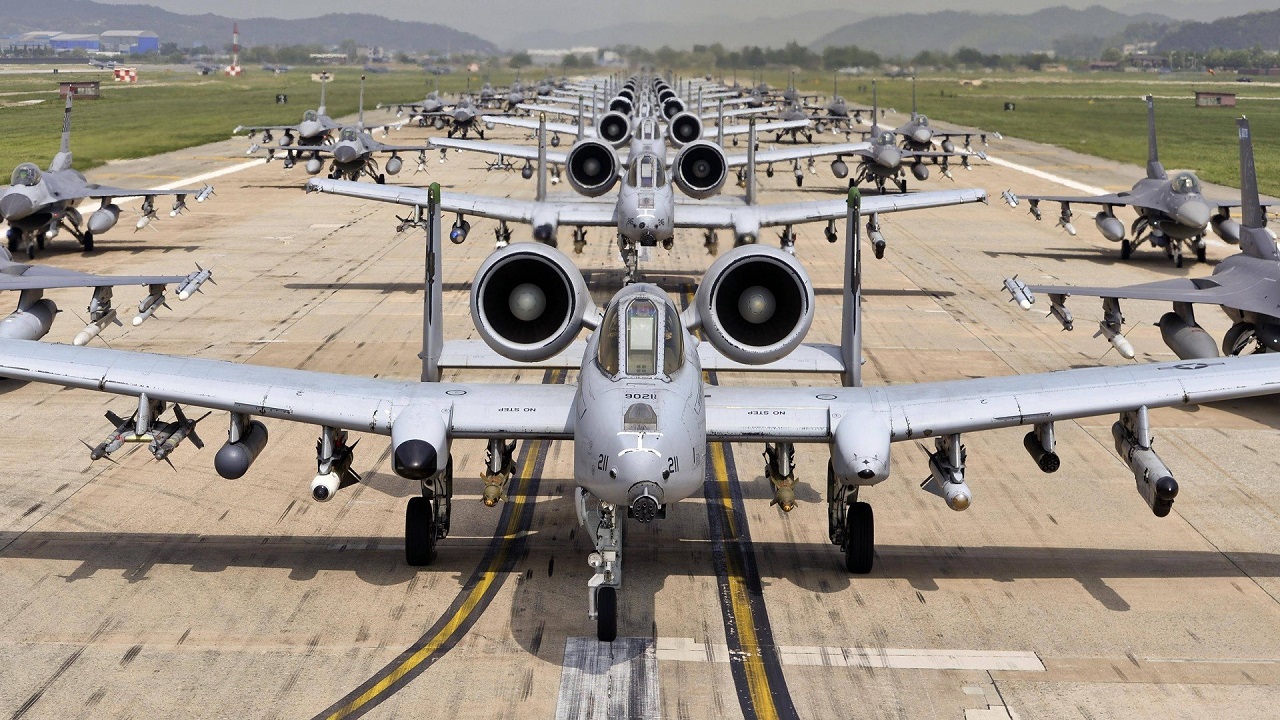
Key Points and Summary – The A-10 Thunderbolt II, famously known as the “Warthog,” has been granted a reprieve from full retirement until 2029 thanks to a provision in the 2026 draft budget that sets a minimum inventory level.
-Despite the Air Force’s push to divest the aging fleet to fund newer platforms like the F-35 and F-47 NGAD, strong support from Congress and ground troops has kept the A-10 flying.

A-10 Warthog.
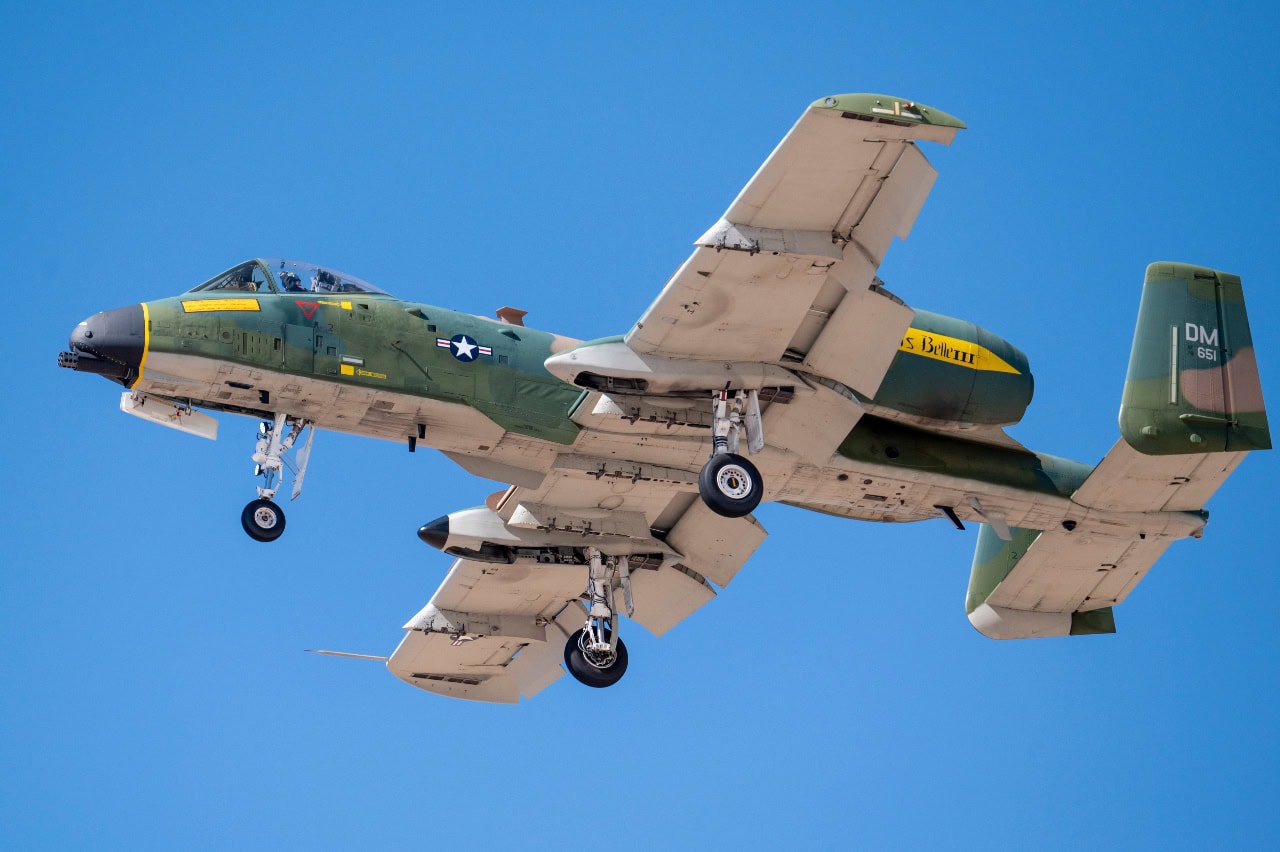
U.S. Air Force Maj. Lindsay “MAD” Johnson, A-10C Thunderbolt II Demonstration Team commander and pilot, signals to the audience from her A-10 aircraft during a Hawgsmoke 2024 practice demonstration at Davis-Monthan Air Force Base, Arizona, Sept. 12, 2024. The A-10’s ability to fly low and slow over the battlefield was one of the many attributes that made it an effective close air support airframe. (U.S. Air Force photo by Senior Airman Devlin Bishop)
-While no longer viable against near-peer threats like China, the A-10 remains relevant for Special Operations in permissive environments and is finding a new niche as a cost-effective drone hunter armed with laser-guided rockets.
The A-10 Warthog Will Now Survive Until 2029
BRRRRRT! The sound so many US troops loved to hear will continue to serve until 2029, as it has been granted a reprieve from retirement.
The 2026 draft budget includes a provision that “prohibits the Air Force from retiring A-10 aircraft, such that the inventory would drop below 103 aircraft in FY26.”
The US Air Force announced a plan to retire all 162 remaining A-10 Thunderbolt II aircraft, affectionately known as the “Warthog,” by the end of fiscal year 2026, two years earlier than scheduled.
The Air Force has wanted to retire the A-10 for some time, but Army and Marine ground troops love the “Hog” and don’t want to see it go.
The Air Force’s strategy is to divest itself of 340 aircraft from its inventory.
Originally built between 1972 and 1984 for close air support, the A-10’s durability and GAU-8 Avenger cannon earned it a stellar reputation among troops in Iraq and Afghanistan. Despite that legacy, Air Force officials said the platform no longer fits the demands of future modern conflict.
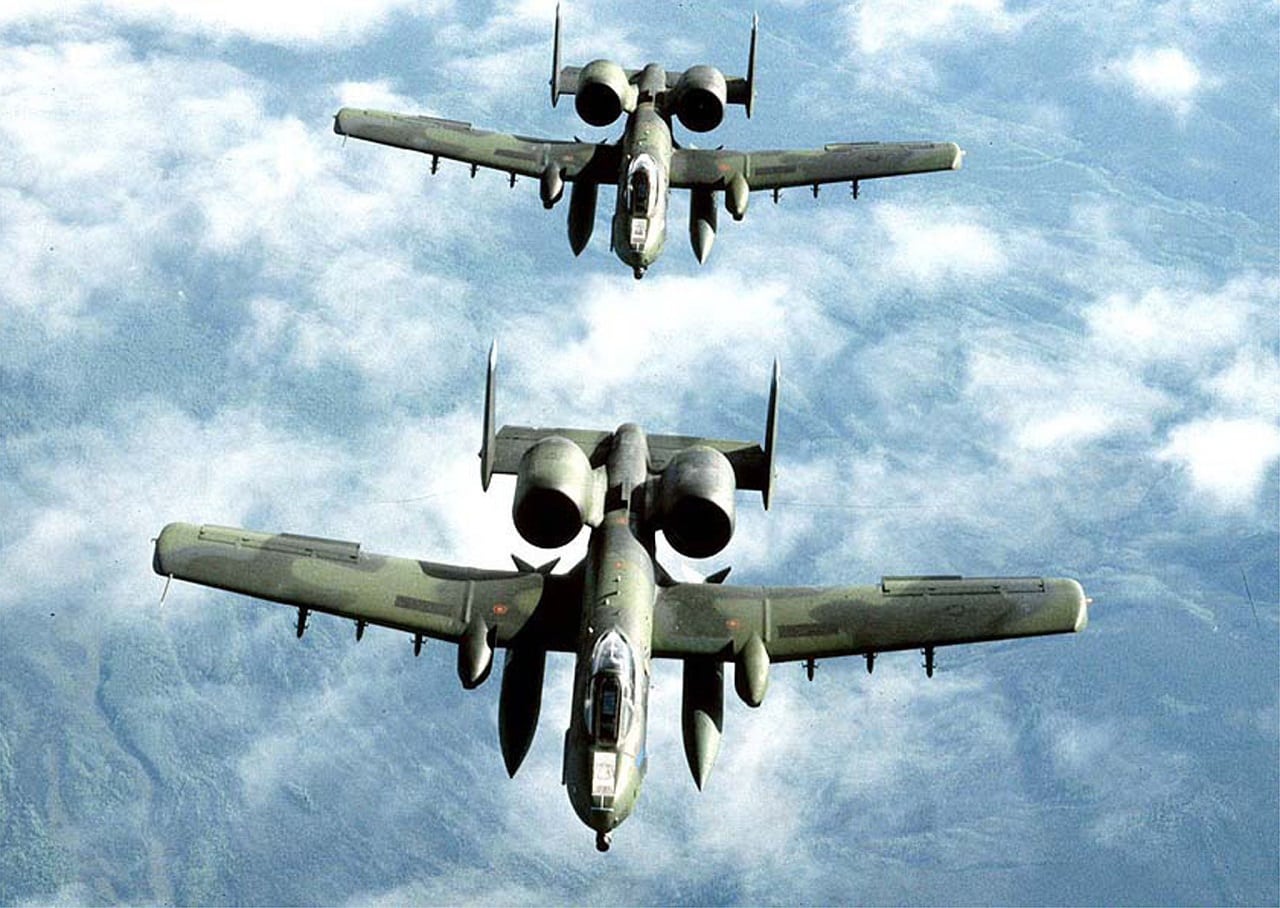
A-10 Warthog.
A-10 Warthog munitions render Explosive Reactive Armored tanks inoperative during test

A-10 Warthog. Image Credit: Creative Commons.
SOFX wrote that the plan would mark the Air Force’s largest aircraft drawdown in years, with roughly 350 planes and helicopters slated for retirement. In addition to the A-10s, the list includes 62 F-16s, 36 F-15s, 14 C-130H cargo planes, three EC-130H electronic warfare aircraft, and 15 KC-135 tankers.
So, how did the A-10 survive more than 50 years, and is nearing 60 years of active military service?
The A-10 Is An Incredible, Tough, 53-year-old Old Aircraft.
The A-10 Warthog serves so long due to its exceptional durability, built around its powerful gun for Close Air Support (CAS) with redundant systems to survive heavy damage, a titanium “bathtub” protecting the pilot, and its ability to fly with significant damage, plus constant upgrades extending its life, and strong Congressional support driven by its unmatched effectiveness for ground troops, keeping it in service past earlier retirement plans.
The key design features that cemented the Hog’s longevity include:
Battle damage resilience remains incredibly high. The A-10 can sustain direct hits from large-caliber rounds and remain flyable, even with one engine, half a tail, or half a wing missing.
Redundant systems keep it flying. It features backup mechanical flight controls for when hydraulic systems fail, ensuring control even with severe damage.
A titanium “bathtub” protects the pilot, making it incredibly tough for a jet to penetrate.
The engines are placed high on the fuselage, behind the wings, to shield them from ground fire and reduce infrared signature.
Built around its massive 30mm GAU-8 Avenger cannon, it excels at low-speed, low-altitude tank-killing and supporting troops, a role it’s uniquely suited for. And the cannon has that unique, “BRRRRT” sound that the soldiers love.
Modernization, Upgrades & Support
The Air Force has invested in structural reinforcements, modernized avionics, and targeting systems to keep it combat-ready and up to date.
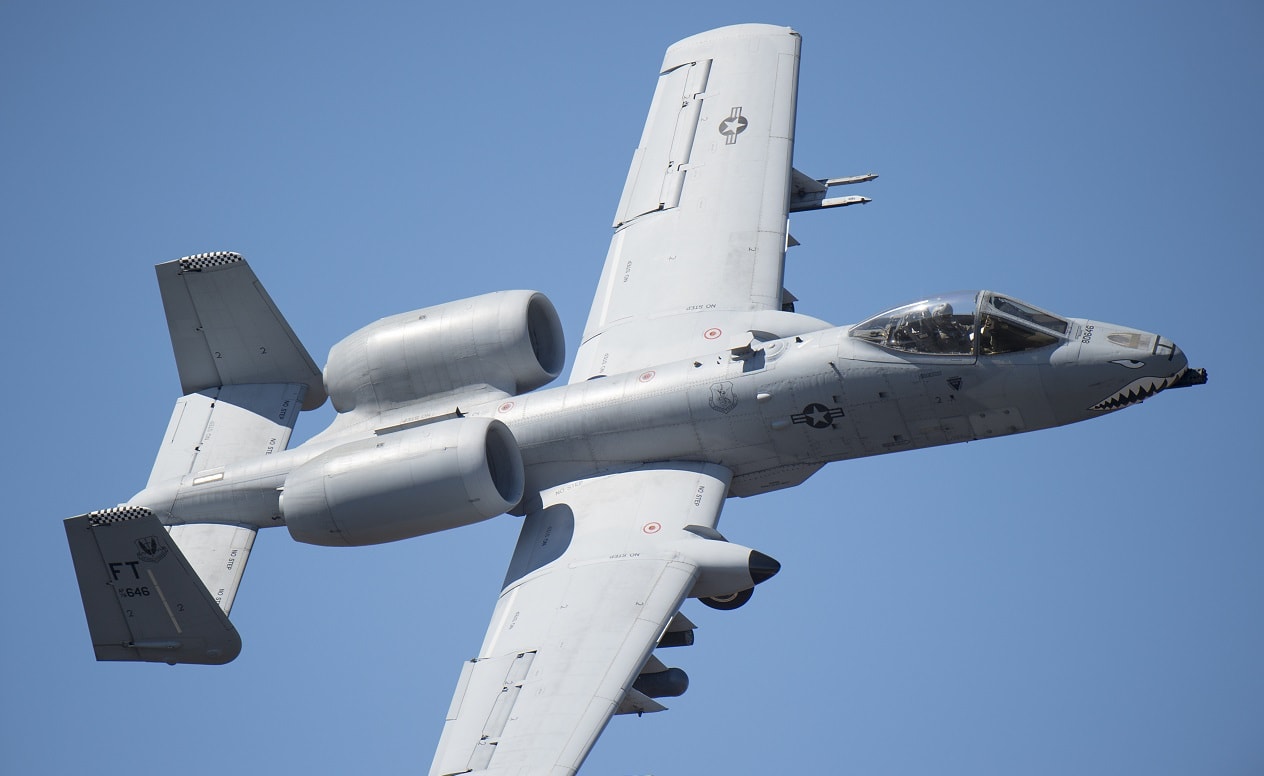
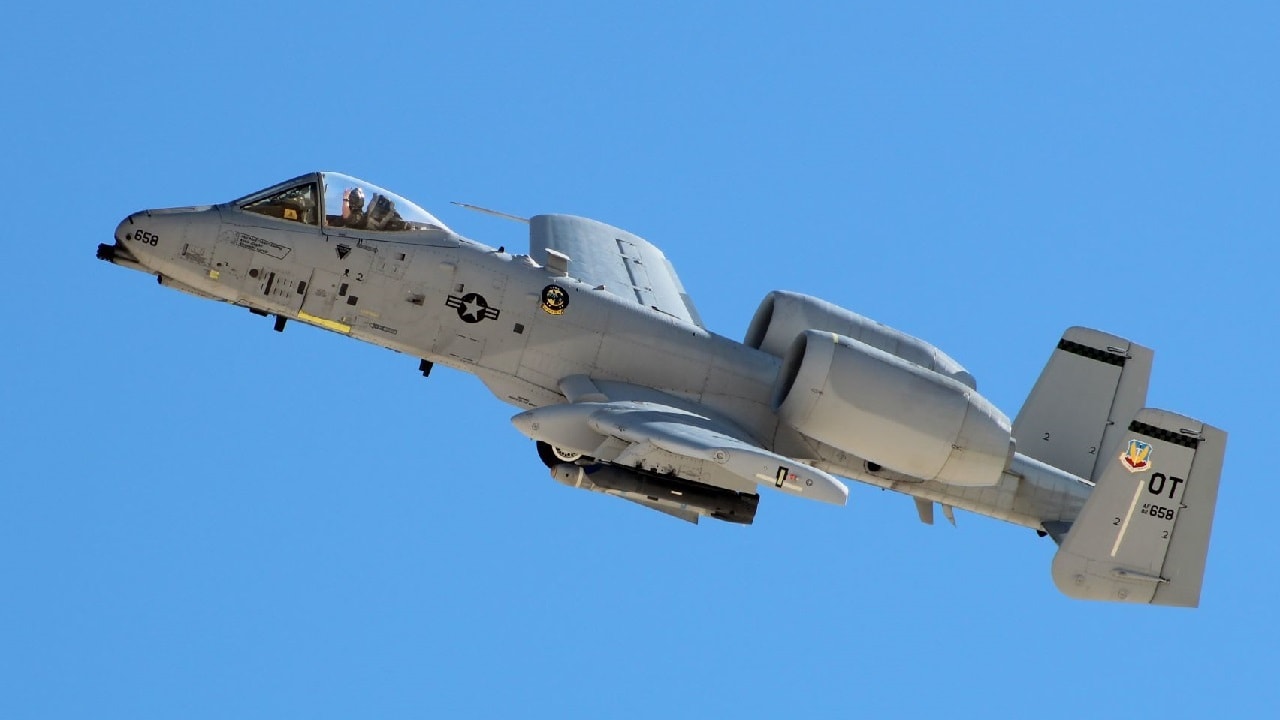
An A-10 Thunderbolt II flies over Grand Bay Bombing and Gunnery Range at Moody Air Force Base, Ga., Feb. 18, 2016. Multiple U.S. Air Force aircraft within Air Combat Command conducted joint aerial training that showcased the aircrafts tactical air and ground maneuvers, as well as its weapons capabilities. (U.S. Air Force photo by Staff Sgt. Brian J. Valencia/Released)
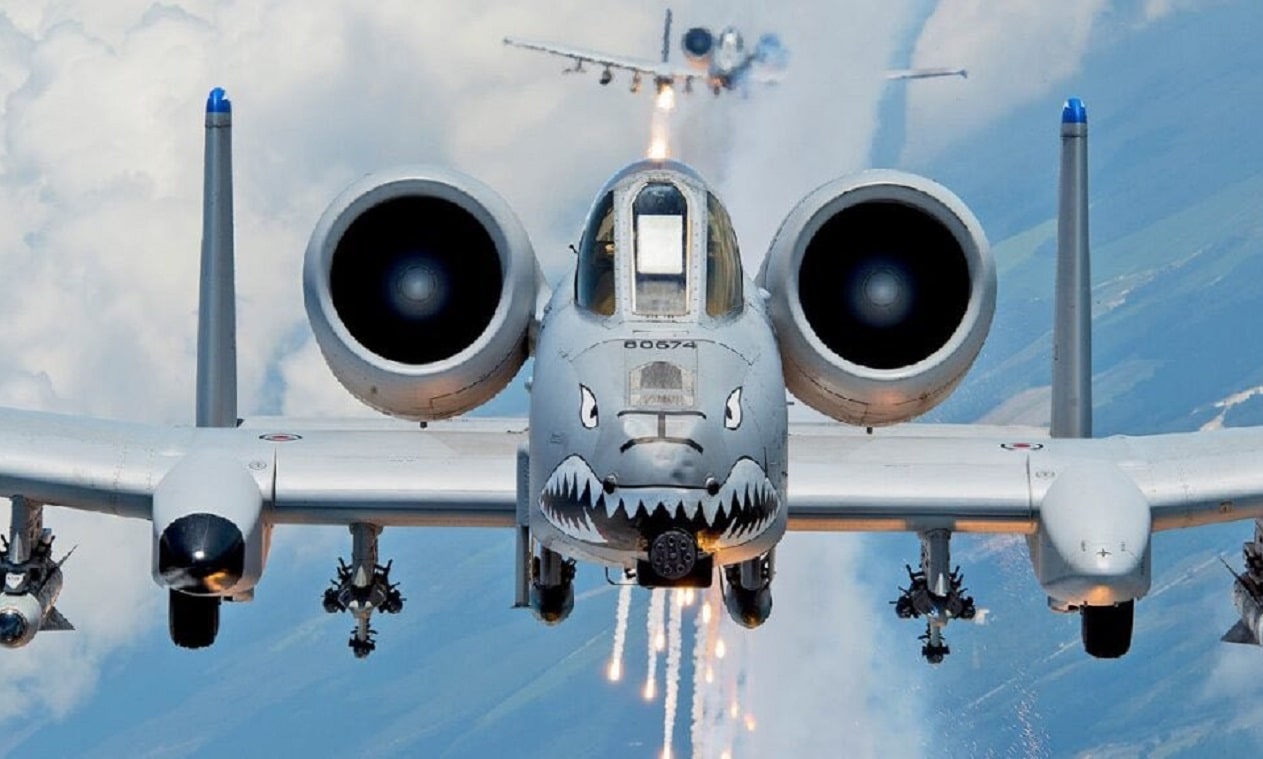
A-10 Warthog. Image Credit: Creative Commons.
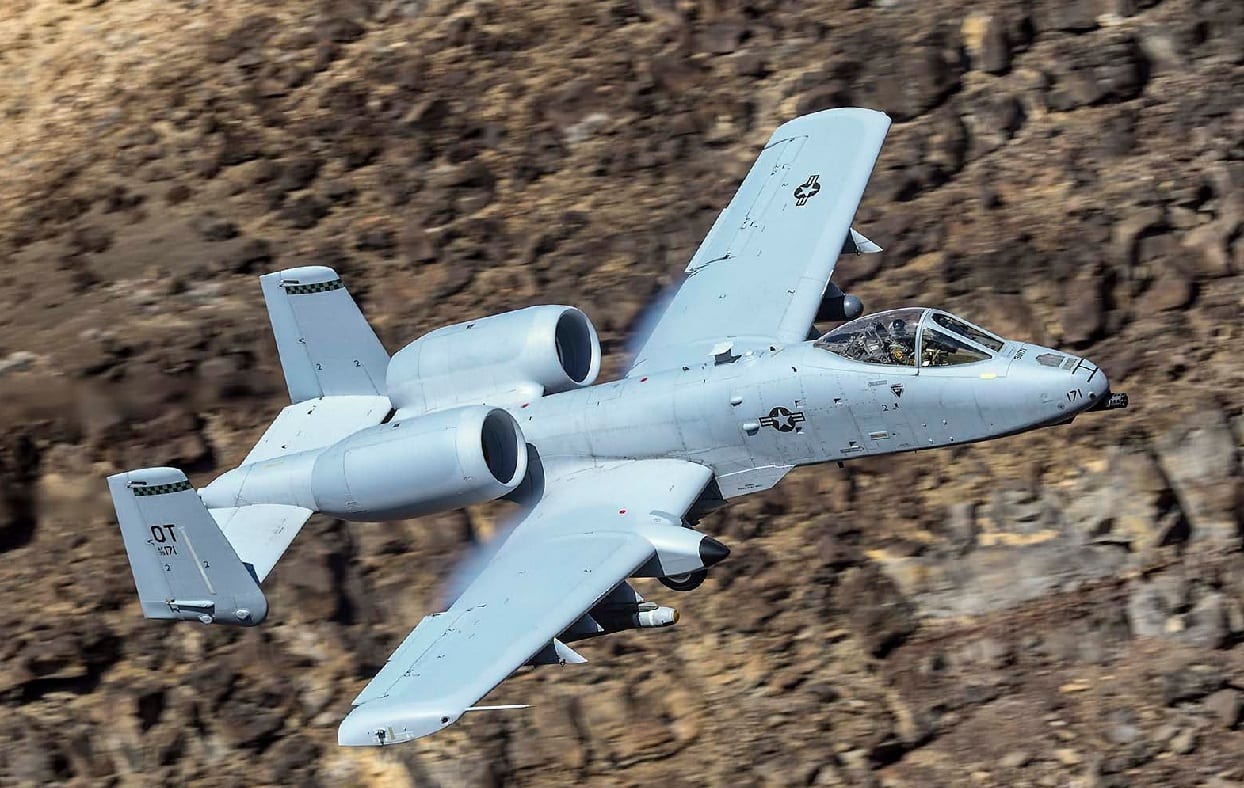
A-10 Warthog. Image: Creative Commons.
Service Life Extension Programs (SLEP). These programs aim to double the aircraft’s operational lifespan beyond its original 8,000-hour estimate.
Congressional and ground troop support are factors that can’t be overstated. Strong support from Congress and ground forces, who value its vital CAS role, has repeatedly saved it from retirement plans.
Close Air Support Is Changing
Last year, then-Air Force Chief of Staff Gen. CQ Brown said that Close Air Support was less of a requirement these days and that low- and slow-flying aircraft wouldn’t survive in a war with an enemy like China.
The second half of the statement is totally true. On a modern battlefield with an enemy like China or Russia with a plethora of anti-aircraft missiles, the “Hog” would suffer terrible losses.
However, in many Third World countries, where our Special Operators currently deploy, the A-10 would still be relevant. Our troops welcomed it for its deadly ability to suppress enemy forces. For the record, close air support is ALWAYS a requirement for ground troops.
However, perhaps SOCOM saw the writing on the wall and has purchased the lightweight Armed Overwatch aircraft that it controls. It is a highly modified version of the Air Tractor AT-802U, an aircraft typically used for crop dusting and firefighting.
The OA-1K Skyraider II, also known as Sky Warden, was developed by L3Harris and Air Tractor and is designed to provide close air support, armed intelligence, surveillance, and reconnaissance (ISR), and precision strike capabilities to special operations forces.
Air Force Budget Cuts the Number of F-35s Purchased in 2026
The Air Force has often stated that the arrival of the F-35 will replace the A-10 fleet. However, the new budget also reduces the number of those jets, which carry fewer weapons than the A-10 and lack its famous GAU-8 Avenger 30 mm gun.
The Air Force instead said it will request $3.1 billion for 21 F-15EX aircraft, reduce its F-35 procurement from 74 to 47, and spend $3.4 billion developing the F-47, the next-generation air superiority fighter (NGAD).
The F-15EX Appears To Be The Next Ground Support Aircraft
President Trump made a surprise announcement that the Michigan Air National Guard, which was set to lose its A-10 Warthogs in 2026, will be reequipped with the F-15EX.
So, the Michigan ANG squadron will have to be trained on the F-15EX. The aircraft has an increased payload of 29,000 pounds plus two additional weapons stations. It can carry hypersonic missiles or up to 12 AIM-9 Sidewinder missiles or AIM-120 AMRAAMs, or a combination of up to 24 air-to-ground munitions.
Plus, it carries one internally mounted M61A1 20 mm six-barrel cannon (500 rounds). The cannon is no match for the 30mm, but it is still powerful nonetheless.
It is also blisteringly fast, reaching Mach 2.5, or approximately 1,918.7 mph. The Michigan ANG pilots could also be teachers, training new F-15EX pilots on the finer points of ground support.
Say Goodbye to the Hog? Not Just Yet
While it isn’t suited to modern air combat, the A-10 will live on for a short time, probably supporting Special Operations Forces in Third World hotspots.
And it will live on as a drone hunter. TWZ reported last October that A-10s had been modified to carry Advanced Precision Kill Weapons System II (APKWS II), but kill markings reveal it has successfully shot down drones.
ARKWS IIs are cheap 2.75-inch (70mm) Hydra rockets transformed into drone and cruise missile killers. These offer the Air Force major advantages over their more advanced air-to-air missile counterparts.
The rockets enable the aircraft to engage large numbers of enemy drones and other aerial threats cost-effectively. The Air Force has a large inventory of 2.75-inch rockets.
While Congress gave it a reprieve, the A-10 was never popular with the Air Force. It is an ugly icon for a service that loves the next pretty thing. But for the people on the ground, it is a beautiful sight.
And the troops will continue to be supported by the best ground attack aircraft ever … even for just a short time. BRRRRRT.
About the Author: Steve Balestrieri
Steve Balestrieri is a National Security Columnist. He served as a US Army Special Forces NCO and Warrant Officer. In addition to writing on defense, he covers the NFL for PatsFans.com and is a member of the Pro Football Writers of America (PFWA). His work was regularly featured in many military publications.