
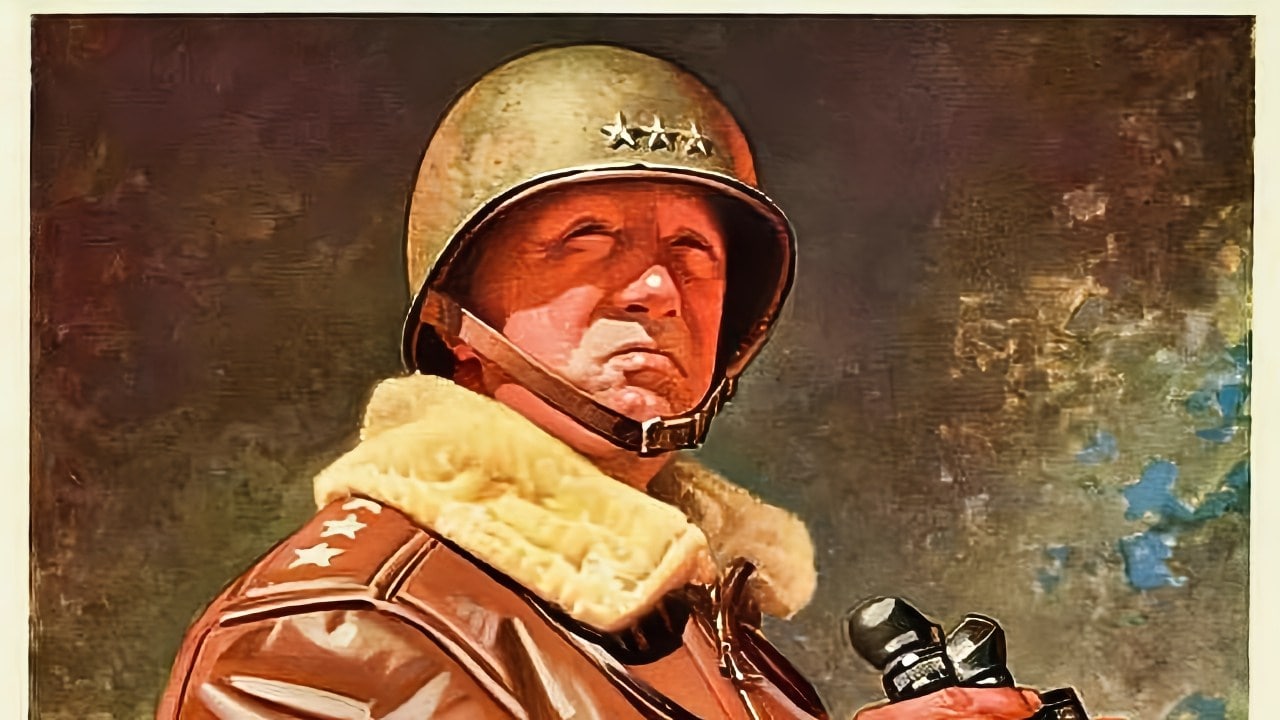
Summary and Key Points: George S. Patton’s blunt view of war as “simple, direct, and ruthless” captures the core of his battlefield philosophy: relentless offense, constant momentum, and psychological pressure designed to break an enemy fast.
-His combat identity formed early, from the Punitive Expedition against Pancho Villa—where he helped execute what’s described as the first motorized attack in U.S. military history—to World War I, when he joined the Tank Corps, built a light-tank school, and argued for massed armor to rupture front lines.
-Leading from the front in France, he was wounded in the Meuse-Argonne and later decorated for bravery.
Patton’s “War Is Simple” Quote Explains Everything About How He Fought
War is Very Simple, Direct, And Ruthless. It Takes A Simple, Direct, Ruthless Man To Wage War – General George Patton
General George S. Patton Jr. was arguably the United States’ best combat field commander. Although highly controversial, he was a very respected commander and was respected by the men under his command.
Most well-known for his service in World War II in North Africa, Sicily, and later Western Europe, Patton’s first taste of combat was in Mexico during America’s Punitive Expedition against Pancho Villa, and then in World War I as the first US tank corps commander.
Meaning Of the Quote
Patton’s quote, “War is straightforward, direct, and ruthless. It takes a simple, direct, and cruel man to wage war, as reflected his philosophy on combat, which centered on relentless, aggressive offense, believing continuous forward momentum saved lives by quickly defeating the enemy through speed, shock, and overwhelming initiative, utilizing mechanized forces, and instilling immense discipline and confidence in his troops to overcome fear and achieve decisive victory.
Key tenets included attacking relentlessly, never retreating, using logistics to fuel speed, and creating psychological pressure, all to force rapid enemy collapse and establish dominance.
Patton emphasized that war isn’t complex in its essence; it’s about decisive action, clear goals, and brutal effectiveness, demanding a leader with similar unwavering qualities.
Patton was known for his aggressive tactics and charismatic, no-nonsense leadership style during World War II, making this quote consistent with his military philosophy.
First Motorized Attack in U.S. Military History
During the Mexican Punitive Expedition of 1916-1917, Patton was a cavalry lieutenant assigned to General Pershing’s command. He was an Olympic athlete and an expert swordsman.
In the spring of 1917, the Americans learned of General Julio Cárdenas, head of Villa’s personal bodyguard—the Dorados, or “Golden Ones.” Moving in automobiles instead of horses, Patton and a small detachment got into a shootout with Cardenas and his men.
In the end, Cardenas was killed, supposedly by Patton himself, and the brash young Lieutenant carved a notch in his famous ivory-handled Colt .45s. He lashed Cardenas to the hood of his car. He returned it and the general’s body to Pershing’s headquarters. It was the first motorized attack in US military history.
GeorgePatton in World War I
Patton saw in Pershing the officer that he wished to one day become. After Pershing brought his staff, which included Patton, to London early in 1917, they began setting the stage for bringing large units to England and France for the US’s entry into the ground fighting of the war.
Bored with staff duty, Patton requested a transfer to the Tank Corps in the fall of 1917. On November 10, 1917, he was officially accepted into the Tank Corps and was ordered to develop a school for light tanks. Thrilled to be away from staff duty, Patton wrote in his diary, “This is [my] last day as staff officer. Now I rise or fall on my own.”
Patton and Lieutenant Elgin Braine visited the French tank factories and armored units. They made four suggestions, all of which were adopted. These included a self-starter, improvements to the fuel tank to prevent leaks, an interchangeable mount that allowed the tank to carry a 37mm cannon or machine gun, and a steel panel to separate the crew from the engine.
The American Expeditionary Force Light Tank School was set up. Patton’s men trained mainly with the French Renault light tank, which was easy to drive and had a crew of two: a commander in the turret and a driver.
He wrote a 58-page report on tanks and armored warfare, arguing that, rather than being used piecemeal, tanks should be employed en masse to punch holes in the enemy’s front lines that the infantry can exploit.
Armored Combat in France
George Patton was promoted twice in quick succession, first to Major, and then Lieutenant-Colonel in March of 1918. Later in September, the American Expeditionary Force (AEF) would conduct its first major offensive against the Germans in the St. Mihiel area.
Before the battle, George Patton gave one of his patented speeches to his men. “American tanks do not surrender,” he said. “As long as one tank can move, it must go forward. Its presence will save the lives of hundreds of infantry and kill many Germans. Finally, this is our big chance. Make it worthwhile.”
He led his men on foot; his tanks captured two towns, Beney and Jonville. His bravery was noted by the men and officers in his command, who saw him lead from the front. However, his immediate supervisor, Colonel Samuel Rockenback, was less impressed and ordered him to remain in the rear and lead his troops telephonically.
The Meuse-Argonne Offensive
During the next major offensive, the Meuse-Argonne, 18 American divisions would face 18 dug-in German divisions across a 20-mile-wide front. As soon as the fighting began, he disregarded his commander’s orders and set out to lead his men from the front.
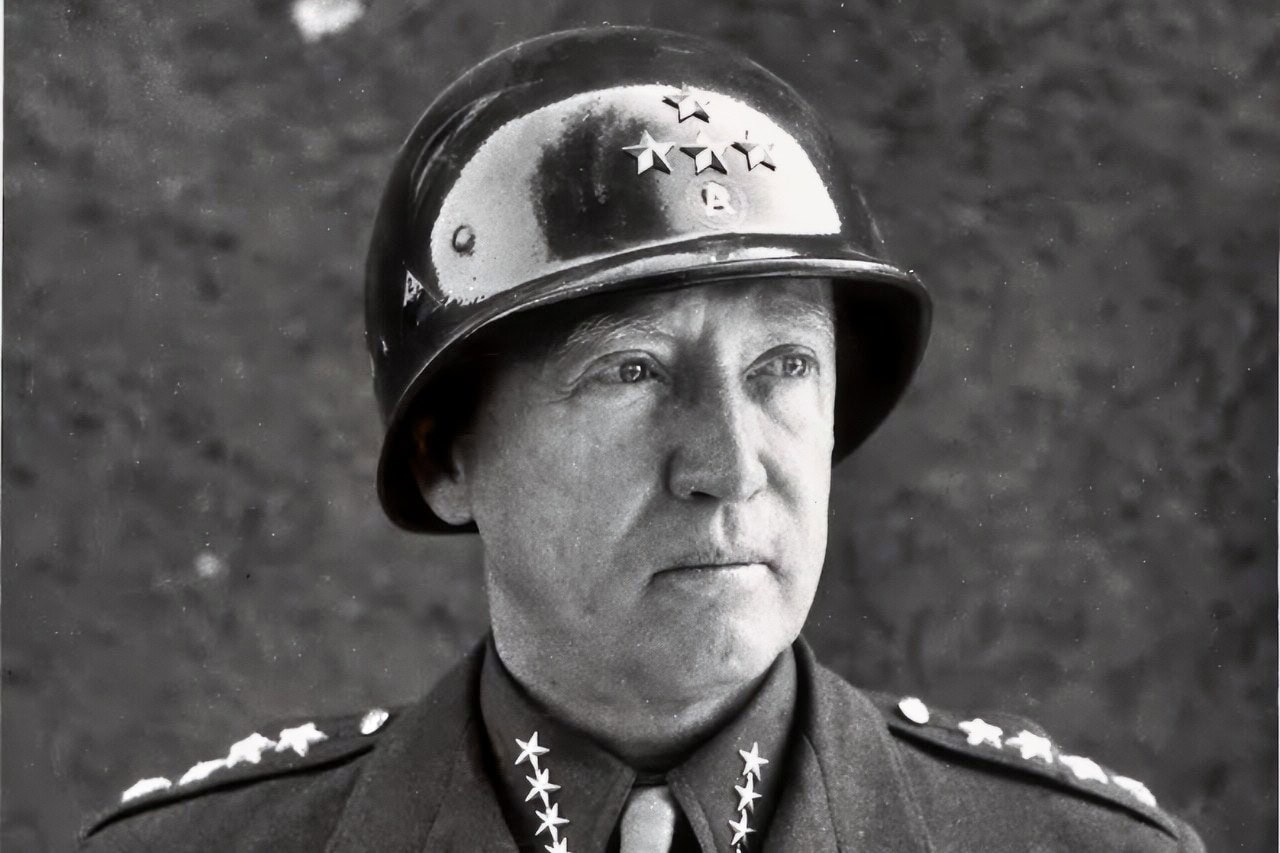
U.S. Army General George Patton

U.S. Army General George Patton. Image Credit: Creative Commons.
While personally leading men against prepared German positions, Patton was hit in his left thigh, with the bullet exiting out his butt. Suffering from blood loss, Patton was saved by PFC Joseph Angelo, but before being taken to a hospital, he insisted that he be taken to HQs to make his report.
The Americans had inflicted over 100,000 casualties on the Germans, had taken more than 26,000 prisoners, with 874 guns and 8,000 machine guns captured. Patton remained in the hospital, however, until the Armistice was signed a few weeks later.
Writing to his wife, Patton said, “missing half my bottom, but otherwise alright,” he received notice that, in addition to the Purple Heart, he would be awarded the Distinguished Service Cross and the Distinguished Service Medal for his actions in France.
Patton’s exploits and experience in World War I would serve him well when World War II began.
About the Author: Steve Balestrieri
Steve Balestrieri is a National Security Columnist. He served as a US Army Special Forces NCO and Warrant Officer. In addition to writing on defense, he covers the NFL for PatsFans.com and is a member of the Pro Football Writers of America (PFWA). His work was regularly featured in many military publications.