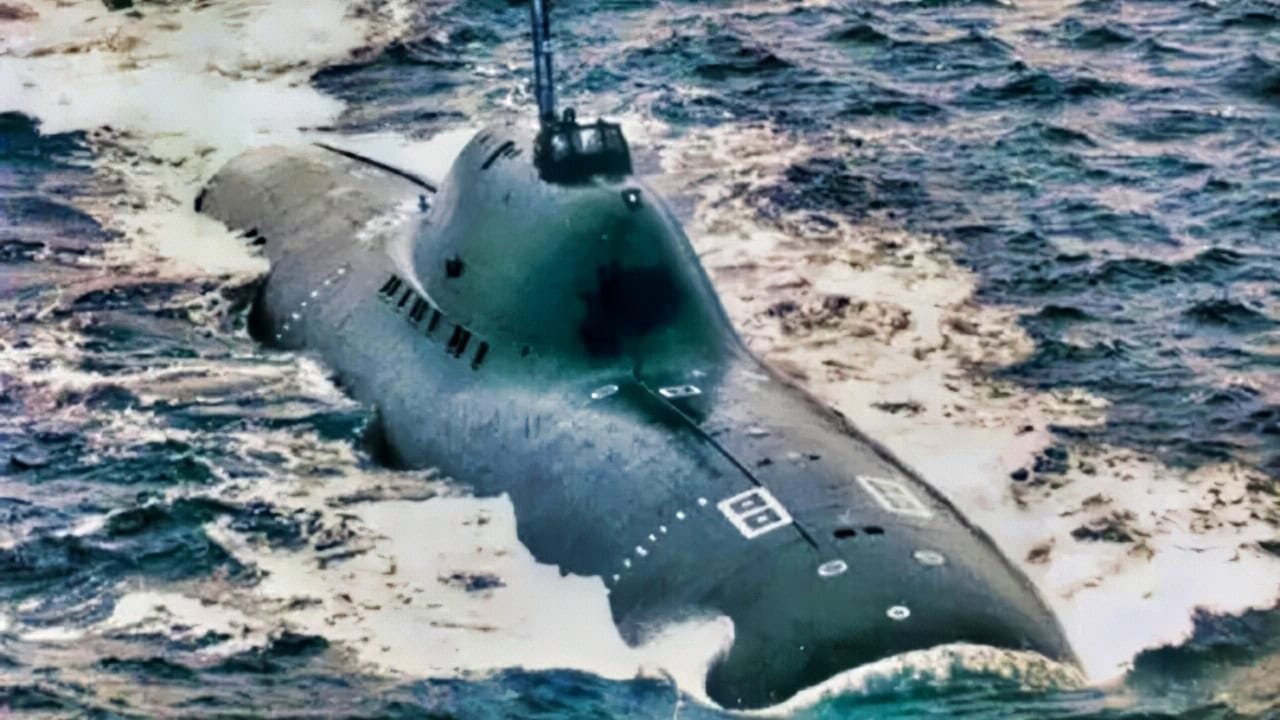
Synopsis: While Russia’s surface fleet often lags behind, its submarine force has a history of “cutting-edge” innovation, exemplified by the Soviet Union’s use of titanium hulls in the Project 705 Lira (NATO: Alfa-class).
-These lightweight, corrosion-resistant hulls allowed Soviet boats to dive deeper and reach speeds of 40 knots, outperforming Western counterparts in raw metrics.
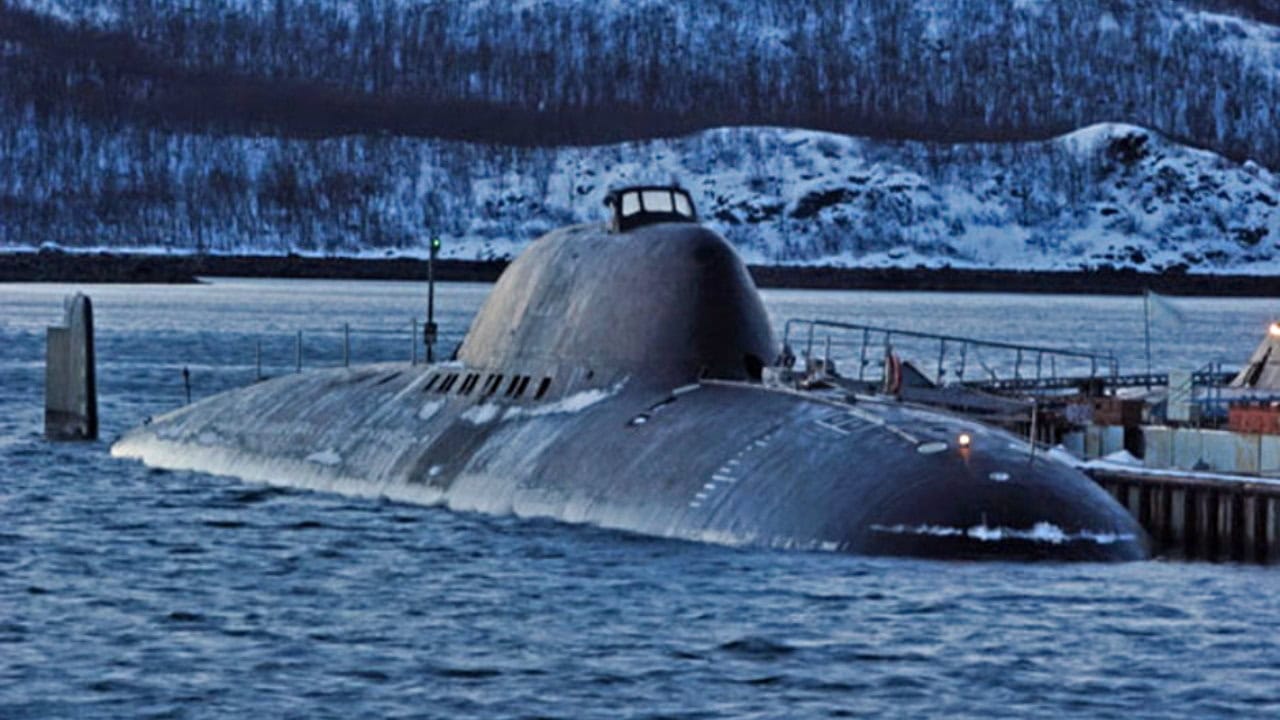
Alfa-Class Russian Navy. Image Credit: Creative Commons.

Alfa-Class Submarine. Image Credit: Creative Commons.
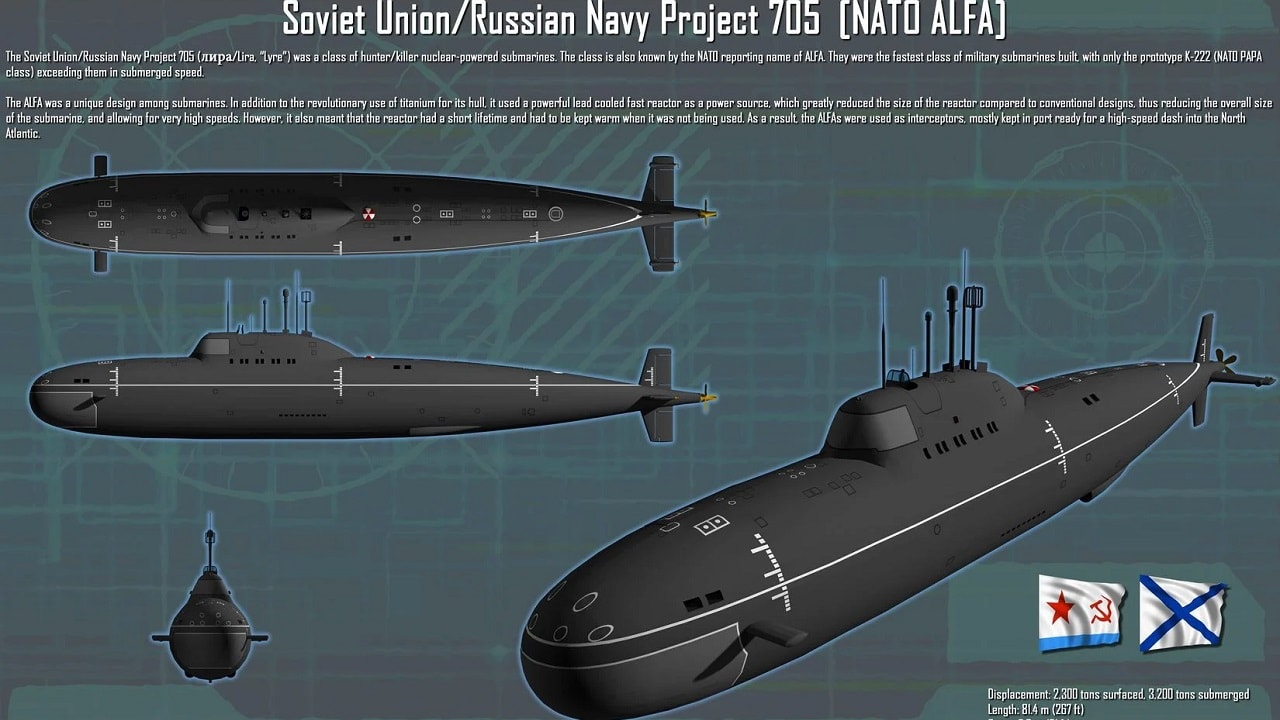
Alfa-Class Submarine. Image Credit: Creative Commons.
-However, the immense cost and difficulty of welding titanium—combined with the vessels being “noisier” than American subs—led the U.S. Navy to stick with high-strength steel, prioritizing stealth and acoustic superiority over extreme depth and speed.
Russia Has Titanium Submarines: The U.S. Navy Doesn’t
The Russian Navy is seen as far less threatening than its land and air military forces.
Russia has few sophisticated warships capable of projecting maritime combat power, especially compared to the U.S. Navy and China’s People’s Liberation Army Navy.
Russian submarines, however, are another story. Going back to the days of the Soviet Union, its underwater vessels are recognized for significant prowess, lethality, and advanced technology—placing their reputation in stark contrast to Russia’s far less effective surface-warfare fleet.
The Soviet Union operated on the cutting edge of submarine technologies for decades. It integrated quieting technologies such as air-independent propulsion and acoustic-signature-absorbing coating materials.
Titanium Hull
Soviet submarine innovation extended into the metallurgical realm. The Soviet Union’s Project 705 Lira submarine emerged in 1971 with a lightweight titanium hull the likes of which had never been seen.
Titanium was found to have a useful combination of strength, corrosion resistance, and low weight. These properties made it a solid choice for underwater vessels that must operate safely and efficiently at great depths for long periods of time.
Thanks to the innovative use of titanium in its hulls, the Lira, or Alfa-class according to its NATO designation, could reach speeds of 40 knots and depths of 350 meters.
The lower-density Alfa-class was the second-fastest submarine model, only known to be slower than the Soviets’ K-222 prototype.
Alfa-class submarines operated from the early 1970s until the mid-1990s and posed a sharp threat to the U.S. and its NATO allies.
Lighter, Faster & Deeper Submarines
Global Security describes titanium submarines as highly effective undersea platforms.
“The use of titanium alloy in the submarine hull gave several advantages at once. Firstly, the use of a particularly strong alloy with a yield strength of 70-72 kgf / mm2 significantly increased the maximum depth of the ship—almost one and a half times compared to second-generation boats—and, secondly, the use of this material reduced the magnetic field of the vessel,” Global Security writes. “Well and most important: thanks to the titanium hull, it was possible to reduce the displacement of the submarine by 30%.”
One of the most important advantages of titanium is its strength-to-weight ratio.
Titanium is as strong as many types of steel but significantly lighter, a combination of properties that enables greater speeds without compromising protection.
Submarines built with titanium hulls may withstand immense water pressure at great depths without becoming excessively heavy.
As a result, titanium submarines can dive deeper and maneuver more effectively than those made solely from steel.
Paper Tiger?
However, the choice of titanium came with major drawbacks. The metal is three to five times more expensive than steel and extremely challenging to work with. Welding large titanium sections requires specialized facilities and highly trained technicians.
Soviet Titanium Hull vs. U.S. Navy
Despite these documented technical advances, Russian submarines had no proven performance advantages over advanced U.S. Navy attack submarines such as the Los Angeles-class and the revered Seawolf-class submarines.
Some analysts argue the Alfa-Class was much noisier than U.S. or other NATO submarines of its era, minimizing any potential Russian advantage.
An essay from 1945 explains why the U.S. never sought to use titanium: U.S. submarines typically use high-strength steels and advanced anechoic coatings to reduce noise—and a submarine’s ability to stay quiet is considered a more critical factor in underwater warfare than extreme depth performance.
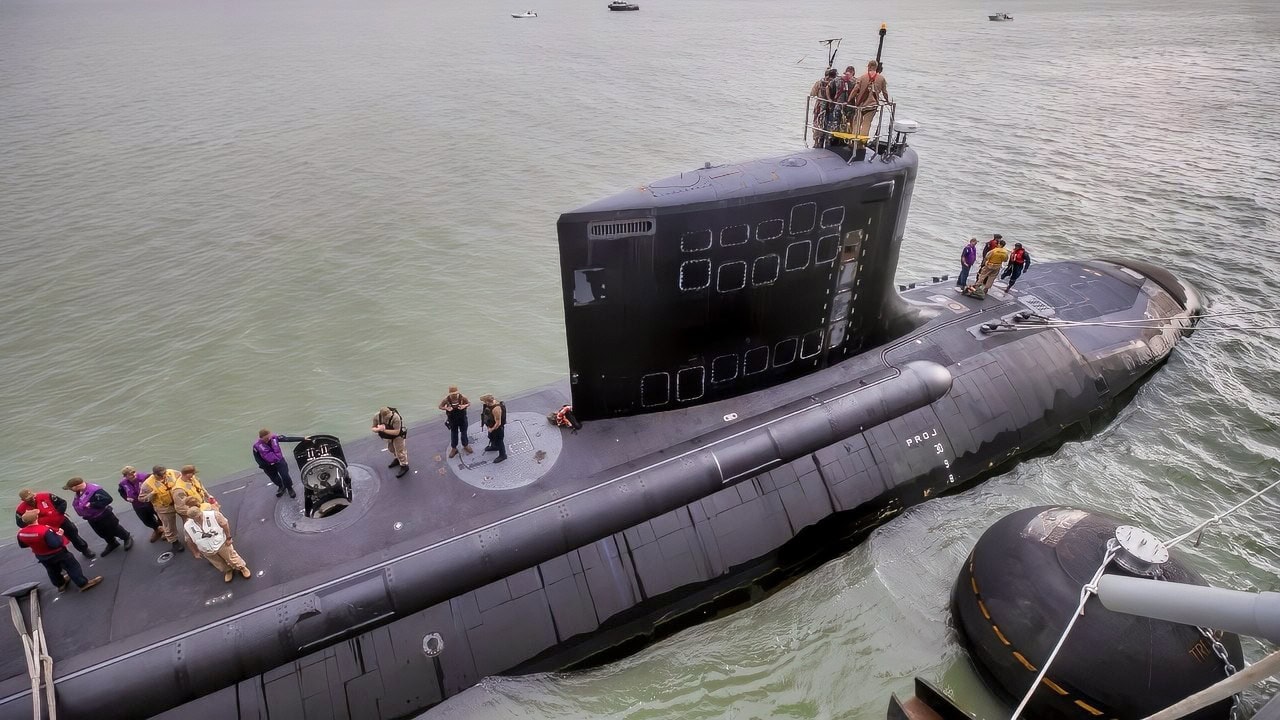
DARWIN, Northern Territory, Australia (March 31, 2025) – The Virginia-class fast-attack submarine USS Minnesota (SSN 783) departs from the submarine tender USS Emory S. Land (AS 39) after a scheduled port visit at Darwin, Northern Territory, Australia, Mar. 31, 2025. Darwin is Emory S. Land’s 17th port call since it departed on deployment May 17, 2024. Emory S. Land and Minnesota are operating in U.S. 7th Fleet, the U.S. Navy’s largest forward deployed numbered fleet, operating with allies and partners in preserving a free and open Indo-Pacific region. (U.S. Navy photo by Mass Communication Specialist Seaman Mario E. Reyes Villatoro)
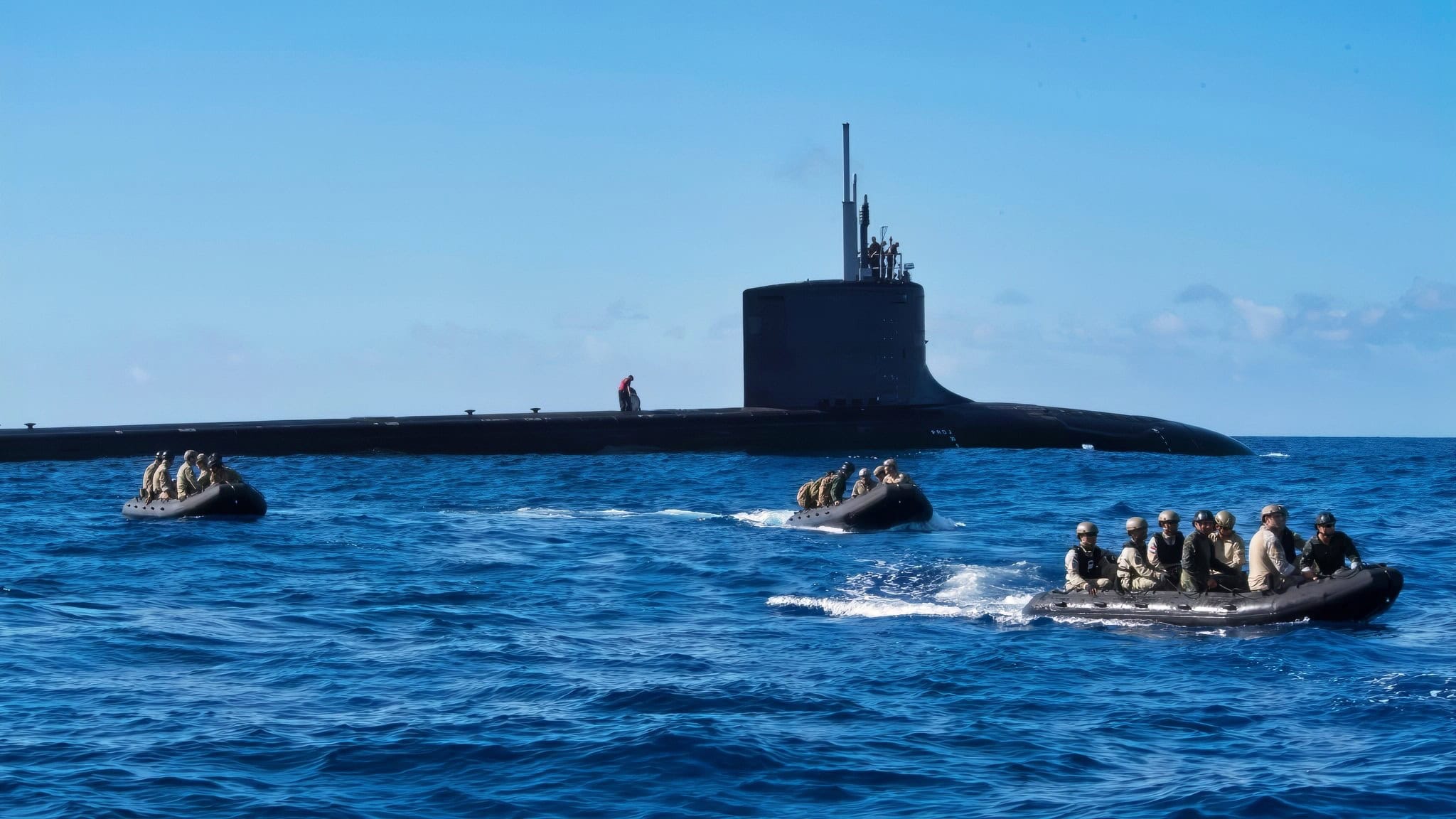
PEARL HARBOR (July 9, 2018) – Multi-national Special Operations Forces (SOF) participate in a submarine insertion exercise with the fast-attack submarine USS Hawaii (SSN 776) and combat rubber raiding craft off the coast of Oahu, Hawaii during Rim of the Pacific (RIMPAC) exercise, July 9. Twenty-five nations, 46 ships and five submarines, about 200 aircraft, and 25,000 personnel are participating in RIMPAC from June 27 to Aug. 2 in and around the Hawaiian Islands and Southern California. The world’s largest international maritime exercise, RIMPAC provides a unique training opportunity while fostering and sustaining cooperative relationships among participants critical to ensuring the safety of sea lanes and security of the world’s oceans. RIMPAC 2018 is the 26th exercise in the series that began in 1971. (U.S. Navy photo by Lt. j.g. Michelle Pelissero)
The emphasis on quieter operation and weapons integration helped U.S. submarines such as the Los Angeles and Virginia classes to achieve enduring superiority in submarine detection and tracking.
Steel hulls are also simpler to produce and maintain at scale, fitting U.S. strategic needs for large, versatile fleets.
About the Author: Kris Osborn
Kris Osborn is the President of Warrior Maven – Center for Military Modernization. Osborn previously served at the Pentagon as a highly qualified expert in the Office of the Assistant Secretary of the Army—Acquisition, Logistics & Technology. Osborn has also worked as an anchor and on-air military specialist at national TV networks. He has appeared as a guest military expert on Fox News, MSNBC, The Military Channel, and The History Channel. He also has a Masters Degree in Comparative Literature from Columbia University