
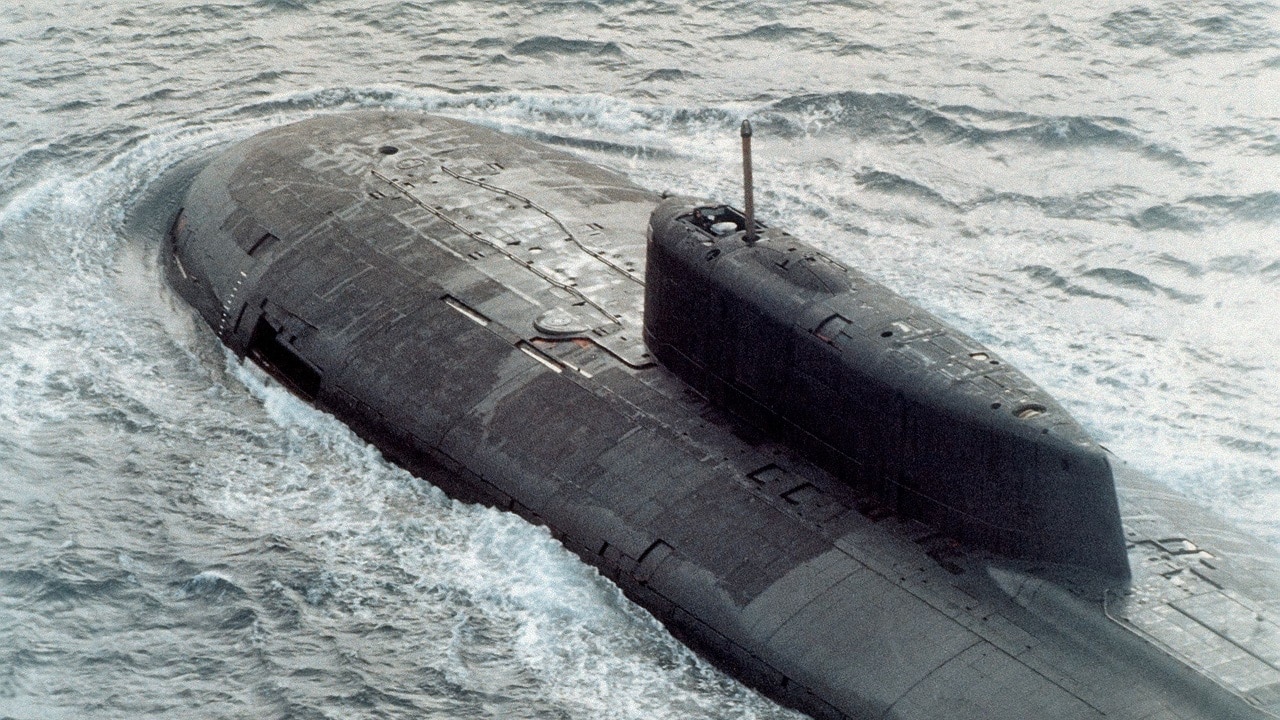
Summary and Key Points: The sinking of the nuclear-powered Kursk in August 2000 killed all 118 sailors and became an early test of Putin-era crisis management.
-As evidence pointed to a torpedo malfunction and catastrophic internal explosions, Russian officials and surrogates pushed shifting narratives—ranging from NATO involvement to claims of an American submarine collision—while the rescue effort moved slowly and foreign assistance was initially refused.
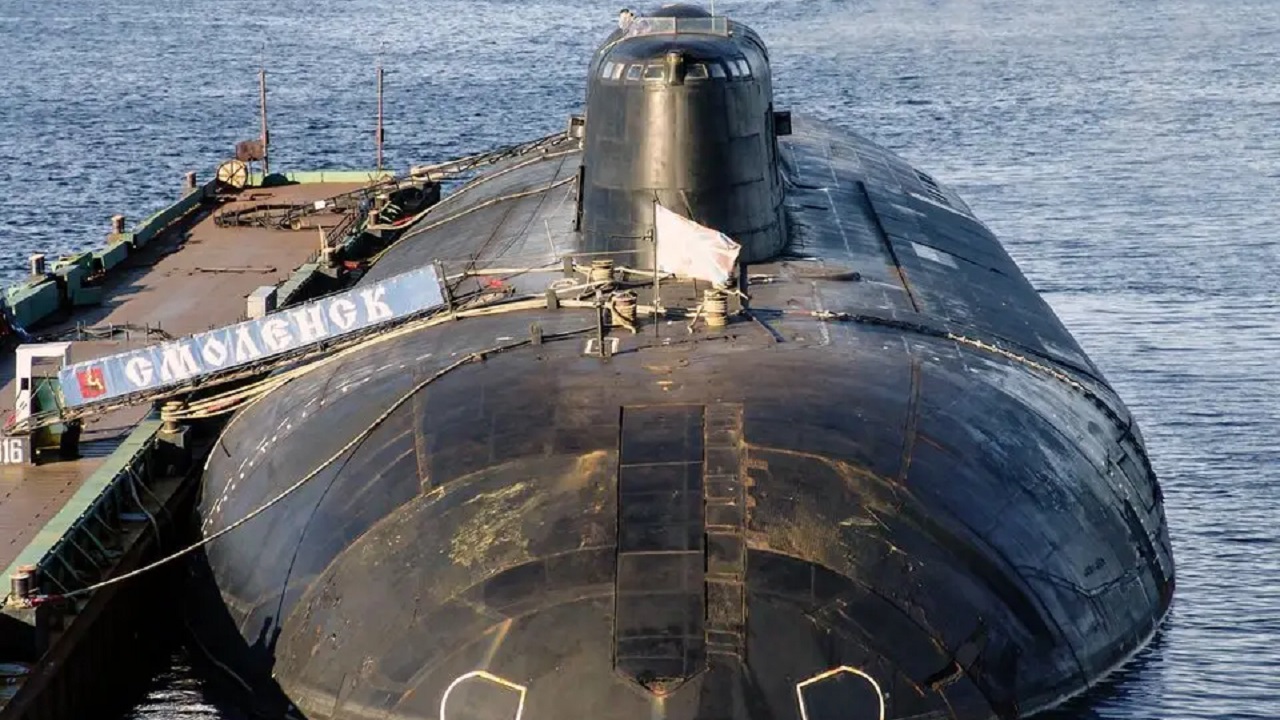
Oscar II Class Submarine. Image Credit: Creative Commons.
-A detailed timeline shows how alarms were missed, the exercise continued, and search-and-rescue actions lagged even after seismic events were recorded.
-In the end, the tragedy exposed systemic failures in safety, command accountability, and information control that would shape Russia’s politics for years.
Russian Navy Nuclear Sub Kursk: 118 Sailors Died, and Russia Still Tried to Blame a U.S. Submarine
Russia has traditionally relied on its propaganda machine. During the disaster that followed the explosion and loss of all on board the submarine Kursk, the propaganda of President Putin’s regime was in full swing.
Rand characterizes the modern Russian model for propaganda as “the firehose of falsehood” because of two of its distinctive features: a high number of channels and messages, and a shameless willingness to disseminate partial truths or outright fiction.”
Putin’s propaganda arm of his government tried to paint the sinking of the Kursk alternatively as a plot by Nazis (a common factor that was repeated in his invasion of Ukraine), and the fault of an American submarine, with even a nonsensical supposed distress call by the Americans.
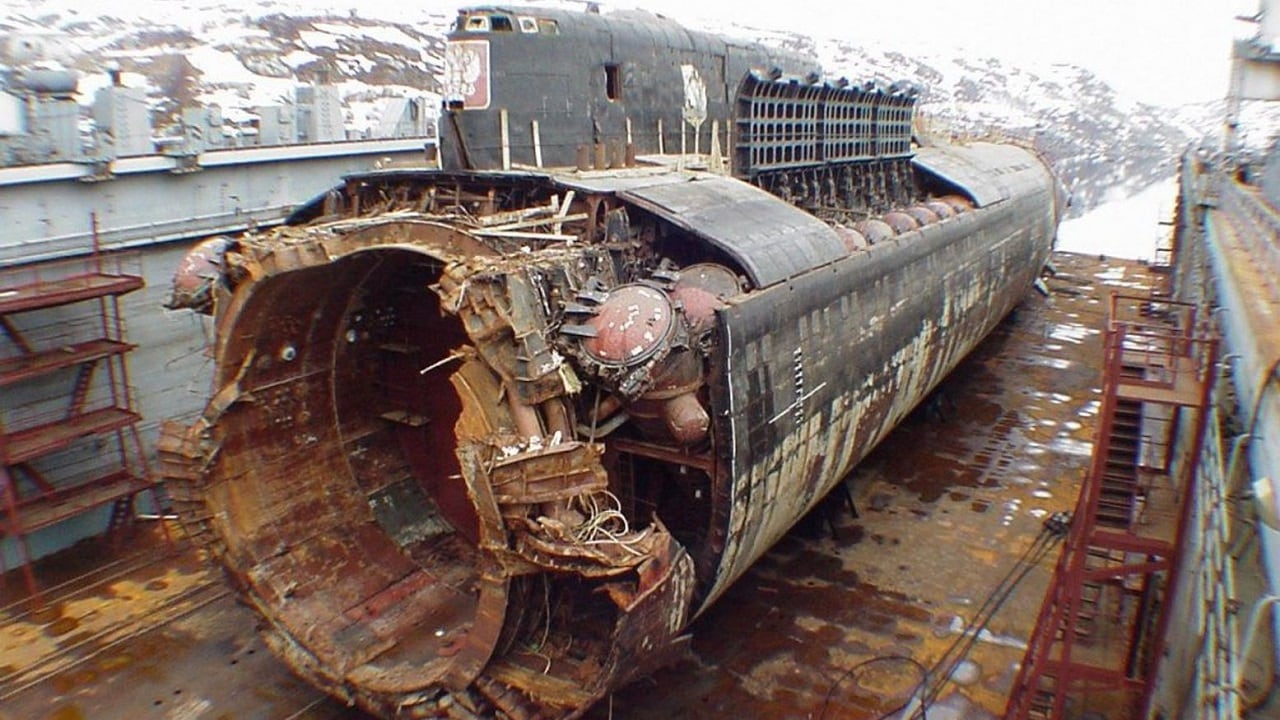
Image of Kursk submarine after accident. Image Credit: Russian Government.
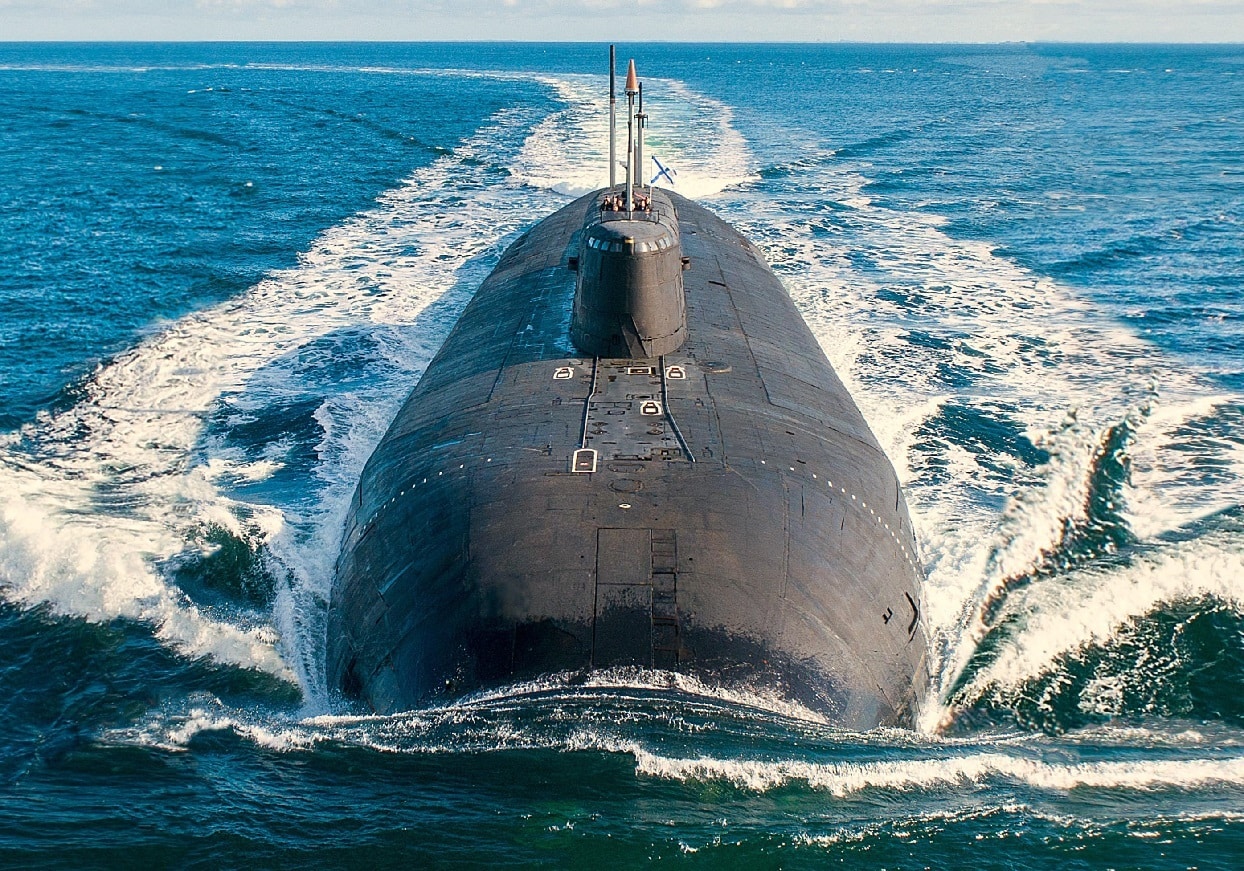
Image of an Russian Oscar-class Submarine. Image Credit: Creative Commons.
However, despite Putin’s propaganda, the Kursk incident was a horrific loss of life and perhaps an unnecessary one.
The Russian Submarine Kursk sank in August of 2000
The Russian Navy suffered a significant loss on August 12, 2000, when the Russian nuclear-powered submarine K-141 Kursk sank in the Barents Sea during a naval exercise, killing all 118 crew members. The disaster was caused by a faulty torpedo that detonated, triggering a chain of events that led to the submarine’s sinking.
Retired Adm. Vyacheslav Popov, the Russian commander of the Northern Fleet, whose slow and bungled rescue effort doomed the sailors, later claimed, without proof, that the sinking of the submarine with all hands was the result of a collision with a NATO submarine.
Timeline of the Submarine Kursk K-141 Sinking
On the morning of August 12, 2000, Kursk was in the Barents Sea, participating in the Russian Navy’s “Summer-X” exercise, the first large-scale naval exercise in more than a decade, and also its first since the collapse of the Soviet Union.
According to Russian state-controlled media, the exercise involved more than 50 ships and submarines, 40 support vessels, and approximately 80 aircraft and helicopters.
The Kursk, a member of the Oscar II-class submarines, had a stellar reputation and was equipped with a full complement of conventional combat weapons. It was one of the few submarines authorized to carry a combat load at all times.
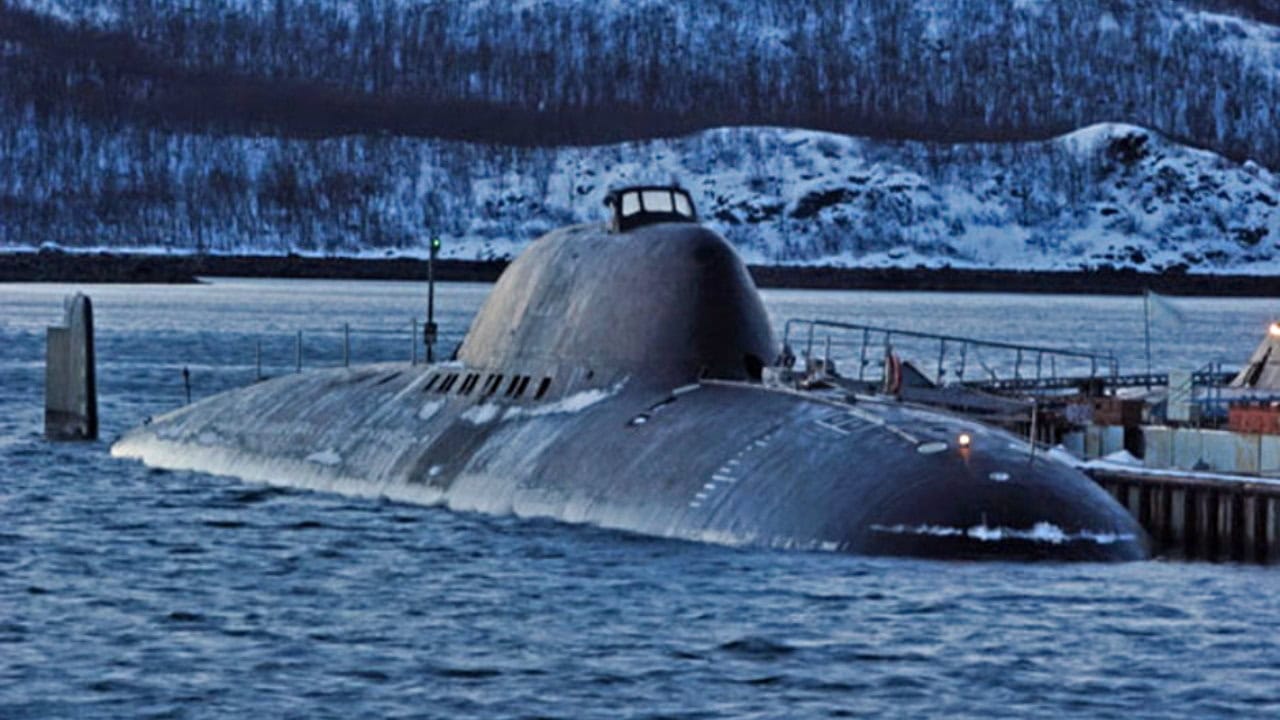
Alfa-Class Russian Navy. Image Credit: Creative Commons.
The Oscar II Class submarines are equipped with 24 P-700 Granit (SS-N-19 “Shipwreck”) cruise missiles. In addition, since the torpedo tubes can fire both torpedoes and anti-ship missiles, it also carries two dozen other weapons, including the RPK-6 Vodopad/RPK-7 Veter (SS-N-16 “Stallion”) missiles.
At 08:51 local time, the Kursk requested permission to conduct a torpedo training launch and received the response “Dobro” (“Good”).
After a delay of 2.5 hours, the submarine was set to fire two dummy torpedoes at the Kirov-class battlecruiser Pyotr Velikiy.
At 11:29 local time, the torpedo room crew loaded the first practice Type 65 “Kit” torpedo (Russian: tolstushka, or “fat girl”, because of its size), without a warhead, into Kursk’s number-4 torpedo tube on the starboard side. It was 10.7 m (35 ft) long and weighed 5 tons (4.9 long tons; 5.5 short tons).
Only 29 seconds later, seismic detectors at the Norwegian Seismic Array (NORSAR) and at other locations worldwide recorded a magnitude 2.2 eventon the Richter scale.
The location was fixed at 69°38′N 37°19′E, northeast of Murmansk, approximately 160 miles from Norway and 50 miles from the Kola Peninsula.
Two minutes and 14 seconds after the first seismic event, a second event, measuring 4.2 on the Richter scale, or 250 times larger than the first, was registered on seismographs across northern Europe and was detected as far away as Alaska. The second explosion was equivalent to 2–3 tons of TNT.
After the second massive explosion, which was felt by other Russian ships, including the intended target of the mock attack, nothing was done or even reported.
The torpedo exercise was slated to end at 13:30 hours, but even then, with no contact from Kursk and despite the massive explosion with no explanation, this didn’t alarm Admiral Popov.
At 17:00 hours, the fleet dispatched a reconnaissance aircraft, which returned without results. A search-and-rescue effort was begun, but the Summer X exercise wasn’t stopped until 22:30 hours. About 20 ships were involved in the search. Putin, who was on vacation in Sochi at the time, wasn’t alerted until 07:00 hours the next morning.
Popov that morning knew the Kursk was missing and presumed sunk, but he briefed reporters on the progress of the naval exercise. He said the exercise had been a resounding success and spoke highly of the entire operation. And yet he didn’t mention the situation regarding the Kursk.
Poor Russian Rescue Efforts, Foreign Assistance Declined
The first explosion was likely caused by a faulty weld in the torpedo, which caused highly concentrated hydrogen peroxide to leak out when the torpedoes were loaded on the ship. Records indicated that it was noted during the loading, but officers did nothing.
When the torpedo was fired, the initial explosion occurred. The initial blast set off a fire that was later estimated to have burned at 2,700 °C (4,890 °F). The government report concluded that the initial explosion and fire in the torpedo room compartment immediately killed all seven crew members inside.
An open valve in the ventilation system allowed the huge blast wave, along with possibly fire and toxic smoke, to enter the second and, perhaps, the third and fourth compartments.
Although the sub was at periscope depth with its radio antennas extended, no one in the command post sent a distress signal or pressed a single button that would initiate an emergency ballast-tank blow and bring the submarine to the surface.
It is believed that this was because all 36 men in the command post located in the second compartment were immediately incapacitated by the blast wave and likely killed. The second explosion collapsed all the decks and the first three compartments when nine torpedo warheads exploded.
Twenty-three men survived somehow and were alive inside an inner compartment, but the Russians were so slow on the entire rescue effort that the men had no chance of survival. The sub sank to 354 feet.
When the submarine was finally recovered, a scribbled note was found from one of the officers:
“It’s too dark to write, but I’ll try by touch. It seems we have no chance of survival. Only a 10–20 percent chance. Let’s hope that at least someone will read this … Hello to all, don’t despair. – Kolesnikov”
Worse still, on the afternoon of the explosion, aware that the Kursk had sunk, the US and UK governments offered help in rescuing survivors, along with France, Germany, Israel, Italy, and Norway. The Russian government refused all offers, content with letting their sailors die rather than accept help.
They finally allowed Norway’s help four days after the sinking, and by then, it was too late. who claimed that the rescue was impossible due to storms.
The submarine was finally raised by a Dutch company in 2001. A total of 115 bodies of the 118-man crew were recovered and sent home to families for a proper burial.
Putin and Admiral Popov Try to Blame The US
Popov, after being ridiculed by his inaction and poor rescue efforts, tried to paint the sinking as being caused by an American submarine. He claimed that a US submarine bumped the Russian submarine, causing the submarine to explode.
He further claimed that the US submarine had sent a distress call and was heavily damaged, although he admitted that he had no proof of this.
Putin remained on vacation until August 17, and then was cold to the families of the dead sailors, while claiming that the rescue was impossible due to storms. He then claimed that American missiles attacked the Kursk.
However, according to Russian lawyer Boris Kuznetsov, Putin, who had just taken office a few months earlier, didn’t control the media as he does now. Russian oligarchs controlled it. But this was Putin’s “first lie.”
“The lies began with the sinking of the Kursk,” Kuznetsov said. “When the Kursk sank, the government began interfering with the legal and law-enforcement systems. The government began gathering all the mass media under its control. The entire process of undermining democracy in Russia, in many regards, began with this.”
Finally, Kremlin spokesman Dmitry Peskov cited the official investigation, which concluded that the disaster was triggered by an explosive propellant leak from a faulty torpedo.
About the Author: Steve Balestrieri
Steve Balestrieri is a National Security Columnist. He served as a US Army Special Forces NCO and Warrant Officer. In addition to writing on defense, he covers the NFL for PatsFans.com and is a member of the Pro Football Writers of America (PFWA). His work was regularly featured in many military publications.