
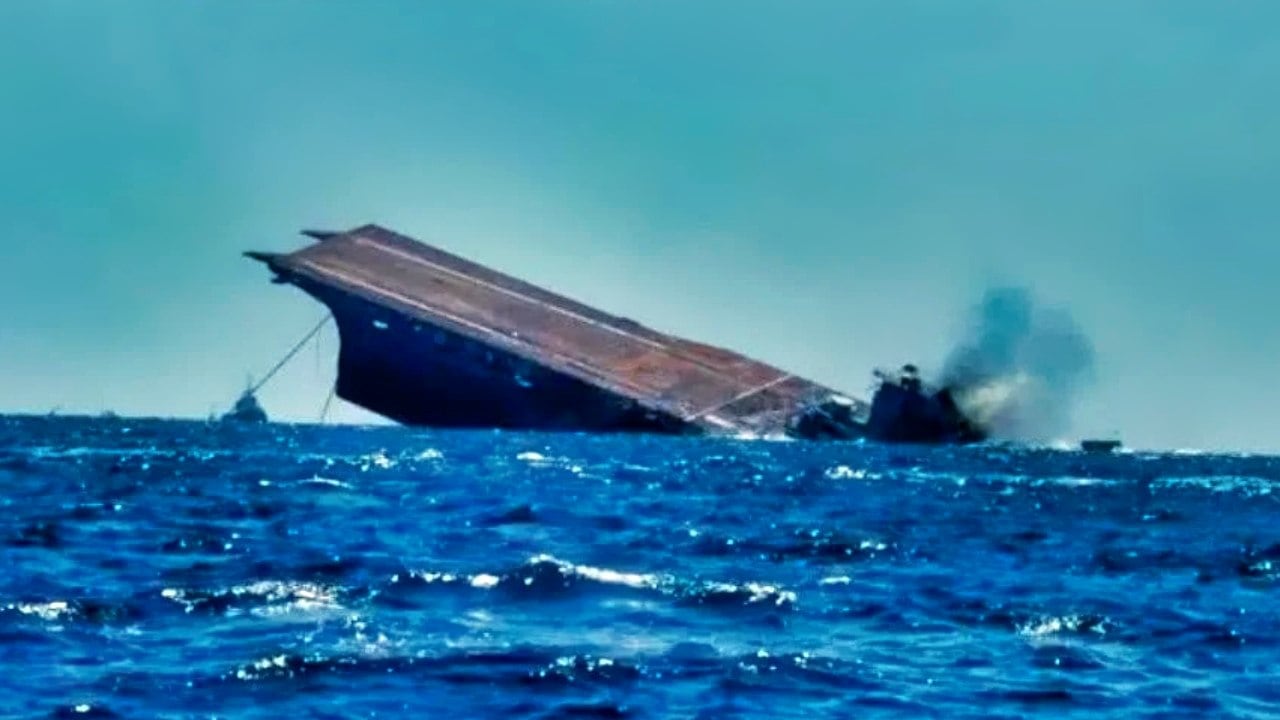
Summary and Key Points: A Taiwan contingency would put U.S. aircraft carriers in a far harsher environment than 1996. China’s A2/AD network—anti-ship ballistic missiles, cruise missiles, submarines, satellites, and over-the-horizon sensors—raises the risk and compresses decision time.
-Carriers remain valuable, but they would likely operate farther east, leaning on long-range aircraft, refueling, standoff weapons, emissions control, deception, and constant mobility to complicate targeting.
-They would fight as part of a wider “kill web” with submarines, bombers, and allied bases—because land airfields are vulnerable too. Carriers still signal commitment, but uncontested dominance is over.
Would U.S. Aircraft Carriers Survive a Taiwan War? China’s A2/AD Changes Everything
Every Taiwan contingency discussion now includes the same question: would US aircraft carriers survive?
China’s anti-access/area-denial (A2/AD) network has become increasingly formidable, now including DF-21D and DF-26 anti-ship ballistic missiles, long-range cruise missiles, and ISR satellites and over-the-horizon radars—all of which serve to make carrier operations riskier. Still, carriers would be relevant in a Taiwan contingency, albeit unable to operate as freely as they did in 1996.
Historical Context
In 1996, during the Taiwan Strait Crisis, the US deployed carriers directly to the region. At the time, China lacked mature missile forces, integrated ISR, and long-range precision strike capabilities. So, the US carrier presence was low-risk and high-signaling.
But today’s China is not 1996 China. The threat has matured. China has built layered defenses: ballistic missile threat envelopes that reach deep into the Philippine Sea; dense coastal air defense systems; an expanded submarine fleet; and Intelligence, Surveillance, and Reconnaissance (ISR) integration via satellites, drones, and maritime patrol aircraft.
The goal behind the A2/AD network’s construction was to push US naval forces beyond their effective strike range.
Carrier Vulnerability
Are carriers too vulnerable to operate within the A2/AD network? Carriers have a large radar signature and, of course, are high-value targets. Actually, carriers are among the most highly valued targets in military history.
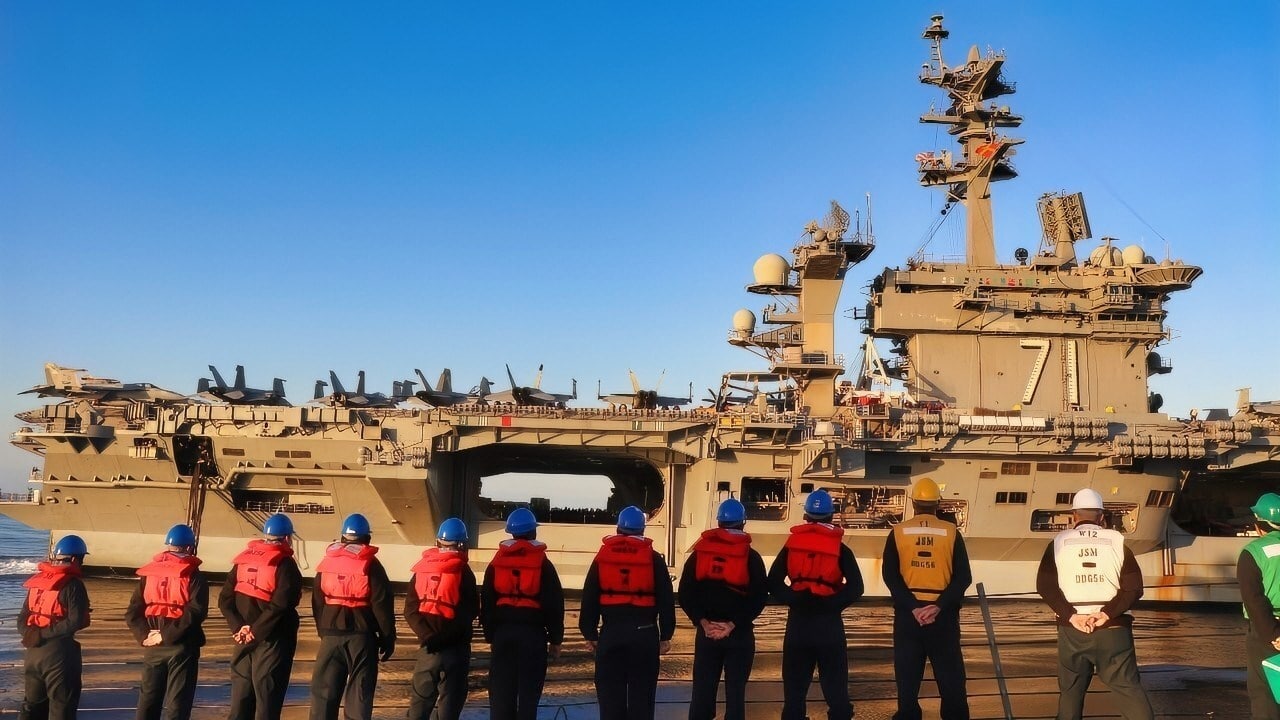
PACIFIC OCEAN (Nov. 28, 2023) Line handling crew assigned to the Arleigh Burke-class guided-missile destroyer USS John S. McCain (DDG 56) prepares to come alongside USS Theodore Roosevelt (CVN 71) for a replenishment at sea. John S. McCain is currently conducting routine training and certifications in the U.S. 3rd Fleet area of operations. (U.S. Navy photo by Ensign Garrett Fox).
Worth many billions of dollars, loaded with a hundred or so units of cutting-edge aircraft, and operated with upwards of five thousand sailors, each aircraft carrier represents a concentration of wealth and human capital unrivaled in military machines.
Missile saturation and ISR tracking improvements pose a real risk to carriers. But carriers do not operate alone; they enjoy layered air defense via escorts, SM-6 and other interceptors, and electronic warfare systems.
And carriers are mobile—and mobility complicates targeting, especially in a geography as vast as the Pacific, given imperfect tracking systems. So while the missile threat that carriers face is serious, the kill chain is fragile, and carriers maintain defense mechanisms and adaptable survival tactics.
Standoff Distance
In a modern Taiwan crisis, carriers would need to adjust relative to 1996; they would likely operate further east of Taiwan, outside the densest Chinese missile envelopes. This would require long-range aircraft, aerial refueling, and standoff weapons.
The result is that carrier aviation is increasingly about range and persistence rather than proximity.
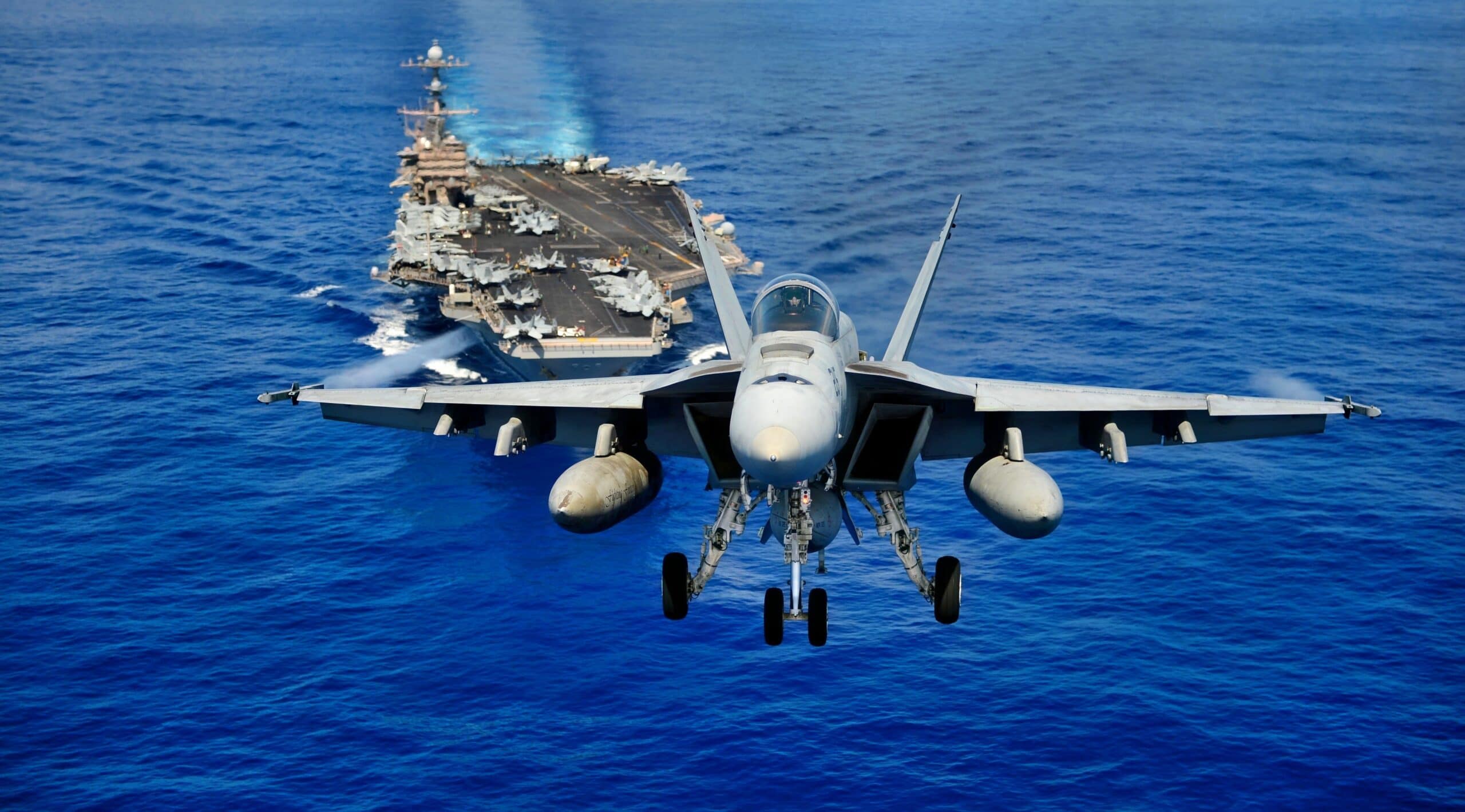
Aircraft Carrier. Image Credit: U.S. Navy.
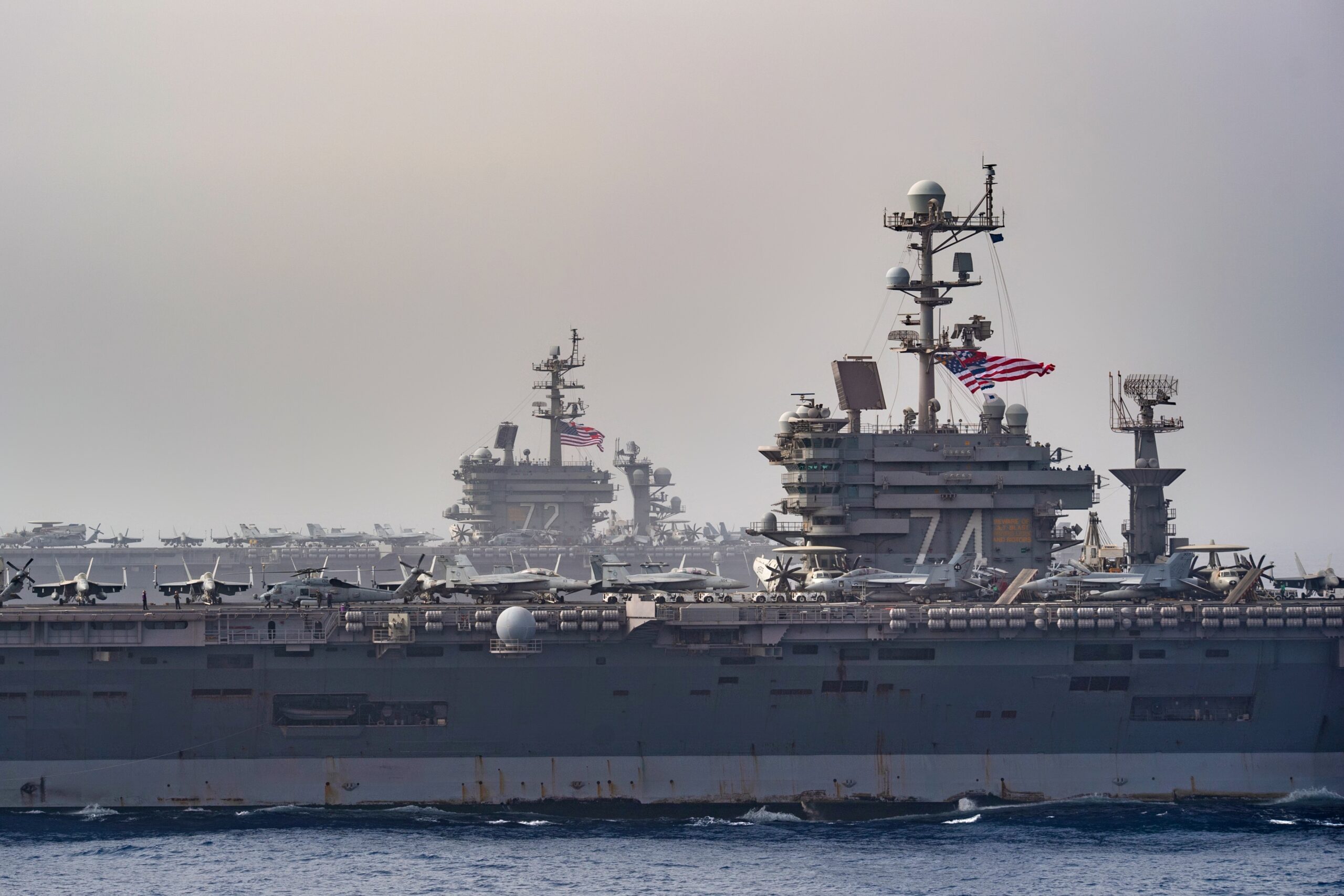
The aircraft carrier USS John C. Stennis (CVN 74) steams alongside the aircraft carrier USS Abraham Lincoln (CVN 72), background, in the Mediterranean Sea, April 24, 2019. The John C. Stennis Carrier Strike Group (CSG) 3 and Abraham Lincoln Carrier Strike Group (CSG) 12 are conducting dual carrier operations, providing opportunity for two strike groups to work together alongside key allies and partners in the U.S. 6th Fleet area of operations. John C. Stennis is underway in the Mediterranean Sea as part of the John C. Stennis Carrier Strike Group (JCSCSG) deployment in support of maritime security cooperation efforts in the U.S. 6th Fleet area of responsibility. (U.S. Navy photo by Mass Communication Specialist 3rd Class Grant G. Grady)
The carrier would need to make tactical adjustments as well, with a greater emphasis on deception, emissions control, mobility, and unpredictability. Distributed operations involving multiple carriers and amphibious assault ships would complicate targeting. An increased reliance on submarines and long-range bombers would alleviate the burden on carriers.
The aircraft aboard carriers has evolved, too. The F-35C extends sensor reach and integrates with the E-2D and networked surface combatants. Still, the air wing must evolve further to achieve longer combat radii and greater ISR resilience.
Still Relevant
Despite the challenges, carriers are still relevant. Land bases in Japan and Guam are also vulnerable, meaning alternatives are not perfect. And carriers provide sovereign mobility, political flexibility, and immediate crisis response.
They remain the most adaptable forward air base. But in a modern crisis, carriers would almost certainly not sail directly into the Taiwan Strait. The area is too constrained and missile-dense. Operations would instead be peripheral, layered, and coordinated with regional allies.
In the absence of carriers, the US response would become reliant on strategic bombers, submarines, and missiles.
These tools can be effective, but they lose the political signaling of the carrier, perhaps to the point where a carrier absence would embolden China; carriers serve as symbols as well as military platforms—their presence signals commitment.
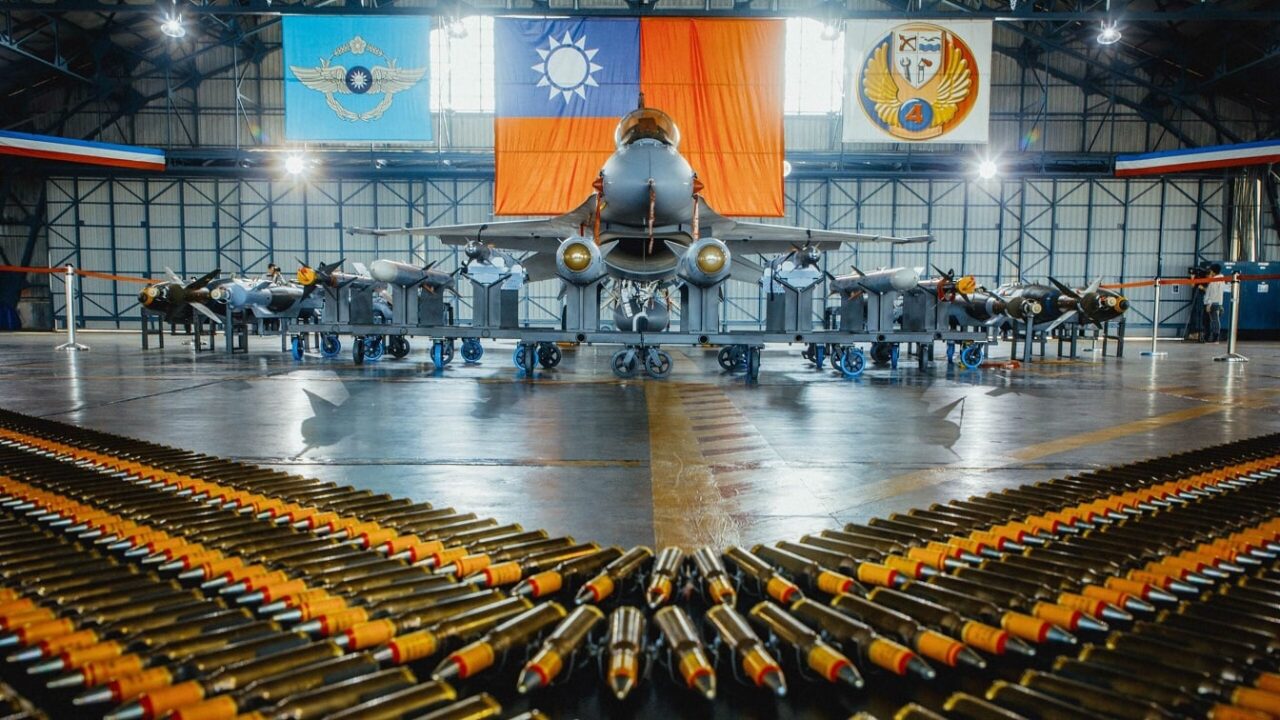
New Taiwan F-16V fighter jet. Image Credit: ROC government.
In sum, we are not past the point of carrier relevance. But we are past the era of uncontested dominance.
Carriers remain usable but with greater risk, requiring greater distances and tighter coordination with defense systems. The result is that carriers are no longer the blunt instrument of intimidation they were through the second half of the 20th century.
They are now, instead, nodes in a distributed kill web, mobile airbases that must be wary of Chinese missile capabilities. A modern conflict in Taiwan would test carrier survivability.
About the Author: Harrison Kass
Harrison Kass is an attorney and journalist covering national security, technology, and politics. Previously, he was a political staffer and candidate, and a US Air Force pilot selectee. He holds a JD from the University of Oregon and a master’s in global journalism and international relations from NYU.