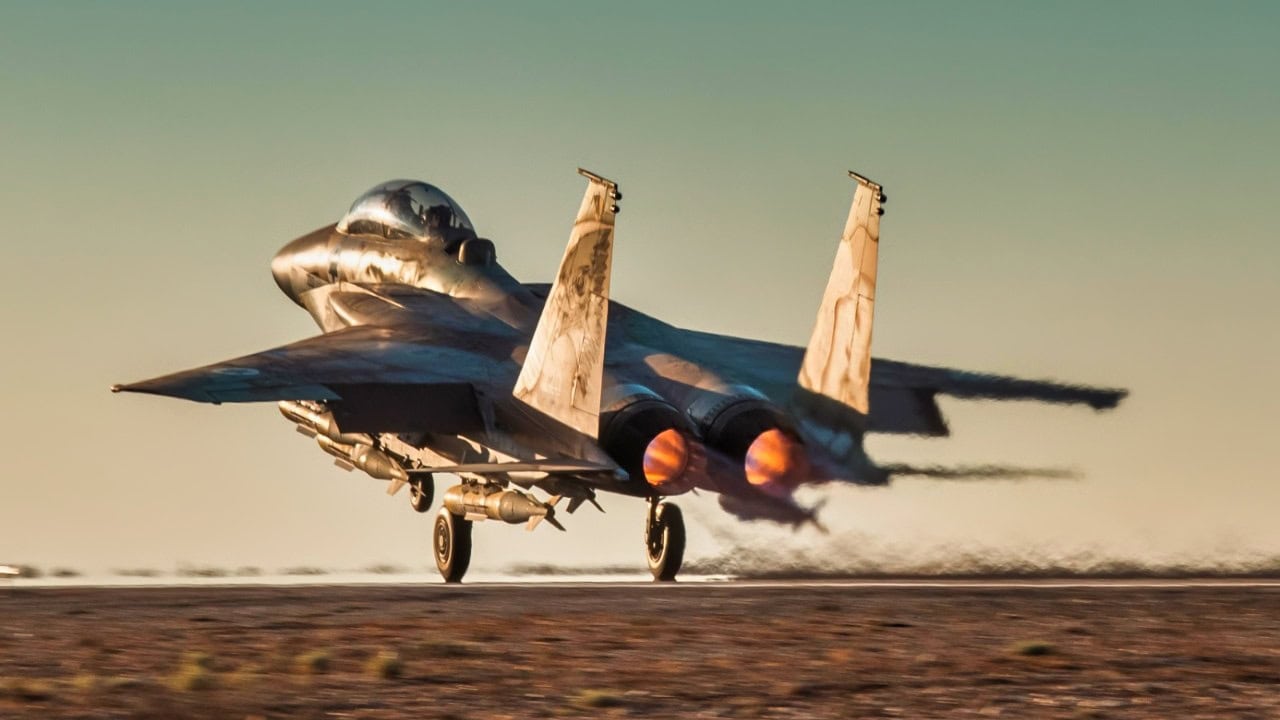
F-15I Was Built for Long-Range Strikes—and the F-15EX Wasn’t: Summary and Key Points for This Article
-The F-15 began as an air-to-air dominance fighter, built for speed, climb, and radar reach. Israel’s F-15I Ra’am evolved from the F-15E Strike Eagle into a long-range precision strike platform, optimized for deep missions with heavy payloads, conformal fuel tanks, and Israeli-specific avionics, electronic warfare, and weapons integration.
-The U.S. F-15EX Eagle II reflects a different logic: modernize the F-15 for a digitized force, pairing advanced AESA radar and open mission systems with the ability to carry large missile loads and support fifth-generation fighters.
-Both are Eagles—but built for different problems.
F-15I vs. F-15EX: Two Eagles Built for Two Very Different Wars
The original F-15 Eagle entered U.S. Air Force service in the 1970s with a clear mission: to dominate the skies. Developed in response to advanced Soviet fighter aircraft, the Eagle emphasized speed, climb rate, radar performance, and air-to-air combat capability.
Its Mach 2 speeds and nearly flawless combat record help explain why the U.S. Air Force has been upgrading the platform with enhanced technologies for many years now.
The F-15’s powerful engines, large radar, and high thrust-to-weight ratio gave it unmatched performance for its time. Armed with air-to-air missiles and a 20mm cannon, it was designed to prevail in air engagements and “outperform” adversaries.
By contrast, the F-15I Ra’am, introduced into Israeli Air Force service in the late 1990s, is based on the American F-15E Strike Eagle variant rather than the original F-15C air-to-air variant. Its primary role is long-range precision strike.
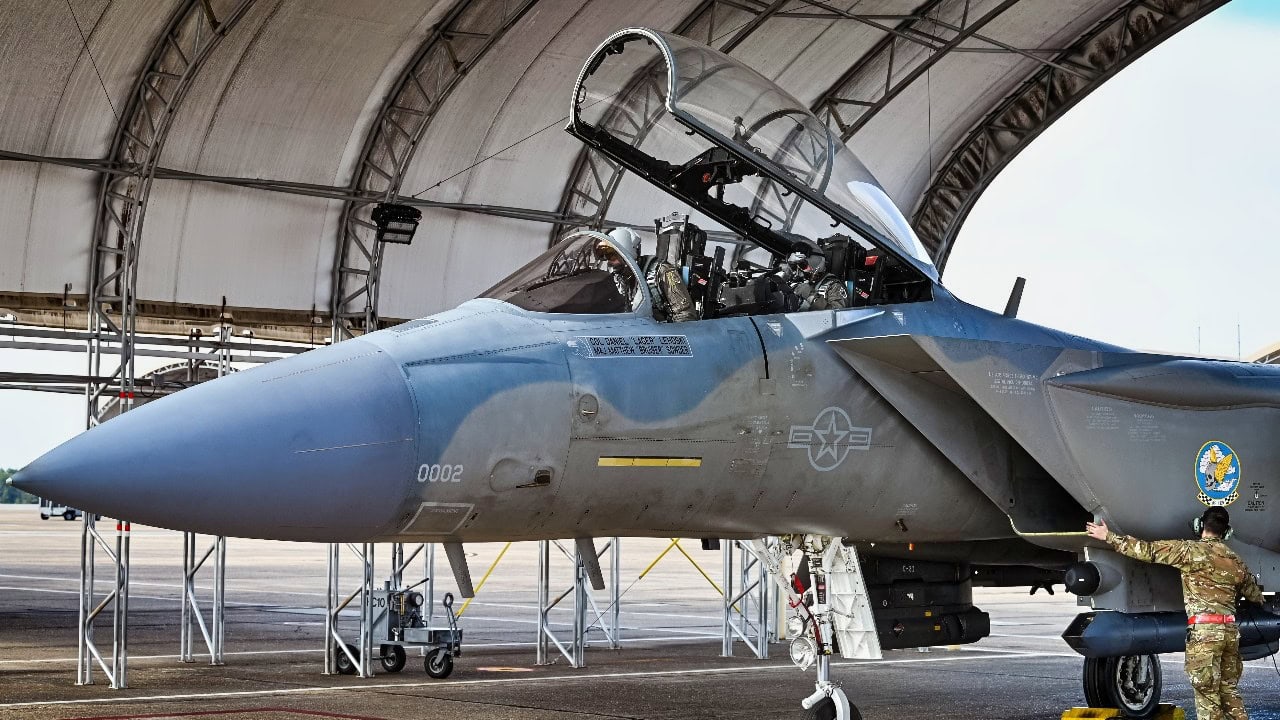
U.S. Air Force Maj. Aaron Eshkenazi, F-15EX Test Director for the 84th Test and Evaluation Squadron, performs preflight procedures for the F-15EX with Lt. Gen. Michael Koscheski, deputy commander of Air Combat Command, at Eglin Air Force Base, Florida, January 29, 2025. During his visit, Koscheski gained valuable insights from the 84th TES and 85th TES to help inform future decisions regarding the platform. The future F-15 fleet will complement 5th generation aircraft, bringing substantial additional capacity for over-sized long-range fires, sensors, and electronic warfare capabilities to defend critical locations in highly contested areas. (U.S. Air Force photo by 1st Lt. Rebecca Abordo)
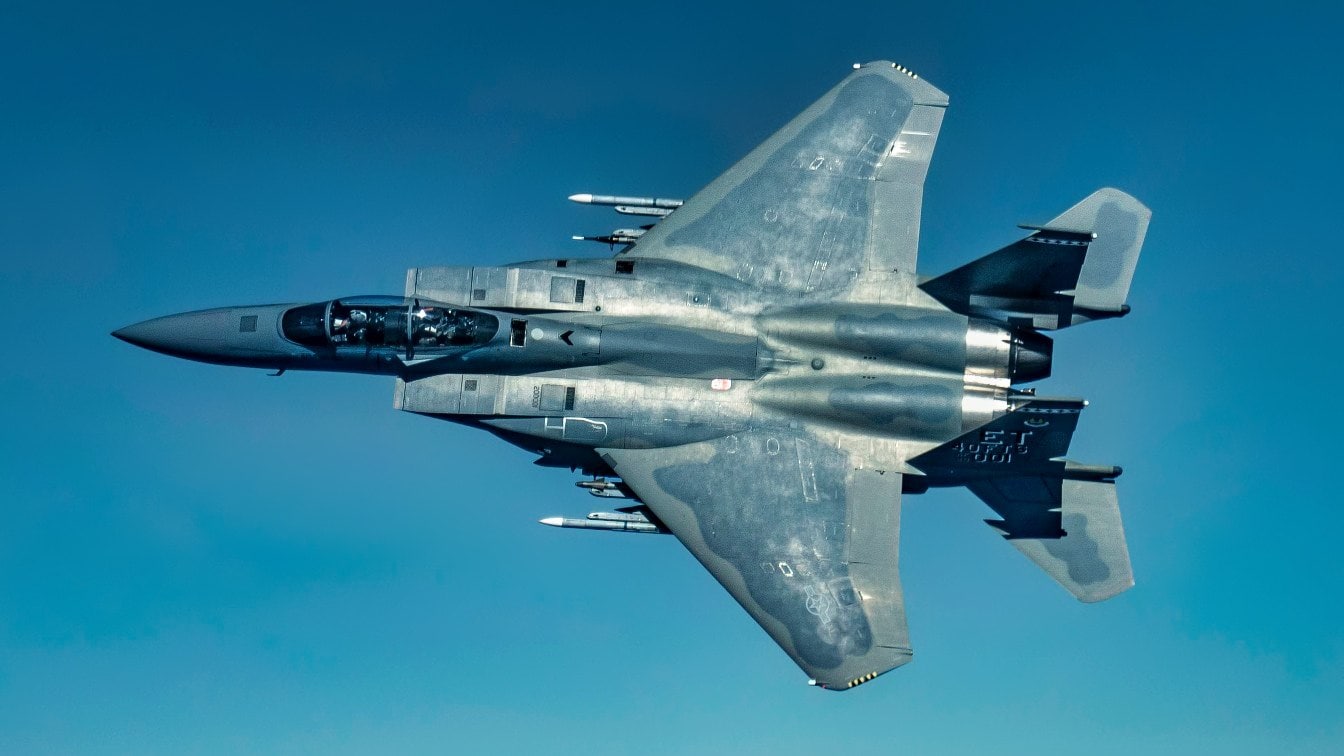
U.S. Air Force Lt. Col. Richard Turner, 40th Flight Test Squadron commander flies 40 FLTS Senior Enlisted Leader, MSgt Tristan McIntire during a test sortie in the F-15EX Eagle II over the Gulf of Mexico on Jun. 14, 2022. Assigned to the 96th Test Wing at Eglin Air Force Base, Fla., the F-15EX Eagle II is the Air Force’s newest 4th generation fighter being tested at the 40 FLTS. (U.S. Air Force photo by Tech. Sgt. John McRell)
Israel required an aircraft capable of carrying heavy payloads over extended distances, potentially reaching targets far beyond its borders. As a result, the F-15I incorporates conformal fuel tanks for increased range and endurance, advanced navigation systems, and the ability to deliver a wide array of precision-guided munitions.
Deep Strike Attack in the Middle East
The F-15I Ra’am is based on the American F-15E Strike Eagle and entered service with the Israeli Air Force in the late 1990s. From the outset, it was tailored for deep-strike missions against distant, heavily defended targets.
Israel required an aircraft capable of flying long distances—potentially across hostile territory—while carrying heavy payloads of precision-guided munitions.
As a result, the F-15I was equipped with electronic warfare equipment customized to Israeli specifications, in a manner somewhat similar to the Israeli efforts with the F-35i Adir. Although derived from a U.S. design, the F-15I incorporates significant Israeli avionics, mission computers, and locally developed weapons integration, giving it a distinct national character.
One of the most significant differences lies in avionics and customization. The U.S. F-15 Eagle variants were built with American radar, electronic warfare systems, and mission computers tailored to U.S. doctrine.
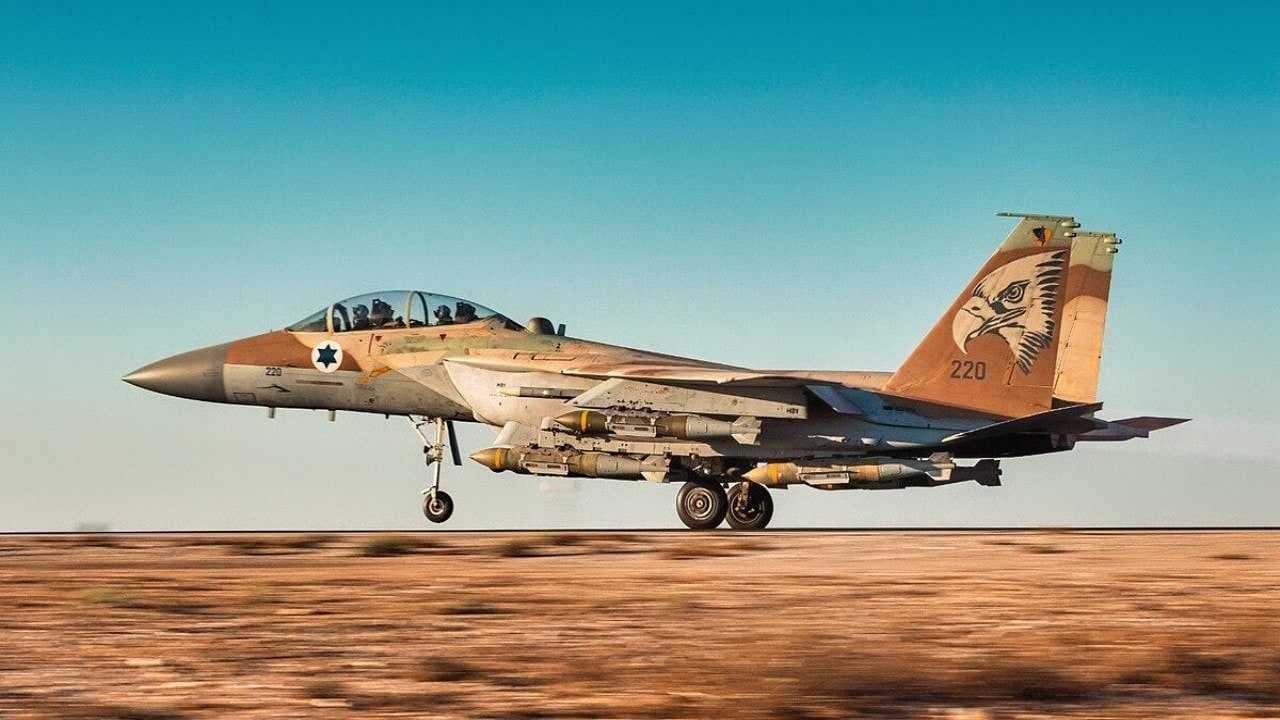
F-15I Ra’am Israeli Air Force.
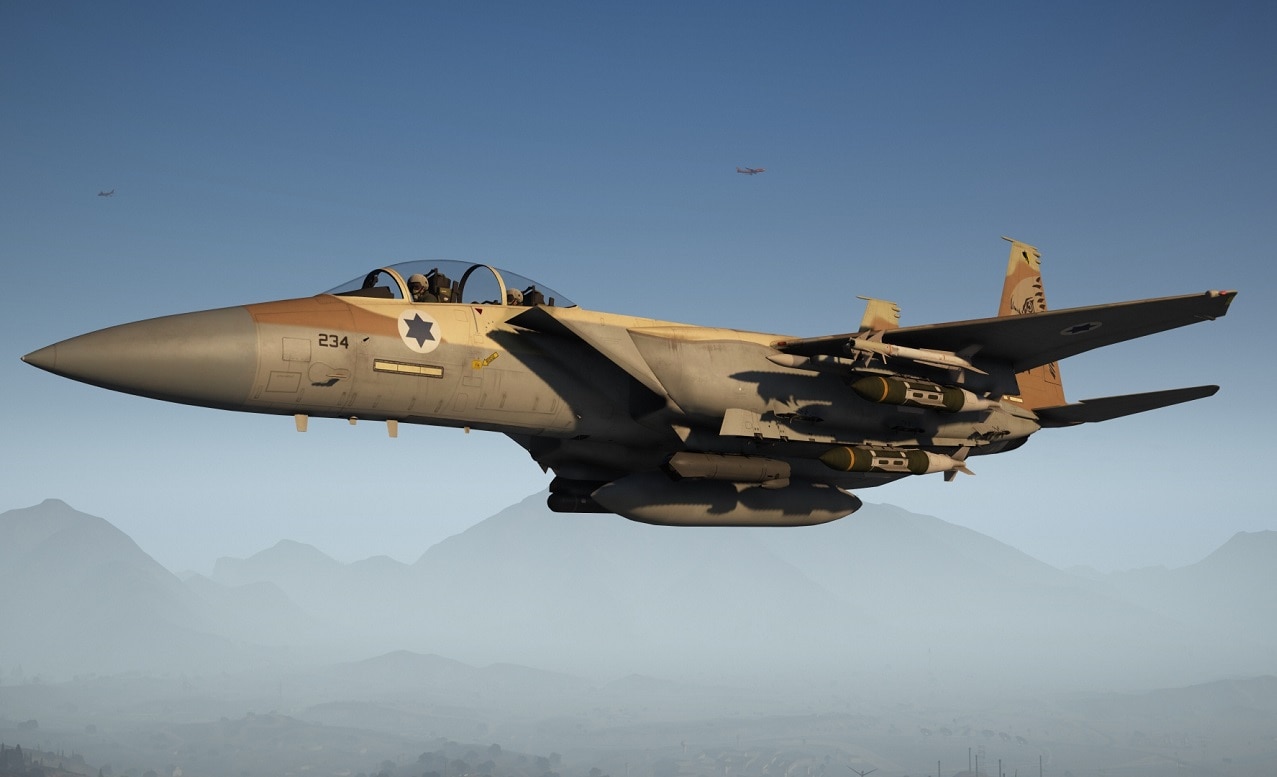
F-15I Ra’am. Image Credit: Creative Commons.
The F-15I, while initially delivered with U.S. systems, integrates substantial Israeli-developed avionics, electronic countermeasures, and weapons systems. This allows Israel to maintain greater operational independence and adapt the aircraft to its specific needs. Israeli defense companies have contributed targeting pods, data links, and specialized electronic warfare suites that reflect the country’s emphasis on survivability in dense, high-threat environments.
F-15I and F-15EX: What’s the Difference?
The F-15I Ra’am and the F-15EX Eagle II represent two different generations and philosophies within the long-serving F-15 family. While both aircraft share a common heritage in the original American F-15 design, they were built to meet distinct operational requirements.
The F-15I reflects Israel’s need for long-range precision strike capability in a volatile regional environment, whereas the F-15EX embodies the United States’ effort to modernize and digitize its high-performing F-15.
F-15EX Eagle II is the most advanced evolution of the F-15 platform developed for the U.S. Air Force. It is intended to replace aging F-15C/D models and complement fifth-generation aircraft such as the F-22 and F-35, rather than focusing primarily on deep strike.
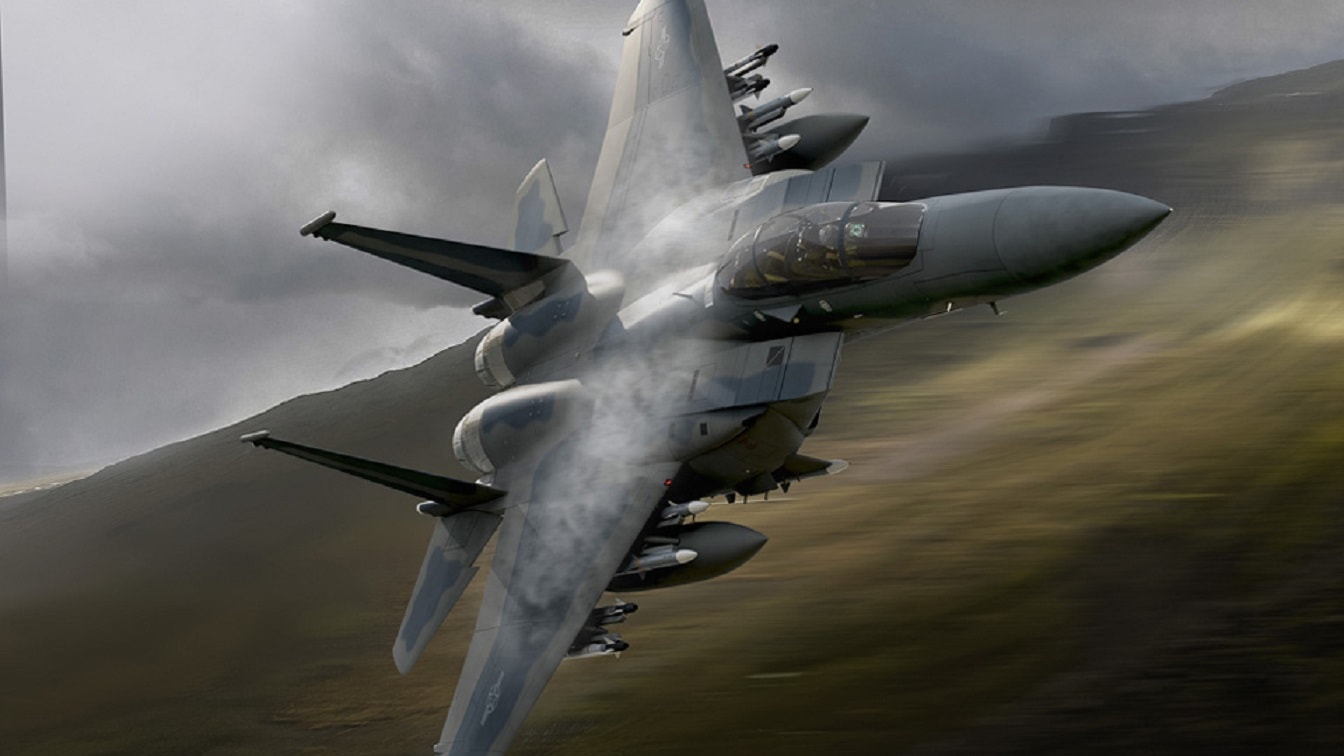
F-15EX Eagle II artist rendition. Image Credit: Boeing.
The F-15EX is designed as a highly adaptable “arsenal platform” capable of air superiority, long-range missile carriage, and strike operations. It can bring massive ordnance and fire support to reinforce attack missions from stealthy 5th-gen aircraft designed to destroy air defenses, establish air superiority, and create a safer “air corridor” for less stealthy aircraft to attack.
The F-15EX leverages decades of technological advancement since the F-15I’s introduction, including cutting-edge digital avionics, open mission systems architecture, and a powerful Active Electronically Scanned Array (AESA) radar.
About the Author: Kris Osborn
Kris Osborn is the President of Warrior Maven – Center for Military Modernization. Osborn previously served at the Pentagon as a highly qualified expert in the Office of the Assistant Secretary of the Army—Acquisition, Logistics & Technology. Osborn has also worked as an anchor and on-air military specialist at national TV networks. He has appeared as a guest military expert on Fox News, MSNBC, The Military Channel, and The HistoryChannel. He also has a Master’s Degree in Comparative Literature from Columbia.