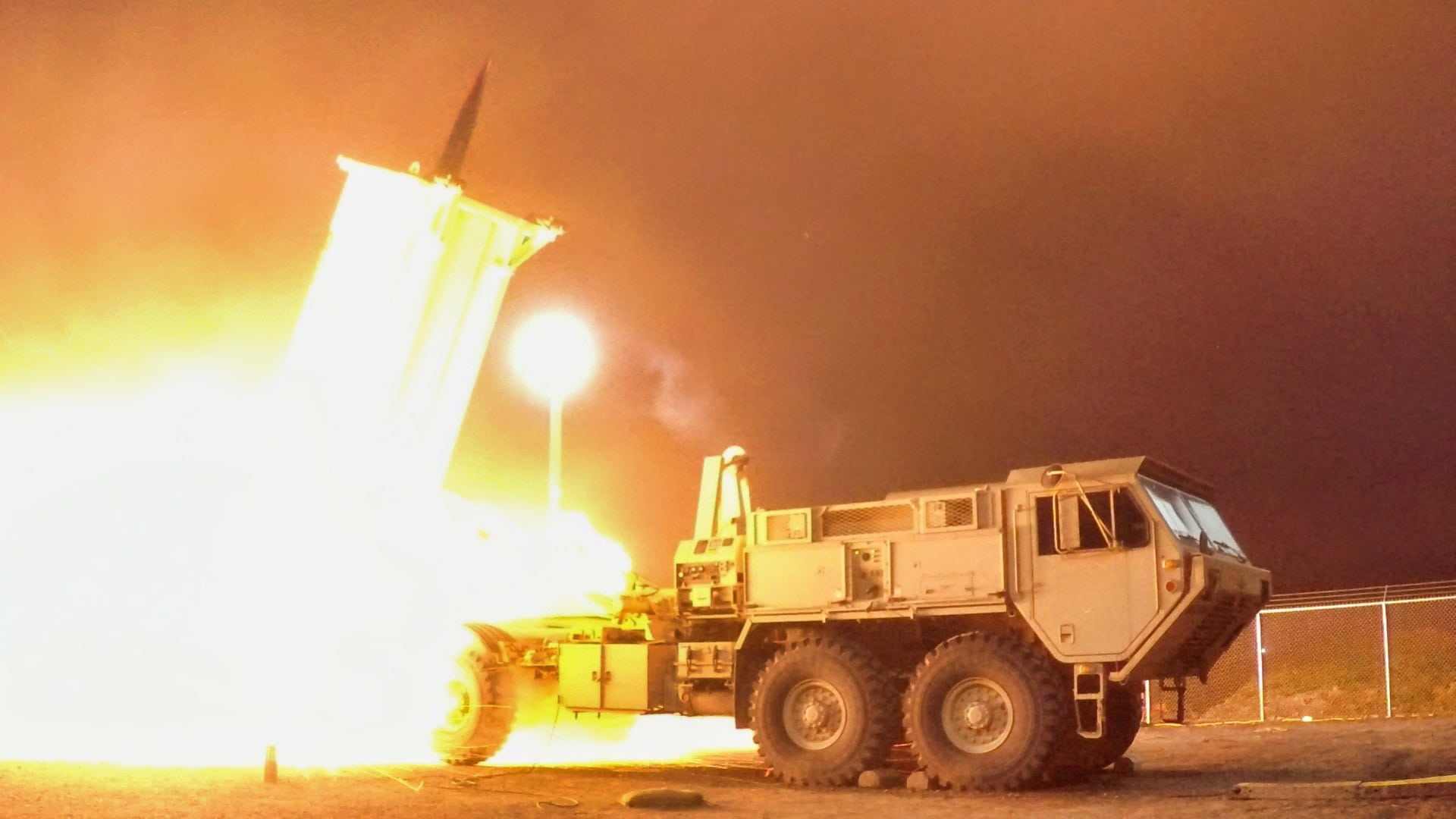
Summary and Key Points: China’s unveiling of the CJ-1000 land-based, scramjet-powered hypersonic missile marks a seismic shift in global security in 2026.
-Showcased during the September 2025 Victory Day parade, this road-mobile weapon maintains sustained Mach 6 flight at altitudes of 20–30 km, significantly lower than traditional Hypersonic Glide Vehicles (HGVs).

Image of DF-17 missile. Image: Creative Commons.
-Its reported 2,500 km range allows it to strike critical regional nodes and carrier strike groups with unprecedented precision.
-While Beijing claims this “Long Sword” renders existing defenses powerless, the U.S. is racing to counter it with a proliferated LEO satellite tracking layer designed for continuous target acquisition.
China’s New CJ-1000 Threat: How Worried Should the U.S. Military Be?
The People’s Liberation Army (PLAN) claims to be surging far ahead in the realm of hypersonic weapons, including hypersonic glide vehicle projectiles and scramjet-powered weapons.
Many around the world witnessed a full arsenal of hypersonic projectiles on display at the People’s Republic of China’s (PRC) Victory Day military parade this past September, some of which had never been seen in public before.
Now, a Chinese government-backed newspaper called Shipborne Weapons claims the PLA has operationalized a first-of-its-kind land-fired hypersonic scramjet capable of delivering more explosives over a longer range than any previous scramjet.
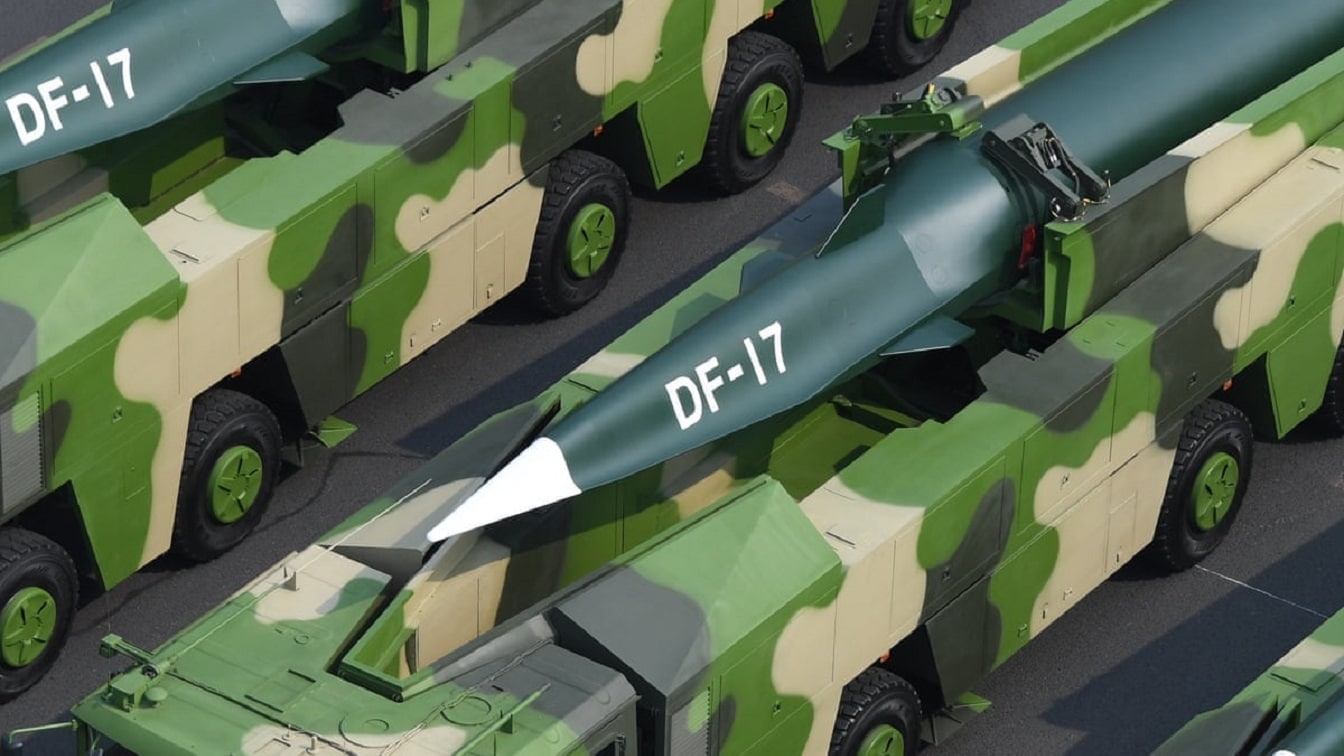
DF-17 Chinese Missile. Image Credit: Creative Commons.
Unlike Hypersonic Glide Vehicles (HGVs), boost-glide weapons, which are powered up to the edge of the earth’s atmosphere before using pure speed of descent to destroy a target, a scramjet-powered weapon uses an engine to sustain hypersonic speeds over shorter distances at lower altitudes.
An Interesting Engineering article cites the Chinese newspaper describing the CJ-1000 as a weapon mounted atop a 10-wheel diesel-electric hybrid transporter-erector-launcher.
“During a sustained cruise, the scramjet-powered missile reaches speeds of Mach 6, or six times the speed of sound. At this speed, and given the advantages provided by its scramjet design, the CJ-1000 could render any traditional air defense system powerless,” the Shipborne Weapons article states.
Scramjet vs HGVs
HGVs are known as maneuvering, difficult-to-track high-speed projectiles with less predictable or known trajectories, such as those of a typical ballistic missile. Scramjets, by contrast, are air-breathing projectiles that travel shorter ranges than HGVs.
The PLA now claims to have developed the CJ-1000, a scramjet-powered missile capable of traveling unprecedented ranges of 2,500km, according to a write-up in Interesting Engineering.
As a land-fired weapon, the CJ-1000 could carry more fuel and explosives than air- or surface-launched weapons, so it seems feasible that it could introduce new levels of lethality.
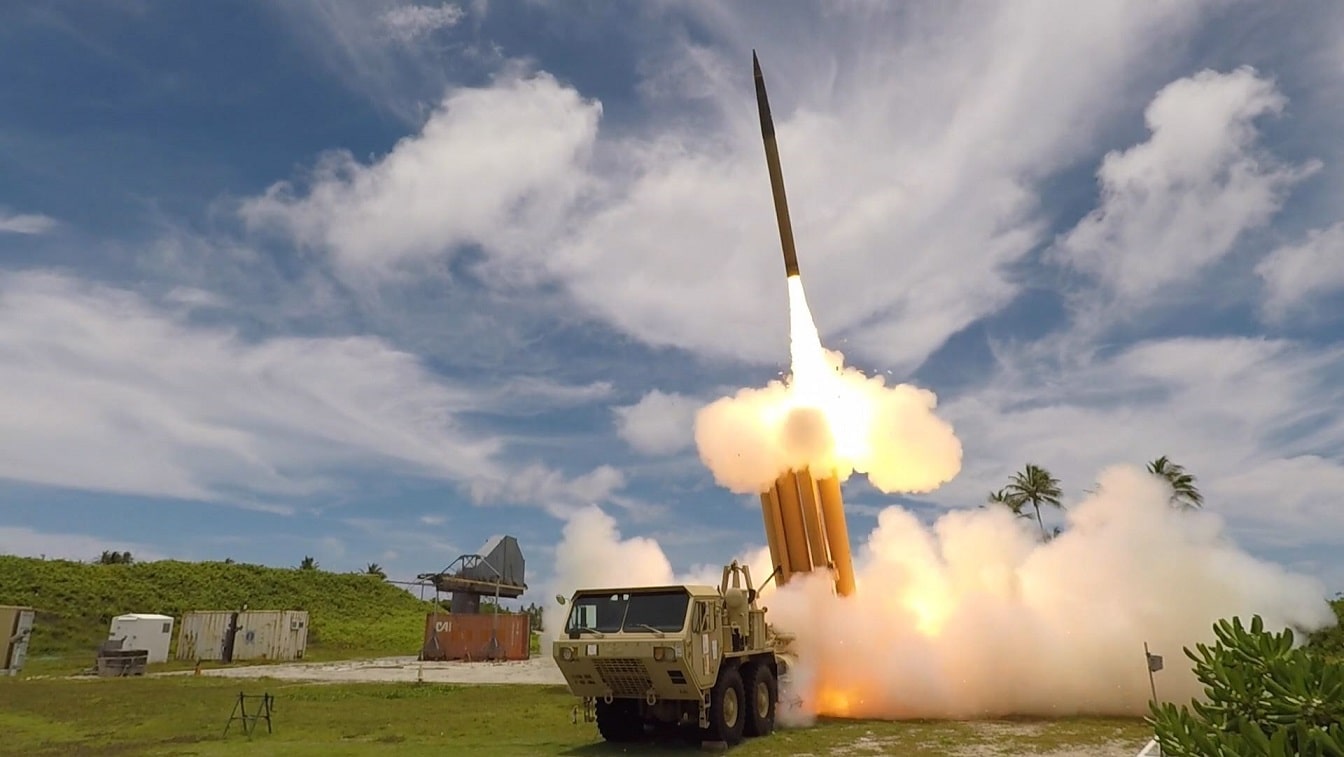
THAAD Missile Defense Battery Firing. Image Credit: Lockheed Martin.
The PRC-backed newspaper claims that the CJ-1000 would render any modern air-defense system “powerless,” yet many variables affect this equation, which might prompt some hesitation about this possibility.
The Pentagon is currently fast-tracking a number of defensive systems engineered to track and intercept hypersonic projectiles, some of which are now reaching substantial levels of maturity.
The primary challenge with hypersonics is quite simply a question of speed, as the weapons can travel from one radar aperture or field of view to another so quickly that ground or air-based radar simply cannot establish a “continuous track” on the weapon sufficient to intercept.
Hypersonic Defenses
The rapid proliferation of emerging Medium and Low Earth Orbit satellites, however, is changing this equation by enabling breakthrough high-throughput, lower-altitude networking designed to help establish a “continuous” target track.
Scramjets also fly at lower altitudes than HGVs and typically do not travel as far, so integrated groups of satellites might be well positioned to attempt targeting them for possible interception.
There is also substantial modernization taking place in the realm of air defense radar and networking technologies.
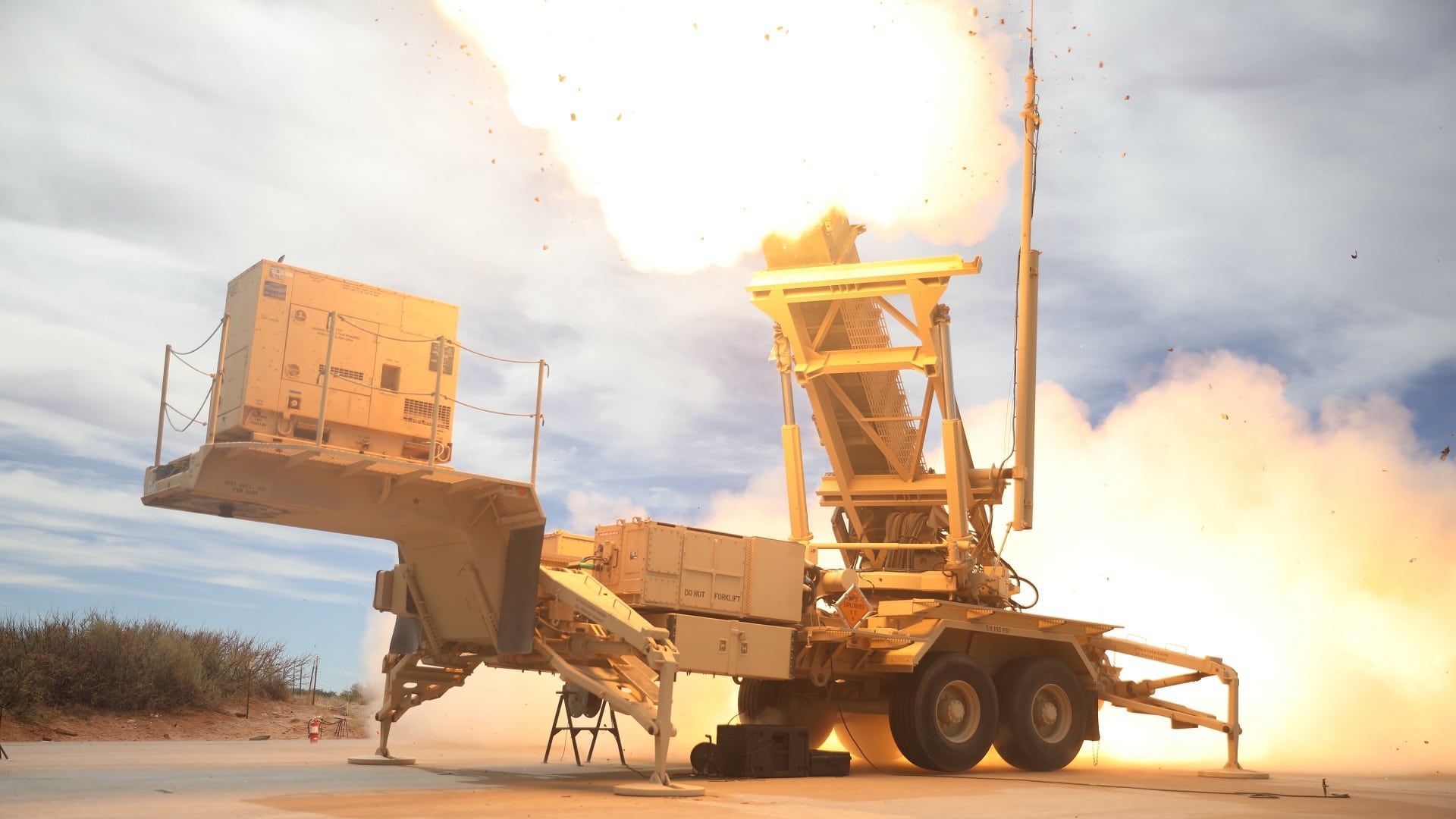
Soldiers from 69th Air Defense Artillery Brigade conducted Patriot Missile live fire training, November 5, at McGregor Range Complex on Fort Bliss. The live fire exercise was conducted jointly with Air Defense counterparts from the Japanese Self-Defense Force. (U.S. Army Photo by Staff Sgt. Ian Vega-Cerezo)
The Patriot missile defense radar technology, for example, can now track and support the interception of two maneuvering cruise missiles simultaneously.
The U.S. Army is also breaking through with a technology called the Integrated Battle Command System, a networked web of “nodes” dispersed across multiple platforms.
IBCS, as it is called, connects Patriot missile batteries with Sentinel Radar systems, ground-based command and control, and even aerial nodes such as an F-35 to exchange threat information across multiple domains in real time.
While it has yet to be established as a system capable of defending against hypersonic weapons, the architecture for tracking fast-moving targets across domains is evolving quickly.
Long Range Hypersonic Weapon & HAWC
The Pentagon is not necessarily that far behind with its own hypersonic weapons, depending on the credibility of Chinese claims about the CJ-1000’s range and speed. The Army is now deploying its Long Range Hypersonic Weapon, a ground-fired, mobile hypersonic weapon that can be transported on a C-17 for forward deployment.
However, the LRHW is a boost-glide HGV weapon, and the Army does not currently operate a land-fired, air-breathing scramjet-powered hypersonic weapon.
The U.S. Air Force and DARPA, however, are surging forward with an air-launched scramjet weapon, the Hypersonic Air Breathing Weapons Concept (HAWC), which is being prepared for operational service by 2027.
About the Author: Kris Osborn, Warrior Maven President
Kris Osborn is the President of Warrior Maven – Center for Military Modernization. Osborn previously served at the Pentagon as a highly qualified expert in the Office of the Assistant Secretary of the Army—Acquisition, Logistics & Technology. Osborn has also worked as an anchor and on-air military specialist at national TV networks. He has appeared as a guest military expert on Fox News, MSNBC, The Military Channel, and The History Channel. He also has a Masters Degree in Comparative Literature from Columbia University.