
Summary and Key Points: Stephen Silver, an award-winning national security journalist, evaluates the U.S. Army’s transition to proactive mental health strategies and efforts to fight loneliness.
-Highlighting research from the Harvard Business Review (HBR) and retired General Rhonda Cornum, this 19FortyFive report explores the “Social Fitness” model used to reduce soldier loneliness following the wars in Iraq and Afghanistan.
-The analysis scrutinizes the 2024 Military Health System mortality data and the recently launched Prevention Music Initiative led by Chief Warrant Officer 2 Craig Morgan, detailing how creative resilience training and firearm safety education are becoming essential pillars of modern Mission Readiness.
Social Fitness: How the U.S. Army is Using Psychological Drills to Combat the Loneliness Crisis
Loneliness in the U.S. Army was the topic of a study conducted in 2017 and published by Harvard Business Review.
“The army has long had a deep understanding of how to build cohesion in groups, but much less was known about reducing loneliness and strengthening social resilience — two critical factors for improving soldiers’ mission readiness and quality of life,” the Harvard Business Review wrote. “Our study looked at the problem through a physiological and psychological lens. Just as you can start an exercise regimen to lose weight, gain strength, or improve your health, you can combat loneliness through exercises that build emotional strength and resilience. The soldiers engaged in a range of social fitness exercises over the course of the study, and the results were encouraging: Social fitness training reduced loneliness and improved well-being in the soldiers.”
The study concluded that private-sector businesses could learn from the Army’s example.
After Iraq and Afghanistan
The HBR study came at a unique time, after many soldiers had taken part in the wars in Iraq and Afghanistan.
“Our study was informed by the wars in Iraq and Afghanistan. Advances in equipment, training, and battlefield medicine had raised the proportion of soldiers who returned home from the wars; however, those who did come home showed an alarming rate of adverse outcomes, including suicide,” the Harvard Business Review wrote. “In 2011, a large-scale study confirmed that many returning soldiers struggled with loneliness and found that those who committed suicide had reported being lonelier and more depressed and tended to think in more catastrophic terms than soldiers who did not commit suicide.”
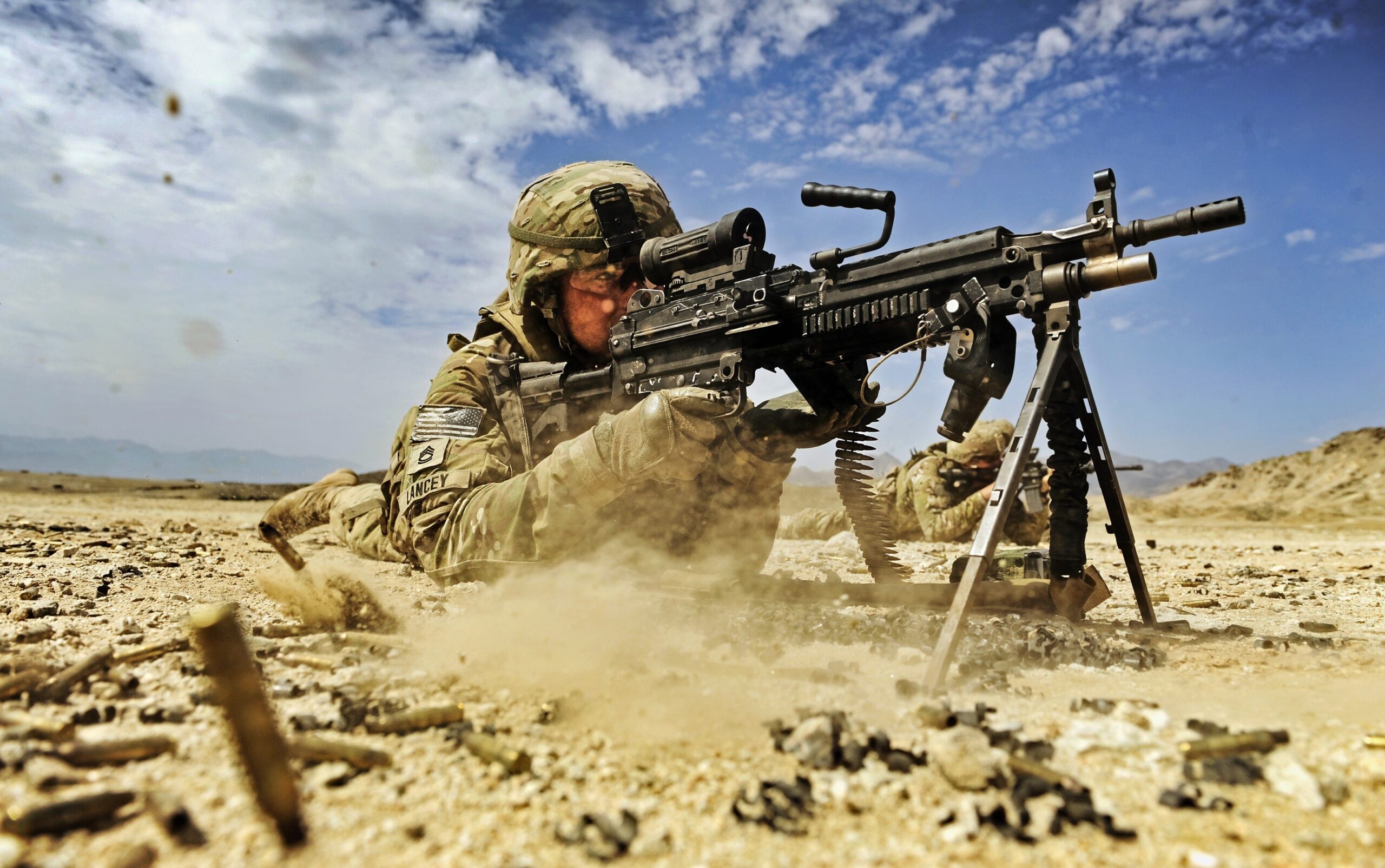
US Army. Image Credit: Creative Commons.
Harvard worked in the study with retired General Rhonda Cornum, formerly the director of the Army’s Comprehensive Soldier Fitness program.
“Our training was designed to improve the capacity of soldiers to develop and sustain positive relationships, adapt to social challenges, deal with the inevitable feelings of stress and loneliness, recover and grow from personal and social adversity, and forge and capitalize on healthy relationships,” the article said.
The effort included about 50 social fitness exercises.
“Interventions ranged from very simple tasks — doing someone a favor, for example — to more-complex exercises, such as getting groups to go beyond settling for easy solutions. We applied those exercises in a randomized controlled experiment to evaluate the effectiveness of the social fitness training. In some cases, the instructions were explicit: Say hello to someone. In others, people were coached through situations to help them learn techniques for forming, maintaining, and strengthening their bonds with fellow soldiers,” Harvard Business Review wrote. “The goal was to give them tools to deal with their own feelings of isolation and help others who were feeling lonely.”
Suicide Remains a Problem
Another study found that suicide had become the primary cause of death among active-duty U.S. soldiers.
In a study titled “U.S. Army Mortality Surveillance in Active Duty Soldiers, 2014–2019,” the Military Health System in 2024 found that “during the surveillance period, 2,530 soldier deaths were reported.
Apache Helicopter U.S. Army. Image Credit: Creative Commons.
“The highest crude mortality rates observed during the 6-year surveillance period were for deaths by suicide, followed by accidental (i.e., unintentional injury) deaths. The crude mortality rates for natural deaths decreased significantly over the 6-year period, by an average of 6% annually,” the military report said. “The leading causes of death were suicide by gunshot wound, motor vehicle accidents, suicide by hanging, neoplasms, and cardiovascular events.”
In a 2024 article in Boston University’s journal The Brink, James Whitworth, an Army veteran and assistant professor of psychiatry at BU’s Chobanian & Avedisian School of Medicine, discussed those findings.
“There has been a precipitous rise in the rate of suicide nationwide across most demographics. Since the early 2000s, this has included US military veterans and soldiers and Marines and aviators—it’s a specific demographic,” Whitworth told The Brink. Whitworth served with the 172nd Stryker Brigade Combat Team from 2003 to 2006.
“When we see big rises in these trends across the country, we’re probably going to see it in our service members as well. That said, there are unique challenges and stressors that our service members and their families face on a day-to-day basis: notably, deployments, training cycles. There’s a lot of hardship, and the culture of the military is quite a bit different than the culture of nonmilitary life.”
Whitworth was also asked about whether the military’s efforts to “improve access to mental health and counseling” had had any effect at that time.
“We know that safe storage of firearms and firearm prevention education are important tools for preventing suicide,” he said. “Safely storing firearms—separating the ammunition from the firearm, locking it up, and not leaving firearms around the house where they’re easily accessible—slows down the time someone has to get access to the firearm.”
“ I’m very supportive of these efforts that the military and other institutions are doing, but clearly, there’s more to be done. This is still a national crisis, both for military folks, veterans, and nonmilitary populations. While some of these programs are effective, implementation is important,” he added.
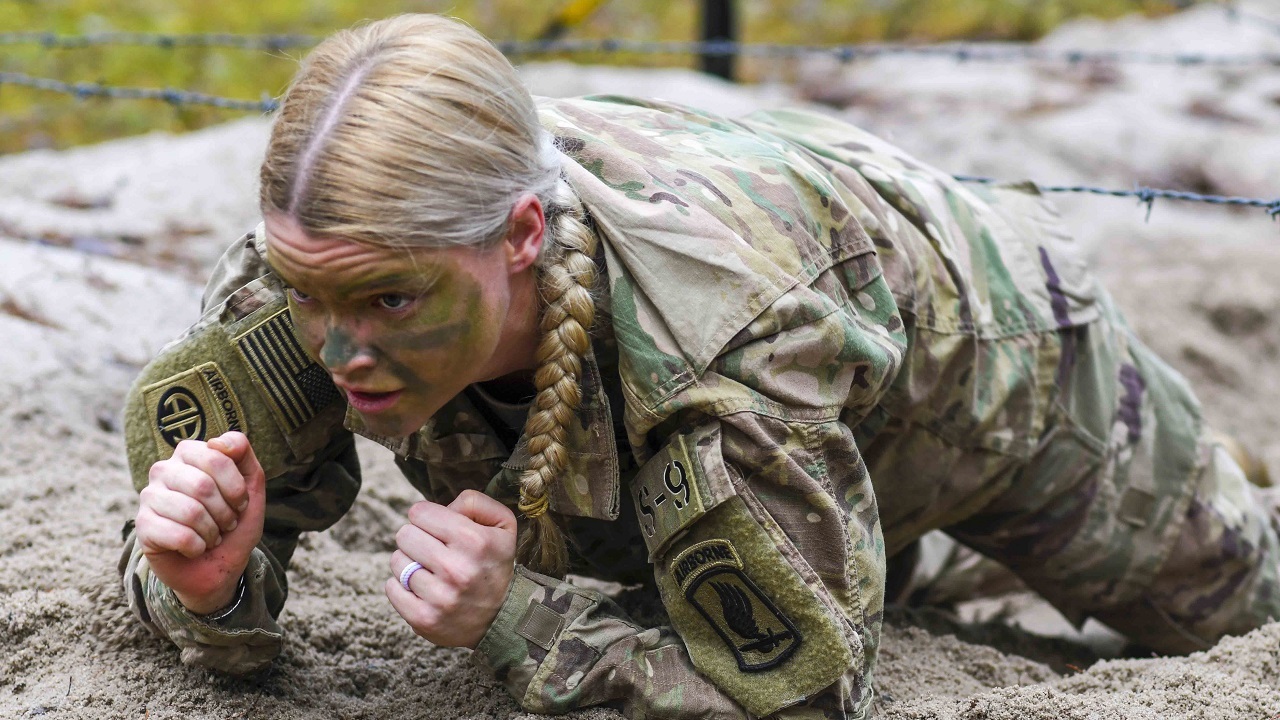
U.S. Army Capt. Valerie Nostrant, assigned to 1st Squadron, 91st Cavalry Regiment, 173rd Airborne Brigade, low crawls under barbed wire during the obstacle course portion of a spur ride at the 7th Army Training Command’s Grafenwoehr Training Area, Germany, Dec. 14, 2021. The purpose of this spur ride is to integrate new paratroopers into the Airborne Cavalry and build esprit de corps within the squadron, focused on Cavalry heritage. (U.S. Army photo by Markus Rauchenberger)
What About Now?
Last August, the Army announced an effort called the Prevention Music Initiative, which it called “a modern, creative way to reach Soldiers and Families with messages of suicide prevention.”
Craig Morgan, a country music teacher who has been promoted to chief warrant officer 2, is also part of the Prevention Music Institute.
“I’m so proud of this initiative because, regardless of who you are, we’re all touched by music,” he told Reserve + National Guard magazine. “You can’t always predict when someone might be struggling, and there aren’t always signs, especially for our veterans, but music can reach people in ways nothing else can,” Morgan said.
About the Author: Stephen Silver
Stephen Silver is an award-winning journalist, essayist, and film critic, and contributor to the Philadelphia Inquirer, the Jewish Telegraphic Agency, Broad Street Review, and Splice Today. The co-founder of the Philadelphia Film Critics Circle, Stephen lives in suburban Philadelphia with his wife and two sons. For over a decade, Stephen has authored thousands of articles that focus on politics, national security, technology, and the economy. Follow him on X (formerly Twitter) at @StephenSilver, and subscribe to his Substack newsletter.