
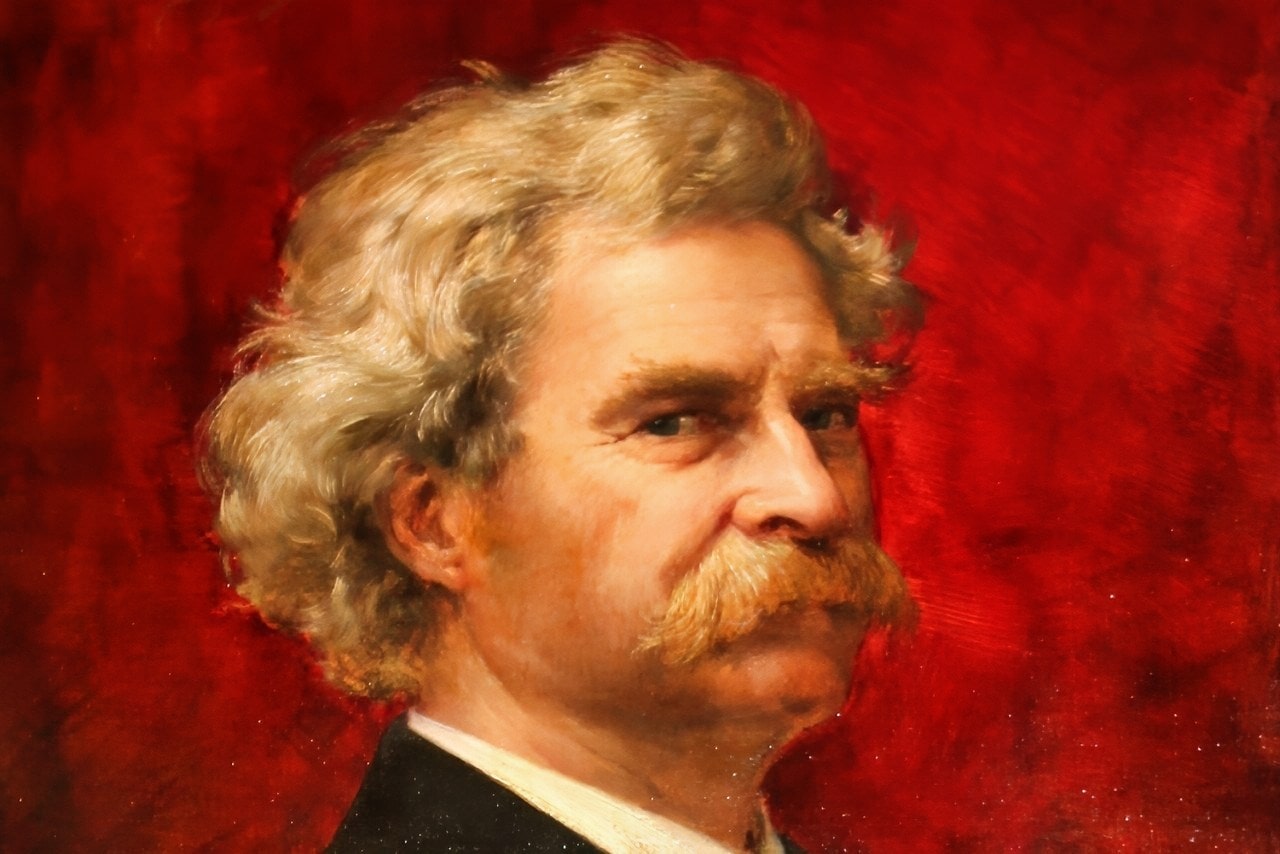
Summary and Key Points – The Tragedy That Created Mark Twain: How Samuel Clemens Survived the Frontier
-Mark Twain is remembered as America’s greatest humorist, but his genius was forged in the brutal reality of the 19th-century frontier.
-Born Samuel Clemens in a remote Missouri settlement, his early life was defined by the crushing debt of his father and a childhood unsupervised on the dangerous banks of the Mississippi River.
-From witnessing the horrors of slavery to his brief, chaotic stint in the Civil War, this is the story of how a young steamboat pilot abandoned a life of uncertainty to become the literary voice of a nation.
Why Mark Twain Quit the Civil War to Become an American Legend
“If everybody was satisfied with himself there would be no heroes.” – Mark Twain
Mark Twain was one of the most inspirational and influential American authors in history. He is most fondly remembered for The Adventures of Tom Sawyer and The Adventures of Huckleberry Fin along with a slew of other books and humorous commentaries. Mark Twain was born as Samuel Langhorn Clemens in the territory of Missouri. His younger years were characterized by adventure and uncertainty which shaped his wit and his sense of humor, enabling him to become the renowned writer that he was.
Origins in Missouri
Samuel Clemens was born in the village of Florida, Missouri, a remote settlement that reflected the frontier character of early nineteenth-century America. He was the sixth of seven children born to John Marshall Clemens and Jane Lampton Clemens.
His father was a lawyer and minor local official, stern in temperament and ambitious but chronically unsuccessful in his financial pursuits. His mother, by contrast, was lively, humorous, and an accomplished storyteller. Many biographers have noted that Twain inherited his keen sense of humor and love of anecdote from her, while his father’s rigidity and moral seriousness influenced the satirical edge that later marked his writing.
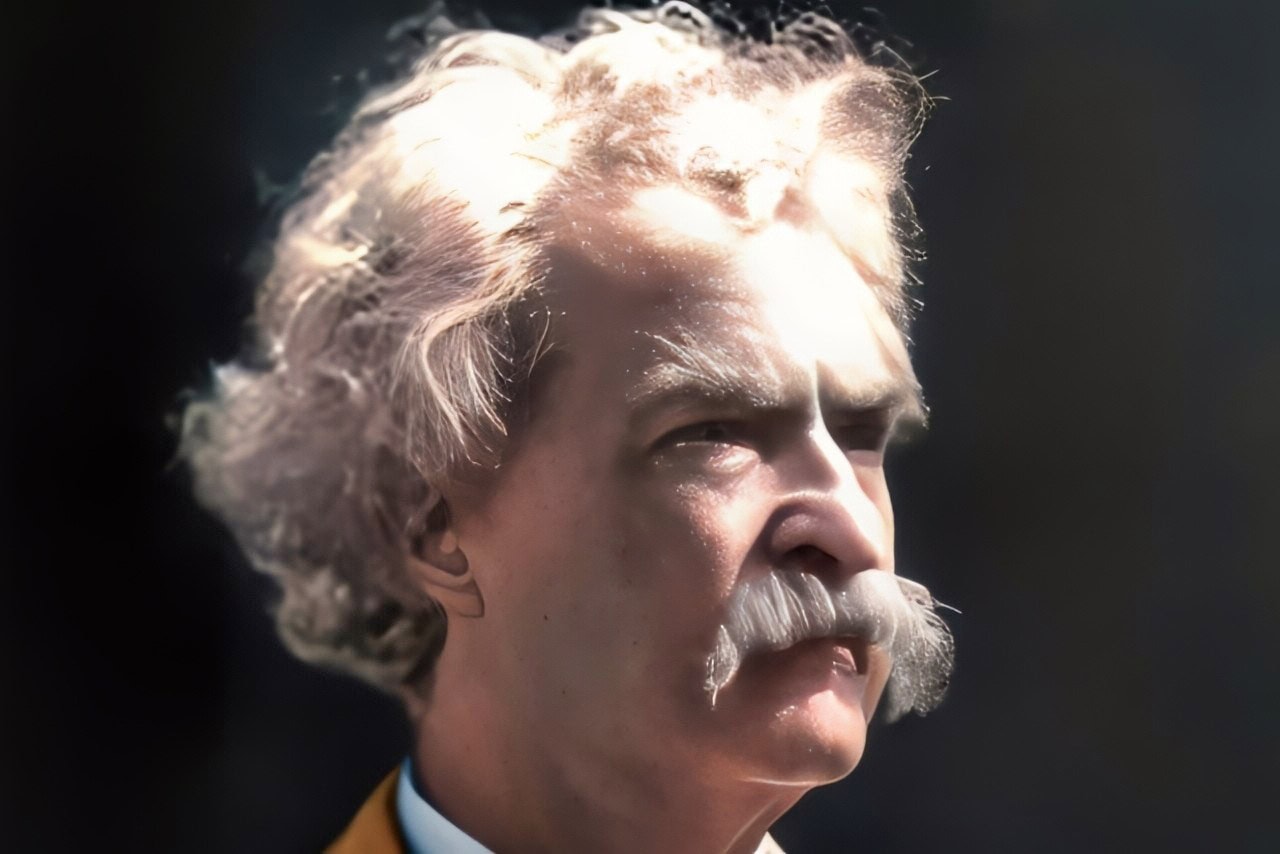
Mark Twain. Creative Commons Image.
When Samuel was four years old, the family moved to Hannibal, Missouri, a river town situated on the Mississippi River. Hannibal was a place of energy and danger, shaped by steamboat traffic, commerce, and the institution of slavery. This move proved decisive in Samuel’s development. Hannibal would later reappear in his fiction as the town of St. Petersburg, a setting that captured both the freedom and the moral contradictions of boyhood in antebellum America.
Childhood Along the Mississippi
Samuel’s childhood in Hannibal was largely unsupervised by modern standards. Like many boys of the time, he roamed freely through woods, caves, and riverbanks, learning through direct experience rather than formal instruction.
These adventures, often reckless and occasionally dangerous, later provided the raw material for the escapades of Tom Sawyer and Huck Finn. The Mississippi River, in particular, exerted a powerful influence on him.
He viewed it with a sense of wonder and mystery, seeing it as both a playground and a living force that shaped the lives of those who depended on it.
Yet Hannibal was also a place where young Samuel encountered suffering and injustice. Slavery was an accepted part of daily life, and enslaved people were present in his household and community. Although Samuel did not fully grasp the moral enormity of slavery as a child, the images and experiences he absorbed left a deep imprint on his conscience. These early encounters with human cruelty and moral blindness would later resurface in his writing, especially in his exploration of freedom, conscience, and social hypocrisy.
The Loss of His Father and the End of Formal Education
In 1847, when Samuel was eleven years old, his father died of pneumonia. This event marked a turning point in his life. John Marshall Clemens left behind debts rather than financial security, forcing the family into economic hardship.
Samuel’s childhood effectively ended at this moment, as he was required to contribute to the family’s survival.
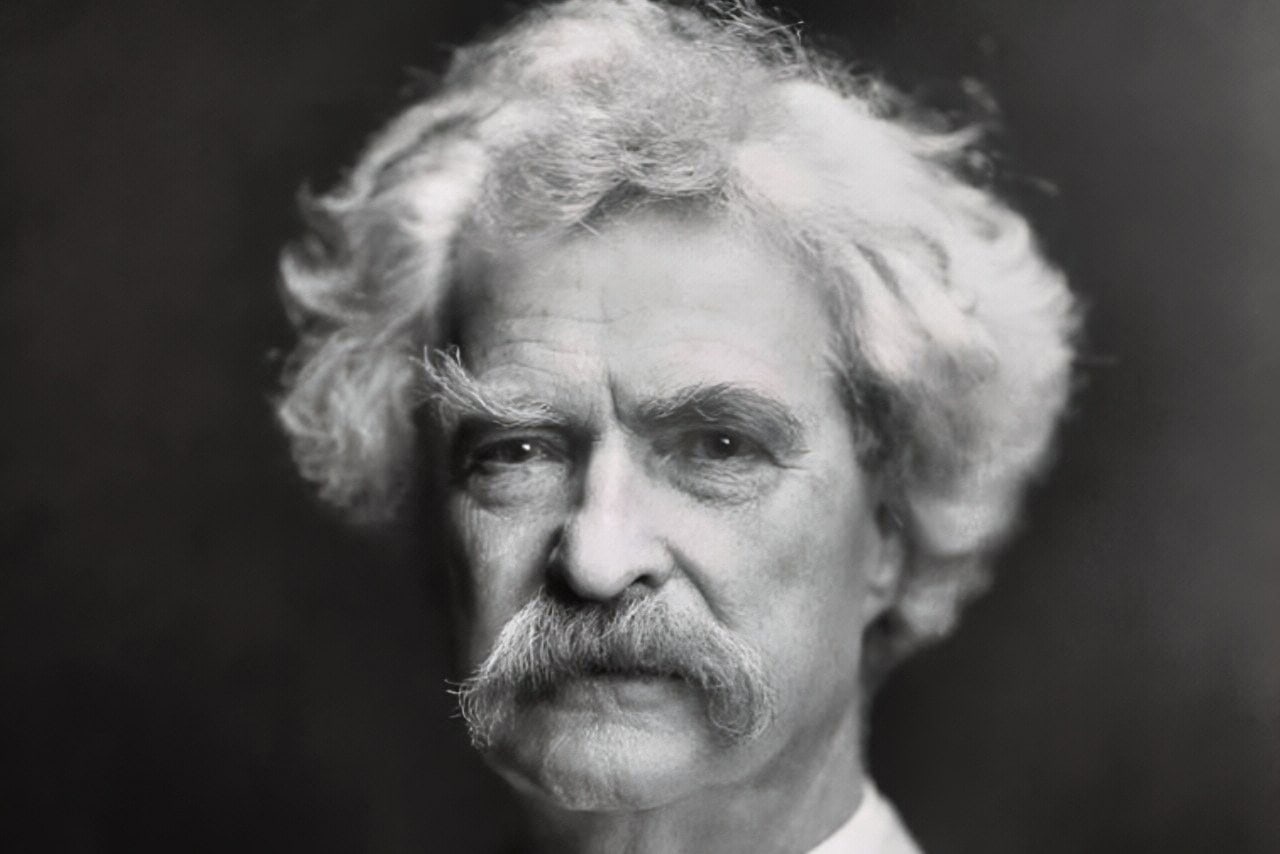
Mark Twain Black and White. Image Credit: Creative Commons.
His formal education, already irregular, came to an end soon after. Though he attended school sporadically, Samuel was never a model student, and he often chafed against rigid instruction. However, the absence of formal schooling did not hinder his intellectual growth. He became an avid reader, consuming books, newspapers, and magazines whenever he could. This self-directed education proved more influential than any classroom, allowing him to develop an independent voice and a deep familiarity with language.
The River Pilot Years
After a brief stint as a traveling printer, Samuel felt a powerful pull back to the Mississippi River. In 1857, he began training as a steamboat pilot, one of the most respected and lucrative professions of the era.
Under the guidance of experienced pilots, he learned to read the river’s constantly changing currents, depths, and hazards. This work required intense concentration, memory, and judgment, and Samuel took pride in mastering it.
He earned his pilot’s license in 1859, an achievement he later described as one of the greatest satisfactions of his life. The river became a central symbol in his imagination, representing both freedom and danger, knowledge and uncertainty. It was from this world that he would later take the pen name “Mark Twain,” a river term indicating safe water depth.
A Life Interrupted and a New Direction
The outbreak of the American Civil War in 1861 brought Samuel’s river career to an abrupt end. Steamboat traffic declined sharply, and the profession of piloting effectively disappeared.
This sudden disruption left him adrift, searching for a new identity and livelihood. Although he briefly joined a Confederate militia, he quickly abandoned military life, later describing the experience with characteristic humor and skepticism.

Cannon Firing. Image Credit: Creative Commons.
Soon afterward, he traveled west with his brother Orion, who had received a government appointment in the Nevada Territory. This journey marked the end of Samuel Clemens’s early life and the beginning of his transformation into Mark Twain, the writer.
By the time Samuel Clemens left the Mississippi River behind, the essential elements of Mark Twain were already in place. His childhood in Hannibal had given him a deep familiarity with human nature in all its contradictions.
His early exposure to injustice, loss, and hardship had sharpened his moral awareness. His work as a printer and pilot had trained him in discipline, observation, and respect for language. These experiences did not merely precede his literary career; they shaped it.
About the Author: Isaac Seitz
Isaac Seitz, a Defense Columnist, graduated from Patrick Henry College’s Strategic Intelligence and National Security program. He has also studied Russian at Middlebury Language Schools and has worked as an intelligence Analyst in the private sector.