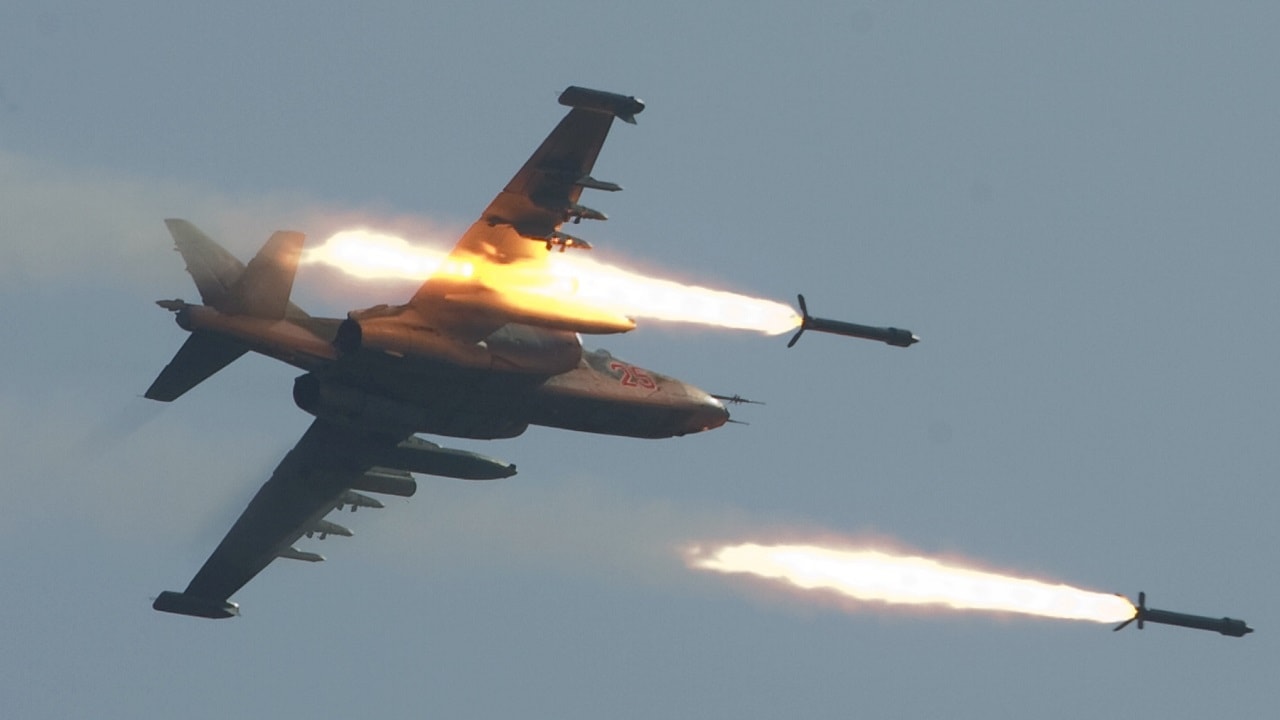
Summary and Key Points: In 2026, the A-10 Warthog and Su-25 Frogfoot represent the sunset of manned close air support.
-While the A-10 is famous for its GAU-8 cannon and extreme redundancy, it is currently being retired by the U.S. Air Force, with final depot maintenance completed in February 2026.

Russian Su-25s. Image Credit: Creative Commons.
-Conversely, the Frogfoot remains a frontline workhorse for both Russia and Ukraine, despite staggering attrition rates.
-While the A-10 offers superior loiter time and payload, the Su-25’s ability to operate from unprepared dirt strips and fly 30% faster makes it a persistent, if vulnerable, threat in modern contested airspace.
The “Flying Tank” Showdown: Why the Su-25 is the A-10’s Brutal 2026 Rival

A-10 Warthog. Image Credit: Creative Commons.
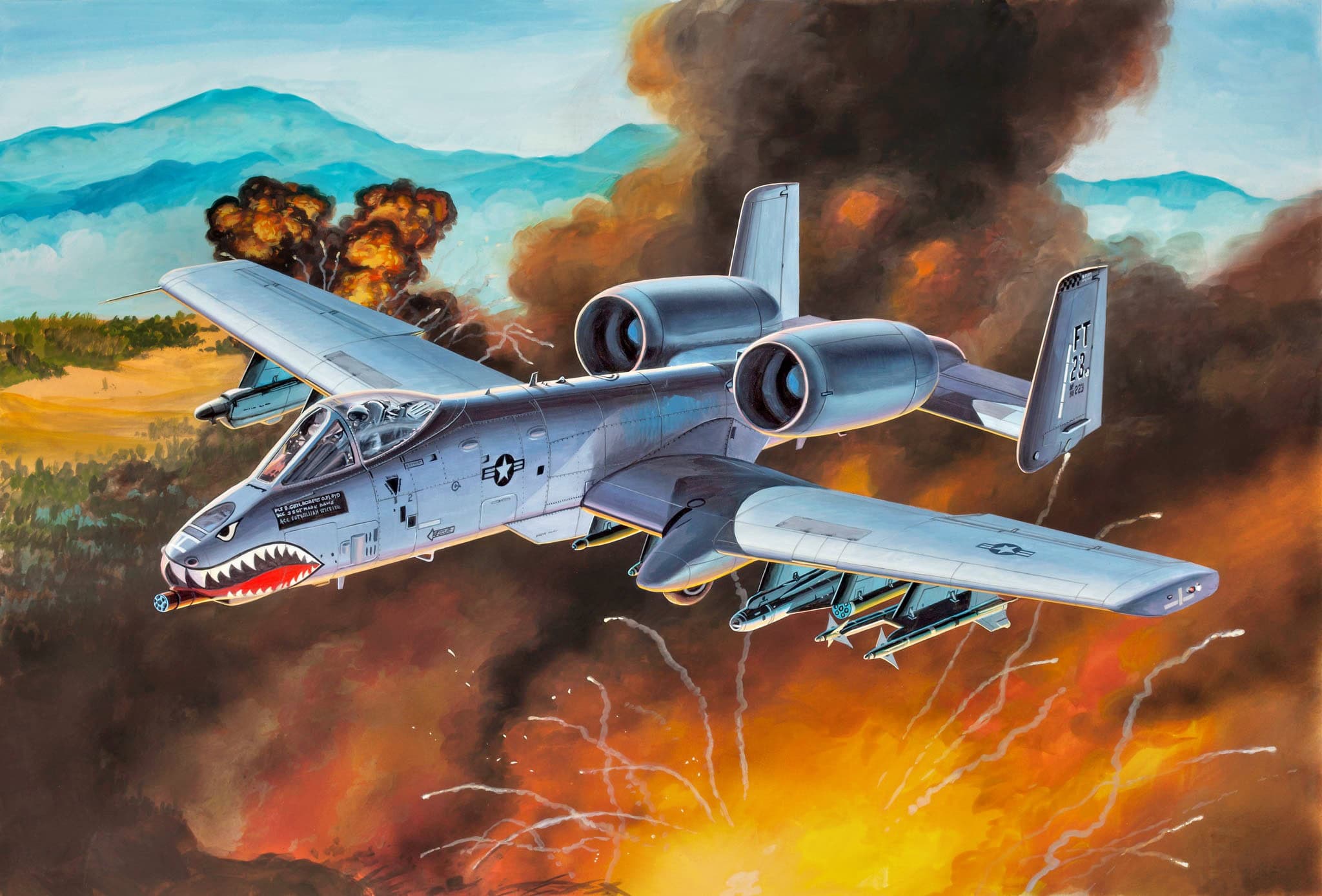
A-10 Warthog. Image Credit: Creative Commons.
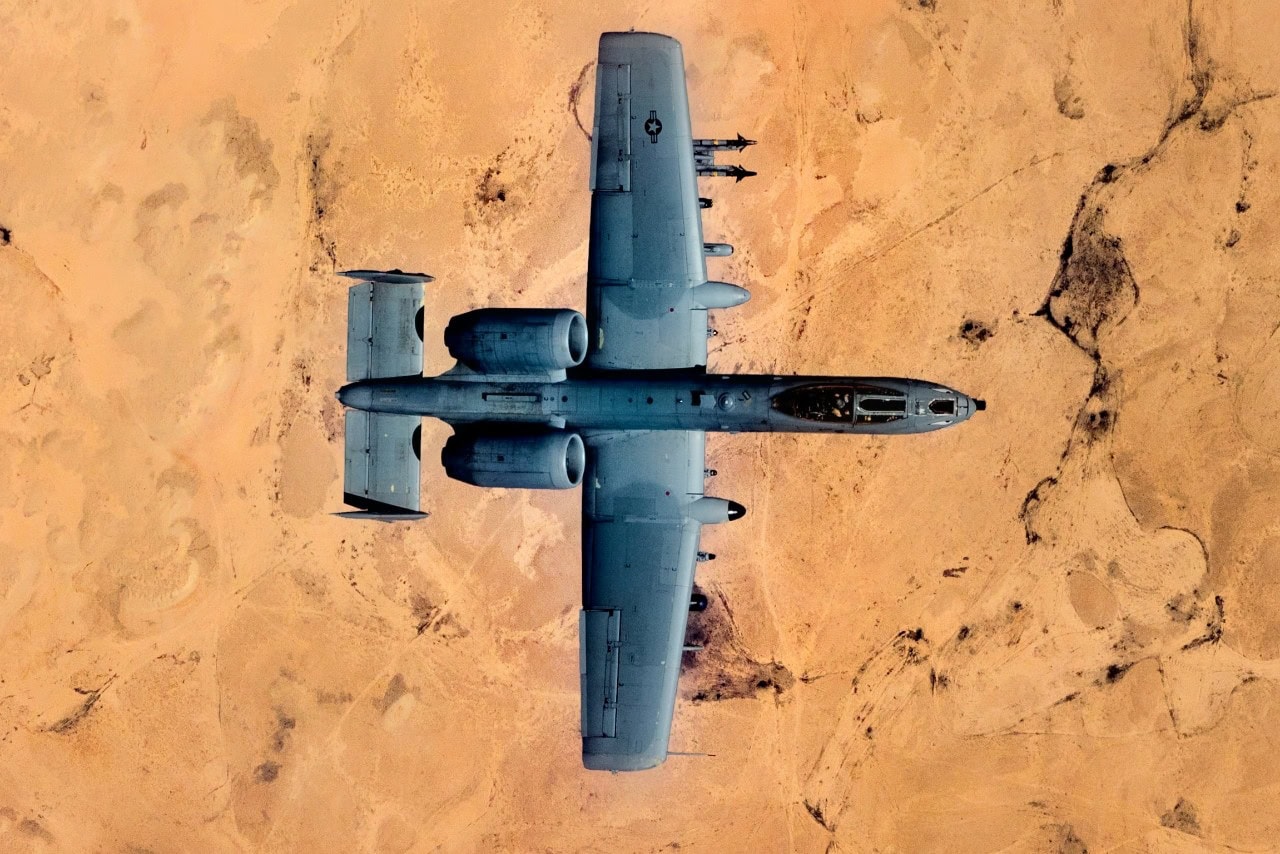
A U.S. Air Force A-10 Thunderbolt II flies a presence patrol over the U.S. Central Command area of responsibility, Feb. 26, 2025. The A-10 aircraft is employed throughout the region to bolster regional security and counter the growing threats of adversarial unmanned aircraft systems and other emerging threats. (U.S. Air Force photo by Staff Sgt. Jackson Manske)
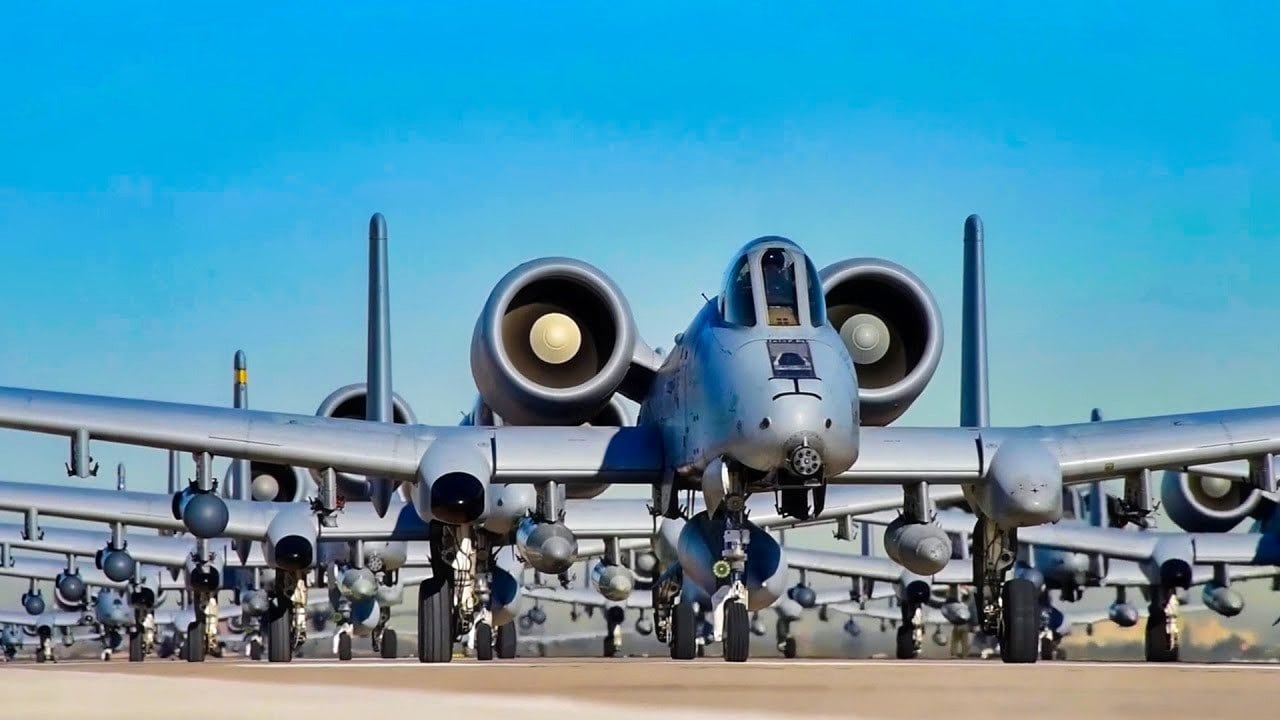
A-10 Warthog Elephant Walk.
U.S. ground troops caught under enemy fire over the past several decades of battle have cultivated and regularly expressed an unparalleled love, reverence, and appreciation for the life-saving A-10, an aircraft known as a “flying tank.” Those U.S. soldiers and servicemembers saved by the A-10 will likely be quick to tell you the Warthog has no equivalent anywhere in the world.
What about Russia? Meet the Su-25: Moscow’s Very Own A-10 Warthog
Does the Russian Air Force have a “flying tank” equivalent? Seems unlikely, yet the Soviet-era Su-25 is a combat-tested workhorse with a long history of supporting ground troops in military conflict.
First emerging in 1975, the Sukhoi Su-25 Frogfoot is a single-seat, twin-engine jet designed for close air support; the aircraft therefore spent many years attacking the Afghan Mujahideen in Afghanistan during the Soviet-Afghan war and also supported Russian forces in the war in Chechnya.
International Su-25
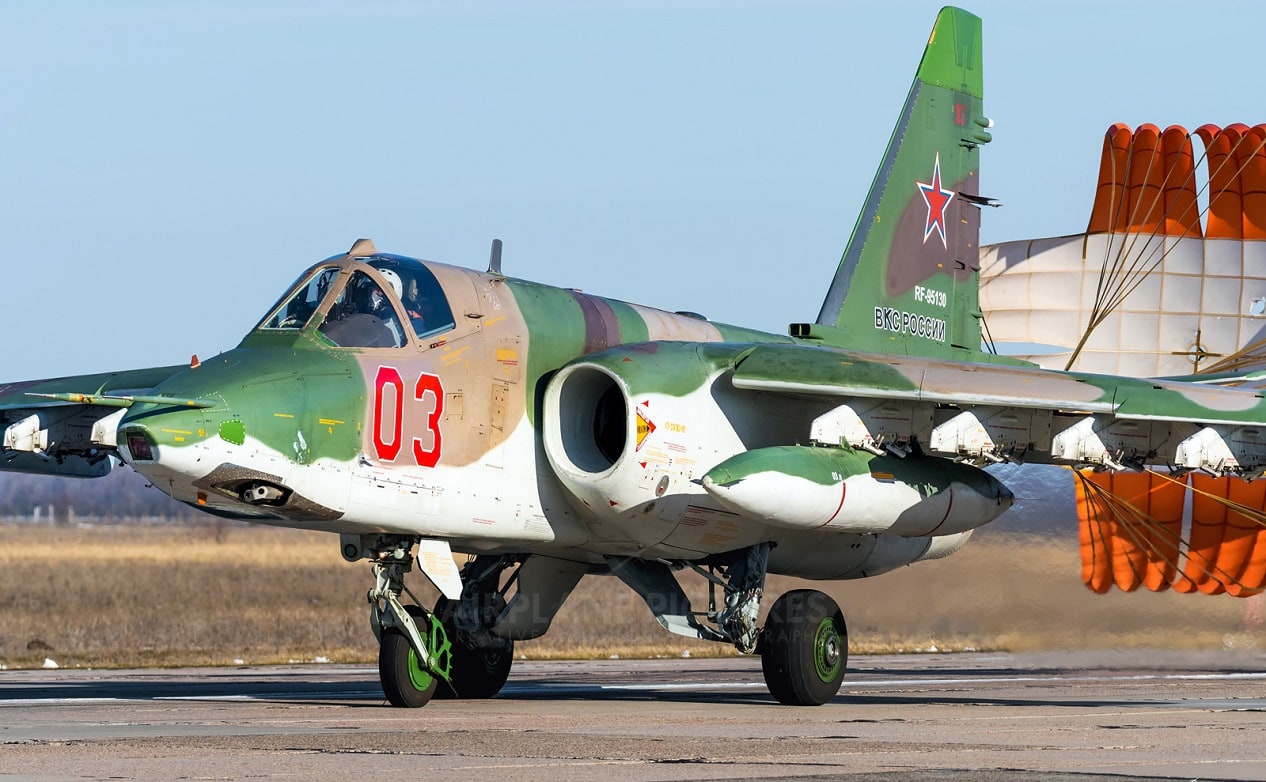
Su-25. Image Credit: Creative Commons.
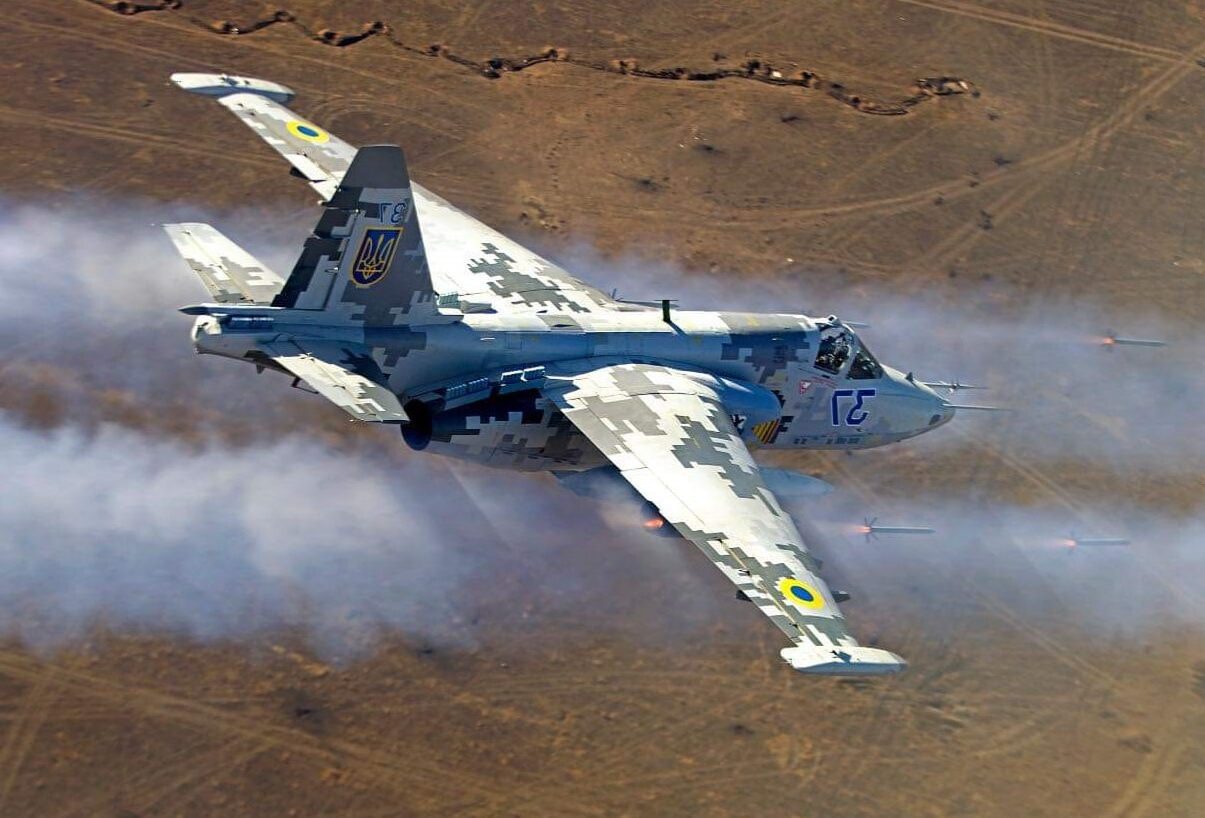
Su-25. Image Credit: Creative Commons.
The Su-25, called Frogfoot by the West, has also been widely exported and has served with the Macedonian and Iraqi Air Forces, as well as with a number of former Soviet republics, such as Georgia, which broke off when the Soviet Union collapsed.
An article on Military-Today says the Frogfoot has been exported to Angola, Bulgaria, Congo, Côte d’Ivoire, the Czech Republic, Eritrea, Ethiopia, Iraq, Macedonia, North Korea, Peru, Slovakia, Sudan, and possibly to other countries.
Su-25 Smaller than A-10
With a 47-foot wingspan, the Frogfoot is smaller than the A-10 yet can load hardpoints with a heavy payload.
The Su-25’s 42,000-pound max takeoff weight makes it about 10,000 pounds lighter than the A-10, which can take off with 50,000 pounds, yet both planes have similar attributes.
Their ranges are roughly equivalent, around 600 to 800 miles, and they are both heavily armed. The Su-25 fires a 30mm Gryazev-Shipunov GSh-30 autocannon, which may not compare favorably with the A-10’s famous 30mm cannon, which is aligned directly below the nose of the aircraft to enable a straight-on attack.
Available specs don’t fully specify the materials used in the Su-25’s fuselage, and the aircraft is doubtless built to withstand small-arms fire. Yet, it may not rival the A-10’s famous titanium hull, which can absorb massive amounts of incoming fire.
Of equal significance, the Su-25 may not have comparable built-in redundancy to keep the aircraft flying and operating even when key components are damaged. The Russian Air Force operates a fleet of roughly 250 Su-25 aircraft, and more modern variants have been upgraded with advanced technologies.
Russian Su-25s continue to be used in the ongoing Russian invasion of Ukraine, and available reports indicate a number of them have been destroyed and shot down by Ukrainian forces using Stinger missiles or MANPADs.
Multiple reports of destroyed Su-25s in Ukraine might suggest that the aircraft does not have built-in redundancies or protections equivalent to the A-10.
Decimated in Ukraine
Yet another point of comparison between the A-10 and the Su-25 concerns survivability.
As a close-air-support platform 10,000 pounds lighter than an A-10, it seems unlikely that the Su-25 would fly with a titanium hull, reinforced structure, and redundant systems built throughout the aircraft.
The Su-25 is far more vulnerable to ground-based small arms fire and shoulder-fired anti-aircraft weapons.
There is also the key question of lethality, as the Su-25 may not operate with the extensive arsenal of weaponry carried by the A-10. The A-10 can carry a full complement of air-dropped bombs as well as advanced air-to-ground missiles such as the Maverick, so its air-fired lethality appears to be far superior to the Su-25, in large measure because it can carry a larger, more expansive weapons payload.
About the Author: Kris Osborn
Kris Osborn is the President of Warrior Maven – Center for Military Modernization. Osborn previously served at the Pentagon as a highly qualified expert in the Office of the Assistant Secretary of the Army—Acquisition, Logistics & Technology. Osborn has also worked as an anchor and on-air military specialist at national TV networks. He has appeared as a guest military expert on Fox News, MSNBC, The Military Channel, and The History Channel. He also has a Masters Degree in Comparative Literature from Columbia University.