
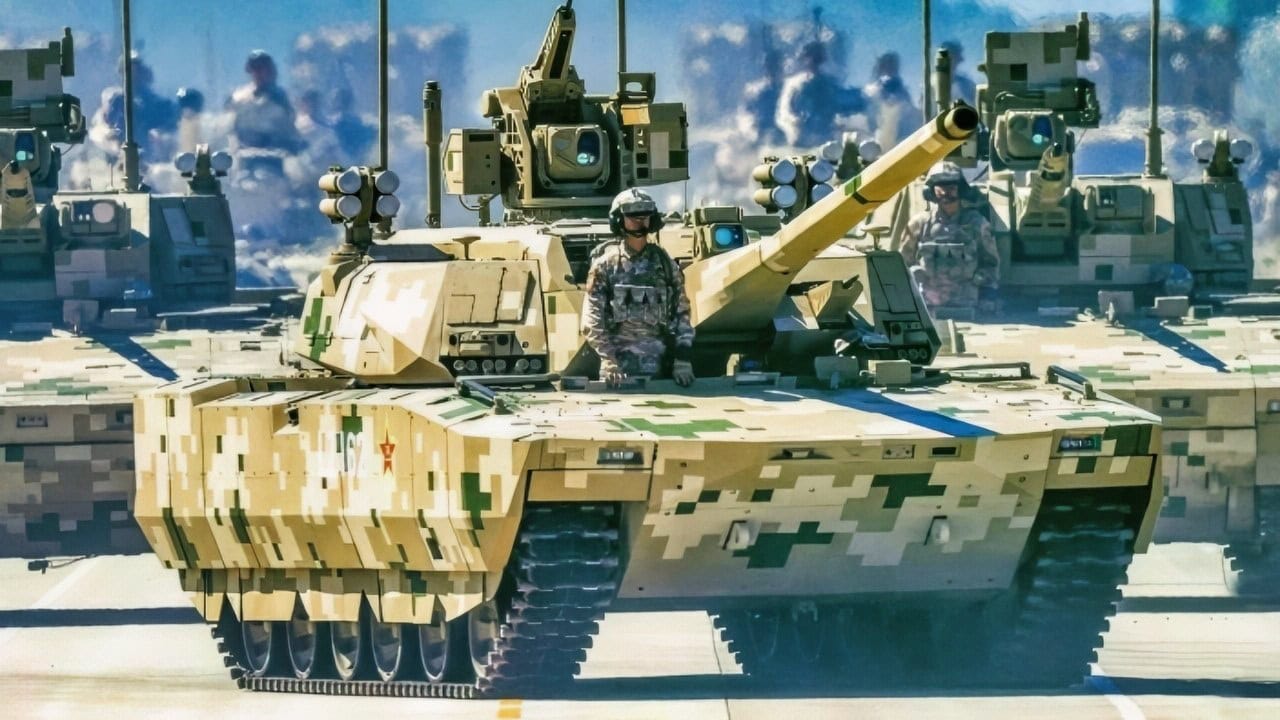
Summary and Key Points: China fields the world’s largest tank force, with roughly 6,800 armored vehicles built around three core platforms: the Type 99A, Type 96 series, and Type 15 light tank.
-The Type 99A gives the PLA a top-tier strike and protection platform, while the Type 96 provides mass and sustainment across regular brigades.
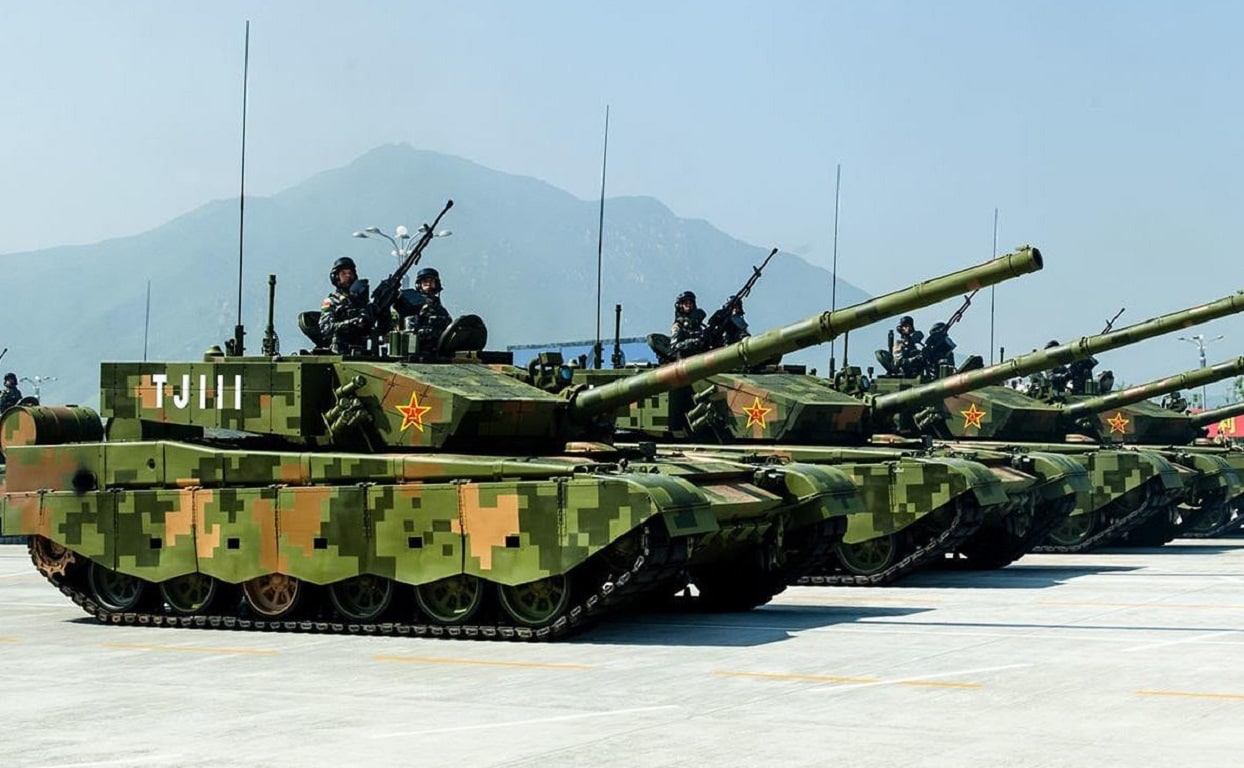
Type 99 Tank from China. Image: Creative Commons.
-The Type 15 fills a different role, delivering mobility and firepower in high-altitude terrain such as Tibet and Xinjiang.
-Taken together, these tanks reflect a broader strategy focused on modernization, industrial depth, and readiness for long wars. The open question is how this force performs under real combat pressure.
China’s Tank Arsenal Has a Message: Mass, Modernization, and Staying Power
China currently possesses the largest tank force on the planet. According to some estimates, China has about 6,800 main battle tanks, and that number is growing every year. China has also been working on modernizing its ground forces, phasing out Cold War-era tanks and replacing them with more modern MBTs that enjoy better protection and firepower.
China produces three tank models for its ground forces.
The Big Three: China’s Current Tank Line Up
The Type 99 is China’s premier MBT. Some sources speculate that as many as 1,300 Type 99-series tanks have been produced in total, about 700 of which are upgraded 99A variants.
The 99A carries a 125-mm smoothbore complete with a carousel autoloader capable of firing armor-piercing fin-stabilized discarding sabot, high-explosive anti-tank, and high-explosive fragmentation rounds, as well as guided missiles. It integrates modern hunter-killer optics, digital fire controls, and modular armor packages that include improved reactive armor. Its 1,500-horsepower diesel engine yields more than 27 horsepower per ton and a road speed competitive with peers.
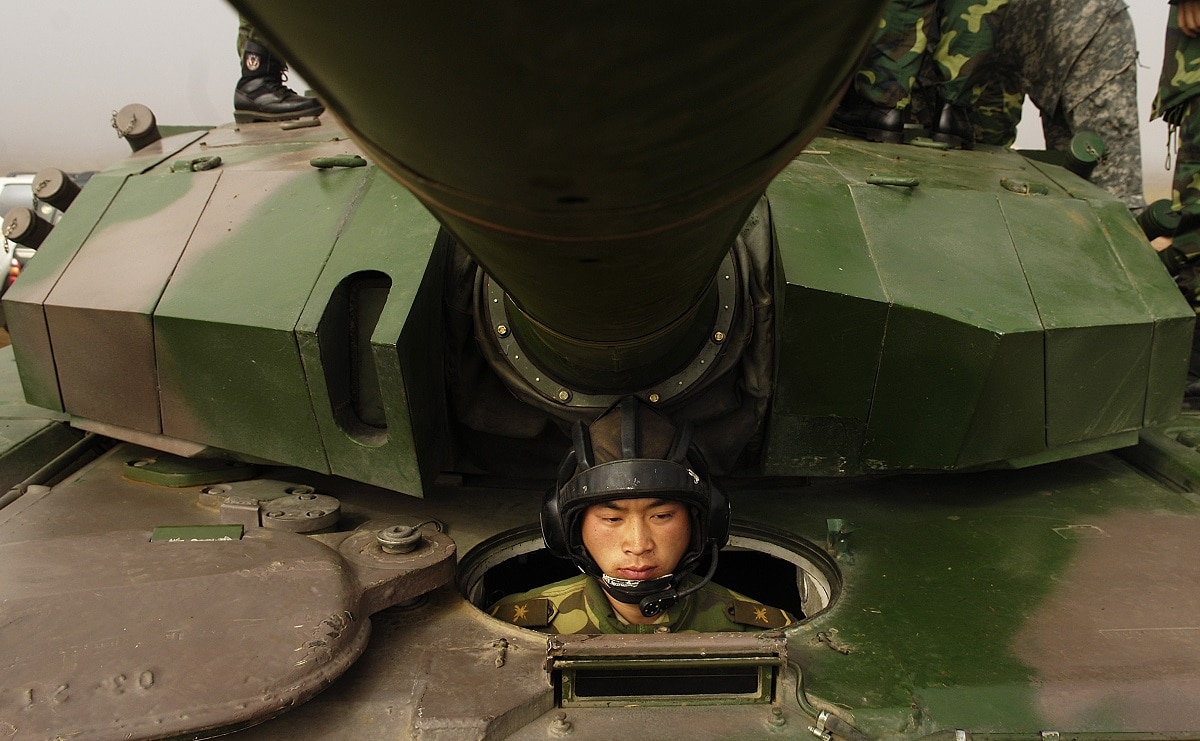
Chinese tanker soldier with the People’s Liberation Army sits while the Chairman of the Joint Chiefs of Staff comes aboard his tank at Shenyang training base, China, Mar. 24, 2007. DoD photo by Staff Sgt. D. Myles Cullen (released)
The older Type 96 is one of the most widely produced tanks in China. The 96A and the mobility-enhanced 96B form the backbone of the People’s Liberation Army Ground Forces’ (PLAGF’s) armored strength. Most estimates are that more than 2,500 Type 96 vehicles have been produced, and the 96A variant alone numbers more than 1,000 in service.
The 96A incorporates applique armor and FY-4 explosive reactive armor, retains a 125-mm gun, also with a Soviet-style autoloader, and is widely distributed across regular brigades. The 96B, which is seen at international competitions, improves mobility and engine output, reinforcing the fleet’s operational reach. While the 96 family does not have the 99A’s survivability or digitization, it gives the PLAGF a dense, modern baseline that can be upgraded and sustained to serve the needs of the whole force.
The third regular in China’s ground forces is the Type 15 light tank, which was designed to operate in the rough terrain of China’s mountainous regions. The Type 15 weighs roughly 33–36 tons depending on armor fit, uses a 1,000-horsepower powerpack and hydropneumatic suspension, and mounts a 105-mm rifled gun with an autoloader and guided-munition options.
It exists to restore mobility and fire support in places where 50–60-ton main battle tanks are simply unfeasible.
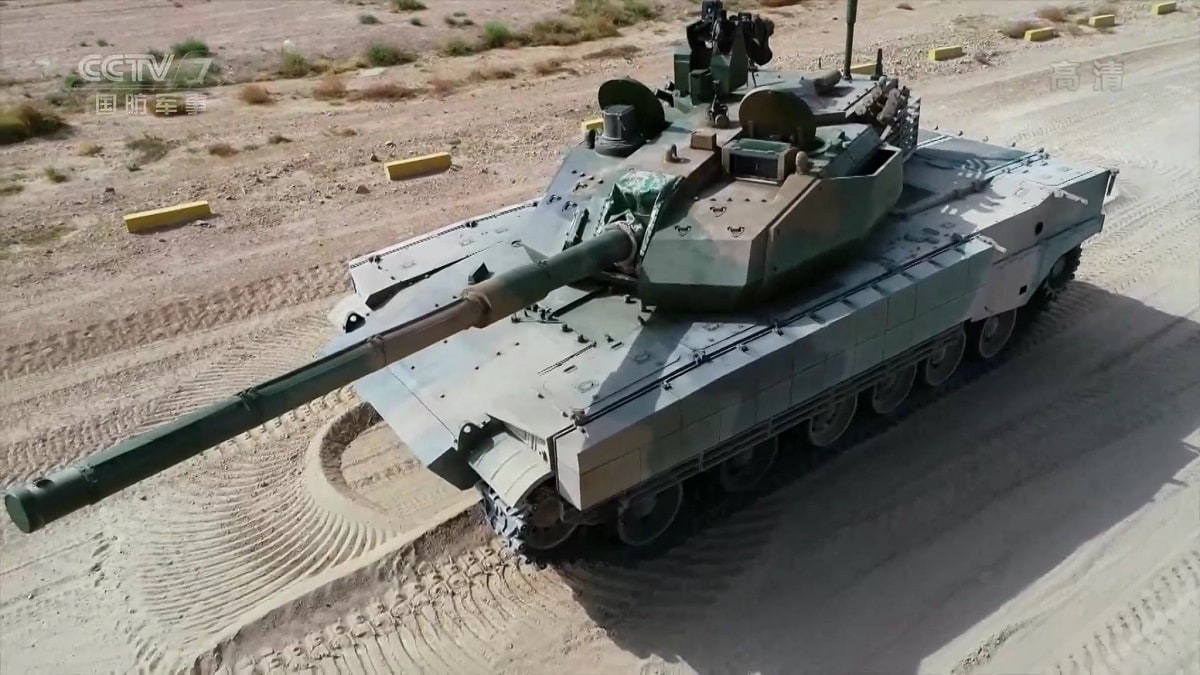
China’s Type 15 Light Tank: Image: CCTV.
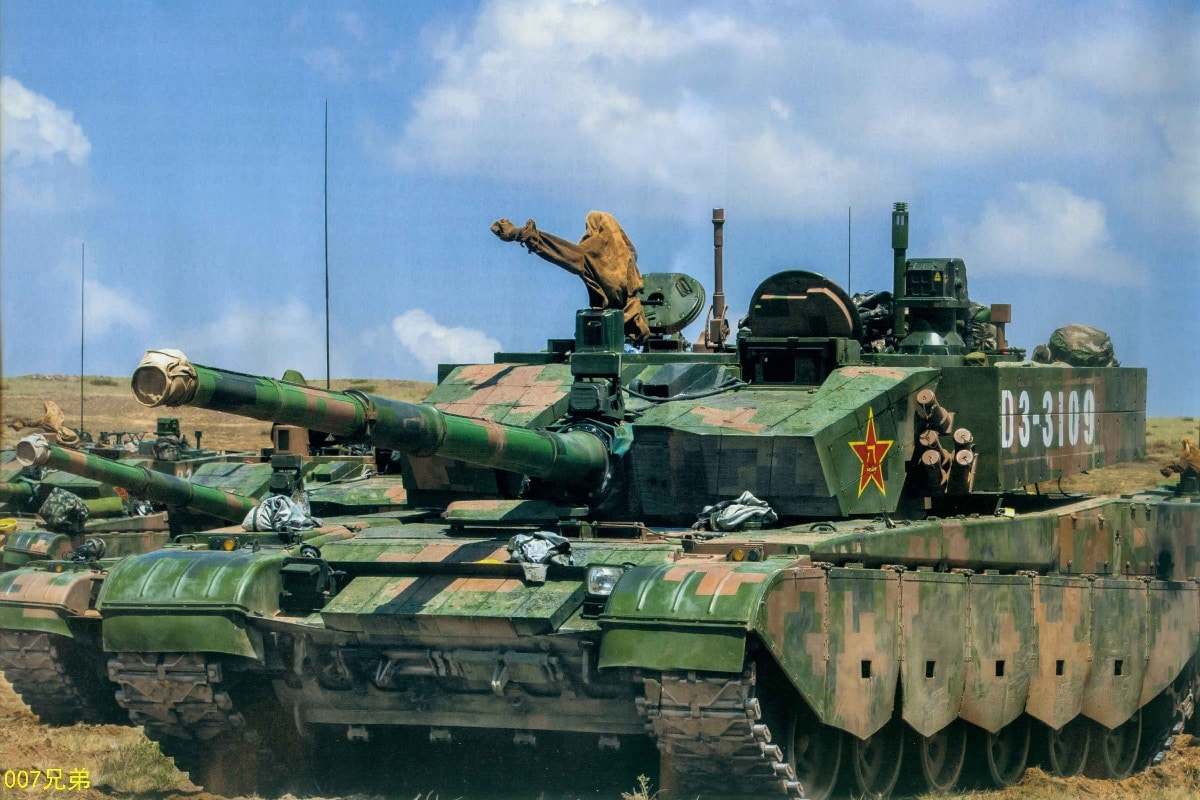
Type 99 Tank. Image: Creative Commons.
Recent imagery and reporting show the PLA fielding large numbers of Type 15s with supporting infantry fighting vehicles in Tibet and Xinjiang, conducting seasonal maintenance and readiness drills at altitudes above 4,500 meters and, in some exercises, 5,000 meters.
During high-altitude combined-arms events in 2024–25, units also appeared with improvised anti-drone cages, reflecting a clear effort to adapt survivability to the loitering munitions and First Person View drones used in Ukraine.
Protection and Production
China’s armor industry is anchored by NORINCO’s long-standing manufacturing base (including the Baotou Tank Plant) and a dense constellation of research institutes, optics producers, and munitions factories.
The state has the capacity to build and upgrade large numbers of vehicles and has also exported modern MBTs such as the VT-4 and light tanks such as the VT-5, which have seen service in multiple foreign armies. China’s biggest factories are also located deep within the mainland, meaning that any attempts to strike these locations will have to travel across China’s vast and well protected airspace. At the same time, independent assessments of the Chinese munitions system suggest that, despite its size and integration, it remains vulnerable to targeted disruption against a handful of centralized, non-redundant nodes in transport, fixed production sites, digital communications, and select foreign-sourced components. During a prolonged, high-attrition conflict, especially under cyber pressure, these choke points could limit ammo production for 60-90 days.
Lessons From Ukraine
The war in Ukraine has provided two broad lessons for the PLA.
First, armor must survive in a battlespace saturated by drones and precision sensors. Anti-drone cages thus are mounted on light tanks during high-altitude drills, and counters to unmanned aerial vehicles and anti-tank guided missiles are being fast pursued.
Second, wars of attrition can drag on. The high attrition rates in Ukraine have proven how valuable a mature industrial base and logistics are during sustained conflict. Chinese sources indicate the PLA is preparing for costly, extended campaigns, hardening sustainment networks, and integrating unmanned systems throughout the force.
China possesses one of the largest and most modernized armored forces in the world, anchored by a capable top‑tier MBT, the 99A. Its brigade‑centric organization, investments in realistic training, and an industrial base with deep experience translate into real high-end capability.
At the same time, the PLA’s relative lack of recent large‑scale combat experience leaves a lot of questions to be answered. How the PLAGF develops from here will go a long way toward determining whether its armored formations merely look imposing on paper, or remain lethal and survivable in a fully contested battlespace.
About the Author: Isaac Seitz
Isaac Seitz, a Defense Columnist, graduated from Patrick Henry College’s Strategic Intelligence and National Security program. He has also studied Russian at Middlebury Language Schools and has worked as an intelligence Analyst in the private sector.