
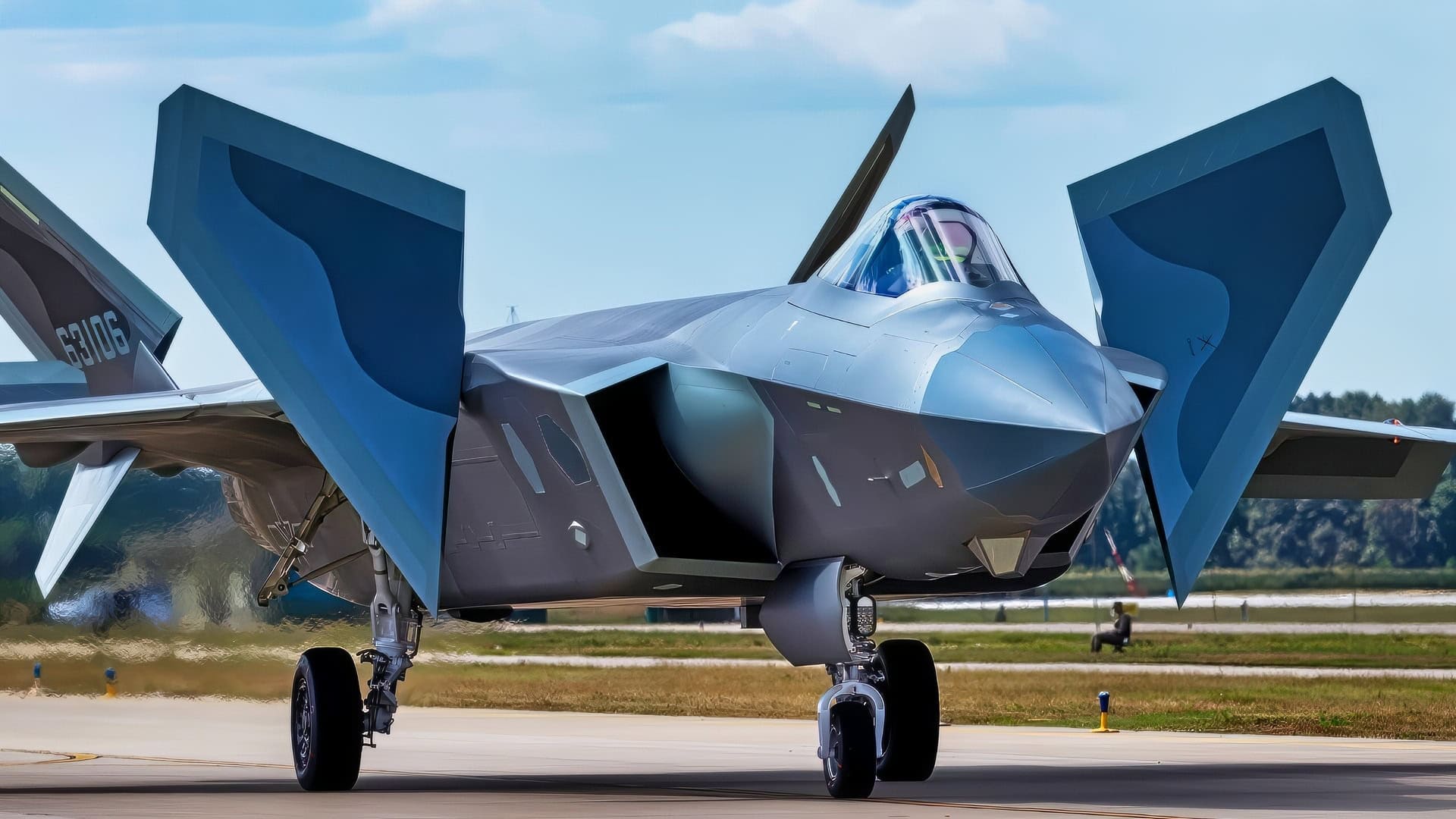
Summary and Key Points: China’s new two-seat J-20S is built for combat, not training—pairing a pilot with a mission-systems officer to run sensors, electronic warfare, and manned-unmanned teaming.
-The extra crew station turns the jet into an airborne command node that can cue loyal-wingman drones, coordinate multi-axis attacks, and support long-range maritime strike inside the first island chain.
-Backed by improved engines and a large internal weapons bay, the J-20S aims to stay stealthy while carrying advanced air-to-air missiles and precision munitions. Claims of unchallenged flights near Taiwan highlight the detection problem this platform is designed to exploit. In crisis, it complicates U.S. defense.
-In 2 Words: Game Changer?
A Strategic Disaster? Why the J-20S in Taiwan’s Backyard Changes Everything
The Chinese built the first stealth fighter aircraft outside of the United States. The J-20 “Mighty Dragon” stealth fighter, code-named “Fagin” by NATO, is China’s most prevalent fighter.
The J-20S, the newest variant, is a twin-seat, fifth-generation stealth fighter developed by China for the PLAAF and unveiled in 2025 for specialized, non-training combat roles.
It acts as a command hub for coordinating drone swarms, performing electronic warfare (EW), and executing long-range maritime strikes. The J-20S enhances battlespace situational awareness through advanced sensor fusion and is expected to operate alongside other J-20 variants and unmanned systems.
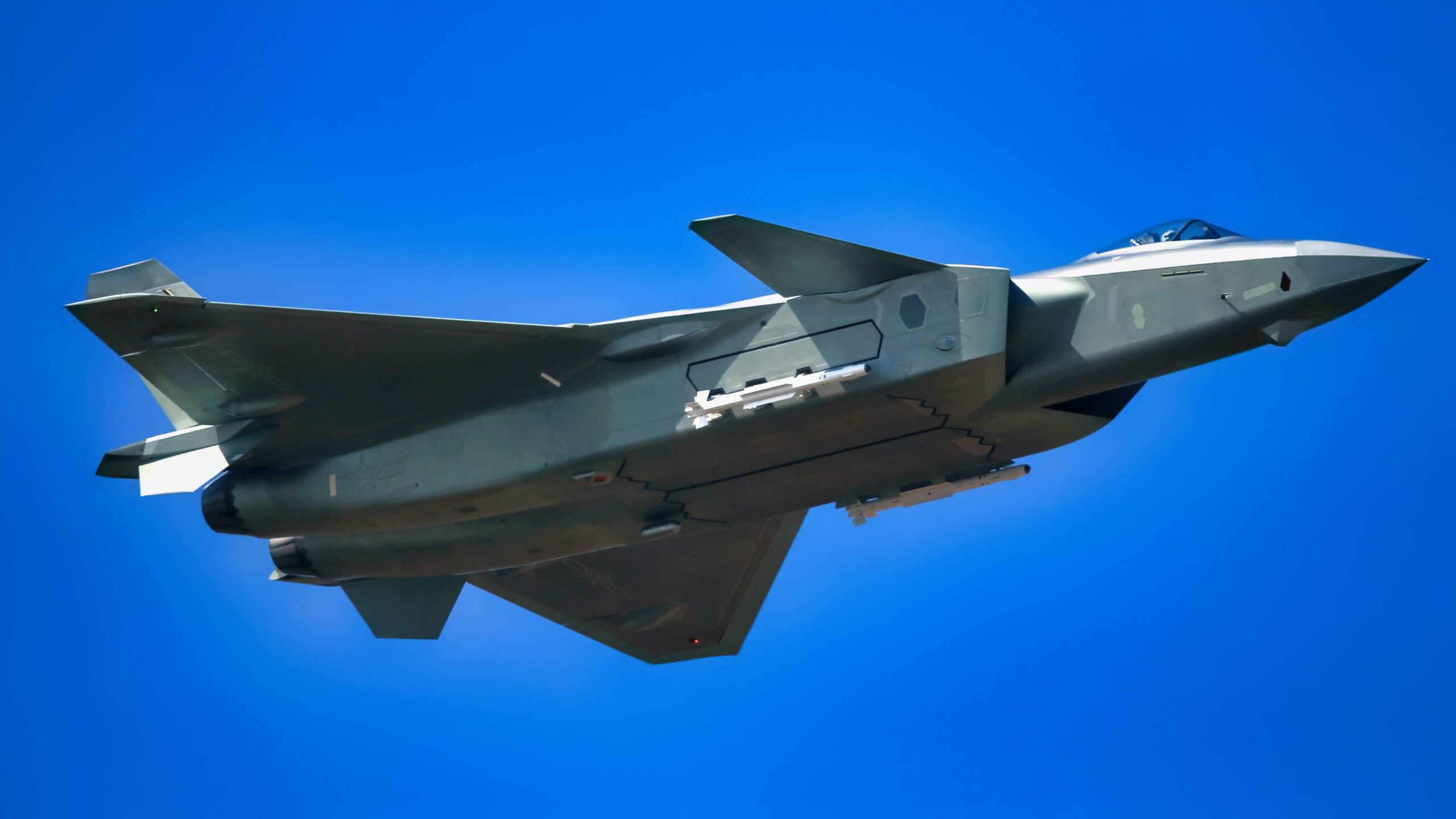
J-20 Fighter. Image Credit: Creative Commons.
China Central Television reported that, “It boasts exceptional medium-and long-range air superiority capabilities, precision strike capabilities against ground and maritime targets, as well as prominent situational awareness, electronic jamming and tactical command and control capabilities, and is capable of conducting manned-unmanned teaming operations.”
Long-Range Maritime Strike Capabilities Have Increased
“Of particular note is the potentially expanded role of the J-20S for maritime strike operations, relative to the J-20. As the PLA will almost certainly fight within range of airbases in China, a stealth aircraft equipped for maritime strike operations could significantly increase the risk to allied forces operating in or near the first island chain,” Ben Lewis, the founder of PLATracker, an organization dedicated to monitoring Chinese military activity and development, said.
Fifteen years on, Lewis said, the PLA continues its efforts to expand the capabilities of its J-20 aircraft.
“The J-20S, in particular, represents a significant progression in the aircraft’s development, providing the potential for an expanded suite of weapons and systems to facilitate the integration of unmanned aircraft,” Lewis added.
Several key features of the J-20S stealth fighter are worth noting. The aircraft features a second crew member who will manage electronic warfare, sensors, and unmanned (loyal wingman) drones, making it the first fifth-generation fighter with two crew members.
The Mission Systems Officer (MSO) is responsible for managing electronic warfare systems, coordinating with Unmanned Aerial Vehicles (UAVs), and overseeing complex tactical operations. This dual-crew configuration enables the J-20S to serve as a tactical command node in the air.
The MSO can direct loyal wingman drones, such as the FH-97A or GJ-11, enabling the J-20S to conduct multi-drone attacks, reconnaissance missions, and electronic suppression operations.
This frees the pilot from additional responsibilities and enables the aircraft to be more responsive and capable in combat. The result is a fighter that not only engages in direct combat but also serves as a drone quarterback, enhancing the effectiveness of surrounding assets. It will serve as a sensor-fusion role, similar to how the US uses the F-35.
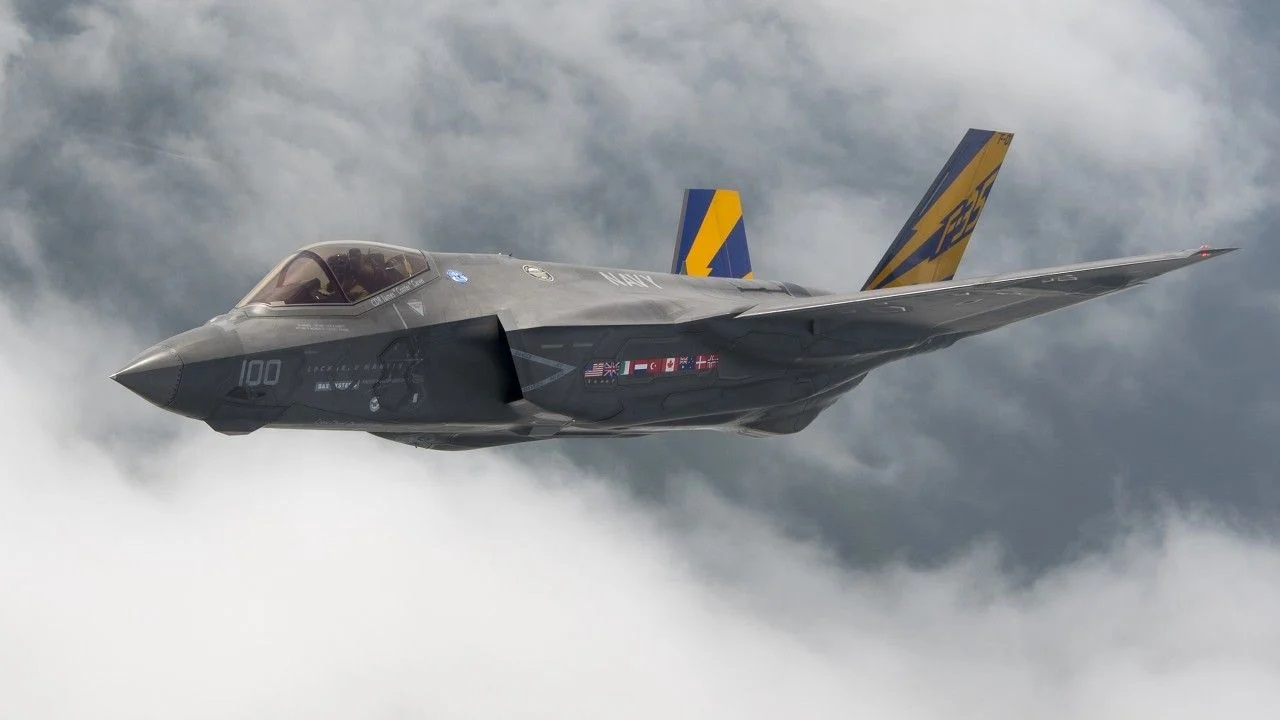
Stealth F-35C. Image Credit: Creative Commons.
Other features include an advanced stealth design, a powerful WS-15 engine for supercruise, integrated avionics with 360-degree sensor coverage, a large internal weapons bay, and high maneuverability afforded by its canard-delta wing configuration.
These features work together to allow the J-20s to penetrate enemy airspace, strike high-value targets, and perform complex combat missions.
The J-20S Mighty Dragon Is Stealthy
The J-20S’s stealth capabilities are achieved through a combination of design features, including a blended wing-body, diverterless supersonic inlets (DSIs), internal weapons bays, and radar-absorbent materials.
While its overall stealth is considered inferior to some American counterparts, such as the F-22, its design offers better multi-directional stealth from the sides and rear. The aircraft also features advanced avionics and sensor fusion to enhance situational awareness and support stealthy operations.
The J-20’s design minimizes its radar signature, particularly at the front, by using a chiseled nose, a blended wing-body, internal weapons bays, and diverterless supersonic inlets.
This low observability is crucial for an ambush-style attack, allowing it to slip past enemy patrols undetected.
Like other stealth fighters, the J-20 stores its weapons in a storage bay. It has four beyond-visual-range (BVR) and within-visual-range (WVR) missiles. With internal fuel tanks, the J-20 can travel 1,100 nautical miles.
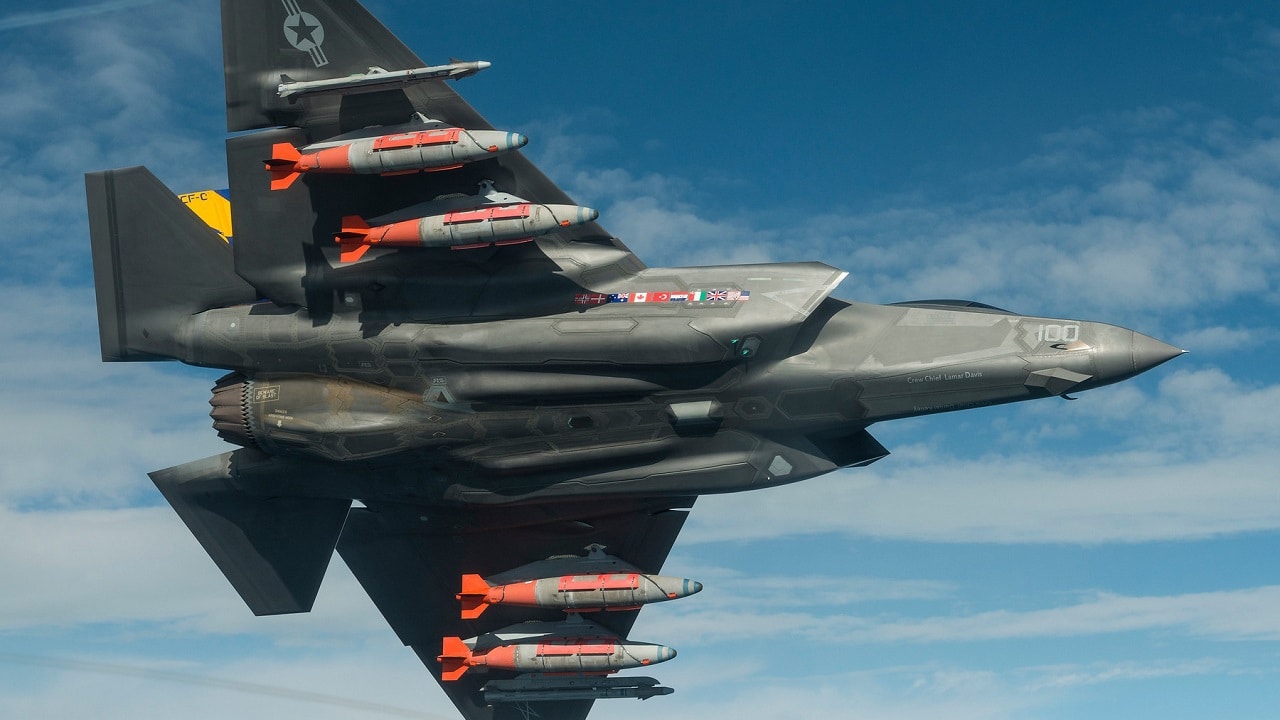
CF-1 Flt 453 piloted by Lockheed Martin test pilot Mr. Dan Canin flies with external GBU-31 weapons for the first time on an F-35, the test was flown from NAS Patuxent River, MD on 5 Aug 2016
Recently, a J-20 pilot of the People’s Liberation Army Air Force (PLAAF), Captain Yang Jucheng of the “Wang Hai” Brigade, claimed that he overflew the entire island of Taiwan and was never once intercepted. He reportedly penetrated Taiwan’s airspace, and Taiwan’s air defense systems were utterly unaware that the aircraft was even there.
The Powerful WS-15 Engine Can Supercruise
The J-20S’s speed is reported by the Chinese to be Mach 2.55 (1956 mph). It is capable of supercruise, flying supersonic without using fuel-intensive afterburners.
The J-20S has a high ceiling and can reportedly reach an altitude of 65,000 feet. China has indigenously developed the Shenyang WS-10 afterburning engine, which delivers 30,000 pounds of thrust and powers the J-20.
Initially, the J-20 relied on Russian-supplied Al-31 engines but has transitioned to the domestically produced WS-10C engine and will ultimately adopt the upcoming WS-15, which should provide the J-20 with supercruise capabilities, i.e., sustained supersonic flight without the use of afterburners.
The WS-15 should significantly increase the J-20S’s range, enabling China to project airpower deeper into contested airspace across the sprawling Indo-Pacific region.
J-20S’s Integrated Avionics Package
The J-20’s integrated avionics system includes an Active Electronically Scanned Array (AESA) radar, an Electro-Optical Targeting System (EOTS) for infrared search and track (IRST), a distributed aperture system (DAS) for 360-degree situational awareness, and a helmet-mounted display system (HMDS) for the pilot.
These sensors are integrated via advanced sensor fusion to create a unified picture of the battlespace, enabling the J-20 to operate in a command-and-control role by connecting with other assets, such as drones and ground stations.
Large Internal Weapons Bay
The J-20S stealth fighter features a large central internal weapons bay and two smaller side bays, allowing it to carry a variety of weapons while maintaining stealth.
The main bay can accommodate long-range air-to-air missiles such as the PL-15 and PL-21, or guided munitions, while the smaller side bays are typically for short-range missiles such as the PL-10.
This internal carriage is crucial for its low observability, enhancing its speed and survivability by reducing drag and its radar signature.
In situations where stealth is less critical, such as in areas with established air superiority, the J-20 can use its external hardpoints to carry additional weapons, sometimes referred to as “Beast Mode”.
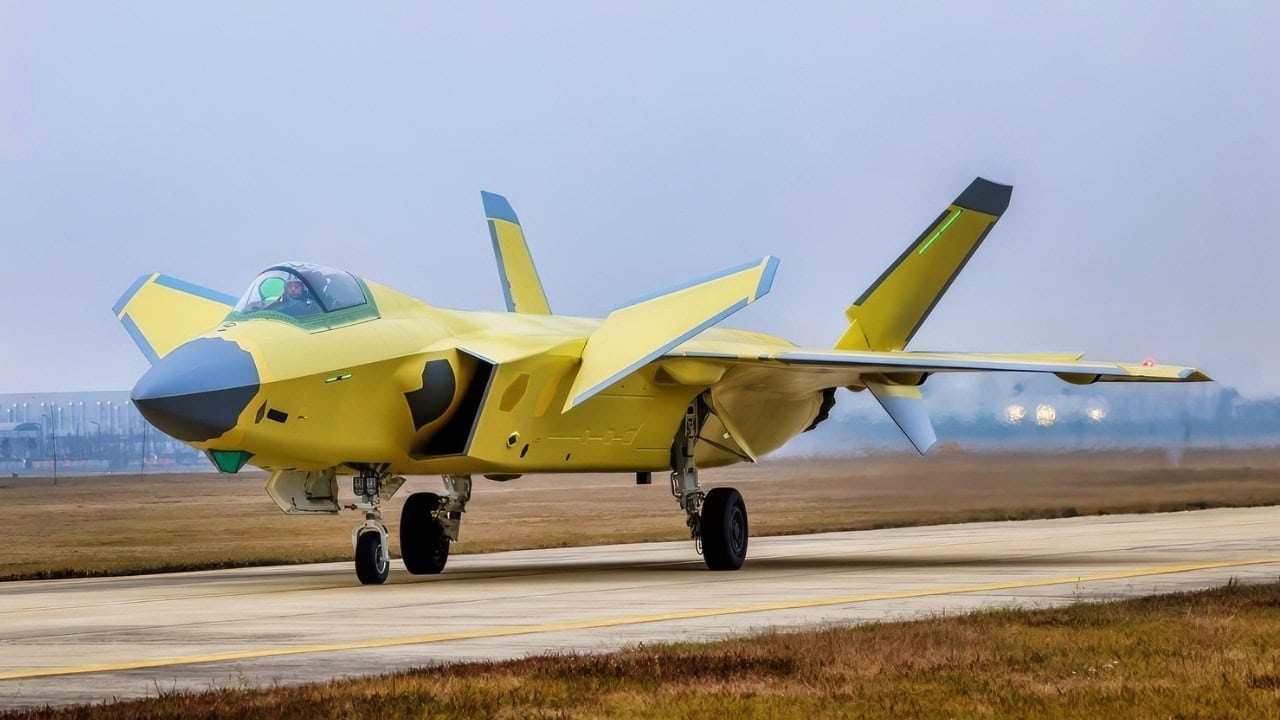
J-20 Fighter from China X Screenshot. Image Credit: Creative Commons.
The J-20S Is Highly Maneuverable
The J-20S’s maneuverability is considered strong, with recent versions demonstrating high agility, though its effectiveness with a combat load is debated.
Its maneuverability is enhanced by thrust-vectoring controls on some models, enabling sharp turns and high-G maneuvers that are comparable to those of the highly agile F-16.
While its stealth design is intended to reduce radar signature, it may compromise maneuverability to some extent.
However, while the J-20S’s maneuverability is impressive, its performance when fully armed with internal weapons remains uncertain and a subject of debate among aviation analysts.
Will The J-20S Be A Gamechanger In A Pacific War?
If a shooting war between the United States and China does occur in the near future, the J-20S two-seat, twin-engine stealth fighter could significantly challenge US air superiority over Taiwan by acting as a “carrier killer” and networked command node, enabling stealth maritime strikes, commanding drones (MUM-T), and disrupting US command-and-control with long-range weapons like the PL-17.
Its integration into a comprehensive kill web with AI, EW, and early-warning aircraft erodes US detection advantages and threatens to push carriers out of the first island chain.
With production projections of 1,000 J-20s by 2030, China is matching or surpassing the U.S. in fifth-generation numbers in the theater, eroding the numerical superiority the U.S. has traditionally relied on.
The J-20S can also serve as a force multiplier by serving as a command center for unmanned “loyal wingman” drones, allowing one pilot to focus on flight while another handles mission systems and drone control, further shifting the technological balance away from the U.S.
About the Author: Steve Balestrieri
Steve Balestrieri is a National Security Columnist. He served as a US Army Special Forces NCO and Warrant Officer. In addition to writing on defense, he covers the NFL for PatsFans.com and is a member of the Pro Football Writers of America (PFWA). His work was regularly featured in many military publications.