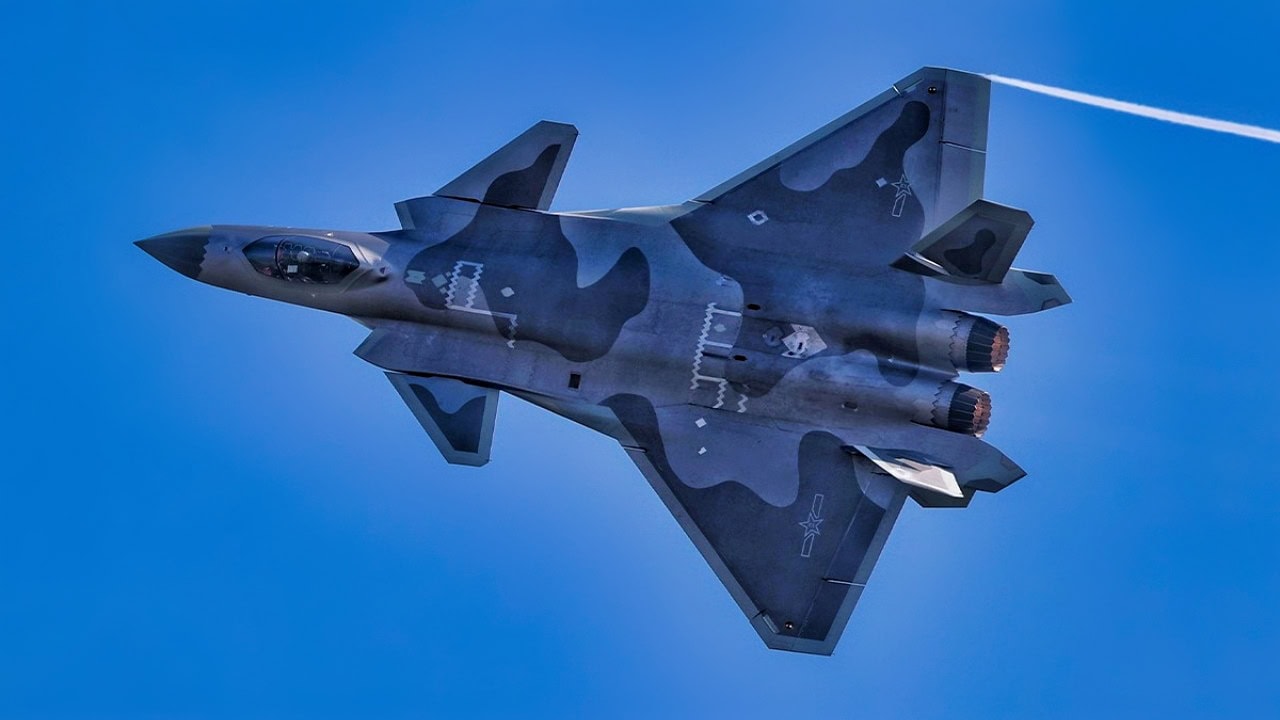
Summary and Key Points: China’s J-20 family is becoming a production story as much as a capability story. Estimates cited from RUSI suggest the People’s Liberation Army Air Force could field roughly 1,000 J-20/A/S variants and about 900 J-16s by 2030, reflecting a shift toward heavier fighters and a rapidly modernizing mix.
-A Mitchell Institute for Aerospace Studies analysis similarly points to a large inventory and a rising fifth-generation share, with J-20 output reportedly climbing toward 120 aircraft per year.
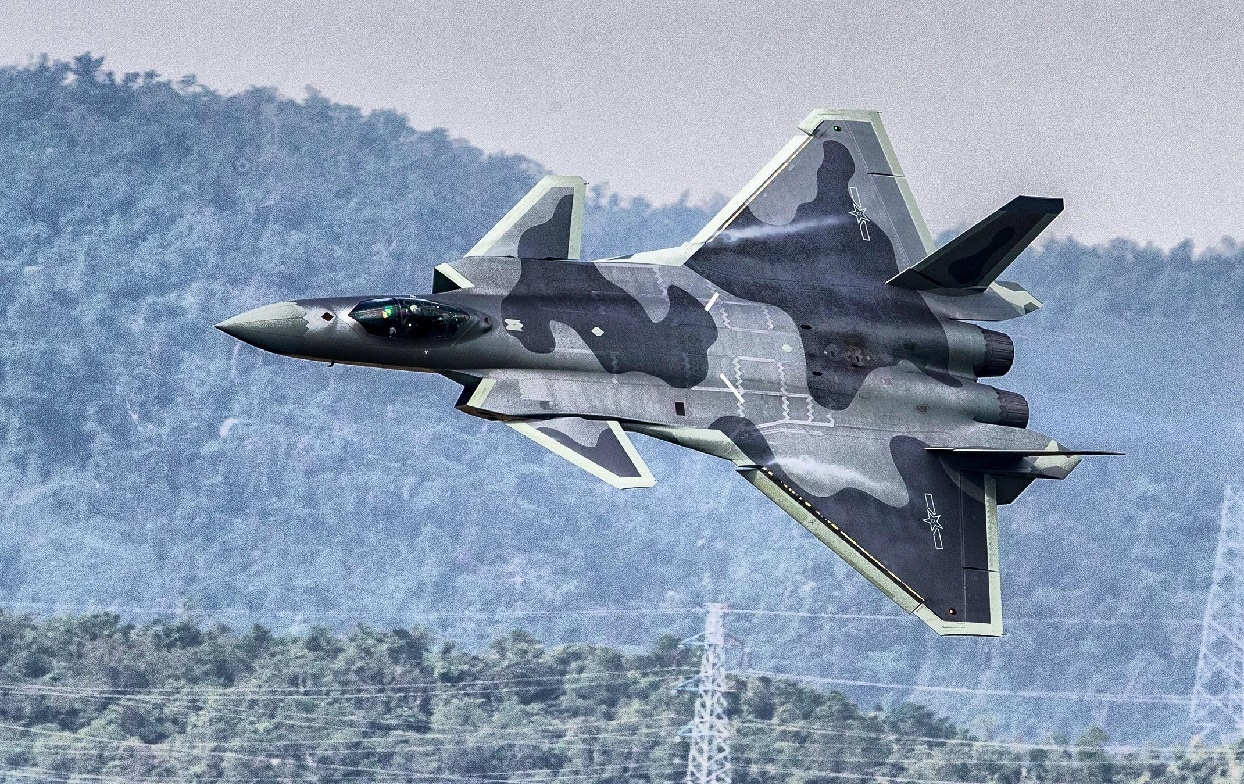
J-20 Image: Creative Commons.
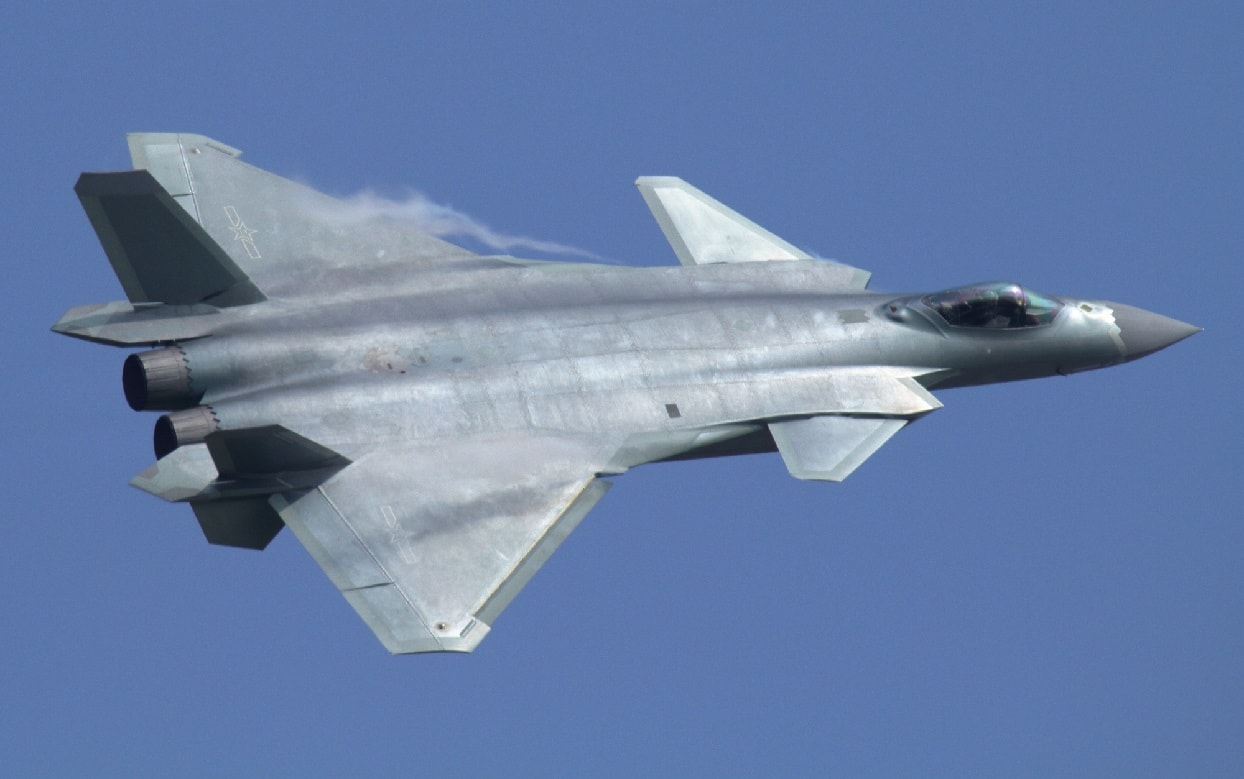
Image of J-20 Stealth Fighter. Image Credit: Creative Commons.
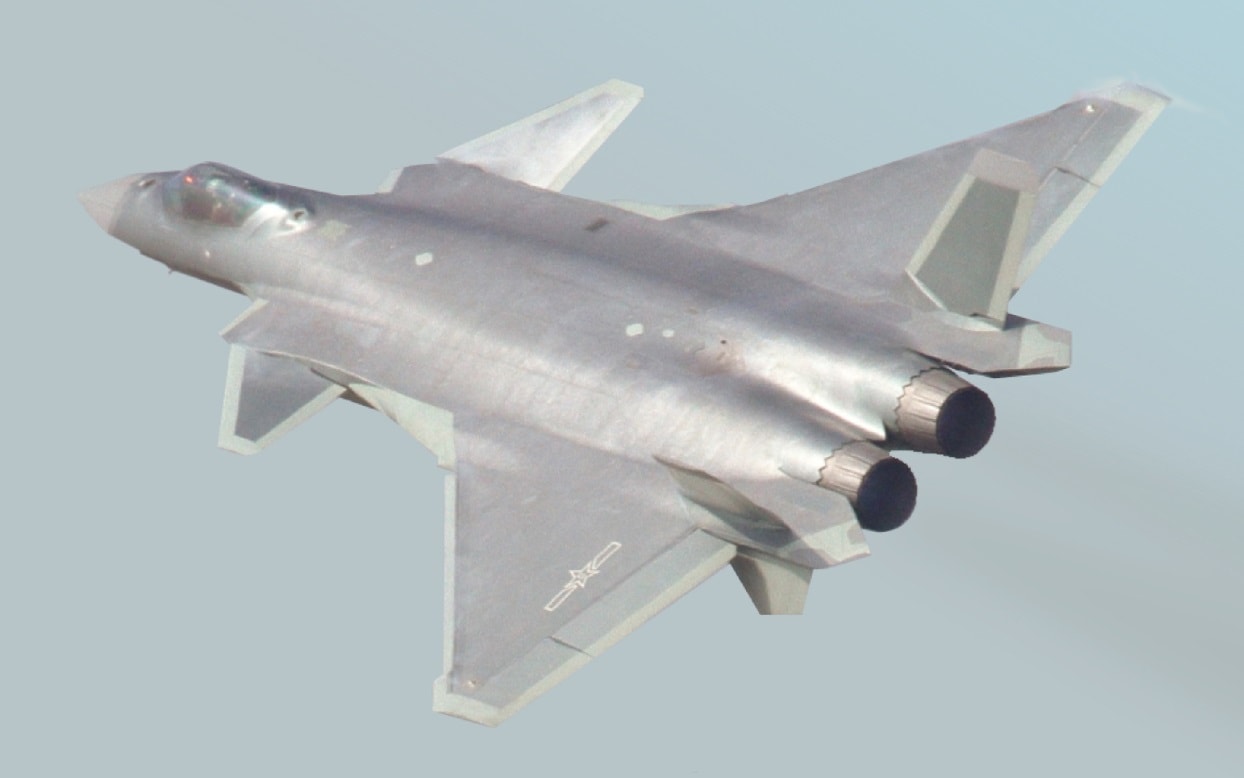
Image: Creative Commons.
-Even so, U.S. engine makers like General Electric and Pratt & Whitney are described as holding a reliability edge—though China is improving.
If China Can Build 1,000 J-20 Fighters, Can America Sustain a Long Air War?
Much ink has been spilled about the J-20 family of stealth fighters, fifth-generation aircraft in service with China’s People’s Liberation Army Air Force (PLAAF).
Today, produced in three variants, it holds the unique distinction of being the world’s first two-seater fifth-generation fighter.
Parsing the details of individual aircraft, such as the J-20, is, by definition, a speculative exercise given the paucity of publicly available information about that aircraft.
But conjecture finds a more concrete footing when directed not at specific capabilities but at production numbers.
A recent report from the Royal United Services Institute, the United Kingdom’s leading defense think tank, provides production estimates and informed best-guess fleet numbers for Chinese and Russian air power.
The backdrop of the picture it paints for Chinese air fleets is one of vast industrial capabilities.
Trending Upward
“What these figures indicate, in practice,” the report notes, “is that the proportion of fifth-generation and advanced fourth-generation fighters operated by the PLAAF has greatly increased since 2020 and will continue to do so. The trend suggests that around 1000 J-20/A/Ss and 900 J-16s will be in service with the PLAAF by 2030.”
But in addition to that increase in numbers, there is, as well, “a noticeable trend towards heavy fighters in general, with J-16s and J-20s being used to re-equip units that previously were operating not only J-11 and Su-27/30 Flanker heavy fighters, but also some J-7 light and J-8 medium fighters.”
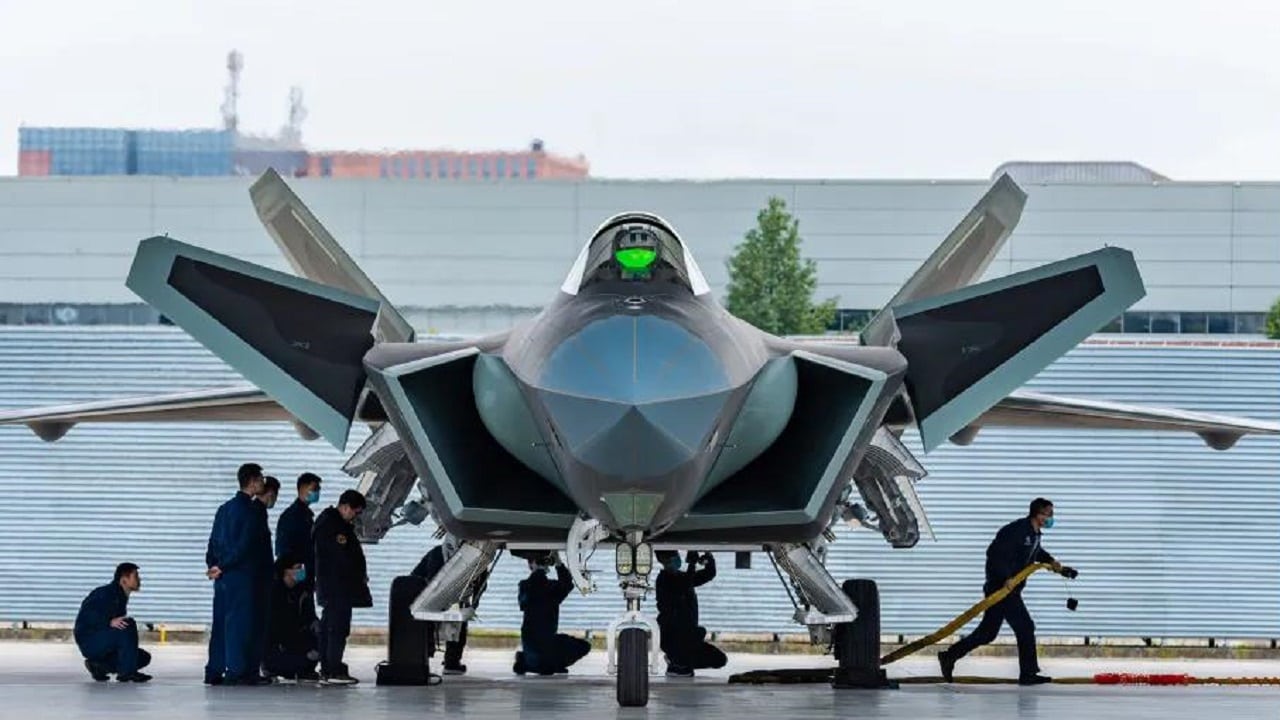
J-20. Image Credit: Chinese Internet.
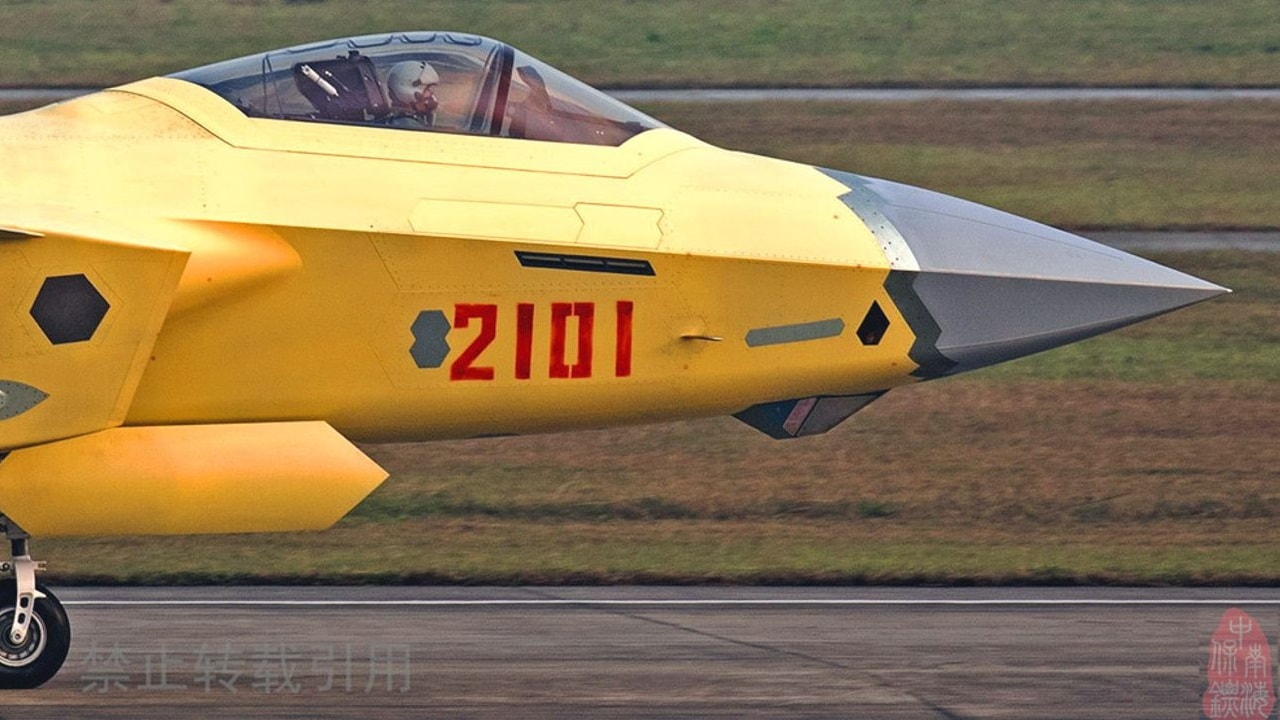
J-20 Stealth Fighter. Image Credit: Chinese Military.
The J-20 is noticeably larger than its counterpart in the United States Air Force, the F-22 Raptor, and significantly larger than the somewhat smaller F-35 multirole fighter.
Even the J-20’s smaller single-seat variant offers greater internal volume for both fuel and weaponry, raising important questions about the jet’s range and magazine capacity, both of which could exceed those of either American fighter.
The sheer scale of aircraft entering service with the PLAAF is certainly remarkable. Still, the composition of those numbers is also a cause for concern — notably, the ratio of fourth- and fifth-generation fighters in China’s air fleets.
A recent analysis by the Mitchell Institute for Aerospace Studies, an aerospace and defense think tank, presented figures largely in line with those of RUSI. “China has an estimated 2,225 fighters in its inventory,” the Mitchell Institute wrote, “of which 1,311 are 4th-generation, and 320 are 5th-generation aircraft.”
“With a production rate reportedly increasing to 120 J-20s a year, the PLAAF’s acquisition of 5th-generation jets almost triples that of the USAF.” The paper did add one caveat. “There is little data available regarding readiness, but assuming 70 percent of their fleet is combat-coded and has the same 70 percent MC rate that was assumed for the allies is reasonable. That equates to the PLAAF having roughly 799 MC fighters available to employ at any given time.”
Powerplant Advantages
Despite the staggering pace of Chinese fighter jet production, American aircraft are thought to retain a qualitative lead, particularly in propulsion. Steve Russell, general manager of General Electric’s advanced projects unit, Edison Works, explained that his firm, as well as aerospace rival Pratt & Whitney, both build and design fighter jet engines that are markedly superior to those powering China’s current crop of aircraft.
“Our reliability tends to be still an order of magnitude better than theirs,” Russell explained in an interview with Flight Global.
Chinese jet engines require extensive servicing after hours of use in the triple digits, but their American counterparts need an overhaul after hours of use in the quadruple digits.

J-20 Fighter. Image Credit: Chinese CCTV.
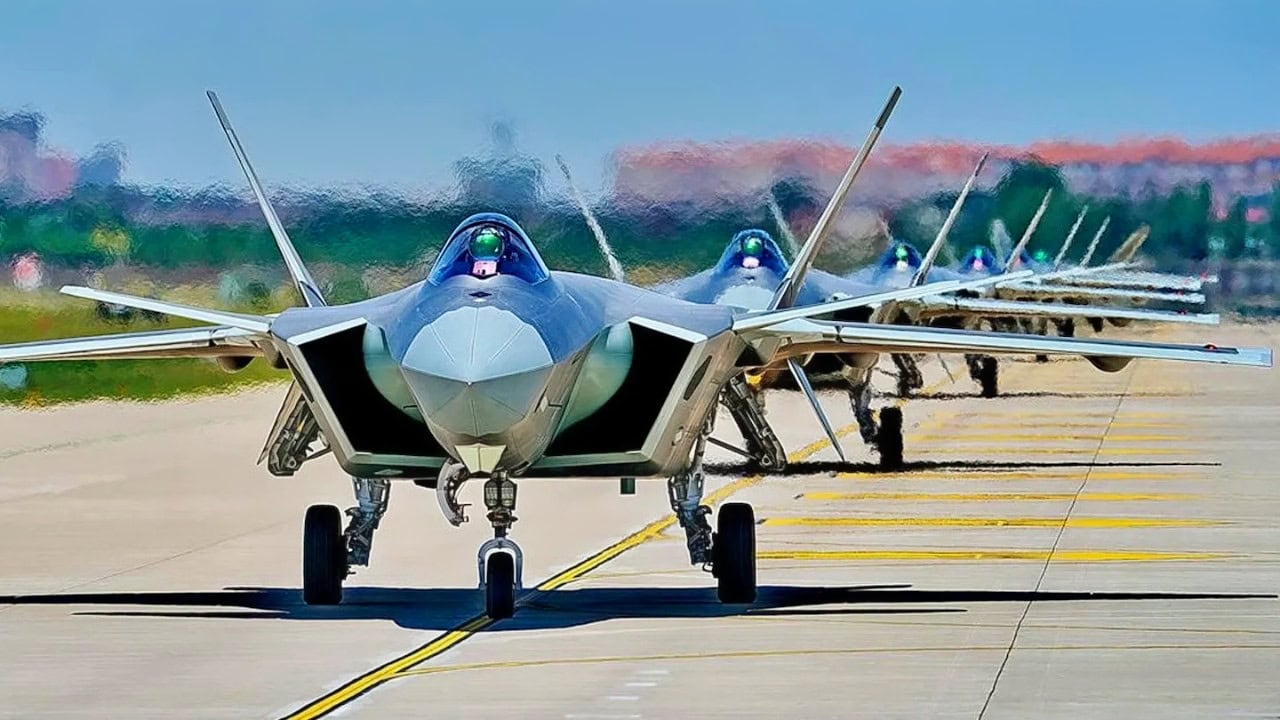
J-20 Fighter from PLAAF China. Image Credit: Creative Commons.
“But they’re getting better, and we’re seeing them get better,” he added. “That’s why it’s important that we take this next generational leap to make sure that we maintain that advantage that we have.”
But China is narrowing the performance gap between its engines and those of the United States. However, it may still face difficulties with jet-engine subsystems, including turbine blades, compressors, and ball bearings, which raise questions about long-term reliability.
The Runway Ahead
Overall production numbers are an important metric, but do not, alone, provide any insight into capability estimates, nor do they factor in other important qualifiers such as the quality of the build, pilot training, the jet’s ability to network with other aircraft, or other aspects of the jet’s design and operational use.
But these brumous questions aside, what is clearer is that China’s pace of building stealthy, fifth-generation aircraft is certainly outpacing that of the United States.
The implications for the next war are severe: a look to Ukraine underscores the importance of a robust defense industrial base to sustain long, attritive wars — and the consequences of running out of arms and ammunition.
While perhaps not a qualitative match for the United States, the PLAAF is increasingly capable of absorbing vast losses. Could the United States Air Force as well?
About the Author: Caleb Larson
Caleb Larson is an American multiformat journalist based in Berlin, Germany. His work covers the intersection of conflict and society, focusing on American foreign policy and European security. He has reported from Germany, Russia, and the United States. Most recently, he covered the war in Ukraine, reporting extensively on the war’s shifting battle lines from Donbas and writing on the war’s civilian and humanitarian toll. Previously, he worked as a Defense Reporter for POLITICO Europe. You can follow his latest work on X.