
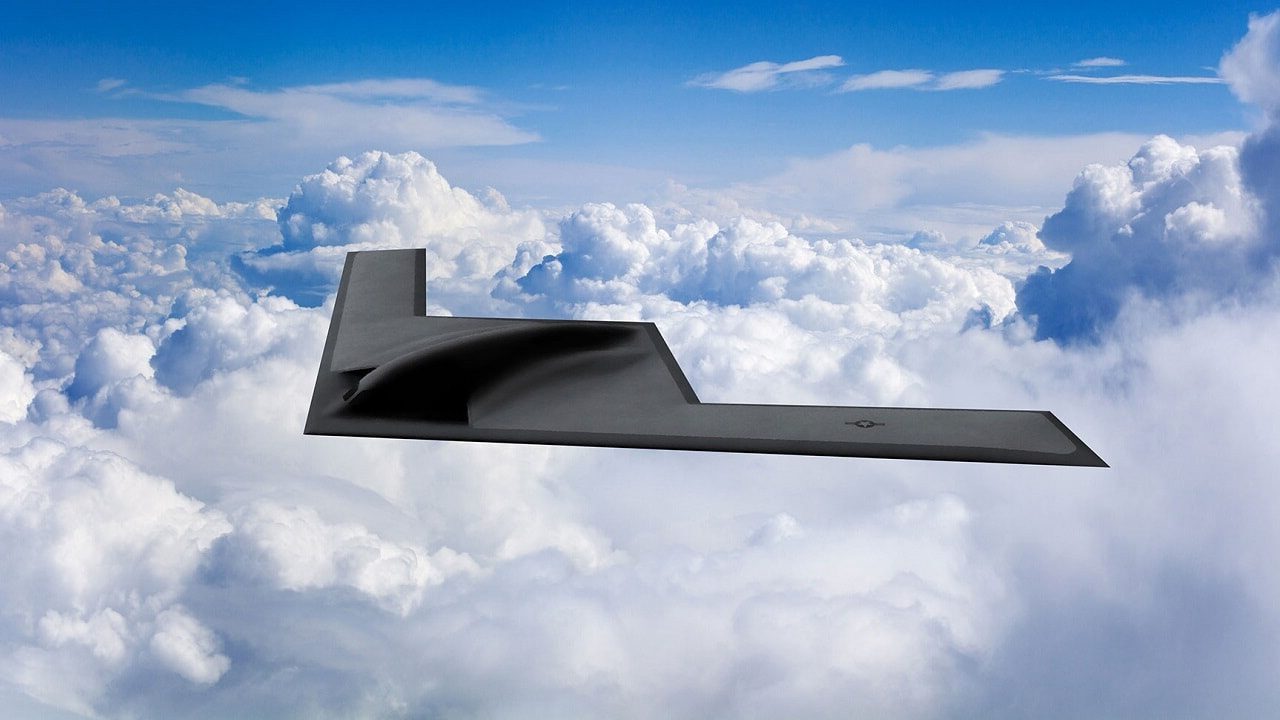
Summary and Key Points: The Mitchell Institute’s latest report, “Strategic Attack: Maintaining the Air Force’s Capacity to Deny Enemy Sanctuaries,” calls for doubling the stealth B-21 fleet and significantly increasing F-47 procurement.
-Authors Heather Penney and Mark Gunzinger argue that current planning only provides a “raid force” capable of “bloody nose” attacks like Operation Midnight Hammer, but lacks the mass to sustain a protracted war with China.
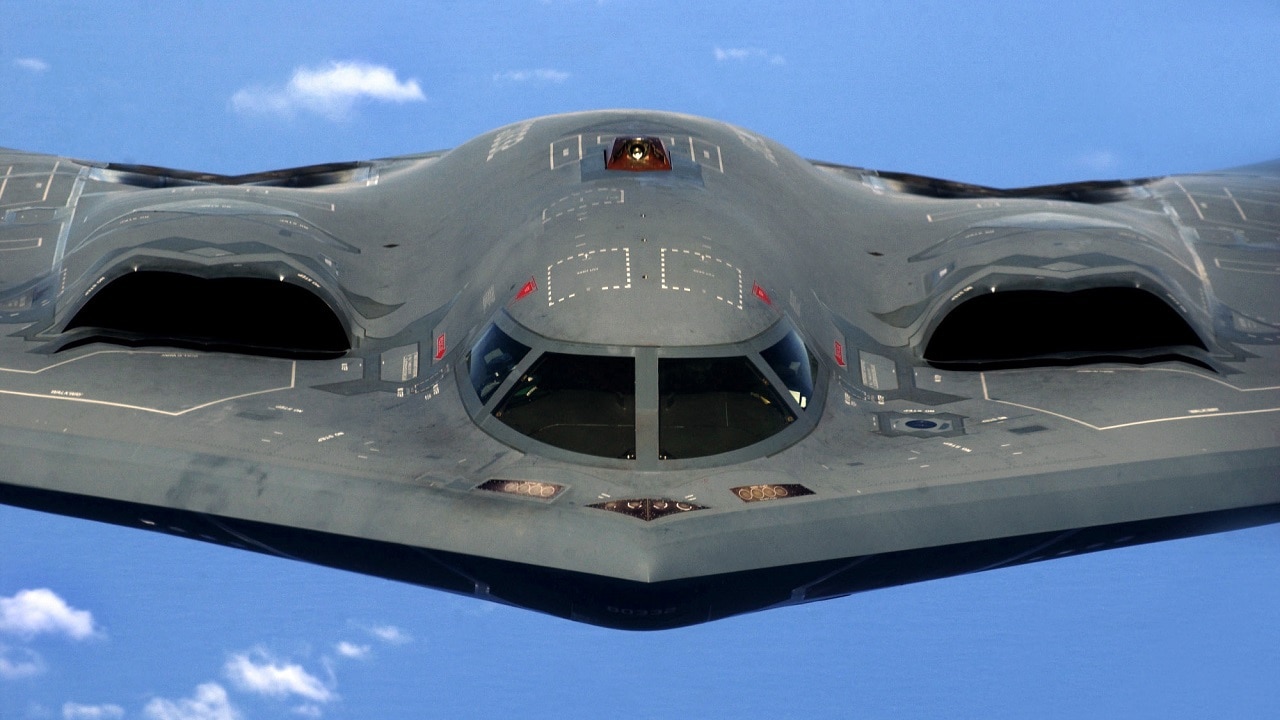
A U.S. Air Force B-2 Spirit “Stealth” bomber, 393rd Expeditionary Bomb Squadron, 509th Bomb Wing, Whiteman Air Force Base, Mo., flies over the Pacific Ocean after a recent aerial refueling mission, May 2, 2005. The Bombers are deployed to Anderson Air Force Base, Guam, as part of a rotation that has provided the U.S. Pacific Command a continous bomber presence in the Asian Pacific region since February 2004, enhancing regional security and the U.S. commitment to the Western Pacific. (U.S. Air Force photo by Tech Sgt. Cecilio Ricardo) (Released)
-While you champion a stand-off “Kinetic Missile Fight,” the analysts contend that hypersonic costs are prohibitive. The U.S. now faces a $100 billion dilemma: build more stealth airframes or bet on an arsenal of high-priced missiles.
F-47 and B-21: Can the U.S. Build a “Campaign Force” Before the Clock Runs Out?
You surely realize that the United States needs more new fighter jets and bombers. China is producing a large number of its stealth J-20 fighter jets and developing a new radar-evading bomber, the H-20. Russia has its Su-57 Felon and its next-generation bomber called the PAK DA.
To answer these threats, the U.S. Air Force is building and developing the new F-47 NGAD sixth-generation fighter jet and the B-21 Raider stealth bomber. But could the Americans actually build 300 F-47s and 200 B-21s? That is what an aerospace think tank is calling for. There is a need to construct a fleet with those numbers, but there may not be the means to do so.
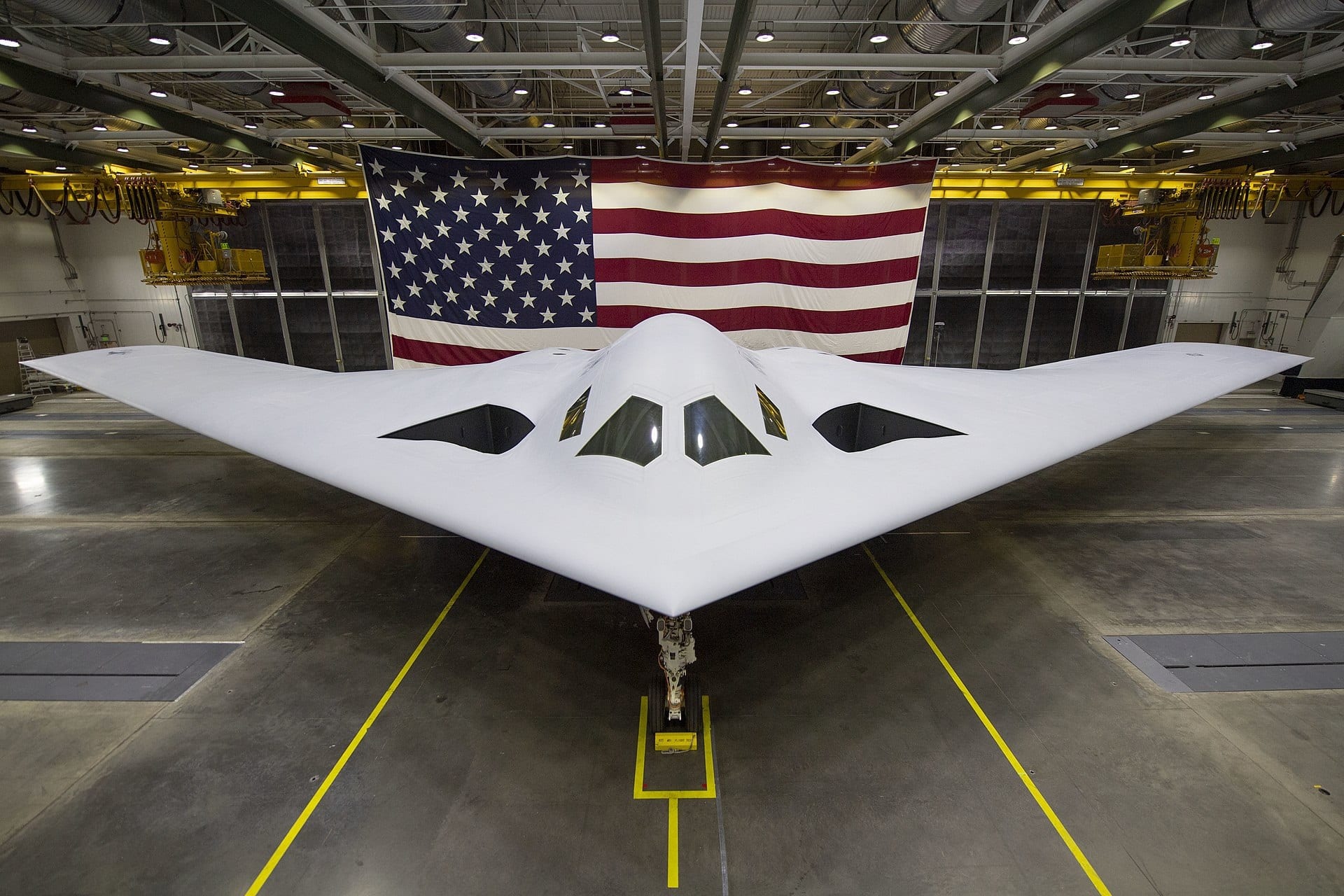
The B-21 Raider was unveiled to the public at a ceremony December 2, 2022 in..Palmdale, Calif. Designed to operate in tomorrow’s high-end threat environment, the B-21 will play a critical role in ensuring America’s enduring airpower capability. (U.S. Air Force photo)
The Need to Punish Chinese Factories and Supply Chains
A new report by AFA’s Mitchell Institute for Aerospace Studies calls for the construction of large numbers of warplanes to deny the Chinese the ability to establish a “sanctuary” on the Mainland that can build J-20s, H-20s, and the new stealth fighter, the J-35.
Authors Heather Penney and retired Col. Mark A. Gunzinger wrote a new report called “Strategic Attack: Maintaining the Air Force’s Capacity to Deny Enemy Sanctuaries.” The analysts believe that the large number of F-47s and B-21s can attack deep into China to destroy critical targets that supply the Chinese defense industry.
“F-47s operating with B-21s and other aircraft in the Air Force long-range strike family can be [the Pentagon’s] ‘sanctuary denial force.’ Two hundred [B-21s] isn’t based off of a full-up World War III scenario, but it does look at what’s the number needed for ‘hold back’ and how do you be credible and effective in denying that sanctuary and hitting those key centers of gravity in China and also having enough attrition reserve to be able to sustain a protracted conflict?” the authors asked.
‘Long-Range Kill Chains’ Are Needed
The United States is not producing enough fighters and bombers to create the required number of “long-range kill chains” in the first 100 hours of a war with China, according to the report.
Keeping Pace with Legacy Platforms
The study determined that the United States must also continue to maintain B-2 Spirit stealth bombers and F-35 Lightning IIs.
The Air Force has already said it would procure at least 100 B-21s and 185 F-47s. This is an impressive number that may not be met if the programs have schedule slips and cost overruns.

Shown is a graphical artist rendering of the Next Generation Air Dominance (NGAD) Platform. The rendering highlights the Air Force’s sixth generation fighter, the F-47. The NGAD Platform will bring lethal, next-generation technologies to ensure air superiority for the Joint Force in any conflict. (U.S. Air Force graphic)
Landing the Knockout Punch
However, Penney and Gunzinger are not convinced that wit alone will be sufficient for sustained operations against an adversary. The current level of new fighters and bombers could conduct a “bloody nose” attack like B-2s executed against Iran during Operation Midnight Hammer last summer, but for a sustained war, the current numbers of B-21s and F-47s would be insufficient.
The researchers are concerned that, because some bombers in today’s fleet must be focused on nuclear strikes and others on homeland defense, there would not be sufficient capacity to stage numerous offensive attacks that would create a winning formula in the early days of a protracted war.
Let’s Execute the Kinetic Missile Fight
I have written extensively about what I call the “Kinetic Missile Fight” in a future war. This would primarily consist of stand-off missile attacks from beyond visual range to dominate an enemy that is already fighting from long-range.
Many of these weapons would be hypersonic missiles. These are what the authors call “long-range kill chain” munitions.
The Analysts Do Not Agree With My Plan
Penney and Gunzinger disagree with my assessment and acknowledge that such continuous missile attacks would not be feasible during the first 100 hours of warfare.
“The service’s current combat force mix is now weighted toward earlier-generation non-stealthy bombers and fighters,” Penney and Gunzinger write. “If not modernized with the right quantities of next-generation stealthy aircraft, this legacy force would have to close thousands of long-range kill chains in hundreds of hours in a peer conflict, a feat that is beyond the Air Force’s current and projected capacity,” they explained.
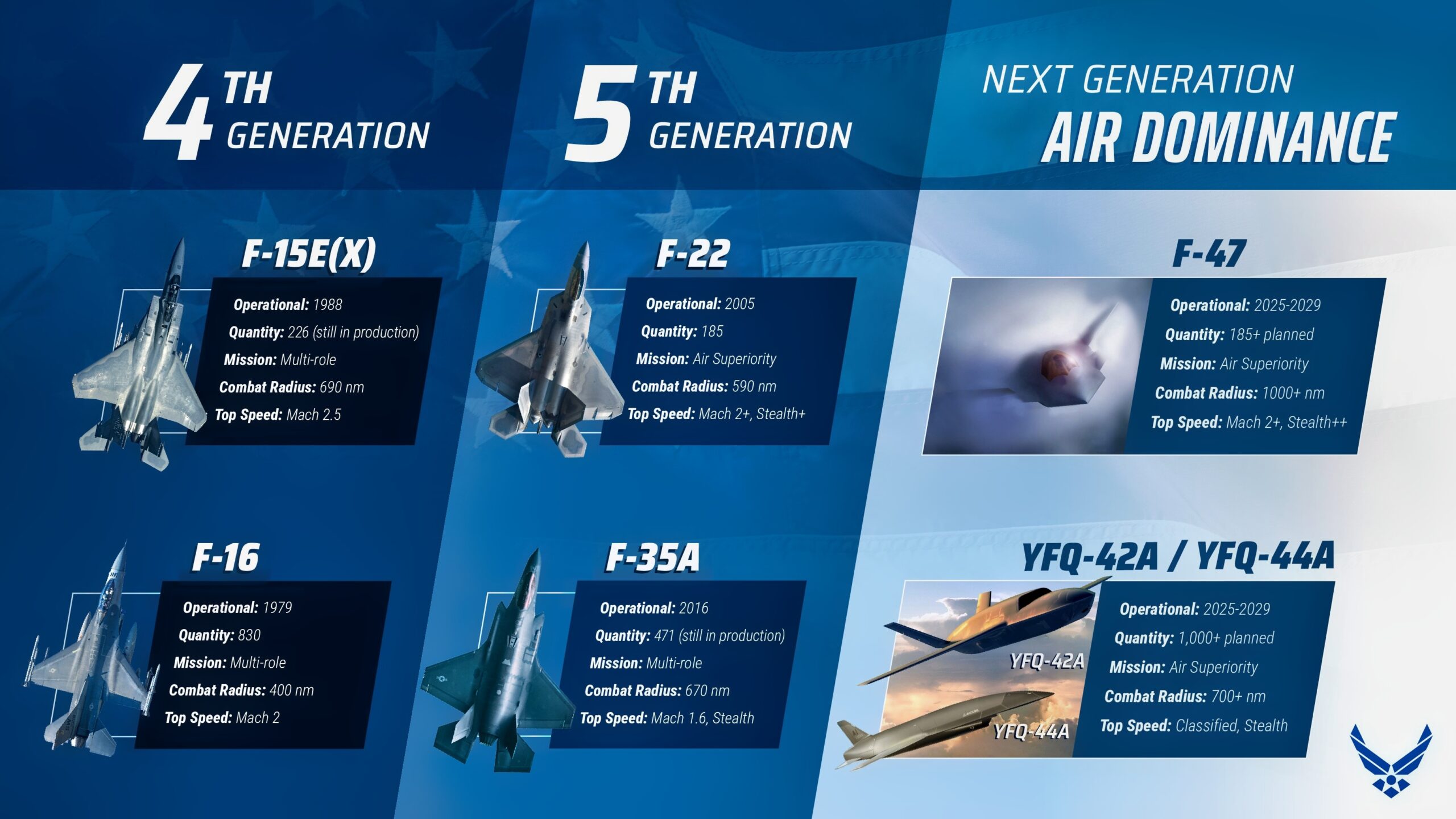
F-47 Infographic. Image Credit: U.S. Air Force
Hypersonics Are Expensive Too
The authors have a point regarding the cost of new next-generation missiles. “The U.S. Army’s Dark Eagle Long-Range Hypersonic Weapon costs upwards of $40 million per shot, so striking just 25 targets would cost $1 billion,” Air and Space Forces pointed out.
But having both long-range hypersonics and all the new fighters and bombers will be expensive, too. The extra B-21s and F-47s could cost the Air Force an extra $100 billion or more.
These price tags may be prohibitive to Congress. Lawmakers on Capitol Hill know that the U.S. military must be survivable beyond three months in a shooting war, and the American missile arsenal may not have the numbers to create a decisive victory in the first 90 days of a conflict.
What Scenario Will the DoD Choose?
However, the new bombers and fighters would also take time to produce, given that the Air Force needs them now to be effective. That’s why I still favor stand-off missiles over producing such a large force of manned fighters and bombers. The cost of these new airplanes, along with keeping legacy systems in operation, is prohibitively expensive.
Of course, the best-case scenario would have the additional aircraft purchased along with the new hypersonics for the stand-off fight. But the overall cost across the Department of Defense is what concerns me. The U.S. Navy needs ships, submarines, and new fighter jets, too.
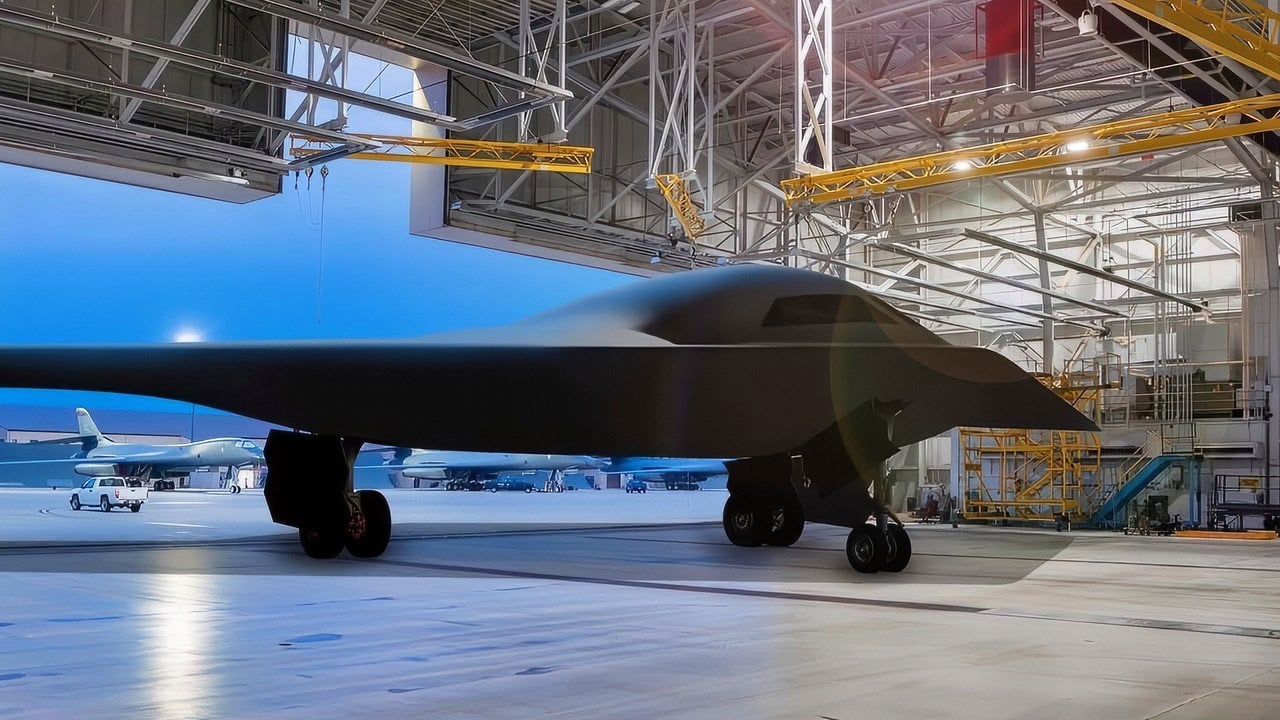
Artist rendering of a B-21 Raider in a hangar at Ellsworth Air Force Base, South Dakota, one of the future bases to host the new airframe. AFCEC is leading a $1 billion construction effort at Ellsworth to deliver sustainable infrastructure to meet warfighter demands for bomber airpower. (U.S. Air Force graphic)
This Debate Is Not Over
The authors of the new report make a good argument for the Air Force to be plussed-up, though.
A prolonged conflict with Russia or China would require as many warplanes as possible, but this may not be feasible in an era when Department of Defense funding is constrained by operational requirements.
This debate is not over and will require the Air Force to articulate why it believes a large number of new aircraft is warranted.
This is a constructive discussion, and strategists in the Department of Defense must develop an acquisition plan that accounts for differing beliefs about future warfare over the next decade. Five hundred new next-generation warplanes could be a dream or a reality.
About the Author: Dr. Brent M. Eastwood
Author of now over 3,000 articles on defense issues, Brent M. Eastwood, PhD is the author of Don’t Turn Your Back On the World: a Conservative Foreign Policy and Humans, Machines, and Data: Future Trends in Warfare plus two other books. Brent was the founder and CEO of a tech firm that predicted world events using artificial intelligence. He served as a legislative fellow for US Senator Tim Scott and advised the senator on defense and foreign policy issues. He has taught at American University, George Washington University, and George Mason University. Brent is a former US Army Infantry officer. He can be followed on X @BMEastwood.