
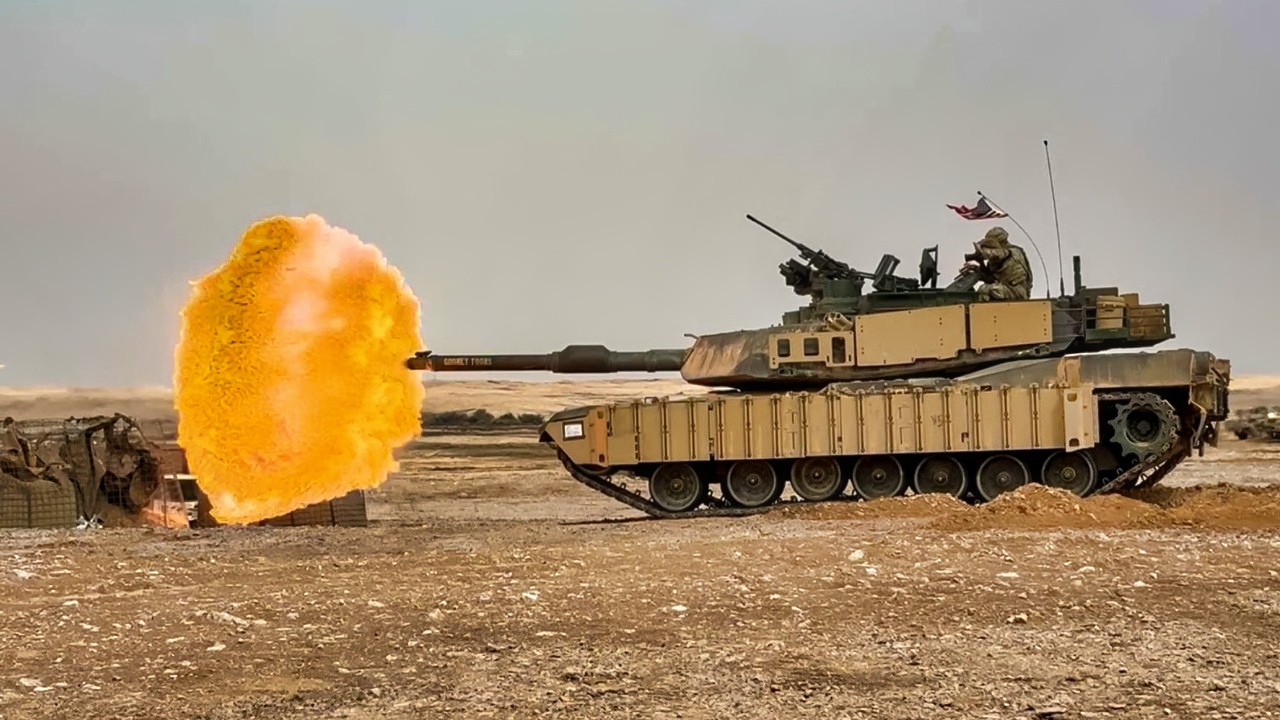
Summary and Key Points: The U.S. Army’s recent Spartan Focus exercise at Fort Stewart highlights a paradigm shift in modern warfare: the rise of the “infantry bomber.”
-Utilizing the PDW C100 drone, the 3rd Infantry Division practiced delivering 3D-printed munitions to support ground maneuvers—a tactic refined by the 2.5 million combat missions flown by Ukraine’s Vampire-class drones in 2025.
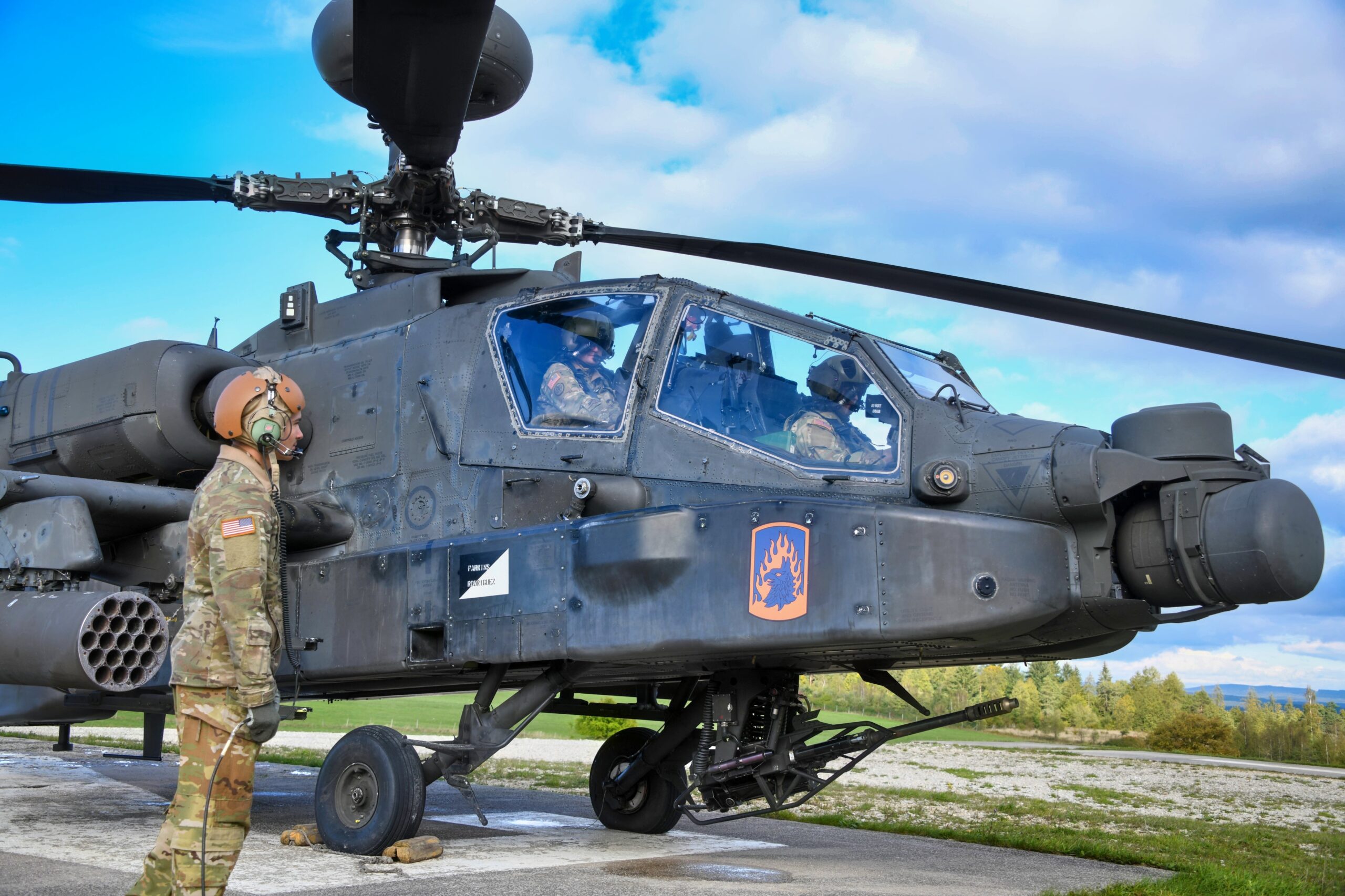
U.S. Soldiers assigned to 12th Combat Aviation Brigade conduct pre-flight checks on an AH-64D Apache longbow helicopter at the Grafenwoehr Training Area, Germany, Sept. 28, 2022. 12th CAB is among other units assigned to V Corps, America’s Forward Deployed Corps in Europe. They work alongside NATO Allies and regional security partners to provide combat-ready forces, execute joint and multinational training exercises, and retain command and control for all rotational and assigned units in the European Theater. (U.S. Army photo by Sgt. Randis Monroe)
-Simultaneously, the Pentagon has launched the $1.1 billion Drone Dominance Program, selecting 25 vendors to compete in “The Gauntlet.”
-This initiative aims to field 340,000 autonomous, low-cost attack drones by 2027, ensuring U.S. forces maintain lethality in an era of “killer robots.”
Beyond Ukraine: The Pentagon’s $1.1 Billion Race for “Drone Dominance” in 2026
U.S. Army units from the 2nd Armored Brigade Combat Team, 3rd Infantry Division, conducted training February 2 at Fort Stewart in Georgia with a C100 reconnaissance drone.
As reported by Defence Blog, this training, which took place during the Spartan Focus exercise, “reflects lessons from Ukraine, where low-cost quadcopter bomber drones were used at scale in 2025, with VAMPIRE-class systems conducting more than 2.5 million combat missions.”
The unmanned aircraft system operators came to the training from the Multi-Function Reconnaissance Troop, 6th Squadron, 8th Cavalry Regiment.
“The unit employed the C100 drone in a bomber configuration with 3D-printed training rounds to practice tactics and coordination for using a comparatively low-cost aerial system as infantry fire support on the battlefield,” the Defence Blog report said.
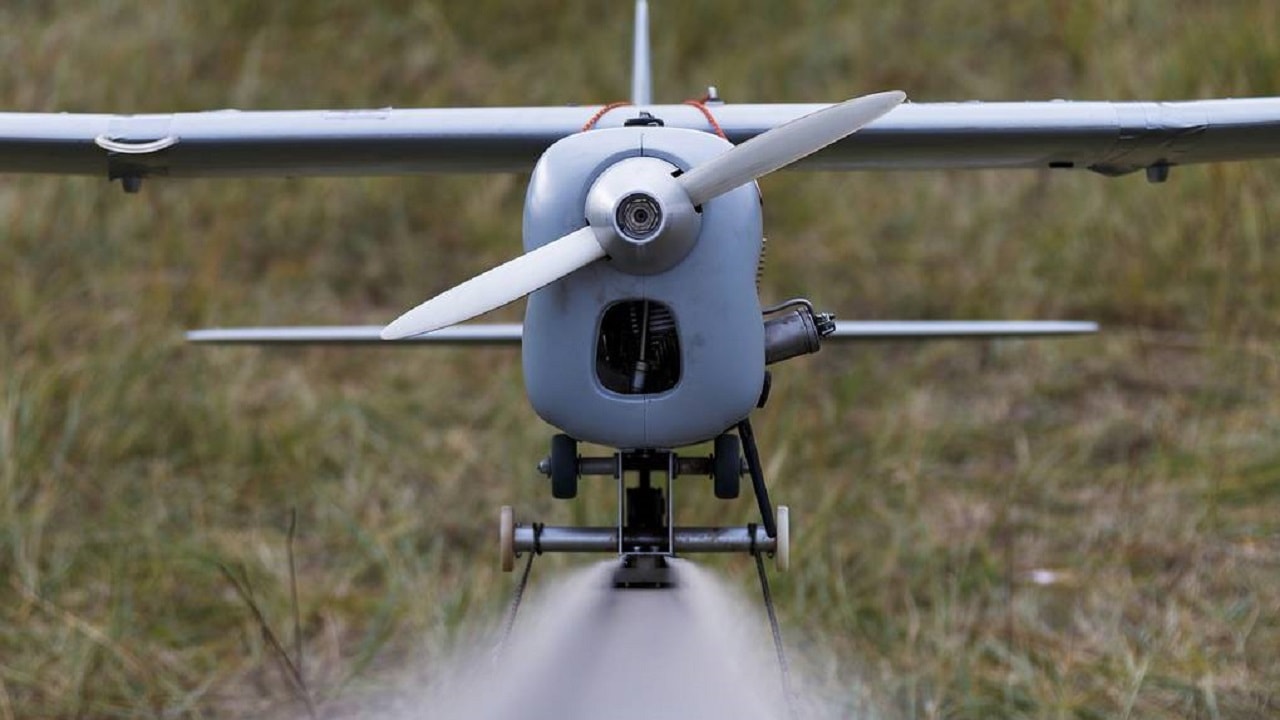
Russia’s Orlan-10 drone. Image Credit: Russian State Media.
DVIDS published photographs and a video of the exercise.
“The exercise focused on integrating drone-delivered munitions into ground maneuver operations. Operators rehearsed coordination with supported infantry elements, target identification, and release procedures during live training scenarios designed to mirror modern battlefield conditions,” Defence Blog said of the exercise. “As noted by the 3rd Infantry Division, the use of drone technology allows commanders to observe enemy positions without placing soldiers in direct danger, while retaining the ability to choose the most appropriate course of action based on real-time aerial reconnaissance.”
About the Drone
According to Defence Blog, the C100 Medium Range Reconnaissance drone is “designed to provide extended-range surveillance and can be configured to carry small payloads.” The drone comes from manufacturer PDW and is described as “the ultimate force multiplier.”
In a mid-January press release, PDW announced that a laser-equipped C-100 drone had extended its targeting reach.
“Modern conflict has shifted toward dispersed, fast-moving units that operate far beyond the reach of traditional fire support,” the company stated in the press release. “Their success depends on organic strike capability that lives inside the formation. PDW is delivering this capability to the front lines, giving warfighters the power to rapidly find, fix, and finish high-value targets with minimal signature and maximum lethality from stand-off ranges without relying on manned aviation assets.
“In 2025, PDW set out to validate this capability through its Iron Lance campaign, partnering with the Department of War and UK allies to conduct a series of laser-designator and launched-effects demonstrations across the U.S. and the UK. A joint organic cross-domain fires effort, Iron Lance, leveraged PDW’s C100 sUAS integrated with purpose-built laser target designator payloads to enable land-air-sea precision strike.
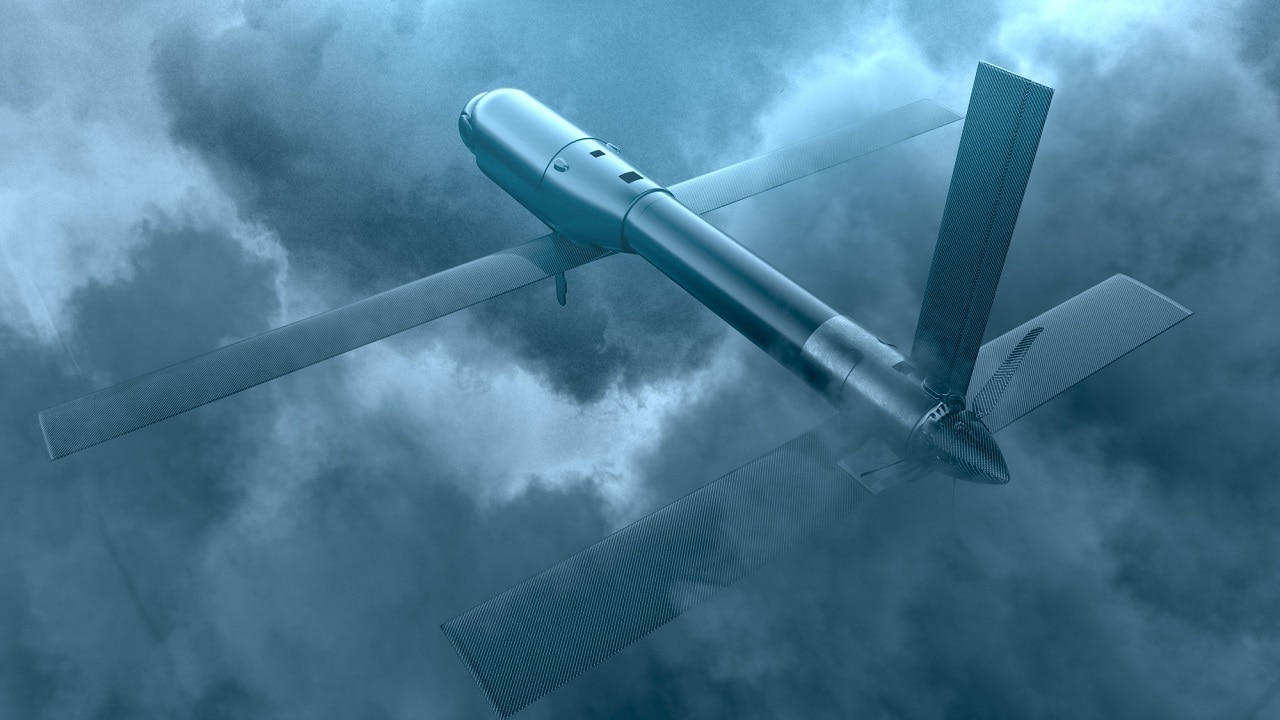
Switchblade drone that is used by Ukraine’s forces against Russia. Image Credit: Industry handout.
“The ultimate platform for cross-domain fires, the C100 gives warfighters organic, on-demand precision strike from any domain, without waiting on manned aviation or external assets,” PDW CEO Ryan Gury said in the mid-January release. “It delivers the reach, survivability, and targeting authority that modern battlefields demand, empowering ground forces to identify, designate, and neutralize critical targets with unmatched speed and confidence.
“Iron Lance’s successful demonstrations give U.S. military and joint forces a clear path to embrace these next-generation capabilities – expanding organic precision strike options, enabling truly distributed targeting, reducing risk for fires practitioners, and accelerating the convergence of ISR and fires across the force.”
A Call for Drone Vendors
The Department of Defense announced that 25 vendors have been selected to participate in Phase 1 of what it called the Drone Dominance Program.
“Drone Dominance operationalizes the Secretary of War’s acquisition reform priorities by sending a clear demand signal to industry—$1.1 billion over four phases, placing warfighters at the center of evaluation, and driving competitive, iterative cycles measured in months, not years,” the Pentagon announcement said. “Across the program’s four phases, unit prices decrease, production volumes increase, and operational capability rises.”
The Lessons of Ukraine
Drone warfare has been a major part of the continuing war between Russia and Ukraine. Operation Spider’s Web in particular stands out. This daring attack pulled off by Ukraine in the summer of 2025 struck aerial assets deep within Russia.
At the end of 2025, the New York Times Magazine wrote about how “drone warfare in Ukraine has undergone a chilling transformation,” one that entails use of AI.
“Most drones require a human pilot. But some new Ukrainian drones, once locked on a target, can use A.I. to chase and strike it—with no further human involvement,” the Times wrote. “Throughout 2025 in the war between Russia and Ukraine, in largely unseen and unheralded moments like the warehouse strike in Borysivka, the era of killer robots has begun to take shape on the battlefield.
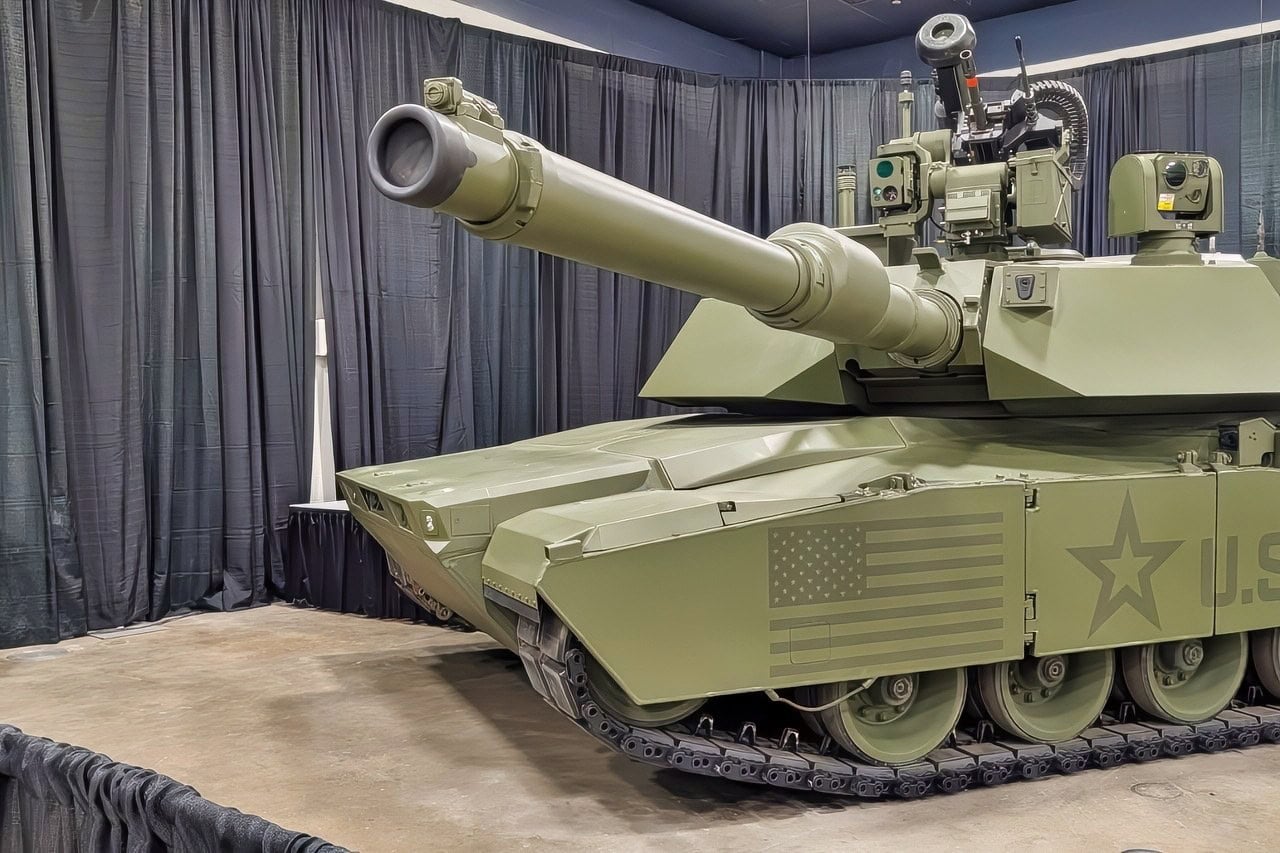
M1E3 Tank at the Detroit Auto Show. Image Credit: 19FortyFive.com
“Across the roughly 800-mile front and over the airspace of both nations, drones with newly developed autonomous features are now in daily combat use. By last spring, Bumblebees launched from Ukrainian positions had carried out more than 1,000 combat flights against Russian targets, according to a manufacturer’s pamphlet extolling the weapon’s capabilities. Pilots say they have flown thousands more since.”
The Times reporter also went to the manufacturers.
“In repeated visits to arms manufacturers, test ranges and frontline units over 18 months, I observed their development firsthand. Functions now performed autonomously include: pilotless takeoff or hovering, geolocation, navigation to areas of attack, as well as target recognition, tracking and pursuit—up to and including terminal strike, the lethal endpoint of the journey,” the Times wrote.
Most drones, the magazine made clear, still have pilots:
“Drones under full human control remain far more abundant than their semiautonomous siblings. They cause most battlefield wounds. But unmanned weapons are crossing into a new frontier.”
About the Author: Stephen Silver
Stephen Silver is an award-winning journalist, essayist, and film critic, and contributor to the Philadelphia Inquirer, the Jewish Telegraphic Agency, Broad Street Review, and Splice Today. The co-founder of the Philadelphia Film Critics Circle, Stephen lives in suburban Philadelphia with his wife and two sons. For over a decade, Stephen has authored thousands of articles that focus on politics, national security, technology, and the economy. Follow him on X (formerly Twitter) at @StephenSilver, and subscribe to his Substack newsletter.