
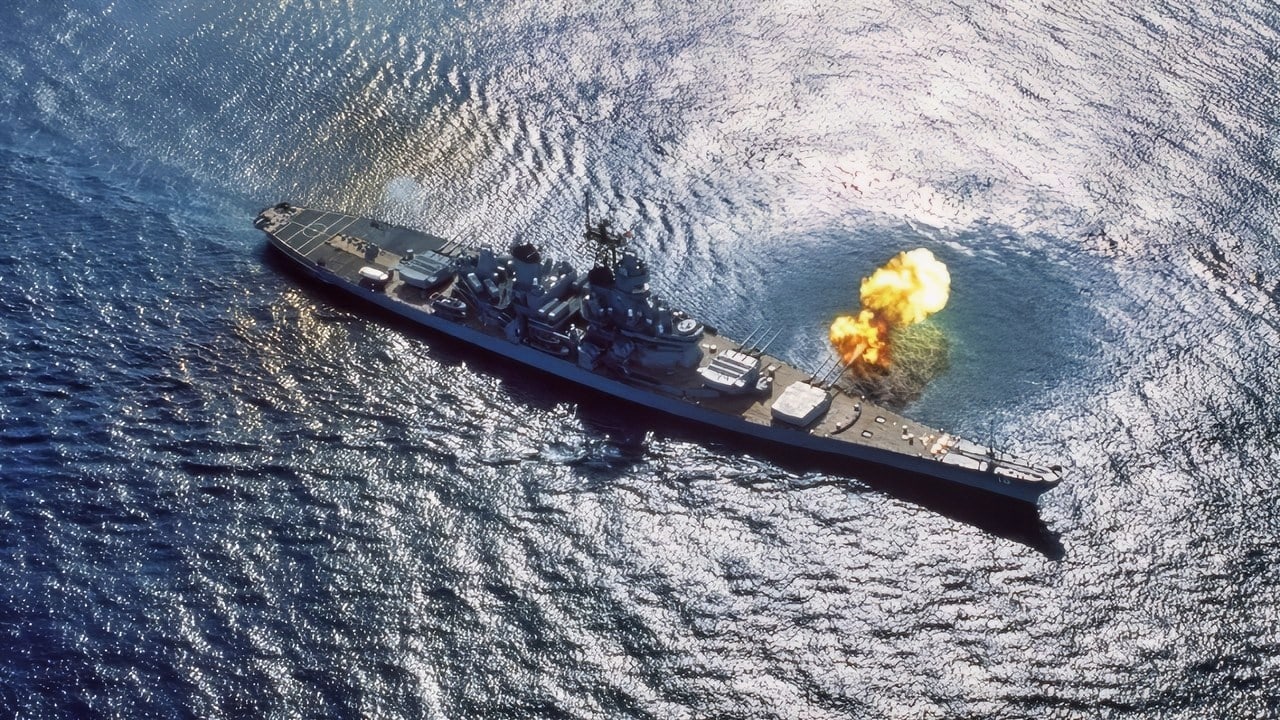
Summary and Key Points: The announcement of the Trump-class battleship marks the most significant shift in U.S. surface warfare doctrine since the cancellation of the Montana-class in 1943. However, the move is sparking a fierce debate over “mass vs. survivability.”
In a press conference on December 22, 2025, President Trump announced that a United States Navy guided-missile warship would be called the Trump-class battleship.
The class is also known as BBG(X) in some Navy documents and is intended to initially comprise the lead ship, USS Defiant (BBG-1), and an as-yet-unnamed vessel. Once commissioned, the class is expected to add another nuclear-capable cruise-missile option to the U.S. Navy surface fleet.
However, the Chinese are not impressed. A Chinese naval researcher has said that the U.S. Navy’s latest concept is a larger and “easier target” for the PLAN’s growing array of anti-ship drones and missiles.
And while I don’t normally agree with the PRC on many things, I think they are spot on with this assessment.
A Ripe Target For DF-21D Anti-Ship Missiles?
President Donald Trump announced a plan for the US Navy to build a new, large “battleship” as part of a larger vision to create a “Golden Fleet.” “They’ll be the fastest, the biggest, and by far 100 times more powerful than any battleship ever built,” Trump said back in December at Mar-a-Lago.
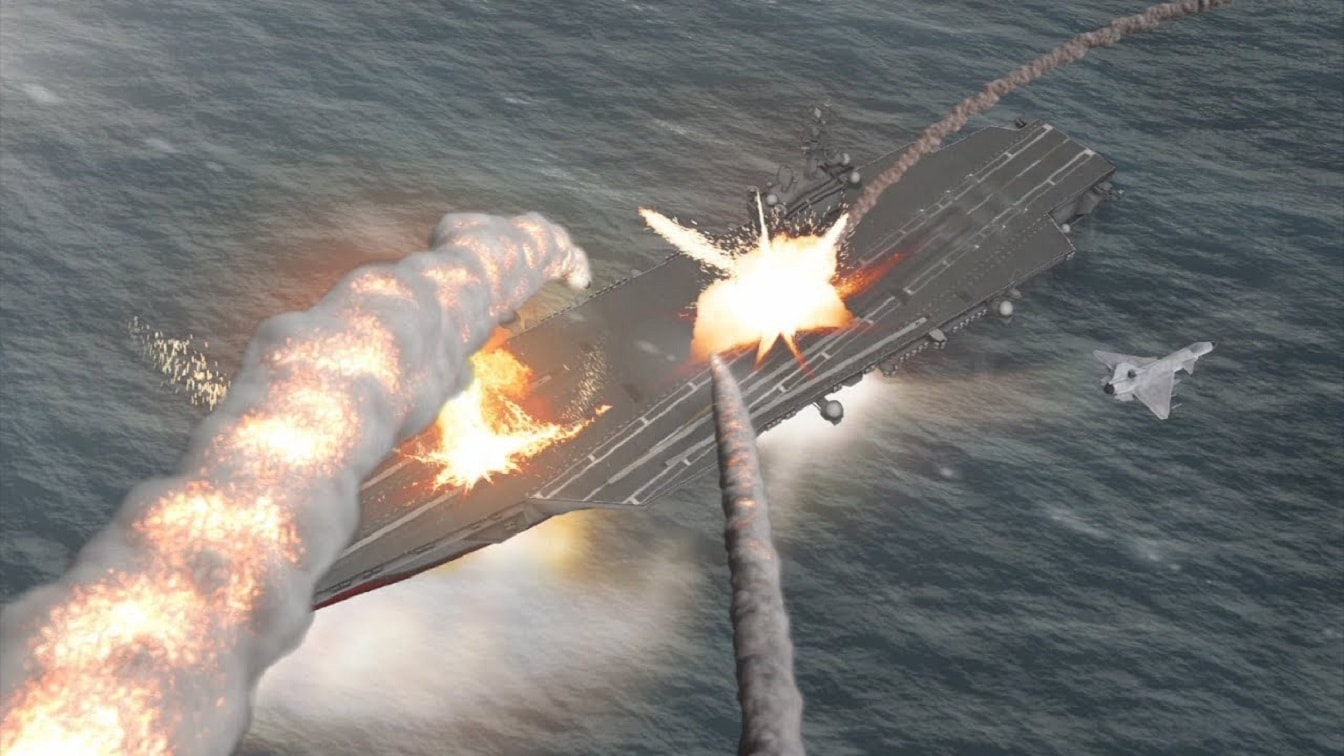
YouTube Screenshot of a Simulation of China Firing a DF-21 ASBM.
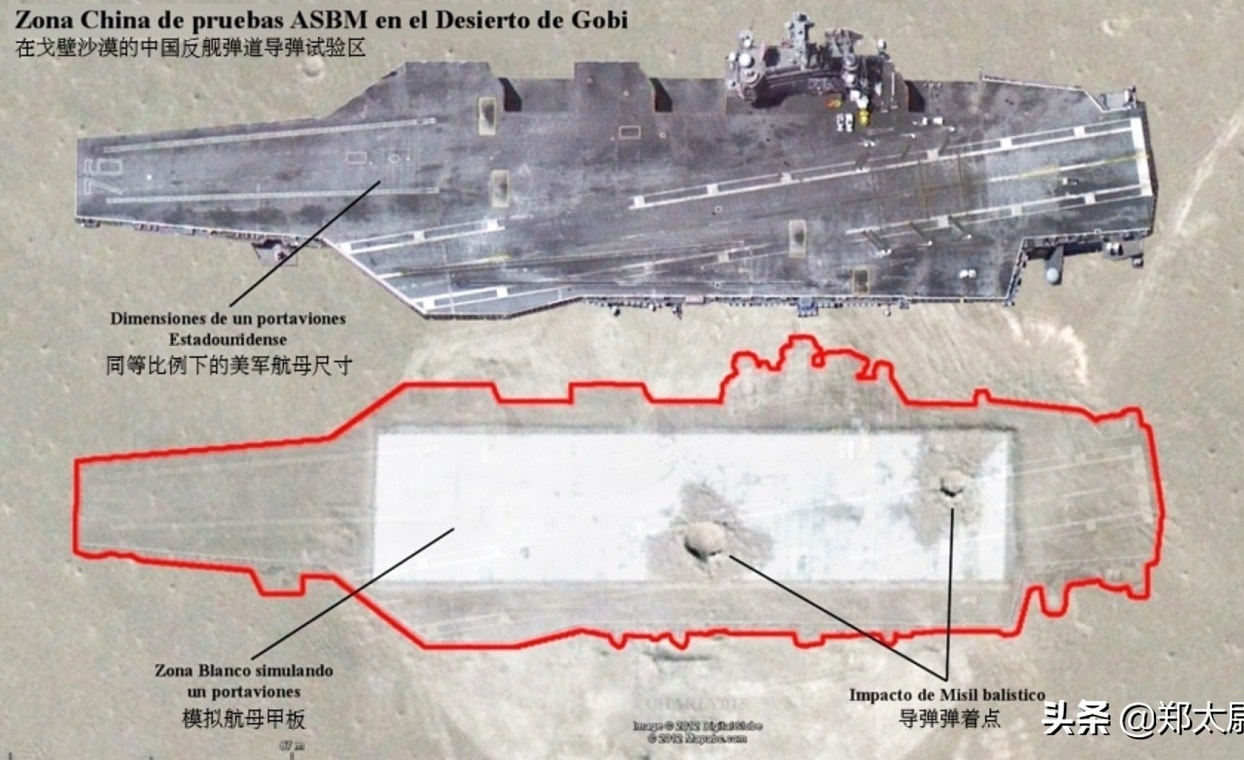
Image from the now closed WantChinaTimes. This shows a mock attack on a U.S. Navy aircraft carrier.
However, Zhang Junshe, a Chinese military affairs expert and researcher at the People’s Liberation Army Naval Military Academic Research Institute, said in an interview with the Chinese Global Times that the battleship would be a ripe target for China’s anti-ship weapons, including the so-called “carrier killer” DF-21D ballistic missile.
“The DF-21D is a conventionally armed DF-21 variant designed as an anti-ship missile. Sometimes dubbed the “carrier-killer,” U.S. reports suggest a range of 1,450 to 1,550 km, according to CSIS.
“Similar to the DF-21B, the warhead is likely maneuverable and may have an accuracy of 20 m CEP. This missile entered service in 2006 along with the DF-21C. In 2013, the missile was tested against a ship target that was roughly the same size as contemporary U.S. aircraft carriers.”
Zhang said that a battleship’s large size also makes it more vulnerable and potentially an easier target, particularly when it is densely loaded with munitions. He also cast doubt (correctly) on the struggling US shipbuilding industry’s ability to build such a ship.
“Announcing such a project could aim to revive the shipbuilding industry, but we must wait and see if it can succeed,” Zhang added.
Bath Iron Works President Charles F. Krugh is excited for the proposed project and said his shipyard “stands ready to fully support the Navy in the design and construction of this important new shipbuilding program.”
Why Is The Navy Is Going Back To Battleships?

USS Iowa Battleship. Image Credit: Creative Commons.
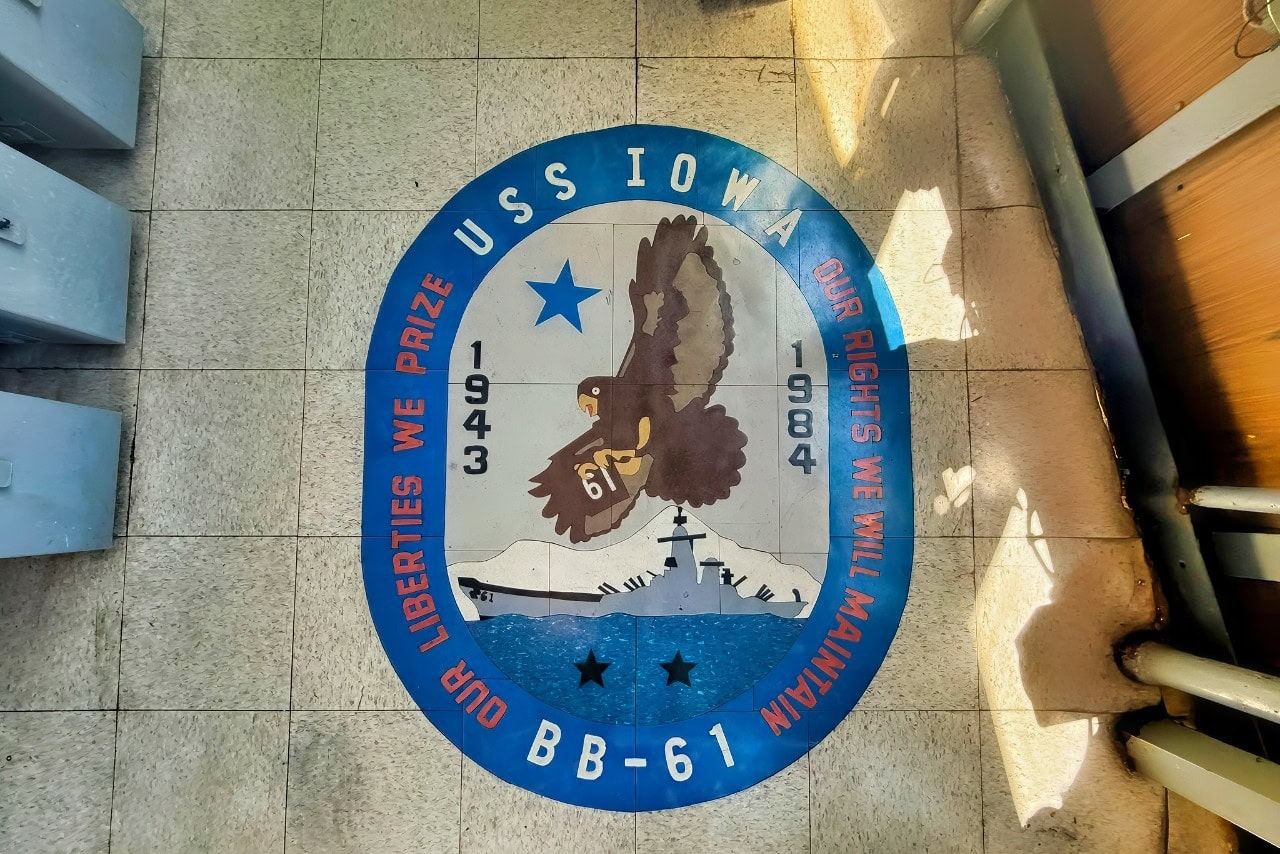
Battleship USS Iowa Logo 19FortyFive Image.
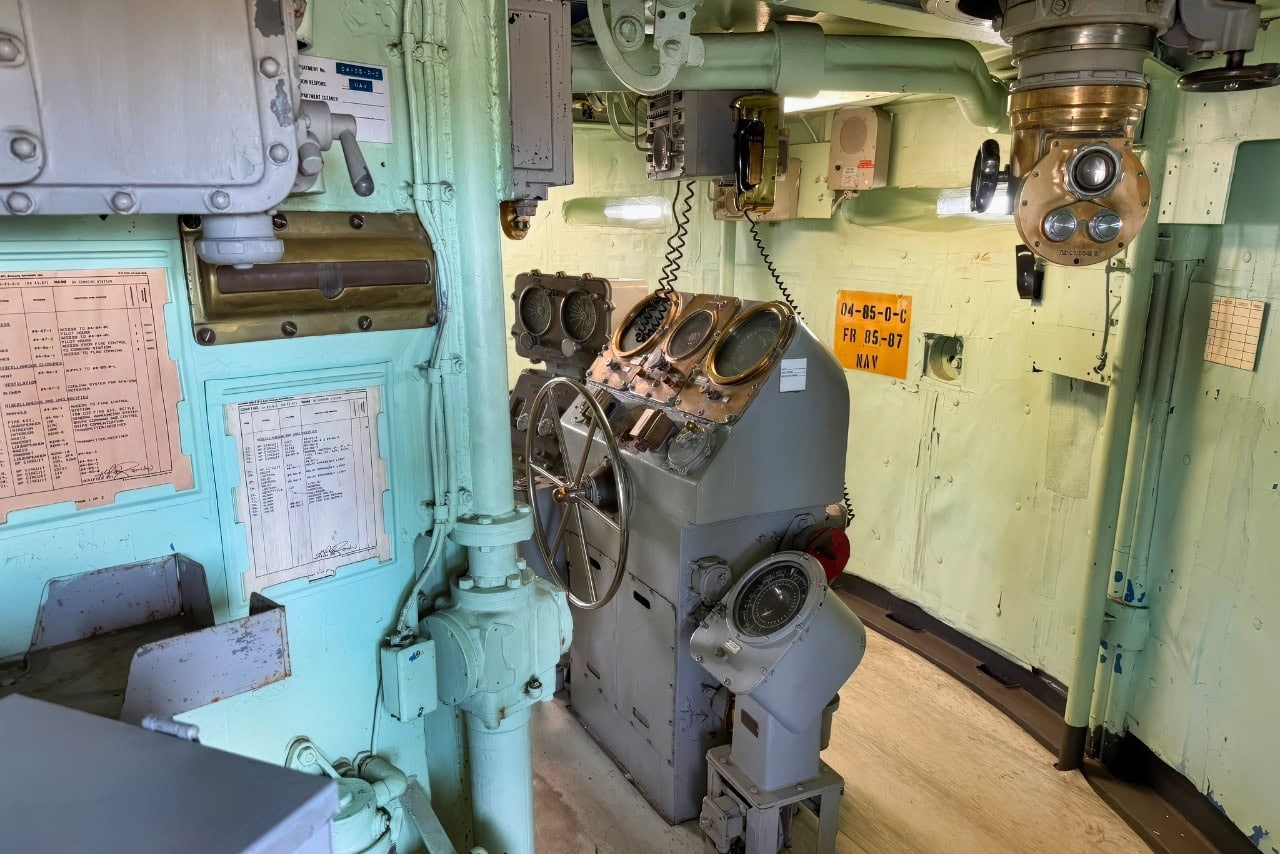
USS Iowa Battleship. 19FortyFive Image.
According to the Navy, “This modern Battleship will leverage state-of-the-art combat systems, including large missile vertical launch systems (LMVLS) to deliver long-range hypersonic strike against strategic targets ashore that are unreachable by the current fleet and directed energy weapons to deliver more favorable exchange ratios against enemy threats.
“The Battleship will be capable of operating independently, as part of a Carrier Strike Group, or commanding its own Surface Action Group, depending on the mission and threat environment. With the ability to provide forward command and control for both manned and unmanned platforms, Battleship will be a critical component in executing the Navy Warfighting Concept.
“The President has been clear – we must bring back our American Maritime Industrial might, and he has told me many times that as Secretary of the Navy, it is my job to equip our sailors to win the fight at sea with the finest ships in our history.
“Now, when a conflict arises, you’re going to ask us two questions: where is the carrier, and where is the battleship?” said John C. Phelan, 79th Secretary of the Navy.
The Navy Did Away With Battleships More Than 30 Years Ago:

16-Inch Guns of USS Iowa 19FortyFive Image taken By Harry J. Kazianis on the Deck of the Battleship USS Iowa.
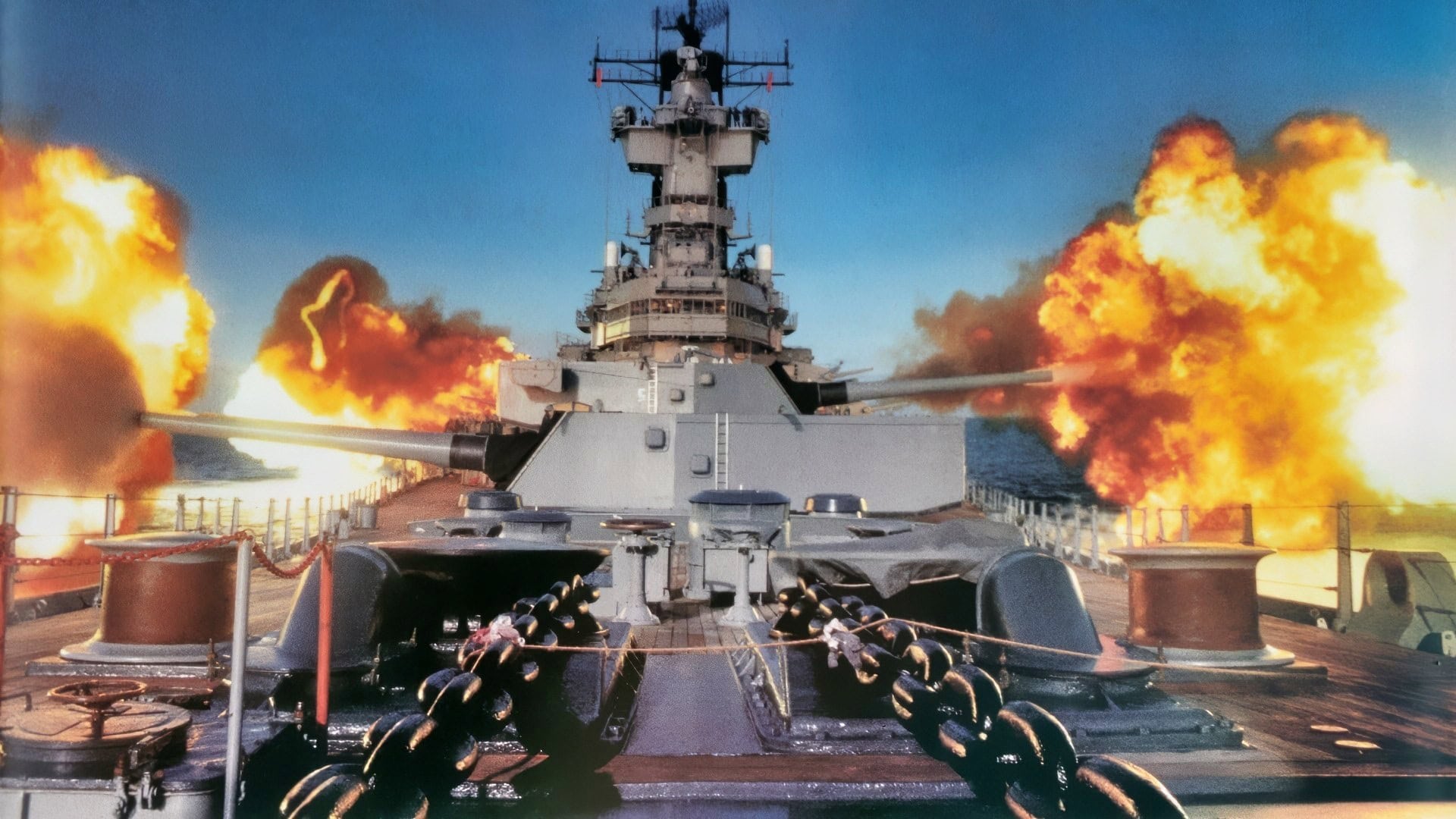
Copy negative of the US Navy (USN) Iowa Class (as built) Battleship USS NEW JERSEY (BB 62) firing a 21-gun broadside. Exact date shot unknown. Image Credit: Creative Commons.
The U.S. Navy has not had a battleship in commission since the retirement of the last Iowa-class battleship, USS Missouri, in 1992, nearly 35 years ago. There have been no plans for new ones since the cancellation of the Montana class in 1943.
The Navy was slow to recognize battleships’ vulnerabilities, even after General Billy Mitchell demonstrated that airpower could sink them by sinking the captured German battleship Ostfriesland in 1921.
The Navy pooh-poohed the results, and it cost them dearly on December 7, 1941, when the Japanese bombed Pearl Harbor. Four US battleships were sunk, and four more were damaged. The era of the battleship was over, and the era of the aircraft had begun.
In fact, the largest, most powerful battleship ever built, the Japanese Yamato, was obliterated by at least 11 torpedo hits and six bombs before sinking during the closing days of World War II.
The Navy Tried To Replace The Missouri With The USS Zumwalt:
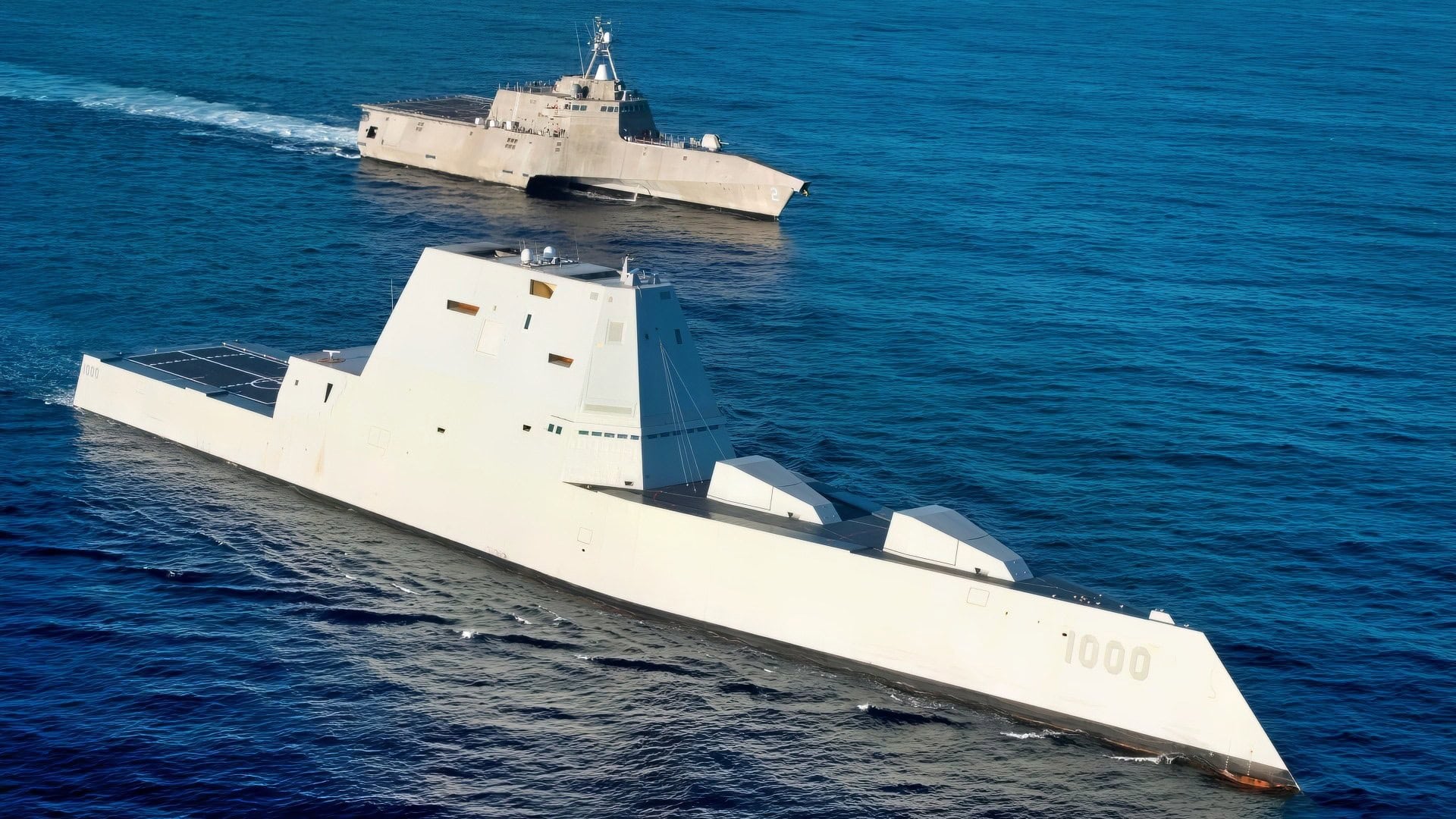
Dec. 8, 2016) The guided-missile destroyer USS Zumwalt (DDG 1000), left, the Navy’s most technologically advanced surface ship, is underway in formation with the littoral combat ship USS Independence (LCS 2) on the final leg of its three-month journey to its new homeport in San Diego. Upon arrival, Zumwalt will begin installation of its combat systems, testing and evaluation, and operation integration with the fleet. (U.S. Navy photo by Petty Officer 1st Class Ace Rheaume/Released)
After the retirement of the Iowa class, the Navy was split on how to replace its capabilities. The Zumwalt-class destroyer was developed to replace its gunfire support function, but the class was cancelled after only three ships were constructed.
The Zumwalt class is currently the largest surface combatant ship operated by the U.S. Navy, and has 80 vertical launch missile systems.
After the cessation of Zumwalt procurement, the Navy announced a Large Surface Combatant initiative, which led to a design process for a DDG(X) or Next-Generation Guided-Missile Destroyer to replace both the Zumwalt and Arleigh Burke classes.
Will The Trump-Class Battleship Even Be Built?
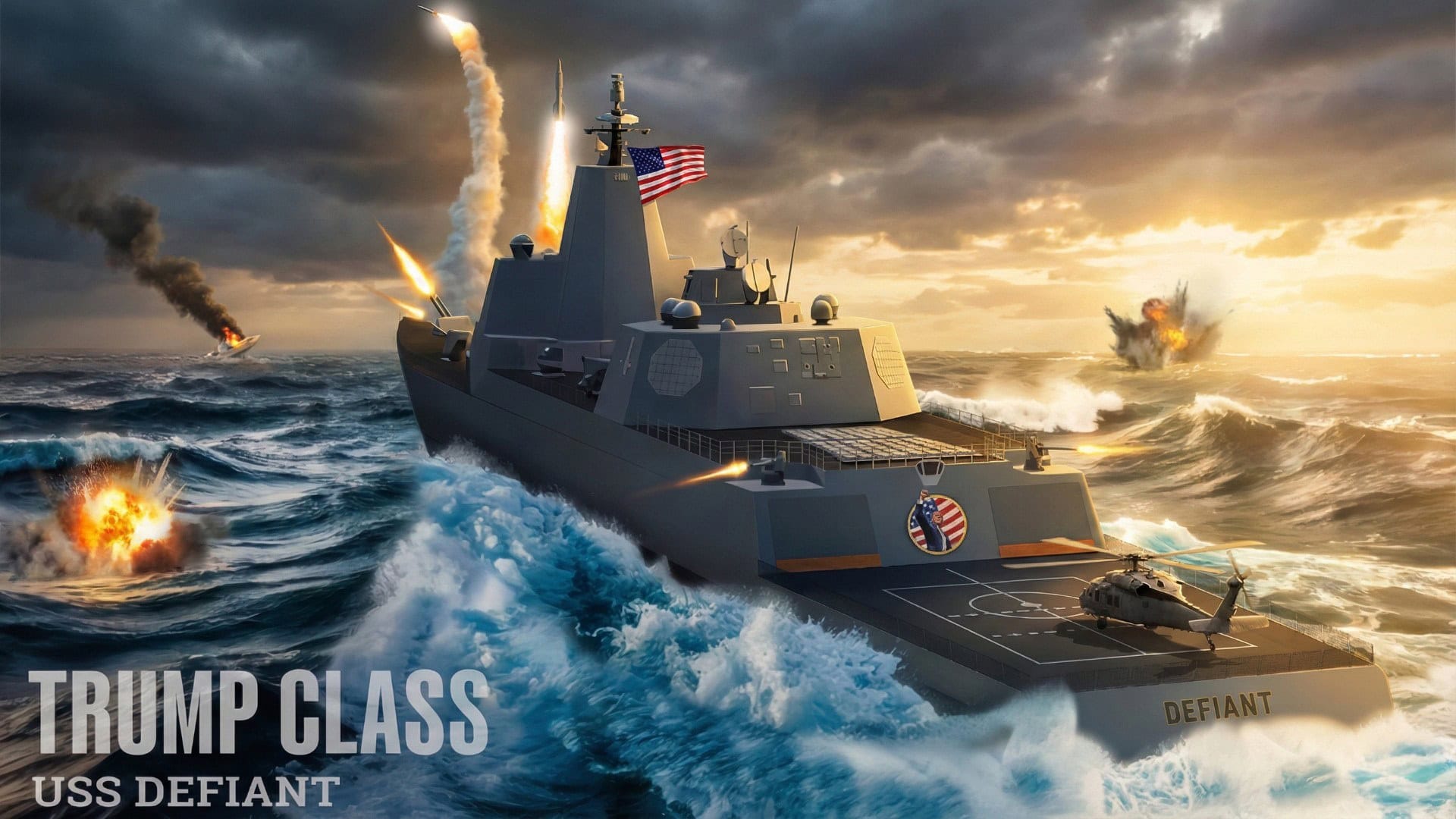
Trump-Class Battleship Mockup Created with Nano Banana.
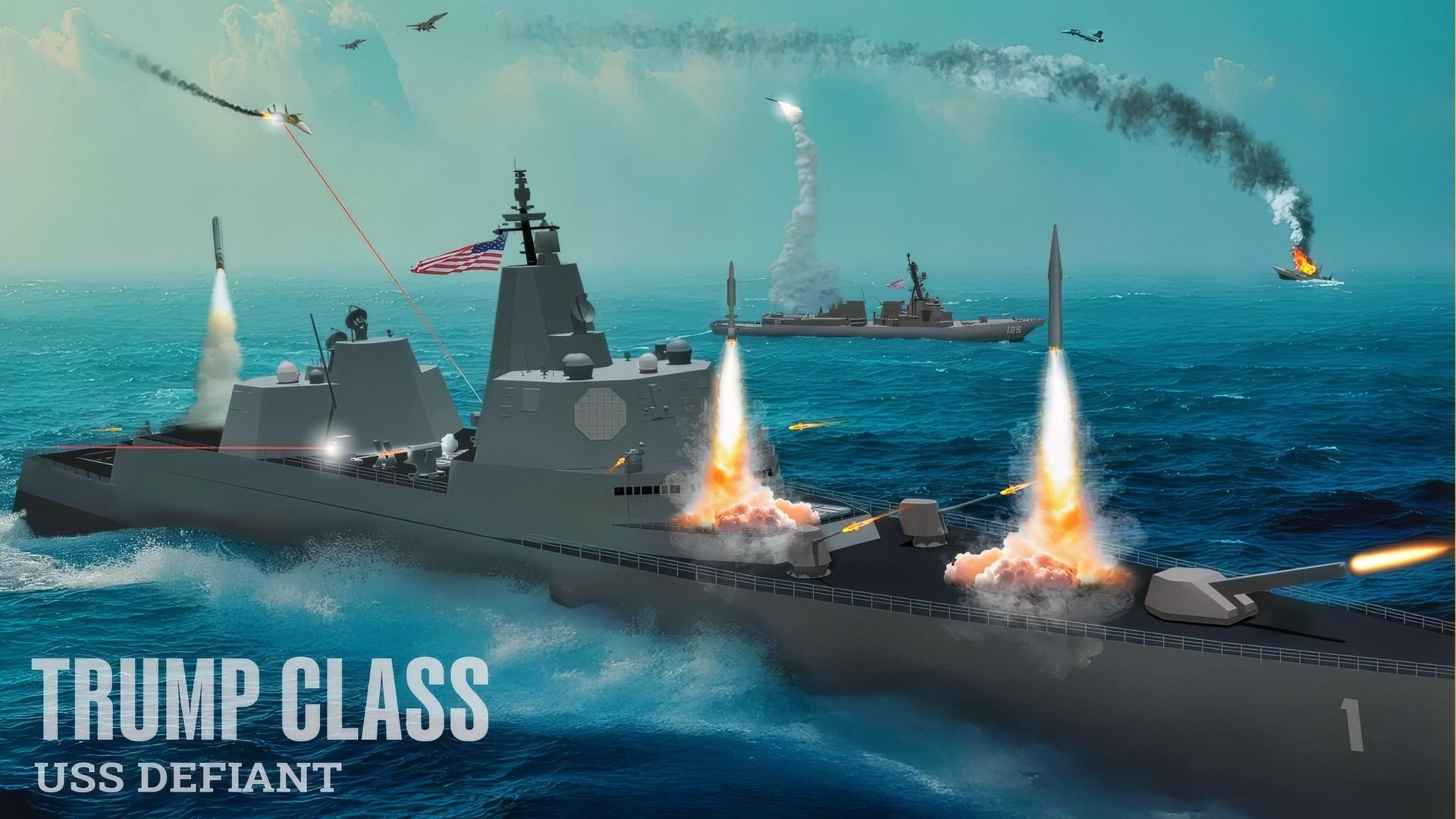
Trump-Class Battleship USS Defiant. Image Credit: Creative Commons.
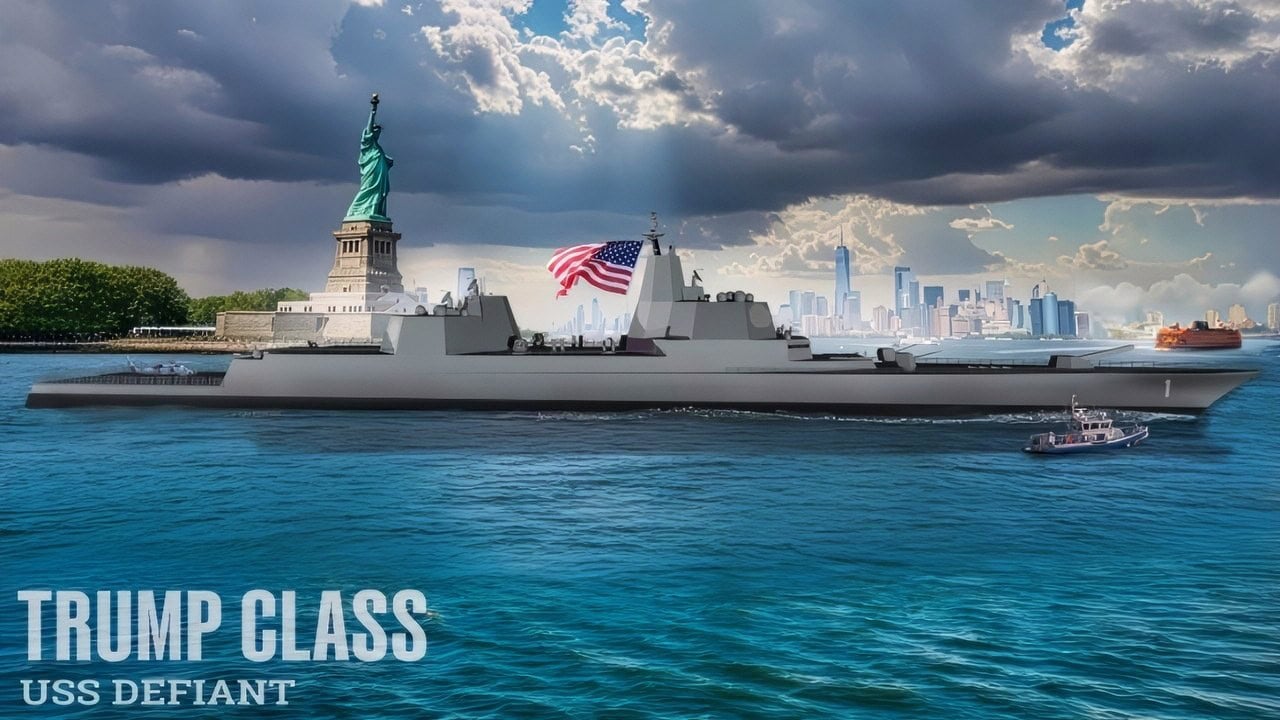
Trump-Class Battleship. Image Credit: Creative Commons/White House.
Several issues would hold back the battleship from ever seeing the ocean. And many analysts believe that the ship would never be built. And the time frame will undoubtedly be at least a decade before anything would be built.
Is it even a battleship? The Navy can call it whatever it likes, but it would be more of a heavy guided-missile cruiser than an actual battleship, and that makes little difference to what it is called. However, those big missile cruisers are increasingly sitting ducks on the ocean surface.
The Trump-class battleship is more of a boutique ship than a true game-changer for the Navy. And the US should pay attention to the mistake the Russians have made with the Kirov-class battlecruisers.
Adding more missiles and weapons to a ship will definitely increase costs without making it more survivable.
The cost of such a large ship would be very high. The DDG-51 class flight III (the current version of this destroyer class) displaces 9,000 tons and costs $2.8 billion each.
Congressional Budget Office: BBG(X) To Cost $12.7 Billion
Judging by the Congressional Budget Office estimates, a future destroyer of 14,500 tons would cost $4.4 billion or approximately $300,000 per ton. The Large Surface Combatant (LSC) battleship is supposed to be more than 35,000 tons. And being the first ship in its class, it will invariably be much more expensive.
The Congressional Budget Office put the likely price of the largest non-aircraft carrier surface ship that the Navy has built since World War II at up to $22 billion for the first ship. Later ships would cost up to $12.7 billion, according to the CBO.
The ship’s design is just beginning, and this LSC is larger than anything the US has built since World War II, other than aircraft carriers. And according to Janes, the cost of this new ship would equal that of an aircraft carrier.
Given that it will supposedly utilize directed energy and nuclear weapons, this design will take years to perfect, and that would also entail constant tinkering with the design that the Navy can’t seem to fix. It would probably entail a decade of design work.
With a shipbuilding industry already pushed to build anything on time and on budget, this would be another albatross the Navy would have to deal with.
The Chinese analyst is correct; it is just a big, easy target.
About the Author: Steve Balestrieri
Steve Balestrieri is a National Security Columnist. He served as a US Army Special Forces NCO and Warrant Officer. In addition to writing on defense, he covers the NFL for PatsFans.com and is a member of the Pro Football Writers of America (PFWA). His work was regularly featured in many military publications.