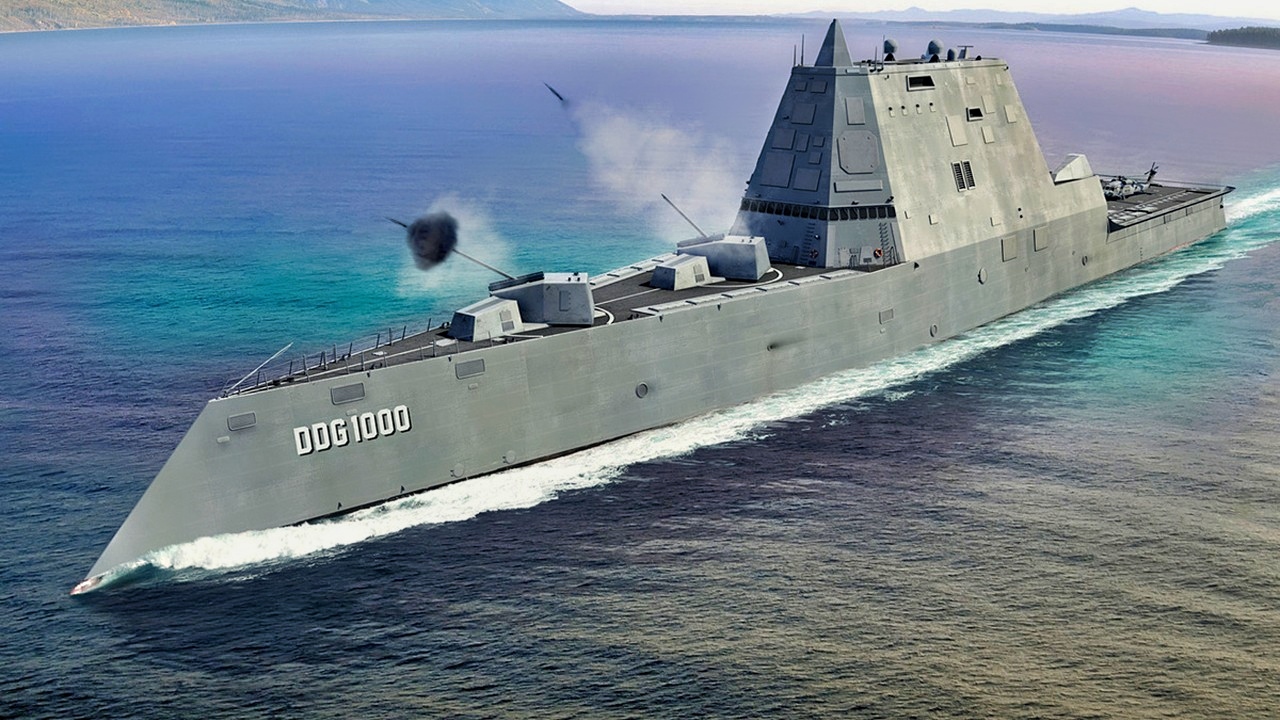
No Ships, No Plan: Iran’s Navy Faces Total Obliteration
The United States and Israel have decimated the Iranian Navy since the beginning of Operation Epic Fury, which began last month.
The ongoing campaign, called Operation Roaring Lion in Israel, has eliminated most, if not all, of Iran’s warplanes and warships.
On March 11, the United States said it had sunk 60 Iranian warships, and commercially available satellite imagery, plus photos and video released by U.S. Central Command (CENTCOM), show that a significant majority of Iran’s warships have been sunk or destroyed.
This includes some of Iran’s most high-profile military ships, including the Sabalan, an Alvand-class frigate, the Makran, a forward base ship and converted tanker, and two of Iran’s Mowj-class light frigates.
Earlier this month, CENTCOM released a video showing the sinking of Iran’s IRIS Dena off the Sri Lankan coast following maritime exercises with India.
That sinking was the first by a U.S. Navy submarine since 1945, and only the fourth ship sunk by torpedo during the same time period.
The Iranian navy is at an unprecedented nadir. The embattled Islamic regime’s conventional maritime capabilities are thought to be nearly nonexistent. But Iran’s naval assets were never meant to challenge those of the U.S. Navy symmetrically.
Instead, cognizant that it would not pose a realistic challenge to the U.S. Navy, Iran built its naval strategy around asymmetric warfare against the United States.
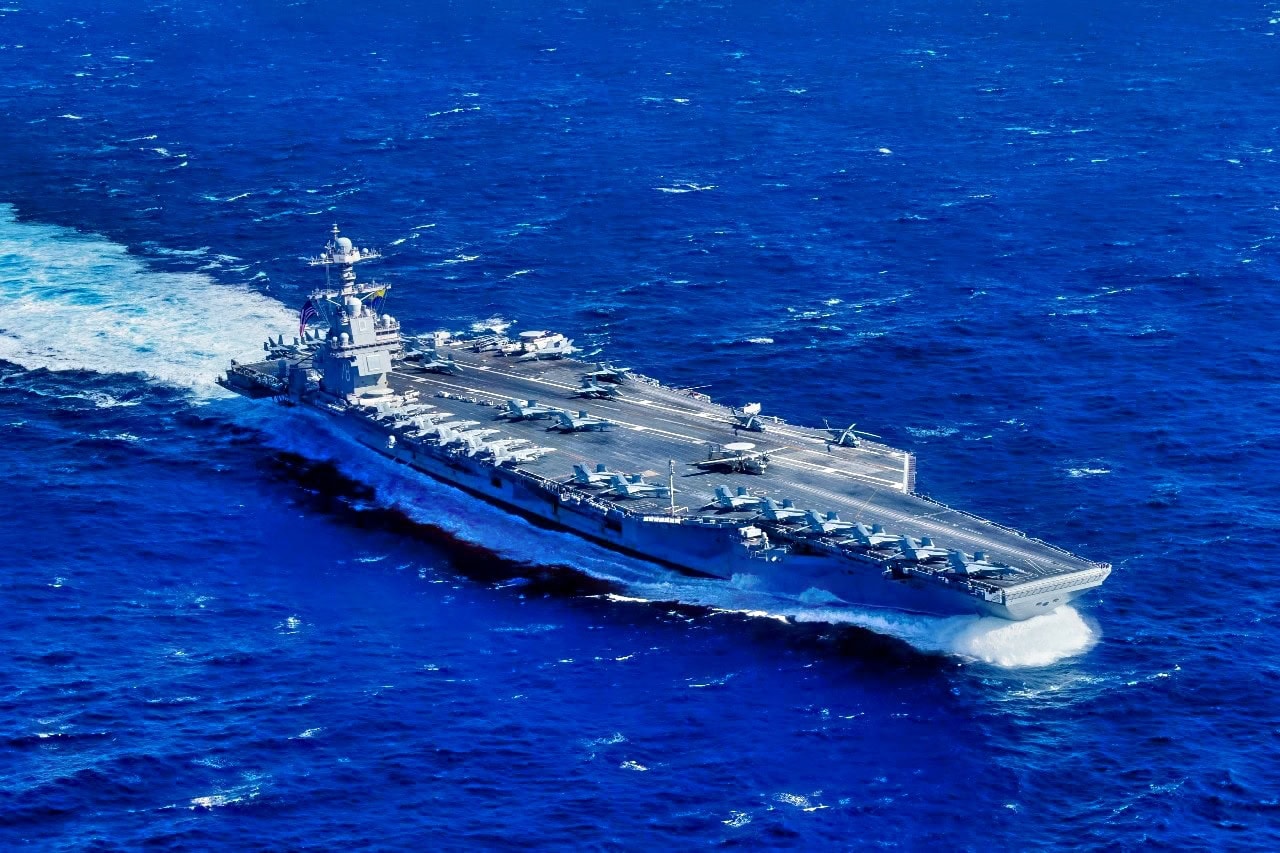
The world’s largest aircraft carrier, USS Gerald R. Ford (CVN 78), sails in formation with the Arleigh Burke-class guided missile destroyers USS Winston Churchill (DDG 81), USS Mitscher (DDG 57), USS Mahan (DDG 72), USS Bainbridge (DDG 96), and USS Forrest Sherman (DDG 98) in the Atlantic Ocean, Nov. 12, 2024. The Gerald R. Ford Carrier Strike Group is underway in the Atlantic Ocean completing Group Sail. Group Sail is the first at-sea integrated phase training event during a routine deployment training cycle. It is designed to challenge the Gerald R. Ford CSG’s ability to use the capabilities of the USS Gerald R. Ford (CVN 78), USS Winston S. Churchill (DDG 81), Carrier Air Wing (CVW) 8, Destroyer Squadron (DESRON) 2, and embarked Information Warfare team as a cohesive Strike Group to meet Navy and Joint Warfighting requirements that increases warfighting capability and tactical proficiency across all domains. (U.S. Navy photo by Mass Communication Specialist 2nd Class Maxwell Orlosky)
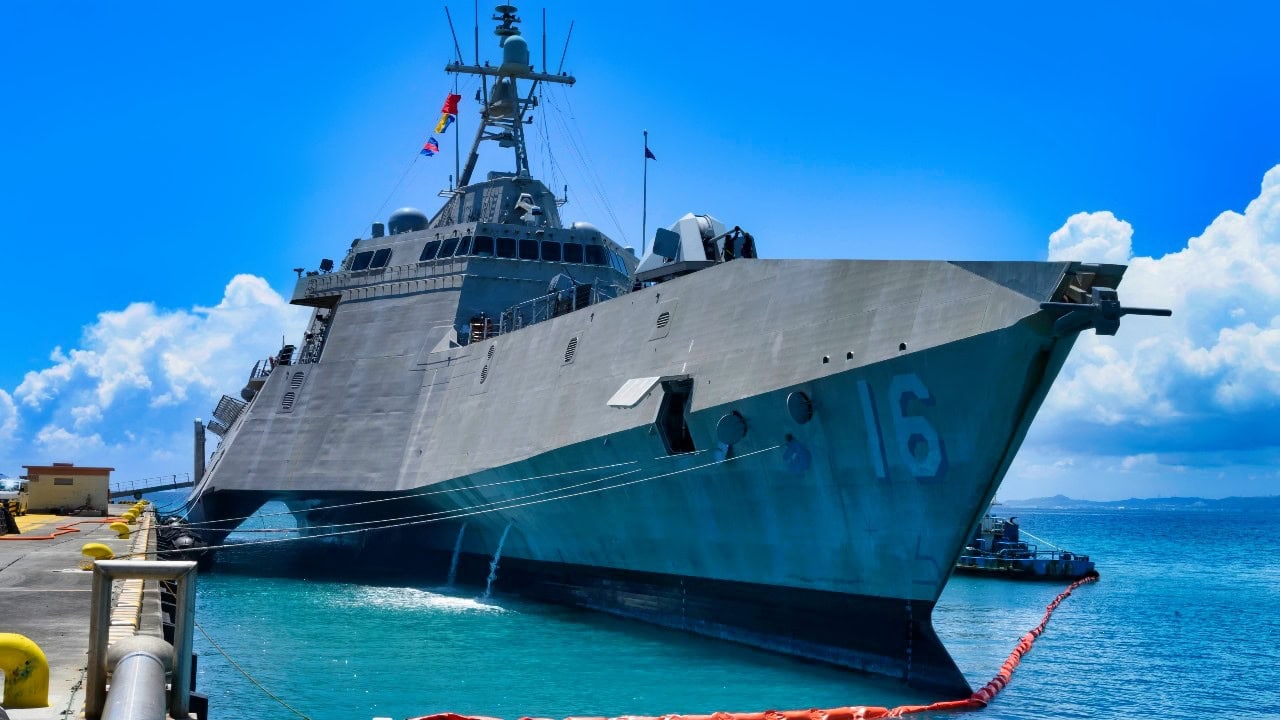
(Sept. 2, 2021) Independence-variant littoral combat ship USS Tulsa (LCS 16) sits pierside at Commander, Fleet Activities Okinawa White Beach Naval Facility, Okinawa, Japan, Sept. 2, 2021. Tulsa conducted a brief stop for resupply at CFAO White Beach Naval Facility. Tulsa, part of Destroyer Squadron Seven, is on a rotational deployment in the U.S. 7th Fleet area of operation to enhance interoperability with partners and serve as a ready-response force in support of a free and open Indo-Pacific region. (U.S. Navy photo by Mass Communication Specialist 1st Class David Krigbaum)
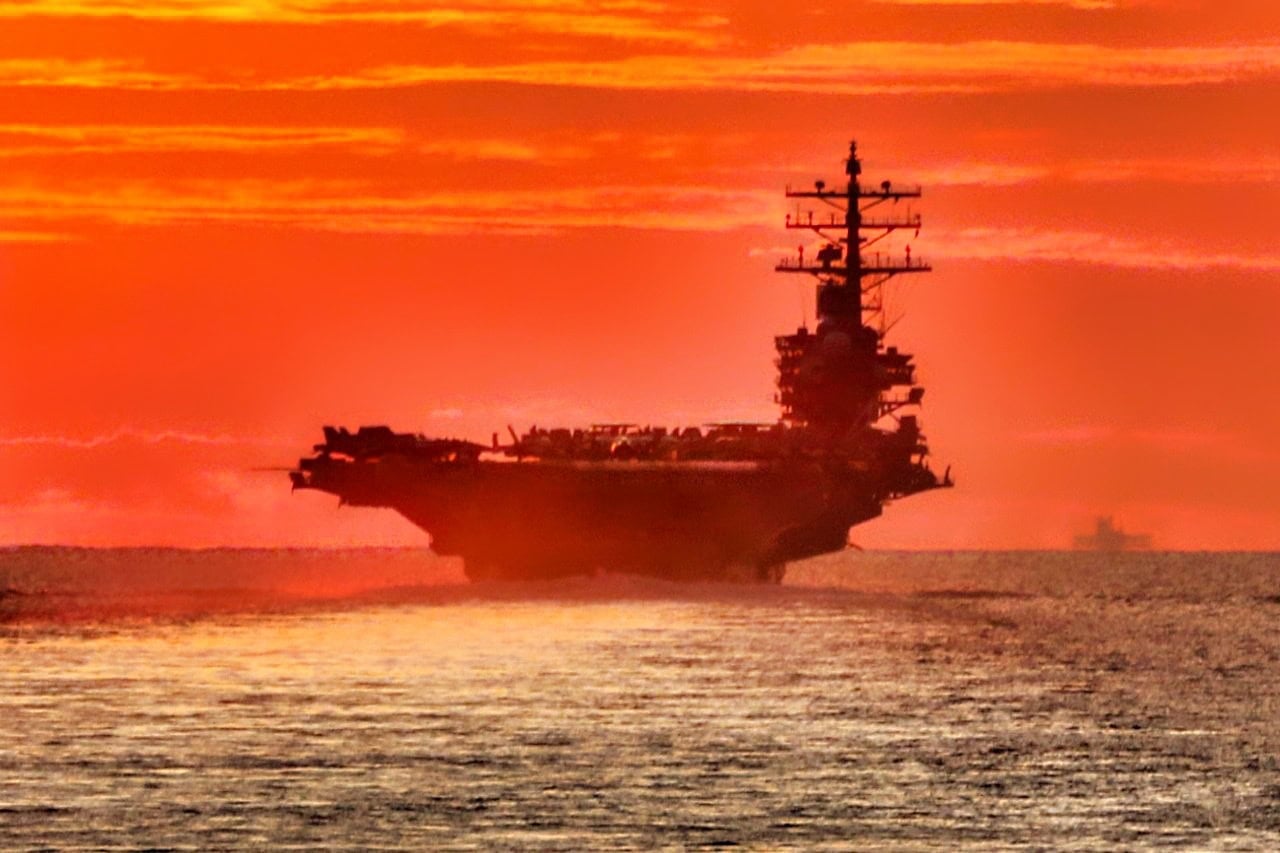
STRAIT OF MALACCA (June 18, 2021) As seen from the Ticonderoga-class guided-missile cruiser USS Shiloh (CG 67), the Navy’s only forward-deployed aircraft carrier USS Ronald Reagan (CVN 76) transits the Strait of Malacca with the Arleigh Burke-class guided missile destroyer USS Halsey (DDG 97). The ships are part of Task Force 70/Carrier Strike Group 5, conducting underway operations in support of a free and open Indo-Pacific. (U.S. Navy Photo by Mass Communication Specialist 1st Class Rawad Madanat)
Iran’s Asymmetric Naval Strategy
On April 18, 1988, the United States launched Operation Praying Mantis against Iranian warships.
The operation was seen as retaliation for the mining of a U.S. Navy frigate just four days earlier. The operation was decisive and saw about half of Iran’s conventional warships sunk or destroyed.
But what followed was a decades-long strategic realignment of Iran’s naval assets, shifting from a conventional naval force to a buildup of unconventional and asymmetric assets.
The pivot favored small submarines, naval mines, coastal anti-ship missiles, and a fleet of fast-attack speedboats.
Though Iran did retain some conventional warships, those boats were reserved for prestige projects, such as participating in naval drills with Russian or Chinese warships. But Iran’s real warfighting capability at sea rests with the Islamic Revolutionary Guard Corps (IRGC).
In the Persian Gulf and Strait of Hormuz in particular, tight geographical constraints and shallow waters favor the small, nimble fleet of IRGC watercraft and help to offset the conventional advantages of the U.S. Navy.
In one social media update, CENTCOM announced that some Iranian assets along the Strait that could have endangered American ships had been engaged. “U.S. forces successfully employed multiple 5,000-pound deep penetrator munitions on hardened Iranian missile sites along Iran’s coastline near the Strait of Hormuz,” the post reads. “The Iranian anti-ship cruise missiles in these sites posed a risk to international shipping in the strait.”
CENTCOM also struck targets on Kharg Island in the Gulf, through which the majority of Iranian oil is pumped onto oil tankers for delivery abroad.
President Donald Trump is reportedly considering an assault to seize the island. If successful, it could effectively choke off the majority of Iranian oil exports.
If unsuccessful, it could prove to be a costly military debacle. Success could well hinge on how degraded Iranian capabilities are in and around the island, including on the Iranian mainland.
Ongoing Negotiations? Or Perfidious Feet Dragging?
In comments given to reporters, President Trump strongly rejected the idea of a potential ceasefire with Iran before the weekend. “You don’t do a ceasefire when you’re obliterating the other side. They don’t have a navy. They don’t have an air force,” the president said. Though talk of ongoing negotiations between Iran and the United States is swirling—importantly, those talks are strenuously denied by the Iranian side—Iran’s hand at the table is rather weak.
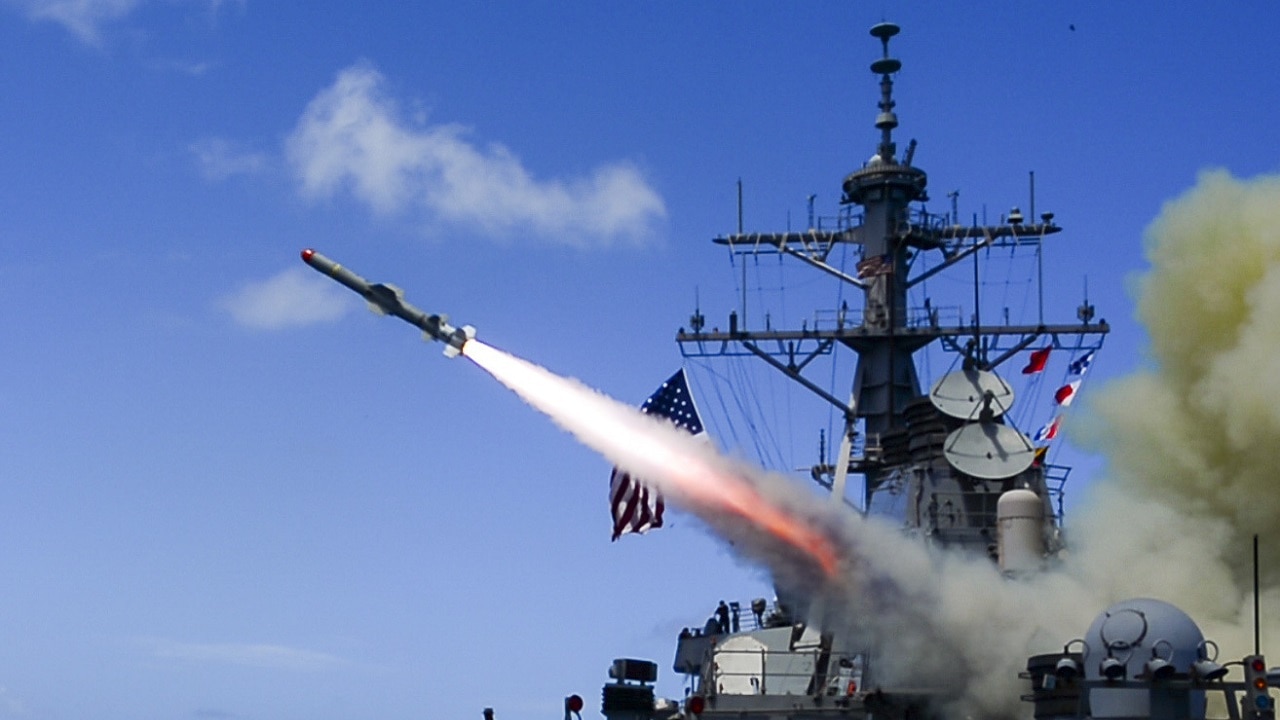
WATERS NEAR GUAM (Mar. 10, 2016) – Arleigh Burke-class guided missile destroyer USS Fitzgerald (DDG 62) conducts a live fire of a harpoon missile during Multi-Sail 2016. Multi Sail is a bilateral training exercise aimed at interoperability between the U.S. and Japanese forces. This exercise builds interoperability and benefits from realistic, shared training, enhancing our ability to work together to confront any contingency. (U.S. Navy photo by Mass Communication Specialist 3rd Class Eric Coffer/Released)
In a video posted to X, formerly Twitter, CENTCOM Commander Admiral Brad Cooper, wrote that Iran’s “navy is not sailing, their tactical fighters are not flying, and they’ve lost the ability to launch missiles and drones at the high rates seen at the beginning of the conflict.”
“We not only took out that facility but also destroyed intelligence support sites and missile radar relays that were used to monitor ship movements,” he said. “Iran’s ability to threaten freedom of navigation in and around the Strait of Hormuz is degraded as a result, and we will not stop pursuing these targets.”
For now, the bombardment of Iranian targets continues, and the American and Israeli Air Force fly over the country with seemingly complete impunity.
About the Author: Caleb Larson
Caleb Larson is an American multiformat journalist based in Berlin, Germany. His work covers the intersection of conflict and society, focusing on American foreign policy and European security. He has reported from Germany, Russia, and the United States. Most recently, he covered the war in Ukraine, reporting extensively on the war’s shifting battle lines from Donbas and writing on the war’s civilian and humanitarian toll. Previously, he worked as a Defense Reporter for POLITICO Europe. You can follow his latest work on X.