The U.S. Military Could Launch a Ground Invasion of Iran – It Would Be a Massive Undertaking
Shahed drone swarms, mines, anti-armor weapons, and ballistic missile salvos are certain to be on the Pentagon’s radar at the moment, as strategists wargame and analyze contingencies regarding the potential of ground combat in Iran. The Pentagon and the president will look for options as the Iran war balances between negotiation and massive escalation.
Perhaps the most critical questions surrounding a possible ground attack on Iranian forces, or an amphibious assault along coastal areas or Kharg Island, pertain to technology, tactics, and air support.
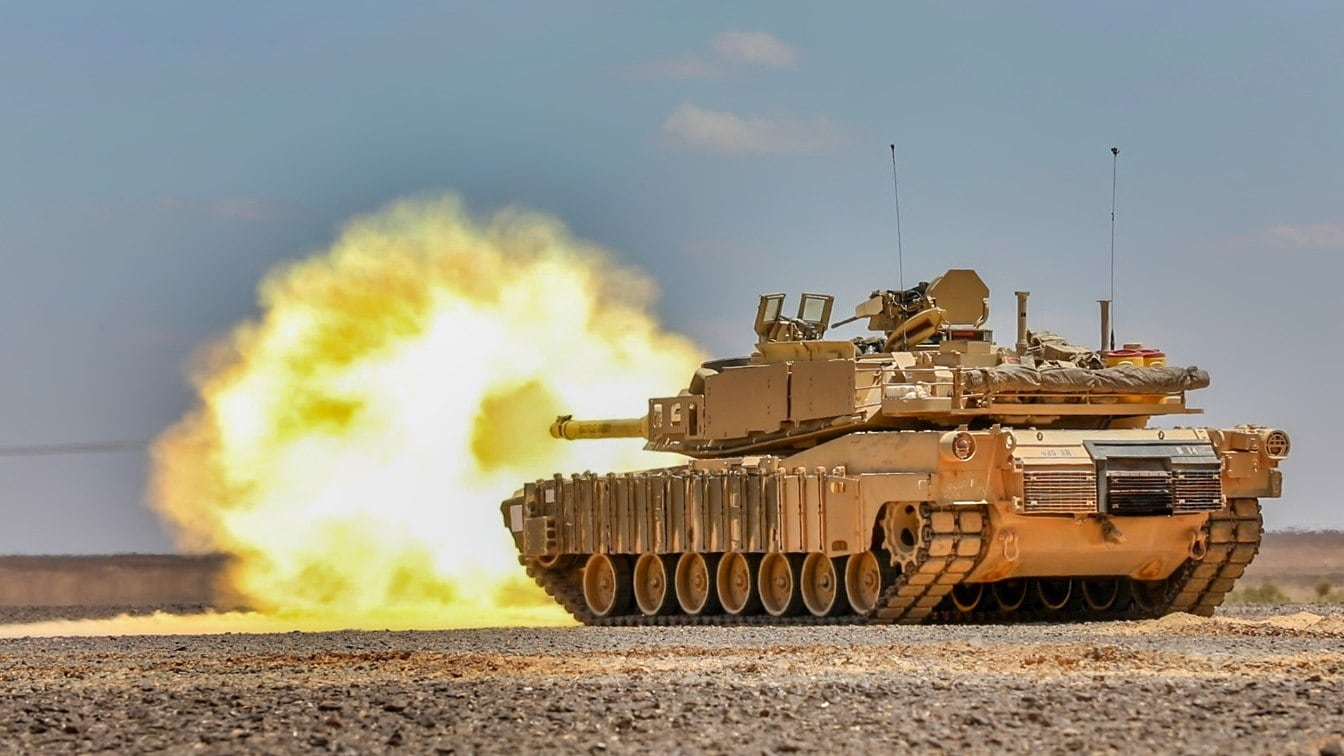
A U.S. Army M1A1 Abrams tank fires as part of Eager Lion 2024 at Training Area 5, Jordan, May 13, 2024. Eager Lion 24 is a multilateral exercise, with 33 participating nations, hosted by the Hashemite Kingdom of Jordan, designed to exchange military expertise, and improve interoperability among partner nations, and considered the capstone of a broader U.S. military relationship with the Jordanian Armed Forces. Jordan is one of U.S. Central Command’s strongest and most reliable partners in the Levant sub-region. (U.S. Army photo by Spc. Nataja Ford)
As is often the case in large-scale military operations, logistics are crucial to success. Preparing, staging, and deploying a large, mechanized ground force is a massive and difficult undertaking, and in this case, the favorable points of entry are most likely Turkish territory or the ocean. It seems unlikely the United States could stage an invasion force in Iraq.
To say the prospective operation is “high-risk” might be an understatement. Any concentration of U.S. forces would immediately offer a target for Iran’s remaining precision-guided ballistic missiles.
No “Thunder Run”
Iran is not Iraq; there are not hundreds of miles of flat desert amenable to a “thunder run” toward Tehran.
A simple look at a map suggests that a large mechanized force may need to enter from Turkey, requiring armored columns to transit heavily mountainous areas in northern Iran en route to holding territory within the country.
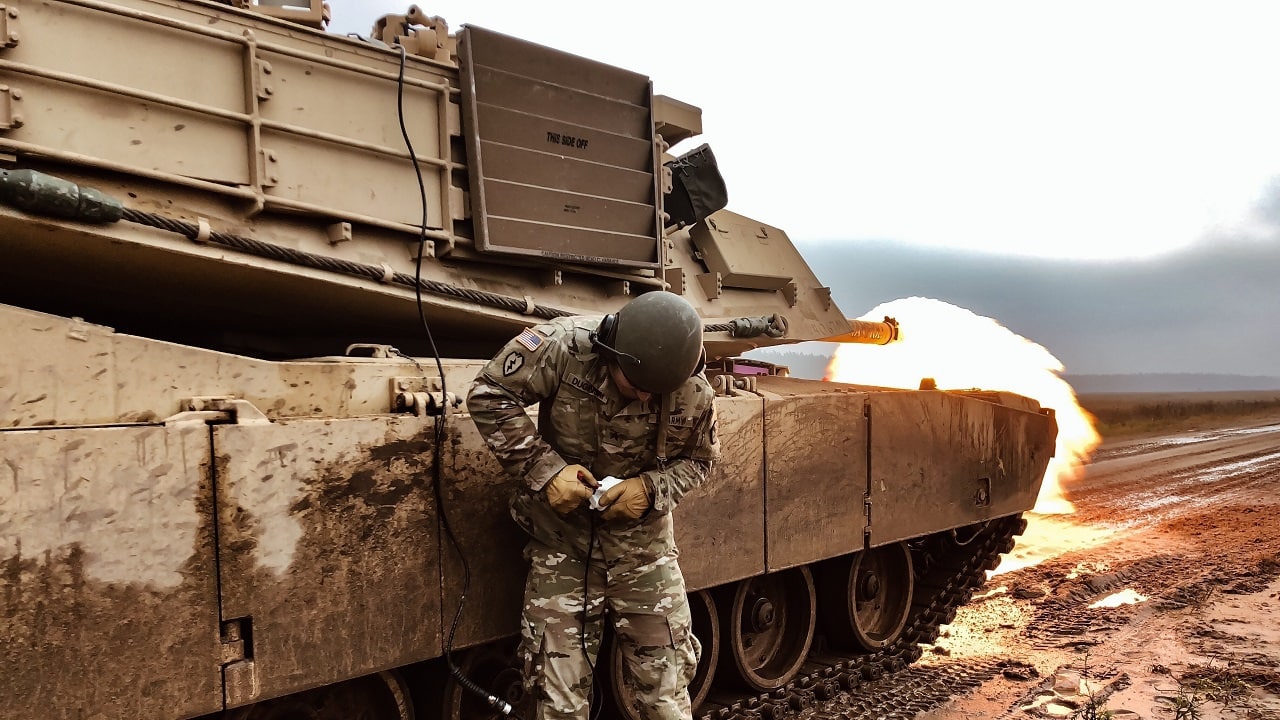
Defensive forces would lay mines and obstacles and use uneven terrain to ambush, surprise, or counter advancing forces. Iranians know the terrain, and defending forces could use underground tunnels for weapons and to conceal attacking forces. The effectiveness of shoulder-mounted anti-armor weapons and drone attacks has been well-established in Ukraine, so advancing U.S. Army tanks could prove vulnerable to suicide drone swarm attacks and the kinds of anti-armor hit-and-run ambushes that proved effective in Ukraine.
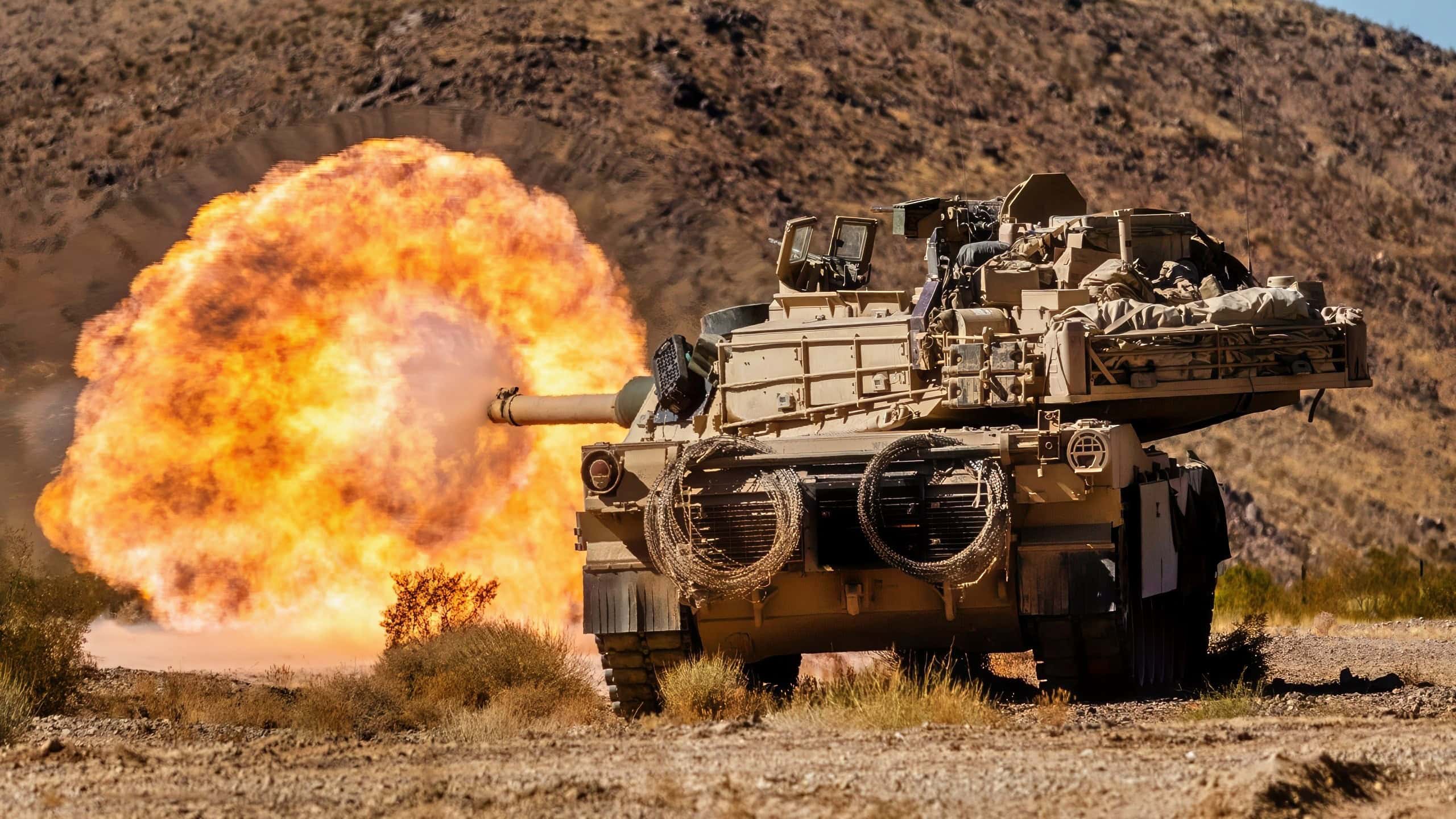
U.S. Soldiers assigned to 1st Battalion, 9th Cavalry Regiment, 2nd Armored Brigade Combat Team, 1st Cavalry Division fire an M1 Abrams main battle tank at an enemy target during Rotation 25-02 at the National Training Center, Fort Irwin, Calif., Nov. 07, 2024. Rotations at the National Training Center ensure Army Brigade Combat Teams remain versatile, responsive, and consistently available for current and future contingencies. (U.S. Army photo by Spc. Casey Auman, Operations Group, National Training Center).
The size of Iran’s 1 million-plus ground force, with its 4,071 tanks and more than 8,000 armored vehicles, is a known challenge. That the terrain is mountainous and difficult is also understood. There is little question that a traditional mechanized armored assault would prove extremely difficult and costly. Yet if fortified by air superiority and new generations of AI-enabled multi-domain sensing and targeting, a decisive, rapid success does not seem entirely unrealistic.
Achieving this outcome, however, would require the successful application of new forms of combined arms maneuver, advanced, layered drone defenses and sensors, and an AI-enabled ability to instantly close the sensor-to-shooter gap. If the U.S. military could operationalize networking and targeting breakthroughs in an actual military campaign, Iranian forces might be destroyed quickly.
With advanced, modern, multi-domain intelligence, surveillance, and reconnaissance; fifth-generation air superiority; and a massively truncated sensor-to-shooter time, U.S. aircraft and ground-fired weapons might destroy Iranian forces minutes after they first appear to U.S. sensors on drones, satellites, and surveillance planes operating in largely uncontested airspace.
To a certain extent, this has already been proven, as rapid U.S. sensor-to-shooter time has caused Iranian launchers to be destroyed quickly after emerging from hidden positions to attack.
Most of the risks of a ground attack would come in the form of drone swarm attacks and ballistic missiles. Iran does operate an arsenal of precision-guided missiles, which could be fired at advancing forces.
The question is, could mobile, ground-based air-defense systems see and intercept these missiles while U.S. forces were on the move? Could Iranian launchers and launch points be so degraded that Iran would only have a limited ability to fire missiles at advancing U.S. forces?
The U.S.-IDF air campaign has decimated much of Iran’s military, and the remaining regime leaders are likely to be operating without much command-and-control infrastructure.
Defending any territory from an invading land force would require logistical coordination and a command hub—something which may no longer exist within Iran.
Mobile Patriots
Advancing U.S. units would need to maneuver with organic air defenses and multi-domain networking to destroy incoming Iranian ballistic missiles.
Patriot missile batteries are combat-proven and “road mobile” to a degree. All major components—including the radar set, engagement control station, antenna mast group, power plant, and launching stations—are mounted on heavy-duty M860 semi-trailers, which are towed by Oshkosh M983 HEMTT trucks.
The newest Patriot interceptors will soon be upgraded with a 360-degree Lower Tier Air and Missile Defense (LTAMDS) radar, capable of tracking and intercepting multiple maneuvering targets simultaneously.
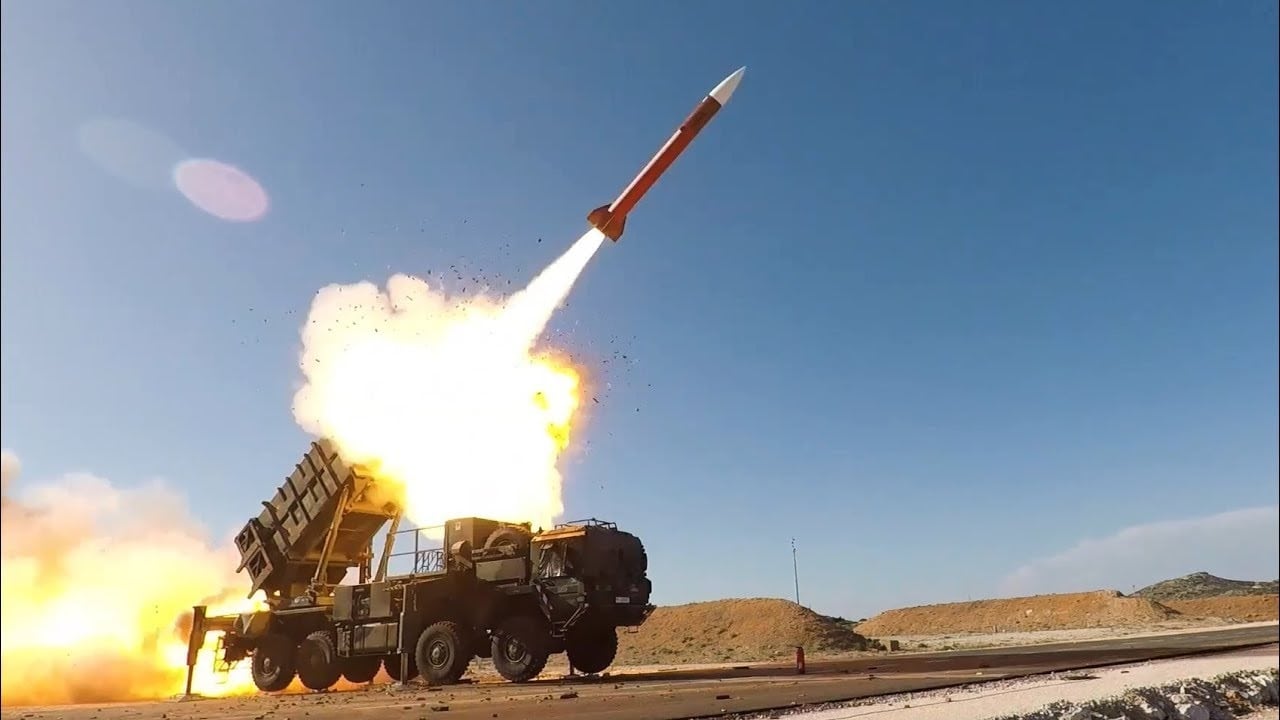
Patriot Missile. Image Credit: Lockheed Martin.
U.S. ground forces would need large numbers of ready, deployable Patriot missile batteries to advance alongside mechanized units and protect forward-positioned troop concentrations.
As of early 2026, the LTAMDS radar was not yet operational, but the system is quickly transitioning from a successful prototype to production.
Drone Swarm Defense
The greatest risk in any ground attack would come from swarming Shahed drones. Any advancing ground force in Iran must have operational drone-swarm defenses. This is much easier said than done, and the effort will demonstrate how mature and deployable many counter-drone technologies are.
There are many promising counter-drone technologies in development, ranging from “smart” interceptors such as the Coyote, to vehicle-mounted lasers and fast-developing non-kinetic defenses such as Electronic Warfare (EW) platforms and High-Powered Microwave.
The question is clear and simple: Many of these technologies are reasonably mature, mobile, and potentially prepared for deployment—but are they available?
Can they be quickly produced at scale?
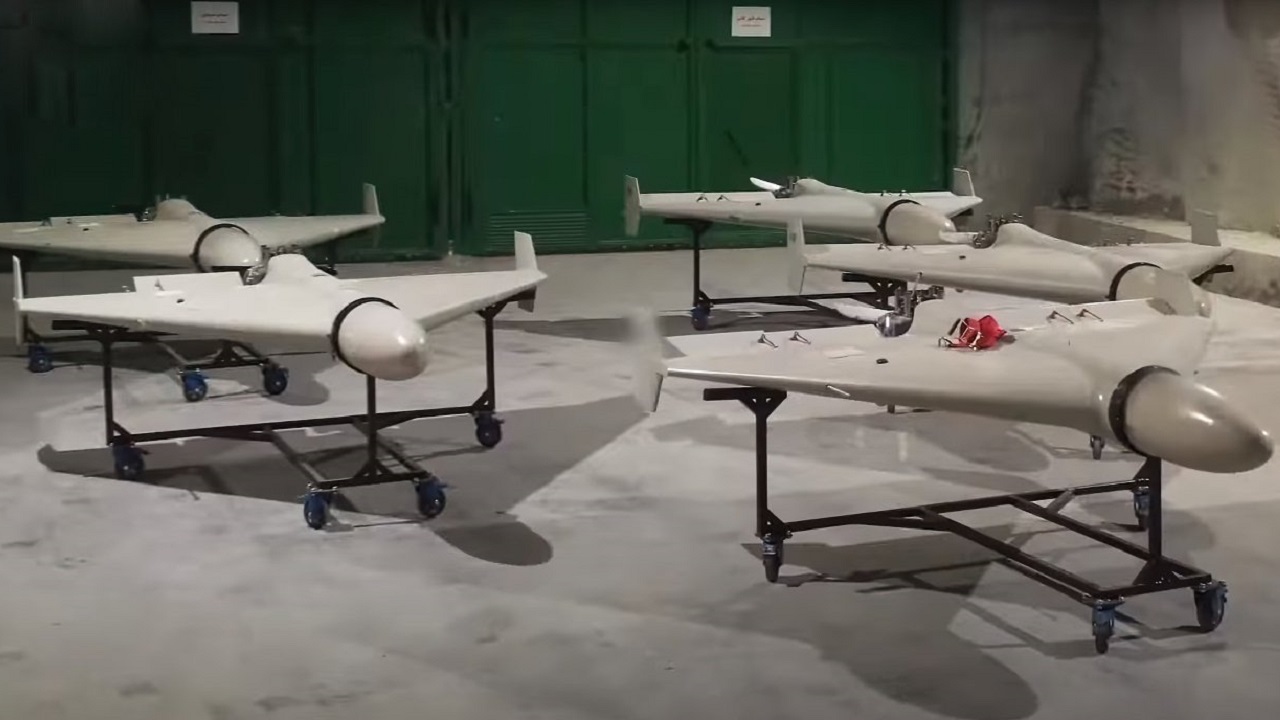
shahed-136
How long would it take to integrate counter-unmanned aerial system (C-UAS) lasers, interceptors, and EW into operational units?
This has happened to some degree already, but the potential success of any ground operation depends on the answer to this question. If there are no effective drone-swarm defenses, then it seems clear a land incursion is ill-advised or simply too costly to consider.
The U.S. Army does, however, have operational counter-drone lasers and EW, so the question is, how tailored are they to the Iranian threat? Can they be produced quickly at scale? Do they exist in a substantial, deployable capacity?
AV, for example, makes the now operational 50-kW LOCUST laser system, and Army ground units now also deploy with an integrated C-UAS system called low, slow, small unmanned aircraft Integrated Defeat System (LIDS). This Raytheon system uses KuRFS radar with Coyote interceptors and an integrated Syracuse Research Systems EW system to destroy or jam attacking drones.
Could these operational technologies counter Iranian Shahed drones in a ground war? What about a salvo or swarm of attack drones? Could these be deployed widely and sufficiently across a ground attack force to ensure maneuvering units could counter Iranian drone swarms? Would operational LIDS units be able to jam groups of Shahed drones?
If the answer to these questions is yes, then a ground invasion might make more tactical sense. If the answer is no, or not sufficiently, then a ground assault would simply be ill-advised—drone-swarm attacks could devastate armored convoys and troop concentrations. In Ukraine, for instance, U.S. made Switchblade kamikaze drones have simply decimated Russian T-90 tanks with an ability to loiter and strike as an explosive anti-armor weapon.
Thus far, Iranian drone attacks have been limited to stand-off ranges, but an approaching U.S. Army force might be easier for Iran to target.
Networking – Sensor-to-Shooter Time
The integration of AI might help smooth success. For years, Raytheon and its Pentagon partners have been working to leverage an AI-enabled ability to gather incoming sensor data, perform analytics, and pair a threat with a shooter in seconds. If this capability is mature and deployable now, then mobile armored units could maneuver with an organic, high-speed, fast-acting drone-defense system.
Using AI to verify threats and match an approaching threat with an optimal countermeasure in seconds could give ground commanders the ability to see and counter-attack drones and drone swarms from much farther away. It is realistic that this capability is operational, given the massive breakthrough successes the U.S. military services have achieved in AI-enabled threat detection and sensor-to-shooter pairing.
Simply put, the time it takes for a sensor to acquire a target, verify it, process otherwise disparate incoming pools of sensor data, and identify a shooter capable of taking rapid lethal action has, in recent years, shrunk from 20 minutes to a matter of seconds. By operationalizing these technological breakthroughs in combat, U.S. forces could quickly destroy an opposing Iranian ground force.
Urban terrain would make overhead targeting more difficult and pose challenges for precise strikes against Iranian forces on the move, yet there are vast areas of open terrain clearly visible to U.S. satellites, drones, and surveillance systems.
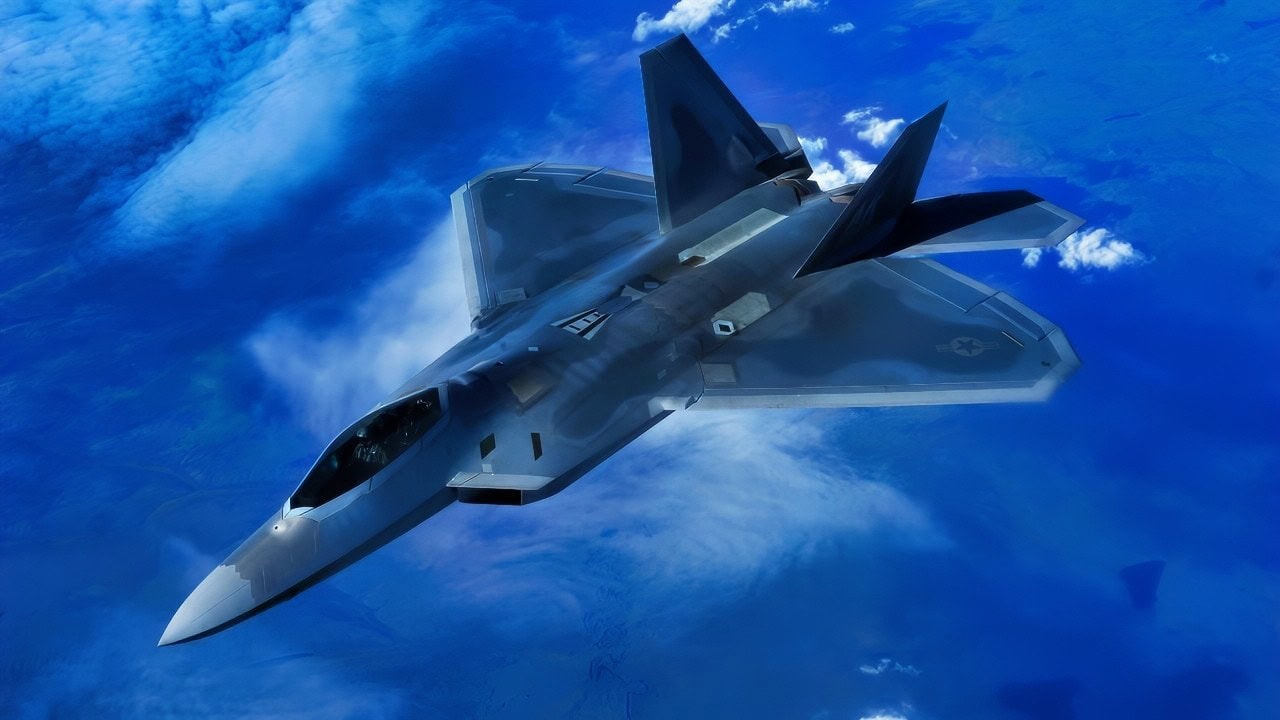
A U.S. Air Force F-22 Raptor assigned to the 90th Fighter Squadron, Joint Base Elmendorf-Richardson, Alaska, flies over clouds during RED FLAG-Alaska 14-3 Aug. 20, 2014, Eielson Air Force Base, Alaska. A combination of sensor capability, integrated avionics, situational awareness and weapons provides first-kill opportunity against threats. (U.S. Air Force photo by Staff Sgt. Jim Araos/Released)
It seems entirely realistic that Iranian forces could be destroyed quickly and decisively from the air if U.S. military technology breakthroughs have translated into operational and tactical realities. An ability to operate with complete air superiority, therefore, could massively favor an advancing U.S. ground force, as enemy formations could be seen and destroyed from stand-off distances before U.S. units were susceptible to Iranian ground-vehicle fire.
Further, with newer applications of combined-arms maneuver, adequate sensing, and short sensor-to-shooter time, pockets of dispersed Iranian fighters might be identified from the air and destroyed quickly by armed drones and fixed-wing fighter jets performing close air support. Certainly, going house-to-house would be ill-advised and likely too costly for an advancing armored ground force—Iranian fighters would hide in urban areas and use buildings, bridges, checkpoints, or narrow areas to ambush U.S. armored formations. However, it seems feasible that a decisive victory could be achieved and the existing Iranian regime fully collapse without ever needing large-scale close-in urban warfare.
Anti-regime Iranians could be armed, Iranian forces of any considerable threat could be seen and destroyed from the air, and a multi-domain U.S. military joint force could create a less contested attack corridor to Tehran.
Modern combined arms maneuver, using drones, multi-domain networking, unmanned vehicles, and dispersed but integrated formations, would heavily favor the U.S. Army. Iran is known to have more than 4,000 tanks, most of which are Soviet-era T-72s, yet it is extremely unlikely that they are modernized with state-of-the-art thermal sights, targeting, computing, or command-and-control capabilities. Much smaller numbers of modern Abrams tanks with Forward Looking Infrared (FLIR) sensors, manned-unmanned teaming, air-ground networking, and long-range targeting systems would likely be well positioned to prevail in tank warfare against a numerically larger Iranian armored force.
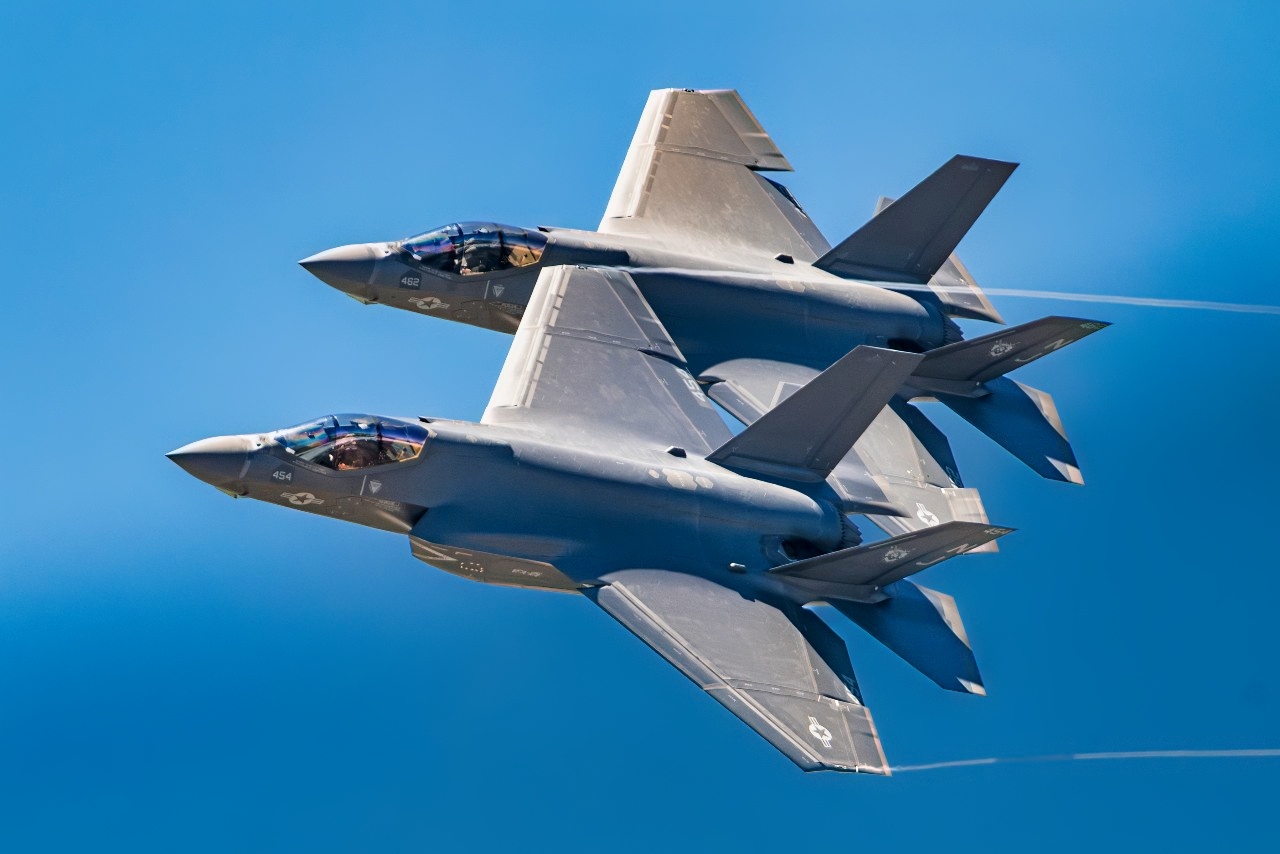
The U.S. Navy F-35C Lighting II Demo Team performs a flight demonstration at the Wings Over South Texas Air Show. This year’s air show marks Wings Over South Texas’s first return to Naval Air Station Corpus Christi since 2019.
According to 21st Century Asian Arms Race, Iran has German-built Leopard tanks as well as Russian T-90s and even some Abrams. Iran’s first widely reported indigenous tank has emerged in recent years—a platform said to be based upon an upgraded Iranian T-72S chassis. The Iranian tank, reported to operate with an electro-optical fire control system, laser rangefinder, and ballistic computer, would at least on the surface appear to be vastly inferior to the U.S. Abrams.
Massive Attack from the Sea
Perhaps with the U.S. Army’s increasing watercraft fleet and growing Marine Corps ability to transport armor ship-to-shore, a large-scale amphibious operation could launch from the Persian Gulf—something that could remove any need to enter Iran from Turkish territory. Once a beachhead was secured to some capacity, then potentially thousands of troops, weapons, and armored vehicles could enter Iran from the ocean. While this would be time-consuming and logistically difficult, Iran has no ability to target arriving forces from the air and would be left to launch drone swarms and missile attacks on arriving forces.
A salvo of missiles or a series of combined drone swarms would pose a serious risk, yet an amphibious attack would be supported by fifth-generation, amphibious-launched F-35Bs, surface and air drones, and integrated ISR. Marine units can now quickly transport 70-ton armored vehicles with new ship-to-shore connectors, use unmanned systems, and operate with some warship-supported counter-drone weapons.
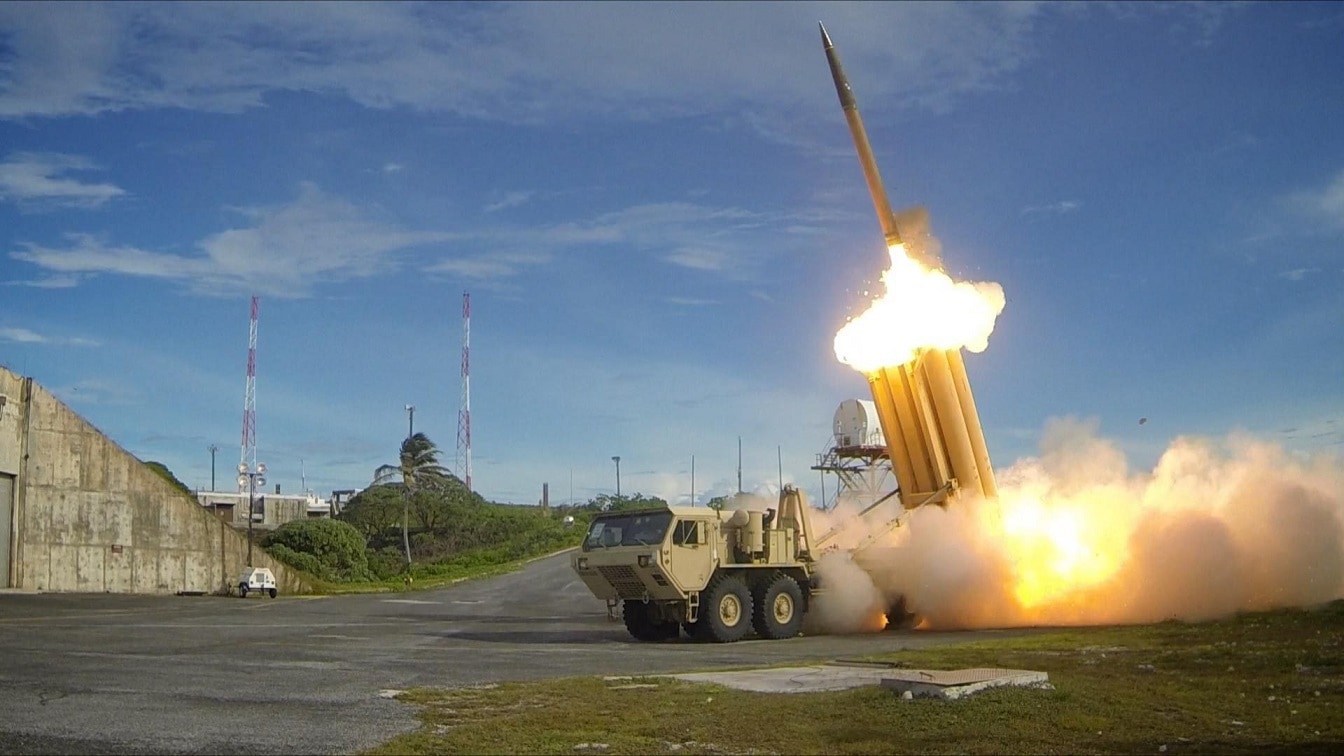
The first of two Terminal High Altitude Area Defense (THAAD) interceptors is launched during a successful intercept test. The test, conducted by Missile Defense Agency (MDA), Ballistic Missile Defense System (BMDS) Operational Test Agency, Joint Functional Component Command for Integrated Missile Defense, and U.S. Pacific Command, in conjunction with U.S. Army soldiers from the Alpha Battery, 2nd Air Defense Artillery Regiment, U.S. Navy sailors aboard the guided missile destroyer USS Decatur (DDG-73), and U.S. Air Force airmen from the 613th Air and Operations Center resulted in the intercept of one medium-range ballistic missile target by THAAD, and one medium-range ballistic missile target by Aegis Ballistic Missile Defense (BMD). The test, designated Flight Test Operational-01 (FTO-01), stressed the ability of the Aegis BMD and THAAD weapon systems to function in a layered defense architecture and defeat a raid of two near-simultaneous ballistic missile targets
Given the expectation of mines, it would make sense for unmanned systems to breach the perimeter and clear a path or corridor for landing Marines. Large numbers of tanks and armored vehicles can be delivered across the ocean, given the extensive development of new watercraft and the Army’s efforts to become more expeditionary.
If the drone and ballistic missile threat is neutralized or massively diminished, the United States could occupy fortified positions along the coastline to open the Strait of Hormuz. However, forward units arriving on islands or the coastline will need to be quickly fortified with mobile air defenses, protective cover from Navy warships, and transportable, ground-fired drone swarm defenses.
MORE – Russia Has Built 30 Su-57 Stealth Fighters: The F-35 is 1,300 Strong and Adding More by the Day
MORE – The U.S. Navy’s New $15,000,000,000 Columbia-Class Nuclear Submarine Is Way Behind Schedule
About the Author: Kris Osborn
Kris Osborn is the President of Warrior Maven – Center for Military Modernization. Osborn previously served at the Pentagon as a highly qualified expert in the Office of the Assistant Secretary of the Army—Acquisition, Logistics & Technology. Osborn has also worked as an anchor and on-air military specialist at national TV networks. He has appeared as a guest military expert on Fox News, MSNBC, The Military Channel, and The History Channel. He also has a Master’s Degree in Comparative Literature from Columbia University