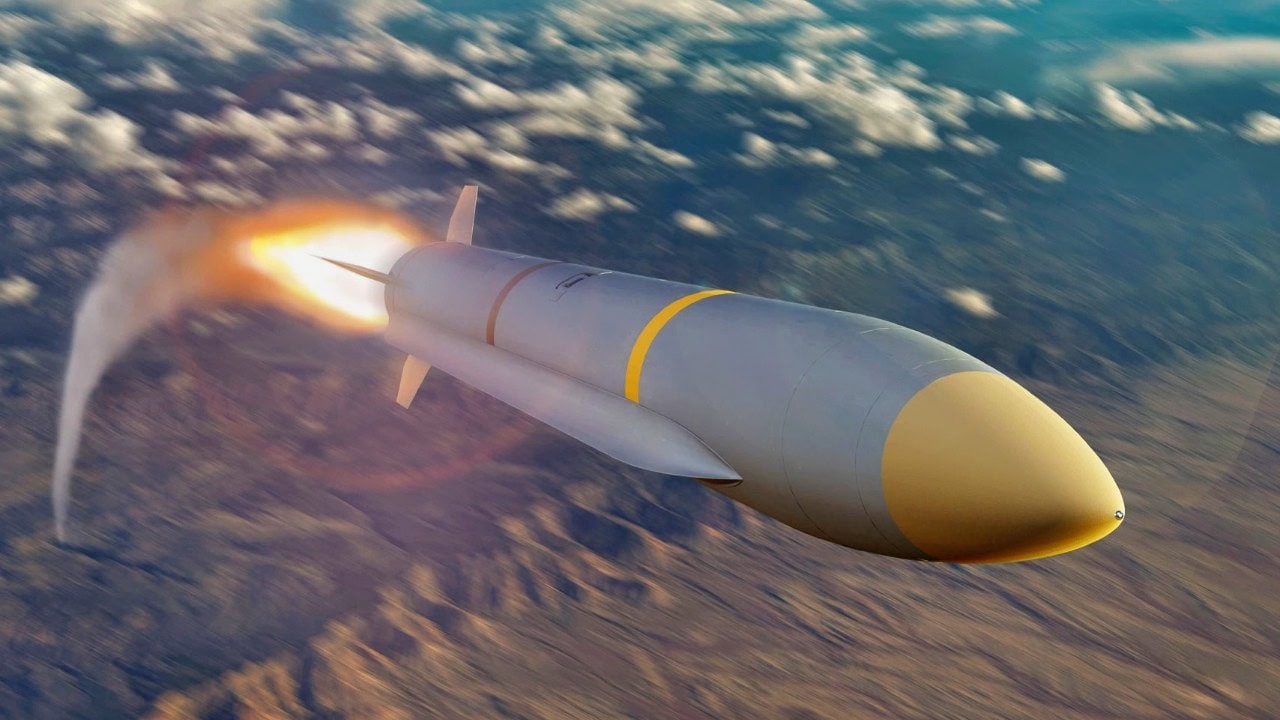
Why The US Air Force is Going All-Out For a New Stand-In Attack Weapon (SiAW)
MANILA – As US weapon systems become more sophisticated and their delivery systems operate over greater ranges, more adversaries of Washington and its allies have taken measures to neutralize that allied advantage.
The course they are all taking to compensate for or neutralize the increased US technological advantage is to place renewed emphasis and resources on developing anti-access/area denial (A2/AD) capabilities.
One of the most common measures taken by these nations is to create more capable, effective, and longer-range air defense networks.
So far, however, the nations the US has faced in actual combat have not been able to create an effective air shield with their Russian– and Chinese-designed air defense batteries. Cases in point are Venezuela and Iran.

Shown is a graphical artist rendering of the Next Generation Air Dominance (NGAD) Platform. The rendering highlights the Air Force’s sixth generation fighter, the F-47. The NGAD Platform will bring lethal, next-generation technologies to ensure air superiority for the Joint Force in any conflict. (U.S. Air Force graphic)
Venezuela’s air defense system was spectacularly ineffective against US Air Force (USAF) and US Navy (USN) aircraft during the January 2026 Operation Absolute Resolve. Reasons for its failure – among others were:
– The deployment by the US Navy of EA-18G Growler aircraft and other electronic warfare assets, which are credited with having jammed Venezuelan radar signals within only 12 minutes.
– The failure of Russian and Chinese air defense systems. Despite having been marketed as being some of the most advanced systems available, the Russian-made S-300, Buk-M2E, and Chinese-made JY-27A mobile radars failed to detect or engage the stealthy US fighter aircraft (F-22, F-35).
-Operational readiness of the Venezuelan forces was practically non-existent. Some air defense systems were reportedly not fully integrated into the network and/or not properly maintained.
-Several of the air defense units that had been procured by Caracas had been stored in warehouses rather than deployed on station. This is most likely due to problems within the armed forces, including training and logistical shortcomings in the Venezuelan military, including a lack of the most basic spare parts for these systems.
Other failures of the Venezuelan defenses have been blamed on an inadequate command and control system within the armed forces, as well as on the fact that the Venezuelan air defense command structures were overwhelmed or paralyzed, allowing the US to be completely inside their command decision loop.
The performance of Iran’s air defenses since 28 February has been similarly unimpressive.
US and Israeli forces were able to achieve total air superiority over Iran, and Tehran’s air defenses were almost completely unable to act against 5th-generation fighters like the F-35.
The coordinated air campaign, known as Operation Epic Fury, successfully targeted the command centers of both the Artesh (Iranian Armed Forces) and the Islamic Revolutionary Guard Corps (IRGC) and their associated radar networks. Most of those systems are today destroyed or degraded to the point of being ineffective.
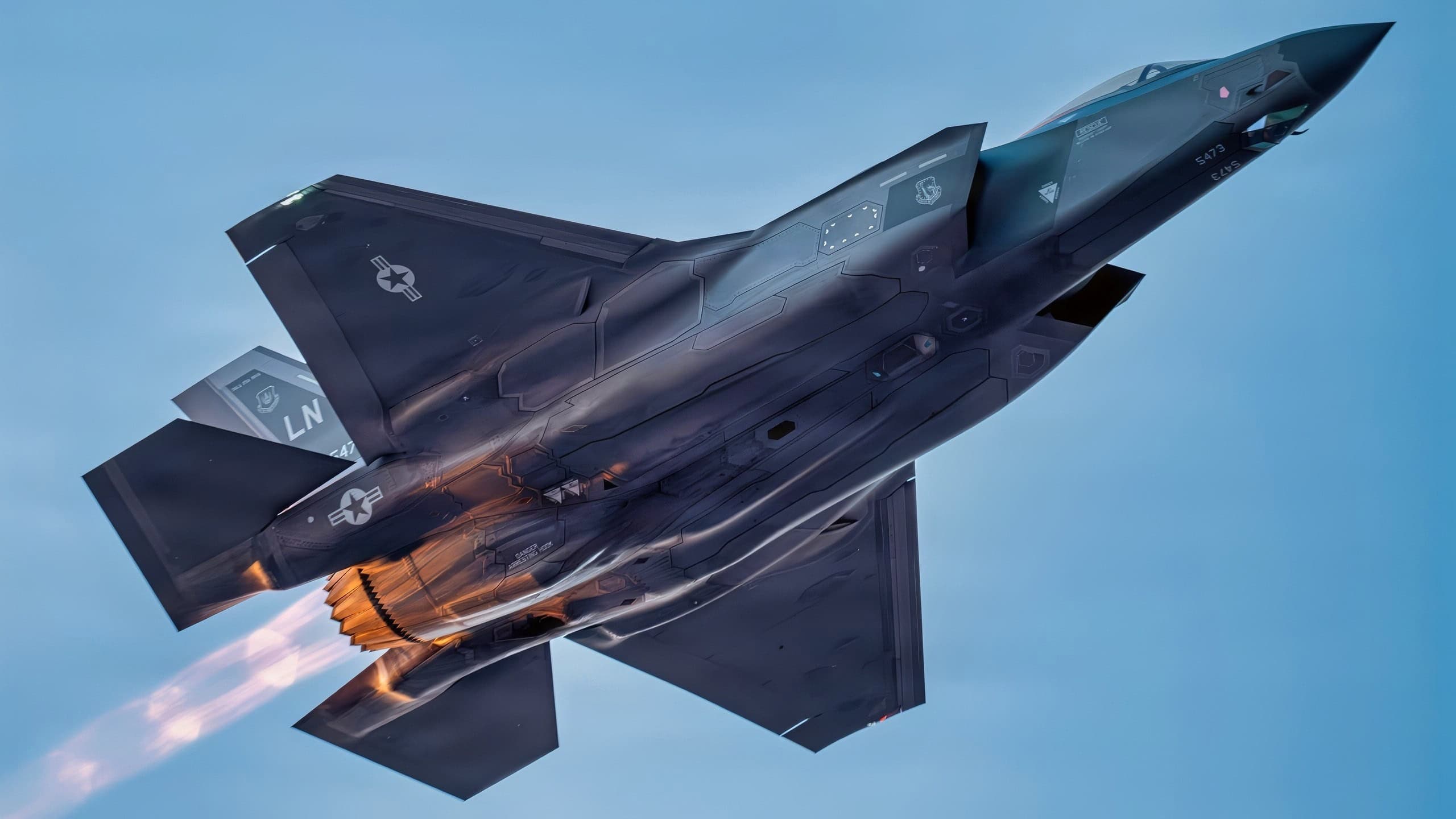
A U.S. Air Force F-35 takes flight in the Middle East in support of Operation Epic Fury, March 2, 2026. (U.S. Air Force Photo)
So, why, some are asking, is the USAF going full speed ahead – almost warp speed, said one commentator – in the procurement of a Stand-in Attack Weapons (SiAW) that is designed to take out air defenses and other A2AD capabilities.
The answer is that there is an acknowledgement that neither Venezuela nor Iran falls into the category of “peer competitors” with Washington.
Any efforts that those two nations had undertaken along those lines would pale in comparison to those of the People’s Republic of China (PRC) and, to a lesser extent, the Russians.
SiAW Developmental Concept and Guidelines
As the air defenses of the PRC and Russia become more sophisticated, the USAF has increasingly analyzed what kind of new-age, yet easy-to-produce, weapon could meet the future demands of countering one or both of these nations.
This weapon must be capable of penetrating advanced A2/AD networks, but it must also be a system that is designed and built at a reasonable cost. It also must be capable of being used across a broad spectrum of platforms.
Thus, the SiAW must be a primary weapon for the in-development 6th-generation F-47 to be used at extended ranges.
But at the same time, the weapon must also fit into an operational concept with aircraft as old as the F-16 and F/A-18, as well as everything in between, and for use on the new B-21 and possibly the 1980s-era B-1B Lancer.

A U.S. Air Force B-1B Lancer assigned to the 7th Bomb Wing takes off from Dyess Air Force Base, Texas, Dec. 25, 2025. U.S. military forces are deployed to the Caribbean in support of the U.S. Southern Command mission, Department of War-directed operations, and the president’s priorities to disrupt illicit drug trafficking and protect the homeland. (U.S. Air Force photo)
This currently fast-evolving, air-launched SiAW could significantly enhance the F-47’s ability to suppress enemy defenses and “pave the way” for a broader set of air operations once air defence networks have been neutralized.
Unlike the F-22, which was primarily designed for air superiority, the SiAW on board the F-47 could operate under a far more expansive Concept of Operations (ConOps).
Due to the aircraft’s highly advanced stealth properties, it will likely be able to conduct strike missions over heavily defended areas – meaning it can cross into contested airspace in a manner that other fighters currently in service cannot.
The name of the weapon is an important discriminator from that of previous-generation air-to-surface systems. This concept of it being a “stand-in” weapon system makes it a completely different animal from the many types of “stand-off” munitions that have been in service for decades.
Stand-off weapons, such as long-range air-launched cruise missiles (ALCMs), enable aircraft to launch well beyond the engagement envelope of enemy air defense networks. But stand-in weapons are employed in a manner not seen before in traditional USAF doctrine.
The concept behind the SiAW is that it would be carried by a stealth aircraft – or at least by an aircraft with a managed signature and aided by advanced EW. That aircraft would then infiltrate contested airspaces, and once inside, this weapon would be launched at ranges much closer to the target.
That greatly reduced range to target would permit the aircraft to strike high-value assets with greater accuracy. Launching at these much shorter ranges also drastically reduces the weapon’s flight time from launch to target. Being a shorter-range weapon also means a greatly reduced size and significantly lower cost. A greatly reduced size enables the SiAW to be carried in an internal weapons bay of a stealthy aircraft, offering multiple advantages to the SiAW concept.
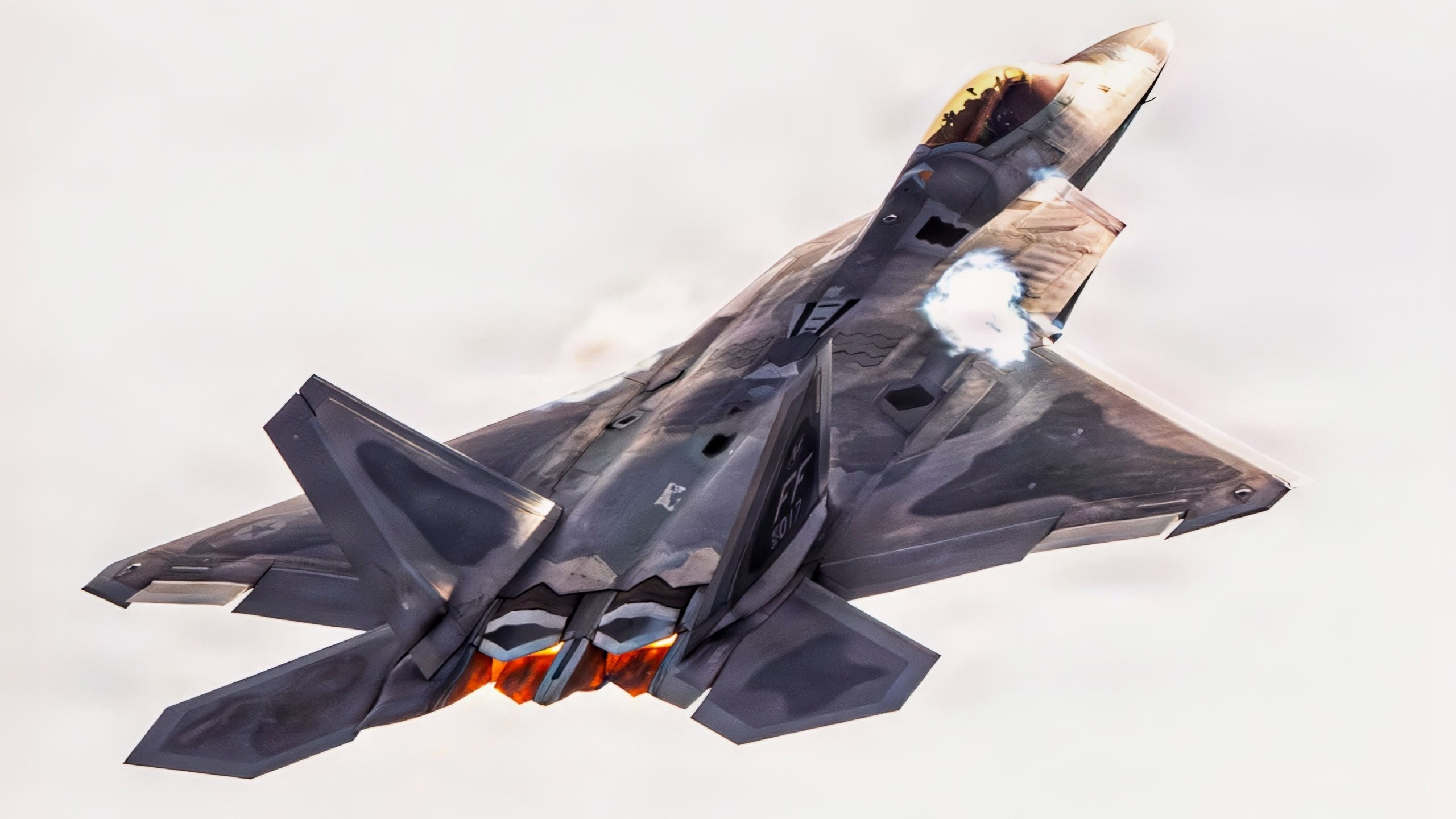
U.S. Air Force Capt. Nick “Laz” Le Tourneau, pilot and commander of the F-22 Raptor Aerial Demonstration Team, performs a practice demonstration for the 2026 Heritage Flight Training and Certification Course at Davis-Mothan Air Force Base, Arizona, March 1, 2026. The Heritage Flight Training and Certification Course is an annual event where military and civilian pilots train together to fly in formations, showcasing both modern and vintage military aircraft. These flights are performed at airshows across the country to honor the service and contributions of every U.S. Airmen, past and present, while educating the general public on the importance of the U.S. Air Force and its mission. (U.S. Air Force photo by Staff Sgt Mary Bowers)
The SiAW’s primary mission is to target systems that pose a threat to friendly air operations, including mobile missile launchers, command-and-control nodes, electronic warfare systems, and integrated air defense infrastructure.
The latter concept, usually abbreviated as IADS, has been under continuous improvement for more than three decades and remains a top design driver for both ground-based air defense and tactical fighter design.
Sources Sought
The USAF is also convinced that there will be no end to the need for this weapon in numerous theaters and, therefore, believes it should be produced by more than one contractor.
Having more companies able to manufacture this new, multi-use/multi-role anti-radar missile is a hedge against what would likely be a rapidly spiralling demand for such a weapon in any future conflict involving peer adversaries.
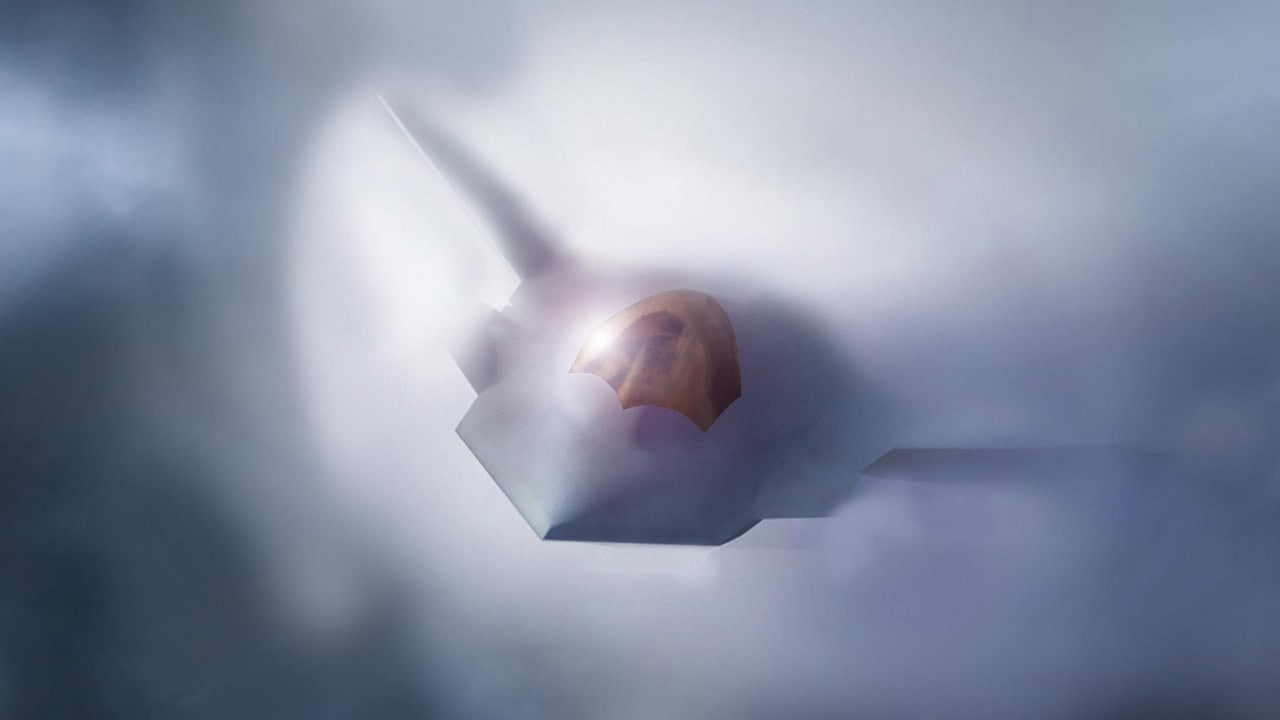
- F-47 Fighter. Image Credit: U.S. Air Force.
Such a weapon would be something in high demand even for the current war in Iran if it were available now, said one air power analyst who spoke to 19FortyFive.
“Iran’s air defenses are in a parlous state now after almost a month’s pounding by US and Israeli strikes, so you do not need this weapon to the degree you would if this was a fight for the defense of the Republic of China (ROC) on Taiwan,” he explained.
“But in that instance,” he continued, you could see the US and Israel now handing off the suppression of enemy air defenses (SEAD) mission to a non-stealthy aircraft like an F-16 or Super Hornet and then freeing up your F-35s for other riskier missions with a higher threat environment profile.”
On 4 March, the USAF posted a notice calling for a missile with “similar or improved capabilities” as the Stand-in Attack Weapon, or SiAW, currently under development by Northrop Grumman. This raises the possibility of the SiAW becoming a “family” of weapons with modular design configurations, multiple-mode seekers, the ability to accept targeting data from other platforms and any number of features.
“What the USAF wants to avoid is the situation that the armed services now find themselves in with weapons like the Tomahawk, or the Patriot Air and Missile Defense System (MSE) missile,” said the air power analyst.
“We have too many weapons in this distressing category now: high-burn rates, low inventory, anaemic production rates, long lead times to receive replacement systems. It is a situation that USAF does not want to find itself in if it gets involved in some future conflict,” he explained.
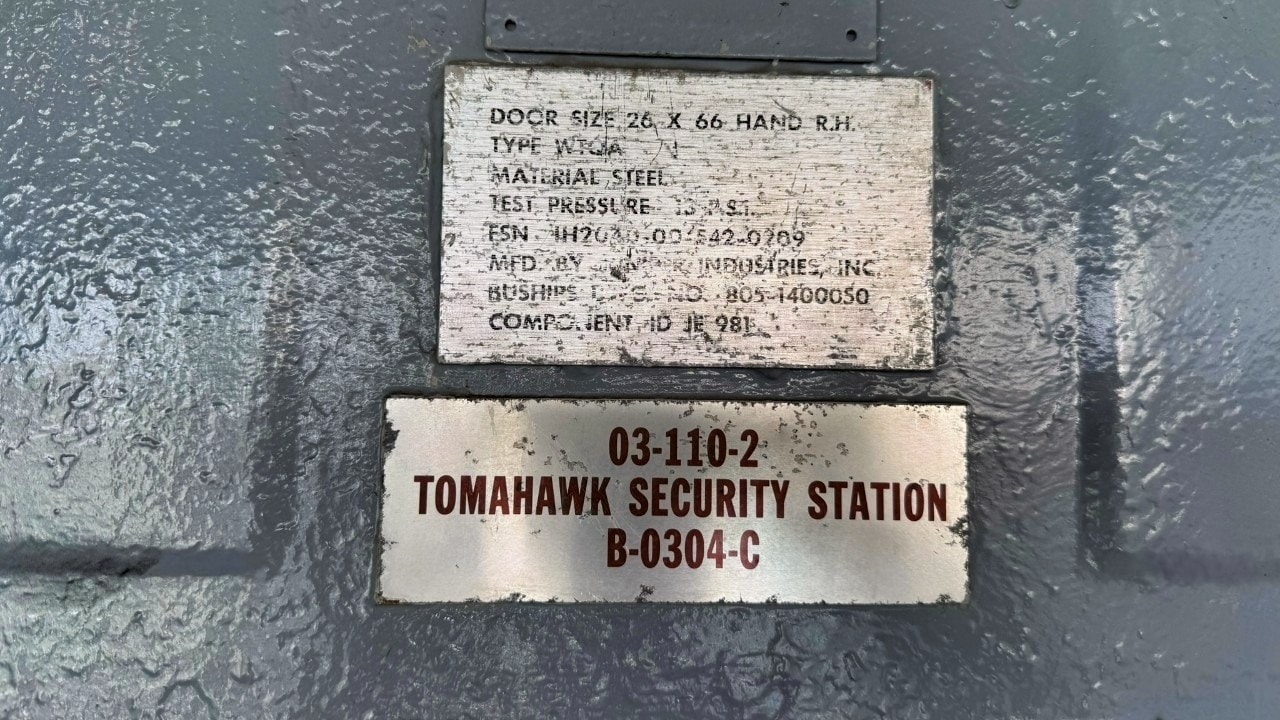
Battleship USS Iowa Tomahawk Missile Container. Taken by Harry J. Kazianis for 19FortyFive.com abord USS Iowa.
SiAW Missile To Fly From F-35, F-47 and Even B-21 Raider
The SiAW is intended to be a supersonic air-to-ground missile that the USAF plans to use for SEAD missions and to take out high-value, mobile/relocatable targets.
The missile is also planned to be carried on a number platfoms: “these include the F-35, F-16, F-47, and B-21,” said more than one analyst familiar with the program who spoke to 19FortyFive.
Northrop has based the design of their version of the new missile on its Advanced Anti-Radiation Guided Missile-Extended Range, or AARGM-ER, which was itself an evolutionary and advanced version of the older AGM-88 High-speed Anti-Radiation Missile, or HARM.
The AARGM-ER is believed to be a Mach 4 missile with a range of 180 miles, according to information obtained by Air & Space Forces Magazine. The SiAW is expected to go one better by flying faster than the HARM and possibly faster than the AARGM-ER. It will also be able to strike targets at greater ranges than those missiles, which is one reason Northrop has stated the missile fills “gaps created by 2025+ threats.”
“It’s the kind of weapon that if we had it in quantity would be very valuable in current operations in Iran and definitely in the Pacific,” said retired Col. Mark Gunzinger, director of future concepts and capability assessments at AFA’s Mitchell Institute for Aerospace Studies, who was interviewed on the weapon by the same Air & Space Force Magazine.
For the past two decades, the USAF has developed a ConOps against heavily defended targets by employing a mix of single-use standoff weapons in conjunction with inexpensive, stand-in weapons fired by survivable, stealthy aircraft.
These ideally would be low-observable platforms that – like any stealthy platform – can carry out multiple runs on the same targets.
The Air Force began work on the SiAW by awarding first-phase contracts to Northrop, L3Harris, and Lockheed Martin in 2022. The service then selected Northrop to build the missile in 2023 under a three-year contracted program valued at $705 million. Northrop then delivered the first SiAW test and evaluation missile to the USAF in November 2024, with the intention to field the weapon by 2026.
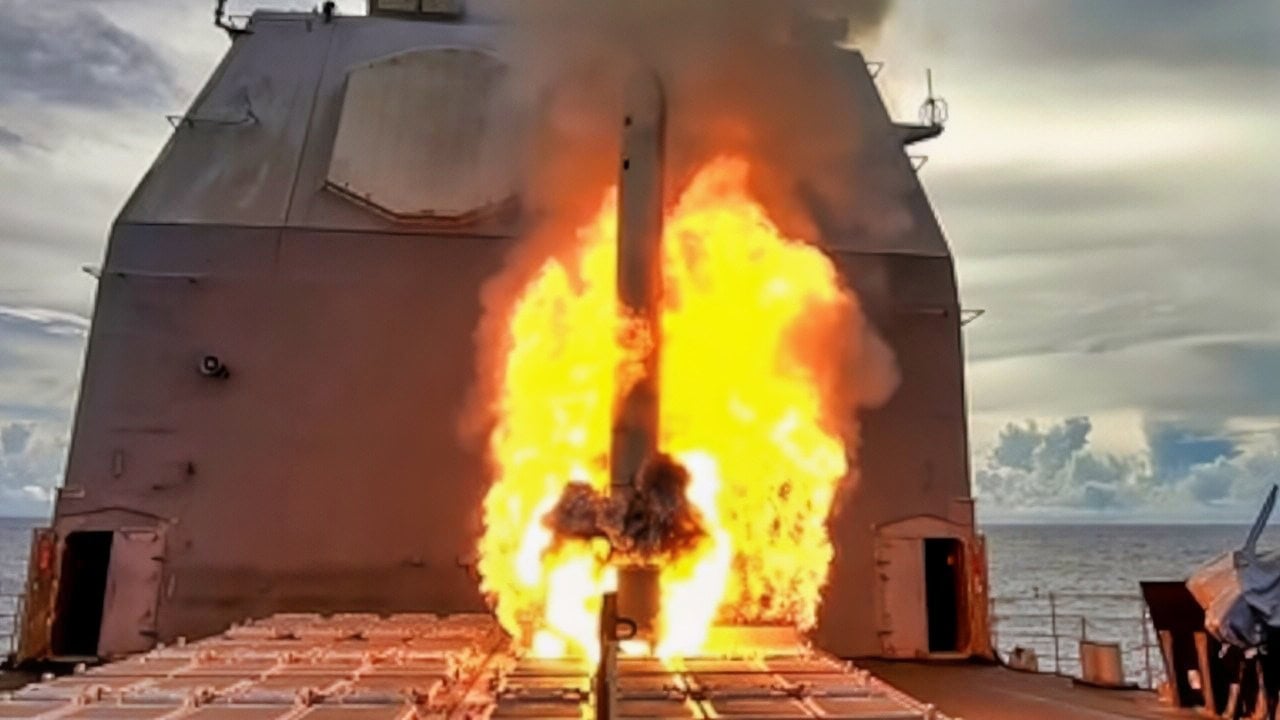
Tomahawk Missile Firing U.S. Navy Photo
The program received additional funding as part of last summer’s One Big Beautiful Bill Act. The reconciliation package in the bill included $325 million for improvements to production capacity for air-launched anti-radiation missiles.
However, at the time, it was not evident whether those extra funds were being included so that the USAF could also secure more vendors for the program.
The new sources sought notice informs interested vendors they must deliver key features such as “extended range, advanced targeting, counter-countermeasures, and integration with existing and future platforms.”
The notice was issued by the Air Force Life Cycle Management Center’s weapons office at Eglin Air Force Base, Florida. It has been issued not as a solicitation but as a market research tool to identify firms capable of producing a system with “similar or improved capabilities” to the SiAW. Responses to this announcement are due by 19 March.
Original notices for the SiAW also require companies to include notional average unit production prices assuming production quantities of 500, 1,000, and 1,500 units.
The more recent notice seeks vendors capable of building 600 missiles annually.
We Might Need a Lot of SiAW in a China War
“Those production numbers sound impressive on the surface,” said the air power analyst, but most likely still greatly inadequate. If we get into a real shooting war with the PLA over Taiwan, for example, those kinds of numbers will be just a drop in the bucket.”
About the Author: Reuben F. Johnson
Reuben F. Johnson has thirty-six years of experience analyzing and reporting on foreign weapons systems, defense technologies, and international arms export policy. Johnson is the Director of Research at the Casimir Pulaski Foundation. He is also a survivor of the Russian invasion of Ukraine in February 2022. He worked for years in the American defense industry as a foreign technology analyst and later as a consultant for the U.S. Department of Defense, the Departments of the Navy and Air Force, and the governments of the United Kingdom and Australia. In 2022-2023, he won two consecutive awards for his defense reporting. He holds a bachelor’s degree from DePauw University and a master’s degree from Miami University in Ohio, specializing in Soviet and Russian studies. He lives in Warsaw.