Summary and Key Points: Drawing on his extensive background as a national security analyst and author of The Shadow War: Iran’s Quest for Supremacy, Brandon J. Weichert issues a stark warning about the escalating U.S.-Iran conflict.
-As the blockade of the Strait of Hormuz chokes the global economy, the Trump administration is reportedly considering deploying Marines and Airborne Rangers to seize strategic Iranian coastal assets like Kharg Island or Qeshm Island.
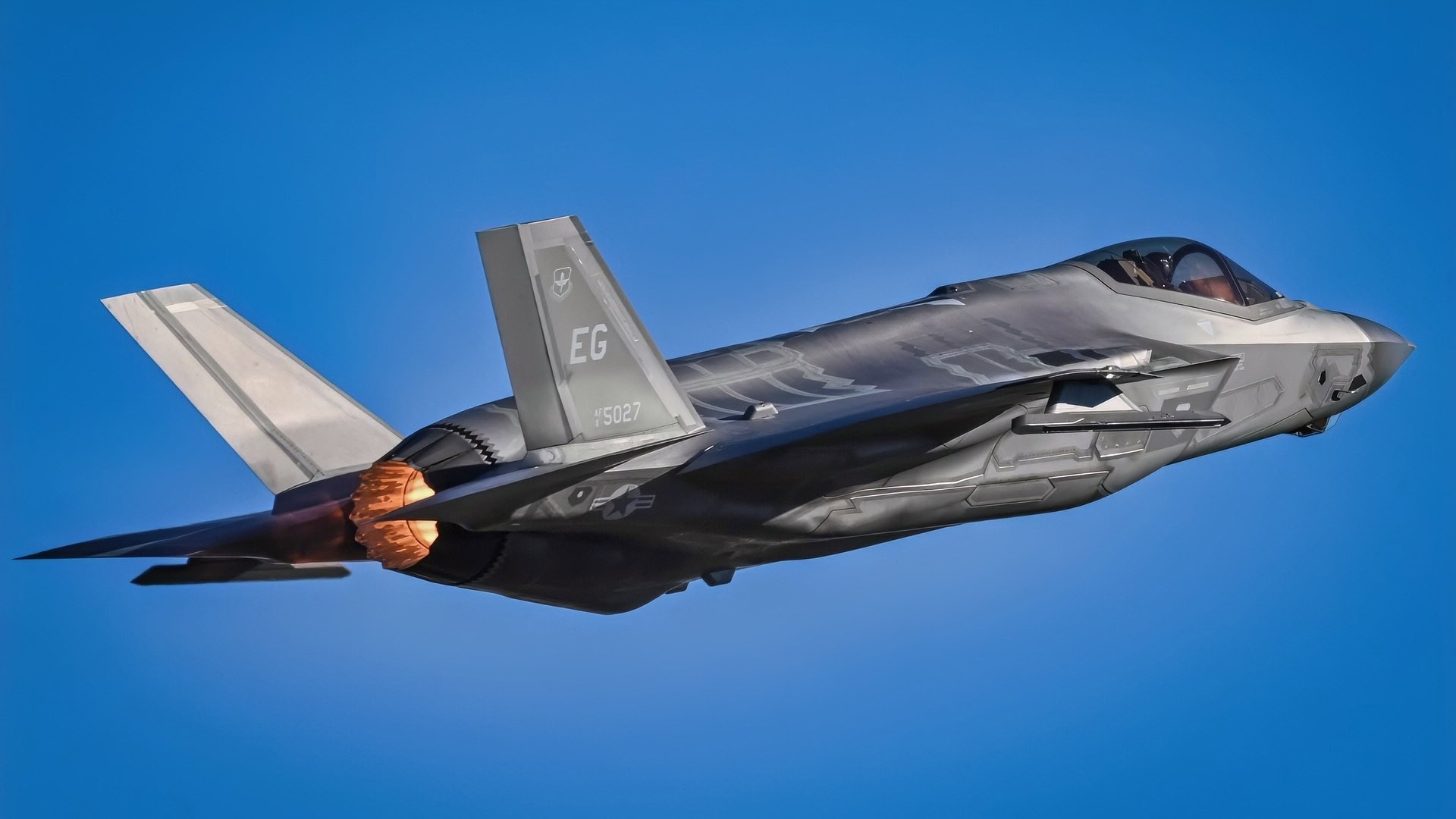
An F-35A Lightning II departs for a training mission at Savannah Air National Guard Base, Georgia, Feb. 14, 2023. The 60th Fighter Squadron and Aircraft Maintenance Unit traveled to Savannah to conduct off-station training while avoiding weather attrition. (U.S. Air Force photo by Airman 1st Class Christian Corley)
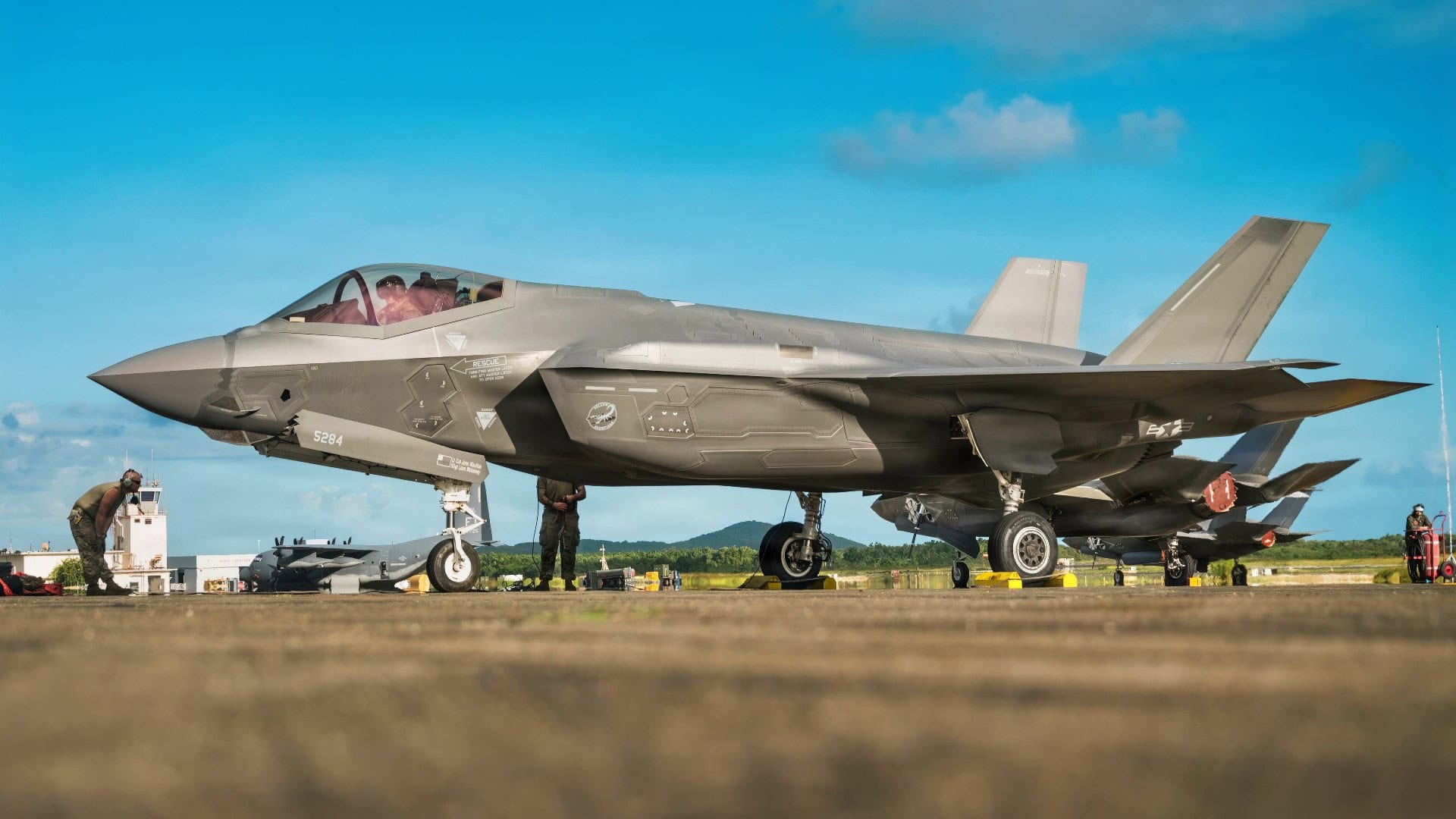
U.S. Air Force crew chiefs perform post flight maintenance on an F-35A Lightning II after its first arrival in Ceiba, Puerto Rico, Dec. 20, 2025. U.S. military forces are deployed to the Caribbean in support of the U.S. Southern Command mission, Department of War-directed operations, and the president’s priorities to disrupt illicit drug trafficking and protect the homeland. (U.S. Air Force photo)
-Weichert argues that such an amphibious assault would be a suicidal blunder, exposing limited American ground forces to devastating drone swarms and missile strikes, ultimately risking a humiliating withdrawal and the collapse of U.S. dominance in the Middle East.
Why a U.S. Amphibious Assault on Iran is A Mistake
The United States finds itself stuck in an escalation trap.
The United States believed this would be a short, sharp war ending in a decisive defeat of the Islamic Republic of Iran. The war has not yielded such an outcome. Indeed, it is now abundantly clear that the Americans, even if they wanted to abandon the war, cannot leave.
Iran has thoroughly controlled the escalation ladder and stunted all U.S. military attempts to overwhelm the regime. Meanwhile, the Iranians have managed to block the Strait of Hormuz, through which 20 percent of global oil trade, as well as substantial amounts of liquefied natural gas and key agricultural products, pass.
The longer Iran’s blockade persists, the greater the damage it does to the United States and its allies. Indeed, the entire global economy is teetering. Even close allies such as Japan are paying the Iranians what amounts to a passage fee.
So, the U.S. war that was supposed to be short and decisive has become long and drawn out, with real, lasting, and negative implications for the United States’ position as the world’s dominant power. If the strait is not reopened to global commerce once more, it will collapse the world economic order as we understand it.
Now, the Trump administration is considering deploying a force of hundreds of Marines and the U.S. Army’s 82nd Airborne Rangers to help possibly punch open the Strait of Hormuz, take strategic locations along Iran’s coastline, hold that territory, and conduct sea control operations from those captured locations.
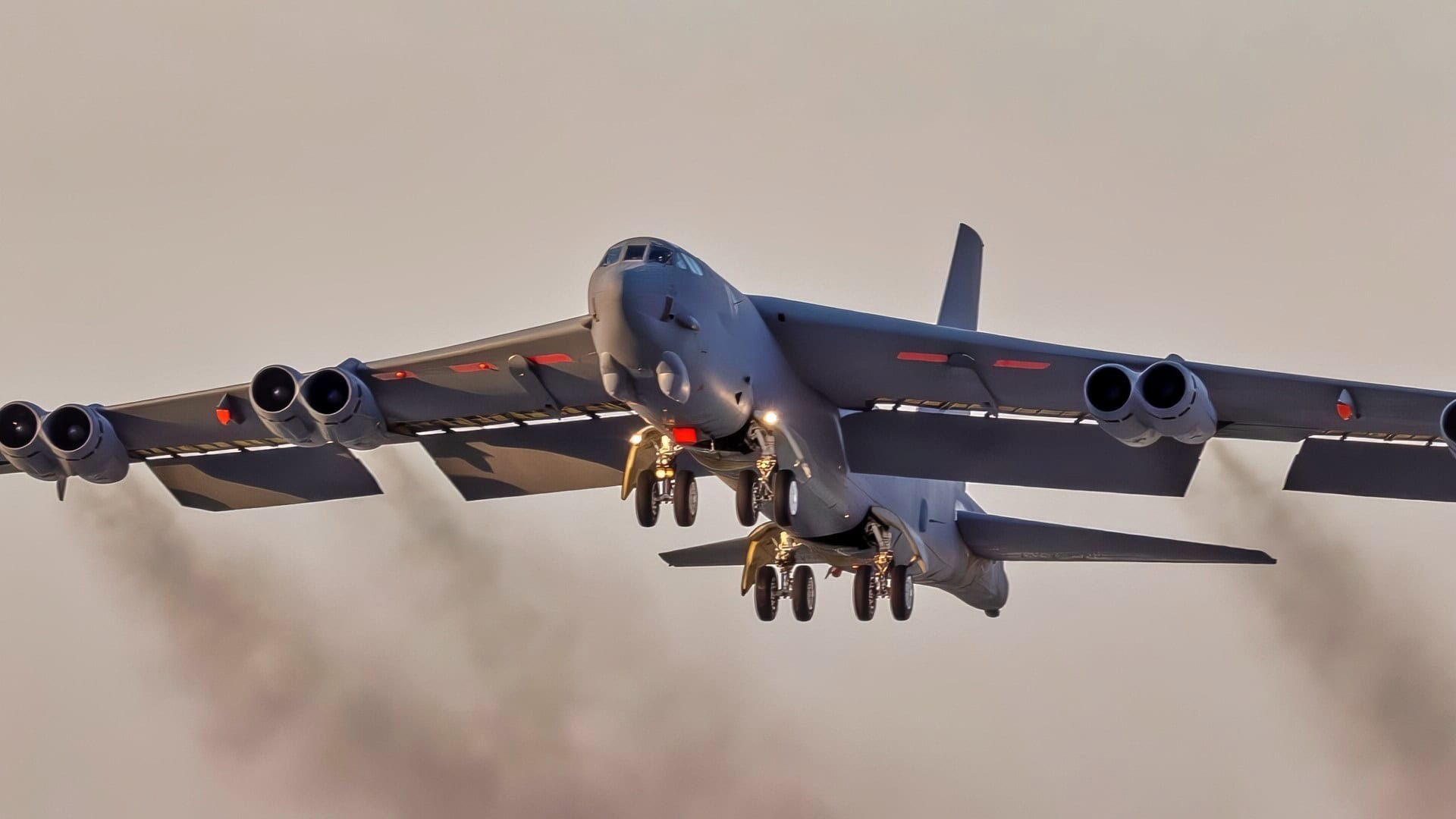
A modified B-52H Stratofortress departs Edwards Air Force Base for an evening training mission on June 25, 2025. The aircraft is assigned to the 419th Flight Test Squadron, Global Power Bombers Combined Test Force, tasked with supporting developmental testing across the B-52, B-1, and B-2 bomber portfolio. Along with most 412th Test Wing aircraft, B-52H bombers at Edwards include special instrumentation to conduct a variety of testing activities. (Air Force photo by Chase Kohler)
Iran Controls the Escalation Ladder
We’ve been hearing for a week or so that the Trump administration is planning to seize Kharg Island, which hosts a key oil processing facility and is a strategic location deep within the Persian Gulf.
Of course, this will be an insufficient force to take and hold the territory. Kharg is well within the striking range of Iranian drones and missiles.
Kharg Island: A Tough Mission Disguised as Strategy
What’s more, to get to Kharg Island, U.S. forces must push through the Strait of Hormuz itself, which is something the Navy has categorically refused to do since the war started on February 28.
The Navy’s reticence is understandable: The services know that Tehran, at least for now, has overmatch in the coastal regions closest to Iran. Breaking that will take more than a few thousand Marines and some Airborne Rangers. And if the administration tries with just that force, it can expect the losses of American lives to be severe.
Qeshm Island and the Illusion of an Easy Landing
Everyone keeps talking about Kharg Island. As noted above, that is a suicide mission. For starters, it’s too far away from the actual problem area—the narrow, geographical bend known as the Strait of Hormuz.
Another target is Qeshm Island, which sits in the bend of the Strait of Hormuz. It also has infrastructure—the Qeshm International Airport—that could support Airborne Ranger landings. The island’s location in the strait makes it ideal for a landing.

120511-N-WO496-003 STRAIT OF HORMUZ (May 11, 2012) Guided-missile cruiser USS Cape St. George (CG 71) and aircraft carrier USS Abraham Lincoln (CVN 72) transit the Strait of Hormuz. Both ships are deployed to the U.S. 5th Fleet area of responsibility conducting maritime security operations, theater security cooperation efforts and support missions as part of Operation Enduring Freedom. (U.S. Navy Photo by Mass Communication Specialist 3rd Class Alex R. Forster/Released)
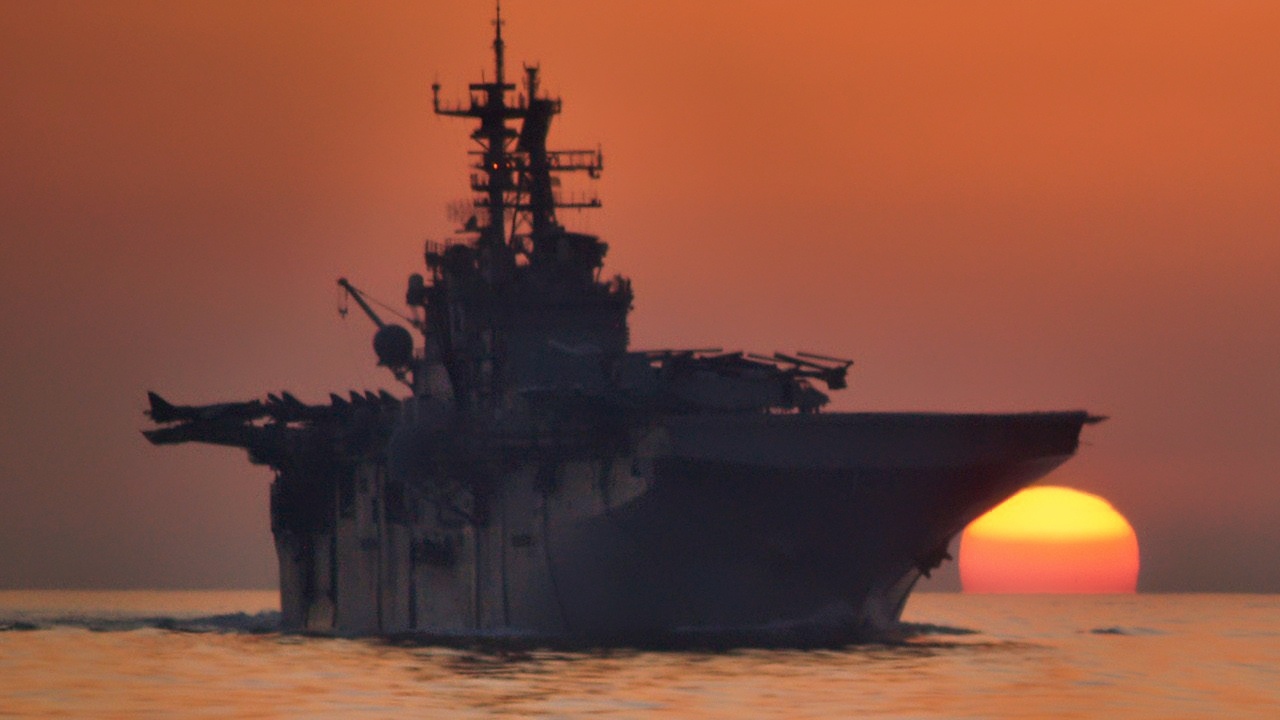
The amphibious assault ship USS Bataan (LHD 5) transits the Strait of Hormuz.
However, according to Al Jazeera, the island does possess an “underground missile fortress.” Even Qeshm, then, is not as attractive for an invasion as the media suggests.
Sadly, few in Washington are publicly acknowledging how irresponsible it would be to attempt such a landing.
Qeshm lies in the Strait of Hormuz, and capturing the territory would allow the Marines to establish heavy fires to conduct sea-control operations that counter the Iranian blockade. However, neither the Marines nor the Airborne Rangers are prepared to endure the counterattacks they would absorb.
Konarak Naval Base
Another possible operation, according to a Ukrainian YouTuber known as History Legends, would be a landing at the Konarak naval base. That Iranian naval facility, which was among the first targets struck by U.S. and Israeli forces at the outset of the war, sits on the southern coast of Iran. It is along the Gulf of Oman, rather than within the Strait of Hormuz or the Persian Gulf.
Therefore, that facility is nearer to where the US Navy is operating in the Arabian Sea and the Indian Ocean.
According to “History Legends,” the fact that this location is not in the “kill box” of the Strait or the Persian Gulf makes it an attractive target. The location is deep inside Baluchistan, a rebellious province in southern Iran that likely has CIA covert forces operating there.
The Marines and Airborne Rangers would have U.S. Navy support and the prospects of friendly locals who may help them to capture and secure the base.
Yet, the threat of Iranian drones and missiles to the invading force would remain. More importantly, it would still be difficult to bust apart the Iranian blockade of Hormuz from that location. The Marines and Army would need to take a place closer to the actual Strait.
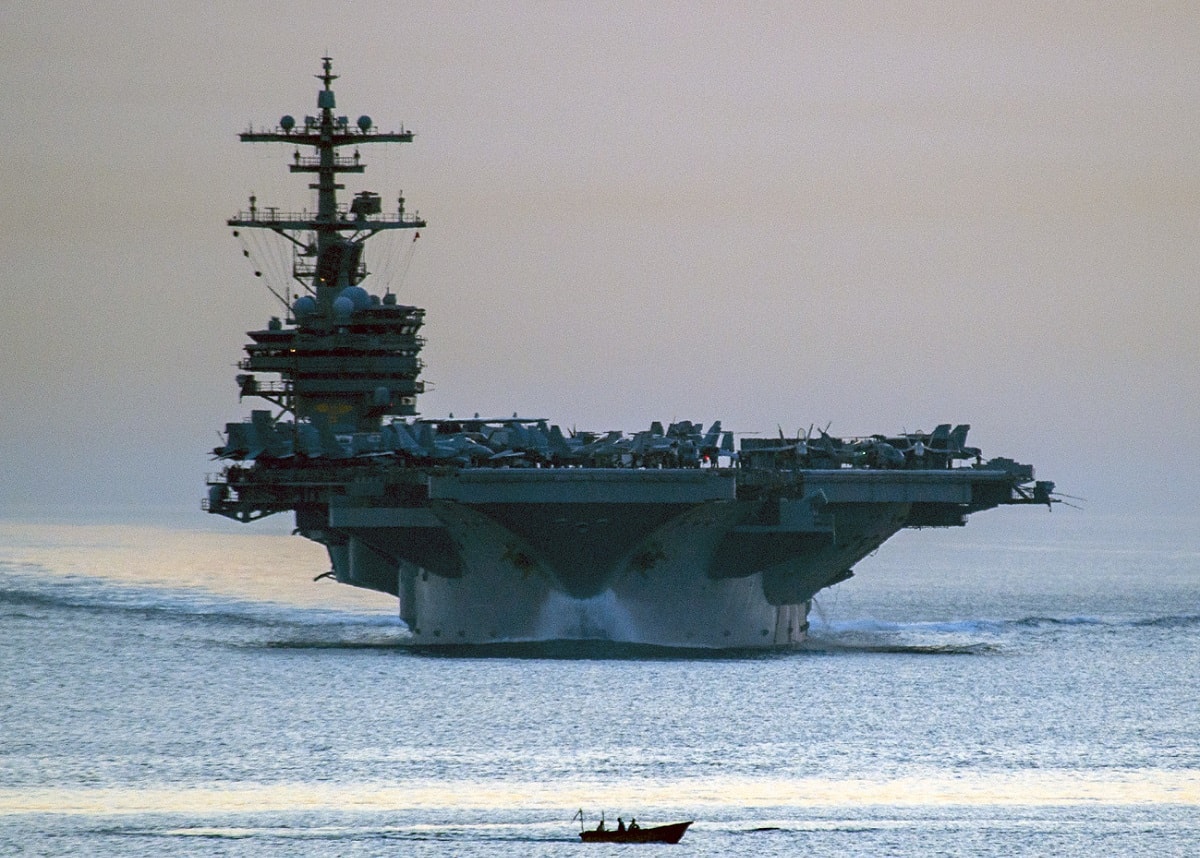
STRAIT OF HORMUZ (April 28, 2014) A small vessel transits in front of the aircraft carrier USS George H.W. Bush (CVN 77) as it transits the Strait of Hormuz as seen from the guided-missile cruiser USS Philippine Sea (CG 58). The George H.W. Bush Carrier Strike Group is supporting maritime security operations and theater security cooperation efforts in the U.S. 5th Fleet area of responsibility. (U.S. Navy photo by Mass Communication Specialist 3rd Class Abe McNatt/Released) 140428-N-PJ969-027
And, like the Navy, they appear quite averse to risking so much to gain so little.
The Drone War: The U.S. is Not Ready to Fight
What the Marines and Airborne Rangers experience if they land anywhere along the Iranian coastline will be similar to what the doomed early invasion forces Russia deployed into Ukraine endured: endless swarms of lethal drones harrying the invasion force until it simply must abandon its position and regroup outside the combat zone—in a humiliating withdrawal.
Given the finite number of troops and systems deployed to the region, and considering the strain already imposed on that stretched force, there is no scenario in which the Americans will be able to capture and hold any piece of the Iranian coastline, let alone conduct counterattacks against Iran’s missile, drone, and hypersonic weapons emplacements.
If the Americans attempt this landing and are hit hard, it will result in U.S. forces falling back and giving up even more ground to the Iranians, while the Iranians continue damaging the U.S.-led order by prolonging their blockade.
The Risk of a Humiliating Withdrawal
We are at the nadir of U.S. military power today as a result of the failed Middle East wars of the last two decades. The Iran War is about to ensure a complete strategic defeat of the U.S. military in the Middle East, while seriously threatening the economic stability of the United States and its allies.
At the same time, if the Trump administration continues down this most destructive path, the end result will be the total collapse of the US-led world order and the rise of a China-dominated one.
Paid for with the blood and treasure of ordinary Americans, spilled in the geopolitical quicksand of the Middle East.
About the Author: Brandon J. Weichert
Brandon J. Weichert is the Senior National Security Editor at 19FortyFive.com. Recently, Weichert became the editor of the “NatSec Guy” section at Emerald. TV. He was previously the senior national security editor at The National Interest. Weichert is the host of The National Security Hour on iHeartRadio, where he discusses national security policy every Wednesday at 8 pm Eastern. He hosts a companion show on Rumble entitled “National Security Talk.” Weichert consults regularly with various government institutions and private organizations on geopolitical issues. His writings have appeared in numerous publications, among them Popular Mechanics, National Review, MSN, and The American Spectator. And his books include Winning Space: How America Remains a Superpower, Biohacked: China’s Race to Control Life, and The Shadow War: Iran’s Quest for Supremacy. Weichert’s newest book, A Disaster of Our Own Making: How the West Lost Ukraine, is available for purchase wherever books are sold. He can be followed via Twitter/X @WeTheBrandon.