Summary and Key Points: It sounds like a scene straight out of a Hollywood thriller: an “invisible” hundred-million-dollar stealth fighter takes a hit from enemy fire, yet the pilot miraculously brings the wounded bird home. But over the skies of Iran, that scenario just became a stark reality. Journalist Caleb Larson breaks down how an American F-35A survived a missile strike during Operation Epic Fury. While Iranian propaganda claims massive victories, the truth reveals a fascinating cat-and-mouse game between cutting-edge stealth technology and heat-seeking missiles.
Bringing the Bird Home: Inside the F-35’s Emergency Landing in Iran War

X-35B. Image Credit: 19FortyFive.com

X-35 Fighter 19FortyFive Image. Image Credit: 19FortyFive.com take on 2/4/2026 at the Smithsonian.
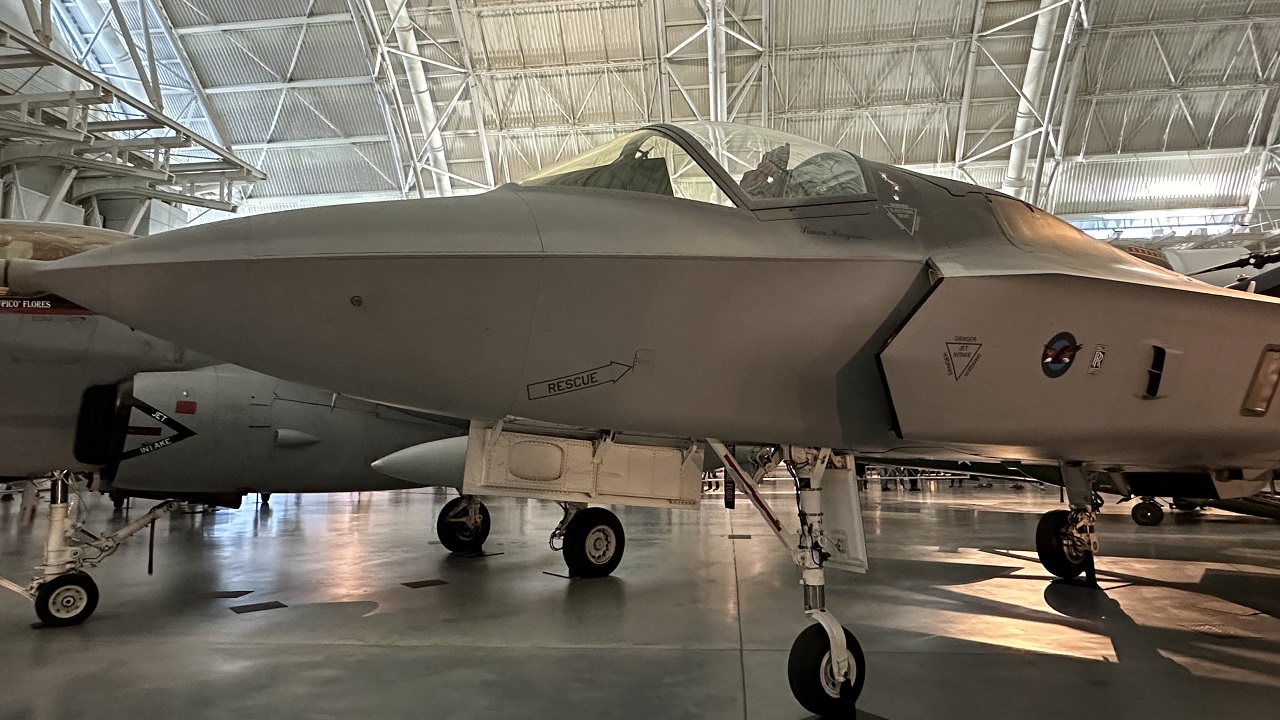
X-35B Joint Strike Fighter. Image taken on October 1, 2022 at National Air and Space Museum.
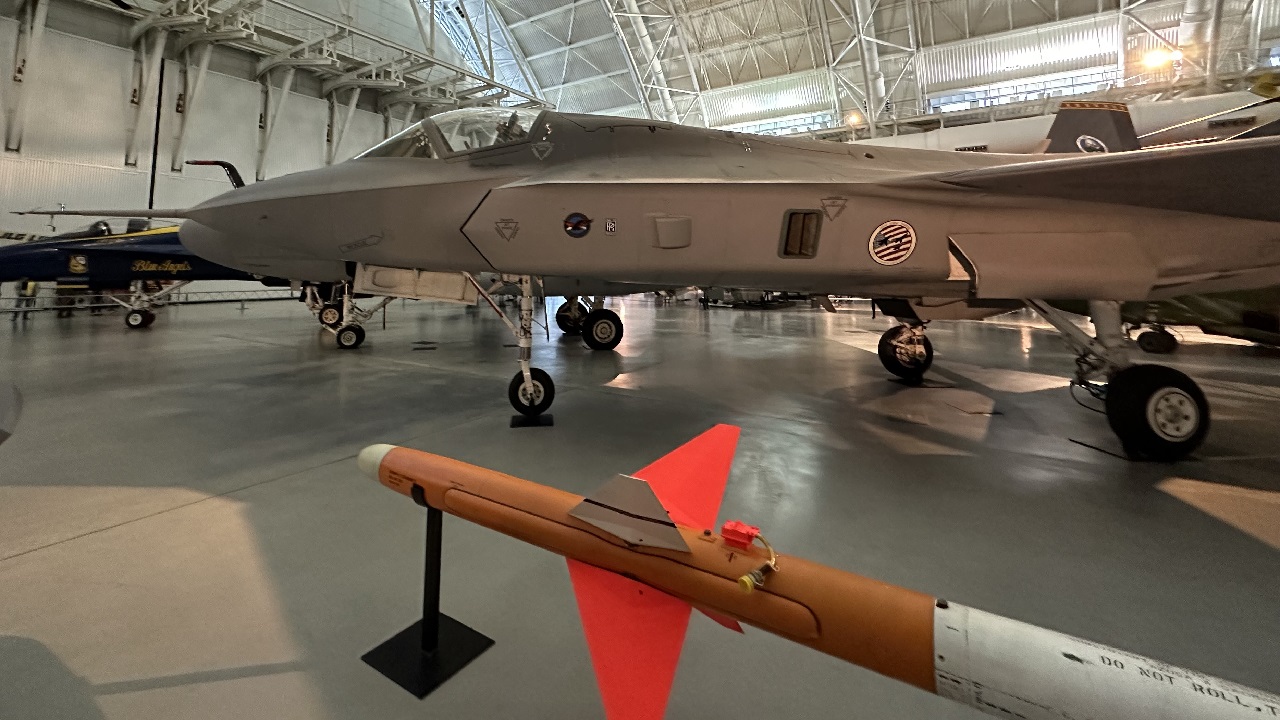
X-35B Joint Strike Fighter. Image taken on October 1, 2022 at National Air and Space Museum.

X-35B Joint Strike Fighter. Image taken on October 1, 2022 at National Air and Space Museum.
Iran reportedly targeted and struck a U.S. Air Force F-35A stealth fighter while the jet was flying over the country. Video of the event shows what appears to be an F-35 struck by a missile. The incident marked the first instance of Iran striking an American or Israeli warplane.
Air and Space Forces Magazine, quoting “people familiar with the matter,” reports that the U.S. Air Force F-35A pilot involved in the incident “suffered shrapnel wounds” after the jet was hit by Iranian ground fire.
Although U.S. Central Command did not provide many details about the incident, the jet is thought to have been struck by a surface-to-air missile rather than small arms fire. Given the F-35’s stealth capability, it is possible that the missile in question used a heat-seeking infrared sensor to home in on the jet’s engine exhaust.
Multiple U.S. Air Force units that fly the F-35A have been deployed in support of Operation Epic Fury, called Operation Roaring Lion in Israel. F-35Cs operating from U.S. Navy aircraft carriers have been deployed as well.
Natasha Bertrand, a Pentagon and national security correspondent for CNN, summarized the known facts about the incident. She wrote that “A US F-35 fighter jet made an emergency landing at US air base in the Middle East after it was struck by what is believed to be Iranian fire, according to two sources familiar with the matter.”
Betrand quoted Captain Tim Hawkins, a spokesman for U.S. Central Command, who said the F-35 in question was “flying a combat mission over Iran” when it was forced to make an emergency landing. Captain Hawkins added that “the aircraft landed safely, and the pilot is in stable condition.”
Importantly, Bertrand noted that “the incident would be the first time Iran has hit a US aircraft in the war started in late February.
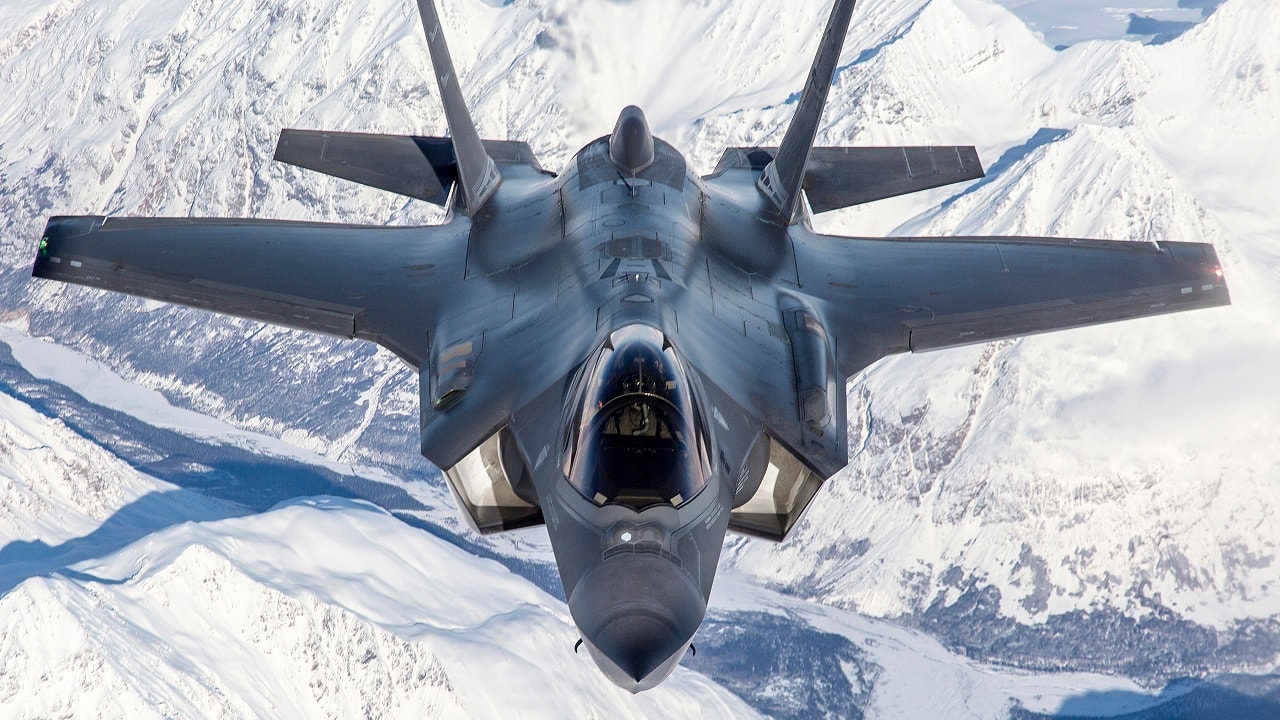
F-35 Stealth Fighter. Image Credit: Creative Commons.
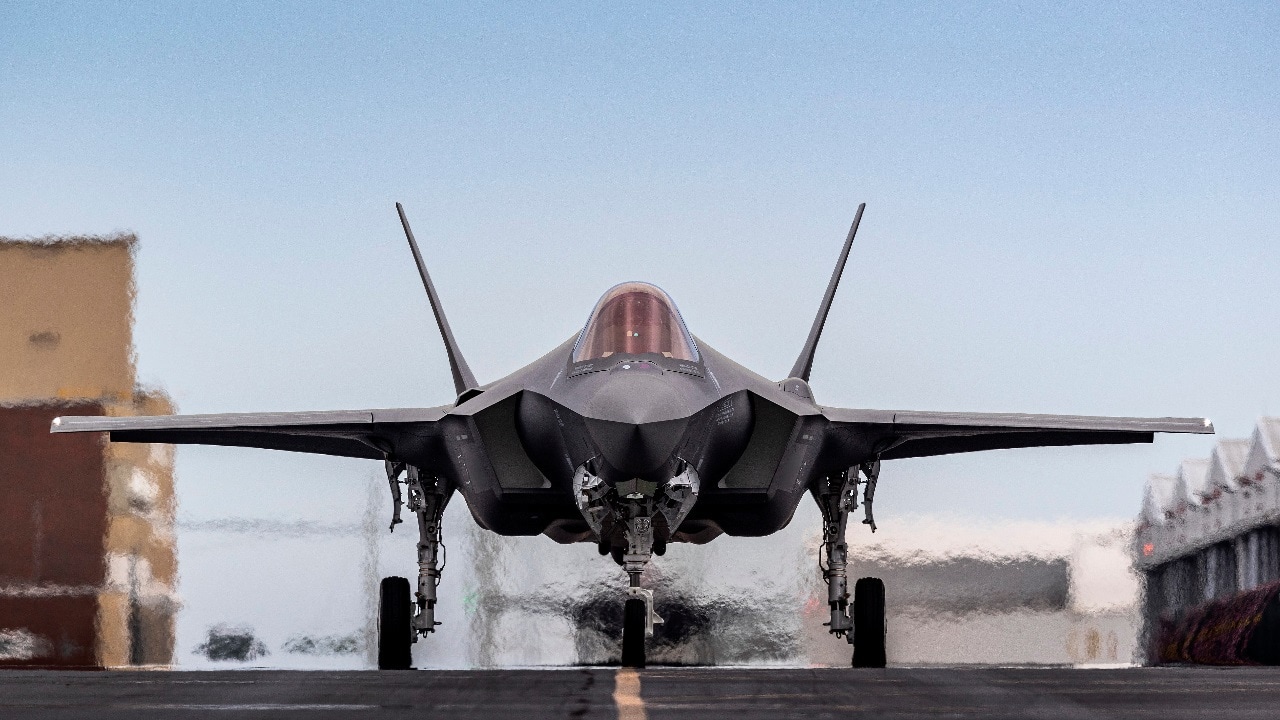
F-35 image. Image Credit: Creative Commons.
Both the US and Israel are flying F-35s in the conflict; the aircraft costs upwards of $100 million.” But there has been a flurry of wild Iranian claims since the opening of Operation Epic Fury, many of which were gross fabrications.
Has Iran Shot Down U.S. Fighter Jets or Sunk Warships?
Iranian messaging has bordered on the farcical, with wild claims of U.S. Navy warships, fighter jets, and bombers destroyed, with many American lives lost.
But U.S. Central Command (CENTCOM) tried to set the record straight about a few of these claims, starting with one of the most recent that says Iran was responsible for shooting an American F-15.
CENTCOM pushed back against assertions that American warplanes have been shot down by Iran on X, formerly Twitter, saying, “Rumors are again circulating about a U.S. F-15 being shot down over Kuwait. They are NOT TRUE.”
It added that “the disinformation campaign from the Iranian regime is rampant. Lies about U.S. aircraft being shot down by Iran have been circulated multiple times on different platforms using fake or misleading imagery. To be clear: No U.S. fighter aircraft have been shot down by Iran.”
Although three F-15s were shot down by friendly fire earlier this month, losses that CENTCOM acknowledged, they were not shot down by Iran.
None of the pilots or weapon system officers involved in those incidents were killed or seriously injured.
Looking Forward
That the F-35A managed to fly back to an unspecified air base in the Middle East indicates it was not destroyed and may be repairable. In any event, it may well be the first F-35 damaged in the course of combat operations.
If so, the event reinforces the F-35’s stealth design but also opens the door to future vulnerabilities—though with the caveat that not many details about the incident are known. Analyses about the event are, therefore, speculative rather than definitive.
The Iranian video appears to have been filmed through a forward-looking infrared system. Iran does have the ability to use passive infrared sensors to target aircraft instead of radar, which fifth-generation aircraft like the F-35 are designed to defeat.
The Houthis, an Iranian-backed rebel group in Yemen, used the technology to shoot down a handful of MQ-9 Reaper drones last year during Operation Rough Rider, though those drones are low-moving and lack the radar-mitigating features seen on F-35s.
The F-35 Is Not Perfect: No Stealth Fighter Is
Landing a successful strike on an F-35 is a significant coup.
But considering the scale of operations over Iran, an enormous and ongoing aerial campaign, that single F-35 strike is less impressive. Far from proving that stealth technology is useless, the incident does highlight the operational risks that all warplanes face, stealthy or not.
About the Author: Caleb Larson
Caleb Larson is an American multiformat journalist based in Berlin, Germany. His work covers the intersection of conflict and society, focusing on American foreign policy and European security. He has reported from Germany, Russia, and the United States. Most recently, he covered the war in Ukraine, reporting extensively on the war’s shifting battle lines from Donbas and writing on the war’s civilian and humanitarian toll. Previously, he worked as a Defense Reporter for POLITICO Europe. You can follow his latest work on X.