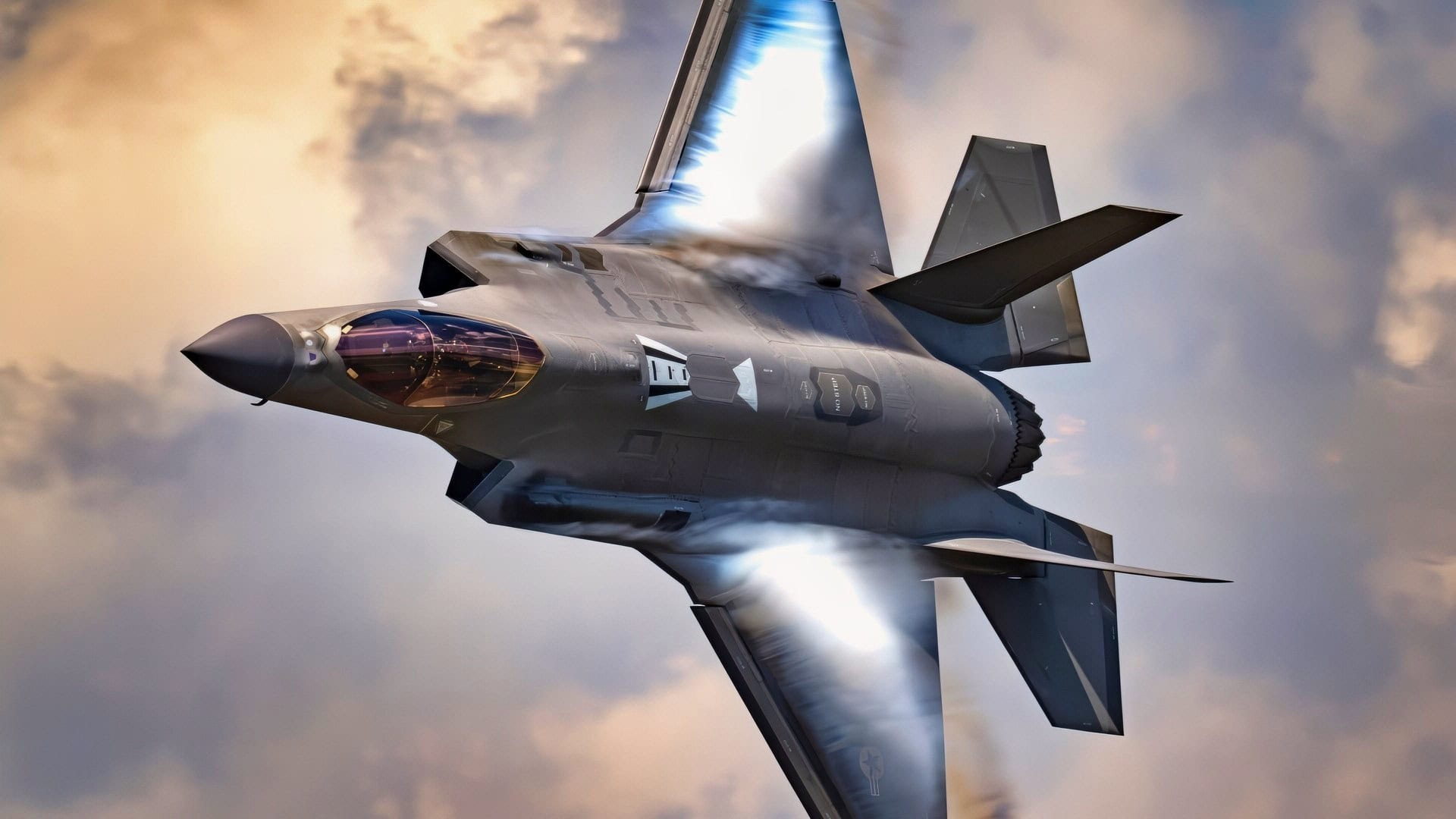
Summary and Key Points: If you’ve read the recent headlines, you might think Australia just cut back its F-35 program.
-Not quite. Journalist Georgia Gilholy explains that while Canberra has paused the purchase of a fourth squadron (28 additional jets), it is far from abandoning the stealth fighter.
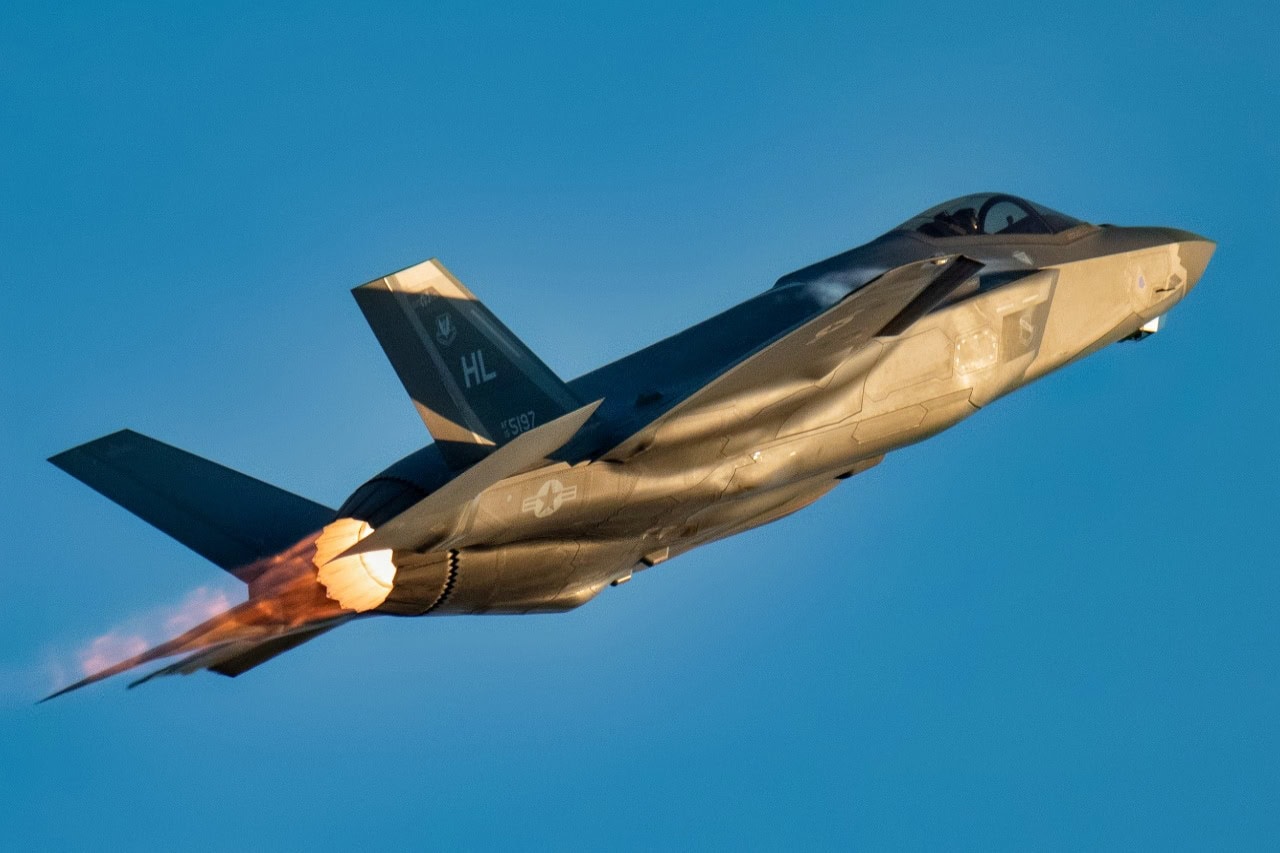
U.S. Air Force Major Kristin “BEO” Wolfe, F-35A Lightning ll Demonstration Team pilot and commander, flies during sunset over Mathers Airport, Calif., Sept. 24th, 2021, at the California Capital Airshow. The team consists of approximately 15 total Airmen to include the pilot and commander, pilot safety officers, superintendent, team chief, maintenance Airmen, aircrew flight equipment specialists, and public affairs personnel. (U.S. Air Force photo by Staff Sgt. Thomas Barley)
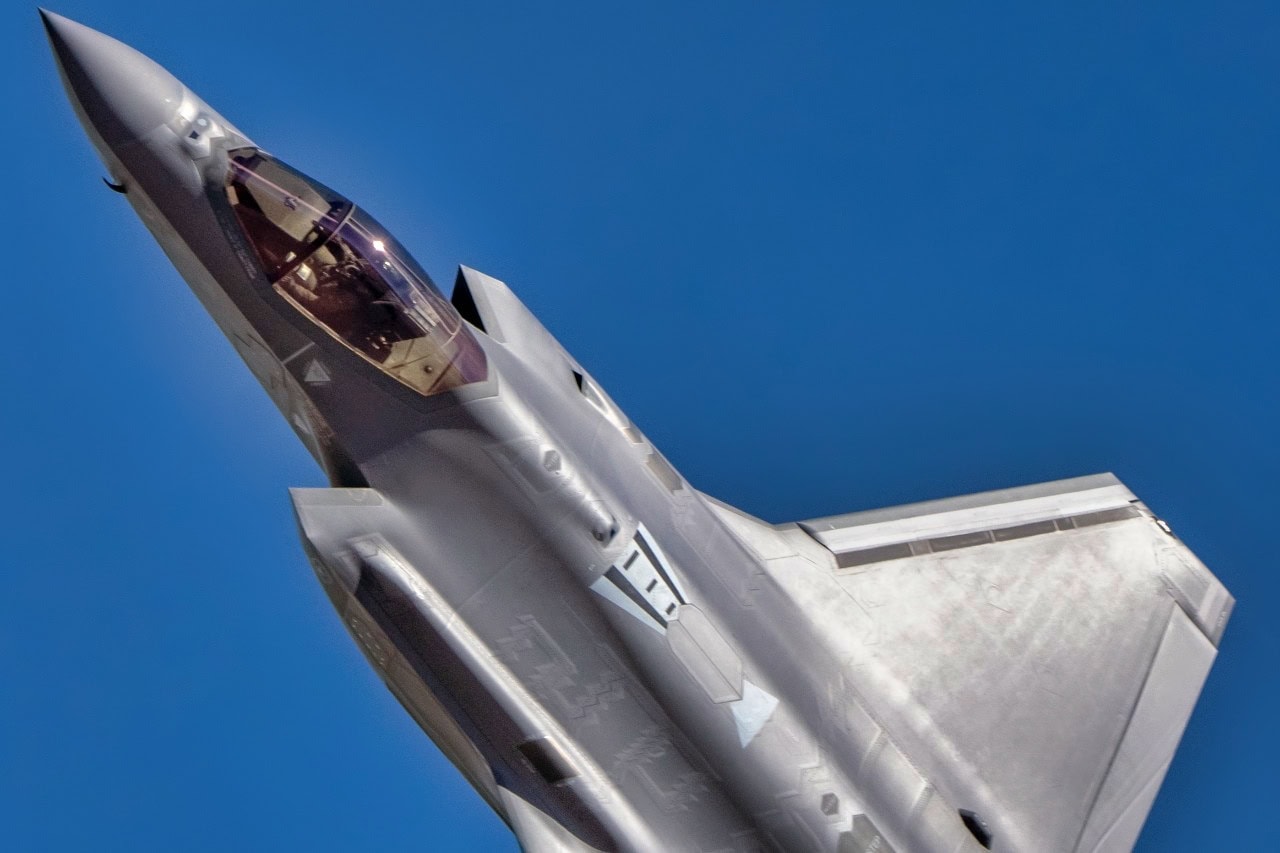
U.S. Air Force Maj. Kristin “BEO” Wolfe, F-35A Lightning II Demonstration Team pilot and commander, flies during the 2021 Reno Air Races, Reno, Nev., Sept. 18, 2021. The 2021 Reno Air Races featured performances from the U.S. Air Force F-35A Demo Team and the U.S. Air Force Thunderbirds. (U.S. Air Force photo by Capt. Kip Sumner)
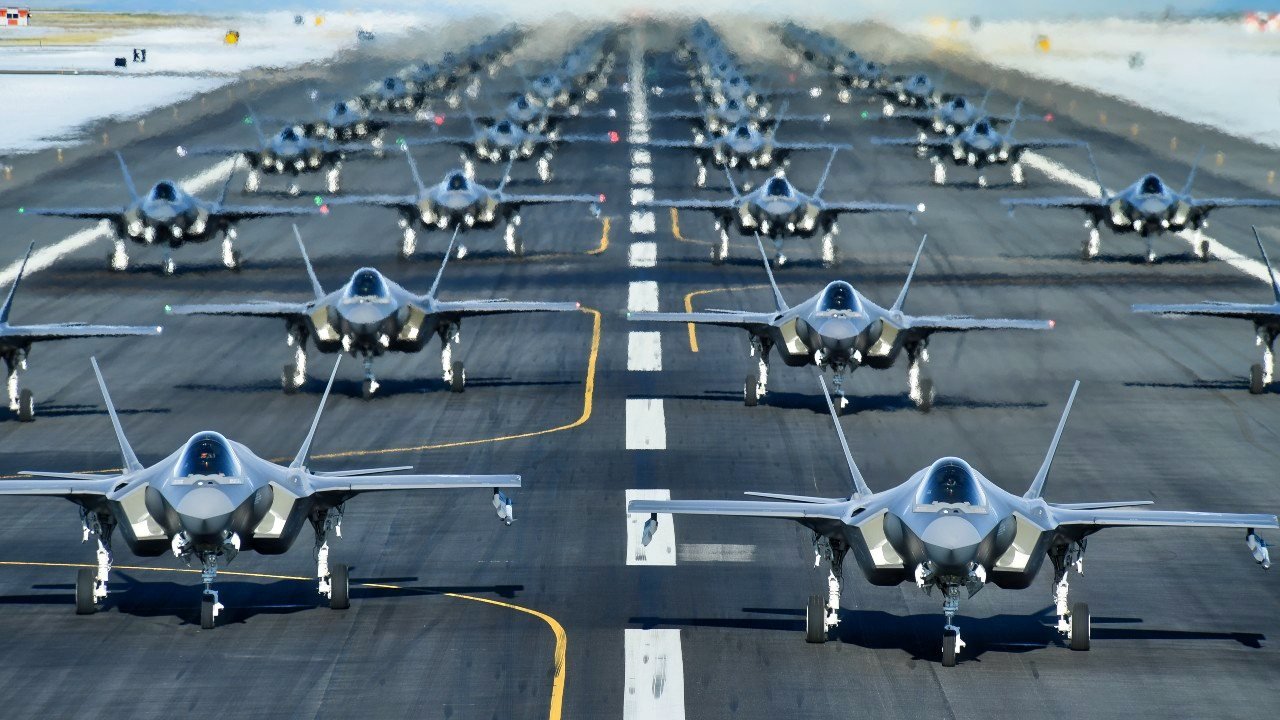
F-35 Elephant Walk. Image Credit: Creative Commons.
-Having just achieved Final Operational Capability for its fleet of 72 F-35As, Australia is strategically pivoting.
-By keeping its F/A-18F Super Hornets and EA-18G Growlers flying, the government is freeing up massive funds—up to A$2.12 billion—to stockpile advanced long-range missiles.
-It’s a calculated bet that in the Indo-Pacific, magazine depth and electronic warfare matter just as much as having more stealth jets on the tarmac.
Australia Holds Off on Extra F-35 Purchase
Australia is holding off on fielding a fourth F-35 squadron. Reporting tends to frame this decision as Canberra outright “cancelling” fresh purchases of Joint Strike Fighters, but the wider context is important.
Prime Minister Anthony Albanese’s administration explained in April 2024 that it had halted plans to grow the Royal Australian Air Force’s (RAAF’s) F-35 fleet beyond 72 jets.
The Labor government said it would redirect funding toward long-range missiles and more-diverse strike capabilities. At the time, Defense Minister Pat Conroy claimed Australia’s F/A-18E/F Super Hornets were “doing great work” and that the F-35 was “even more capable than we initially thought”.
That is an important distinction. Australia has not turned against the F-35. On the contrary, the aircraft now sits at the center of the country’s air combat capability.
The Australian Defence Force (ADF) declared final operational capability for its fleet of 72 F-35As at the end of 2025, stressing that the jets would be capable of fulfilling their required mission set with the pilots, support systems, and infrastructure needed. The ADF also said back in December 2024 that the final aircraft from the 72-jet order had been received.
What has changed is the surrounding force structure. Instead of rushing to buy another 28 aircraft, Canberra has opted to keep its Super Hornets in service and use the fiscal breathing room to deepen its missile stocks. That approach aligns with Australia’s broader “strategy of denial,” which emphasizes range, survivability, and strike depth.
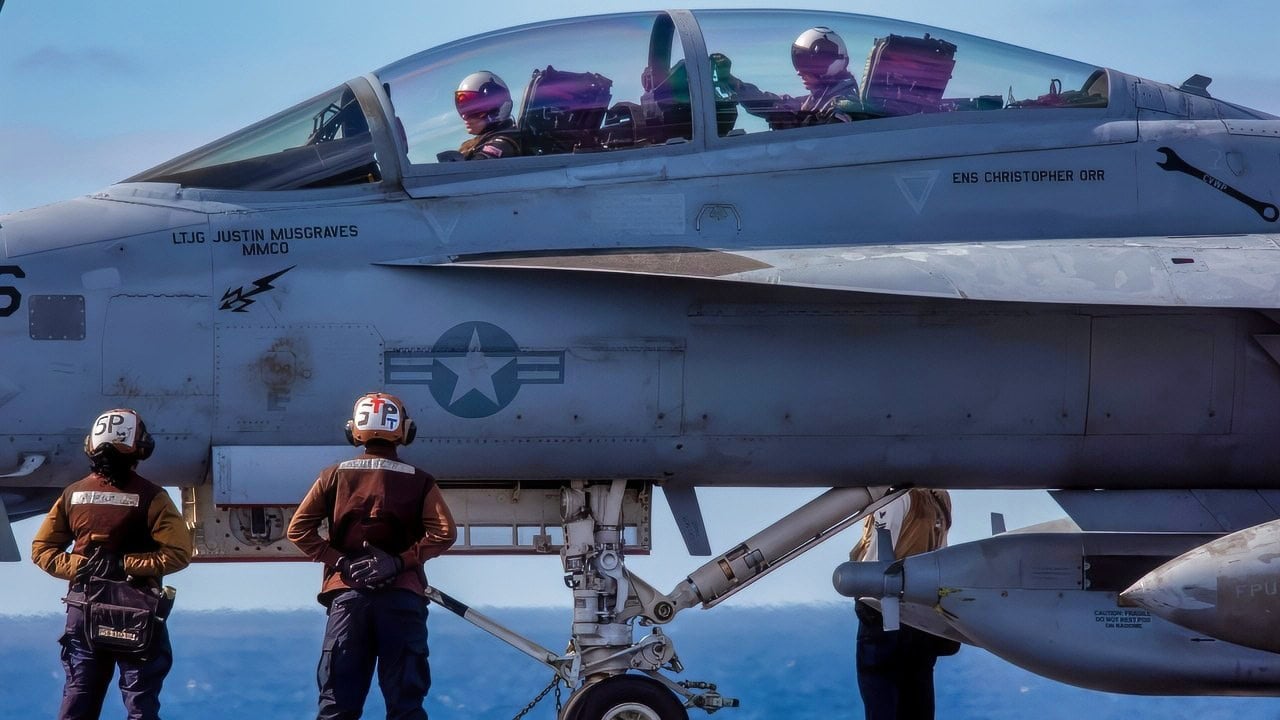
U.S. Navy Sailors prepare to taxi an EA-18G Growler, attached to Electronic Attack Squadron (VAQ) 133, on the flight deck of Nimitz-class aircraft carrier USS Abraham Lincoln (CVN 72) on Nov. 24, 2025. USS Abraham Lincoln (CVN 72), flagship of the Abraham Lincoln Carrier Strike Group, is underway conducting routine operations in the U.S. 3rd Fleet area of operations, demonstrating the U.S. Navy’s long-term commitment to a free and open Indo-Pacific. (U.S. Navy photo by Mass Communication Specialist Seaman Daniel Kimmelman)
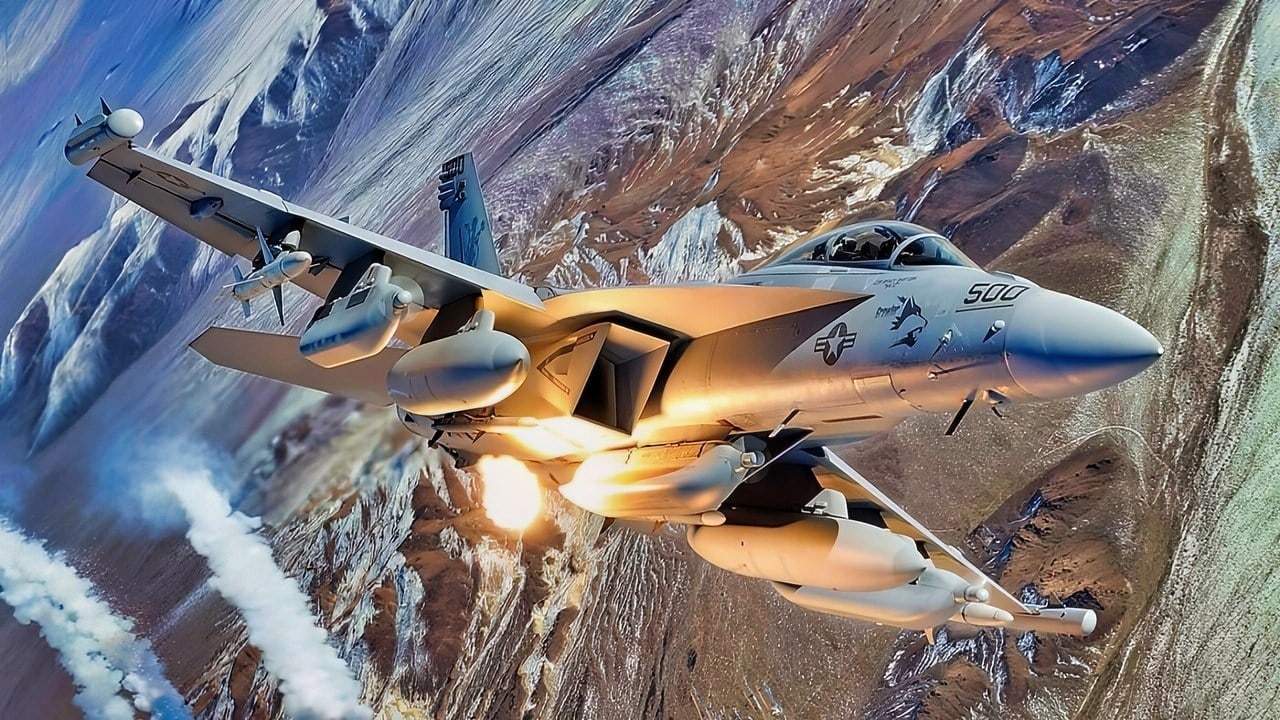
EA-18G Growler Firing Weapons. Image Credit: Creative Commons.
Australian Aviation reported last year that money saved by delaying extra F-35 purchases would be shifted toward long-range missiles, while later reports explained that Australia signed off on up to A$2.12 billion worth of additional purchases of advanced medium-range air-to-air missiles, including AIM-120C-8s and AIM-120D-3s that can be used by the F/A-18F, EA-18G Growler, and F-35A.
In that sense, the government appears to be betting that combat mass is not just about more airframes.
Magazine depth, electronic warfare, sustainment, and the ability to strike at range may matter just as much in any future Indo-Pacific contingency. Australia’s 12 EA-18G Growlers remain especially valuable here, giving the RAAF a specialised electronic attack capability possessed by very few U.S. allies.
Meanwhile, keeping the Super Hornet fleet relevant buys Canberra time to assess what comes next in the 2030s, including possible involvement in the UK-Japan-Italy Global Combat Air Program.
As Simple Flying’s reporting notes, delaying the extra F-35 buy leaves more options open later.
It is not that Australia’s defense establishment has grown wary of the F-35; rather, 72 new F-35s, backed by improved Super Hornets, Growlers, and a growing missile inventory, are satisfactory for the time being.
Whether that proves prudent or too cautious will depend on how fast the regional threat picture hardens, and how quickly the next generation of air combat systems becomes real.
About the Author: Georgia Gilholy
Georgia Gilholy is a journalist based in the United Kingdom who has been published in Newsweek, The Times of Israel, and the Spectator. Gilholy writes about international politics, culture, and education. You can follow her on X: @llggeorgia.