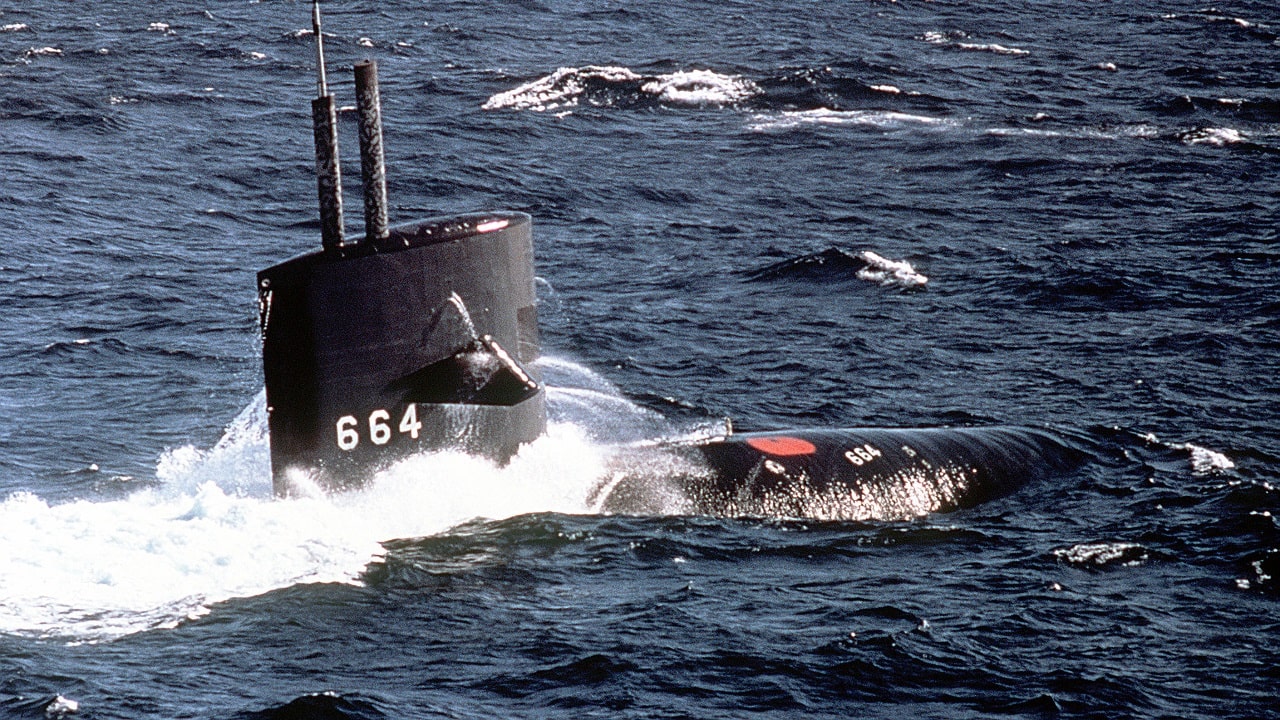
The USS Parche Just Might be the U.S. Navy’s Best Nuclear Submarine
The USS Parche (SSN-683) began life as a normal Sturgeon-class nuclear attack submarine. Commissioned in 1974, during the Cold War, the Parche quickly became something more than just another American submarine. Within a few years, it was converted into something entirely different.
She became a deep-ocean espionage platform tasked with spying on the Soviet Union.
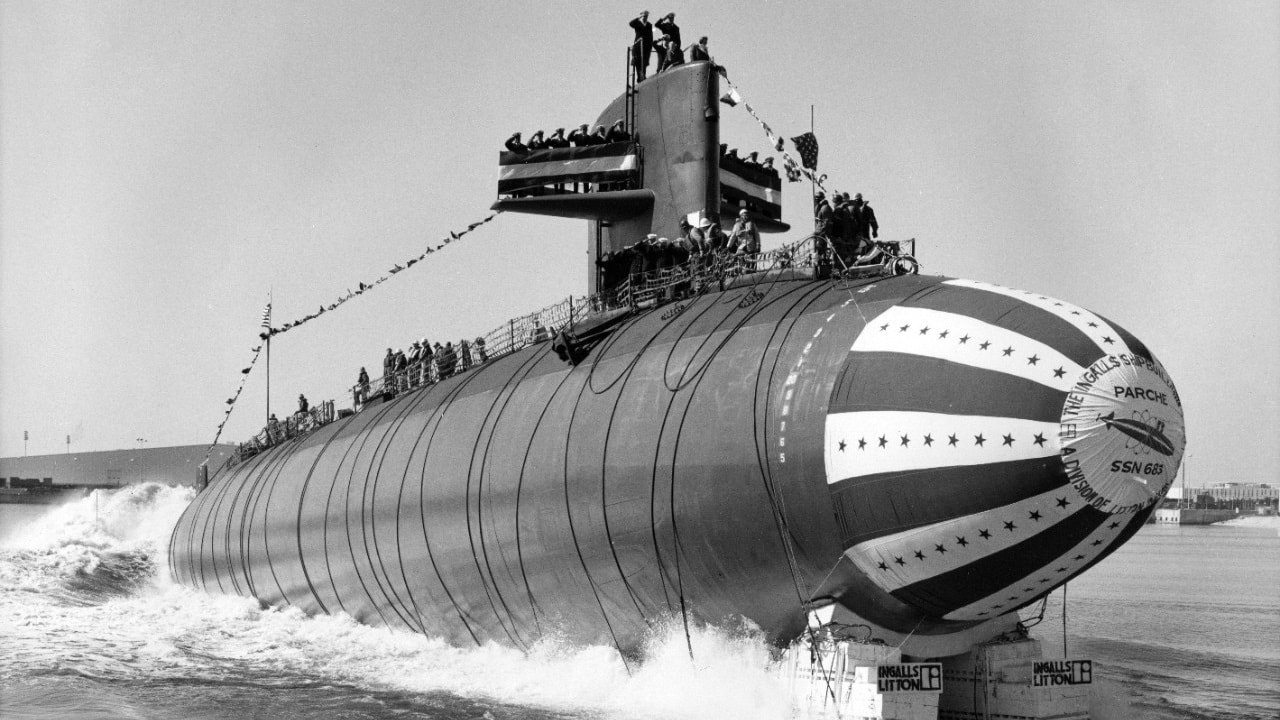
USS Parche (SSN 683) from the early 1970s.
Operation Ivy Bells
Over time, the boat was so heavily modified that it barely resembled the attack submarine it had begun as. Instead of focusing on combat, Parche specialized in undersea intelligence collection and worked closely with US intelligence agencies.
From 1974-2004, the USS Parche plumbed the depths of unfriendly deep waters, finishing its career as the most highly decorated vessel in US Navy history.
Operation Ivy Bells was a now-famous Cold War-era covert mission to tap into undersea cables in the Sea of Okhotsk. Back then, US intelligence gleaned that the Soviet Pacific Fleet communicated through the cables beneath the Sea of Okhotsk. So, American submarines secretly installed recording devices on those cables.
Parche became one of the submarines responsible for maintaining and retrieving those taps, allowing the Americans to listen to Soviet naval communications. It was a major victory for US intelligence in the Cold War, allowing for Washington to learn many of the Soviet Union’s most intimate naval secrets.
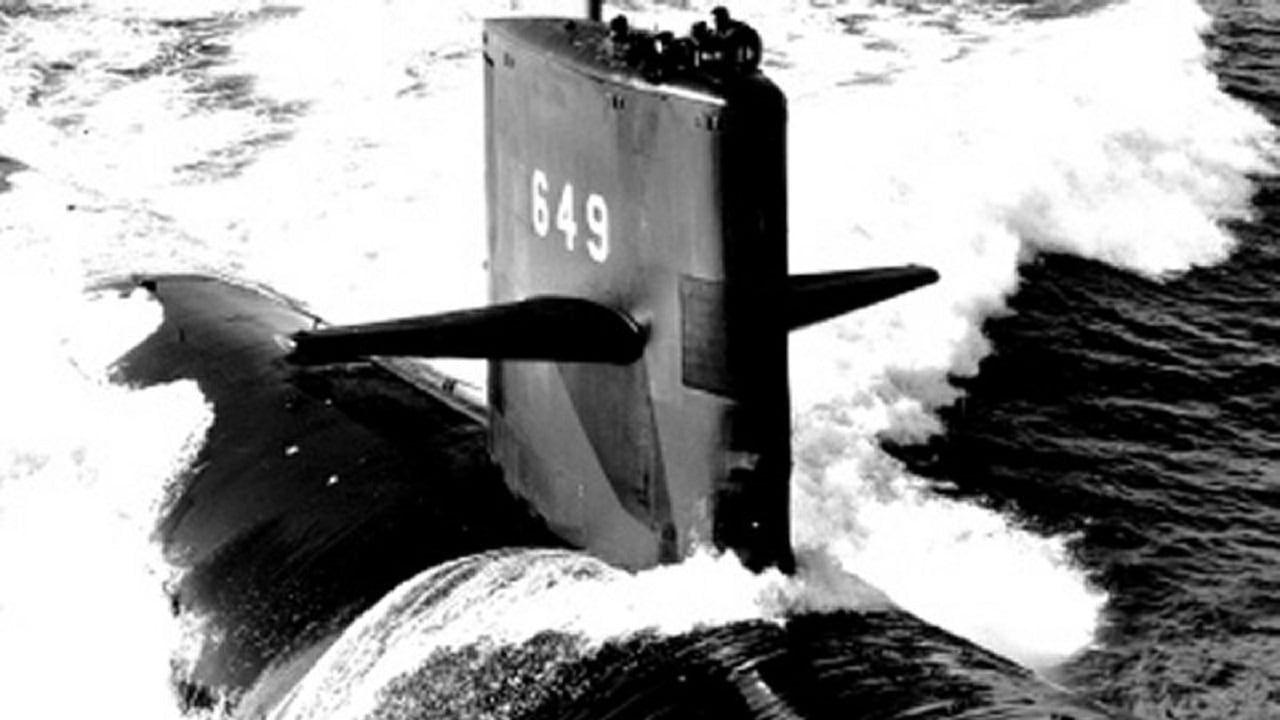
USS Sunfish SSN-649. Sturgeon-Class Submarine.
Stealing Soviet Missiles
But that wasn’t the only important Cold War-era secret mission that the Parche participated in. After Soviet engineers tested a new missile system that was fired into the ocean, the Parche was deployed to retrieve the spent experimental missile. The idea was to capture the new Soviet missile after the test launch so that the US could analyze its design and more effectively counter it.
Indeed, some reports suggest that Parche may have used mechanical arms or specialized gear to retrieve pieces from the seabed, which were then reverse-engineered by American engineers once returned to the States.
Even today, most of Parche’s operations remain classified.
Analysts believe it conducted surveillance near Soviet naval bases, undersea cable mapping, covert diver operations, as well as intelligence collection against China, Iran, and North Korea following the Cold War. Parche was an underwater spy station.
To perform those missions, Parche underwent major refits.
The Radical Modifications That Transformed Parche
The biggest came between 1987 and 1991, when the Navy inserted a 100-foot hull extension, dramatically increasing its size and internal equipment capacity.
These modifications included signals-intelligence antennas, specialized sonar arrays, cameras and armored lights, diver lock-out chambers, and maneuvering thrusters for precision seabed work.
And because of the added equipment listed above, most torpedo tubes were removed, leaving the submarine under-armed but extremely capable as a spy platform.
One of the most striking claims about the USS Parche was that it possessed a scuttle/self-destruct protocol.
The submarine carried around 150 pounds of explosive. It was assumed that, if the Soviets ever did look to be able to capture the submarine, the crew could destroy the submarine and its classified equipment. Of course, doing this would have likely killed all 112 sailors on board.
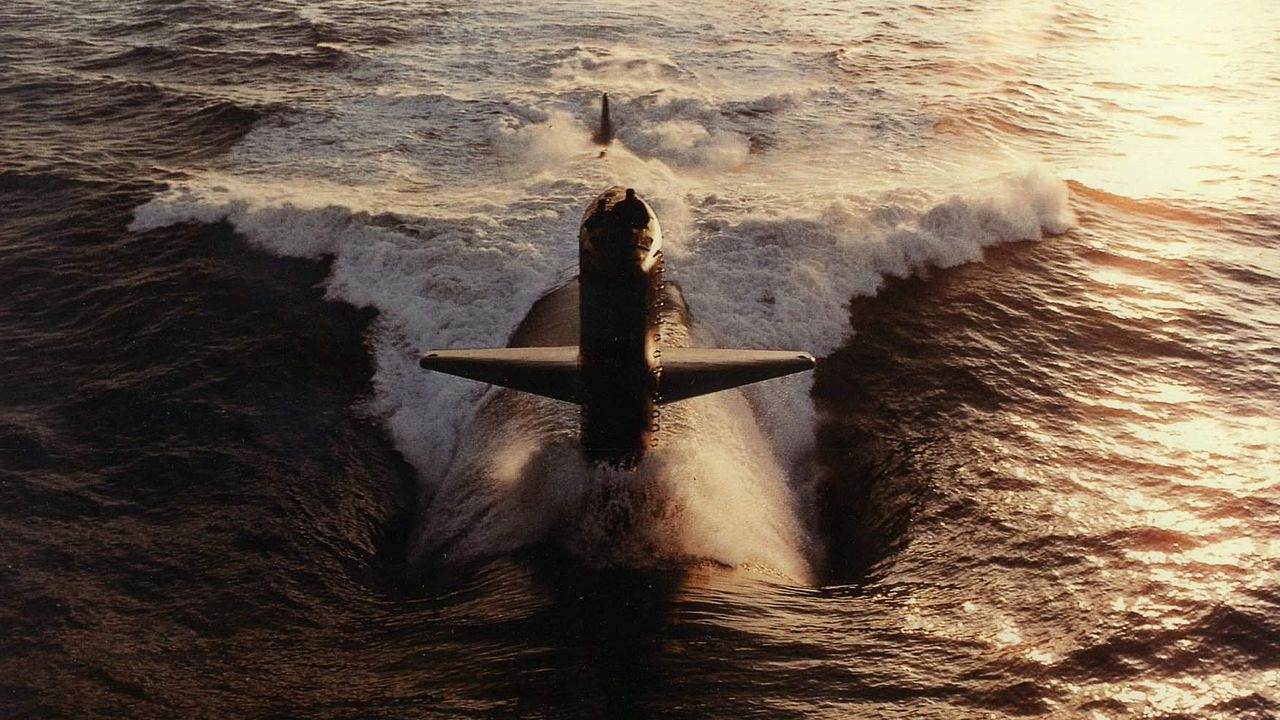
Sturgeon-Class submarine. Image Credit: Creative Commons.
Over the course of its long service to the United States, the submarine was awarded nine Presidential Unit Citations, 10 Navy Unit commendations, and 13 Navy Expeditionary Medals. Most warships never receive even one Presidential Unit Citation.
The Most Decorated Ship in the US
Blessedly, when the unique Parche was retired in 2004, its role didn’t disappear.
Instead, that mission moved to a specially modified submarine: the USS Jimmy Carter.
This Seawolf-class submarine carries a Multi-Mission Platform that supports diver operations, drones, and undersea intelligence work—essentially the modern Parche.
USS Parche was essentially the Navy’s ultimate Cold War spy machine.

(August 16, 2006) – USS Jimmy Carter (SSN 23) sits moored in the Magnetic Silencing Facility at Naval Base Kitsap Bangor Aug 16 for her first ìdepermingî treatment. The deperming process reduces a ships electromagnetic signature as she travels through the water. U.S. Navy Photograph by MCCM(AW) Jerry McLain (Released)
It was a nuclear-powered vessel designed to sneak into enemy waters, tap communications cables, recover missile secrets from the ocean floor, and conduct covert intelligence missions so sensitive that much of its history remains classified today.
About the Author: Brandon J. Weichert
Brandon J. Weichert is the Senior National Security Editor at 19FortyFive.com. Recently, Weichert became the editor of the “NatSec Guy” section at Emerald. TV. He was previously the senior national security editor at The National Interest. Weichert is the host of The National Security Hour on iHeartRadio, where he discusses national security policy every Wednesday at 8 pm Eastern. He hosts a companion show on Rumble entitled “National Security Talk.” Weichert consults regularly with various government institutions and private organizations on geopolitical issues. His writings have appeared in numerous publications, among them Popular Mechanics, National Review, MSN, and The American Spectator. And his books include Winning Space: How America Remains a Superpower, Biohacked: China’s Race to Control Life, and The Shadow War: Iran’s Quest for Supremacy. Weichert’s newest book, A Disaster of Our Own Making: How the West Lost Ukraine, is available for purchase wherever books are sold. He can be followed via Twitter/X @WeTheBrandon.