
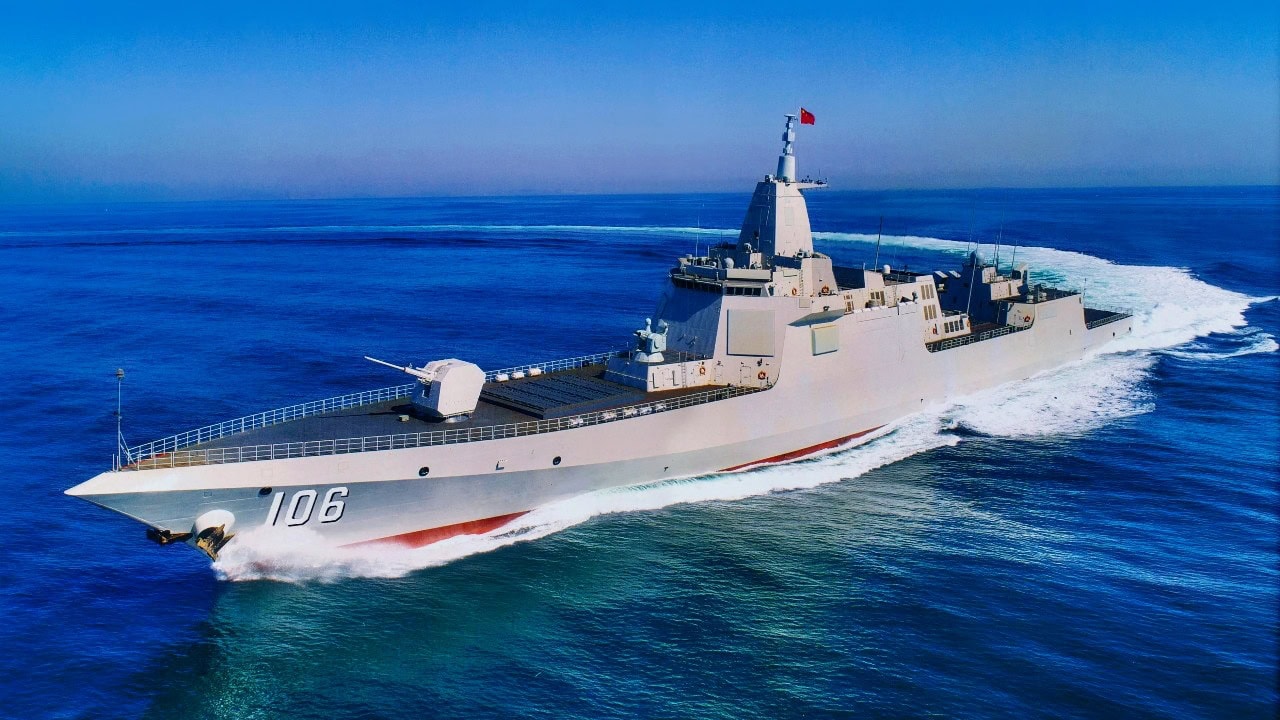
Summary and Key Points: Defense analyst Christian D. Orr evaluates Japan’s strategic pivot as the Japan Self-Defense Forces (JSDF) deploy Mitsubishi Heavy Industries (MHI) Type-12 anti-ship missiles to Kumamoto.
-This deployment marks a historic departure from the Yoshida Doctrine, transitioning toward “counterstrike” capabilities.
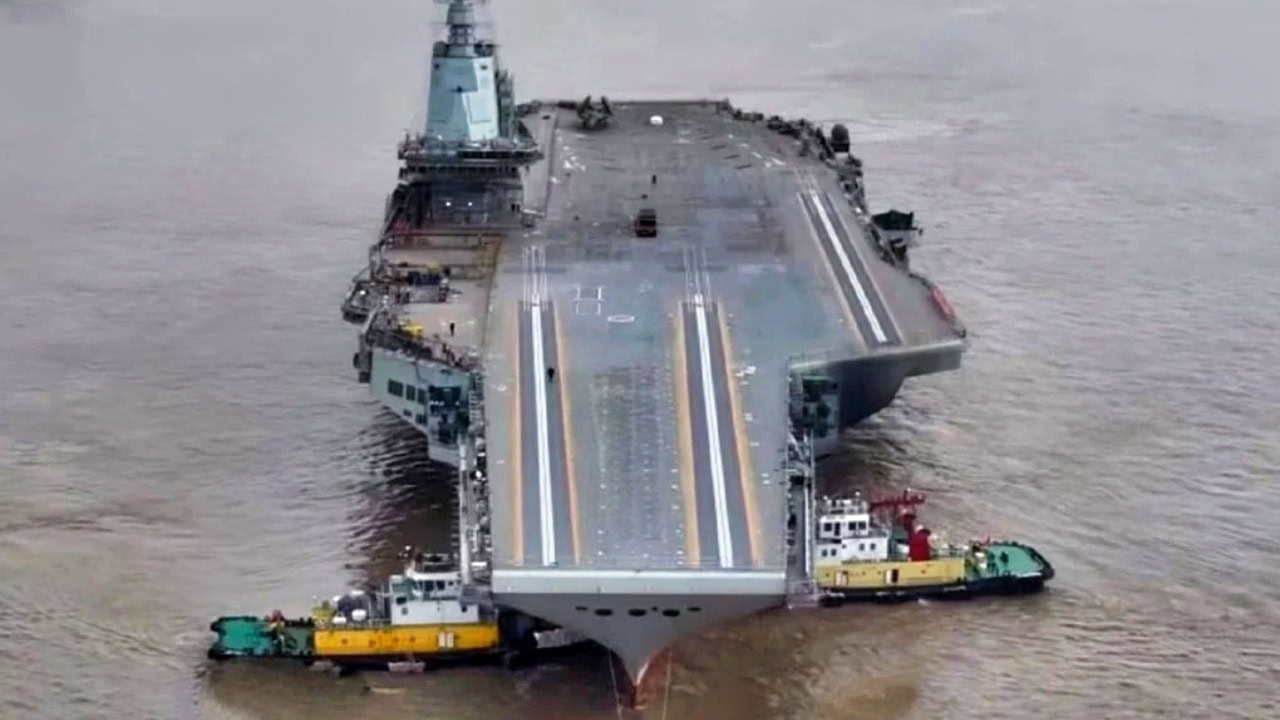
China Aircraft Carrier. Image Credit: Chinese State Media.
-Featuring A-band AESA radar and TERCOM guidance, the upgraded Type-12 will eventually reach a 1,000-kilometer (621-mile) range, placing the Taiwan Strait and PLAN coastal assets within striking distance.
-Amidst rising Indo-Pacific tensions and Quad security goals, Prime Minister Sanae Takaichi is prioritizing proactive defense over traditional Article 9 constraints.
Japan’s Type-12 Missile Deployment: Crossing the Strategic Threshold Against China
After the defeat of Imperial Japan at the end of World War II, that East Asian nation was compelled to draft a new Constitution. Article 9 was important:
“Aspiring sincerely to an international peace based on justice and order, the Japanese people forever renounce war as a sovereign right of the nation and the threat or use of force as a means of settling international disputes. (2) In order to accomplish the aim of the preceding paragraph, land, sea, and air forces, as well as other war potential, will never be maintained. The right of belligerency of the state will not be recognized.”
Effective July 1, 1954, that “forever renounce war” part was reinterpreted to allow for the creation of the Japan Self-Defense Forces (JSDF)—a reasonable recognition of the fact that all sovereign nation-states have an inherent right to self-protection.
Along those same lines, after the defeat of Nazi Germany, Cold War-era West Germany and East Germany were allowed to stand up the Bundeswehr and Nationale Volksarmee, respectively.
However, as JSDF’s name implies, the force was forbidden from offensive capabilities and postures, which explains, among other things, why it does not have long-range strategic bombers such as the B-52 Stratofortress and B-1B Lancer.
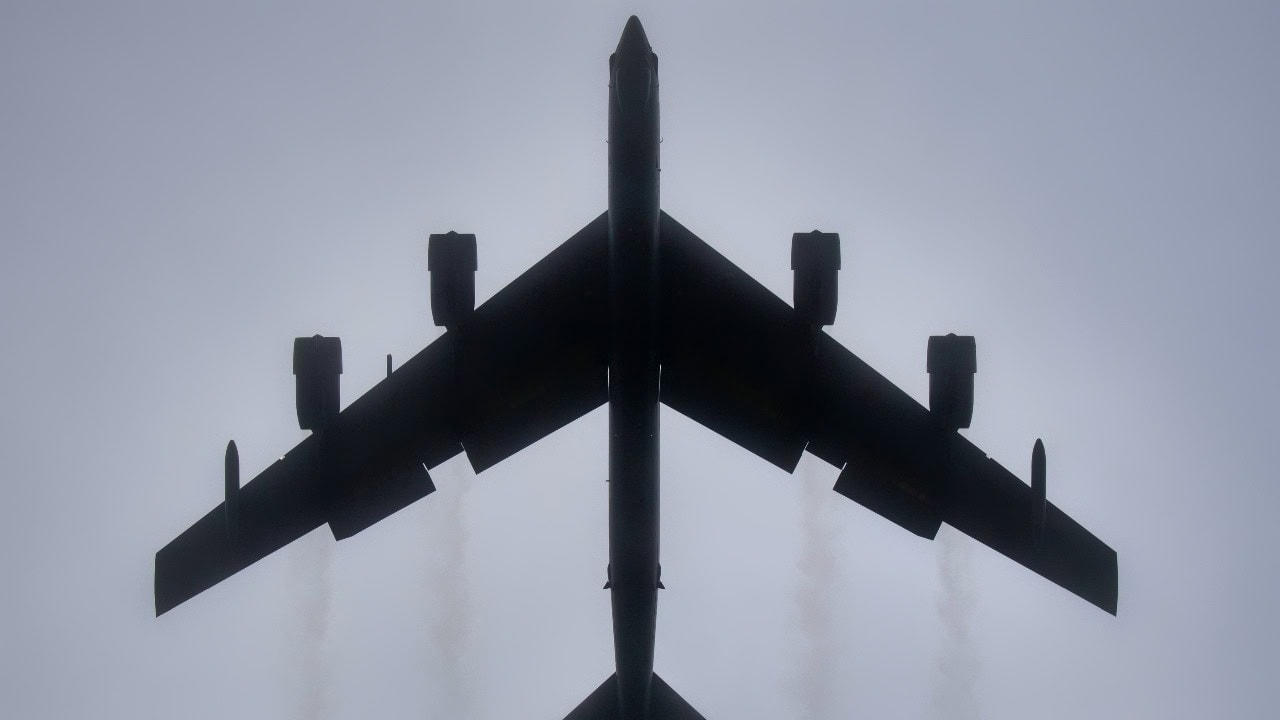
A B-52 Stratofortress takes off during Global Thunder 2019 at Barksdale Air Force Base, La., Nov. 5, 2018. Global Thunder is an annual U.S. Strategic Command (USSTRATCOM) exercise designed to provide training opportunities to test and validate command, control and operational procedures. The training is based on a notional scenario developed to drive execution of USSTRATCOM and component forces’ ability to support the geographic combatant commands, deter adversaries and, if necessary, employ forces as directed by the President of the United States. (U.S. Air Force photo by Airman 1st Class Lillian Miller)
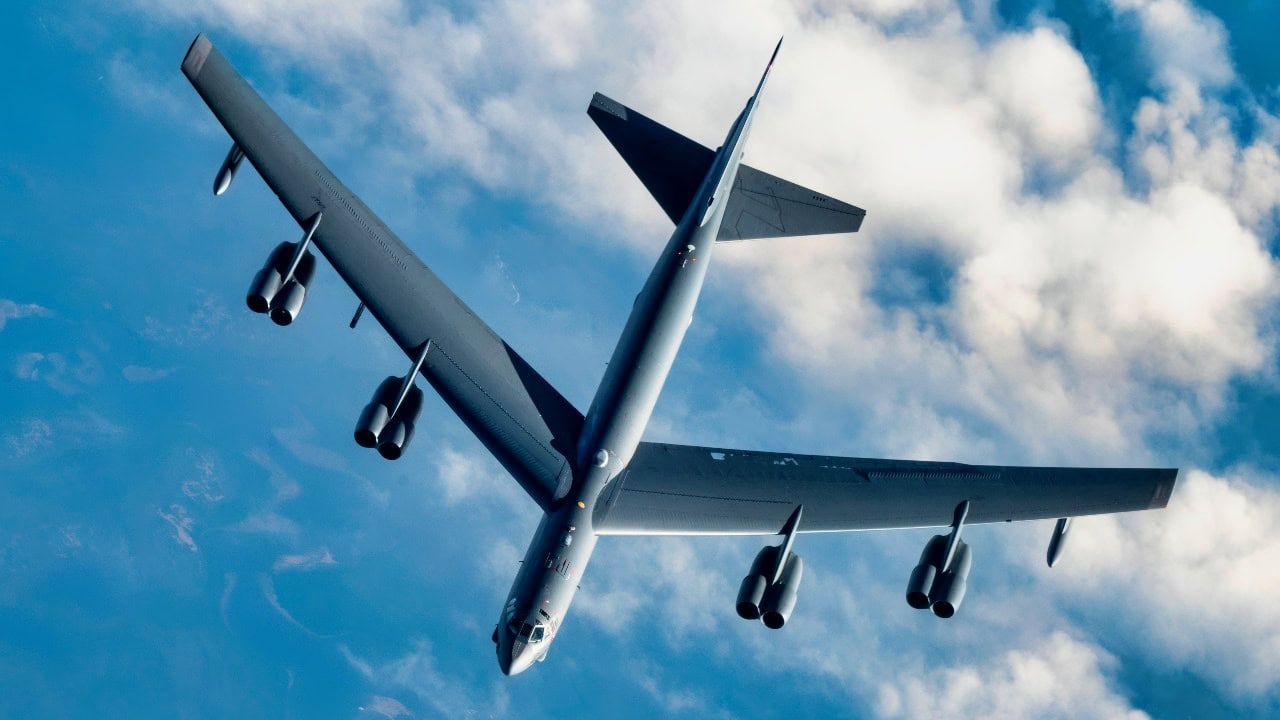
A U.S. Air Force B-52 Stratofortress departs after being refueled by KC-135 Stratotanker over the Pacific Northwest July 18, 2024. The 92nd Air Refueling Wing and 141st ARW’s ability to rapidly generate airpower at a moment’s notice was put to the test when Air Mobility Command’s Inspector General team conducted a no-notice Nuclear Operational Readiness Inspection, July 16–18, 2024. During the NORI, Airmen demonstrated how various capabilities at Fairchild AFB enable units to generate and provide, when directed, specially trained and equipped KC-135 Stratotanker aircrews to conduct critical air refueling of U.S. Strategic Command-assigned strategic bomber and command and control aircraft. (U.S. Air Force photo by Staff Sgt. Lawrence Sena)
In addition, the Yoshida Doctrine—named for Shigeru Yoshida, who served as Japan’s Prime Minister from 1948 to 1954—established reliance on the U.S. military security umbrella and limited the size and strength of JSDF while focusing on economic recovery and growth.
Time changes all things, and with the threat from China growing, the Japanese government, under the leadership of Prime Minister Sanae Takaichi, is continuing its move toward offensive capabilities, as evidenced and exemplified by its Type-12 missiles.
The Scoop
The latest development comes to us courtesy of an Ides of March 2026 article by Christoper McFadden of Interesting Engineering:
“Japan has begun to deploy its homemade Type 12 truck-mounted anti-ship missile systems near the East China Sea, the South China Morning Post (SCMP) reports. Described as a move that crosses a ‘strategic threshold’ for China, Japan appears to be moving away from a purely defensive posture with this weapon system. … Initially designed to provide coastal defense for Japan, the Type-12 is effectively an upgraded version of Japan’s older Type-88 SSM [AKA the SSM-1]. The missile system features an inertial navigation system (INS) and mid-course Global Positioning System (GPS) guidance. … The missile also features an A-band Active Electronic Scanned Array (AESA) radar seeker and has enhanced Terrain Contour Matching [TERCOM] and target discrimination capabilities.”
Type-12 Missile Initial History, Tech Specs, and Vital Stats
The Type-12 missile is produced by Mitsubishi Heavy Industries (MHI). It officially entered operational service with the JSDF in 2015.
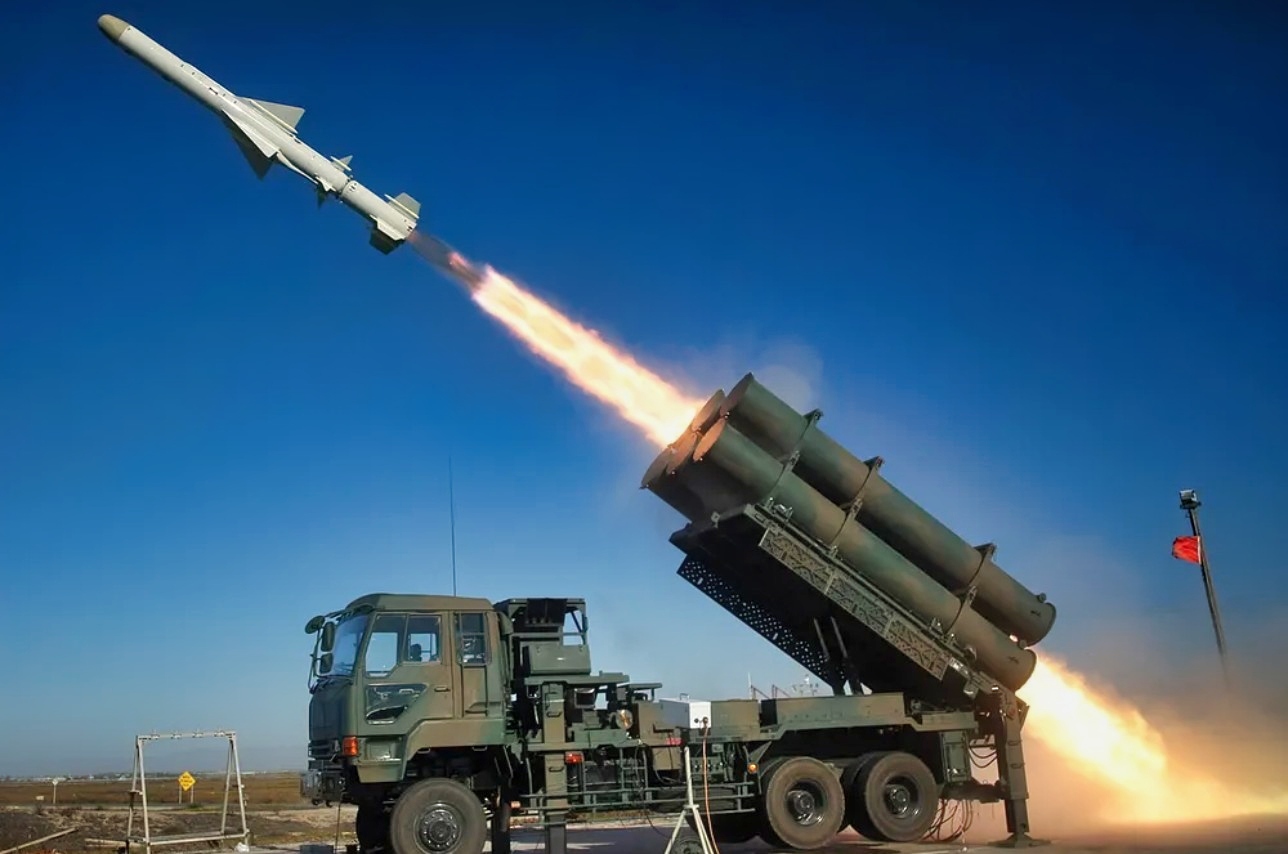
Type 88 Anti-Ship Missile from Japan
-Mass: 700 kg
-Length: 5 m
-Diameter: 350 mm
-Operational Range: 200 km for standard version; 400 km for ship/air-launched and improved version
The SCMP article referenced by McFadden adds that Japan is also planning an upgraded version of the Type-12 with an extended range of about 621 miles: “This beefed-up variant will also feature better targeting and the ability to be fired from land, ships, and aircraft.”
Strategic Implications and the Way Forward?
The Type-12 will likely be able to strike land targets. According to reports, these weapons are being deployed in Kumamoto, on the island of Kyushu.
With the missile’s upgraded range, it could reach Chinese People’s Liberation Army Navy assets in the East China Sea and target vessels moving toward Taiwan or parts of coastal China. Most of the Taiwan Strait sits well within range.
This will obviously not sit well with Chinese President Xi Jinping or China’s appeasers.
Though Prime Minister Takaichi is among the several heads of state who balked at U.S. President Donald Trump’s request for assistance in breaking Iran’s blockage of the Strait of Hormuz, she still is prepared to lobby her U.S. counterpart for Golden Dome cooperation and trade and defense stability (turning the old Yoshida Doctrine on its head by showing that the two concepts are not mutually exclusive).
Considering that Japan, along with the United States, Australia, and India, is one of the four members of the Quad—which was formed as a bulwark against China—it only makes sense that Tokyo would want to take a more proactive role in ballistic missile defense.
About the Author: Christian D. Orr
Christian D. Orr is a Senior Defense Editor. He is a former Air Force Security Forces officer, Federal law enforcement officer, and private military contractor (with assignments worked in Iraq, the United Arab Emirates, Kosovo, Japan, Germany, and the Pentagon). Chris holds a B.A. in International Relations from the University of Southern California (USC) and an M.A. in Intelligence Studies (concentration in Terrorism Studies) from American Military University (AMU).