
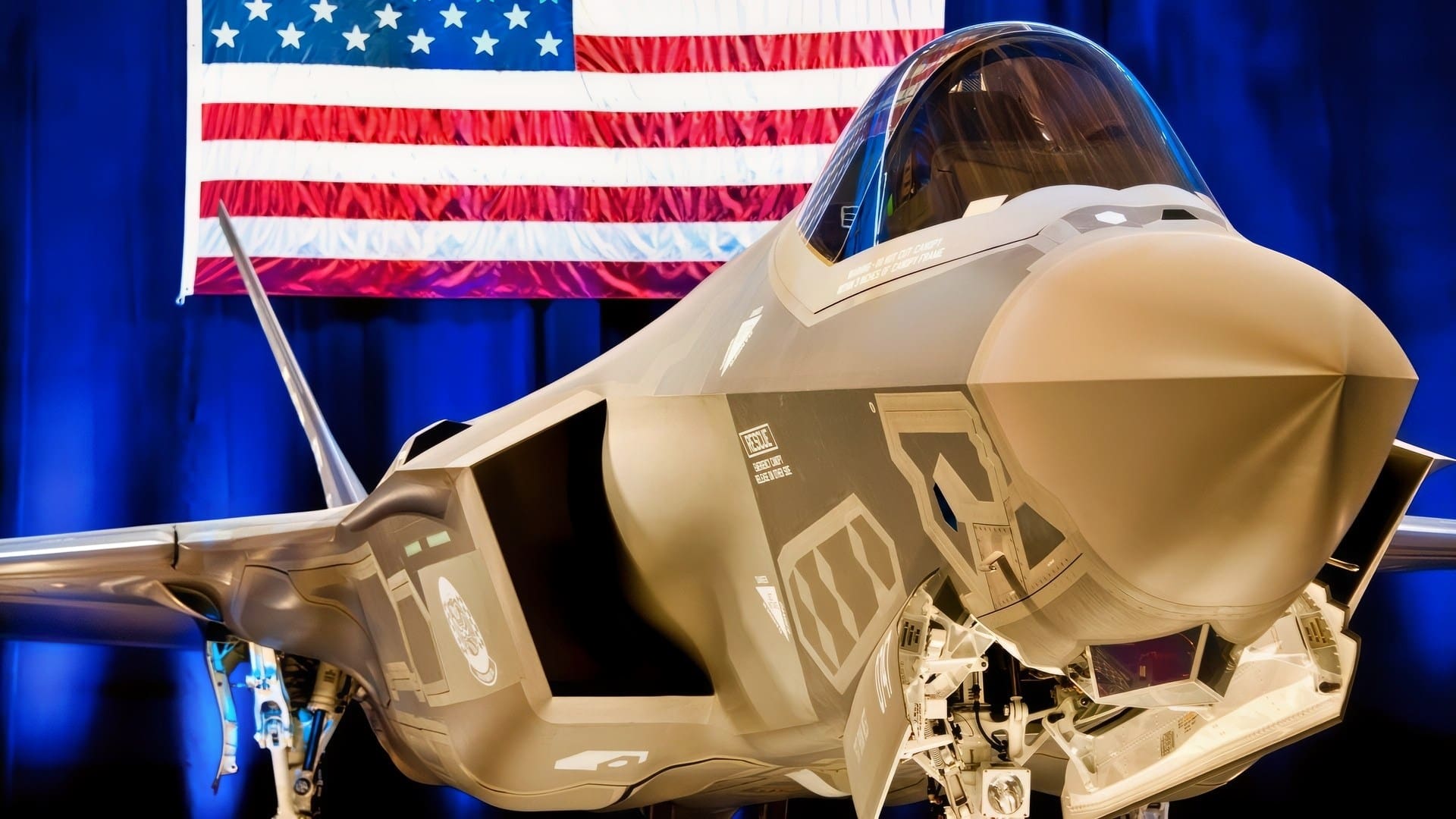
Canada Might Not Need the F-35 Stealth Fighter Afterall (Maybe the F-15EX Eagle II Would Be Enough?)
For the past several years, Canada has been indecisive about acquiring the American-made F-35 fifth-generation fighter.
While it was originally enthusiastic about the acquisition in 2010, more liberal governments have gone back and forth on the issue, leaving the question up in the air.
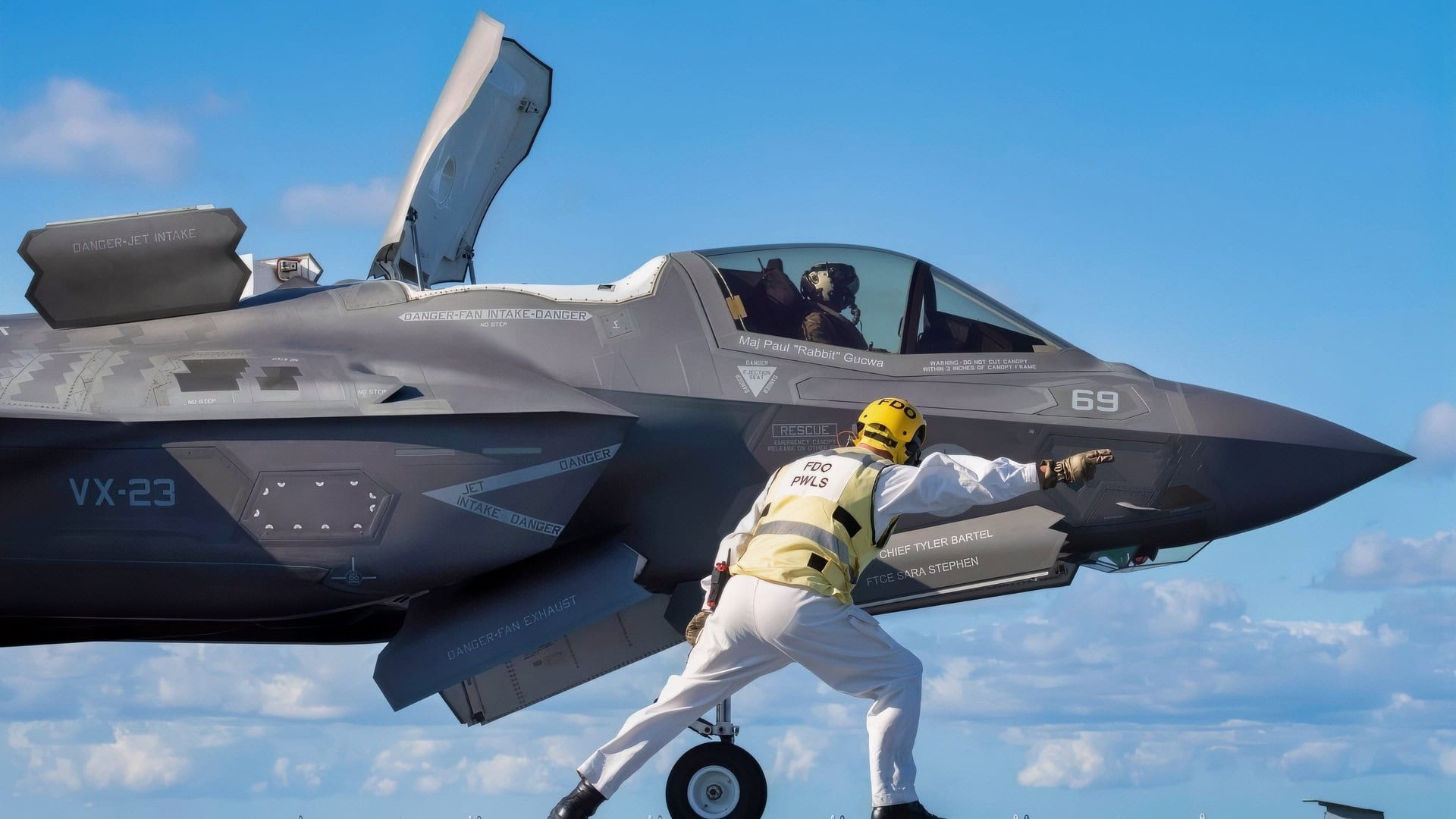
The HMS Prince of Wales (R09) aircraft carrier flight deck officer “shoots” an F-35B Lightning II short takeoff vertical landing (STOVL) variant fighter jet for a STO launch from a ski jump aboard the U.K.’s newest carrier Oct. 24, 2023. The 5th generation strike aircraft for Navy, Air Force, Marines, and allies is aboard to conduct developmental test phase 3 (DT-3) flight trials, which continue today. During the ship’s deployment to the U.S. Eastern Seaboard for WESTLANT 2023, a Pax River F-35 Integrated Test Force (Pax ITF) team is working closely with the ship’s company to conduct the sea trials that continue pushing the boundaries of carrier aviation. (Photo by Michael D. Jackson)
With the start of President Trump’s second term in 2025, Canadians once again debated whether to proceed with the full order of 88 fighter jets originally agreed upon in 2023. The acquisition has been a heated source of contention in Canada ever since.
Just a few days ago, Gregory M. Guillot, the U.S. Commander of NORAD, gave his own thoughts on the matter, and he had some interesting things to say.
Is the F-35 Necessary for Canada?
During a hearing for the U.S. Senate Armed Services Committee, Guillot gave his comments on the ongoing deliberation in Canada to acquire the F-35.
Interestingly, he stated that the F-35’s fifth-generation capabilities were not strictly needed to defend Canada’s borders and fulfill its NORAD obligations.
“Frankly we don’t need fifth (generation) to defend our borders,” Guillot told the Senate on March 19th, “those capabilities are better used overseas where their stealth, air-to-ground weapons and penetration capability are needed.” His statements go in direct opposition to the arguments made by many in favor of the acquisition, who argue that the F-35 is vital to upholding Canada’s NORAD obligations.
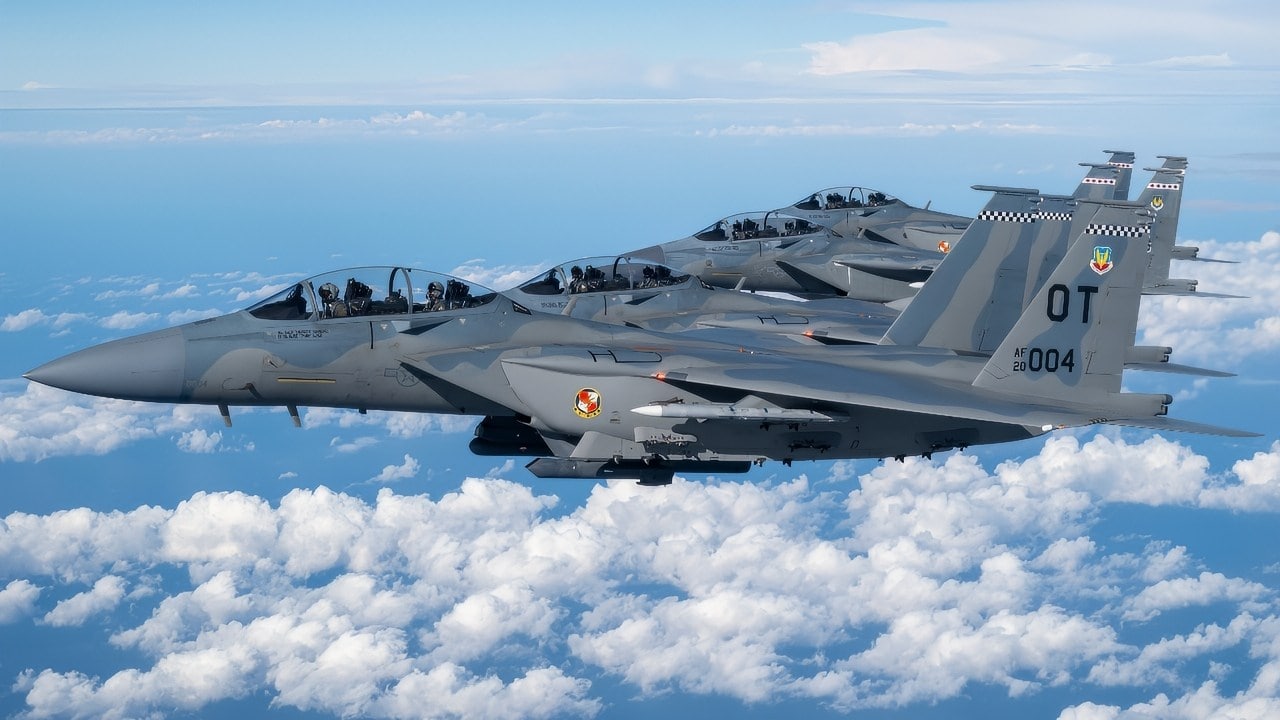
A formation of four U.S. Air Force F-15EX Eagle II fighter jets, assigned to Eglin Air Force Base, Florida, fly over the Gulf of America, Nov. 21, 2025. Secretary of the Air Force Troy Meink flew in the backseat of the lead jet as part of his visit to Eglin AFB. The flight oriented Meink to F-15EX tactics, techniques and procedures being developed and advanced by the 53d Wing to include weapons capacity, next-gen survivability, and next-generation radars, sensors and networking capabilities. (U.S. Air Force photo by Staff Sgt. Blake Wiles)
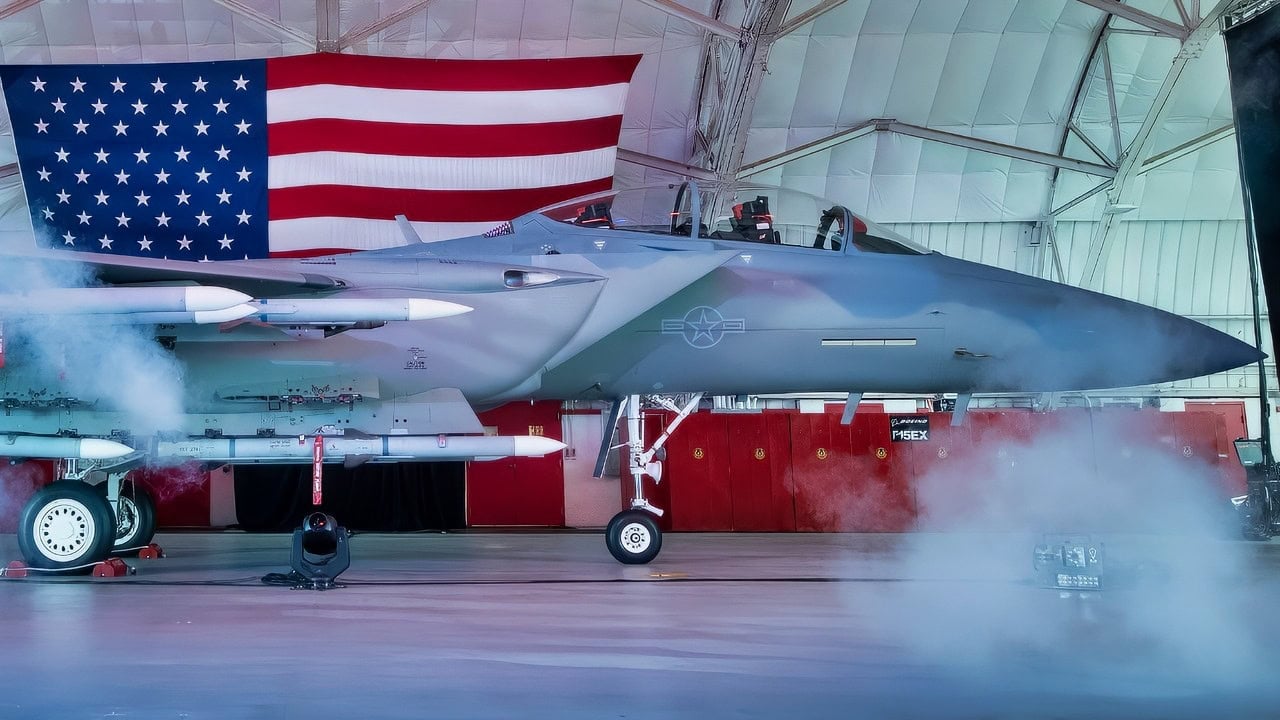
The Air Force’s newest fighter, the F-15EX Eagle II, was revealed and named during a ceremony April 7 at Eglin Air Force Base, Fla. The aircraft will be the first Air Force aircraft to be tested and fielded from beginning to end, through combined developmental and operational tests. (U.S. Air Force photo/Samuel King Jr.)
What NORAD does need, however, are more modernized fourth-generation fighter jets, according to Guillot.
An example he gave was the Boeing F-15EX, which is currently in service with both the U.S. Air Force and, soon, the Israeli Air Force.
While fifth-generation stealth fighters are useful in certain operational contexts, Guillot stressed that for Canada, they may not be as necessary for defending against Russian strategic bombers, which lack air-to-air radars.
Many advocates of the acquisition, including Canada’s own Air Force Commander Lt. Gen. Jamie Speiser-Blanchet, have repeatedly banked upon the F-35’s unmatched capabilities as an argument for why Canada should move forward with the deal.
The History of Canada and the F-35
Canada’s relationship with the F-35 began long before the aircraft existed. In 1997, Ottawa joined the U.S.-led Joint Strike Fighter program as an informed partner, contributing a relatively small amount of funding in exchange for access to technical information and a future opportunity for Canadian companies to participate in the aircraft’s global supply chain.
This participation expanded in 2002 when Canada became a Level III partner, committing additional funding through both the Department of National Defense and Industry Canada.
At this stage, Canada was not contractually obligated to purchase the aircraft, but its industrial participation and access to program data increasingly tied Ottawa’s fortunes to the project. Canadian aerospace firms began competing for F-35 contracts, creating economic and political incentives that would later complicate the procurement debate.
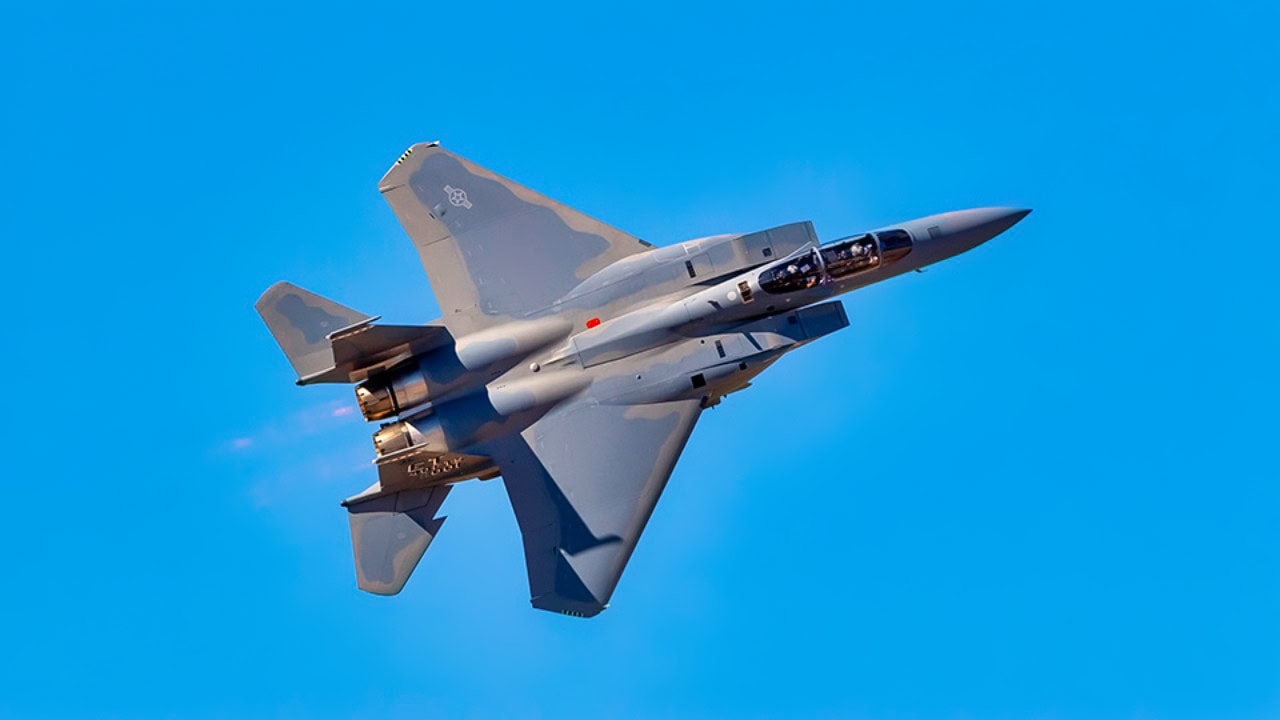
F-15EX Eagle II Fighter from Boeing.
By the late 2000s, Canada faced mounting pressure to replace its CF-18 Hornet fleet, which had formed the backbone of the Royal Canadian Air Force since the early 1980s.
The CF-18s had performed well in NORAD air-defense missions and NATO operations, but they were approaching the limits of their airframe life despite upgrades.
The F-35 emerged as the Canadian Forces’ preferred replacement due to its stealth characteristics, advanced sensors, and ability to operate seamlessly alongside U.S. and allied forces. Senior military leaders at the time argued that future conflicts would demand precisely these capabilities, particularly as potential adversaries developed more sophisticated air-defense systems.
Why the F-35 Is So Controversial in Canada
The procurement controversy erupted fully in July 2010, when Prime Minister Stephen Harper’s Conservative government announced its intention to buy 65 F-35s through a sole-source process without holding a competitive tender. The government publicly framed the acquisition as costing approximately $9 billion, with long-term sustainment costs bringing the total to around $16 billion.
Critics quickly challenged both the decision to sole-source and the credibility of the cost estimates.
Opposition parties argued that bypassing competition violated fundamental principles of public accountability, while defense analysts and the Parliamentary Budget Officer questioned whether major operating and upgrade costs had been excluded. The government’s refusal to release detailed life-cycle cost figures intensified suspicion that Parliament and the public were being misled.
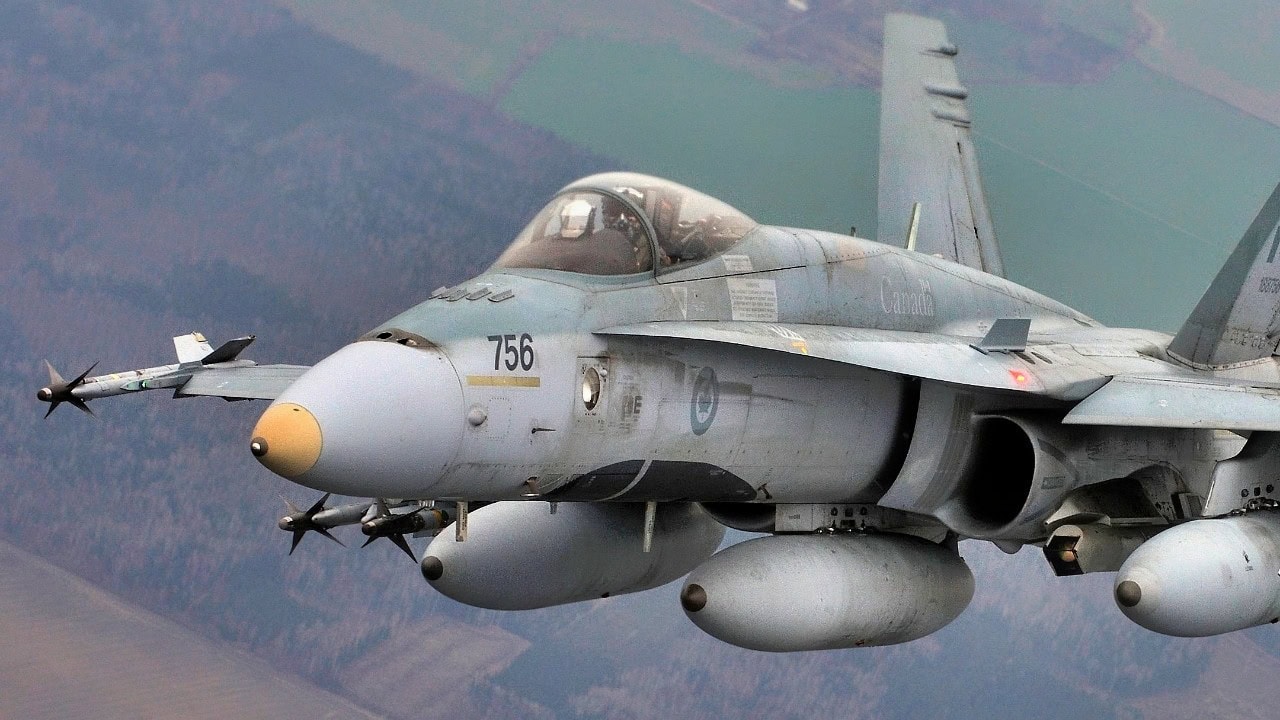
A CF-18 Hornet from the Canadian Air Task Force Lithuania flies over Lithuania on November 20, 2014 for the NATO Baltic Air Policing Block 36 during Operation REASSURANCE.
The government’s failure to disclose full cost information contributed to a historic finding of contempt of Parliament in 2011, which helped trigger the fall of the minority Conservative government.
The F-35 became a central campaign issue in that year’s federal election, symbolizing broader concerns about transparency, accountability, and executive power.
While the Conservatives returned with a majority, the legitimacy of the procurement process had been deeply damaged.
Searching for a Replacement for Canada’s CF-18s
When the Liberal Party won the 2015 election under Justin Trudeau, the F-35 came into the spotlight of Canadian politics. Trudeau had campaigned explicitly on not purchasing the F-35, arguing that Canada could acquire a less expensive fighter while still meeting its defense obligations.
The new government pledged an open and transparent competition to replace the CF-18. However, the subsequent process proved slow and politically fraught. Interim measures, including the purchase of used Australian F-18s, were adopted to prevent a capability gap as the CF-18s aged further. Critics argued that these stopgap solutions imposed additional costs while delaying a permanent decision.
The formal competition launched in 2017 included bids from Boeing, Saab, and Lockheed Martin. Over time, the evaluation increasingly highlighted the importance of interoperability with the United States and NATO, as well as the ability to operate in contested airspace. By the early 2020s, even many former critics acknowledged that the F-35 uniquely satisfied all mandatory requirements without caveats.
This strategic reality gradually narrowed the government’s options, despite lingering political discomfort with reversing a high-profile campaign promise.
In January 2023, the Liberal government formally announced that Canada would purchase 88 F-35A aircraft.
The acquisition cost was estimated at approximately $19 billion, making it the largest investment in the Royal Canadian Air Force in decades, while overall life-cycle costs spanning several decades were projected to approach $70 billion.
Of the 88 aircraft initially agreed upon, only 14 have been contractually agreed upon and financed by the Canadian government. Deliveries are scheduled to begin in 2026, with full operational capability expected in the early 2030s.
MORE – A-12 Avenger II Is the Flying Dorito Bomber
About the Author: Isaac Seitz
Isaac Seitz, a Defense Columnist, graduated from Patrick Henry College’s Strategic Intelligence and National Security program. He has also studied Russian at Middlebury Language Schools and has worked as an intelligence Analyst in the private sector.