Summary and Key Points: Dr. Alexander Motyl, Professor of Political Science at Rutgers University, evaluates the historical probability of a Russian leadership transition.
-Drawing on Edward Luttwak’s Coup d’Etat: A Practical Handbook, Motyl identifies the current presence of all three preconditions for a coup in Putin’s Russia: limited political participation, a centralized political core, and isolation from foreign influence.
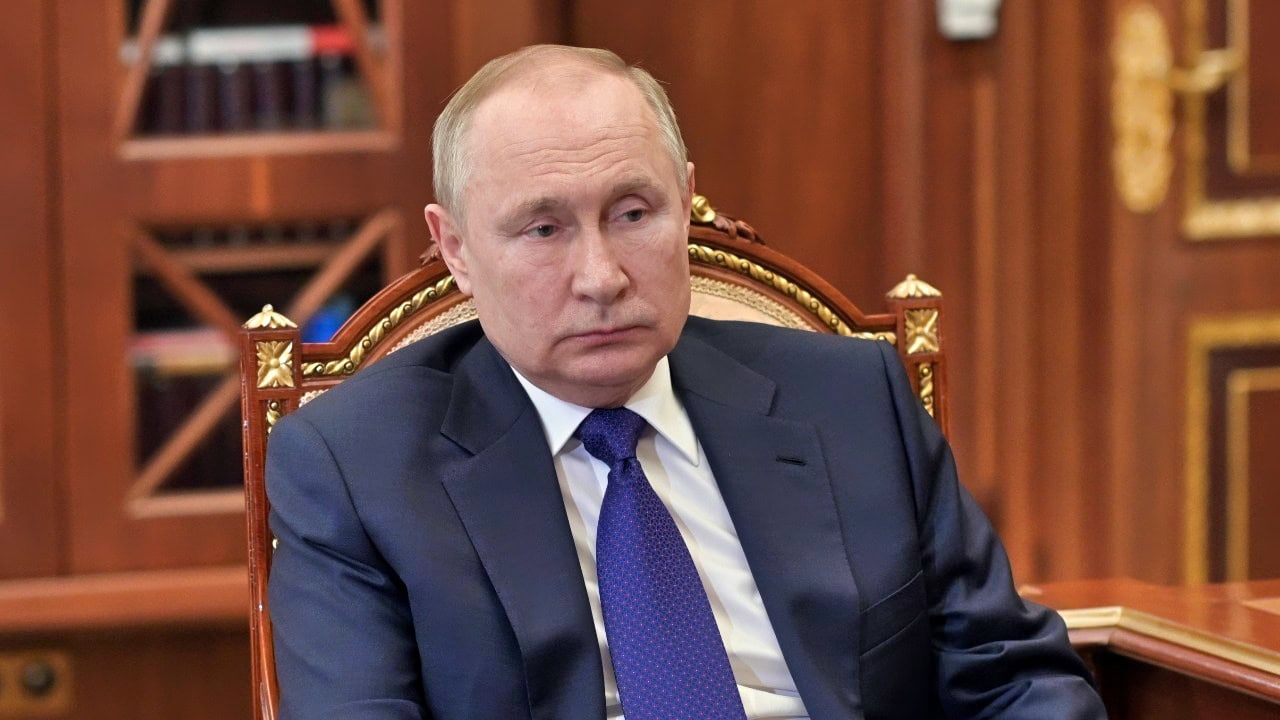
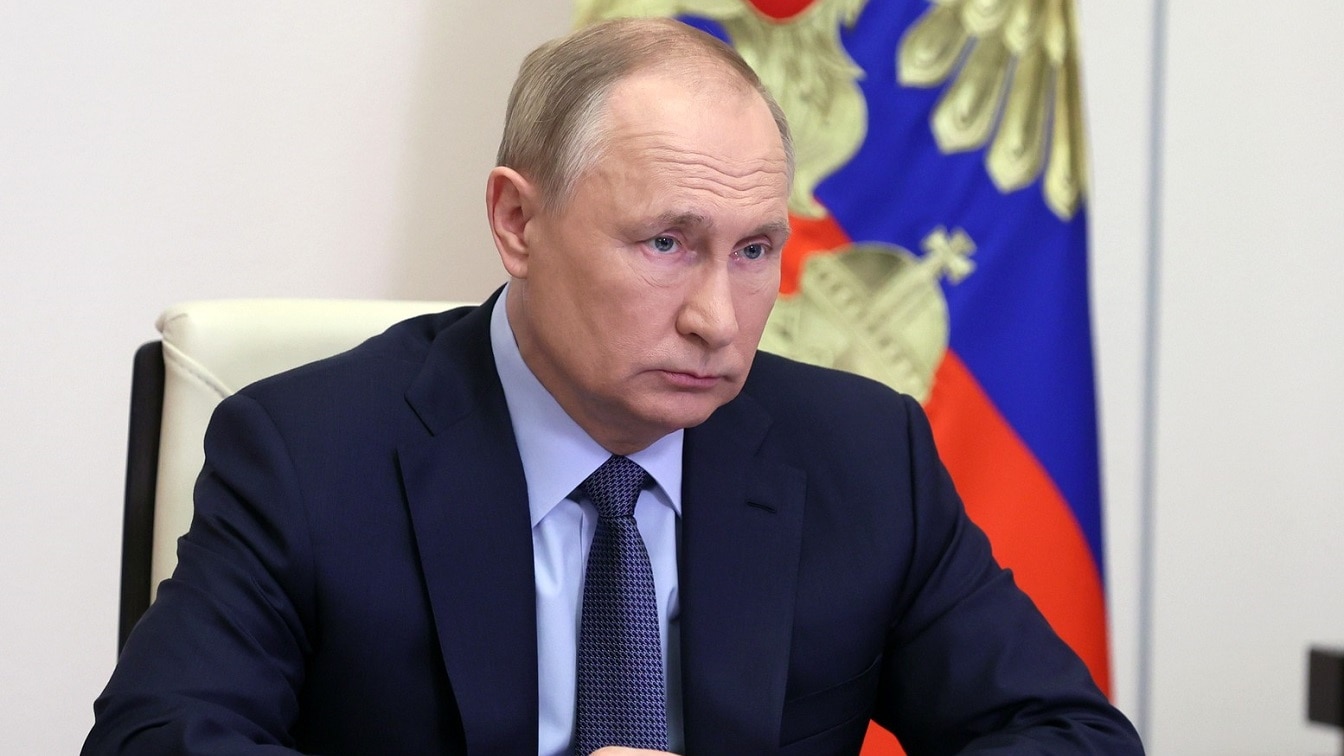
Russia’s President Putin. Image Credit: Russian Government.
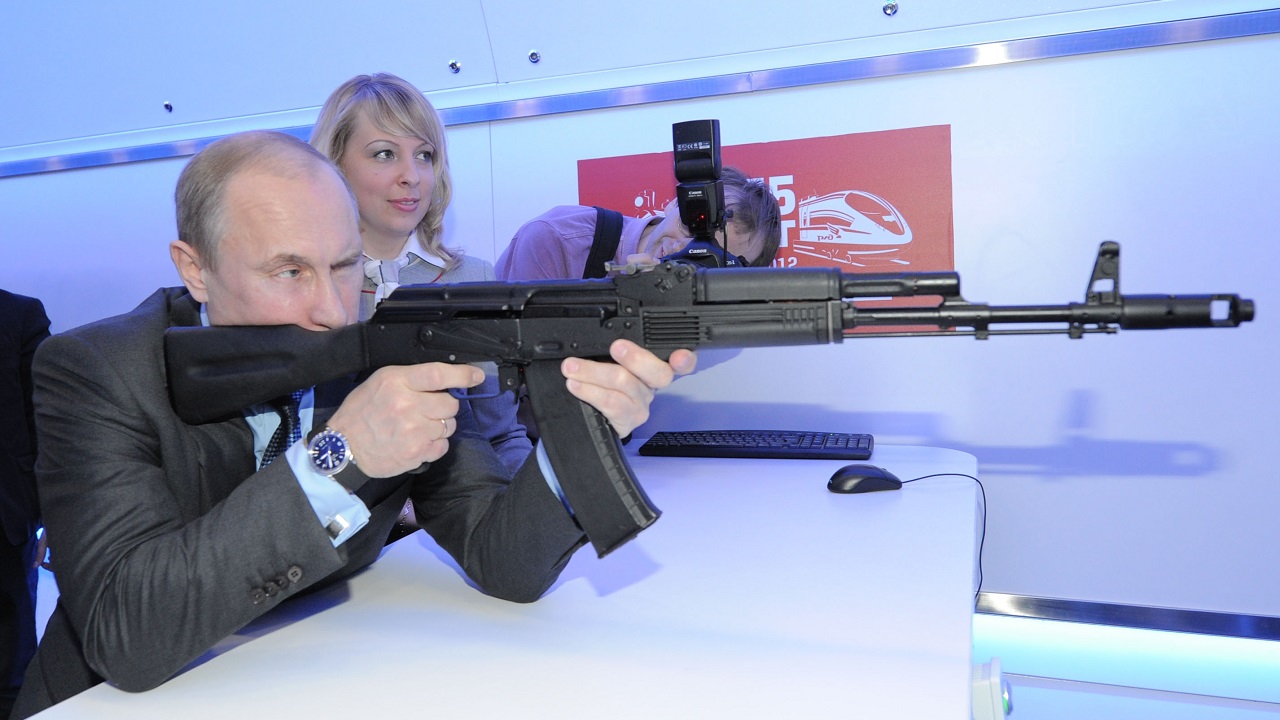
Then President-elect Vladimir Putin aiming with an AK-74 rifle simulator at an electronic shooting gallery during his visit to the Russian Railways Scientific and Technical Development Center in Moscow’s Rizhsky railway station.
-This report analyzes the 44% historical turnover rate of Russian rulers, exploring the dissatisfaction of the FSB and young oligarchs amidst the ongoing military failure in Ukraine and the alienation of the Western-educated Russian elite.
The 44% Rule: Why History Suggests Vladimir Putin is More Vulnerable Than He Appears
How likely is it that Russian President Vladimir Putin will be overthrown? If Russian and Soviet history is a guide, then the answer is “quite likely.”
Russia’s Rich History of Overthrown Leaders
Here’s a list of Russian rulers who were ousted or killed, or almost ousted or killed. I include only the rulers of the last Russian imperial dynasty, the Romanovs (1613-1918), the communist rulers of Soviet Russia and the Soviet Union (1918-1991), and the two presidents of the Russian Federation, Boris Yeltsin and Putin. Dmitri Medvedev served as president, but was a stand-in for Putin and doesn’t qualify.
Of the 18 Romanovs, five were overthrown, killed, or threatened, for a total of 28 percent. The victims include Peter III, who was overthrown by his wife, Catherine the Great, in 1762; Paul I, killed by oppositionist noblemen in 1801; Nicholas I, who quashed the Decembrist Revolt in 1825; Alexander II, assassinated in 1881 by revolutionaries; and Nicholas II, who was forced to abdicate in February 1917 and then killed by the Bolsheviks in 1918.
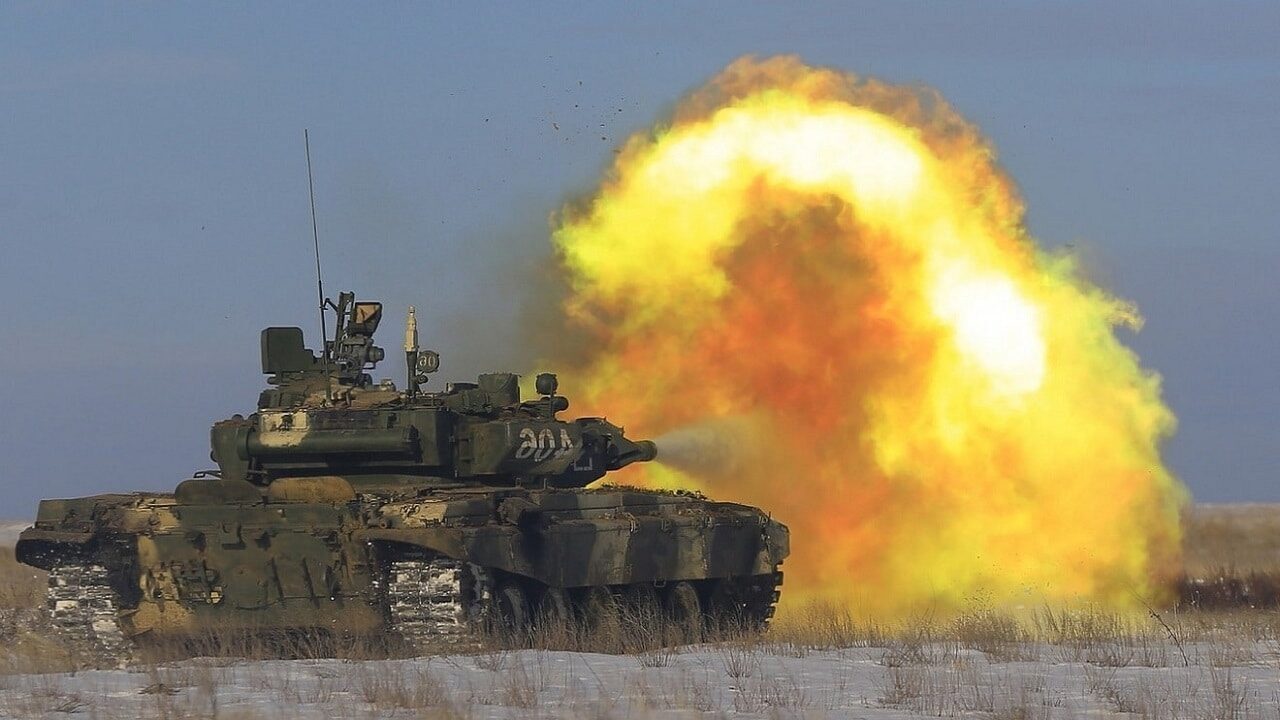
Ukrainian Army Tank Firing. Image Credit: Creative Commons.
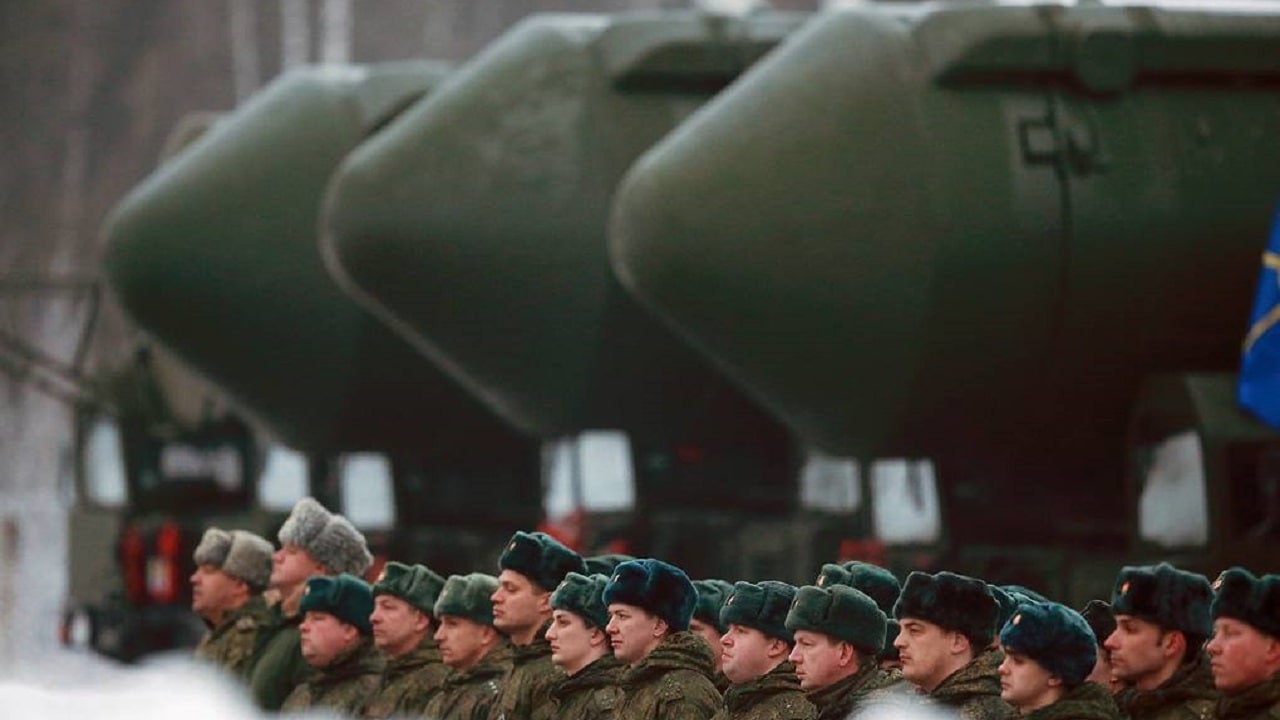
Russian nuclear weapons. Image Credit: Russian State Media.
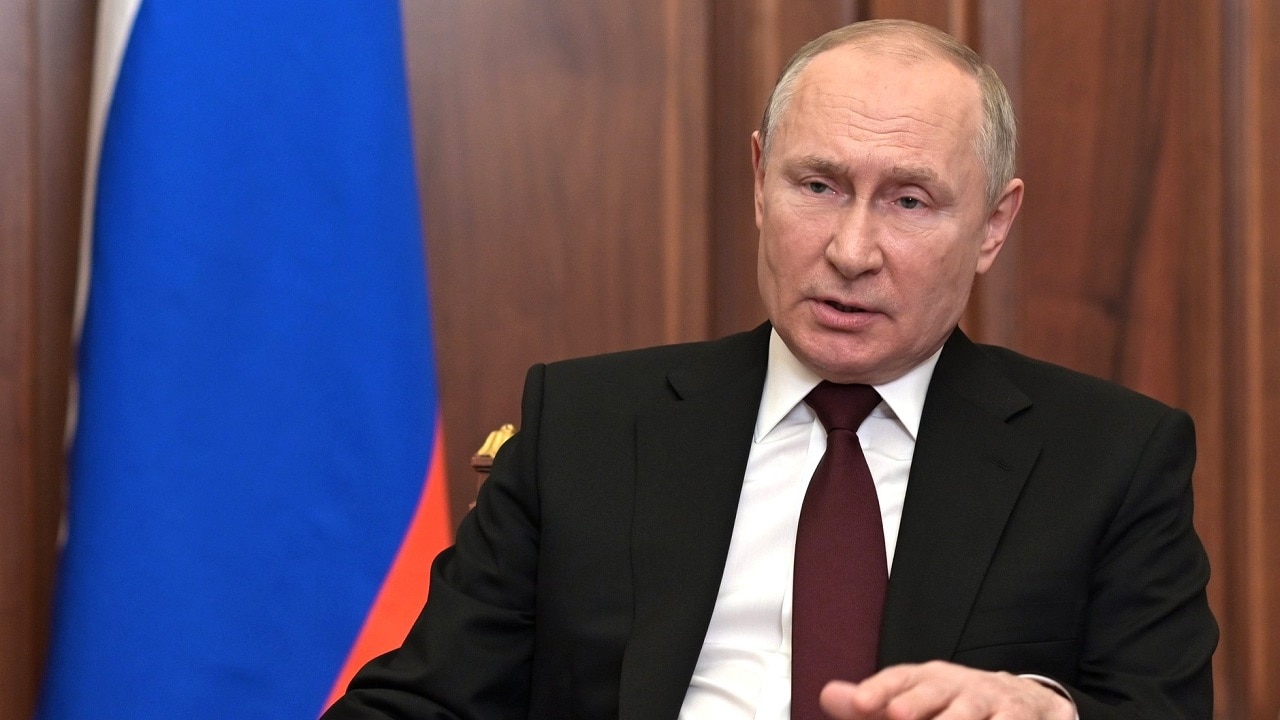
Russian President Putin addressing the nation.
Of the seven Soviet rulers, five were overthrown or killed or threatened, for a total of 71 percent. Vladimir Lenin was almost assassinated by a Socialist Revolutionary in 1918; according to some historians, Joseph Stalin may have been poisoned by his inner circle in 1953; Nikita Khrushchev was ousted by a conspiracy led by Leonid Brezhnev in 1964; and Mikhail Gorbachev, who fell victim to Yeltsin’s power grab after a failed coup in 1991. If we exclude Stalin, the percentage changes to 57.
Of the two post-Soviet Russian rulers, Yeltsin was removed by a cabal led by the oligarch Boris Berezovsky in 1998, while Putin was challenged by Yevgeni Prigozhin in 2023, for a total of 100 percent.
Of 27 rulers between 1613 and 2026, 12 were overthrown or killed or almost overthrown or killed, for a total of 44 percent (41 percent minus Stalin)—a shockingly high number, of which the amateur historian Putin must be aware, especially as it’s been claimed that he has been the target of several assassination attempts.
Should Putin be Prepared?
Naturally, the past need not predict the future, and Putin may turn out to be one of the lucky 15 rulers who died natural deaths. But the fact that overthrowing rulers is commonplace in Russian history gives the lie to claims that Putin is too strong to fall victim to a conspiracy or assassin. So were the unlucky 12.
Significantly, most of the plotters came from within the ruling elite, which makes sense, of course, and is par for the course in coups worldwide, with Julius Caesar’s assassination by a group of Roman Senators perhaps the classic case.
But the case for Putin’s vulnerability doesn’t just rest on historical precedent. It also rests on theory. Edward Luttwak’s 1968 book, Coup d’Etat: A Practical Handbook, identifies three preconditions of a coup, all of which are present in Putin’s Russia: political participation must be limited to a small fraction of the population; the state must not be susceptible to the influence of foreign powers; and it must have a political center.
For a coup to happen, its plotters must also control or neutralize the state bureaucracy and its security forces, “while at the same time using [the machinery of state] to impose … control on the country at large.” In addition, they will have to recruit supporters from the ranks of insiders who are alienated from the government and with whom they are friends. Links of family, ethnicity, or clan can be useful.
Since “the many separate operations of the coup must be carried out almost simultaneously,” a large group of people with the requisite training and equipment must be involved. “There will usually be one source of such recruits: the armed forces of the state itself”—the army, police, and security services.
The final step, according to Luttwak, is the “forcible isolation of the ‘hard-core’ loyalist forces.” Once a “satisfactory degree of penetration” of the armed forces and police is achieved, the time to launch the coup has arrived.
Luttwak’s analysis centers on the following question: since elites must orchestrate Putin’s departure, are they sufficiently dissatisfied to run the risk? Given Putin’s disastrous handling of the war, his degradation of the armed forces, his transformation of the economy into an appendage of the military effort, and his alienation of the West (where Russian elite children study while their parents gallivant on the Riviera), there has to be some dissatisfaction. Russians would be bizarre if there weren’t any.
We know that Prigozhin’s mutiny elicited no opposition from the army, National Guard, or intelligence services, which watched as he marched on Moscow. We also know that Russia’s hyper-nationalist military bloggers routinely decry Putin’s mismanagement of the war. Finally, we can infer from Putin’s arrest of the Russian chauvinist Igor Strelkov and the periodic criticism of the regime by retired General Leonid Ivashov that their attitudes toward Putin cannot be uniquely theirs and only theirs.
As the veteran Russia watcher, S. Frederick Starr, has noted: “Together, these two groups of Russia’s top bosses [the established and young oligarchs], along with the FSB [the security service] working behind the scenes, will demand and likely play a key role in shaping Russia’s future direction…. [S]ome form of collaboration seems likely, for each needs the other: the FSB needs a public face, and the business elite needs behind-the-scenes muscle.”
That said, cautions Starr: “However, it is a fool’s errand to try to predict the direction of their efforts, or even to foresee the level of harmony or disharmony between them.”
At this point, there is little else to be said. The pieces of the puzzle are all on hand. It’s up to some brave Russians to finish assembling it.
About the Author: Dr. Alexander Motyl, Rutgers University
Dr. Alexander Motyl is a professor of political science at Rutgers-Newark. A specialist on Ukraine, Russia, and the USSR, and on nationalism, revolutions, empires, and theory, he is the author of 10 books of nonfiction, including Pidsumky imperii (2009); Puti imperii (2004); Imperial Ends: The Decay, Collapse, and Revival of Empires (2001); Revolutions, Nations, Empires: Conceptual Limits and Theoretical Possibilities (1999); Dilemmas of Independence: Ukraine after Totalitarianism (1993); and The Turn to the Right: The Ideological Origins and Development of Ukrainian Nationalism, 1919–1929 (1980); the editor of 15 volumes, including The Encyclopedia of Nationalism (2000) and The Holodomor Reader (2012); and a contributor of dozens of articles to academic and policy journals, newspaper op-ed pages, and magazines. He also has a weekly blog, “Ukraine’s Orange Blues.”