
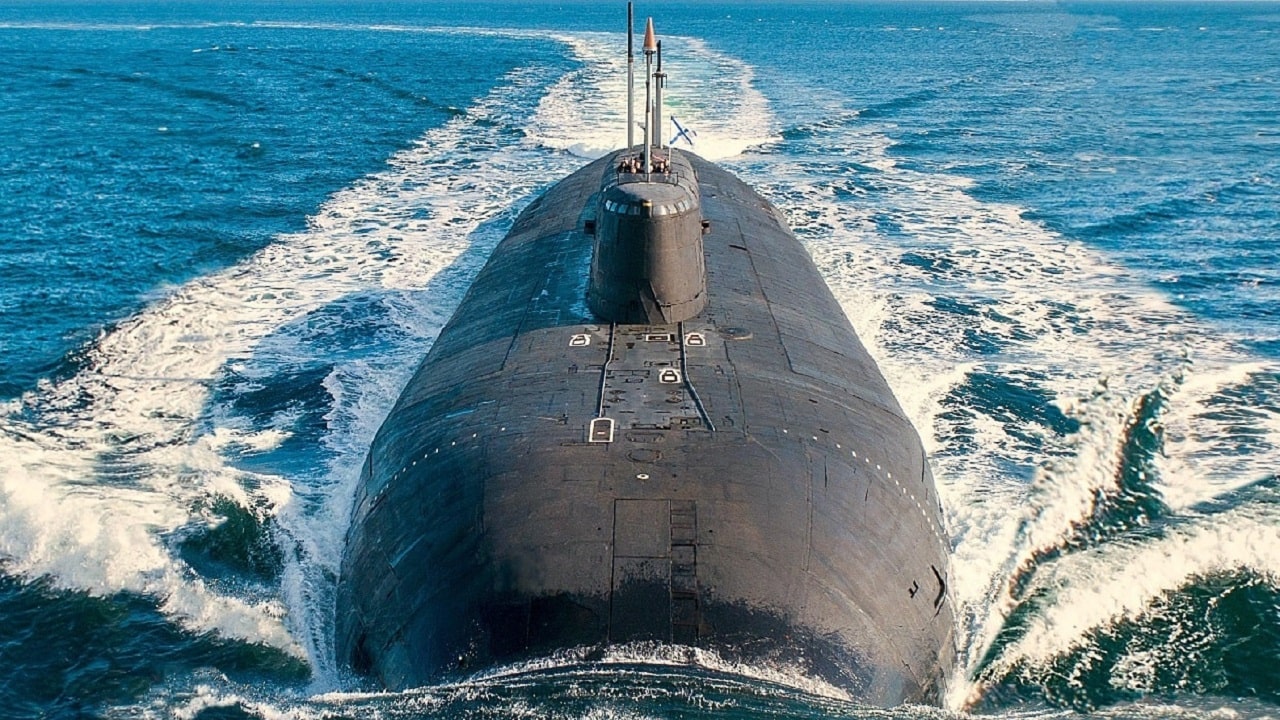
A recent Reuters investigation described how China is conducting a large-scale effort to map the seabed across the Pacific, Indian, and Arctic oceans, using research vessels and sensors to gather data. The efforts are part of China’s ongoing naval buildup and efforts to significantly expand its underwater capabilities.
And, the data being obtained includes information about underwater terrain, temperature, salinity, and acoustic conditions – all factors that directly affect how submarines move and detect one another. In short, China is working to understand the battlespace beneath the surface of the oceans before a conflict even starts.
Today, the seabed is coming into clearer focus, but once upon a time, it was a much more difficult place to understand, which is what makes the 1974 effort by the CIA to recover a Soviet nuclear submarine from nearly three miles beneath the Pacific Ocean particularly impressive.
The operation, known as Project Azorian, was an enormous engineering challenge and a high-risk gamble.
The Submarine That Disappeared
In 1968, a soviet diesel-electric ballistic missile submarine K-129 vanished in the Pacific Ocean.
The submarine sank approximately 1,500 miles northwest of Hawaii at a depth of around 16,500 feet – far beyond the reach of any conventional salvage capability at the time. K-129 was not just any vessel, either: it carried nuclear-armed ballistic missiles, cryptographic equipment, navigation systems, and other sensitive technology tied to Soviet naval operations.
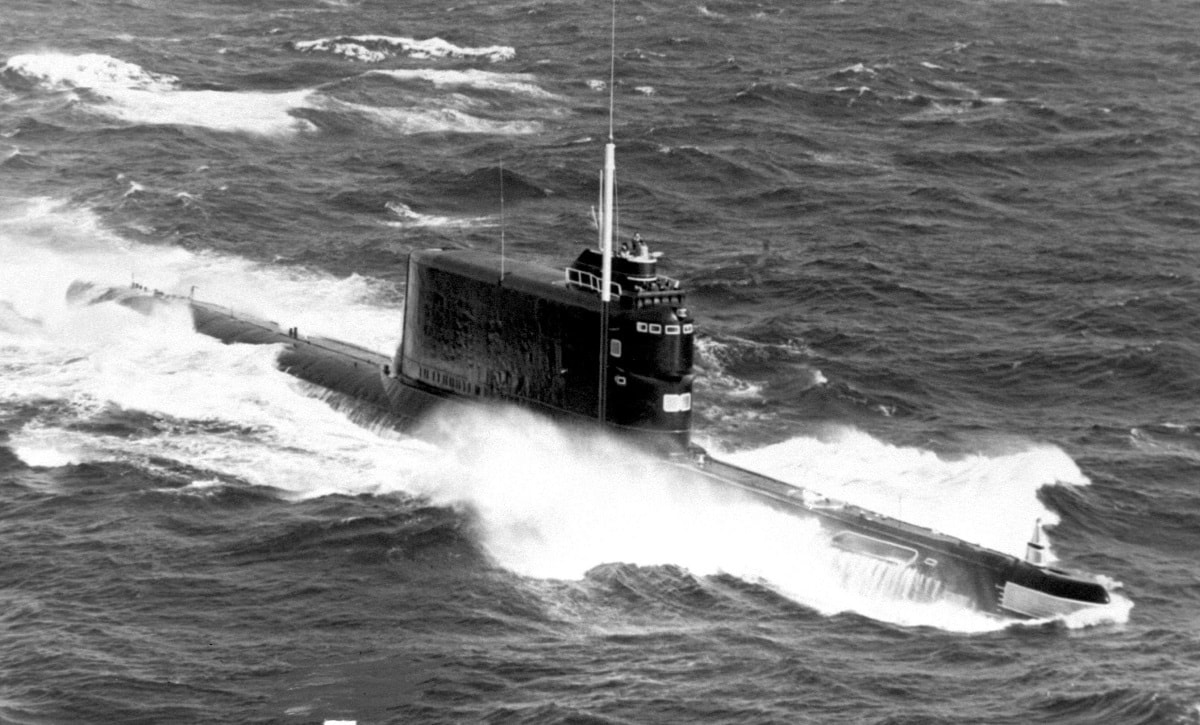
An aerial starboard bow view of a Soviet Golf II class ballistic missile submarine underway. Date Shot: 1 Oct 1985
The Soviet Union quickly scrambled to find the submarine, but couldn’t. The United States, however, figured out a way to do it, using underwater acoustic data and surveillance systems to determine its approximate location on the seabed.
And there was a great incentive to figure out how to recover the submarine – it contained valuable Soviet communications and navigation systems, as well as other sensitive technology that was otherwise virtually impossible to obtain.
The U.S. Built A Ship to Recover the Sub
Once the CIA determined that recovery could be possible, the problem became how to do it without alerting the Soviet Union to the effort. It was eventually decided that the technology onboard the submarine was valuable enough to warrant the construction of an entirely new type of ship.
The result was the Hughes Glomar Explorer, a massive vessel that was publicly presented as a deep-sea mining platform backed by billionaire Howard Hughes.
It was a giant ruse, and the truth was that the ship was specifically designed to carry out a covert submarine recovery mission – and it would not be easy.
In fact, the engineering challenge it presented was completely unprecedented. The submarine was more than three miles below the surface, requiring a system capable of lowering a mechanical capture vehicle to the seabed and then lifting thousands of tons of wreckage, bit by bit, to the surface.
To achieve that, the ship uses a long pipe system similar to offshore drilling equipment, along with what’s known as a “moon pool” – a large internal compartment that allowed the submarine to be brought onboard without being visible to satellites or other nearby vessels.

An artist’s concept of a Soviet Yankee class nuclear-powered ballistic missile submarine after conversion into a test platform for the SS-NX-24 cruise missile.
The U.S. effectively transported the submarine in parts from the bottom of the seabed and right into the vessel they built to capture it. While nobody could see what was being salvaged from the ocean floor, the world believed it was all commercial activity.
Specifically, the cover story said that the ship was mining manganese nodules from the ocean floor – a story plausible enough to withstand scrutiny. So plausible, in fact, that even Soviet ships monitoring the vessel’s movements couldn’t prove that anything untoward was going on.
The United States effectively adapted offshore oil technology and turned it into a tool of espionage.
The 1974 Recovery Attempt
In July 1974, the Glomar Explorer arrived over the wreck site and began the recovery operation under strict secrecy. The process involved lowering the capture vehicle nearly 16,500 feet to the seabed, securing part of the submarine, and slowly lifting it back to the surface.
The operation took weeks, with the ship remaining in position while Soviet vessels observed from a distance.
Initially, the lift worked – but during the ascent, a mechanical failure caused much of the submarine to break apart and fall back to the ocean floor. Even so, the mission was not a total failure. The CIA recovered a portion of the submarine, including nuclear-tipped torpedoes and some cryptographic equipment.
The remains of six Soviet sailors were also brought to the surface and later given a formal burial at sea.
Crucially, though, the Soviet Union never fully understood what the United States was doing at the time. While Soviet ships monitored the operation, they didn’t believe that recovering a submarine from such extreme depths was technically possible.

An aerial port quarter view of a Soviet Mike class nuclear-powered attack submarine underway.
The Project Exposed
The secrecy surrounding Project Azorian did not last. In 1975, media reports began to reveal details of the operation after documents linking the CIA to the Glomar Explorer were stolen and investigated.
Faced with questions from journalists and foreign governments, U.S. officials issued what became known as the “Glomar response,” stating that they could “neither confirm nor deny” the existence of the operation – a phrase that remains in use today.
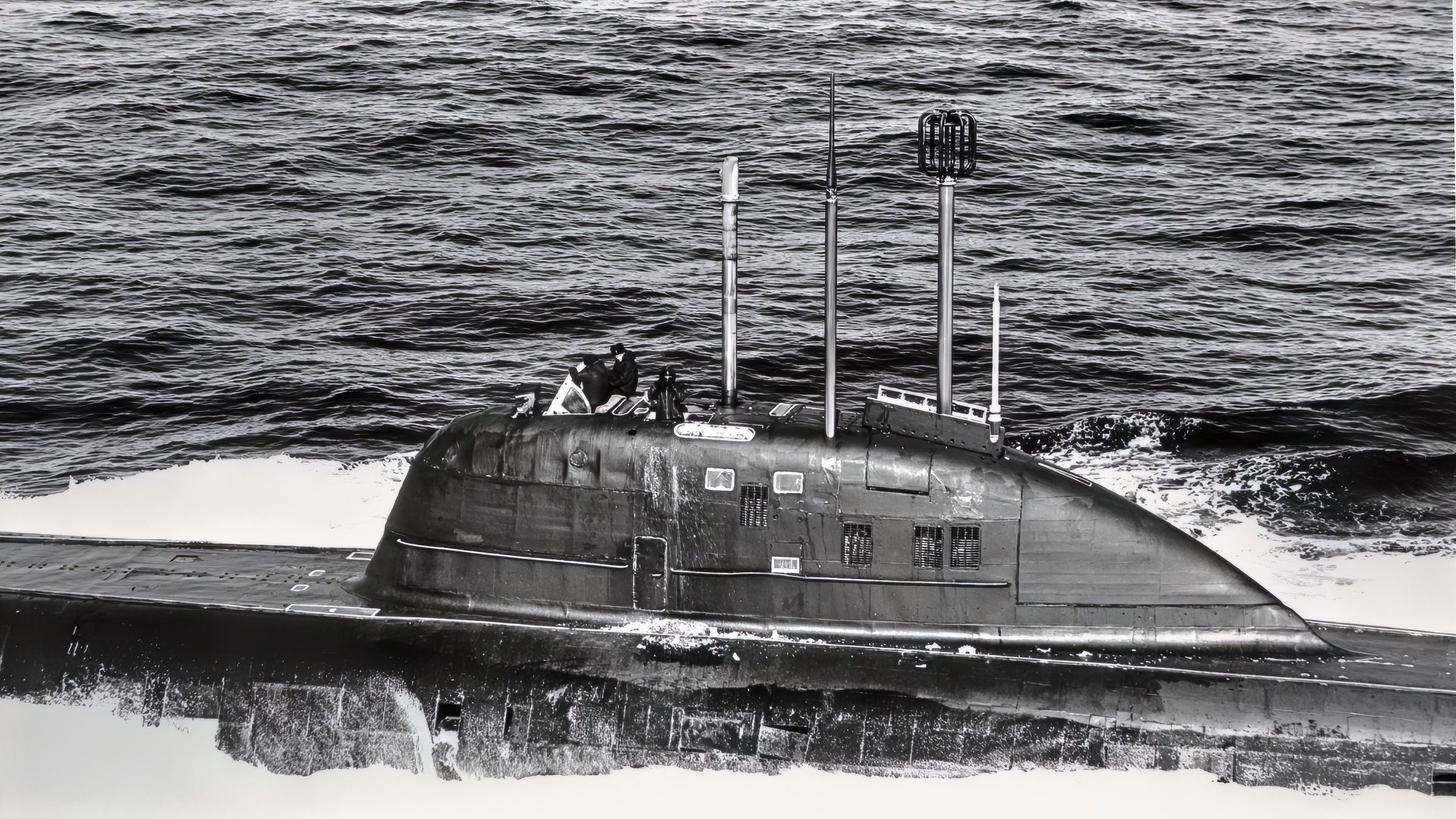
A port view of the sail of a Soviet Victor-II class nuclear-powered attack submarine underway.
Ultimately, plans for a follow-up mission to recover the remaining wreckage were abandoned after the operation was exposed.
Today, though, feats like this are becoming increasingly possible – not necessarily in terms of recovering undersea equipment, but mapping and traversing the depths with more advanced submarines and significantly larger fleets.
About the Author: Jack Buckby
Jack Buckby is a British researcher and analyst specialising in defence and national security, based in New York. His work focuses on military capability, procurement, and strategic competition, producing and editing analysis for policy and defence audiences. He brings extensive editorial experience, with a career output spanning over 1,000 articles at 19FortyFive and National Security Journal, and has previously authored books and papers on extremism and deradicalisation.