Summary and Key Points: Reuben F. Johnson, a veteran weapons analyst, evaluates the IDF’s March 3rd strikes on the Assembly of Experts in Qom and Tehran.
-Following the February 28th killing of Supreme Leader Ali Khamenei, these surgical strikes targeted the 88-member body responsible for selecting a successor.
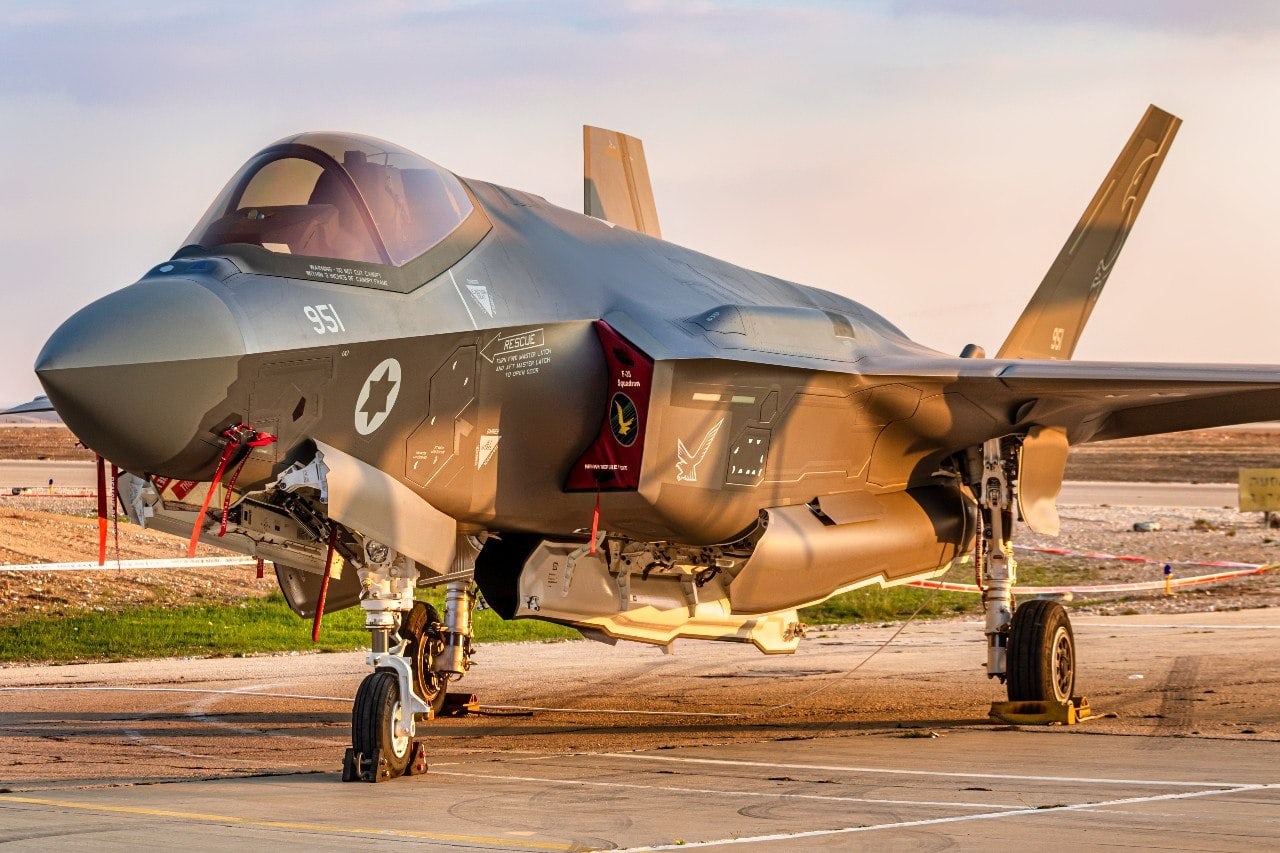
F-35I Adir from Israel. Image Credit: Creative Commons.
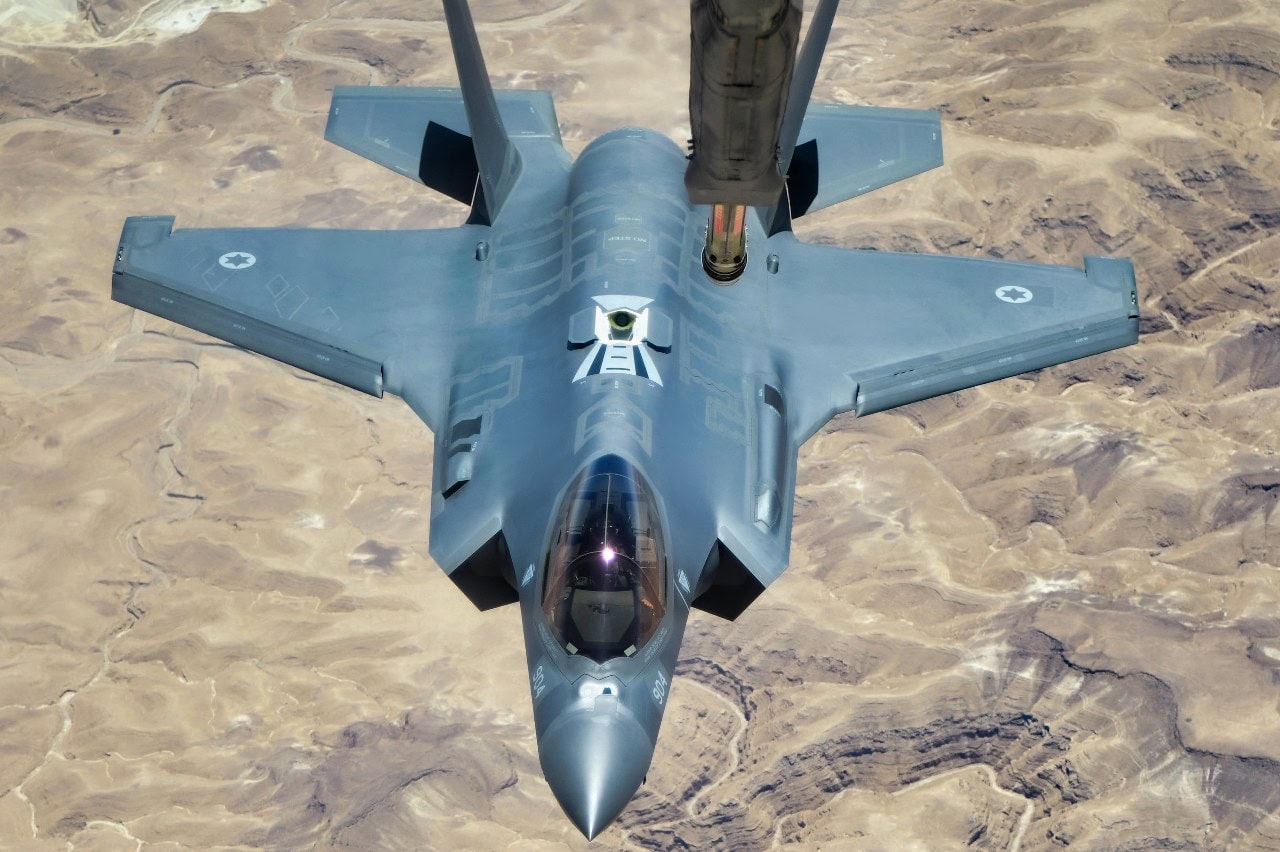
An Israeli Air Force F-35I Lightning II “Adir” approaches a U.S. Air Force 908th Expeditionary Refueling Squadron KC-10 Extender to refuel during “Enduring Lightning II” exercise over southern Israel Aug. 2, 2020. While forging a resolute partnership, the allies train to maintain a ready posture to deter against regional aggressors. (U.S. Air Force photo by Tech. Sgt. Charles Taylor)
-Johnson analyzes the potential rise of Hassan Khomeini—grandson of the regime’s founder—amidst a power struggle with hardline factions.
-This report details the psychological impact of “flattening” religious leadership structures, concluding that the Israeli operation has successfully degraded the central command and control systems of the Islamic Republic.
Beyond Decapitation: Analyzing the IDF’s Psychological War on the Islamic Republic’s Core
On Tuesday, March 3, the Israel Defence Forces (IDF) reported they had targeted a building in the religious capital of Qom, in which the 88-member Iranian “Assembly of Experts” was meeting in emergency session. The purpose of their meeting was said to be to choose the Islamic Republic of Iran’s next supreme leader.
This next leader would theoretically take the position now vacant after an attack on the country’s leadership compound in the capital, Tehran, on Saturday, February 28. That air strike killed Ayatollah Ali Khamenei, a religious leader who had enjoyed dictatorial power since he assumed the position in 1989. He was only the second individual to hold this title after the founder of the Islamic regime, Ayatollah Ruhollah Khomeini, took power in 1979.
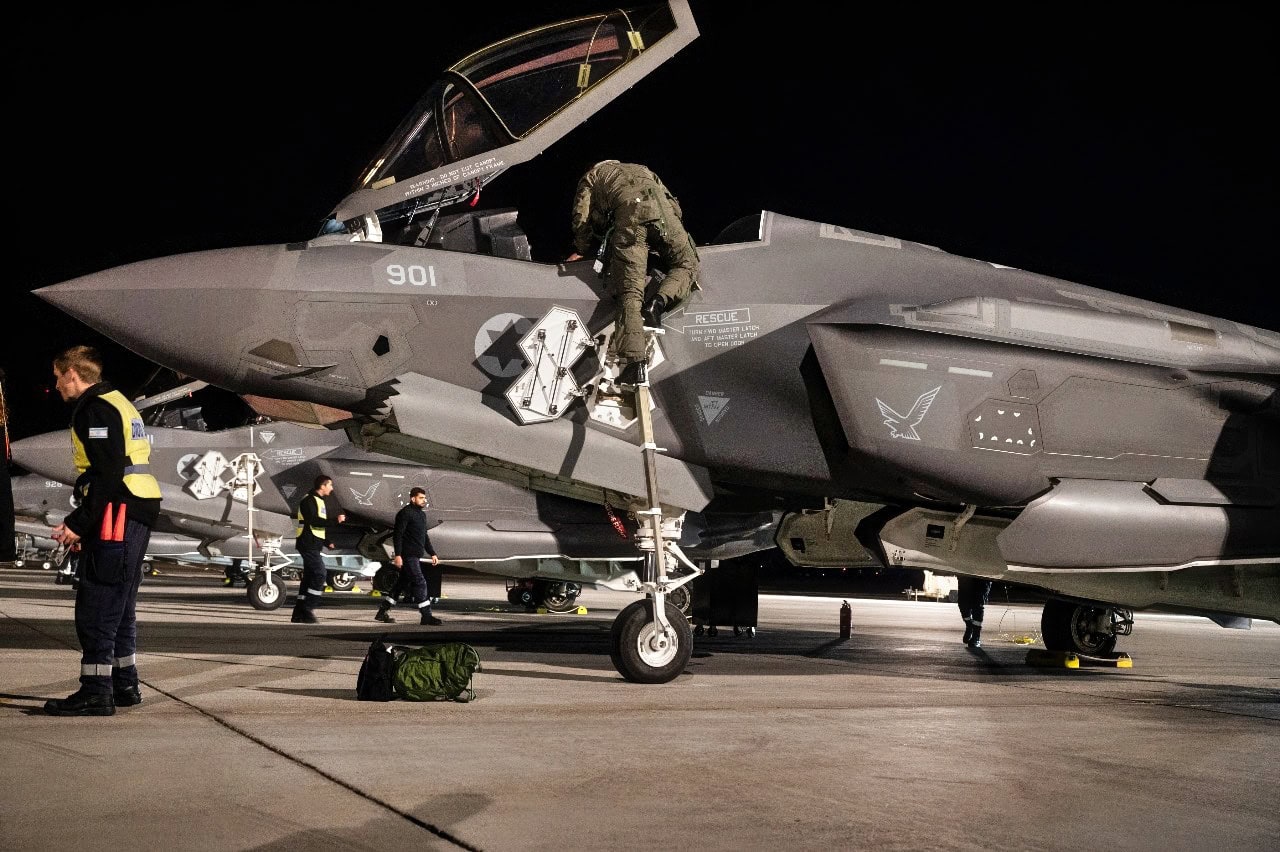
An Israeli Air Force pilot climbs into an F-35I Adir prior to a Red Flag-Nellis 23-2 mission at Nellis Air Force Base, Nevada, March 16, 2023. Red Flag is an opportunity to build on the success of JUNIPER OAK 23-2, JUNIPER FALCON, and additional combined exercises to enhance interoperability with Israel, strengthen bilateral cooperation, and improve capabilities in ways that enhance and promote regional stability and reinforce the United States’ enduring commitment to Israel’s security. (U.S. Air Force photo by Airman 1st Class Trevor Bell)
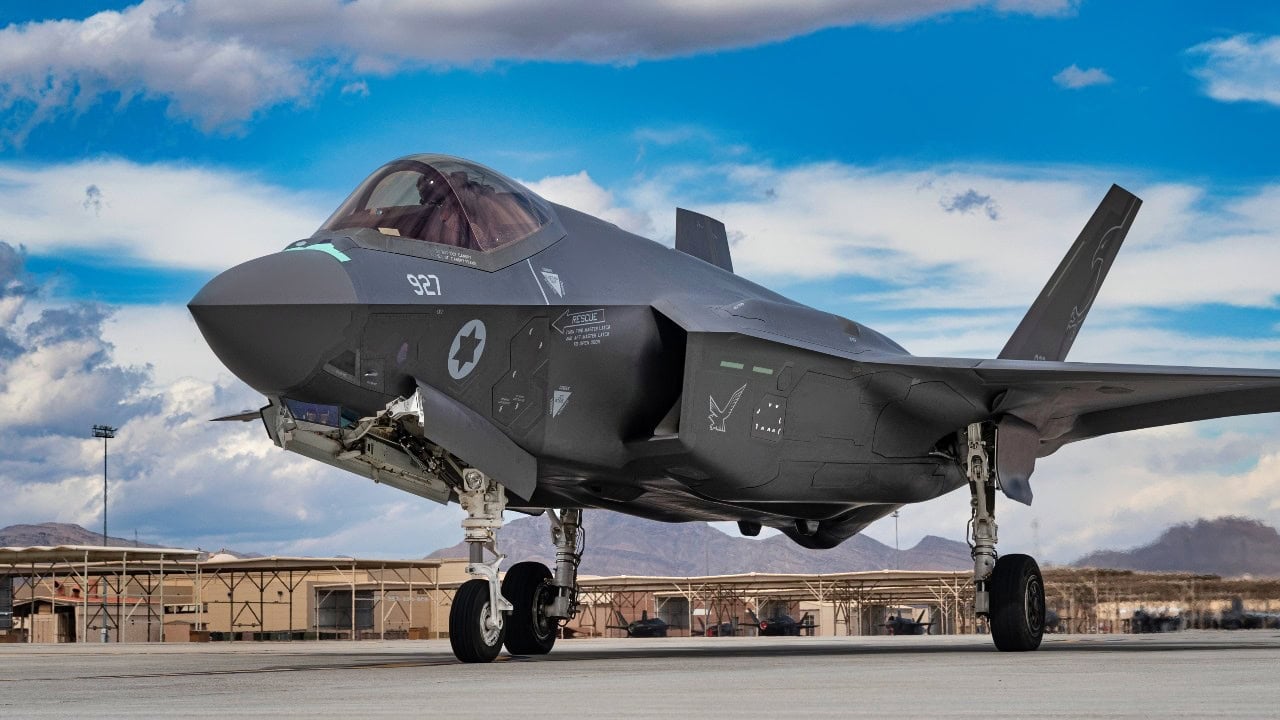
F-35I Adir Fighter from Israel
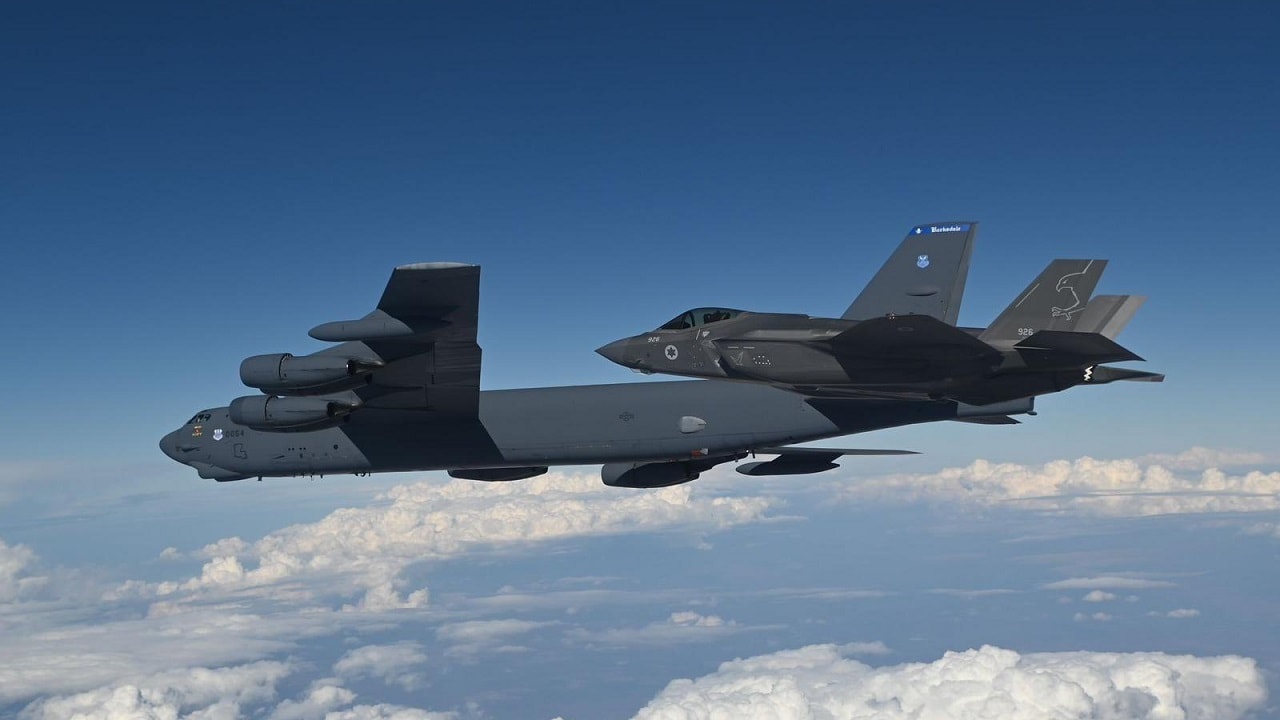
B-52H and F-35I Adir. Image Credit: IDF.
Israeli IDF sources have told The Jerusalem Post that Iranian news agencies have reported the structure in Qom was “flattened.” The act of targeting the assembly is not only an act that disrupts the succession process, but, as other Israeli sources have stated, it is also a highly symbolic action.
As one Israeli official explained, hitting the assembly is a psychological strike against everything the Islamic Republic stands for.
One of the Iranian news services that is closely connected with the Islamic Revolutionary Guard Corps confirmed that the assembly’s compound in Qom had been struck. It also reported that a second assembly building in Tehran, located at the site of the former parliament, was also hit overnight.
A Set of Coordinated Strikes
Earlier, Iranian news reports, citing an informed source, had said that the Israeli claim of destroying the Assembly of Experts or a Temporary Leadership Council was “completely false.” The source claimed that these Israeli reports were part of a program of psychological operations that aims to convince the outside world that there is a power vacuum in Iran.
However, the Israeli military said on Tuesday that it had struck Iran’s leadership compound in central Tehran overnight, targeting “the regime’s most central and significant headquarters.
It added that the site had been utilized by Iran’s leadership, including Supreme Leader Ali Khamenei, and that the building contained infrastructure involved in the directing and financing of regional armed groups.
Iran’s Tasnim news agency later reversed a previous statement denying the attack had occurred and stated, “the American-Zionist criminals attacked the Assembly of Experts building in Qom,” located south of Tehran.
The Israeli strike reportedly included the Presidential Office and the building of the Supreme National Security Council. It also targeted a site used by top officials for security decision-making, a training institution for military officers, and other key infrastructure, the IDF said. The Israeli military added that the compound hit in central Tehran is spread out across several streets and is one of the most heavily secured sites in the entire country.
The IDF later reported that this air strike had followed prolonged intelligence collection efforts and was intended to degrade Iran’s central command and control systems.
A Grandson Successor
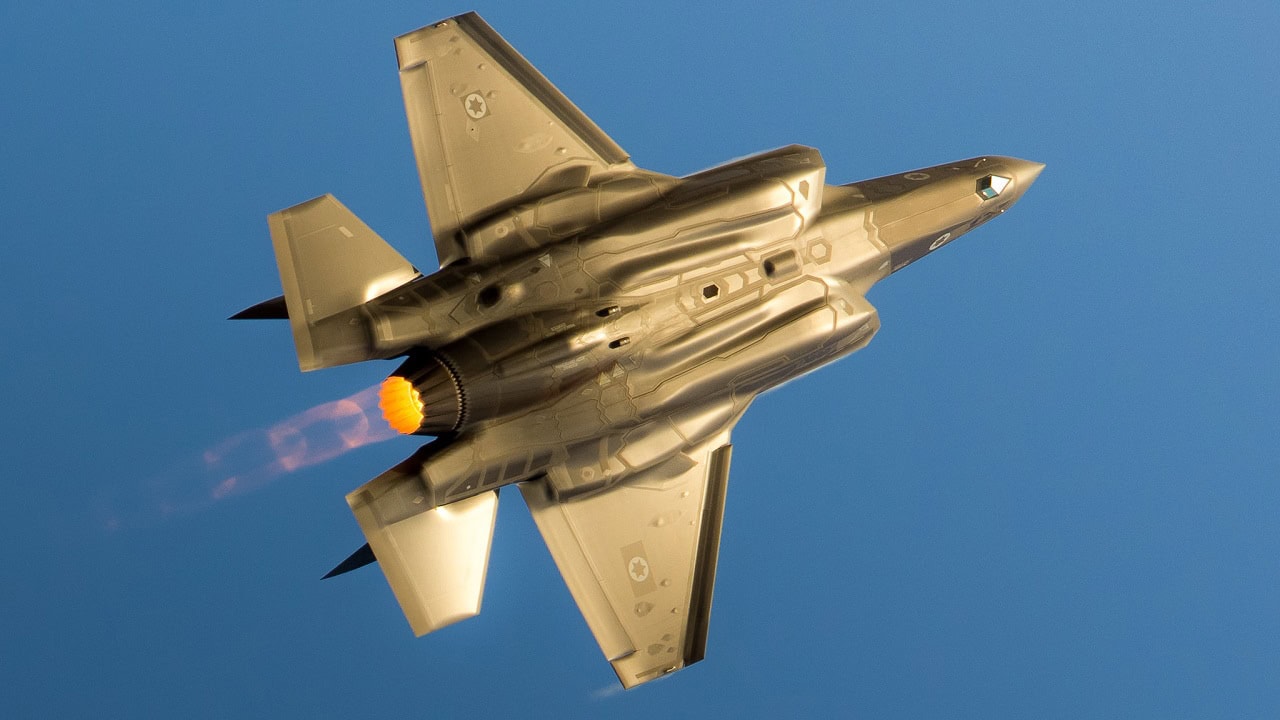
F-35I Adir. Image Credit: Creative Commons.
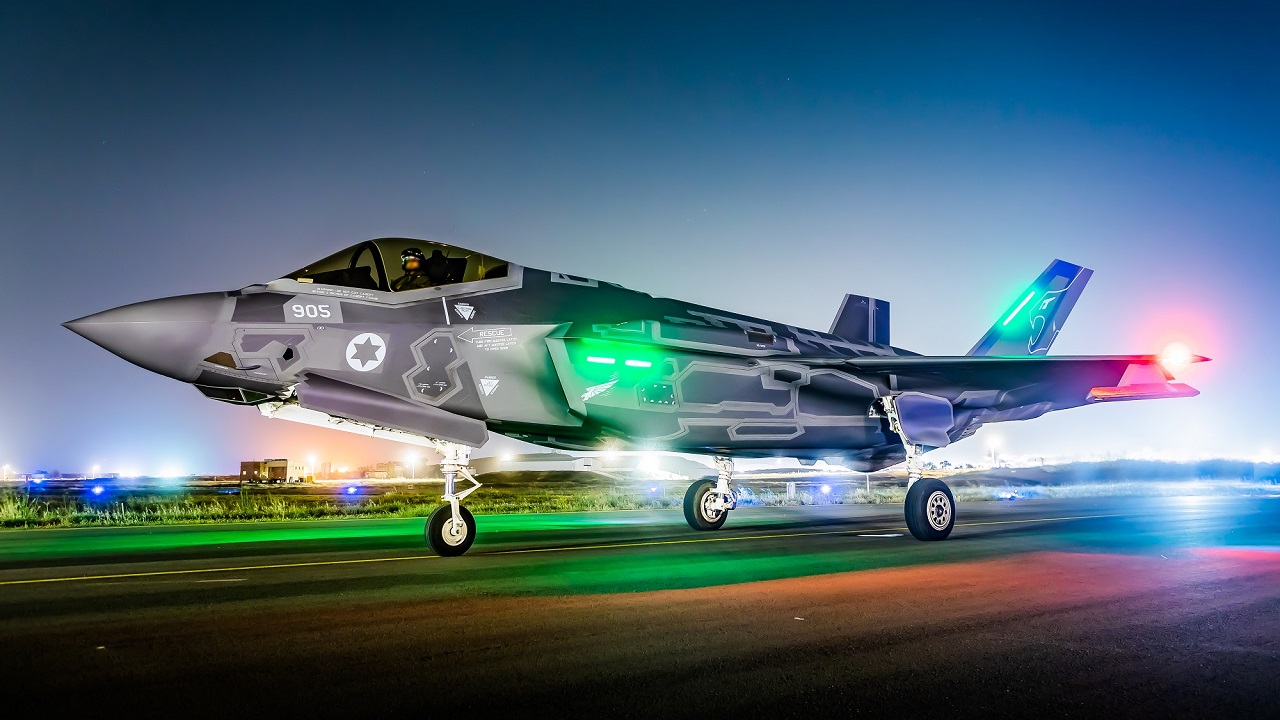
F-35I Adir serving in Israel’s Air Force. Image Credit: Creative Commons.
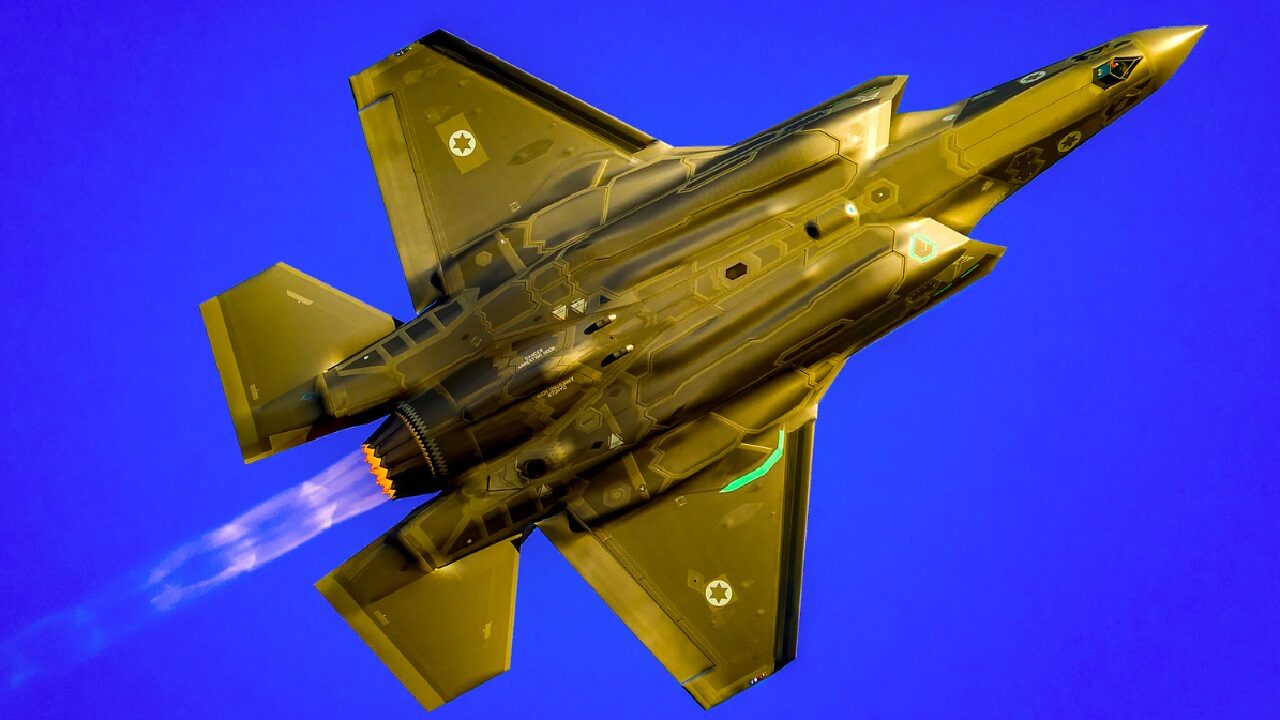
F-35I Adir. Image Credit: IDF Air Force.
Hassan Khomeini, who is mentioned as a possible new supreme leader, is the grandson of the Islamic Republic’s founder, Ayatollah Ruhollah Khomeini. He is a prominent figure in these deliberations to select a new leader and is sometimes described as a relative moderate within the establishment.
Khomeini is 53 and currently acts in a symbolically important role as the custodian of his grandfather’s mausoleum. He also has close relations with reformist politicians in Iran who have been trying to moderate the system’s draconian Islamic political order and legal code.
Politicians inside Iran have described him as a rival candidate to hardline Islamists who gained more power during the 37-year reign of Ayatollah Khamenei. One of the names specifically mentioned among the hardline candidates is the recently deceased ayatollah’s son, Mojtaba, who has at times been called a potential “Iranian Putin.”
Despite supposedly harboring reformist sympathies, Hassan Khomeini is said to have nonetheless declared his loyalty to the Islamic Republic. In this vein, he has reportedly condemned the street protests that have rocked the nation for weeks and has also expressed strong anti-Israel sentiments.
About the Author: Reuben F. Johnson
Reuben F. Johnson has thirty-six years of experience analyzing and reporting on foreign weapons systems, defense technologies, and international arms export policy. Johnson is the Director of Research at the Casimir Pulaski Foundation. He is also a survivor of the Russian invasion of Ukraine in February 2022. He worked for years in the American defense industry as a foreign technology analyst and later as a consultant for the U.S. Department of Defense, the Departments of the Navy and Air Force, and the governments of the United Kingdom and Australia. In 2022-2023, he won two awards in a row for his defense reporting. He holds a bachelor’s degree from DePauw University and a master’s degree from Miami University in Ohio, specializing in Soviet and Russian studies. He lives in Warsaw.