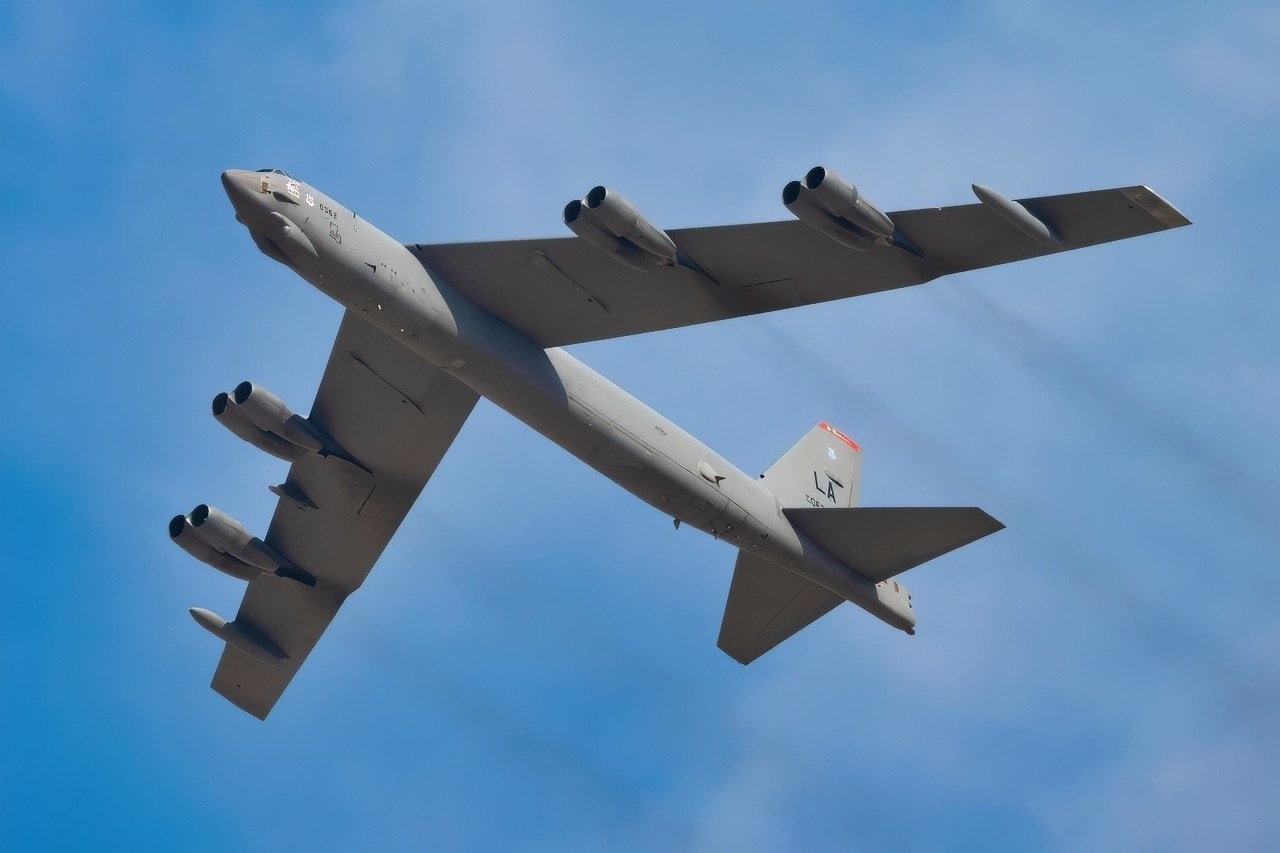
Summary and Key Points: Caleb Larson, a national security journalist, evaluates the deployment of the B-52 Stratofortress during Operation Epic Fury.
-According to CENTCOM Commander Admiral Brad Cooper, B-52s are currently striking Iranian command control posts and hunting “mobile ballistic missile launchers” with nearly total impunity.
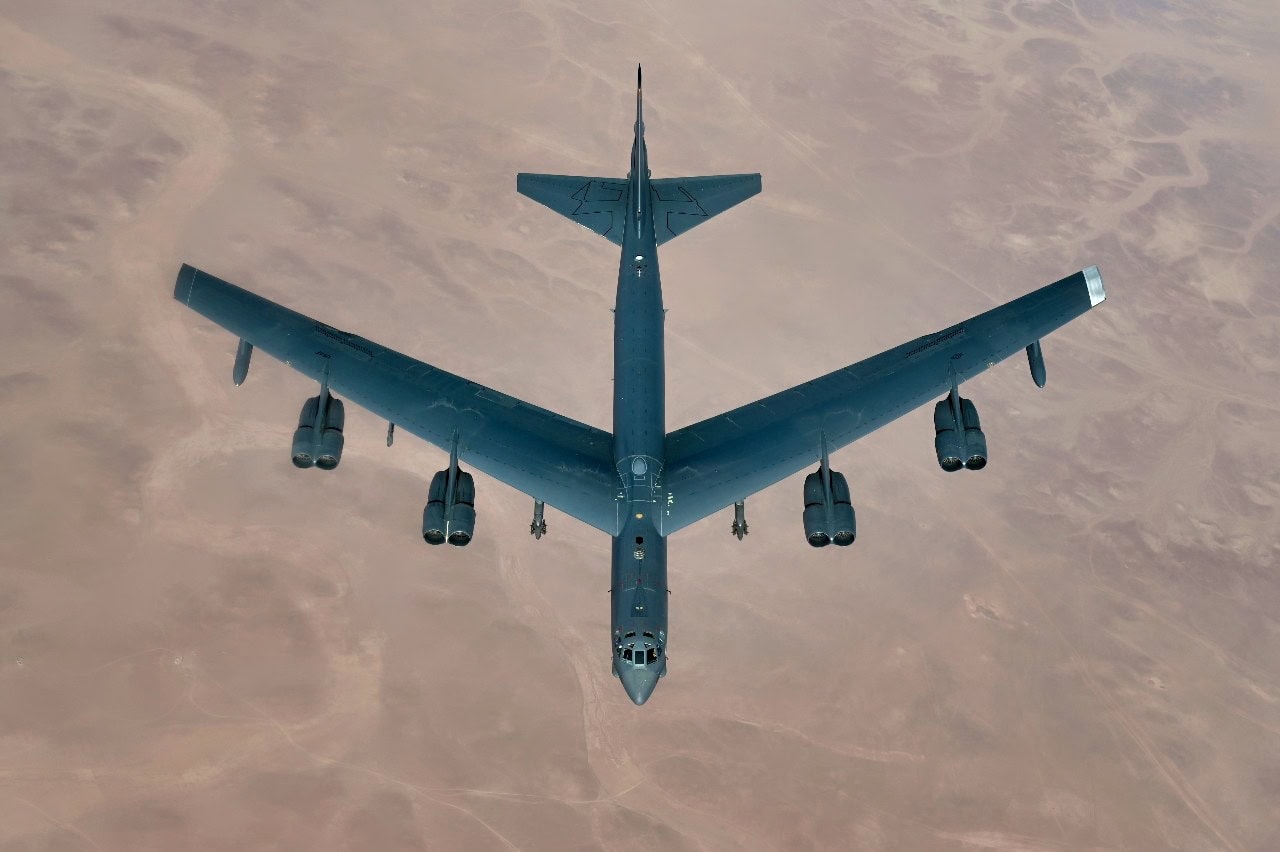
A U.S. Air Force B-52H Stratofortress conducts a combat air patrol in support of Operation Inherent Resolve over the U.S. Central Command area of responsibility Nov. 23, 2024. The deployment of the long-range heavy bombers into the USCENTCOM theater demonstrates the United States’ dedication to deterring aggression and maintaining stability in the region alongside allies and partners. (U.S. Air Force photo)
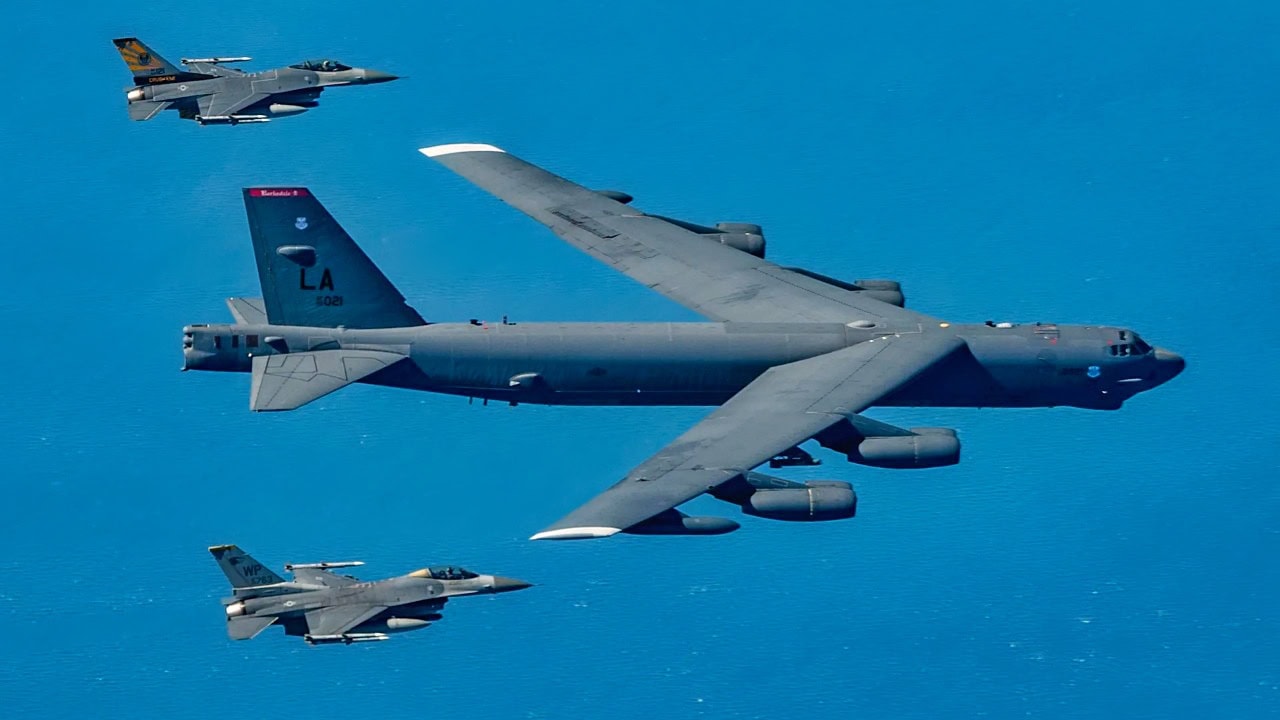
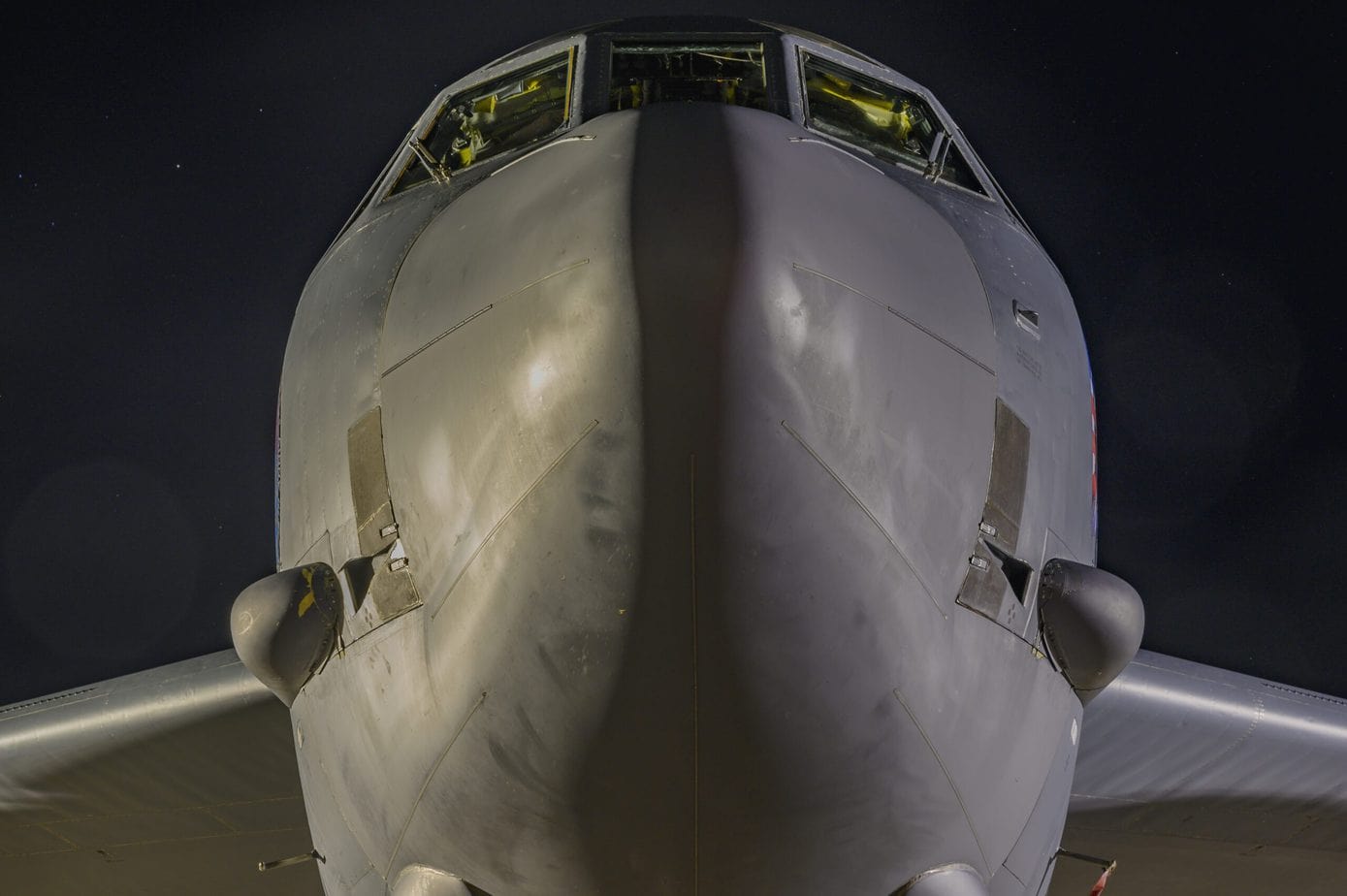
B-52 Bomber. Image Credit: Creative Commons.
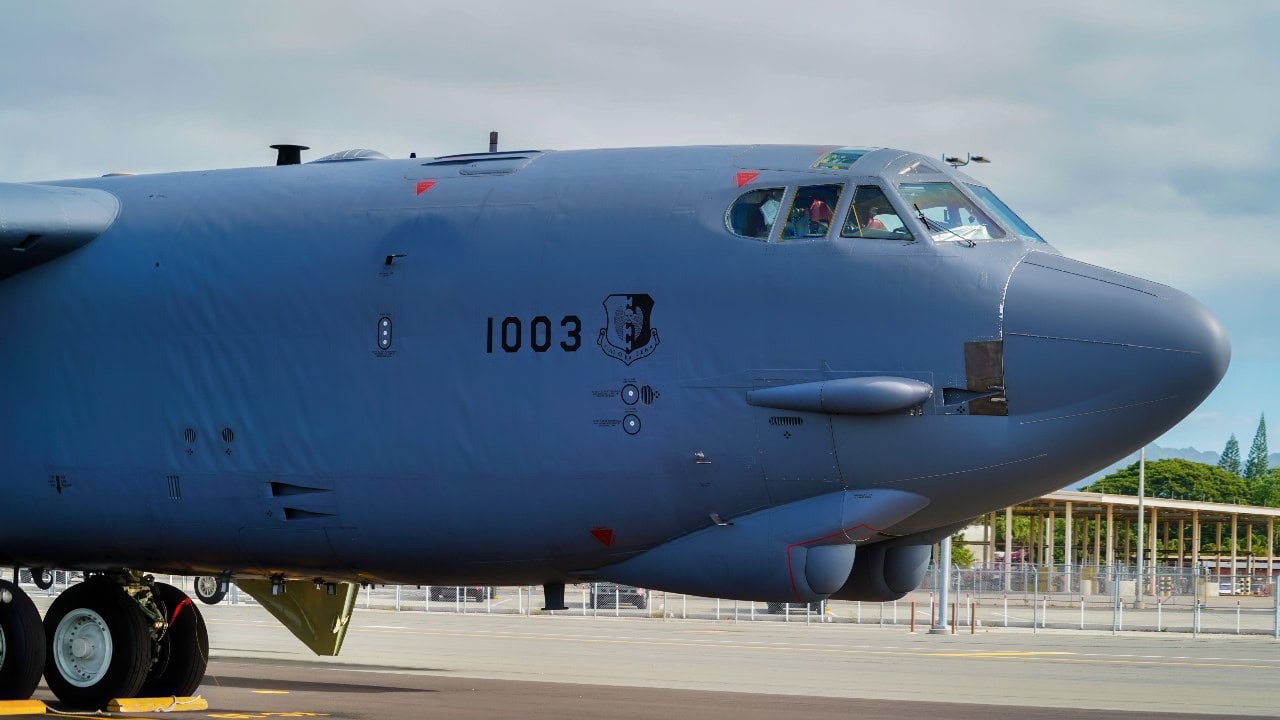
A B-52, assigned to Minot Air Force Base, sits on the flightline at Joint Base Pearl Harbor-Hickam, Hawaii, Nov. 27, 2019. (U.S. Air Force photo by Airman 1st Class Jermaine Ayers)
-This report analyzes the B-52J modernization program, including the Commercial Engine Replacement Program (CERP) with Rolls-Royce F130 engines.
-Larson concludes that while the B-52 lacks the stealth of the B-2 Spirit, its unmatched 9,000-mile range and massive payload make it the primary tool for sustained bombardment in the 2026 conflict.
The 100-Year Bomber: Why the B-52 Stratofortress is Dominating the 2026 Iran Air War
The oldest bomber in the U.S.Air Force—the B-52 Stratofortress—has participated in Operation Epic Fury, the joint Israeli-American campaign against the Islamist regime in Iran. Despite its age — the bomber’s first flight was in 1952 — the long-range bomber has several unique qualities that kept it relevant throughout the Cold War and into the present day.
First is the bomber’s payload capacity. At about 70,000 pounds, the jet’s payload is bested only by the B-1B Lancer bomber’s 75,000-pound capacity.
But the Stratofortress’ range is unmatched by any other U.S. bomber. Able to fly nearly 9,000 miles without aerial refueling, with the aid of tanker aircraft, the bomber can easily circumnavigate the globe.
Despite the B-52’s age, these qualities kept it relevant even when the Air Force took service of fifth-generation stealth bombers—the B-2 Spirit. It is still a powerful aircraft as the upcoming sixth-generation B-21 Raider bomber gets set to enter service.
U.S. Central Command (CENTCOM) took to X to provide some details of the ongoing campaign in Iran. CENTCOM explained that B-52s had been used to hit “ballistic missile and commander control posts” in Iran.
“These forces bring a massive amount of firepower, representing the largest build up by the US in the Middle East in a generation,” Admiral Brad Cooper, the CENTCOM Commander, explained.
Noting that the operation is “nearly double the scale” of strikes against Iraq in 2003, Admiral Cooper explained that B-2 Spirits, B-1B Lancers, and B-52s have conducted “uncontested surgical strikes” against Iranian missile and political infrastructure. The inclusion of B-1B and B-52s is particularly notable, as those bombers lack the stealth capabilities of the B-2 Spirits, and highlight the utter dearth of Iranian air defenses, allowing American and Israeli aircraft to fly over Iran with almost total impunity.
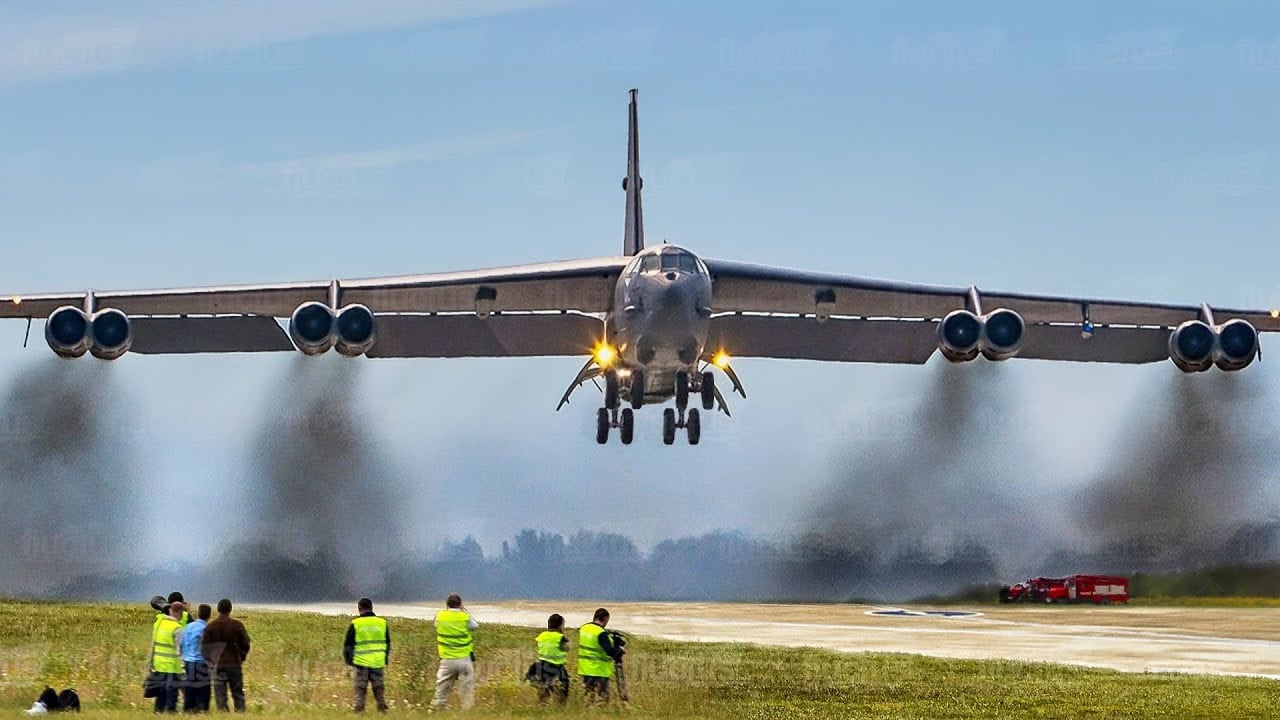
B-52 Bomber. Image Credit: Creative Commons.
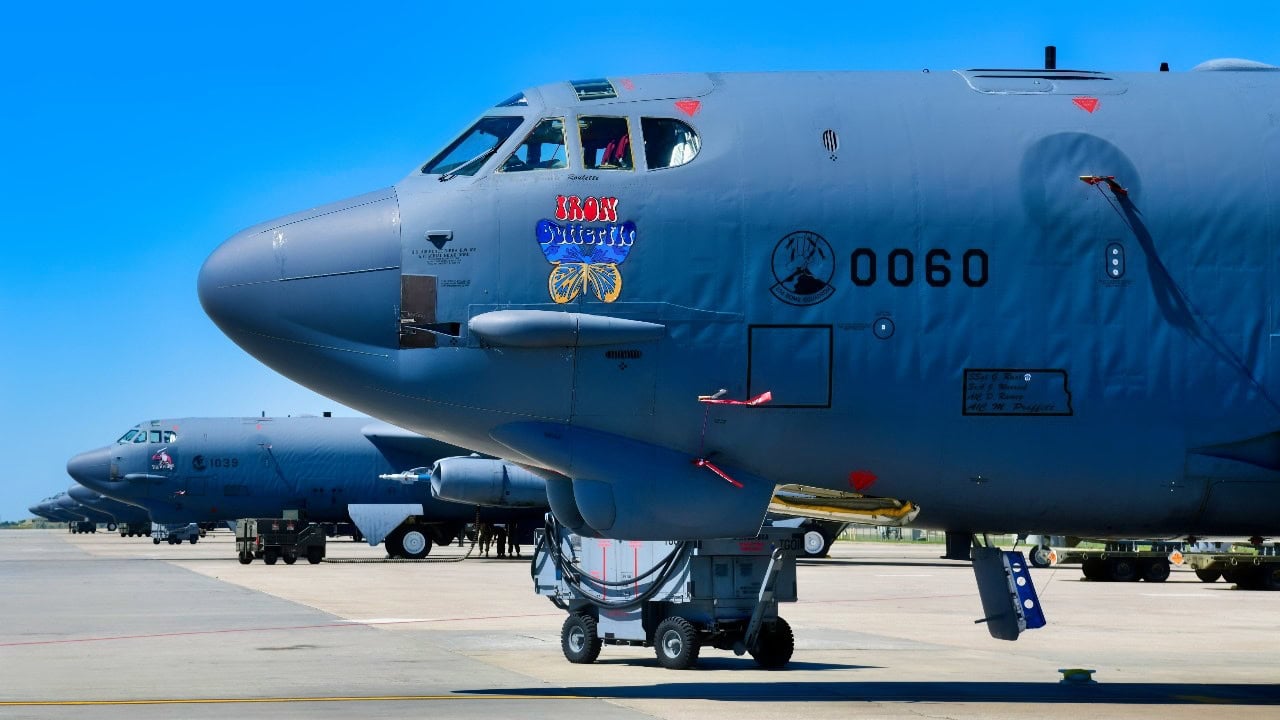
Multiple B-52H Stratofortresses sit parked on the flight line on Minot Air Force Base, North Dakota, Aug. 8, 2022. The B-52 Bomber has been in service since February of 1955. (U.S. Air Force photo by Airman Alysa Knott)
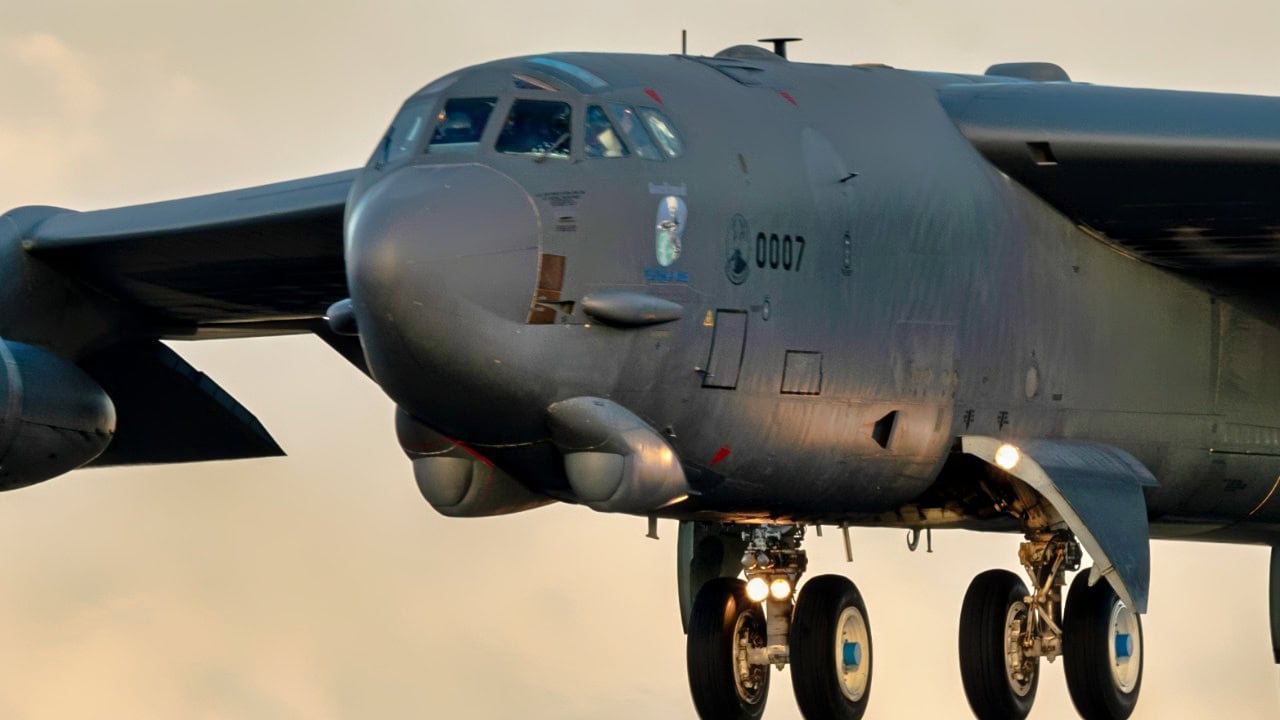
U.S. Air Force B-52H Stratofortress lands at RAF Fairford, England, following a sortie in support of Bomber Task Force 25-2, Feb. 27, 2025. The U.S. maintains a strong, credible strategic bomber force that enhances the security and stability of Allies and partners. (U.S. Air Force photo by Airman 1st Class Luis Gomez)
“We will continue to conduct dynamic targeting operations or hunting Iran’s last remaining mobile ballistic missile launchers and eliminate what I would characterize [as] their lingering launch capability.”
Israel crippled Iranian air defenses during the 12 Day War in 2025, paving the way for U.S. Air Force B-2 stealth bombers to drop bunker-busting munitions on Iranian nuclear infrastructure. Despite reports prior to Operation Epic Fury that Russia and Iran had signed a deal for 500 man-portable Verba air-defense units, along with 2,500 9M336 missiles, it appears that the joint Israeli-American air campaign preempted the arrival of the advanced Russian air defenses.
Upgrades and Refresh
Modernization programs are key to further extending B-52’s longevity.
The B-52J is one of the most significant updates to the Cold War-era bomber in years. If it is successful, the strategic bomber could reach the one-century mark of service.
The Commercial Engine Replacement Program (CERP) will replace the B-52’s Pratt & Whitney TF33 engines, eight of which are housed in four underwing pods, with more fuel-efficient Rolls-Royce F130 engines. In 2024, the F130 engines underwent a critical design review prior to the start of the CERP program.
The new Rolls-Royce engines deliver about the same thrust as the old TF33 engines. But they are significantly more fuel-efficient, offering about 30-percent-better fuel economy than the TF33s. Just as important, however, they will be easier to maintain, more reliable, generate less noise, need less maintenance, and, thanks to their more modern design, will have a steady, reliable stream of spare parts.
In combination, these upgrades offer the B-52 superior range, more loiter time while on-station, and lower demand on the tanker fleet. Overall, the up-engined B-52J will be even more combat effective.
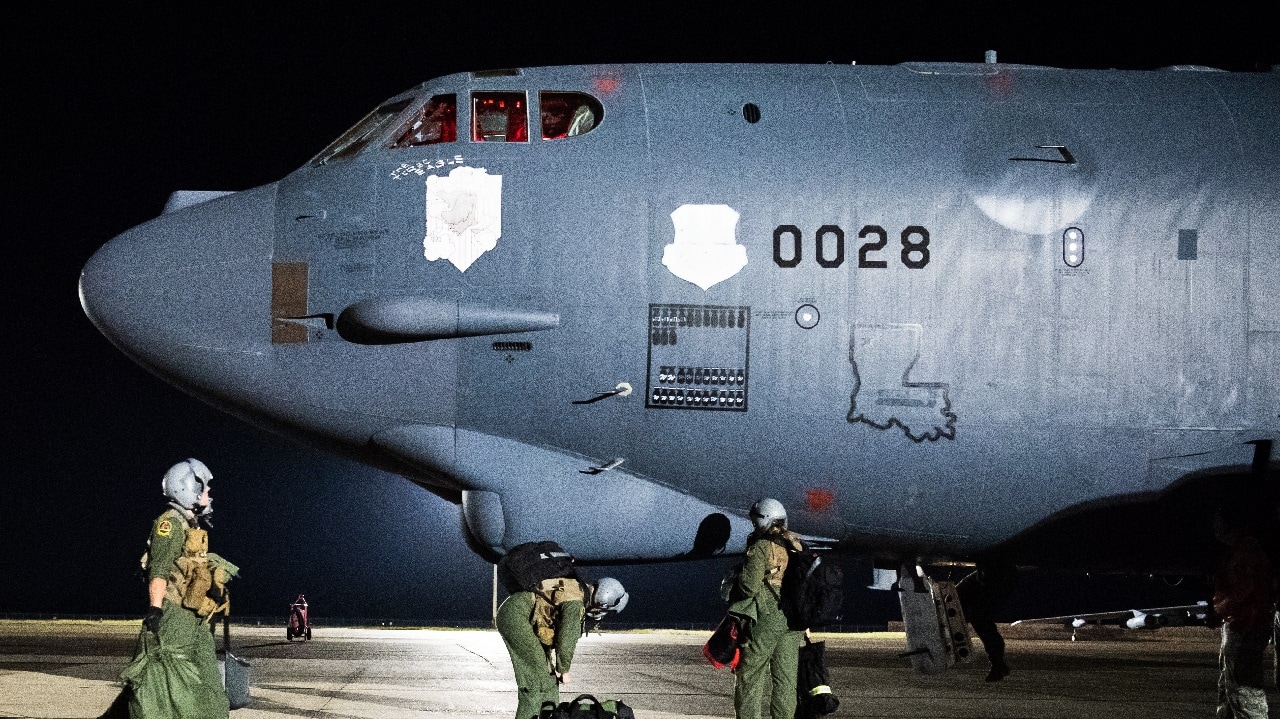
Airmen from the 96th Bomb Sqaudron load gear onto a B-52H Stratofortress at Barksdale Air Force Base, La., Oct. 13, 2020. The crew took part in a NATO crossover exercise designed to increase interoperability with NATO mission partners. (U.S. Air Force photo by Airman 1st Class Jacob B. Wrightsman)
A U.S. Air Force B-52 Stratofortress assigned to Barksdale Air Force Base, La., is prepared for a Mark-82 munitions load, in support of a Bomber Task Force deployment, Feb. 1, 2020, at Andersen Air Force Base, Guam. The bomber deployment underscores the U.S. military’s commitment to regional security and demonstrates a unique ability to rapidly deploy on short notice. (U.S. Air Force photo by Senior Airman Jacob M. Thompson)
In addition to new engines, B-52Js will integrate updated avionics and the Combat Network Communications Technology update—which will provide Link 16 data connectivity updates—as well as other cockpit upgrades.
Into the Future for the B-52 Bomber
Despite the B-52’s age, it remains relevant to the modern battlefield in certain scenarios.
In an operational environment like Iran, where there are few if any operational air defenses, the B-52 excels. Its range and enormous payload capacity give the bomber distinct advantages.
In highly contested aerial environments, however, the B-52’s lack of stealth would be a distinct shortcoming.
Against a peer rival, such as China or Russia, B-52s would fly stand-off missions to lob long-range cruise missiles at distant targets, rather than inserting themselves more directly into the fray.
Though these Cold War-era bombers cannot match the stealth capabilities of newer strategic bombers, their upgrades and recent combat in Iran attest to their longevity.
About the Author: Caleb Larson
Caleb Larson is an American multiformat journalist based in Berlin, Germany. His work covers the intersection of conflict and society, focusing on American foreign policy and European security. He has reported from Germany, Russia, and the United States. Most recently, he covered the war in Ukraine, reporting extensively on the war’s shifting battle lines from Donbas and writing on the war’s civilian and humanitarian toll. Previously, he worked as a Defense Reporter for POLITICO Europe. You can follow his latest work on X.